
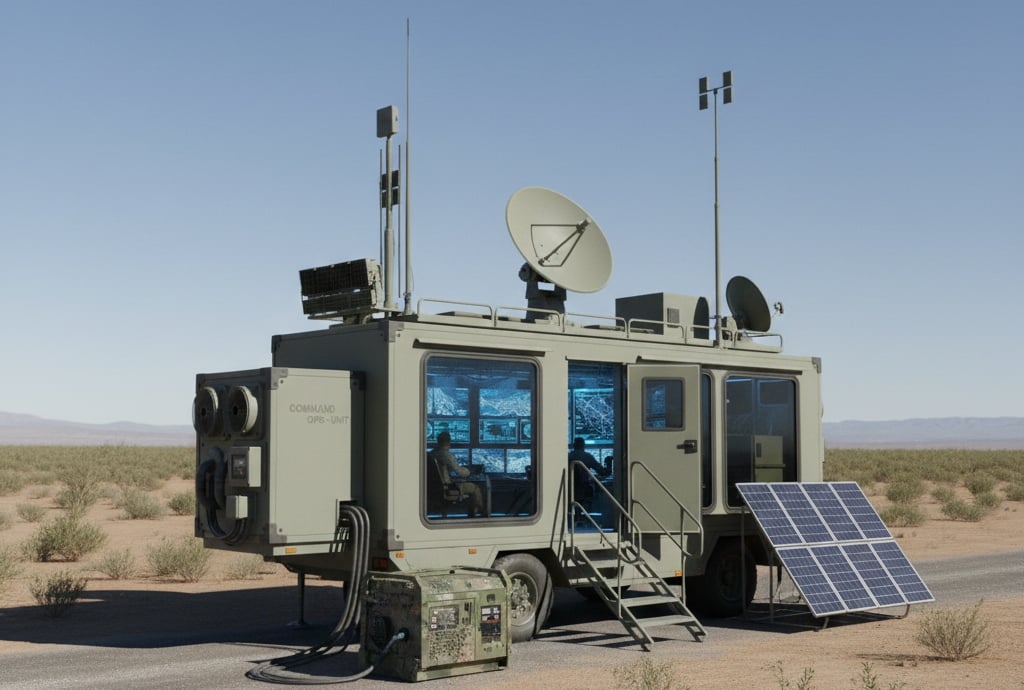
Redundant Systems for Reliable Mobile Command Center Operations
When critical operations hinge on the reliability of your mobile command center, there’s no room for single points of failure. Redundant systems are the backbone that keeps essential power, communications, and support functions online, regardless of the environment or challenge.
According to the Uptime Institute’s latest outage analysis, 54% of the most recent significant outages cost organizations over $100,000, and 16% exceeded $1 million. Power remains the leading cause of impactful data-center failures, underscoring the tangible, quantifiable value of redundancy.
By integrating backup solutions across every critical system, your team stays connected, operational, and ready to lead when it matters most. In the following sections, we’ll explore how purpose-built redundancy can make all the difference in keeping your operations running smoothly.
Why Redundancy Is Essential for Mobile Command Center Reliability
Reliability sets the foundation for every successful mobile command center trailer deployment. In high-stakes environments, even a minor disruption can bring operations to a halt, risking communication, coordination, and ultimately, the mission itself. Redundancy is the safeguard that ensures your team remains connected and operational, regardless of unforeseen setbacks.
Why Single Points of Failure Aren’t an Option
Every mission presents its own unique challenges; unexpected weather, equipment breakdowns, or network congestion can all disrupt the flow of critical information. Redundant systems provide backup pathways for power, communications, and support functions. With well-integrated redundancy, there is always an alternative ready to take over, preventing a single malfunction from impacting your entire operation.
This approach aligns with systems-resilience engineering best practices that explicitly aim to eliminate single points of failure and enable graceful degradation.
Industry Standards That Drive Redundant Design
Across public safety, disaster recovery, defense, and large-scale event support, industry standards increasingly call for built-in redundancy. These requirements ensure mobile command centers can meet rigorous demands and remain fully functional when it matters most. Compliance isn’t just about checking a box; it’s about keeping personnel safe, data protected, and missions on track.
What are the main risks if a mobile command center doesn’t use redundant systems?
Without redundancy, a single failure in power, communications, or environmental control can result in downtime, loss of coordination, and an increased risk to both personnel and mission success.
Building Reliable Power Redundancy for Mobile Command Centers
Every successful mission starts with dependable power. Without it, communications, technology, and climate control systems fail to perform when they are needed most. Building redundancy into your power system ensures that even under heavy load or unexpected conditions, your mobile command center continues to operate without interruption.
Dual-Source Power and Layered Integration
True resilience begins with multiple power sources that work together seamlessly. Combining generator output, battery storage, and shore power input creates a balanced system that can transition between energy sources in seconds. This design ensures continuous uptime and eliminates the vulnerability of relying on a single power supply. In fact, emergency systems governed by NFPA 70/NEC are designed to restore power to life-safety loads within 10 seconds.
Automatic Transfer and Load Prioritization
Modern power systems use automatic transfer switches that instantly reroute energy when one source becomes unavailable. Essential circuits, such as radios, network equipment, and control systems, receive uninterrupted power, while non-critical loads are managed intelligently to conserve resources and extend runtime during emergencies.
Fuel Management and Preventive Maintenance
A redundant setup is only as strong as its upkeep. Strategic fuel planning and regular generator testing guarantee long-term performance. Preventive maintenance, including load bank tests, oil changes, and battery inspections, ensures that each system is ready when needed. A consistent schedule ensures dependable and field-proven backup power.
How often should power redundancy systems be serviced or tested?
Generators, batteries, and transfer systems should be tested monthly under operational load. A complete inspection before every deployment helps confirm that power transitions are smooth and reliable when real-world conditions put them to the test.
Designing Redundant Communication Systems That Never Go Dark
In the field, communication is the heartbeat of command and control. Whether it’s coordinating first responders, managing resources, or relaying intelligence, your mobile command center must stay connected under all conditions. Redundant communication networks ensure that when one signal fails, another immediately takes over, keeping the mission moving forward.
Multi-Layered Connectivity for Reliable Uptime
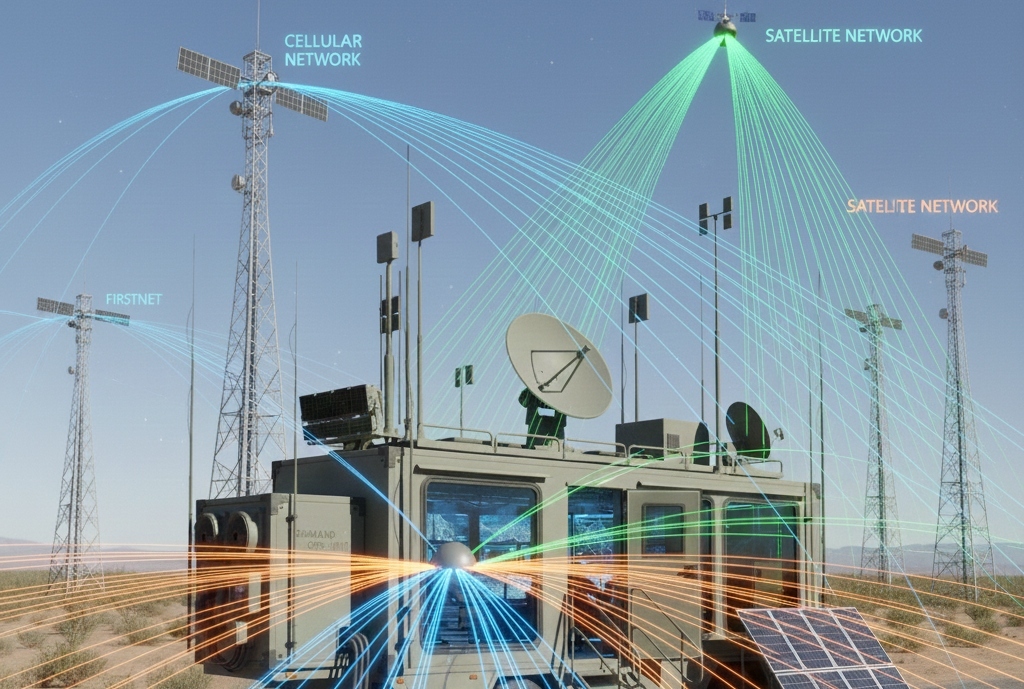
A resilient communication strategy combines multiple networks that complement one another. By integrating cellular, FirstNet, and satellite systems, teams gain continuous coverage in both urban and remote environments. Each network acts as a safety net for the others, creating uninterrupted communication even when local infrastructure fails.
Satellite Integration for Ultimate Resilience
Satellite connectivity serves as a vital backup when terrestrial systems become unreliable. With both LEO and GEO satellite options available, command centers can transmit and receive data from virtually anywhere. This layer of redundancy ensures that command units remain operational when storms, terrain, or network overloads disrupt standard communication channels.
Hardware Separation and On-Demand Deployables
Strong connectivity depends on innovative engineering. Separating antennas, radio systems, and power paths prevents interference and reduces the risk of single-point failures. For extended deployments, portable boosters or mobile deployable towers can reinforce coverage in areas where infrastructure is damaged or nonexistent.
Why is it essential to include both cellular and satellite communication in a redundant network design?
Cellular systems offer high-speed connectivity in densely populated areas, while satellite systems ensure reliable communication in remote or disaster-stricken regions. Together, they ensure consistent coverage, regardless of the environment or infrastructure stability.
Protecting Mission Critical Data With Redundant IT Systems
Information drives every decision in the field. When command centers deploy to complex environments, the stability and protection of IT systems determine how effectively teams can coordinate and respond to events. Redundant data and network systems ensure that information continues to flow, even if one component fails.
Ruggedized, Redundant Hardware for Reliable Performance
Mobile command centers operate under demanding conditions that traditional IT systems simply can’t handle. Ruggedized equipment, including hardened routers, redundant switches, and mirrored storage arrays, ensures data accessibility and maintains system uptime. Each device is designed to absorb vibration, temperature swings, and constant movement without compromising function.
Continuous Uptime with UPS and Smart Network Management
Power transitions happen often in the field. A dependable uninterruptible power supply (UPS) bridges those moments, preventing data loss or system resets. Network control systems equipped with SD-WAN and link-bonding technology automatically route traffic through the strongest available connection, ensuring optimal performance. This keeps data, voice, and video channels live, even if a network path becomes unstable.
Strong Cybersecurity for Mission-Critical Data
Cybersecurity is a crucial component of operational redundancy. Firewalls, encryption, and segmented access limit vulnerabilities across connected networks. Remote monitoring tools enable technicians to detect irregular activity early, while secure VPNs safeguard transmissions between command centers and headquarters. Together, these safeguards ensure continuity without compromising security.
How does redundant IT design improve mission performance in the field?
Redundant IT systems enable command centers to maintain communication, access critical data, and continue coordinating even in the event of hardware or network failures. This reliability directly enhances mission performance by reducing downtime and preserving real-time information flow.
Redundant Environmental Controls That Safeguard People and Equipment
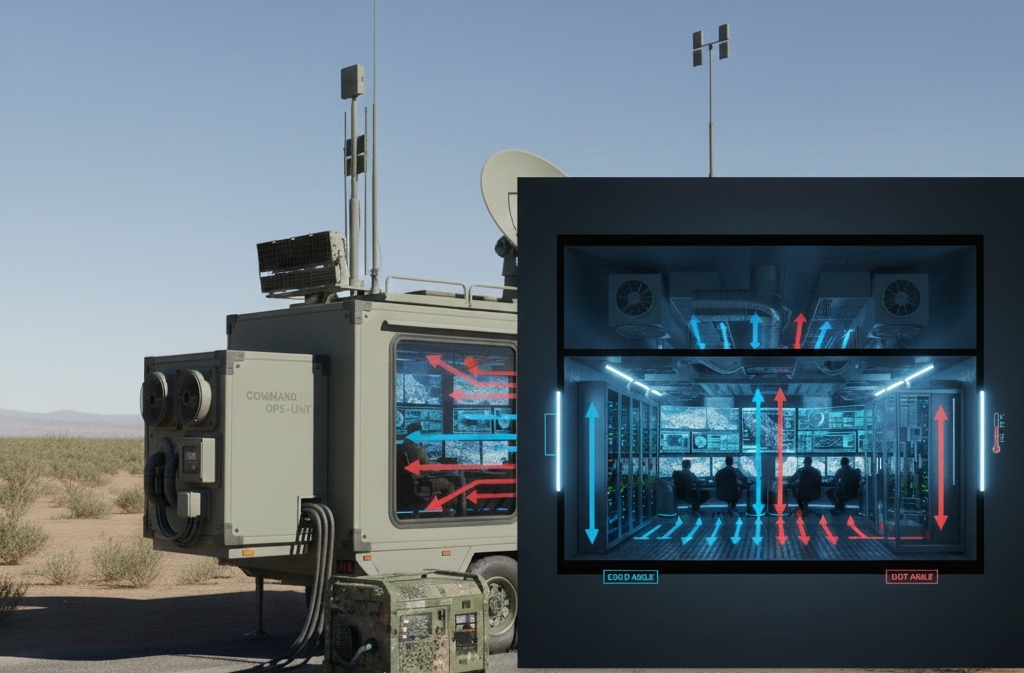
A stable internal environment is crucial to mission success. When mobile command centers operate in unpredictable weather or harsh terrain, environmental control systems protect both the crew and the sensitive electronics that keep the mission running. Redundancy in these systems ensures comfort, safety, and continuous functionality, even if one component fails.
Redundant HVAC Systems for Reliable Climate Control
Each mobile command center relies on precise temperature management to keep personnel comfortable and ensure equipment operates within safe ranges. Installing multiple, independently powered HVAC units provides continuous performance even when one unit requires maintenance or experiences a fault. This redundancy prevents downtime and safeguards essential systems from overheating or freezing.
Air Quality, Filtration, and Environmental Monitoring
Field operations often take place in environments filled with dust, smoke, or chemical exposure. Advanced filtration systems and optional pressurization help maintain clean air quality inside the command unit. Integrated sensors monitor humidity, temperature, and air purity, sending alerts if conditions shift beyond safe levels. This proactive monitoring prevents minor fluctuations from becoming costly system failures.
Thermal Zoning for Equipment Protection
Electronics generate significant heat, especially in rack-mounted configurations. Thermal zoning divides the workspace into dedicated areas with specific airflow and temperature control. Equipment bays receive targeted cooling while crew spaces remain comfortable, allowing each system to perform efficiently without interference.
How do redundant HVAC and monitoring systems improve mission safety?
Redundant HVAC and environmental monitoring systems maintain consistent temperature and air quality, even during component failures. This stability protects personnel’s health, prevents equipment damage, and ensures continuous operation under demanding conditions.
How Smart Vehicle Design Supports System Redundancy
Redundancy is not only about adding backups but also about how each system is engineered and arranged within the vehicle. Smart design decisions protect critical components, improve serviceability, and prevent one issue from affecting multiple systems. A well-integrated layout supports reliability and simplifies maintenance, giving your team the confidence to operate without disruption.
Segmented Infrastructure for Power and IT
A dependable command center separates its systems into layers of priority. Electrical and IT infrastructures are divided into critical, essential, and nonessential categories. This approach isolates malfunctions and prevents minor issues from spreading through the network. When circuits and communication lines are separated, technicians can work on one system without disturbing the rest.
Physical Placement and Isolation of Components
Strategic placement is a cornerstone of vehicle reliability. Antennas, batteries, and fuel systems are positioned to reduce interference, heat buildup, and vibration exposure. Isolated compartments protect delicate electronics from movement and environmental stress. This attention to physical layout enhances both safety and system longevity while keeping the vehicle easy to service in the field.
Compliance and Field Serviceability
Every mobile command center must meet industry regulations and the client’s operational requirements. Designs that include labeled wiring, accessible panels, and precise documentation save valuable time during inspections or repairs. Compliance-driven builds not only meet standards but also ensure that vehicles remain dependable throughout their service life.
How does a modular vehicle layout contribute to long-term performance?
A modular layout allows systems to be maintained or upgraded individually without disrupting the rest of the vehicle. This flexibility extends the service life of the command center and reduces downtime during maintenance or technology upgrades.
Testing, Training, and Validating Redundant Systems in the Field
A redundant system only proves its worth when it’s tested under real-world conditions. Verification and training transform built-in backup systems from theoretical safeguards into dependable tools your team can rely on. Regular testing ensures each system performs as designed, while operator training builds the confidence and readiness needed to act decisively in the field.
Commissioning and Functional Verification
Before a mobile command center ever leaves the facility, every backup system must undergo full commissioning. This process verifies that automatic transfers, communication handovers, and HVAC redundancies operate exactly as planned. Comprehensive documentation provides a reference for future inspections and field tests, confirming that the command unit is mission-ready from day one.
Scenario-Based Field Testing
Real-world drills are essential for ensuring redundancy works when it matters most. Simulated failures, such as power loss, network disruption, or HVAC system malfunction, enable crews to assess how each system responds and recover operations quickly. These exercises highlight any weak points early and provide operators with firsthand experience in managing transitions under pressure.
Continuous Monitoring and Remote Diagnostics
Even with careful design and testing, equipment performance changes over time. Integrated monitoring systems track power loads, network activity, and environmental stability, alerting technicians to irregularities before they become failures. Remote diagnostics provide a rapid means of identifying and resolving issues, thereby reducing downtime and enhancing long-term reliability.
Why should operator training be part of a redundancy plan?
Training ensures that operators understand how redundant systems function and how to respond in the event of failures. Well-trained personnel can identify irregularities, switch to backups quickly, and maintain operations without hesitation or confusion during high-pressure situations.
Why Investing in Redundancy Reduces Downtime and Operational Risk
When operations are critical, the real cost of downtime becomes immediately apparent. Every minute without power, communication, or environmental stability can mean lost coordination, reduced safety, and compromised response times. Redundancy may require an upfront investment, but it pays back every time a backup system prevents an outage in the field.
Understanding the True Cost of Downtime
For mobile command centers, downtime is more than an inconvenience. It can interrupt communication between agencies, delay resource deployment, and cause equipment failures that take hours to recover. Quantifying these risks helps justify the cost of redundancy, showing that the expense of prevention is far lower than the cost of recovery.
Prioritizing High-Impact Redundancy Features
Not all redundancy solutions deliver the same return on investment. Systems that support life safety, communication continuity, and mission control should come first. Investing in power redundancy, network resilience, and environmental protection ensures uninterrupted function where it matters most. Secondary systems can be upgraded over time through phased improvements, which spread the costs across the vehicle’s lifecycle.
Planning for Lifecycle Maintenance and Future Upgrades
Technology evolves rapidly, and redundancy must evolve accordingly. Scheduling regular reviews allows organizations to update components before they become obsolete. A well-planned maintenance and upgrade schedule extends system longevity, maintains warranty validity, and ensures continued compliance with evolving standards.
Let’s Engineer Your Redundant Solution
Reliability doesn’t happen by accident. It’s engineered through precision design, tested performance, and systems built to keep working long after others fail. At Craftsmen Industries, we bring that level of commitment to every mobile command center we build.
Our team collaborates with you from concept to completion, designing, fabricating, and integrating redundant systems that keep your mission moving, regardless of the conditions. When your operations demand zero downtime, Craftsmen Industries delivers the confidence you can depend on.
Connect with our engineers today to start building a command center designed for true resilience. Call 1-800-373-3575 or visit our website to get started.
Frequently Asked Questions
What kind of power runtime should I plan for in a fully redundant mobile command center?
You should budget enough runtime to cover the longest plausible deployment without shore power, including the time to refuel or recharge. For example, many mobile command centers are designed for 24–72 hours of autonomous operation using a generator plus a battery bank, with shore power or fuel resupply planned for more extended missions.
Can redundant communication systems improve interoperability across agencies during multi-jurisdiction deployments?
Yes. When you have multiple communication paths (e.g., cellular, SATCOM, P25 radio backup), you not only guard against outages but also ensure that each agency can connect through alternate networks. That means if local infrastructure fails, teams from different jurisdictions still have a viable path for coordination.
How does redundancy in IT and data systems affect cybersecurity risk in the field?
Redundant IT systems (mirrored storage, dual routers, backup links) reduce risk by ensuring that data remains accessible even if one system is compromised or fails. However, redundancy also increases the attack surface, so you must pair it with strong cybersecurity controls: segmentation, encryption, and monitoring are key.
What maintenance schedule is advisable to keep redundant systems field-ready in mobile command centers?
A proactive approach works best. Monthly functional tests of backups, quarterly inspections of all critical components (including generators, batteries, routers, and HVAC systems), and an annual full-systems test/drill are good benchmarks. Documentation and training refreshers also help maintain high readiness.
When is it appropriate to upgrade components in a mobile command center’s redundant systems rather than simply repair them?
An upgrade is wise when components approach the end of their lifecycle, lack compatibility with new mission demands, or when technology advances significantly (for example, newer satellite links, faster cellular bands, or more efficient battery storage). If the backup system is outdated or unreliable, replacing it is preferable to risking mission failure.
Filter Posts by Tag
related posts

Build a mission-ready mobile command center. Learn key specs for power, tech, layout, and security to support emergency, defense, or event operations.
Wondering how to protect mobile command centers against cyber attacks? Click here to discover the protective measures to safeguard your sensitive data!

Is rapid prototyping used in the fabrication of mobile command centers? Discover how this technique optimizes functionality for emergency response units.
