
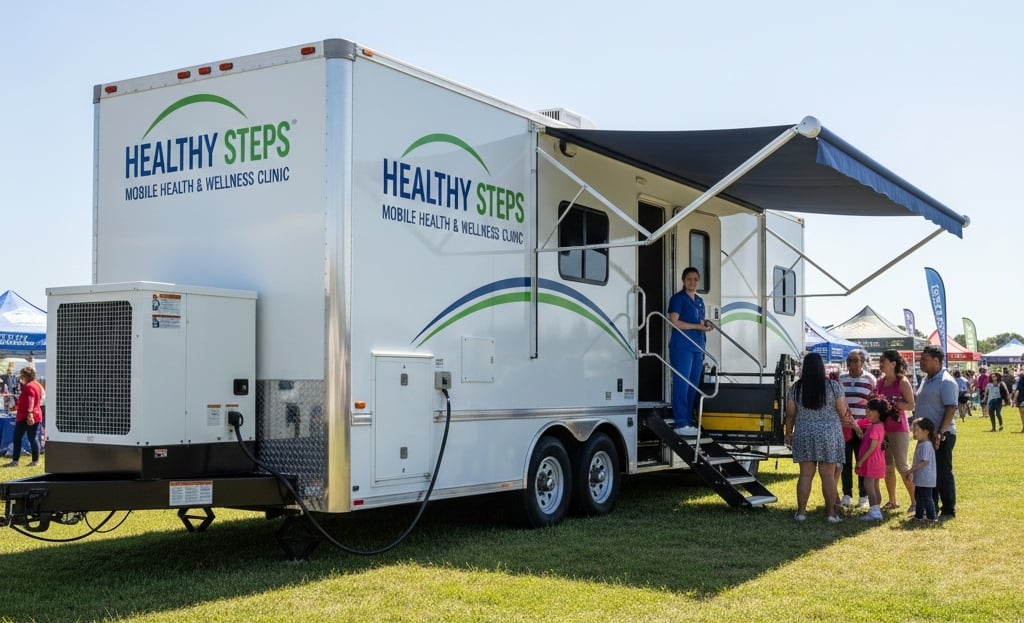
Power generation systems for mobile clinics are not just another piece of equipment. They are the backbone that keeps the entire unit alive and functional. Every element of a mobile healthcare environment—from diagnostic tools and imaging equipment to refrigeration for vaccines, HVAC systems, lighting, and communications—relies on stable, safe, and efficient energy. Without it, even the most advanced medical technology and the most skilled professionals cannot fulfill their purpose.
According to a joint report from the World Health Organization, World Bank, IRENA, and SEforALL, nearly 1 billion people are served by health‑care facilities with unreliable or no electricity—underscoring how critical dependable power is to care delivery even outside hospitals.
As healthcare providers bring services into rural communities, underserved neighborhoods, disaster recovery zones, and large-scale outreach events, power reliability becomes the deciding factor between success and failure. The unpredictability of these settings means clinics cannot afford fragile systems. They need power solutions that are resilient, compliant, and capable of delivering uninterrupted performance.
Craftsmen Industries has seen this need firsthand through decades of building custom mobile medical units. Power generation is not just about keeping the lights on—it is about enabling care, safeguarding equipment, and protecting patients.
Why Reliable Power Is Mission-Critical for Mobile Clinics
Mobile clinics exist to bring healthcare directly to patients, often in environments far removed from conventional facilities. But that mobility comes with a major dependency: self-contained electricity. Unlike hospitals, mobile units cannot rely on a utility grid as backup. Their entire operation must be sustained by onboard systems. As federal emergency guidance notes, health facilities are uniquely susceptible to outages; without power, operations can halt and even require evacuation in some scenarios.
The Real-World Risks of Power Failure
Imagine a mobile vaccination site where doses must remain refrigerated. If power fails, medicine spoils, putting the entire event at risk. Or picture a telemedicine vehicle that loses connection mid-consultation because the generator falters—patients are left without answers, and trust is shaken. These scenarios illustrate the high stakes of clinic energy failure.
In fact, CDC guidance emphasizes that vaccines intended for refrigerator storage must be maintained at 2–8 °C (36–46 °F) to preserve potency, so even short temperature excursions can render doses unusable.
Challenges Unique to Mobile Environments
Operating in the field exposes power systems to conditions permanent facilities never face. Dust, vibration, and extreme temperatures all stress equipment. Vehicle motion introduces constant wear, while off-grid locations leave no margin for error. Mobile healthcare units must therefore meet a higher standard of reliability, with systems engineered for resilience.
Research on backup generators used in mission-critical settings shows that poorly maintained diesel sets have only about a 50% chance of lasting 48 hours continuously, highlighting why design-for-reliability and maintenance matter.
The Human Impact
When a mobile clinic loses power, the ripple effects reach far beyond the mechanical failure. Patients waiting for exams or treatments may be turned away. Staff lose the ability to work safely and effectively. Communities begin to doubt the clinic’s dependability. Power interruptions compromise care delivery in ways that cannot be measured only in dollars—they erode trust and, in some cases, endanger lives.
What happens if a mobile clinic loses power during operations?
If a mobile clinic loses power, critical systems such as refrigeration, lighting, diagnostic equipment, and communication tools shut down. This can halt care delivery, spoil medication, and create unsafe conditions for both patients and staff. Guidance for healthcare facilities underscores that outages disrupt critical services and can force costly, risky contingencies such as evacuations.
Understanding Power Needs: Sizing Your System Properly
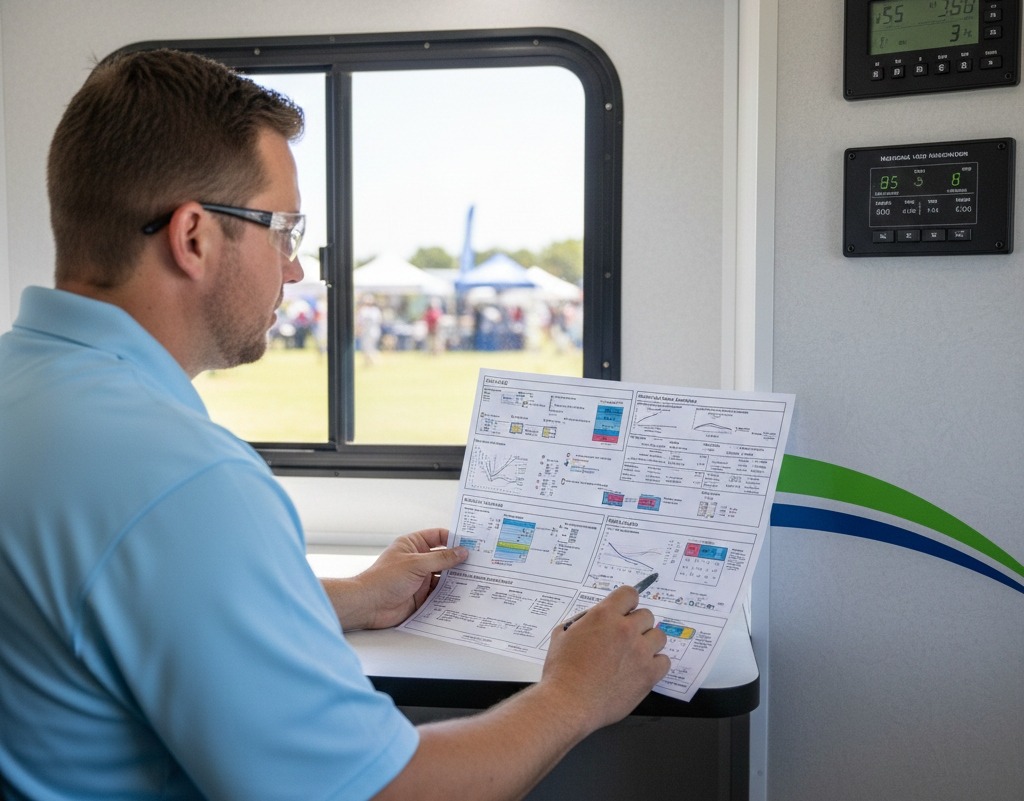
The first step in choosing a power solution is determining how much energy your clinic actually uses. Undersizing leads to outages and stress on equipment, while oversizing wastes fuel and inflates costs. Accuracy here is the foundation of a reliable system. This is backed by engineering references showing that many motors draw 6–8× their full‑load current during startup; NEMA’s locked‑rotor code framework formalizes these surge demands, which must be captured in your load analysis.
Calculating Continuous and Surge Loads
Every mobile clinic has two categories of demand. Continuous loads include the essentials that run all day—refrigeration, HVAC, lighting, and IT hardware. Surge loads come from devices like compressors, x-ray machines, or air conditioners that draw extra power when starting up. A proper load audit, usually performed with an amp load calculator or by an experienced integrator, accounts for both.
Matching System Size to Clinic Type
Different mobile clinics have very different profiles.
- Primary care trailers may operate effectively on 15–20 kW.
- Dental units with powered chairs, suction systems, and imaging often require 25–50 kW.
- Imaging coaches demand the highest capacities, with diesel generators sized for heavy continuous loads.
- Telemedicine units may not use as much raw power but require stability above all else, since a momentary drop can disconnect patient consultations.
Planning for Growth and Redundancy
Energy planning should not stop at current needs. Over time, clinics may add equipment or expand services. Designing with an additional 15–20 percent capacity allows for growth without forcing a complete redesign later. Redundancy is equally essential—dedicated circuits and backup strategies ensure that if part of the system fails, critical loads like refrigeration and oxygen concentrators remain powered.
Why Right-Sizing Matters
A properly sized system is about more than technical compliance. It provides confidence to staff and security for patients. When the power supply is matched to actual needs with room to grow, operators can focus on care delivery instead of worrying about whether the generator can keep up.
How is my mobile clinic generator the right size?
A load analysis performed by an experienced system integrator is the best way to confirm. It measures continuous and surge demands, accounts for clinic type, and ensures capacity for future expansion.
Types of Power Generation Systems for Mobile Clinics
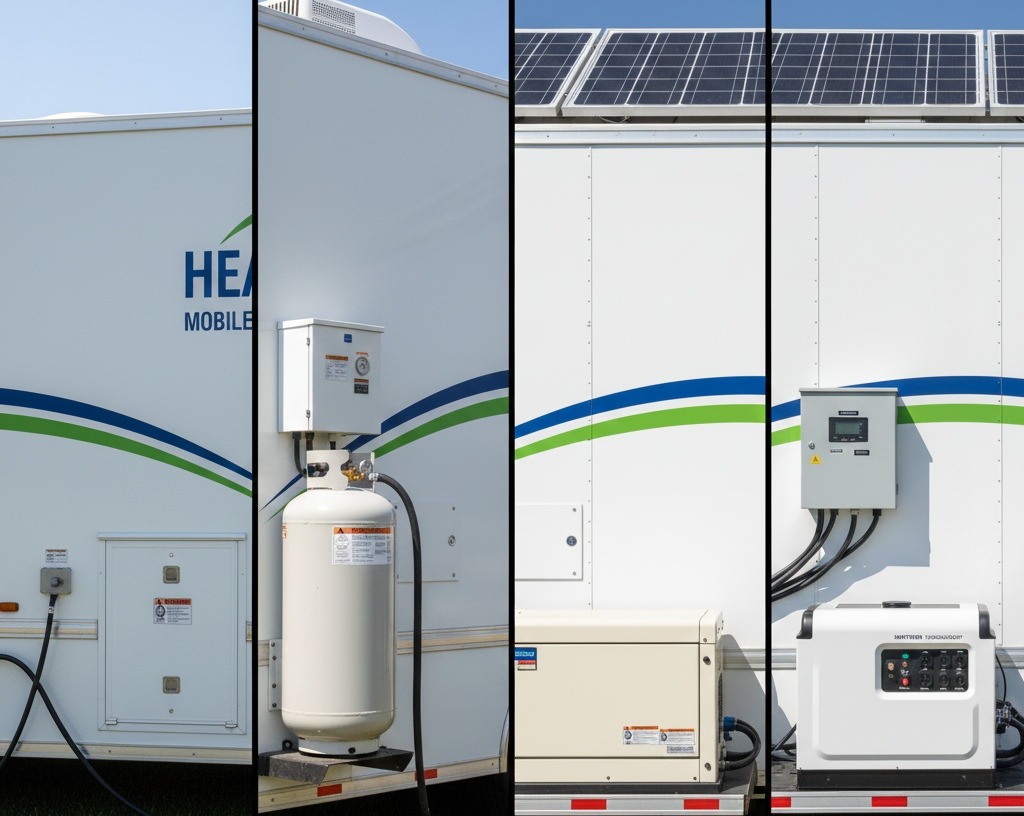
Once power requirements are precise, the next step is selecting the type of power generation system. Each option comes with trade-offs in cost, fuel efficiency, noise, and emissions. Regulatory standards such as the U.S. EPA’s Tier 4 nonroad diesel rules—which reduce exhaust emissions by >90% versus earlier tiers—and California’s CARB Portable Engine ATCM strongly influence generator choice and aftertreatment requirements.
Diesel Generators
Diesel remains the workhorse of mobile healthcare. Known for durability and long runtime, diesel units are often the standard for large clinics or imaging trailers. While historically noisy and emission-heavy, modern models meet stricter standards and incorporate noise-reduction features.
Gasoline Generators
Gasoline units are smaller, lighter, and less expensive up front, which makes them suitable for outreach clinics or temporary events. However, they consume more fuel, require more frequent refueling, and are less efficient for extended operations.
Propane Generators
Propane burns cleaner than diesel or gasoline and produces less noise. These systems are attractive in urban or residential deployments where emissions and sound carry weight. The challenge lies in fuel logistics, since propane tanks require careful storage and handling.
Solar and Hybrid Systems
Solar is becoming a valuable supplement to conventional power. Roof-mounted panels can offset fuel use and reduce noise. When paired with battery banks and a backup generator, hybrid systems combine sustainability with reliability. They are particularly effective in off-grid or long-term deployments. Case studies show solar‑plus‑storage can extend fuel supplies and, in some contexts, displace over 100,000 gallons of diesel per year—for example, the Ta’u island microgrid.
Inverter Generators
Inverter technology produces stable, clean electricity with minimal noise. These generators are ideal for telemedicine vehicles or patient-facing environments where quiet operation and sensitive equipment compatibility are priorities. Their capacity, however, is more limited than that of larger diesel units.
Comparing Generator Options
|
Power Source |
Advantages |
Limitations |
Best Use Case |
|
Diesel |
High capacity, durable, long runtime |
Louder, higher emissions |
Imaging trailers, large diagnostic units |
|
Gasoline |
Low upfront cost, lightweight |
Less efficient, shorter runtime |
Small outreach clinics, short deployments |
|
Propane |
Cleaner emissions, quieter |
Requires secure tank storage |
Urban or residential clinics |
|
Solar Hybrid |
Sustainable, low emissions, reduced fuel use |
Higher initial investment, weather-dependent |
Off-grid or long-term field use |
|
Inverter |
Quiet, clean, safe for sensitive equipment |
Limited size options |
Telemedicine or patient-focused units |
What is the best generator type for mobile clinics?
The right type depends on your mission. Diesel supports large loads, while hybrid systems offer long-term efficiency for off-grid operations. Inverter and propane models are often best for smaller, patient-facing environments.
Fuel and Energy Storage Strategies
A power generation system is only as strong as its fuel and storage plan. Without careful planning, even the most advanced generator can fall short. Research from national labs shows lithium‑ion storage is widely deployed because of its favorable energy density, reliability, and falling costs—and, crucially, batteries can bridge outages and reduce generator runtime in hybrid designs.
Managing Fuel Logistics
Fuel tanks must balance capacity with safety. A tank too small forces constant refueling, while an oversized tank may create unnecessary hazards. Clinics must also consider availability—diesel is accessible in most regions, while propane may be harder to source in rural or disaster-affected areas.
Battery Storage for Quiet Operation
Modern lithium-ion batteries have transformed energy storage. Their higher energy density, long lifespan, and reduced maintenance make them ideal for mobile applications. Properly sized battery banks allow clinics to run silently during patient visits, reducing both noise and emissions. They also provide seamless continuity when transitioning between power sources.
Hybrid Integration for Flexibility
The most resilient systems combine fuel and renewable energy. Solar panels can charge battery banks during the day, reducing generator runtime. Intelligent battery management systems then ensure power flows smoothly across sources. The result is lower fuel costs, extended equipment life, and uninterrupted care. As a matter of fact, this is even backed by Analyses of hybrid microgrids, which show improved reliability and reduced lost load versus diesel‑only approaches
Can a mobile clinic run entirely on batteries?
For short durations or low-load situations, batteries may be sufficient. Most full-scale clinics, however, require hybrid setups that combine batteries with generators or solar for dependable long-term performance.
Noise, Emissions, and Environmental & Regulatory Requirements
Mobile healthcare is about healing, and that means respecting both patient comfort and community well-being. Power systems must operate within limits on sound and emissions while maintaining safe conditions for staff and patients. WHO’s environmental noise guidance highlights the health and communication impacts of excessive sound in care settings, reinforcing the value of quiet equipment and acoustic controls
Controlling Noise for Comfort and Trust
In healthcare settings, excessive generator noise is more than an annoyance—it undermines communication, distracts staff, and creates discomfort for patients. In neighborhoods, loud equipment can also damage community relationships. Solutions include inverter technology for quieter operation, acoustic housings that enclose generators, and strategic equipment placement away from waiting or exam areas. These steps not only ensure compliance with local noise ordinances but also create a calmer atmosphere inside and outside the clinic.
Meeting Emission Standards to Protect Air Quality
Air quality regulations play a critical role in generator selection. EPA Tier 4 standards require reductions in particulate matter and nitrogen oxides. In some states, CARB rules impose even stricter limits. Compliance often involves cleaner fuels, diesel particulate filters, catalytic reduction systems, or alternative energy integration. Clinics that adopt these measures not only avoid penalties but also strengthen their reputation as responsible healthcare providers.
Exhaust and Ventilation for Safety
Even compliant generators produce carbon monoxide, which must be managed carefully. Exhaust must be routed away from doors, windows, and waiting areas, while enclosures should provide consistent ventilation to prevent overheating and fume buildup. Well-ventilated housing ensures both safety and performance.
CDC safety bulletins repeatedly warn that generator exhaust can cause lethal CO exposures without adequate separation and airflow.
How quiet should a generator be for a mobile clinic?
Generators serving patient areas should operate below conversational noise levels. Inverter and hybrid systems often achieve this, especially when paired with acoustic housings.
Safety & Medical Compliance Considerations
Patients expect the same level of safety in a mobile unit as they would in a hospital. That means power systems must be designed and installed to meet strict healthcare codes. In practice, this translates into compliance with the NEC (Article 517 for health care facilities), adherence to NFPA 99 standards for medical electrical systems, and verification that generators are certified under UL 2200.
Electrical Codes and Standards
The National Electrical Code (NEC) governs wiring, grounding, and fireproofing practices. Mobile clinics must adhere to these standards just as permanent facilities do. In confined spaces, where staff and patients work near electrical equipment, correct installation is critical.
NFPA and UL Standards: Safeguarding Care
NFPA 99 sets requirements for electrical isolation and redundancy in healthcare facilities, while UL 2200 certifies that generators meet rigorous safety and performance tests. Together, these standards ensure equipment is protected from surges and patients are never exposed to unsafe conditions.
Redundancy for Critical Loads
Life-supporting devices such as ventilators or oxygen concentrators cannot lose power, even for a moment. Dedicated circuits, fail-safe design, and circuit isolation protect these loads. If one part of the system goes down, essential equipment continues to operate without interruption.
What codes regulate mobile clinic power systems?
Mobile healthcare power systems must comply with NEC, NFPA 99, and UL 2200 standards to ensure safe, reliable operation.
Designing for Portability, Efficiency, and Durability
Mobile clinics travel thousands of miles and operate in climates ranging from desert heat to winter storms. Their power systems must be engineered to handle these demands without compromise. Field experience and research on backup power show that installation quality, vibration control, and maintenance practices materially affect generator reliability over multi‑day events
Portability and Secure Mounting
Generators in motion face vibration, sharp turns, and road impacts. Secure mounting with heavy-duty dampers prevents wear and extends system life. Custom enclosures provide added protection from debris and weather while allowing easy maintenance access.
Efficiency in Limited Space
Inside a clinic, space is always at a premium. Compact, multi-functional systems that integrate with HVAC and insulation maximize utility without crowding patient areas. Smart layouts and noise insulation also improve staff workflow and comfort.
Built for Durability in Harsh Conditions
Mobile units must withstand extreme environments. Generators and batteries require corrosion-resistant components, thermal protection, and enclosures that can withstand dust, humidity, and cold. A rugged design ensures continuous operation no matter where the clinic deploys. In cold climates, fuel quality and conditioning matter; federal and state guidance describes using winter‑grade No. 1 diesel and other strategies to mitigate fuel gelling.
How are generators installed in mobile clinics?
Generators are mounted in custom enclosures with ventilation, vibration dampers, and access points for routine service, ensuring both durability and ease of maintenance. Hazard‑mitigation and generator job aids outline environmental and technical review checklists that mirror these best practices.
Final Checklist and How Craftsmen Industries Can Help
Before investing in a power system, review these essentials:
- Calculate continuous and surge loads.
- Choose a generator or hybrid system suited to your clinic type.
- Plan fuel logistics and storage strategies.
- Verify compliance with NEC, NFPA, and UL standards.
- Design for portability, durability, and space efficiency.
- Evaluate lifecycle costs, not just upfront price.
Craftsmen Industries specializes in turnkey power solutions for mobile healthcare. Our engineering and fabrication teams build systems tailored to each clinic’s mission, integrating seamlessly into trailers, coaches, and specialty units. From initial analysis through installation and training, we provide confidence that your clinic will deliver care wherever it is needed.
Powering Your Mobile Clinic with Confidence
Mobile healthcare cannot operate without a strong energy backbone. By carefully sizing your system, selecting the right generator type, planning fuel and storage strategies, and meeting safety and compliance standards, you create a foundation that protects both your investment and your patients.
Craftsmen Industries has decades of experience outfitting mobile medical units with custom power generation systems built for reliability, efficiency, and compliance. Whether your clinic requires rugged diesel capacity, hybrid flexibility, or renewable integration, our team delivers solutions tailored to your mission. Contact us today to learn how we can power your clinic with confidence and help you provide care without compromise.
Frequently Asked Questions
What is the quietest power option for a mobile clinic?
Hybrid systems are often the quietest, allowing the clinic to operate on silent battery power for extended periods. Generators only activate as needed to recharge.
Can solar panels alone power my entire mobile clinic?
No. Roof space limits solar output, making it impractical as a sole power source. Solar works best as part of a hybrid system with batteries and a generator.
What is the difference between an RV generator and a medical-grade generator?
Medical-grade generators meet stricter standards for emissions, continuous duty, and clean sine wave output to protect sensitive equipment. They also integrate into systems that comply with healthcare codes such as NFPA 99.
How does the weather affect generator performance?
Hot weather can reduce output and requires strong ventilation. In cold weather, diesel fuel may need heaters to prevent gelling. Enclosures must also be weatherproof to guard against snow, rain, and dust.
Why is professional installation necessary?
Professional integration ensures compliance, safety, and balance within the vehicle. Proper grounding, wiring, ventilation, and secure mounting extend equipment life and prevent costly failures.
Filter Posts by Tag
related posts

Explore a variety of different tricks and tips for utilizing your building more effectively and enlarging usable space without huge renovation expenses.
Mobile pharmacy vehicles bring prescriptions and health services to underserved areas, improving access, patient safety, and healthcare equity.
How is the waste disposal managed on a mobile medical coach? Read this article to discover the best practices for disposing of medical waste from mobile units!
