
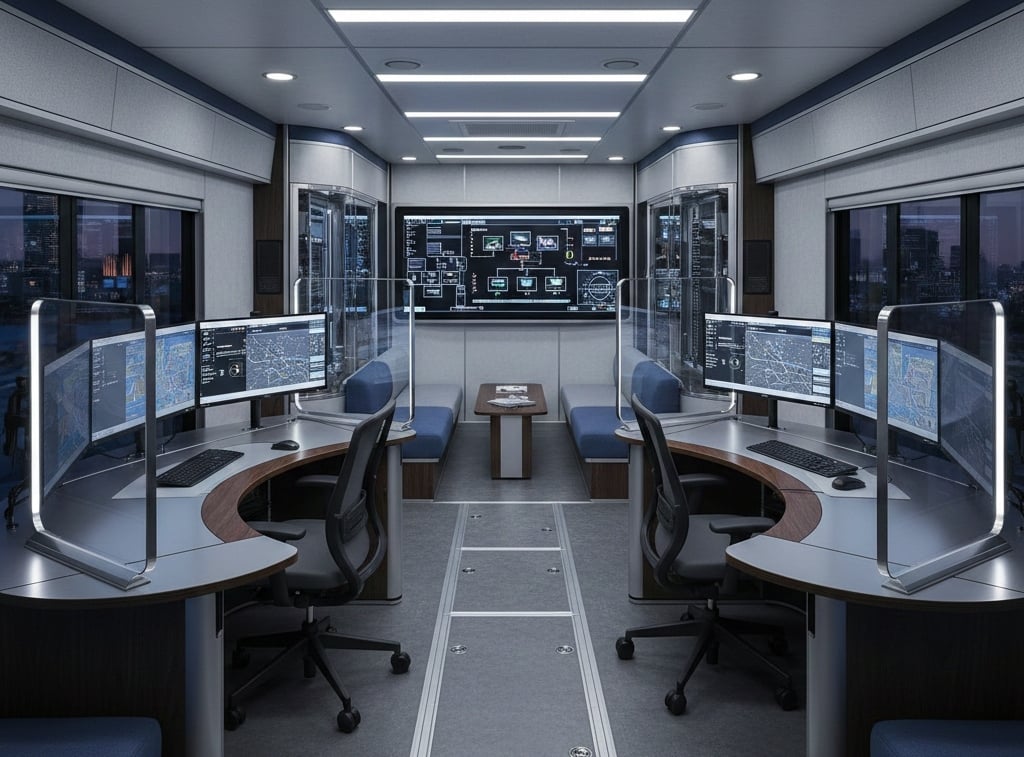
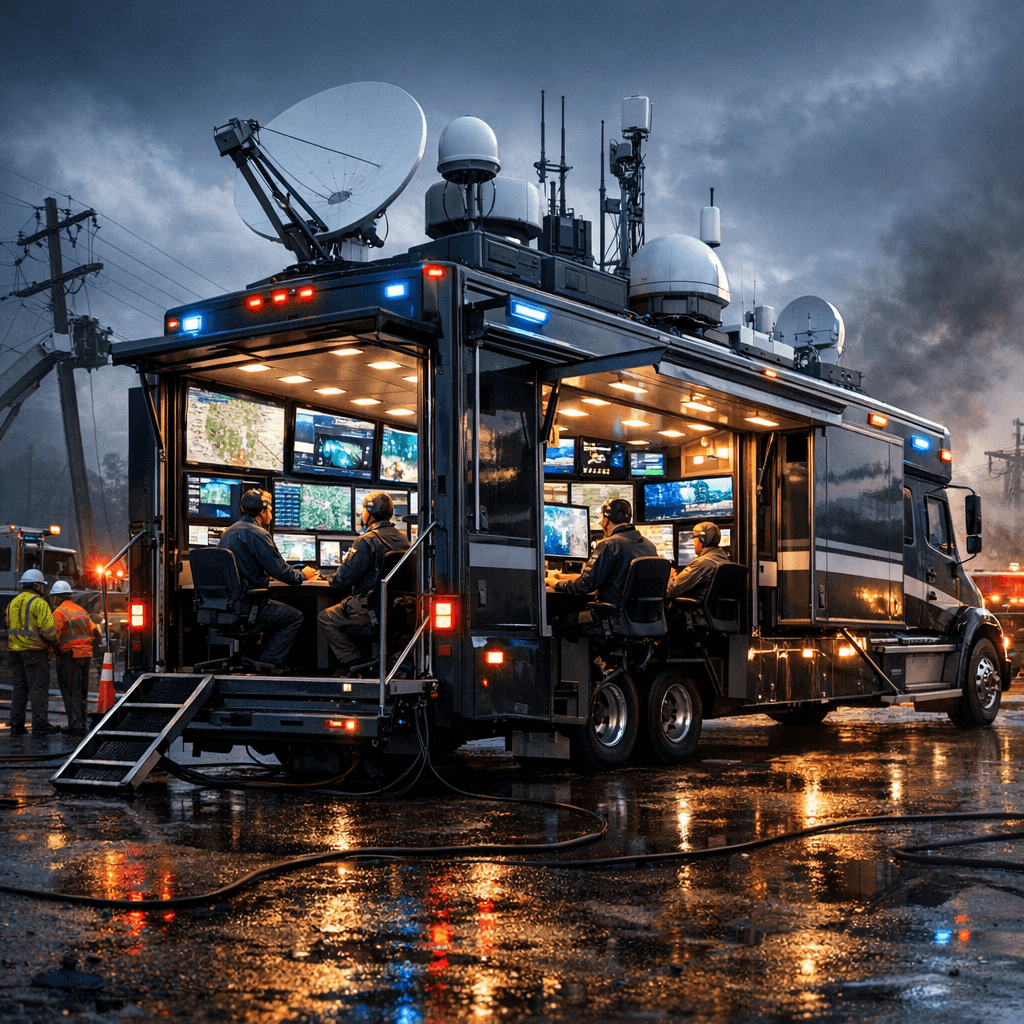
A Mobile Command Unit (MCU) is the heart of field operations, a deployable hub where real-time coordination, communication, and crisis management happen. Its success depends on the vehicle’s structure and an interior layout engineered for flexibility, workflow clarity, and rapid reconfiguration.
The U.S. Department of Homeland Security’s Science & Technology Directorate highlights tools that enable this adaptability, such as the Team Awareness Kit (TAK), the Search and Rescue Common Operating Platform (SARCOP), and the POINTER system. All designed to give commanders live tracking, shared situational awareness, and faster cross-agency coordination. These capabilities prove that modular design strengthens communication, agility, and interoperability in critical response operations.
This guide explores how modular interior layouts transform MCUs into versatile, mission-ready environments that can be reconfigured in minutes, not hours, supporting everything from tactical response to large-scale disaster recovery coordination.
Why Interior Modularity Defines Modern Mobile Command Units
A modular interior isn’t just a convenience; it’s a mission enabler. Flexible layouts let operators reconfigure spaces for changing operational requirements, from communications control to logistics management.
As stated in FEMA’s Emergency Operations Center Quick Reference Guide ,”EOC functions and activities drive design and layout considerations,” highlighting how crucial flexibility is to the success of missions.
Adapting Spaces to Mission Demands
Different missions require different interior setups. A modular layout allows partitions, desks, and storage systems to shift quickly, transforming a dispatch center into a data hub or medical coordination unit within hours. This adaptability ensures one MCU can serve multiple purposes, maximizing its operational lifespan.
Maximizing Efficiency and Team Workflow
Well-designed modular interiors improve communication and flow of movement. By optimizing layout and routing power/data connections, crews can reduce clutter and move more smoothly during high-stress operations. Each component serves a purpose, improving decision flow and reducing activation time.
Supporting Multi-Agency Collaboration
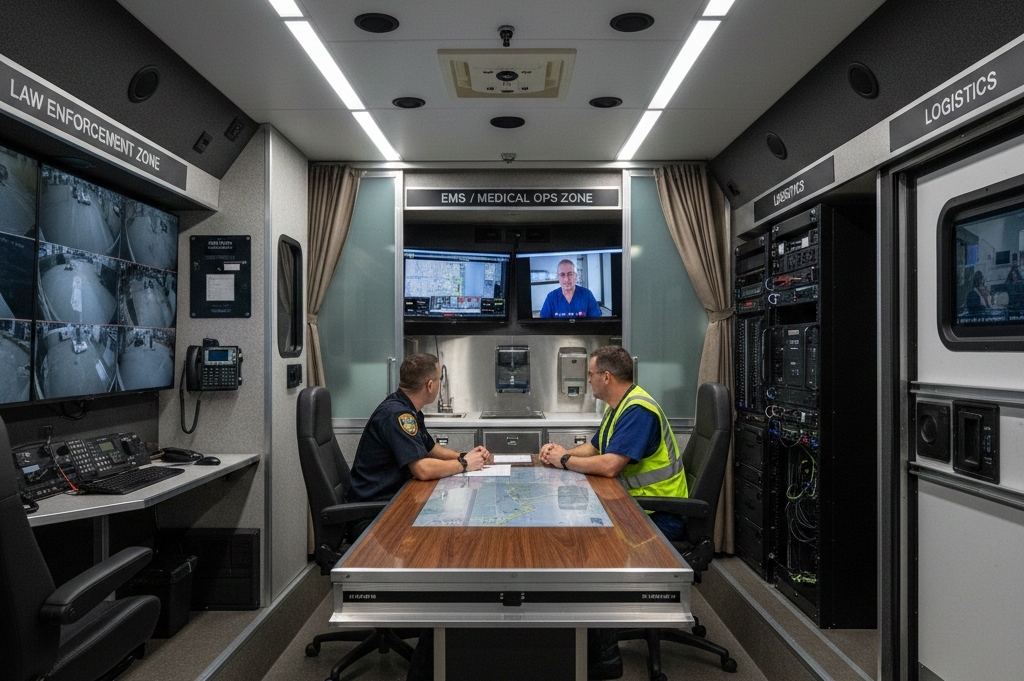
During large-scale incidents, multiple agencies often share one command environment. Modular interiors enable the creation of clearly defined zones, law enforcement, EMS, logistics, each with its own workspace and secure communication lines. This structured separation enhances focus and reduces cross-talk or confusion.
What makes modular command interiors more effective than fixed ones?
Modular interiors can be reshaped instantly to match mission goals. Fixed layouts limit adaptability, forcing teams to work around rigid spaces. Modularity ensures the workspace remains mission-driven, not layout-bound.
Core Design Principles Behind Modular Interior Layouts
Designing modular interiors requires balancing functionality, accessibility, and durability within a confined space.
Space Optimization and Flow
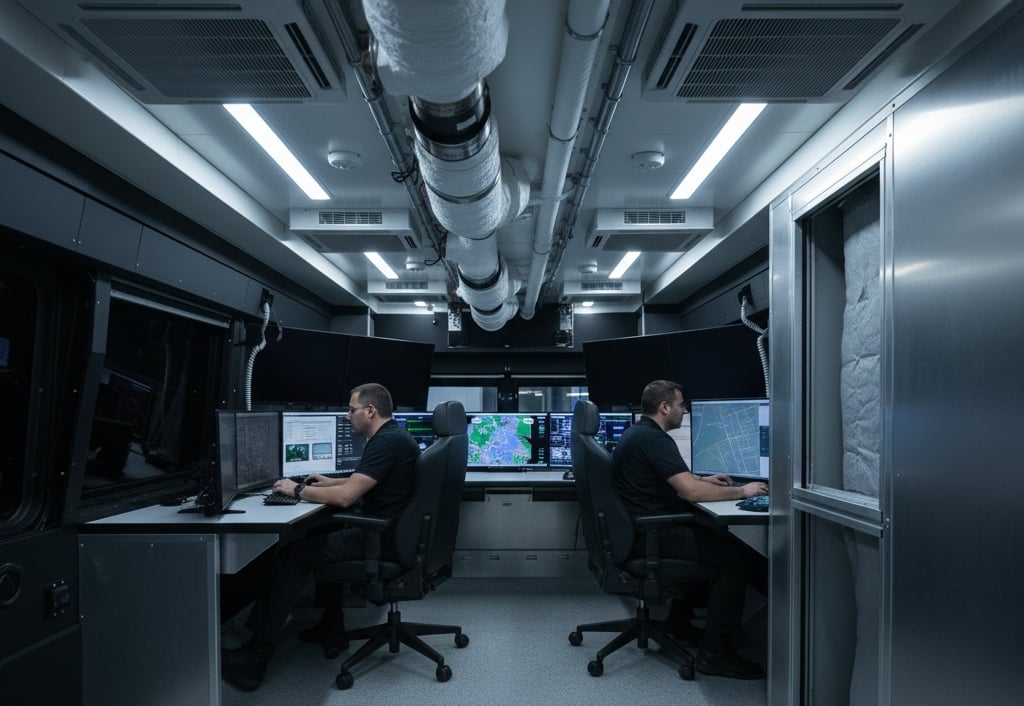
Modular interiors follow a logical sequence: command stations near entry points, communication consoles centrally located, and storage at the rear. This arrangement reduces movement time and supports faster activation.
Lightweight, Durable Materials
Materials such as aluminum alloys, composite panels, and reinforced thermoplastics provide the strength to support equipment while keeping components light for reconfiguration.
Power and Network Integration
Integrated modular cabling, power rails, and quick-connect data ports allow systems to be relocated without rewiring. This modular approach simplifies technology upgrades and maintenance.
Safety and Ergonomics
Rounded edges, secure mounts, and shock-absorbing flooring protect crew and equipment. Ergonomic workstations reduce fatigue and enhance focus during extended missions.
How long does it take to reconfigure a modular interior?
Most modular interiors can be reconfigured in under two hours, depending on unit size and system complexity. In fact, research shows that modular construction methods can reduce project time by up to 50 % compared to traditional approaches, underscoring the efficiency and flexibility that truly matter in field‑deployable systems.
Material and Construction Strategies for Modular Interiors
The choice of materials directly determines a modular interior’s strength, weight, and adaptability. Each component must balance durability with ease of reconfiguration to perform reliably in demanding field conditions.
Aluminum Framing Systems
Aluminum extrusions form the structural backbone of modular wall and furniture systems. They’re lightweight, corrosion-resistant, and designed for quick-connect joints, allowing fast assembly or relocation without specialized tools. This combination of strength and maneuverability makes aluminum ideal for mobile units that must be reconfigured frequently.
Composite Panels and Modular Walls
Composite sandwich panels deliver high stiffness-to-weight ratios while providing thermal and acoustic insulation, essential for secure communications and comfortable working environments.
Magnetic and Quick-Track Mounting Systems
Quick-track and magnetic mounting systems allow operators to easily reposition consoles, monitors, and lighting, no drilling or rewiring required. This preserves wall integrity, reduces wear, and supports ongoing layout flexibility as missions evolve.
Integrated Flooring for Cable and Power Routing
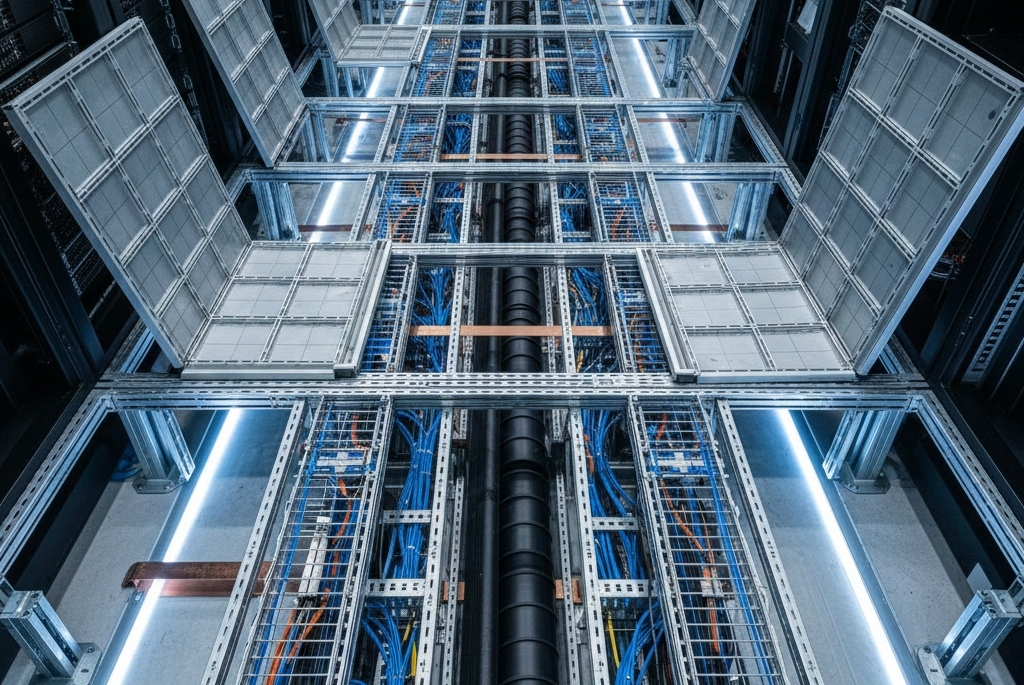
Raised or channeled flooring conceals electrical and data lines beneath the surface, enhancing crew safety while keeping maintenance access simple. Organized routing prevents cable clutter, reducing trip hazards and simplifying equipment upgrades.
What’s the best material for lightweight modular walls?
Aluminum composite panels provide the best balance of strength, insulation, and reconfiguration flexibility, making them the top choice for mobile command environments.
Technology Integration in Modular Command Units
A modular interior goes beyond layout; it embeds technology for mission success.
Scalable Communication Infrastructure
Redundant, modular communications allow systems to grow with mission needs. Patch panels and universal mounts enable quick integration of new radios, servers, or satellite uplinks.
Smart Environmental Controls
Modular ducting and sensors automatically regulate airflow and climate, protecting sensitive electronics from heat and humidity.
Lighting and Power Management
Smart LED strips, touch panels, and modular power hubs enable crews to instantly adapt lighting and energy to mission requirements.
Data Security and System Redundancy
Secure enclosures shield critical electronics from shock and tampering. Built-in redundancy ensures communication uptime even if one component fails.
Can modular interiors support future technology upgrades?
Yes. Modular systems are designed for scalability, allowing integration of new communication, AI-based monitoring, or renewable energy modules without structural changes.
Advantages of Modular Interior Design for Operations
Modern response operations demand speed, adaptability, and efficiency. Modular interiors give agencies the flexibility to deploy faster and operate smarter.
Rapid Deployment and Setup
Pre-built modular systems shorten deployment time. Each module, workstation, console, or rack is designed for plug-and-play installation, allowing full activation within hours. Faster setup means faster decision-making.
Cost and Maintenance Efficiency
Interchangeable components reduce the downtime and cost of the MCU. Damaged modules can be replaced individually without removing the entire system, extending the life of each unit.
Adaptability for Multi-Mission Use
A single modular MCU can transform for law enforcement, emergency response, or medical triage. This adaptability maximizes return on investment and keeps the fleet in use year-round.
Enhanced Safety and Crew Comfort
Ergonomic configurations, rounded corners, and optimized lighting minimize fatigue and enhance situational focus. Anti-slip flooring and proper spacing maintain safety during motion or high-traffic operations.
Do modular interiors require special maintenance?
Not typically. Routine checks of connectors and mounting systems ensure long-term reliability with minimal upkeep.
Designing for the Future: Scalability and Sustainability
Future-ready command units must evolve alongside technology and environmental priorities.
Sustainable Material Selection
Recyclable metals, modular plastics, and low-emission coatings reduce environmental impact and weight, improving fuel efficiency and extending service life.
Modular Upgradability
Modular layouts allow future systems integration, from renewable energy units to next-generation satellite or AI modules, without redesigning the entire vehicle.
Long-Term Operational Flexibility
As mission requirements evolve, modular interiors allow easy reconfiguration of seating, systems, or layouts. Instead of replacing vehicles, agencies can upgrade individual modules, reducing waste and maintaining readiness.
How does modular design support sustainability?
By allowing upgrades and replacements at the component level, modular systems minimize waste, reduce lifecycle costs, and extend operational lifespan.
Build the Future of Mobile Command Centers Through Modular Design
The future of mobile command centers depends on adaptability, inside and out. Modular interior layouts blend engineering precision with operational intelligence, giving agencies flexibility to evolve without costly rebuilds.
At Craftsmen Industries, every element, from structure to interior, is engineered for performance, mobility, and durability. With decades of experience in custom fabrication and mobile command center engineering, our team delivers modular environments designed to perform in the most challenging conditions.
Whether your mission requires tactical readiness, emergency response, or advanced communications, Craftsmen Industries builds solutions that keep your team connected and mission-focused.
Contact us today to start designing your next modular mobile command center.
Frequently Asked Questions
How big is a standard mobile command unit interior?
Depending on mission complexity and crew capacity, typical MCUs range from 20 to 53 feet.
Can modular interiors include sleeping or medical areas?
Yes. Modular systems can incorporate bunks, medical bays, or hygiene modules without sacrificing workspace.
What’s the ideal crew size for a modular command unit?
Most units accommodate 4-12 operators, depending on mission type and interior layout.
How often should modular connections be inspected?
Basic visual inspections every six months and detailed checks annually are recommended.
Are modular interiors compatible with armored vehicles?
Yes. Modular systems can be integrated into armored platforms, balancing protection with interior flexibility.
Filter Posts by Tag
related posts
Look at the different situations command centers are used for and what task-specific command centers are called. Click now to learn more.
A mobile command center is a special-purpose vehicle that provides [...]
Optimize performance and durability in mobile command centers with smart material choices. Balance strength, weight, and protection for mission-ready efficiency.
