
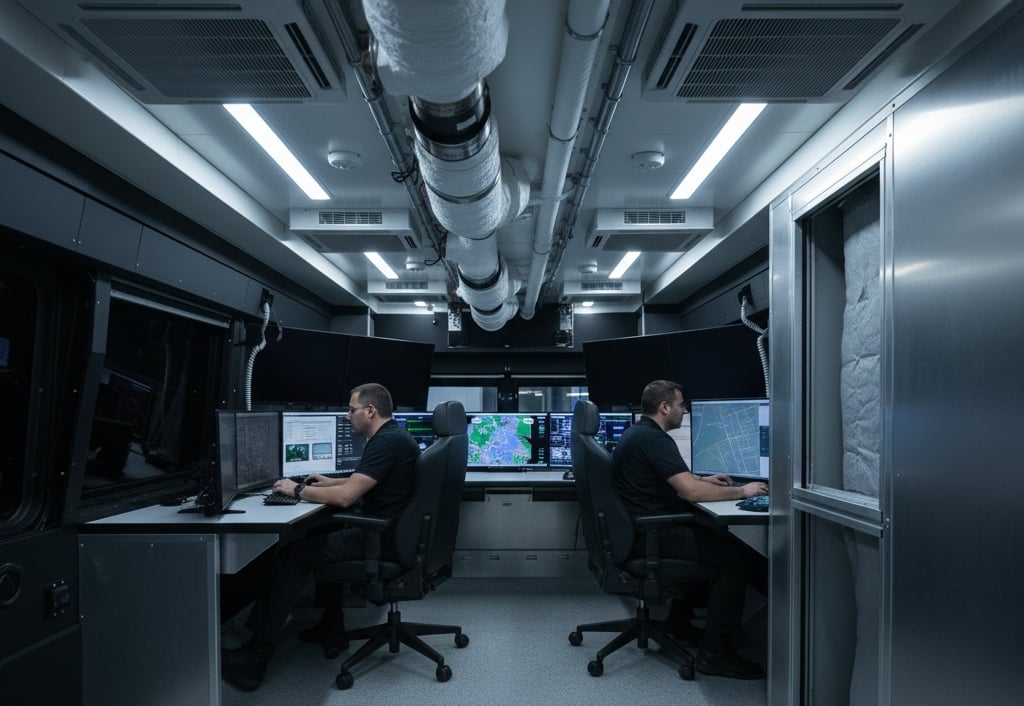
Mobile Command Centers (MCCs) are the backbone of field coordination, sophisticated hubs that support emergency response, defense operations, and critical communication during high stakes missions. Their reliability and effectiveness depend heavily on the materials that form their structure. From aluminum alloys to composite frameworks, the choice of materials directly influences how well these command units perform under pressure, resist environmental stress, and deploy when time matters most.
In today’s demanding field environments, engineers must strike a precise balance between strength and weight. The right combination delivers structural integrity, mobility, and long term durability without sacrificing operational flexibility. In fact, the U.S. Department of Energy reports that a 10% reduction in vehicle weight can improve fuel economy by about 6-8%, a real-world gain that matters for deployment range, operating costs, and payload capacity.
This article explores how material selection shapes the performance of modern mobile command centers and how emerging fabrication technologies are redefining the limits of mobility and resilience.
The Role of Materials in Modern Mobile Command Centers
Every mobile command center begins with a single question: what materials can deliver strength without compromising mobility? The answer determines everything from payload capacity and insulation to safety and energy efficiency.
Why Material Choice Defines Mission Capability
The materials that make up a command center dictate how well it can carry equipment, withstand road vibration, and handle harsh climates. Overly rigid or heavy structures limit relocation speed and fuel efficiency, creating operational bottlenecks.
Lightweight materials such as aluminum alloys and reinforced composites enable faster deployment and more flexible layouts. This balance directly improves mission capability, allowing the vehicle to transport more critical systems without exceeding weight limits.
Strength versus Weight: Finding the Right Balance
In any engineered structure, there’s a trade-off between strength and mobility. Heavier materials may provide rigidity but can slow deployment and reduce handling stability. Lighter options improve maneuverability, but must still deliver the toughness required for rugged conditions.
Why Mobility Depends on Structural Engineering
A command center’s ability to move quickly through urban or off-road environments depends on how weight is distributed and absorbed. A lighter, balanced chassis ensures smoother rides, reduced wear on components, and faster field setup.
Aluminum alloys, often used in aerospace and defense, offer excellent tensile strength while reducing total vehicle mass. Advanced composite panels further decrease weight while maintaining fatigue resistance, making them ideal for walls, roofs, and flooring systems.
Strength Comes First: Building a Foundation That Lasts
Strength defines the foundation of a mobile command center’s performance. It ensures the structure can carry heavy payloads, withstand constant motion, and protect onboard equipment from mechanical stress.
Structural Integrity and Load Distribution
The frame and chassis act as the command center’s skeleton. Every component—from generator mounts to satellite towers, depends on their ability to bear load evenly. Engineers reinforce key joints and stress points to prevent twisting, flexing, or fatigue cracks during transport.
High-tensile steel reinforcements and heat-treated aluminum beams are often used where maximum load-bearing capacity is required. Together, they create a balance between endurance and adaptability.
Key Structural Forces: Tensile, Compressive, and Shear
Every mobile command center faces multiple types of stress during operation:
- Tensile stress resists stretching as the vehicle moves across uneven terrain.
- Compressive stress prevents buckling under roof-mounted or interior loads.
- Shear strength ensures connected panels don’t slip or distort under vibration.
Engineers design for all three, using materials that retain form and strength after repeated cycles of loading, braking, and terrain impact.
Fatigue Resistance and Shock Absorption
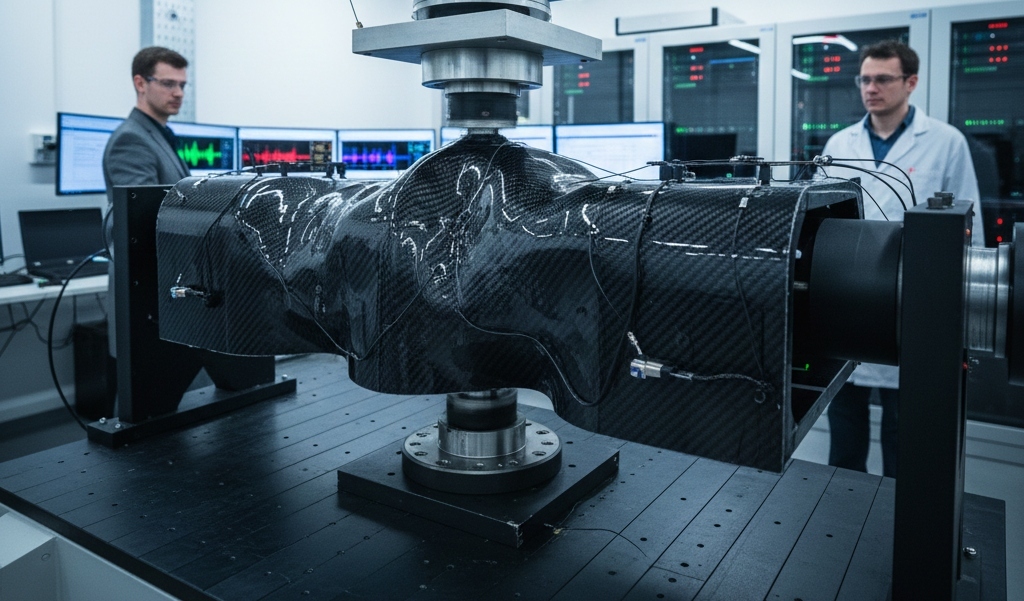
Field deployment subjects mobile command centers to constant vibration and temperature shifts. Over time, even strong metals can weaken. Materials with high fatigue resistance, such as tempered aluminum and composite laminates, maintain strength longer and reduce maintenance needs.
A 2023 study by Lei et al. found that optimizing fiber orientation in carbon-fiber-reinforced polymers (CFRPs) significantly improves fatigue life and residual stiffness under cyclic loading, making these materials ideal for vibration-intensive mobile platforms.
Shock-absorbing mounts and vibration-damping panels further extend component life, protecting sensitive electronics and ensuring mission continuity.
Reducing Weight While Keeping Safety and Performance Intact
A mobile command center must carry heavy communication, power, and data systems while remaining light enough for efficient transport. Smart material selection reduces total mass while maintaining safety.
Why Reducing Weight Boosts Efficiency
Every pound saved increases payload flexibility and improves fuel economy. Lighter structures accelerate setup and reduce wear on suspension, tires, and engines, enhancing long-term cost efficiency.
Aluminum and composite frameworks allow designers to add advanced systems, like HVAC or redundant communication units, without exceeding legal transport limits.
Weight-to-Strength Ratios and Design Optimization
The weight-to-strength ratio, or specific strength, defines how efficiently materials perform under load. Composites like carbon fiber provide high support capacity with minimal mass, while hybrid configurations pair steel subframes with aluminum exteriors for optimal balance.
Finite Element Analysis (FEA) simulations help identify reinforcement zones and optimize load paths, ensuring structural stiffness without unnecessary mass.
Materials That Define Mobile Command Center Performance
No single material can satisfy every performance need. Engineers blend metals, composites, and polymers into hybrid constructions that combine the advantages of each.
Aluminum Alloys: Lightweight and Corrosion-Resistant
Aluminum remains the most common choice for MCC fabrication due to its low weight, excellent corrosion resistance, and adaptability. Grades such as 6061 and 7075 aluminum deliver outstanding tensile strength, making them ideal for structural framing and exterior panels.
Steel: Load-Bearing and Reliable
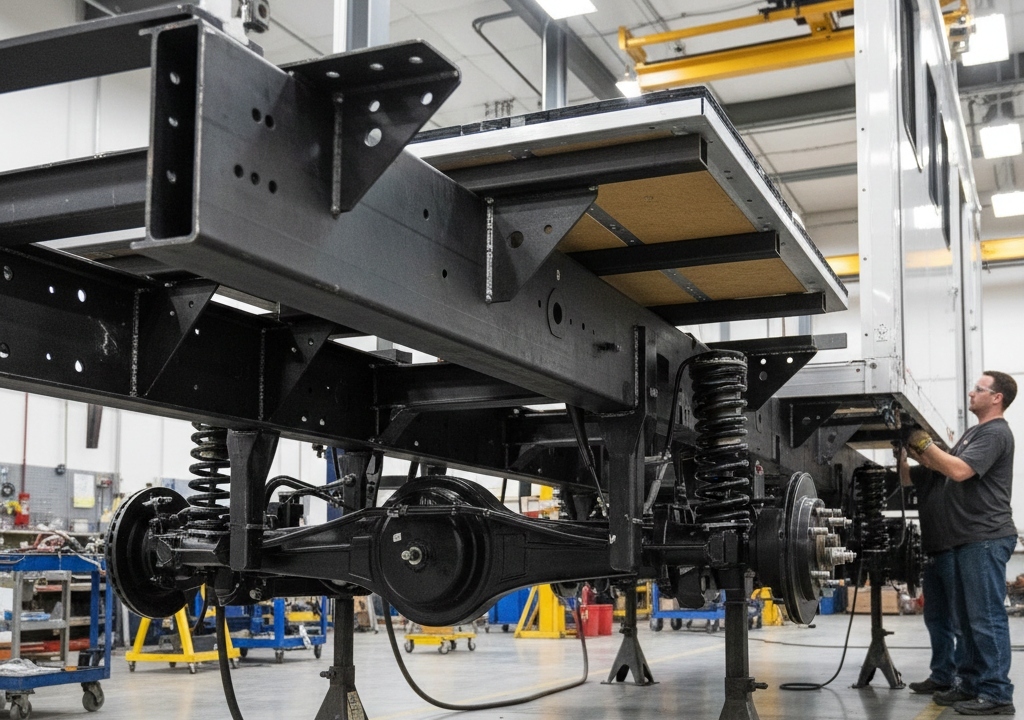
For components that face intense loads or constant vibration, like chassis rails and beam supports, high-strength, low-alloy (HSLA) steel offers unmatched rigidity and longevity. New manufacturing methods reduce unnecessary thickness without sacrificing safety.
Composites and Fiberglass: Advanced Performance
Fiberglass and carbon fiber composites add flexibility, insulation, and vibration damping. These materials are especially valuable for maintaining stable interior conditions where electronic equipment is sensitive to noise or movement.
Thermoplastics and Honeycomb Panels
Thermoplastics such as ABS and HDPE resist chemical damage and are easy to shape for modular interiors. Honeycomb sandwich panels, built from aluminum or composite cores, provide stiffness similar to solid sheets but at a fraction of the weight.
How Mobile Command Centers Withstand Harsh Weather and Tough Conditions
Mobile command centers must remain functional in extreme temperatures, humidity, and terrain. Durability directly affects mission uptime and return on investment.
Corrosion and Moisture Resistance
Marine-grade aluminum, galvanized steel, and powder-coated finishes withstand exposure to salt, rain, and humidity. Proper coating systems prevent corrosion and extend vehicle lifespan.
Temperature and UV Protection
UV-resistant coatings prevent heat buildup and surface degradation under sunlight. Reflective paints and insulating laminates protect both structure and interior climate systems.
Fire and Safety Compliance
Fire-retardant materials and coatings meeting NFPA 701 standards reduce ignition risks, ensuring personnel safety during operations involving electronics and fuel systems.
Shock, Dust, and Weather Protection
Sealed compartments, reinforced gaskets, and layered floors protect sensitive electronics from dust and vibration. This level of ruggedization ensures dependable function even during storms or off-road missions.
Designing and Building MCCs for Easy Maintenance and Long-Term Value
Material selection influences not only strength but also how quickly a mobile command center can be built, maintained, and upgraded.
Ease of Manufacturing and Repair
Aluminum and mild steel enable fast fabrication through cutting, welding, and extrusion. Modular construction allows sections to be replaced or reconfigured with minimal downtime.
Lifecycle Value
Durable and corrosion-resistant materials reduce repainting, part replacement, and maintenance costs. Lightweight designs improve fuel efficiency and extend operational lifespan.
Integration Compatibility
Modern MCCs house extensive HVAC, power, and IT systems. Materials must accommodate secure mounting, vibration isolation, and thermal management. Aluminum’s heat-dissipating qualities make it especially useful for high-power electronic enclosures.
How Materials Affect Stability, Noise, and Ride Comfort in the Field
The true test of design happens on the road. Handling, vibration, and center-of-gravity control all depend on material choices.
Maintaining Stability and Balance
Proper weight distribution prevents rollover risk and maintains traction on uneven terrain. Lightweight structural components allow equipment to be mounted lower, keeping the center of gravity safe and stable.
Noise and Vibration Reduction
Vibration-absorbing composites and acoustic insulation enhance comfort and reduce fatigue during long operations.
Ride Quality and Longevity
Stiff but resilient materials prevent frame flexing, maintaining handling precision while reducing mechanical wear over thousands of miles.
Aligning Materials with Mission Requirements
Every mission profile demands a unique combination of materials.
- Defense and Tactical Units: Favor reinforced steel and advanced composites for ballistic protection and heavy payloads.
- Emergency Response Vehicles: Use lightweight aluminum or fiberglass for fast deployment and efficient transport.
- Data or Communication Centers: Depend on materials with vibration control and thermal stability for sensitive electronics.
Matching the material palette to the mission ensures efficiency, safety, and long-term reliability.
Building the Future of Mobile Command Centers
Material innovation is reshaping the next generation of mobile infrastructure. With advancements in hybrid steel-aluminum structures, composite laminates, and modular fabrication, mobile command centers are becoming lighter, stronger, and more energy-efficient than ever before.
At Craftsmen Industries, we understand how every material decision impacts performance in the field. With decades of experience in custom fabrication and mobile command center engineering, our team delivers mission-ready solutions built for durability, precision, and speed.
Whether your mission demands tactical mobility, emergency readiness, or advanced communications, Craftsmen Industries designs mobile environments engineered for lasting reliability.
Contact us today to start building your next mission-ready command center.
Frequently Asked Questions
What are the most commonly used materials in mobile command centers?
Aluminum alloys and advanced composites are preferred for their combination of strength, corrosion resistance, and light weight.
How does material selection impact mobility?
Lighter materials reduce total mass, improving acceleration, fuel efficiency, and setup speed while minimizing maintenance demands.
Can lightweight construction still ensure safety?
Yes. Reinforced aluminum and carbon-fiber composites are engineered to absorb and redirect impact energy while maintaining structural integrity.
Which materials provide the best insulation and noise control?
Fiberglass, foam-core sandwich panels, and composite laminates provide superior thermal insulation and acoustic performance for interior comfort.
How long can a mobile command center last?
With corrosion-resistant materials and proper maintenance, high-quality MCCs can operate effectively for 10-20 years, even in challenging environments.
Filter Posts by Tag
related posts
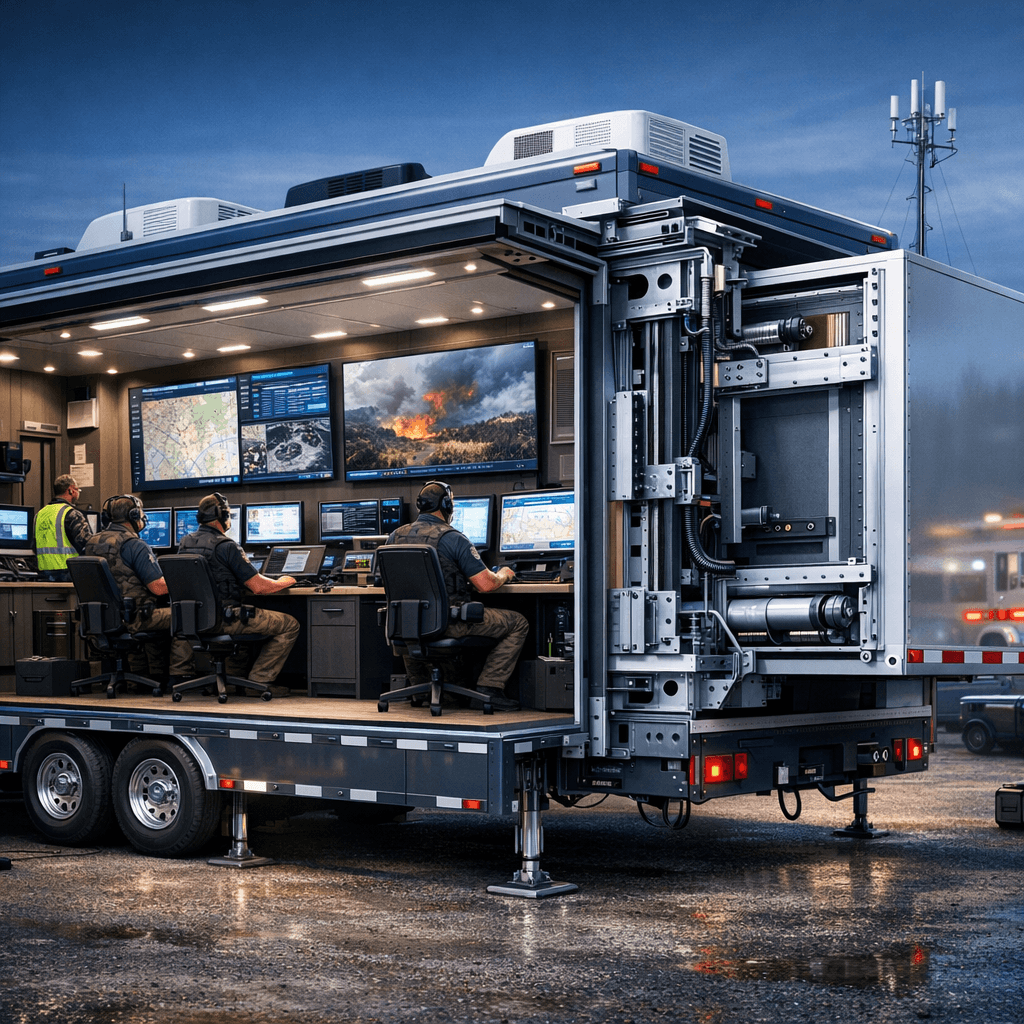
An expandable slide-out section is a retractable room segment built [...]
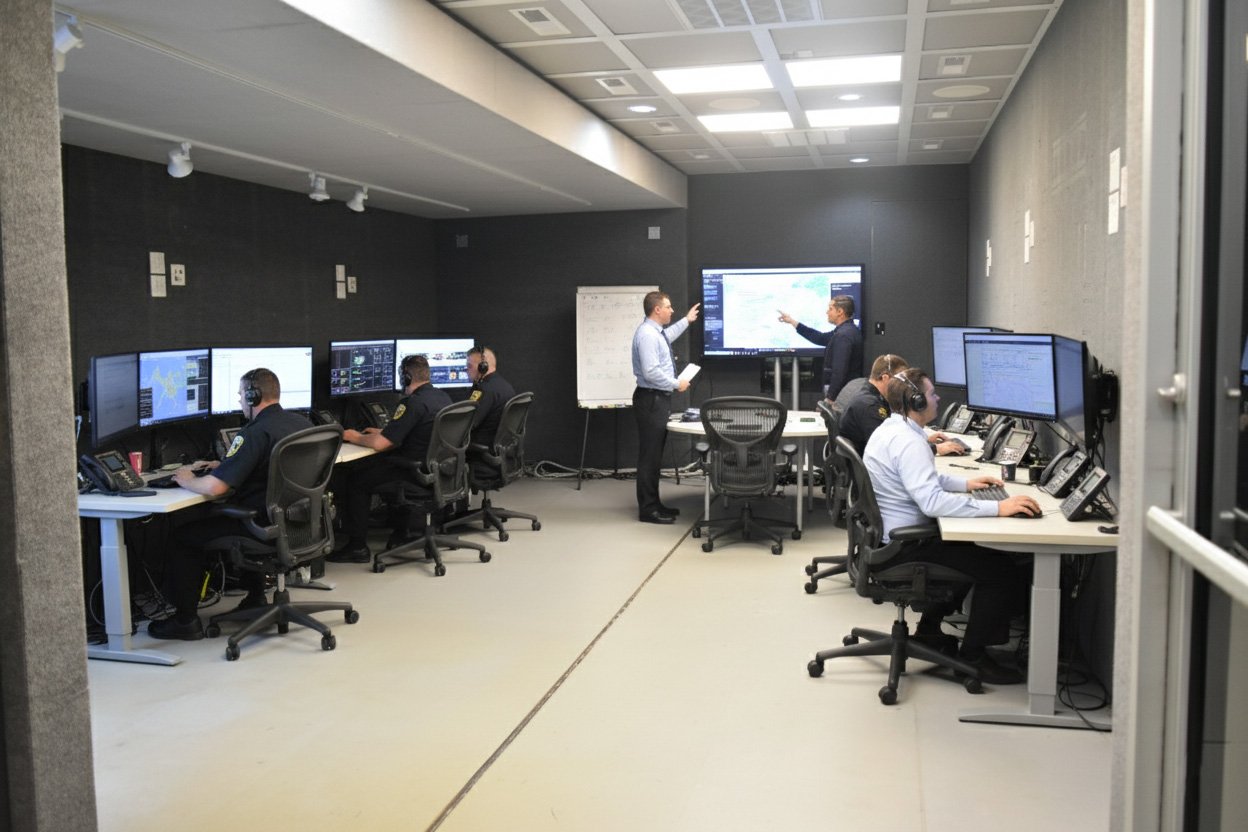
Explore how mobile command centers double as productive offices. Learn key design, technology, and ergonomic features that drive efficiency anywhere.
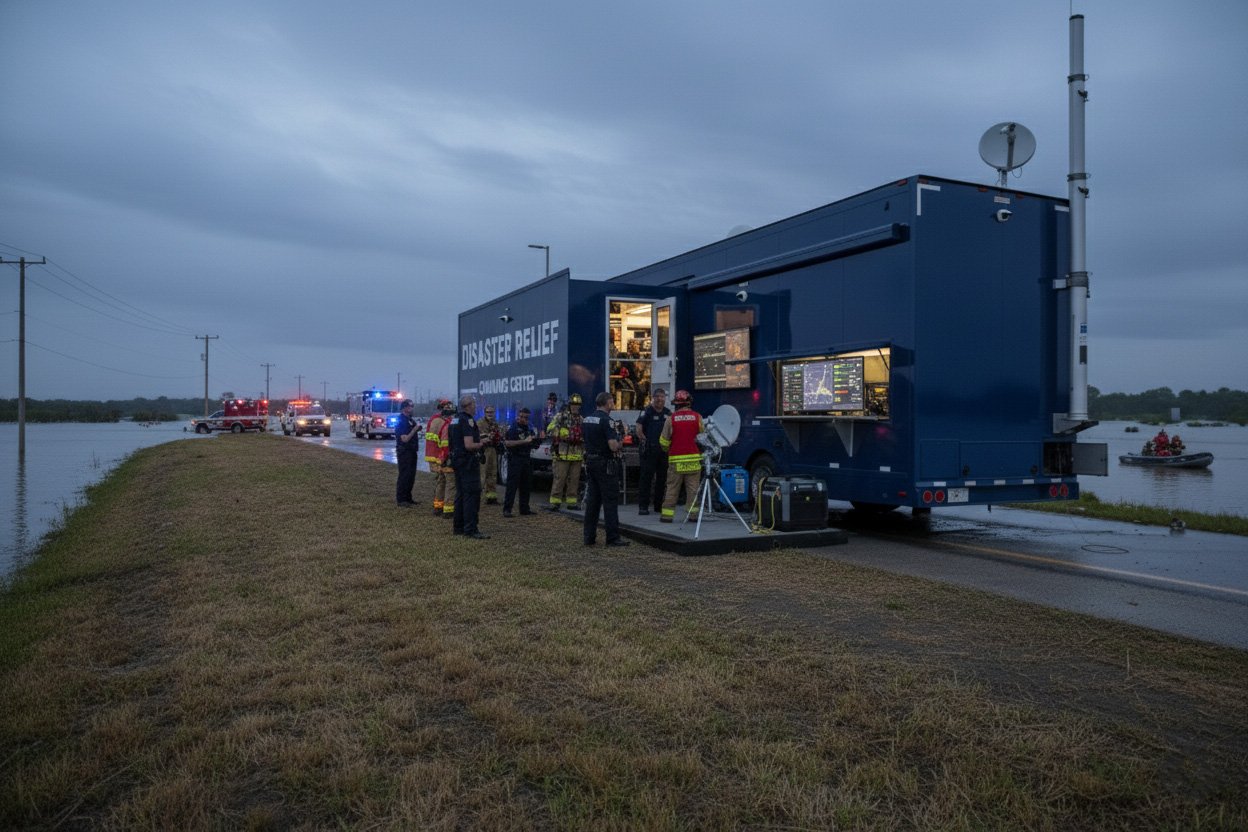
Mobile Command Trailers accelerate post-disaster recovery by restoring communication, coordinating agencies, managing logistics, and delivering medical and humanitarian support.
