
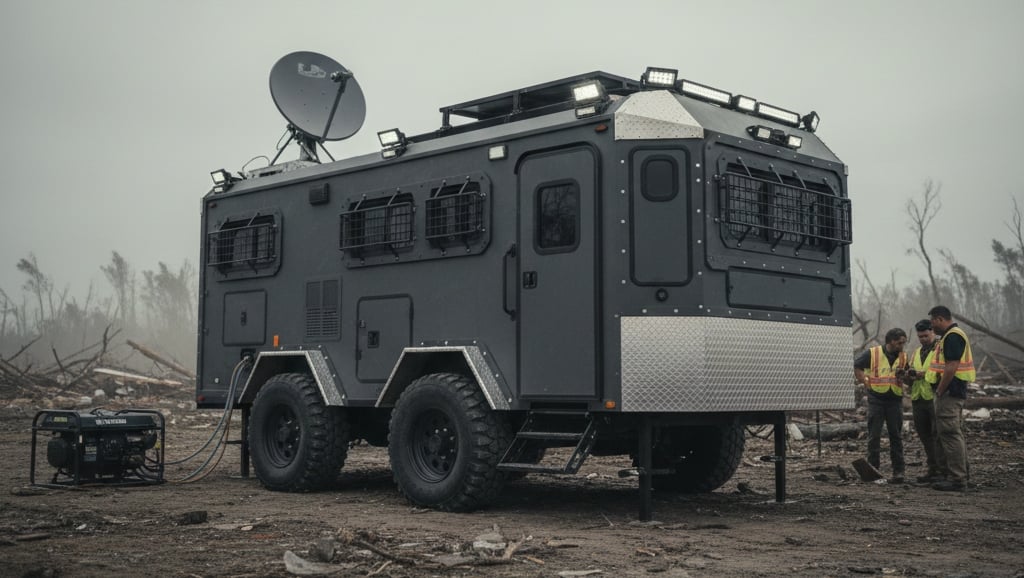
When disaster strikes, relief trailers become the backbone of emergency response, delivering aid, shelter, and medical care where it’s needed most. But their reliability starts long before deployment, with the materials used to build them. Choosing durable materials isn’t just about longevity; it’s about safety, performance, and readiness in unpredictable environments. From corrosion resistance and weight balance to thermal insulation and maintenance ease, every detail determines how effectively these trailers operate in harsh conditions.
Recent World Bank project research shows that using steel structural components for disaster shelters not only improves durability but also speeds deployment. The Multipurpose Disaster Shelter Project reported that shelters built with steel could withstand winds over 260 km/h and reduced construction time by around 25% compared to traditional builds.
In this guide, we’ll explore how to select the right materials for disaster relief trailers, ensuring strength, stability, and sustained performance when resilience matters most.
How Do Disaster Relief Trailers Withstand Extreme Environments
Disaster relief trailers are purpose-built assets designed to perform when everything else fails. They operate in chaotic, high-stress environments where access to power, clean water, and reliable infrastructure is often limited. Each material choice, from the frame to the smallest seal, directly influences the trailer’s endurance, weight, and long-term value.
To select the right materials, you must first understand the environmental, operational, and human demands these units face.
Exposure to Extreme Environments
Disaster zones bring a mix of punishing elements: hurricane-force winds, heavy rain, desert heat, or freezing temperatures. Relief trailers may sit in standing water after floods or bake under direct sunlight for weeks. In such conditions, inferior materials corrode, warp, or delaminate quickly.
That’s why professional builders like Craftsmen Industries rely on marine-grade aluminum, galvanized steel, and composite wall panels with UV-resistant coatings. These materials are engineered to handle high humidity and prevent oxidation, keeping walls rigid and frames strong. Protective coatings and sealants further block moisture intrusion, which is critical for preserving structural integrity and interior components such as electrical wiring and insulation.
Heavy-Duty Performance Expectations
Disaster relief units aren’t empty shells; they’re mobile warehouses, clinics, or command centers. A single unit can carry 3,000 to 10,000 pounds of load, including water tanks, generators, and life-saving supplies. Such heavy-duty use demands materials that combine strength with fatigue resistance.
High-tensile structural steel is often used for chassis components because it maintains rigidity under compression. Floors may feature reinforced steel cross-members topped with non-porous composite decking to handle constant loading and unloading. When these materials are precisely engineered, they prevent sagging or twisting even on uneven terrain, a must for reliable field operations.
Longevity and Low Maintenance
Emergency fleets can’t afford downtime. Trailers are expected to last 10 to 15 years with minimal maintenance, often rotated among different disaster sites. Choosing corrosion-resistant materials, such as powder-coated aluminum or zinc-plated fasteners, reduces rust formation and repair costs.
Interior finishes also matter. Using fiberglass-reinforced panels (FRP) for walls and ceilings creates smooth, easy-to-clean surfaces that resist bacterial growth, while sealed vinyl or epoxy flooring prevents moisture seepage. These features reduce maintenance frequency and speed sanitization, especially valuable for medical or food-service trailers deployed in relief operations.
Mobility and Load Management
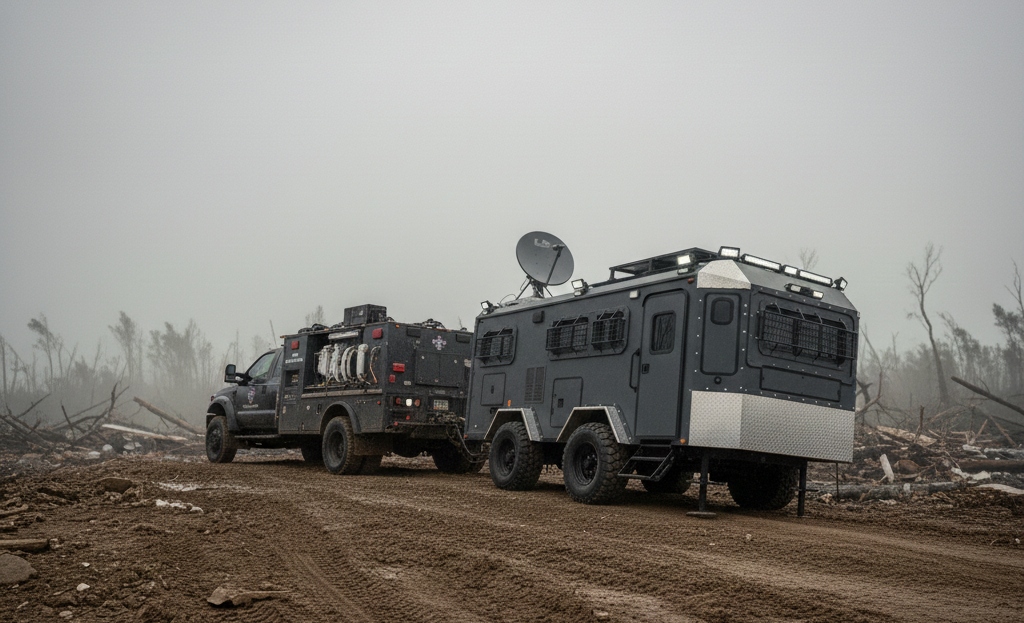
Every pound affects fuel efficiency, braking distance, and towing safety. Lightweight materials are vital, but not at the expense of durability. Aluminum alloys and composite laminates strike the right balance, strong enough to endure vibration and shock loads, yet light enough to enhance fuel economy and payload capacity.
Engineers use finite-element modeling (FEM) to analyze stress points, ensuring frames and axles handle uneven weight distribution. Balanced load management helps the trailer maintain stability on debris-covered roads, improving both safety and maneuverability during deployment.
Safety and Regulatory Compliance
Safety regulations govern nearly every part of a disaster relief trailer. Builders must adhere to DOT, FEMA, and NFPA 1192 standards that cover fire resistance, electrical safety, and occupant protection. Non-toxic insulation, flame-retardant wall panels, and anti-slip floors aren’t optional; they’re mandatory.
Craftsmen Industries integrates these compliance measures early in the design process. Their ISO 9001:2015-certified process ensures every weld, joint, and material choice meets or exceeds federal requirements. The result is a trailer that doesn’t just survive disasters but keeps responders safe while they work.
Human-Centered Design Under Pressure
Durability isn’t only mechanical, it’s operational. Relief trailers often serve as temporary command posts or triage centers where human fatigue, heat, and stress are constant. Materials that regulate temperature, reduce noise, and maintain air quality directly improve user performance.
For instance, closed-cell insulation panels minimize heat transfer, while sound-dampening composites reduce generator noise inside the cabin. Interior finishes with rounded edges and smooth textures prevent accidental injuries during fast movement in emergencies. These subtle design choices, driven by material science, translate to comfort, efficiency, and ultimately lives saved.
Sustainability and Lifecycle Value
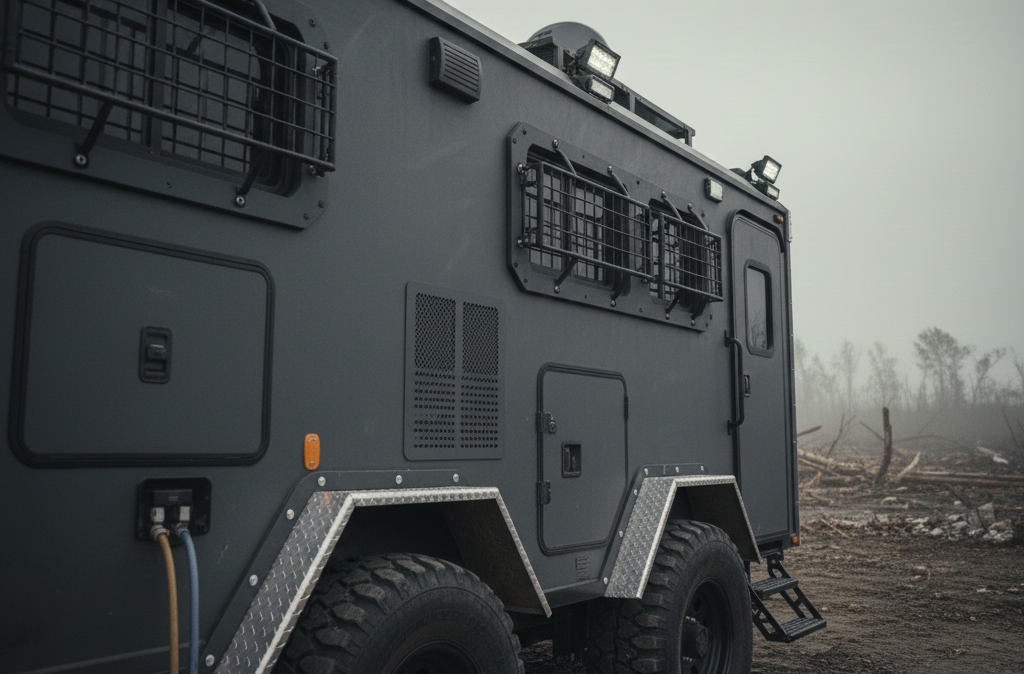
Disaster response programs increasingly evaluate environmental impact. Using recyclable materials like aluminum and thermoplastic composites reduces the carbon footprint and simplifies end-of-life recycling. Lightweight, corrosion-resistant structures also consume less fuel during transportation, lowering emissions. In long-term budgeting, this sustainable durability provides significant lifecycle savings, aligning with both environmental and fiscal responsibility.
What makes disaster relief trailers different from standard utility trailers?
Standard utility trailers are designed for controlled conditions and short-term use. Disaster relief trailers, by contrast, are engineered for extreme durability and autonomy, featuring reinforced frames, weather-sealed enclosures, climate-resistant materials, and compliant safety systems. They’re built not merely to transport cargo but to sustain operations in unpredictable, high-stress environments.
Best Materials for Building Long-Lasting Disaster Relief Trailers
The durability of a disaster relief trailer begins with the materials chosen during fabrication. Each component, frame, wall, flooring, and exterior finish, plays a vital role in ensuring resilience during deployment. Selecting the right combination of metals, composites, and coatings determines how well a trailer withstands weather extremes, transport vibration, and continuous field use.
High-Strength Metals: The Framework of Reliability
Every durable trailer starts with a solid backbone. Steel and aluminum are the primary metals used in trailer construction, each serving unique functions.
- Galvanized steel offers superior load-bearing strength and is ideal for chassis and tongue assemblies. Its zinc coating protects against corrosion even in coastal or flood-prone regions.
- Marine-grade aluminum offers an excellent strength-to-weight ratio, making it ideal for sidewalls and roof framing, where lightweight enhances mobility.
- Some advanced designs combine both steel for the base structure and aluminum for the upper body to balance rigidity with fuel efficiency.
Craftsmen Industries often uses CNC laser-cut precision and TIG welding, ensuring clean joints that maximize the frame’s lifespan while minimizing potential weak points.
Advanced Composites: Balancing Strength and Flexibility
Composite materials are redefining trailer construction. They combine multiple layers, such as fiberglass, resins, and polymer cores, to create lightweight panels that resist impact and weathering.
Fiberglass-reinforced panels (FRP) and polycarbonate laminates are two industry standards for sidewalls and ceilings. These materials maintain structural integrity even after repeated exposure to heat or moisture.
Craftsmen Industries often integrates foam-core composites with thermal insulation to maintain consistent temperatures inside the trailer. This reduces HVAC load, preserves stored goods, and increases energy efficiency in remote locations.
Composites also offer smooth, paint-ready surfaces, enabling the integration of high-quality graphics, vital for branded disaster response fleets and public identification during emergencies.
Flooring Systems: Built to Endure Weight and Wear
The flooring system carries the heaviest burden, literally. Relief trailers must support rolling carts, equipment racks, and personnel movement under constant load. Materials must therefore provide traction, water resistance, and compressive strength.
We often use marine-grade plywood subfloors coated with epoxy sealants, topped with non-slip vinyl or diamond-plate aluminum. This layered approach prevents rot, increases friction, and makes cleaning fast, important when contamination risks are high.
In high-humidity or medical environments, fiberglass composite floors offer an edge: seamless construction that prevents bacteria buildup and minimizes maintenance.
Thermal and Acoustic Insulation
Inside a disaster relief trailer, temperature control is not a luxury; it’s a requirement. Equipment, medicines, and personnel need stable conditions regardless of the outside climate.
Closed-cell polyurethane foam and extruded polystyrene (XPS) are top insulation materials due to their high R-value and moisture resistance. These foams are lightweight, fire-retardant, and easily applied within composite walls or ceilings.
Additionally, sound-dampening mats and acoustic panels reduce noise from generators or heavy machinery, creating a more functional and less stressful workspace for responders.
Protective Coatings and Finishes
Even the strongest metal fails without protection. Coatings and finishes act as the first line of defense against corrosion, UV degradation, and chemical exposure.
Craftsmen Industries applies powder coatings and polyurethane paints designed for marine and aerospace applications. These coatings create a seamless shield against oxidation while maintaining aesthetic quality for years. For trailers operating in saline or flood environments, epoxy-based primers and ceramic topcoats provide unmatched resistance.
Interior finishes like antimicrobial laminates or food-grade epoxy coatings also ensure hygiene and regulatory compliance, particularly in medical or relief kitchen units.
Fasteners, Seals, and Secondary Components
Durability isn’t only about large surfaces; small components like bolts, rivets, and seals can make or break a trailer’s longevity. Stainless steel fasteners, neoprene gaskets, and butyl sealing compounds prevent leaks and metal fatigue at joints. Craftsmen Industries engineers use vibration-tested hardware systems to ensure every connection remains secure after miles of rugged travel.
Which material offers the best balance of strength and lightweight performance for disaster relief trailers?
Aluminum-steel hybrid construction provides the ideal balance. Steel ensures load-bearing rigidity, while aluminum reduces weight and resists corrosion. Combined with composite sidewalls and sealed flooring, this hybrid build maximizes both performance and efficiency in long-term disaster operations.
Comparing Material Performance in Real-World Disaster Conditions
Durability isn’t defined on paper, it’s proven in the field. Disaster relief trailers endure relentless stress tests every time they deploy into real emergencies. From hurricanes and floods to wildfires and earthquakes, each environment pushes materials to their limits. Understanding how metals, composites, and coatings respond under these pressures helps manufacturers like Craftsmen Industries refine their engineering standards and guarantee reliability.
Heat and Sun Exposure: The UV Test
In heatwave and desert-response operations, prolonged sun exposure becomes one of the biggest threats to material integrity. High UV levels can fade colors, weaken resins, and compromise surface bonds.
That’s why high-end trailers feature UV-stabilized aluminum panels and gel-coated composite exteriors. These finishes prevent warping and oxidation while reflecting heat away from the structure. The result: cooler interiors, reduced energy consumption for air conditioning, and longer material life.
Materials like glass fiber-reinforced plastics (GFRPs), commonly used in disaster relief trailers, face significant weakening under prolonged UV exposure. In one controlled study, GFRPs exposed to 2000 hours of accelerated UV testing retained only 59–64% of their original flexural strength. This highlights the critical need for UV-stabilized coatings and finishes to preserve structural integrity and performance during extended field deployments.
Moisture, Rain, and Flood Resilience
Flood and storm zones demand absolute water resistance. Once water seeps into the core structure, rot, rust, and delamination can follow. Craftsmen Industries engineers combat this using marine-grade aluminum frames, sealed composite sidewalls, and fully welded seams that eliminate gaps.
Additionally, underbody coatings shield metal from saltwater and mud accumulation. Trailer floors are designed with drainage channels and moisture barriers, preventing trapped water from corroding inner layers.
Real-world deployments during hurricane relief efforts have shown that properly sealed composite panels maintain their integrity even after weeks of exposure to standing water, proving the long-term reliability of moisture-resistant engineering.
Cold Weather and Thermal Expansion
In freezing climates, materials contract and expand repeatedly, testing welds, joints, and seals. Steel offers unmatched rigidity but may contract more than aluminum under low temperatures. Craftsmen Industries offsets this by using flexible urethane bonding agents and thermal break systems that allow controlled movement without causing cracks or leaks.
Composite materials like fiberglass-reinforced panels (FRP) perform exceptionally well in the cold because they resist thermal cycling. Insulated flooring with closed-cell foam cores helps retain interior heat, ensuring stable temperatures for personnel, equipment, or medical storage.
Impact and Vibration Resistance
Rugged terrain and long-distance towing create continuous vibration, a silent killer for any mobile structure. Without the right materials and reinforcement, vibration can loosen joints, fatigue metal, and cause delamination.
Craftsmen Industries’ approach involves using shock-absorbing mount systems, flexural composites, and high-tensile fasteners tested for vibration resistance. In field trials, aluminum-steel hybrid frames paired with composite walls exhibit 40% less fatigue stress compared to all-steel builds, a key advantage for multi-year deployments.
Interior materials like impact-resistant polymer panels and diamond-plated aluminum floors further enhance longevity during heavy operational cycles.
Fire, Chemical, and Biological Resistance
In some disaster zones, trailers face exposure to hazardous substances, smoke, or high temperatures. Fire-retardant and antimicrobial materials are essential for both occupant safety and compliance.
Craftsmen Industries employs NFPA-rated fire-resistant panels, self-extinguishing composites, and antimicrobial coatings to minimize risk. In medical relief units, interior surfaces are finished with food-grade epoxy that resists both heat and chemical cleaning agents, crucial for sterilization after deployments.
Mobile Relief Clinics After Hurricane Response
During hurricane response operations in the Gulf Coast, Craftsmen Industries aluminum-composite relief trailers operated continuously for over 90 days in high humidity, salt exposure, and debris-filled roads. Post-deployment inspections revealed minimal corrosion and zero structural warping, a testament to the performance of hybrid-material engineering.
These real-world results reinforce the company’s design philosophy: durability isn’t about thickness or weight, it’s about material intelligence and precision assembly.
Which environmental condition causes the most long-term damage to disaster relief trailers?
Moisture and humidity are the most destructive over time. Constant exposure leads to corrosion, wood rot, and electrical failures if materials aren’t properly sealed. That’s why water-resistant metals, composite panels, and anti-corrosive coatings are vital to ensuring multi-year resilience.
What Makes Engineering Design Crucial for Trailer Material Strength
Selecting the right materials is only half the job; how those materials are engineered determines how well a disaster relief trailer performs in the field. Precision layout design, expert fabrication, and smart reinforcement techniques can multiply the strength and lifespan of every component. The best trailers combine craftsmanship with science to achieve reliability under the toughest conditions.
Structural Reinforcement and Frame Design
A strong frame is the foundation of every durable trailer. Engineers use finite element analysis (FEA) to simulate stress and load conditions and identify potential weak points before construction begins. This allows them to optimize the frame geometry, adding reinforcement only where necessary and reducing weight where possible.
Cross-member spacing, gusset plate thickness, and welded joint alignment are carefully calculated to evenly distribute stress. The result is a structure that maintains integrity under extreme loads without unnecessary bulk or metal fatigue.
Welding and Bonding for Long-Term Integrity
Traditional mechanical fasteners alone can’t ensure durability in continuous field deployment. That’s why modern trailers combine precision welding with industrial-grade adhesives and sealing agents.
Techniques like TIG and MIG welding produce cleaner joints with deeper metal fusion, while adhesives form flexible bonds that absorb vibration rather than cracking under stress. Every weld and seam is sealed using high-grade epoxy or urethane sealants to prevent air, moisture, and chemical intrusion. These bonding methods extend service life, reduce maintenance costs, and keep interiors dry even in high-humidity zones.
Protective Coating and Surface Treatment
Even the toughest steel or aluminum can degrade without protection. Surface treatments such as powder coating, anodizing, or galvanization add a defensive layer against oxidation and environmental wear.
Powder coating, for example, forms a uniform, chip-resistant finish that resists scratching and UV damage far better than liquid paint. Galvanization coats steel parts with a zinc layer that sacrificially corrodes, protecting the core metal from rust.
In addition, electrostatic painting ensures even coverage in corners and edges, where corrosion usually begins, guaranteeing consistent protection from edge to edge.
Sealing and Weatherproofing Precision
Disaster zones don’t forgive weak seals. Water, dust, or wind entering the cabin can quickly compromise both equipment and interior finishes. To prevent this, every seam, door, and window is sealed with neoprene or butyl gaskets that remain flexible under temperature fluctuations.
Double-lip weather seals around access points prevent air and moisture leakage, while roofline caulking systems protect against infiltration from heavy rain. In flood-prone deployments, elevated floor construction combined with underbody sealants prevents standing water from reaching the subframe, a crucial step for long-term trailer survival.
Smart Load Distribution and Vibration Control
Durability isn’t only about material toughness; it’s also about balance. Engineers use load distribution modeling to ensure even weight across axles, reducing tire wear and frame stress. Torsion axles, shock absorbers, and flex-mounted equipment racks minimize vibration transmission to sensitive components.
By optimizing suspension geometry and trailer balance, these techniques extend the lifespan of structural joints, flooring, and internal systems. The result is a smoother tow, quieter interior, and reduced long-term fatigue damage.
How does engineering design affect the durability of trailer materials?
Even the strongest materials can fail without proper engineering. A well-designed trailer uses precision welding, balanced load distribution, and corrosion protection to ensure every component works in harmony. Engineering design doesn’t just enhance performance; it determines whether the trailer will last five years or fifteen.
How Are Materials Tested for Disaster Relief Trailer Durability
Before a disaster relief trailer ever hits the road, its materials must be tested and validated to prove their strength. Quality control ensures that every panel, weld, and joint performs reliably under the most demanding conditions. This section explores how structured testing and inspection guarantee real-world durability and safety.
Laboratory Testing for Mechanical Strength
In the early stages of fabrication, materials undergo mechanical testing to measure tensile strength, fatigue resistance, and impact tolerance. Engineers test aluminum alloys, composites, and steel under controlled conditions to simulate real stress scenarios.
- Tensile tests reveal how materials stretch or fracture under load.
- Compression and bending tests identify weak points that could buckle under pressure.
- Impact testing checks whether surfaces can absorb shocks from debris or rough terrain.
These data points guide selection and help ensure the trailer structure won’t deform or fail when deployed in harsh environments.
Environmental and Corrosion Testing
Durability also depends on how materials withstand climate extremes. Salt-spray tests, humidity chambers, and UV exposure simulations replicate years of weathering within weeks. Steel and aluminum panels are exposed to corrosive environments to assess coating performance and oxidation rates.
By simulating real-world exposure, manufacturers can identify and eliminate materials prone to rust, delamination, or fading, ensuring trailers remain operational whether in coastal humidity, desert heat, or freezing conditions.
Field Testing and Real-World Simulation
Once laboratory evaluations are complete, full-scale field tests follow. Trailers are loaded to capacity and driven across rough terrain, gravel roads, and incline ramps to assess performance under vibration and impact stress. Thermal monitoring checks insulation effectiveness, while dynamic towing tests evaluate structural flexibility and axle stability.
These trials confirm whether design assumptions hold outside controlled settings. Field data also helps refine suspension systems, wall reinforcements, and mounting methods before mass production.
Certification and Compliance Standards
Every relief trailer must comply with national and international standards for safety and performance. Common benchmarks include:
- DOT (Department of Transportation) requirements for highway safety.
- NFPA and FEMA guidelines for emergency and disaster operations.
- ISO 9001 and ASTM material standards for manufacturing consistency and reliability.
Compliance audits verify welding quality, electrical system safety, fire resistance, and accessibility features. Meeting these standards not only builds regulatory trust but also ensures that trailers perform effectively in mission-critical situations.
Continuous Quality Control and Inspection Protocols
Quality assurance doesn’t end after assembly. Regular non-destructive testing (NDT), such as ultrasonic scanning, X-ray imaging, and dye-penetrant inspections, detects internal flaws without damaging components. Routine inspection checklists cover everything from bolt torque to door seal integrity, guaranteeing consistent performance throughout the trailer’s lifespan.
By combining laboratory, environmental, and field evaluations, manufacturers create a closed-loop system of accountability that ensures every trailer is genuinely disaster-ready.
How do manufacturers verify that trailers can withstand real disaster conditions?
They use a combination of laboratory stress tests, corrosion simulations, field performance trials, and compliance inspections. This multi-layered process ensures that every trailer component, from its frame to its coatings, meets stringent standards for reliability, safety, and long-term durability in disaster environments.
Which Materials Perform Best in Different Disaster Scenarios
Disaster relief trailers operate in extreme, unpredictable environments, and the materials used in their construction must align with the nature of each disaster. A trailer built for flood zones will have very different structural and material requirements than one for wildfire regions. Selecting the right combination of materials ensures performance, safety, and longevity, no matter the conditions.
Materials for Flood and Water-Prone Areas
In flood and storm-prone areas, moisture protection defines reliability. Trailers used in these regions are constantly exposed to humidity, standing water, and corrosive elements that can quickly degrade unprotected materials. Marine-grade aluminum and fiberglass-reinforced composites perform exceptionally well because they resist rust, mold, and water infiltration.
Floors and walls are often sealed with anti-slip and waterproof coatings to prevent swelling and maintain hygiene after exposure to contaminated water. The key is using non-porous materials that dry quickly, resist decay, and allow for easy sanitation, essential for medical and relief operations.
Materials for Hurricane and High-Wind Environments
When trailers must endure hurricane-force winds and debris impact, strength and stability take priority. Galvanized steel or reinforced aluminum provides a rigid structural base, helping the frame resist torsional stress. Insulated wall panels with polyurethane cores provide both thermal resistance and stiffness, helping keep interiors stable under intense pressure.
Windows and vents use shatterproof materials, such as laminated glass or clear polycarbonate, to prevent breakage. Combined with aerodynamic shaping and tight seam welding, these materials ensure the trailer remains grounded and intact even during severe wind events.
Materials for Earthquake-Prone Regions
Earthquakes introduce a different kind of challenge: constant vibration, ground shifting, and shock waves. Trailers in these zones require materials that can flex without breaking. Lightweight aluminum alloys and composite panels absorb motion effectively, while flexible sealants prevent cracks along joints.
Reinforced floors and shock-absorbing mounts help evenly distribute stress, preventing frame warping or equipment displacement. The goal isn’t to resist movement entirely, but to manage it, so the trailer remains functional even after multiple tremors.
Materials for Wildfire and Extreme-Heat Zones
Wildfire response trailers face extreme heat and direct flame exposure. For this reason, builders prioritize non-combustible and heat-resistant materials. Fire-retardant aluminum panels combined with ceramic insulation maintain safe interior temperatures. Coatings that expand under high heat, known as intumescent layers, protect metal structures from weakening.
Even the window glass is treated with a heat-reflective film to minimize radiant heat buildup inside. Every layer, from flooring to wiring, is selected to slow heat transfer, reduce flammability, and ensure personnel and equipment remain protected.
Multi-Hazard Material Strategies
Some disaster zones demand adaptability. Relief teams often travel through mixed environments, flooded towns, dry plains, and high-heat zones, all within one deployment. To handle such diversity, engineers often combine materials. Aluminum-framed trailers with steel reinforcements and composite exteriors balance strength, corrosion resistance, and heat control. The result is a structure that performs reliably across multiple disaster types without adding excessive weight or maintenance complexity.
Can one disaster relief trailer be built to handle all types of disasters?
While it’s possible to create multi-purpose designs, true durability depends on tailoring materials to specific conditions. A trailer meant for floods needs superior corrosion resistance, while one for wildfire zones demands high thermal tolerance. The most effective approach is a hybrid design that combines materials to adapt to multiple hazards while maintaining strength and efficiency.
Managing the Lifecycle of Disaster Relief Trailers for Maximum Durability
Even the strongest disaster relief trailer will only perform as well as it is maintained. Durable materials provide the foundation, but consistent care ensures lasting performance. Lifecycle management is not simply about fixing issues; it’s about anticipating them through smart design, material choice, and preventive maintenance. When materials are carefully selected and supported by regular inspections, trailers remain reliable over years of service in unpredictable environments.
Importance of Routine Inspection
Trailers deployed in disaster response face harsh wear and tear, exposure to mud, heat, rain, and debris. Regular inspection schedules are crucial for catching minor problems before they escalate. Aluminum joints should be checked for cracks, seals must remain watertight, and coatings should show no signs of peeling or corrosion.
A systematic checklist, covering walls, chassis, tires, electrical wiring, and ventilation, helps teams maintain readiness for the next mission. By addressing small damages early, organizations prevent costly structural failures during deployment.
Cleaning and Corrosion Prevention
Moisture and chemical exposure are leading causes of material degradation in relief trailers. For example, saltwater environments can accelerate corrosion of untreated metals within weeks. That’s why manufacturers recommend periodic deep cleaning and the application of protective sealants or anti-rust sprays.
Simple steps, like washing trailers after every mission, ensuring drainage systems are clear, and keeping surfaces dry during storage, significantly extend service life. A clean trailer is not just about appearance; it reflects structural health and operational reliability.
Repair vs. Replacement Decisions
During maintenance cycles, managers must decide whether damaged parts should be repaired or replaced. Materials like steel and aluminum can often be restored through welding or re-coating, while composites may require section replacement. The key is cost-benefit analysis: if repair costs exceed 60% of replacement value or compromise long-term strength, replacement becomes more efficient.
A well-documented maintenance log helps track wear patterns, making it easier to plan budgets and replacement intervals.
Lifecycle Cost Optimization
Choosing durable materials at the design stage directly influences lifecycle costs. High-quality aluminum, treated steel, and composite panels may seem expensive initially, but they reduce downtime, repairs, and replacements over the years of service.
By balancing upfront investment with long-term savings, relief organizations ensure financial and operational sustainability. Trailers built with premium materials often maintain 85–90% of their original performance even after five years of deployment, a testament to proper design and material integrity.
Future-Ready Materials and Sustainability Trends
As climate events grow more frequent, disaster relief trailers must evolve. Manufacturers are now integrating eco-friendly and advanced materials, such as recycled aluminum, graphene-reinforced composites, and fire-resistant polymers that emit less carbon during production. These innovations not only enhance durability but also align with global sustainability standards.
Future designs may include self-healing coatings that repair micro-scratches and smart sensors embedded in walls to monitor stress, humidity, and temperature in real time. Such features transform maintenance from reactive to predictive, extending trailer life while reducing waste.
How long can a well-maintained disaster relief trailer last?
With high-quality materials and a consistent maintenance schedule, a relief trailer can operate effectively for 10 to 15 years or longer. Regular inspections, corrosion control, and timely repairs ensure the structure remains safe, efficient, and fully functional even after repeated deployments.
Building Strength That Lasts in Disaster Relief Trailers
The durability of a disaster relief trailer starts with smart material choices and ends with precision engineering. Every element, from corrosion-resistant metals to fireproof coatings, defines how well a trailer performs when conditions are toughest.
As disasters grow more frequent, the need for reliable, purpose-built trailers has never been greater. Each design decision impacts not just longevity but lives on the ground.
At Craftsmen Industries, we combine proven materials with expert craftsmanship to create trailers built to perform in any crisis.
Contact us for disaster relief solutions, because when resilience matters, quality makes all the difference.
Frequently Asked Questions
What materials are best for disaster relief trailers?
Most trailers use marine-grade aluminum, galvanized steel, and composite panels. Aluminum prevents rust, steel adds strength, and composites improve insulation and impact resistance.
How do safety standards affect material selection?
All materials must meet DOT, FEMA, and fire-retardant standards. Compliance ensures durability, safety, and reliable performance during emergency use.
Do different disasters require different materials?
Yes. Flood zones need waterproof and rustproof materials, hurricanes require heavy-duty metal frames, wildfire regions use fire-resistant coatings, and earthquake zones need flexible designs.
How is durability tested before deployment?
Materials go through lab and field testing, including corrosion, impact, and weather exposure checks, to confirm long-term strength and reliability.
How long can a disaster relief trailer last?
With quality materials and proper upkeep, trailers typically last 10 to 15 years while maintaining full operational readiness.
Filter Posts by Tag
related posts
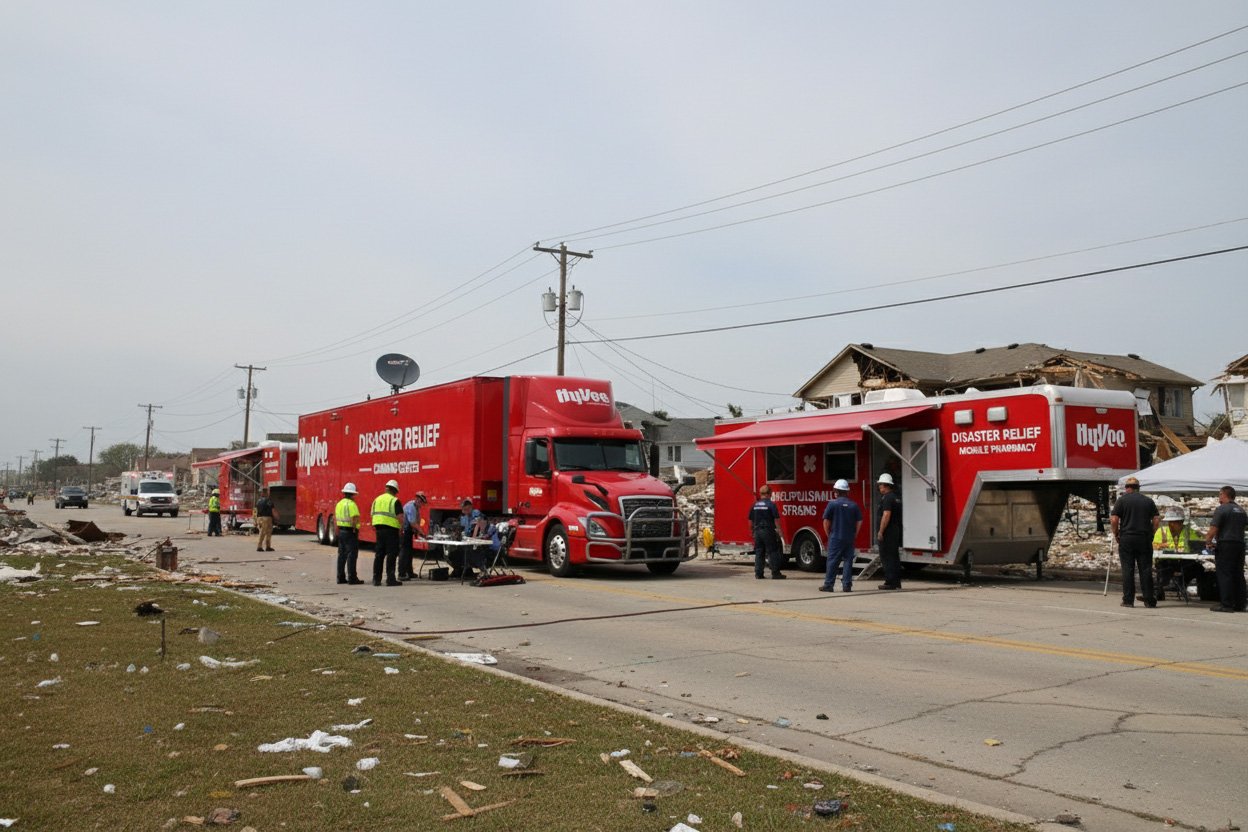
Disaster response vehicles enable multi-agency coordination with mobile command, medical, and logistics capabilities, enhancing efficiency during emergencies.
Maintain relief trailers in the field with daily checks, preventive care, and structured programs to ensure safety, reliability,mission-ready performance.
Discover key design features of disaster relief vehicles and trailers. Strength, mobility, self-sufficient power, and modular interiors ensure rapid, reliable response.
