
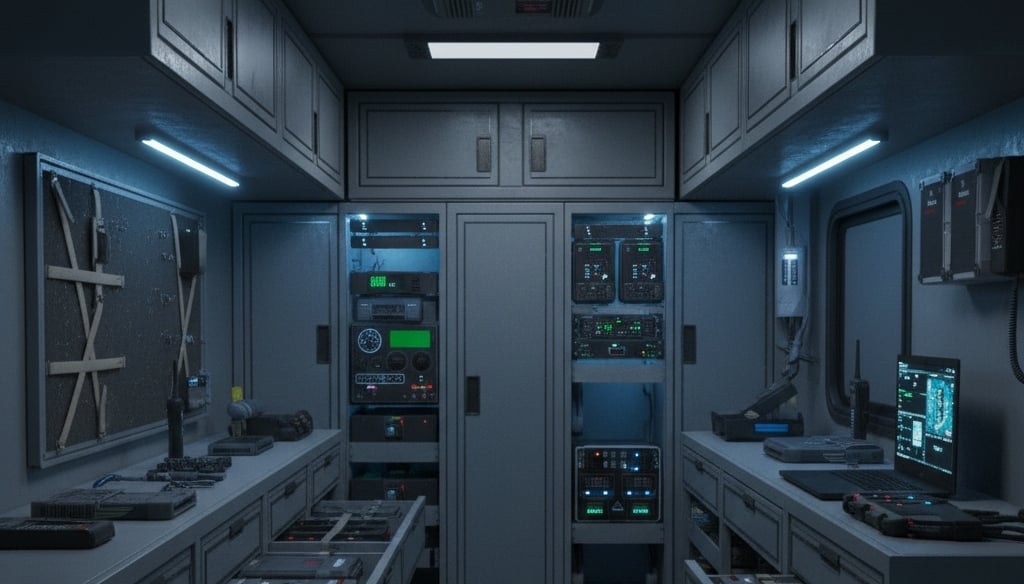
In critical operations, staying connected is not only convenient but also essential. Mobile command centers rely on uninterrupted communication to coordinate teams, share intelligence, and make rapid decisions. Satellite communication integration provides these units with the reliability and reach they need when cellular networks are unavailable or falter. By integrating satellite systems with existing mobile infrastructure, command vehicles maintain real-time data, video, and voice connections in the most challenging conditions, ensuring missions continue uninterrupted.
According to the Society of Satellite Professionals International’s 2019 report, satellite connections installed at departmental emergency operations centers carried nearly 28 GB of data in 11 days after a hurricane. Satellite phones helped 2,461 people across 19 communities restore family links before mobile networks were restored, demonstrating how crucial satellite systems are for maintaining communications when traditional networks fail.
This blog explains how satellite systems are integrated into mobile command centers and why they are essential for reliable communication.
How Satellite Communication Strengthens Modern Mobile Command Centers
Before diving into satellite integration, it is essential to understand why communication failures remain one of the biggest obstacles during mission-critical operations, when field teams lose connectivity, coordination stalls, data becomes outdated, and response times increase.
Why Standard Networks Fall Short
Cellular and radio systems are built for everyday communication, not large-scale emergencies. In a crisis, network congestion, damaged towers, or remote terrain can instantly reduce coverage. Command units depending solely on these channels often face interruptions at the very moment communication is needed most.
The Risks of a Single Communication Path
Many command vehicles still operate on a single-path system. While it may perform well under normal conditions, a single point of failure can sever the connection to every device. Multi-path design, combining multiple transport layers, minimizes downtime and supports continuous data flow, even when one link becomes unstable. According to a 2017 report by the U.S. Government Accountability Office (GAO), wireless networks face increasing risks from physical incidents, and federal reviews repeatedly emphasize that “route diversity” and “redundancy” are vital to improving resilience and reducing outage risk during severe events.
Demands of Modern Field Operations
Today’s operations rely on live video, voice, and data to guide teams in real-time. From emergency management to tactical response, leaders require networks that can handle high data loads while maintaining low latency. Performance under stress, not just connectivity under ideal conditions, defines the success of any communication system.
Common Communication Weak Points in Mobile Command Environments
The table below highlights the most common communication challenges in mobile command centers, their real-world impact, and practical solutions to address them.
|
Challenge |
Real-World Impact |
Recommended Solution Focus |
|
Damaged or congested networks |
Lost connectivity during deployment |
Introduce backup or alternate communication paths |
|
Single-link dependency |
Complete outage when one channel fails |
Design multi-path failover capability |
|
Limited prioritization |
Critical applications delayed |
Apply QOS(quality of service) settings |
|
High latency in rural zones |
Slow video and delayed data sharing |
Integrate low-latency communication options |
What factors determine how reliable a command unit’s network will be during a crisis?
Reliability depends on several factors, including the diversity of connection types, link redundancy, equipment quality, and network management tools. Systems designed with multiple communication paths and intelligent routing consistently outperform those relying on a single link during extended field operations.
How Satellite Connectivity Fills the Gaps Left by Ground-Based Networks
Once the challenges of field connectivity are understood, the value of satellite integration becomes clear. Satellite communication extends the operational range of mobile command center trailers far beyond the limits of ground-based networks, providing a consistent link that supports voice, data, and video in almost any environment.
Expanding Reach Beyond Traditional Networks
Satellites maintain communication coverage where ground infrastructure cannot reach. Whether operating in remote areas, mountainous terrain, or disaster zones where towers are down, satellite systems ensure that mission teams can continue to exchange vital information without interruption. This ability to stay connected regardless of geography transforms how mobile command centers are used for surveillance and respond to unfolding situations.
DHS’s technical review of satellite communications documents how SATCOM restores connectivity when terrestrial internet is degraded or destroyed, specifically for first responders in austere environments.
Understanding the Types of Satellite Networks
Satellite communication typically falls into three main categories: Geostationary (GEO), Medium Earth Orbit (MEO), and Low Earth Orbit (LEO). GEO systems provide broad, steady coverage ideal for stationary operations, while MEO offers a balance of latency and reach. LEO networks, which orbit much closer to Earth, deliver high-speed, low-latency performance well-suited for mobile command vehicles in constant motion. Choosing the right mix depends on the mission profile and communication priorities.
Seamless Integration with Existing Systems
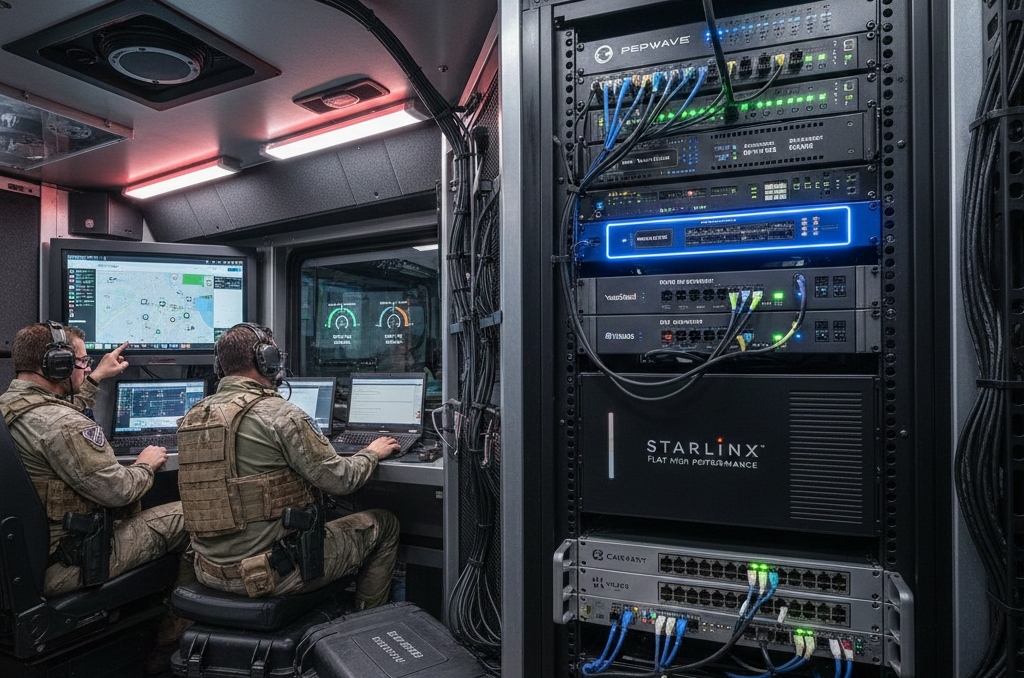
Satellite communication is designed to complement, not replace, existing cellular and radio systems. When properly integrated, a command unit can automatically transition between different links depending on which signal is strongest or most reliable. This seamless switching helps maintain a continuous data stream, so critical communications and live updates continue even when other networks fail.
Can satellite systems operate effectively in severe weather conditions?
Modern satellite communication systems are designed to maintain strong signal performance in a wide range of weather conditions. While heavy rain or storms can temporarily reduce signal strength, adaptive modulation and higher power output often compensate for these effects. Field operators can further reduce interference by using properly aligned antennas and weather-protected mounting systems.
How to Design a Multi-Path Network That Stays Connected
True communication reliability comes from diversity. A network that combines multiple communication paths ensures operations continue even when one link fails. For mobile command centers, designing a multi-path architecture is crucial to achieving consistent uptime and dependable data flow.
Why Multi-Path Design Matters
A single communication link, no matter how strong, is vulnerable to congestion or signal loss. Multi-path systems address this issue by routing data through multiple channels simultaneously, such as satellite, cellular, and radio. When one connection weakens, traffic automatically shifts to another without interrupting ongoing communication. This balance between redundancy and efficiency allows teams to maintain full situational awareness throughout a mission.
How Intelligent Failover Enhances Reliability
Modern routers and network controllers use intelligent failover technology to sense changes in network strength and automatically switch between available links. This process happens within seconds, preventing the data loss and lag that can disrupt live video feeds, GPS tracking, or remote command functions. The goal is simple: maintain stable communication, regardless of what happens outside the vehicle.
Managing Data Priorities in the Field
Not all data is equal during operations. A well-designed system prioritizes critical functions such as live mapping, dispatch communication, and video streams over background processes. Quality of Service (QoS) settings and traffic shaping ensure that essential information reaches command staff first, while less critical updates use the remaining bandwidth. This approach optimizes the use of limited network resources, particularly during periods of high demand.
Can multiple communication paths cause interference or reduced performance when used together?
When properly configured, multiple communication paths work together rather than compete. Modern network controllers separate data streams and manage signal routing to prevent overlap. Each connection is assigned a specific role based on performance, ensuring efficient bandwidth use and stable transmission across all channels.
Key Hardware Components That Keep Command Center Networks Operational
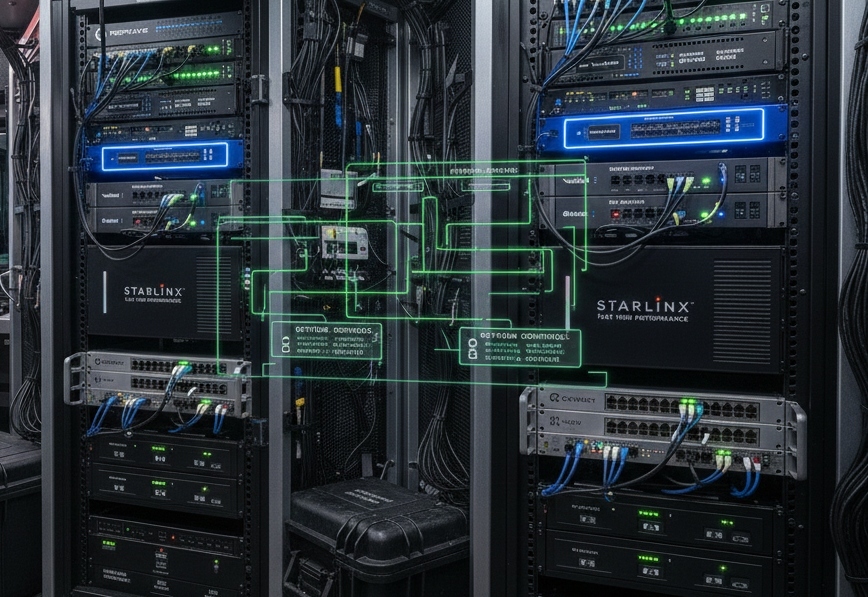
After designing a resilient network, the next step is selecting the proper hardware. Every component, from cables to antennas, affects the reliability and performance of a mobile command center. Properly engineered systems ensure dependable operation under pressure, in motion, and across a wide range of environments.
- Antennas and Terminals for Continuous Communication: Antennas serve as the primary link between the command vehicle and satellite network. Modern systems utilize auto-acquiring antennas that lock onto signals even while the car is in motion. For stationary setups, fixed terminals deliver stronger throughput and more stable connections. Antenna placement, elevation, and a clear line of sight directly influence signal strength and data transfer quality.
- Routers, Modems, and Control Systems: These components form the communication core. Multi-WAN routers manage data across several inputs, including satellite, LTE, and radio. Intelligent routing determines the optimal channel to use for maximum speed and stability. Integrated control systems let operators monitor bandwidth, adjust network priorities, and troubleshoot issues without disrupting operations.
- Power and Environmental Management: Reliable performance depends on stable power and environmental control. Battery backups and inverters protect against voltage fluctuations, while rack-mounted cooling systems prevent overheating during extended missions. Organized cabling, proper airflow, and vibration-resistant mounts extend equipment lifespan and simplify maintenance.
How often should communication hardware in a mobile command center be serviced or tested?
Routine maintenance should be performed at least twice a year, or before and after any major deployment or update. Regular inspections verify antenna calibration, firmware updates, and cable integrity to ensure optimal performance. Field testing under live conditions ensures that every component performs as expected when the system is needed most.
Cybersecurity Measures That Protect Mission-Critical Communications
Once a communication system is physically built and connected, the focus shifts to protecting and maintaining it. In mission-critical operations, cybersecurity and reliability are closely linked. A secure network not only prevents intrusion but also ensures that command operations remain stable and uninterrupted.
Protecting Sensitive Data in the Field
Every command center handles confidential information, ranging from personnel coordination to real-time video feeds. Protecting that data requires multiple layers of defense. Encryption is essential for securing transmissions across satellite and terrestrial links. Firewalls and access control lists add a layer, filtering unauthorized attempts to access the network. Regular software updates and credential management keep vulnerabilities from accumulating over time.
Maintaining Signal Integrity and Network Health
Communication performance can degrade due to interference, poor alignment, or unmonitored bandwidth usage. Operators should consistently track signal strength, latency, and data throughput to detect potential issues before they affect performance. Automated monitoring tools enable technicians to pinpoint weak spots and respond proactively before disruptions occur. This proactive maintenance is what keeps command units ready for any deployment.
Building Operational Redundancy
True reliability comes from planning for failure before it happens. Redundant equipment, backup power sources, and mirrored data storage create a safety net that minimizes downtime. A redundant system allows communication to continue through secondary pathways even if one component fails. The result is a network capable of maintaining control and communication under pressure.
What steps can improve cybersecurity during field deployment without slowing down operations?
Preparation is key. Pre-configured security profiles, updated encryption keys, and automated login policies reduce setup time while maintaining strong protection. Training operators to recognize suspicious activity and use secure channels for data transfer further lowers risk without hindering field performance.
Connecting Satellite Systems with the Broader Command Center Ecosystem
Satellite communication is most effective when it becomes part of a larger, connected ecosystem. In a modern mobile command center, no single system operates in isolation. Radios, video equipment, dispatch platforms, and cloud-based applications all rely on coordinated data exchange to support real-time decision-making.
Connecting Every Element of the Mission
A fully integrated command vehicle consolidates radio, cellular, satellite, and local area networks under a single management framework. This unified approach allows voice, data, and video to move seamlessly across different communication paths. As conditions change, the system automatically routes traffic through the most efficient link, maintaining consistent connectivity without operator intervention.
Supporting Real-Time Data and Situational Awareness
Satellite backhaul plays a critical role in transmitting live video, mapping, and telemetry data back to command headquarters. This connection supports shared situational awareness between field teams and remote decision-makers. Whether coordinating a rescue, managing an event, or assessing storm damage, uninterrupted data exchange helps teams respond faster and more accurately.
Extending Communication to the Edge
Integrating satellite systems with mobile mesh networks or Wi-Fi hotspots allows command vehicles to act as local hubs for surrounding personnel and devices. This setup creates a communication bubble that extends connectivity to handheld radios, tablets, and field sensors, enabling seamless communication. It ensures that even team members operating beyond line of sight remain connected and informed.
Can satellite communication integrate with existing command software platforms and data systems?
Yes. Most modern satellite solutions can connect directly with dispatch software, GIS mapping tools, and cloud-based collaboration systems. Through standard networking protocols and secure interfaces, satellite links function as an additional data transport layer, rather than a separate system, allowing information to move freely across all connected technologies.
Planning a Connected Command Center Built for Real World Conditions
Designing a mobile command center that stays connected under any condition begins with detailed planning. Each component, from communication networks to power systems, should align with the mission’s operational goals. A well-structured plan ensures performance and adaptability in the field, minimizing downtime when conditions change.
- Assessing Mission Requirements: Every mission profile is different. Some deployments focus on urban coordination, while others operate in rural or disaster-affected zones. Understanding the coverage area, bandwidth requirements, and data sensitivity helps determine the type of satellite and cellular integration required. Defining these parameters early sets a foundation for the entire design process.
- Prioritizing Communication Channels: Not every connection is equally important. Primary links handle live command functions, while secondary and tertiary channels support backups and administrative data. Prioritizing channels ensures that when bandwidth becomes limited, essential communications, such as live video, voice dispatch, and GPS tracking, remain active without delay.
- Planning for Power and Expansion: Power availability is the backbone of continuous operation. Backup batteries, inverters, and generator systems should all be sized to support extended missions. It is also wise to design with future growth in mind. As technology evolves, having extra rack space, cabling routes, and network ports allows easy integration of new systems without costly redesigns, including preparing mobile command vehicles for 5G technology.
How can teams future-proof their mobile command centers for new communication technologies?
Future-proofing begins with flexible infrastructure. Modular rack systems, open networking protocols, and scalable power setups facilitate the integration of new technology later. Regular assessments of satellite and cellular developments also help teams update communication components before they become outdated.
Enhance Mission Success with Reliable Satellite Connected Command Centers
At Craftsmen Industries, we recognize that clear communication is essential to every successful mission. That is why we build mobile command centers equipped with advanced satellite integration to keep teams connected when it matters most. By combining satellite, cellular, and radio systems, our solutions ensure uninterrupted performance in any environment.
Every mission presents unique challenges, and thorough preparation makes all the difference. From power management to network design, we engineer communication systems that perform reliably under real-world conditions.
Let’s build your next-generation command center together. Visit Craftsmen Industries to connect with our team and explore communication solutions built to keep your mission moving forward.
Frequently Asked Questions
Can mobile command centers maintain connectivity while in motion, not just parked?
Yes. Antennas and terminals designed for “on-the-move” use enable mobile command centers to connect while in transit. These systems automatically track and lock onto satellite signals as the vehicle moves, ensuring continuity of data, voice, and video streams, rather than only when the vehicle is stationary.
What are the licensing or regulatory requirements for integrating satellite systems in mobile vehicles?
Deploying satellite systems in mobile command centers typically involves obtaining frequency licenses, securing power authorization, and coordinating with satellite service providers. Some geographies require that mobile SATCOM terminals operate under approved plans or operators. Early regulatory checks and spectrum coordination are essential to ensure compliance and uninterrupted use.
How does weather or terrain affect satellite communication in mobile command centers?
Weather phenomena, such as heavy rain or dense cloud cover, and terrain obstacles, like hills or tall buildings, can degrade satellite signal strength. To mitigate this, operators use higher-gain antennas, redundancy in links (e.g., hybrid with cellular/radio), and proper terminal placement with a clear line of sight. Maintaining backup links helps avoid gaps when satellite performance dips.
What considerations support cybersecurity when satellite links are used in mobile command centers?
Using satellite links raises specific cybersecurity concerns, including eavesdropping, jamming, and signal spoofing. To protect against these threats, mobile command centers should implement robust encryption, regular firmware updates, intrusion detection, and signal integrity checks. Having redundant communication paths is also essential so that if one link is compromised, alternatives keep operations secure and active.
Filter Posts by Tag
related posts

Is rapid prototyping used in the fabrication of mobile command centers? Discover how this technique optimizes functionality for emergency response units.
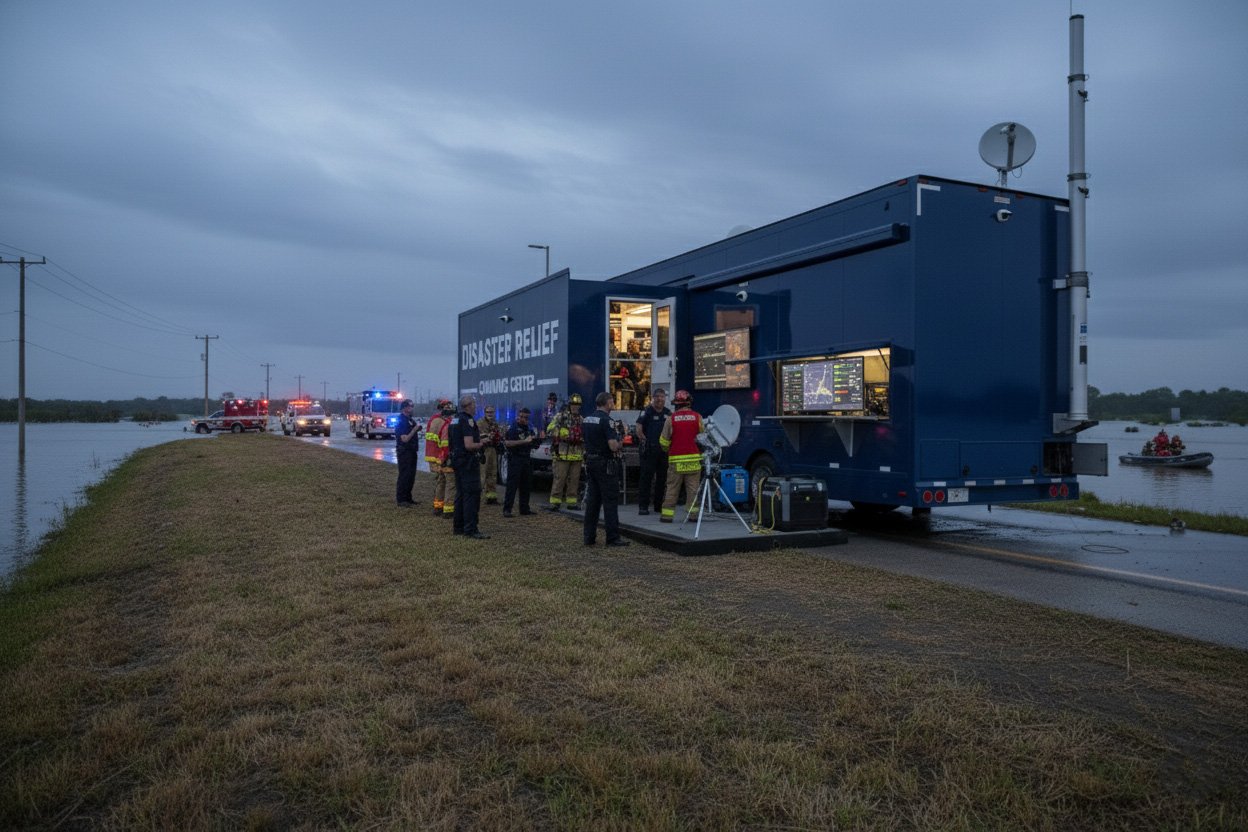
Mobile Command Trailers accelerate post-disaster recovery by restoring communication, coordinating agencies, managing logistics, and delivering medical and humanitarian support.

Are you wondering what is a police mobile command vehicle used for? Read this article to discover the diverse capabilities of MCVs in modern law enforcement!
