
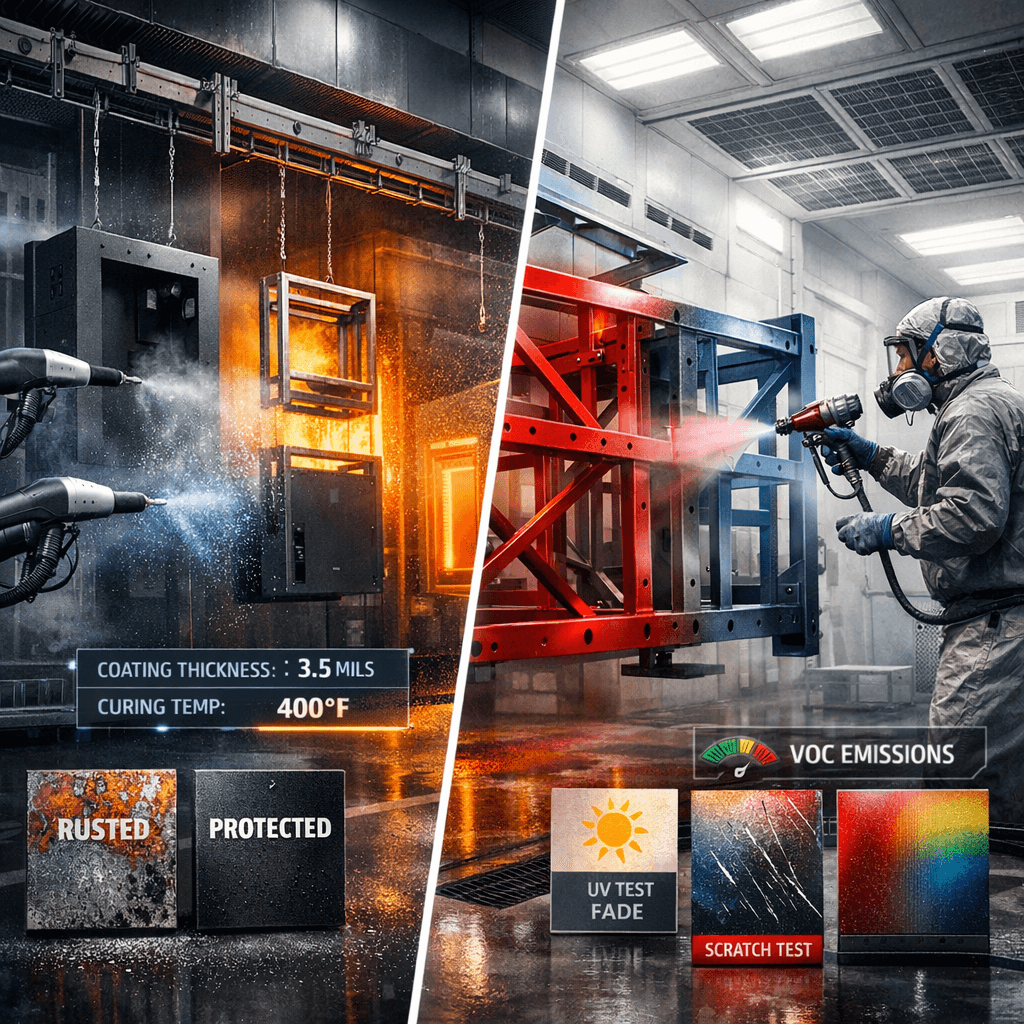
Powder coating is a dry electrostatic finishing process that cures in an oven to form a permanent bond, while wet paint is a liquid coating system applied via spray gun that cures through solvent evaporation. Each method serves distinct roles in metal fabrication based on durability requirements, project geometry, budget, and environmental considerations.
This guide covers application processes, durability and corrosion performance, cost economics, finish and color options, size and substrate limitations, environmental compliance, and scenario-based selection guidance.
Powder coating uses electrostatically charged particles sprayed onto grounded metal, then thermally cured between 350°F and 450°F. Wet paint atomizes liquid through high-pressure guns with adjustable thickness from 10µm to 200µm. The Faraday cage effect limits powder penetration into deep recesses, while wet paint flows freely into complex geometries without oven constraints.
Powder coating resists corrosion for up to 2,000 hours in salt spray testing compared to approximately 500 hours for standard wet paint. Its crosslinked thermoset structure also delivers superior chip, scratch, and UV resistance when polyester formulations are specified.
Powder coating costs roughly half of wet paint per square foot, with operating costs approximately 38% lower due to higher transfer efficiency, overspray reclamation, and minimal cleanup. Long-term maintenance intervals are also significantly extended.
Wet paint achieves virtually unlimited color formulations, precise Pantone matching, and multi-color layered effects. Powder coating offers consistent textures and standard color libraries but requires custom batches for non-standard shades.
Powder coating requires oven enclosures that limit part size, while wet paint handles oversized assemblies and field applications without curing constraints. Substrate conductivity also affects method suitability across steel, aluminum, and stainless steel.
Powder coating produces near-zero VOC emissions with 95% to 98% material efficiency. Wet paint releases 400 to 600 g/L of VOCs in solvent-based formulations, requiring ventilation systems and respiratory protection programs.
What Is Powder Coating for Metal Fabrication?
Powder coating for metal fabrication is a dry finishing process that uses electrostatically charged particles of pigment and resin, sprayed onto grounded metal parts and then cured in an oven to form a durable, permanent coating. This method delivers superior corrosion resistance, consistent film thickness, and high transfer efficiency for fabricated steel, aluminum, and other conductive substrates. The sections below cover how the process works, what makes it distinct from liquid finishes, and why fabricators choose it for industrial applications.
What Is Wet Paint for Metal Fabrication?
Wet paint for metal fabrication is a liquid coating system applied using high-pressure spray guns to protect and finish fabricated metal surfaces. The sections below cover its composition, application method, and adjustable film thickness.
How Does Wet Paint Work as a Coating System?
Wet paint works by atomizing liquid paint through a high-pressure spray gun, distributing it evenly across a metal surface. According to TiRapid, coating thicknesses are typically adjustable between 10µm and 200µm to meet decorative or industrial protective requirements. The liquid formulation contains pigments, resins, solvents, and additives that form a protective film as solvents evaporate during curing. This solvent-based chemistry allows painters to build coatings in precise, controlled layers suited to each project’s performance specifications.
What Are the Main Components of Wet Paint?
The main components of wet paint are:
- Pigments provide color and opacity to the finished coating.
- Resins (binders) form the continuous film that adheres to the metal substrate.
- Solvents reduce viscosity for spray application and evaporate during curing.
- Additives modify properties such as flow, leveling, UV resistance, and drying time.
These components can be reformulated for specific performance needs, making wet paint highly adaptable to varied industrial and decorative applications.
What Types of Wet Paint Are Used on Fabricated Metal?
The types of wet paint used on fabricated metal include epoxies, polyurethanes, acrylics, alkyds, and PVDF-based systems. Epoxies deliver strong chemical and corrosion resistance for industrial environments. Polyurethanes provide excellent abrasion resistance and gloss retention. Acrylics cure by coalescence and offer high color stability in outdoor conditions. Alkyds serve as economical general-purpose coatings. For fabricators handling diverse project requirements, this range of chemistries represents wet paint’s greatest advantage: the ability to select a formulation precisely matched to the end-use environment.
With its liquid formulation understood, the next step is examining how wet paint application differs from powder coating in practice.
How Does the Application Process Differ Between Powder Coating and Wet Paint?
The application process differs between powder coating and wet paint in method, curing mechanism, and equipment requirements. Powder coating uses electrostatic charge and oven curing, while wet paint relies on atomized liquid spray and solvent evaporation.
How Is Powder Coating Applied to Fabricated Metal?
Powder coating is applied to fabricated metal through a multi-step dry finishing process. Finely ground particles of pigment and resin are electrostatically charged and sprayed onto grounded metal parts, then heated in a curing oven to fuse into a smooth, permanent coating.
The standard application sequence includes:
- Surface preparation with iron phosphate or zinc phosphate pretreatment.
- Electrostatic spray application using corona or tribo-charging guns.
- Thermal curing at temperatures typically between 350°F and 450°F.
One significant challenge involves the Faraday Cage effect. According to the Powder Coating Institute, this phenomenon prevents the electrostatic field from penetrating deep recesses or internal corners of a grounded part, often requiring specialized gun settings or manual reinforcement to ensure complete coverage.
Large, heavy metal parts with significant mass also pose challenges due to extended oven dwell times needed to bring the entire part to curing temperature. Field repairs remain difficult since powder coating requires specialized heating equipment; damaged areas are typically touched up using brush-applied liquid paints or PVDF-based air-dry systems for architectural applications.
How Is Wet Paint Applied to Fabricated Metal?
Wet paint is applied to fabricated metal using a high-pressure spray gun that atomizes liquid paint and distributes it evenly across the surface. Coating thicknesses are adjustable between 10µm and 200µm, allowing precise control for both decorative and industrial protective requirements.
The wet paint application process involves:
- Surface cleaning and preparation to the specified profile.
- Primer application for adhesion and corrosion resistance.
- Topcoat spray application in one or multiple passes.
- Curing through solvent evaporation over 2 to 48 hours, reducible to 2–3 hours with infrared drying equipment.
Unlike powder coating, wet paint requires no oven or electrostatic equipment, which makes it suitable for oversized assemblies, field applications, and complex multi-color work. The trade-off is that solvent-based formulations typically contain 400–600g/L of VOCs, demanding proper ventilation and respiratory protection during application.
For fabricators managing both coating methods, understanding these process differences clarifies which finishing approach best suits a given project’s geometry, location, and performance requirements.
How Do Powder Coating and Wet Paint Compare in Durability?
Powder coating and wet paint differ significantly in durability across corrosion resistance, impact protection, and UV stability. The following subsections break down performance in each category.
How Does Powder Coating Perform Against Corrosion?
Powder coating performs against corrosion by forming a thick, chemically bonded barrier that resists moisture and salt penetration far longer than conventional liquid finishes. According to TiRapid’s finish guide, ASTM B117 salt spray testing shows powder coatings can resist corrosion for up to 2,000 hours, compared to approximately 500 hours for standard spray painting.
Pretreatment selection plays a critical role. Iron phosphate is the most common pretreatment across substrates, while zinc phosphate serves high-end applications requiring superior performance despite higher operational costs. Coating integrity also varies by geometry; performance at weld areas is often significantly reduced compared to flat surfaces, requiring targeted inspection protocols.
For fabricators evaluating adhesion quality, the ASTM D3359 crosshatch and tape test offers a reliable predictor of long-term performance when comparing formulation rankings rather than absolute values alone.
How Does Wet Paint Perform Against Corrosion?
Wet paint performs against corrosion effectively when multi-layer systems are specified for demanding environments. According to research from Turku University of Applied Sciences, dual-layer painting systems have been validated to withstand up to 1,000 hours of salt spray testing on high corrosion requirement parts when E-coat is not a viable pretreatment option.
While this falls short of powder coating’s 2,000-hour threshold, properly engineered wet paint systems still deliver substantial protection. For applications where field repair accessibility or substrate limitations prevent powder coating, a well-designed liquid paint system remains a credible corrosion solution.
How Does Powder Coating Resist Chipping and Scratching?
Powder coating resists chipping and scratching through its thermoset molecular structure, which cross-links during the curing process to form a dense, impact-resistant film. This cured layer is typically thicker than wet paint, ranging from 2 to 6 mils, providing a mechanical buffer against surface damage.
The result is a finish that absorbs impacts without fracturing or delaminating from the substrate. For high-traffic fabricated metal components, this inherent toughness makes powder coating a practical choice where abrasion is a daily concern.
How Does Wet Paint Resist Chipping and Scratching?
Wet paint resists chipping and scratching to a lesser degree than powder coating, primarily because liquid films cure thinner and lack the same cross-linked density. Single-coat applications are particularly vulnerable to impact damage on exposed edges and corners.
However, multi-coat systems with hardened clearcoats or urethane topcoats can improve scratch resistance substantially. The trade-off is added application time and material cost. For parts that need periodic refinishing or field touch-up, wet paint’s repairability partially offsets its lower inherent hardness.
How Does Powder Coating Hold Up Under UV Exposure?
Powder coating holds up under UV exposure depending on the resin chemistry selected. Polyester and super-durable polyester formulations deliver strong gloss and color retention in outdoor environments, often maintaining appearance integrity for 5 to 10 years without significant fading.
Epoxy-based powder coatings, by contrast, chalk and degrade quickly under direct sunlight. Selecting the correct resin system for the exposure environment is essential; fabricators should specify polyester or fluoropolymer-based powders for any exterior application.
How Does Wet Paint Hold Up Under UV Exposure?
Wet paint holds up under UV exposure with performance that varies widely by formulation. Automotive-grade urethanes and advanced acrylics offer excellent gloss retention outdoors, while standard alkyd or enamel paints degrade more rapidly.
The advantage of wet paint in UV-exposed applications is formulation flexibility. Specifiers can select coatings engineered specifically for color stability, layering UV-absorbing additives into clearcoat systems. For projects requiring precise color matching over extended outdoor service life, high-performance liquid coatings remain competitive with polyester powders.
Understanding durability differences across these categories helps determine which finish best suits a project’s specific environmental and mechanical demands.
How Do Costs Compare Between Powder Coating and Wet Paint?
Costs between powder coating and wet paint differ significantly in per-square-foot pricing and long-term maintenance expenses. The sections below break down initial application costs and lifecycle economics.
What Does Powder Coating Cost Per Square Foot?
Powder coating costs approximately $0.151 per square foot for fabricated metal products. According to a U.S. Environmental Protection Agency economic evaluation, operating costs for powder coating systems, including labor and cleanup, are approximately 38% lower than compiled costs for comparable wet-finishing systems. This dramatic cost advantage stems from higher transfer efficiency, reduced material waste, and minimal cleanup requirements. For high-volume fabrication projects, these per-unit savings compound quickly, making powder coating one of the most economical finishing options available.
What Does Wet Paint Cost Per Square Foot?
Wet paint costs approximately $0.305 per square foot for fabricated metal products, roughly double the cost of powder coating. Higher material waste, additional labor for multi-coat applications, and more intensive cleanup requirements all contribute to this elevated price point. Solvent disposal, spray booth maintenance, and ventilation system operation further increase operational overhead. While wet paint may offer lower upfront equipment costs for small shops, the per-part finishing expense remains substantially higher across production volumes.
How Do Long-Term Maintenance Costs Compare?
Long-term maintenance costs favor powder coating due to its superior durability and corrosion resistance. Powder-coated surfaces resist chipping, fading, and chemical damage more effectively, which extends recoating intervals and reduces touch-up frequency. Wet paint systems typically require more frequent maintenance cycles, especially in outdoor or high-wear environments where UV exposure and mechanical abrasion degrade the film faster. When factoring in labor for recoating, surface preparation for repairs, and production downtime, powder coating’s higher initial durability translates into measurably lower total cost of ownership over a product’s service life.
Understanding these cost dynamics helps fabricators select the finish that aligns with both budget constraints and performance requirements.
What Finish Options Are Available with Each Method?
The finish options available with each method differ in color range, texture variety, and custom matching capability. Powder coating excels in durable textures, wet paint offers unlimited color formulation, and custom projects benefit from understanding each method’s strengths.
What Colors and Textures Can Powder Coating Achieve?
Powder coating can achieve a wide range of colors and textures, including matte, satin, high-gloss, metallic, and textured finishes such as wrinkle, hammer-tone, and sand. Standard RAL and custom color libraries provide extensive selection. Textured options add both visual interest and functional benefits, since rougher surfaces can hide minor substrate imperfections. However, specialty finishes like candy-coat effects or ultra-thin metallic flakes remain difficult to replicate in powder form. For most fabricated metal applications, powder coating delivers consistent, repeatable finishes across large production runs without the batch-to-batch variation that can occur with liquid systems.
What Colors and Textures Can Wet Paint Achieve?
Wet paint can achieve virtually unlimited colors and textures, from ultra-fine metallic flakes and pearlescent effects to color-shifting chameleon finishes and smooth high-gloss clears. Because wet paint is formulated as a liquid, colorants can be blended in precise ratios to match any specification. Texture options include smooth, orange-peel, suede, and spatter finishes, with multi-coat systems enabling gradients and layered visual effects impossible in single-application methods. According to the National Institute of Standards and Technology, gloss retention serves as a primary criterion for assessing appearance durability of organic coatings, with gloss loss often indicating the first sign of UV-induced degradation in outdoor environments. This formulation flexibility makes wet paint the preferred choice for decorative or brand-specific applications demanding exact visual fidelity.
Which Method Offers Better Color Matching for Custom Projects?
Wet paint offers better color matching for custom projects requiring exact brand colors, Pantone specifications, or multi-tone designs. Liquid formulations allow on-site tinting adjustments in small increments, enabling precise correction until the target shade is achieved. Powder coating, while available in thousands of standard colors, requires custom batches from manufacturers when a specific color falls outside existing libraries. These custom runs typically carry minimum order quantities and longer lead times. For projects involving corporate identity standards or complex multi-color graphics, wet paint provides the most reliable path to an exact match, though powder coating performs well when standard color selections meet the project requirements.
With finish aesthetics defined, understanding size and shape constraints helps determine which method suits a given fabrication geometry.
What Are the Size and Shape Limitations of Each Method?
The size and shape limitations of powder coating and wet paint differ primarily due to curing equipment constraints and electrostatic physics. Below, each method’s capabilities with large or complex fabrications are examined.
Can Powder Coating Handle Large or Complex Fabrications?
Powder coating can handle large or complex fabrications, but with notable constraints. Oven size is the primary limitation; every coated part must fit inside a curing oven to reach the required temperature. Large, heavy metal parts with significant mass pose additional challenges due to extended oven dwell times required to bring the entire part to curing temperature, as noted by AMPP (SSPC/PACE Proceedings). Complex geometries introduce the Faraday cage effect, where electrostatic fields cannot penetrate deep recesses or sharp internal corners, leaving these areas undercovered without specialized gun settings or manual reinforcement. For fabricators handling oversized structural components, these physical constraints often make powder coating impractical without custom-built equipment.
Can Wet Paint Handle Large or Complex Fabrications?
Wet paint can handle large or complex fabrications with fewer physical constraints than powder coating. Because liquid coatings cure through solvent evaporation or chemical reaction at ambient or moderately elevated temperatures, no oven enclosure is required. This eliminates the size ceiling that curing ovens impose. Field application using spray guns or brushes allows coating of assembled structures, bridge components, and architectural installations in place. Deep recesses, internal corners, and intricate weld joints receive consistent coverage since liquid paint flows into areas that electrostatic powder cannot reach. For projects requiring on-site finishing or repair of installed assets, wet paint remains the only viable option given that brush-applied liquid coatings eliminate the need for specialized heating equipment.
Understanding these physical constraints helps determine which substrates pair best with each finishing method.
Which Method Is Better for Specific Metal Substrates?
The best finishing method depends on the metal substrate. Steel, aluminum, and stainless steel each respond differently to powder coating and wet paint based on their conductivity, surface chemistry, and end-use environment.
Which Finish Works Best on Steel?
Powder coating works best on steel for most structural and industrial applications. Steel’s ferrous composition accepts electrostatic charge readily, producing uniform powder deposition and strong adhesion after curing. For corrosion-prone environments, powder coating delivers superior edge protection and film build in a single pass.
According to Peter P. Nixon in the Journal of Protective Coatings & Linings, Cadillac Fabrication utilizes stripe coating for edge retention, highlighting that edge coverage is one of many critical reasons for specialized application techniques in structural steel finishing.
Wet paint remains preferable for field repairs or when thin-film decorative finishes are required on steel assemblies too large for oven curing. For high-volume steel fabrication, though, powder coating’s combination of adhesion, corrosion resistance, and edge coverage makes it the stronger default choice.
Which Finish Works Best on Aluminum?
Powder coating works best on aluminum when proper pretreatment is applied. Aluminum’s non-ferrous surface requires chromate conversion or chrome-free alternatives to promote adhesion, since bare aluminum oxide can interfere with coating bonding. Once pretreated, aluminum accepts powder coating exceptionally well due to its excellent electrical conductivity and lightweight profile, which allows faster heat-up during oven curing.
Wet paint suits aluminum in applications requiring precise color matching, thin decorative films, or field application where oven access is unavailable. Automotive trim, architectural accents, and components needing multi-color graphics often favor liquid systems on aluminum. For outdoor durability and single-color protection, powder coating on properly prepared aluminum delivers superior long-term performance.
Which Finish Works Best on Stainless Steel?
Wet paint works best on stainless steel in most finishing scenarios. Stainless steel’s chromium oxide layer resists adhesion from both methods, but its low electrical conductivity creates additional challenges for electrostatic powder deposition. Specialized surface preparation, such as mechanical abrasion or specialized primers, is essential regardless of method.
Powder coating can work on stainless steel when parts are small enough for oven curing and when aggressive surface prep is performed. However, many stainless steel applications prioritize the metal’s natural finish or require only selective coating in specific zones, making wet paint’s precision application a practical advantage. For fabricators working across all three substrates, matching the method to each metal’s unique surface chemistry ensures optimal adhesion and longevity.
How Do Environmental and Safety Factors Compare?
Environmental and safety factors compare significantly between powder coating and wet paint, with powder coating producing near-zero VOC emissions while wet paint releases substantial volatile organic compounds. The sub-sections below examine VOC output for each method and regulatory compliance.
Does Powder Coating Emit Volatile Organic Compounds?
Powder coating does not emit volatile organic compounds in any meaningful quantity. This dry finishing process eliminates hazardous solvents entirely, preventing the generation of volatile organic emissions and hazardous solid waste while demonstrating system efficiencies between 95% and 98%, according to the U.S. Environmental Protection Agency (NRMRL).
Given that industrial surface coating operations account for approximately 25% of all VOC emissions, powder coating’s solvent-free chemistry represents a substantial reduction in environmental impact. For fabricators managing air quality permits or operating near populated areas, this near-zero emission profile simplifies compliance considerably.
Does Wet Paint Emit Volatile Organic Compounds?
Wet paint does emit volatile organic compounds during application and curing. Solvent-based wet spray paints contain VOC levels typically ranging from 400 to 600 g/L, releasing these compounds as solvents evaporate from the applied film. Water-based alternatives reduce this to 50 to 100 g/L, though emissions remain measurably higher than powder coating’s near-zero output.
These emissions require spray booth ventilation systems, air filtration equipment, and worker respiratory protection programs. OSHA standard 1910.134 specifies rigorous requirements for respiratory protection in environments with VOC exposure from industrial coatings, adding operational complexity and cost to wet paint operations.
Which Method Meets Stricter Environmental Regulations?
Powder coating meets stricter environmental regulations more readily than wet paint. The REACH regulation, effective since 2007, classifies chemical materials with VOC content as “dangerous and high-risk,” directly favoring VOC-free technologies like powder coatings, as documented by RadTech.
Because powder coating generates no solvent waste streams and requires no VOC destruction equipment, facilities using this method face fewer permitting hurdles and lower compliance costs. For fabricators operating under increasingly stringent air quality standards, powder coating eliminates the regulatory burden that wet paint operations must continuously manage.
With environmental compliance addressed, the next consideration is determining which scenarios favor each finishing method.
When Should You Choose Powder Coating Over Wet Paint?
You should choose powder coating over wet paint when projects demand superior hardness, corrosion resistance, UV durability, or high-volume efficiency. The following scenarios highlight where powder coating delivers clear advantages.
When Is Powder Coating Ideal for Outdoor Applications?
Powder coating is ideal for outdoor applications when fabricated metal faces prolonged UV exposure, moisture, and temperature swings. Advanced acrylic powder formulations cure by coalescence and are frequently specified for applications requiring high color and gloss retention in varying environmental conditions, according to the Academia.edu Protective Coatings Inspection Guide. These coatings resist chalking and fading far longer than most liquid paints exposed to the same weathering cycles. For any outdoor metal structure expected to maintain appearance over years of sun and rain exposure, powder coating consistently outperforms conventional wet paint systems.
When Is Powder Coating Ideal for High-Traffic Surfaces?
Powder coating is ideal for high-traffic surfaces when fabricated metal must resist repeated physical contact, abrasion, and impact. The pencil hardness test (ASTM D3363) measures coating hardness on a scale from 6B to 6H, and thermoset powder coatings routinely achieve ratings in the upper hardness range. Comparative studies published in Progress in Organic Coatings demonstrate that polyester epoxy powder coatings show superior adhesion and corrosion resistance over amide-cured epoxy wet paints on mild steel substrates. Handrails, equipment enclosures, and industrial frames all benefit from this enhanced scratch and chip resistance. For surfaces subjected to daily wear, powder coating’s crosslinked film structure provides a measurable durability advantage.
When Is Powder Coating Ideal for High-Volume Production?
Powder coating is ideal for high-volume production when throughput speed and quality consistency matter most. According to Powder Coated Tough Magazine, non-contact ultrasonic thickness gauges per ASTM D7378 Method C can measure uncured powder coatings to predict final cured thickness without contacting the dry powder, enabling non-destructive testing on moving production lines. This inline quality control eliminates bottlenecks and reduces reject rates across large batches. Combined with overspray reclamation rates exceeding 95%, the process minimizes material waste while maintaining uniform film thickness part after part.
With production-scale advantages established, understanding when wet paint is the better choice completes the decision framework.
When Should You Choose Wet Paint Over Powder Coating?
You should choose wet paint over powder coating when projects require ultra-thin films, on-site repairs, or complex multi-color graphics. The following subsections cover each scenario.
When Is Wet Paint Ideal for Thin-Film Requirements?
Wet paint is ideal for thin-film requirements when specifications call for coating thicknesses below what powder can reliably achieve. According to TiRapid, wet spray painting allows coating thicknesses adjustable between 10µm and 200µm to meet decorative or industrial protective requirements. Powder coating typically builds 50µm or more per pass, making precise thin-film control difficult. Applications such as electronics housings, precision instruments, and components with tight dimensional tolerances benefit from wet paint’s ability to deposit minimal material while maintaining uniform coverage.
When Is Wet Paint Ideal for Field Touch-Ups and Repairs?
Wet paint is ideal for field touch-ups and repairs because it requires no oven curing or specialized heating equipment. According to AMPP, field touch-up and repair of damaged coatings are typically performed using brush-applied liquid paints, as brushing allows better control and eliminates the need for the specialized heating equipment required for powder coating. PVDF-based air-dry systems provide color and gloss retention comparable to original factory-applied finishes, making them particularly effective for architectural restoration work. Since powder coating demands a curing oven, any damage discovered after installation or deployment must be addressed with liquid paint regardless of the original finish method.
When Is Wet Paint Ideal for Multi-Color Custom Graphics?
Wet paint is ideal for multi-color custom graphics because it supports layered application, masking, and blending techniques without repeated oven cycles. Each color in a powder-coated multi-color design requires a separate cure pass, increasing production time and risk of over-baking previous layers. Liquid paint allows artists and technicians to mask, spray, and blend multiple colors in sequence before a single final cure. For fabricated metal assets featuring detailed branding, gradients, or complex graphic wraps, wet paint offers the creative flexibility that powder coating cannot match.
With wet paint scenarios defined, the next section explores how the right finish choice affects overall custom fabrication projects.
How Does the Right Finish Affect Custom Fabrication Projects?
The right finish affects custom fabrication projects by influencing durability, production efficiency, and overall quality. Integrated finishing capabilities and informed coating selection determine project success.
Can In-House Metal Fabrication with Integrated Finishing Improve Project Quality and Turnaround?
Yes, in-house metal fabrication with integrated finishing can improve both project quality and turnaround. When fabrication and coating happen under one roof, teams eliminate shipping delays, reduce handling damage, and maintain tighter quality control between production stages.
According to PCI Magazine, new coating technologies have enabled faster production schedules in fabrication shops by eliminating the intermediate epoxy coat on specific industrial applications, allowing for more streamlined in-house finishing.
Craftsmen Industries custom fabricates builds in-house, combining design, engineering, fabrication, and finishing within a single 127,000 sq. ft. facility. This vertically integrated approach gives Craftsmen Industries complete project control from ideation to creation.
What Are the Key Takeaways About Powder Coating vs. Wet Paint for Fabricated Metal?
The key takeaways about powder coating vs. wet paint for fabricated metal are:
- Powder coating delivers superior corrosion resistance, lower long-term costs, and near-zero VOC emissions, making it ideal for outdoor, high-traffic, and high-volume applications.
- Wet paint provides unmatched versatility for thin-film requirements, field touch-ups, multi-color custom graphics, and parts too large for curing ovens.
- Surface preparation quality determines coating performance regardless of method chosen.
- Project-specific factors, such as part geometry, substrate type, production volume, and environmental exposure, should drive the final selection.
For most custom fabrication projects, the best finish is the one matched precisely to the application’s performance demands and production constraints. Craftsmen Industries can help determine the optimal finishing strategy for complex custom builds.
Filter Posts by Tag
related posts
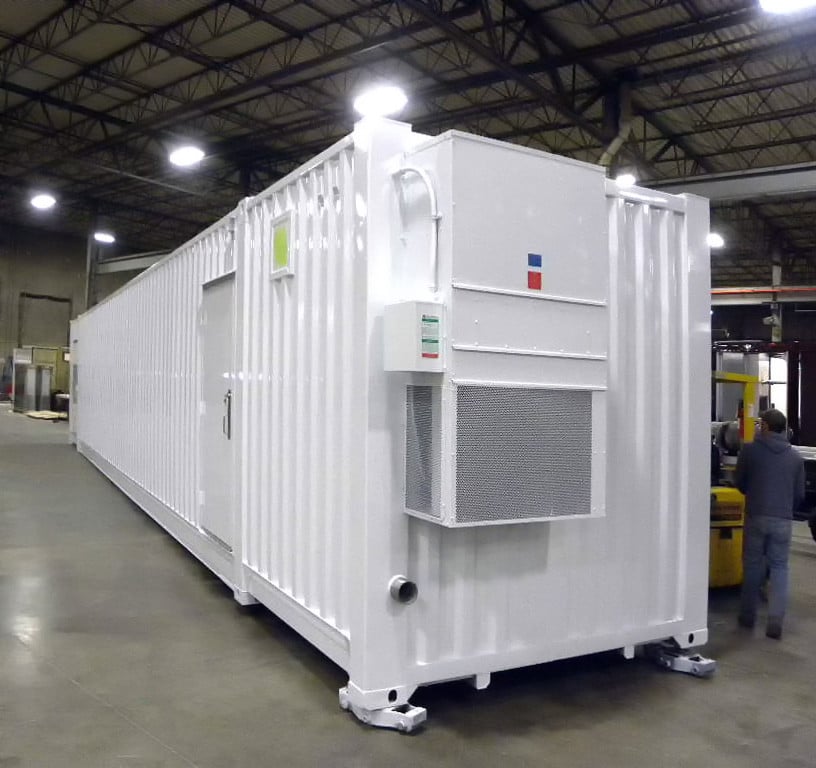
Searching for information on industrial fabrication services benefits? Read about all the ways your business can take advantage of outsourcing fabrication.
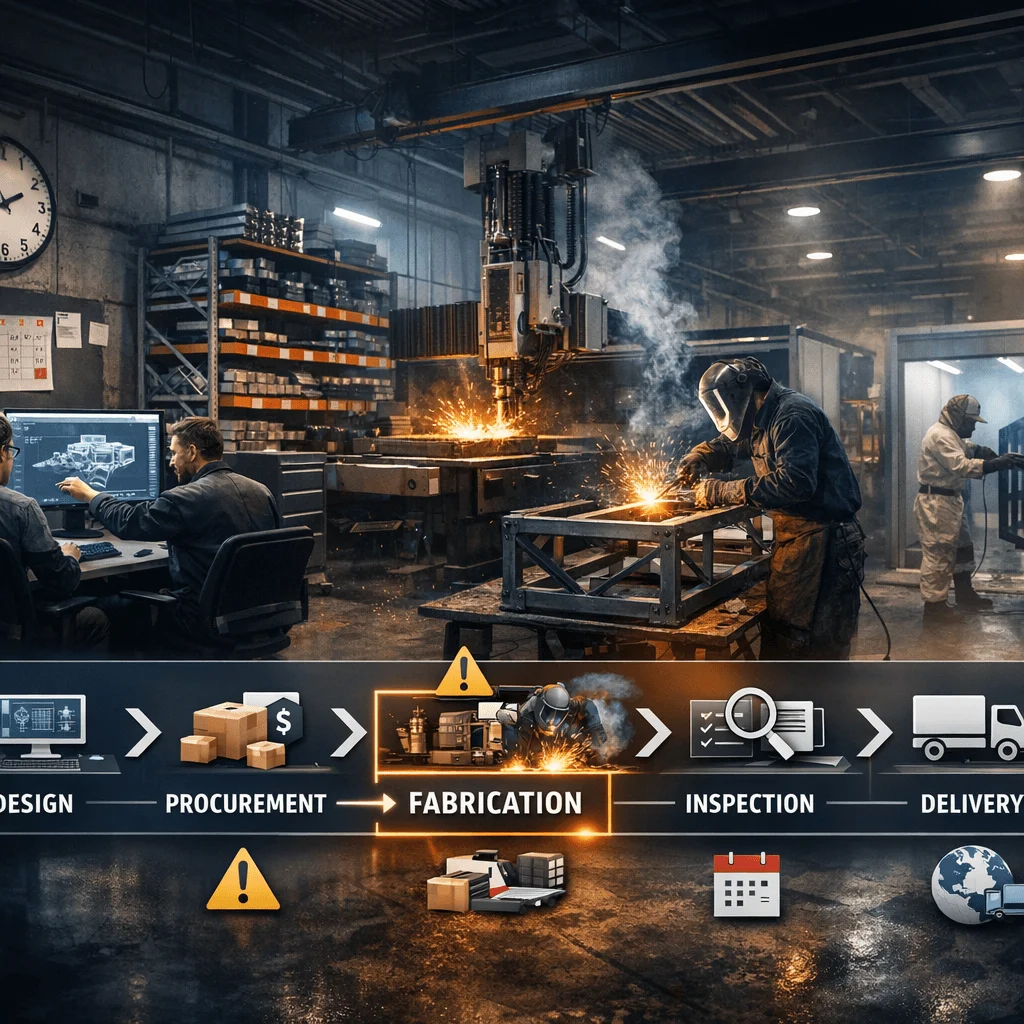
A custom fabrication lead time is the total duration between [...]
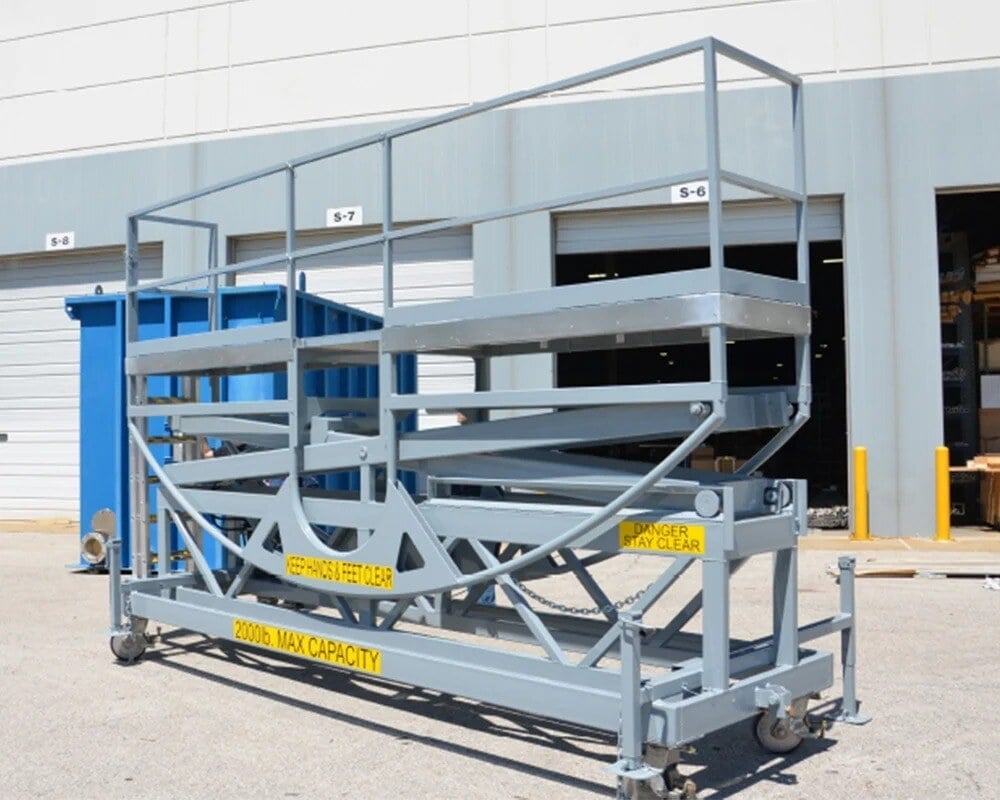
Discover the key differences between fabrication and manufacturing. Learn how each process affects materials, production methods, and the final product.
