
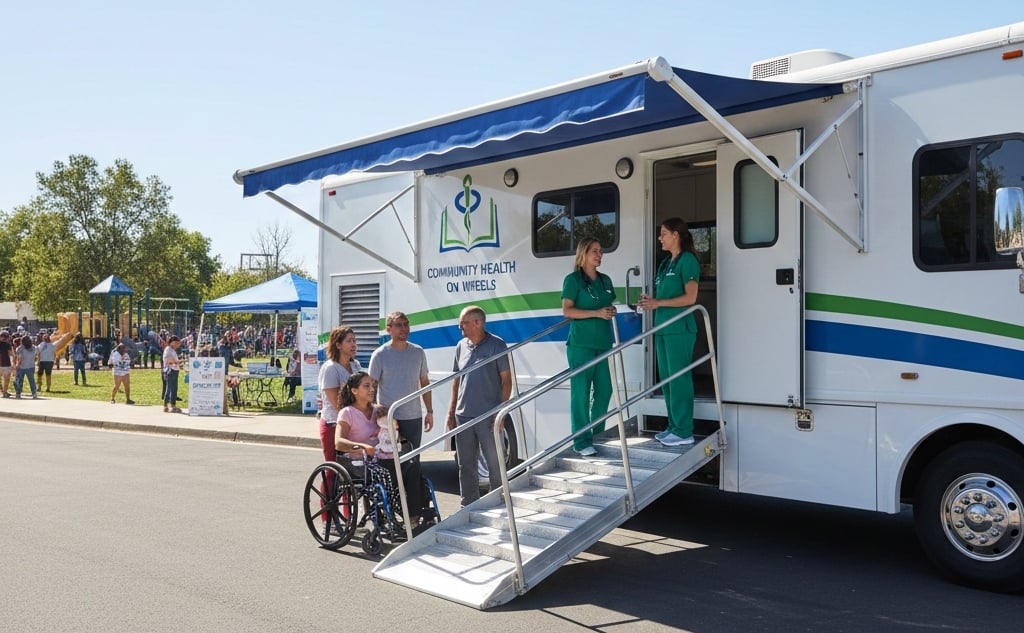
Designing a mobile medical vehicle isn’t just about putting hospital tools on wheels; it’s about creating a self-contained, efficient care unit that can operate anywhere. From a simple concept to a road-ready clinic, every detail matters, like the mission, interior layout, utilities, and safety. These vehicles bring healthcare directly to people who might otherwise go without it, so they must meet strict medical and transportation standards.
Epidemiological research shows there are about 2,000 mobile health clinics in the U.S., and they deliver up to 6.5 million visits annually. This impact highlights how crucial mobile medical units are in bridging healthcare access gaps, especially in underserved or remote communities. Whether it’s a diagnostic lab, a mobile dental office, or an emergency unit, building one takes planning, precision, and craftsmanship.
This blog breaks down how a mobile medical vehicle actually comes to life. Read on!
How Is the Foundation Planned for Mobile Medical Fabrication
Before a single wrench turns, everything begins with planning. This is where an idea becomes a real, road-ready medical unit. It’s not just paperwork; it’s the foundation for safety, usability, and efficiency. Teams sketch out needs, routes, and budgets long before fabrication starts.
A well-planned project saves months of rework later. And honestly, this is where the smartest builds stand out, by thinking ahead about who’ll use the vehicle, where it’ll go, and how it’ll function day after day.
The mission and medical purpose
A mobile dental van looks nothing like a diagnostic lab or vaccination unit. When the purpose is crystal clear, everything else falls into place: equipment, power, layout, even storage. The mission keeps everyone on the same page when ideas start to drift.
Study the operational environment
Next, it’s time to study the terrain, literally. A van built for narrow urban streets needs tight turning and low noise, while rural outreach units demand extra clearance and tougher suspension. Designers often map out actual routes to make sure the vehicle won’t struggle where it’s needed most. It’s all about building something that fits the environment, not fighting against it.
Estimate patient flow and staff needs
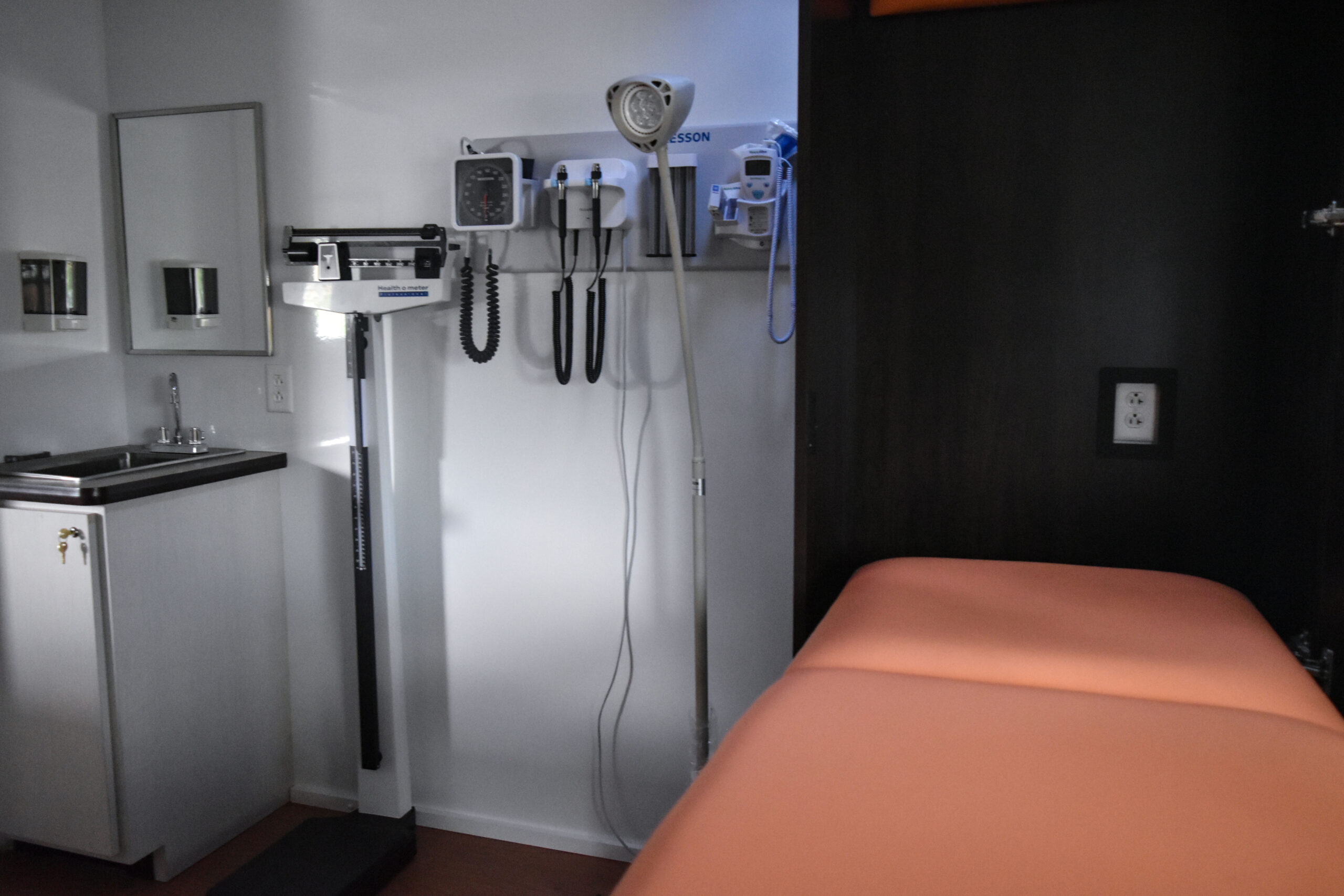
You can’t cram a hospital into a truck, so every inch has to earn its place. Designers plan how patients will move through, check in, be examined, and exit without backtracking or crowding. The smoother the flow, the better the experience for both patients and staff. Even small things, like where a sink sits or where equipment plugs in, can make or break daily operations.
Budget, timeline, and long-term outlook
Budgeting isn’t just about the upfront build. You’ve got to think fuel, generator service, and future upgrades, too. Teams often build in buffer time because fabrication, testing, and certification never go exactly as planned. A little patience here prevents a lot of headaches later.
How long does the planning stage usually take?
For most custom mobile clinics, expect 8–12 weeks of detailed planning, which includes defining the mission, route mapping, and finalizing design specs before fabrication even begins.
What’s the Right Platform to Build a Reliable Mobile Medical Unit
The platform sets the limits for space, weight, and even how your clinic feels on the road. Pick the wrong one, and you’ll end up fighting physics. Pick the right one, and everything, from power systems to layout, falls neatly into place. It’s where engineering meets purpose.
Truck, trailer, or van, what fits best
Each platform has pros and cons. A truck offers strength and high payload capacity. Trailers give room to expand or detach, while vans are compact, maneuverable, and quick to deploy. The choice usually depends on how often the vehicle moves, where it travels, and how much equipment it carries. A good designer helps match the mission to the platform, not the other way around.
Think structure, not just style
Beneath every clean paint job is a structure that carries thousands of pounds of medical gear. Engineers look at Gross Vehicle Weight Rating (GVWR), axle capacity, and frame integrity before choosing a chassis. If these numbers don’t line up, no amount of interior design can save the build. Strength, balance, and safety always come first.
Retrofitted or purpose-built
There’s always a debate here. Retrofitted vans are faster and cheaper to build, but they come with limits; you’re working around existing walls, ceilings, and wiring. Purpose-built units, on the other hand, start from an empty chassis, giving full control over every inch. It’s a bigger investment, but for long-term projects, it pays off in reliability and comfort.
Accessibility and exterior design details
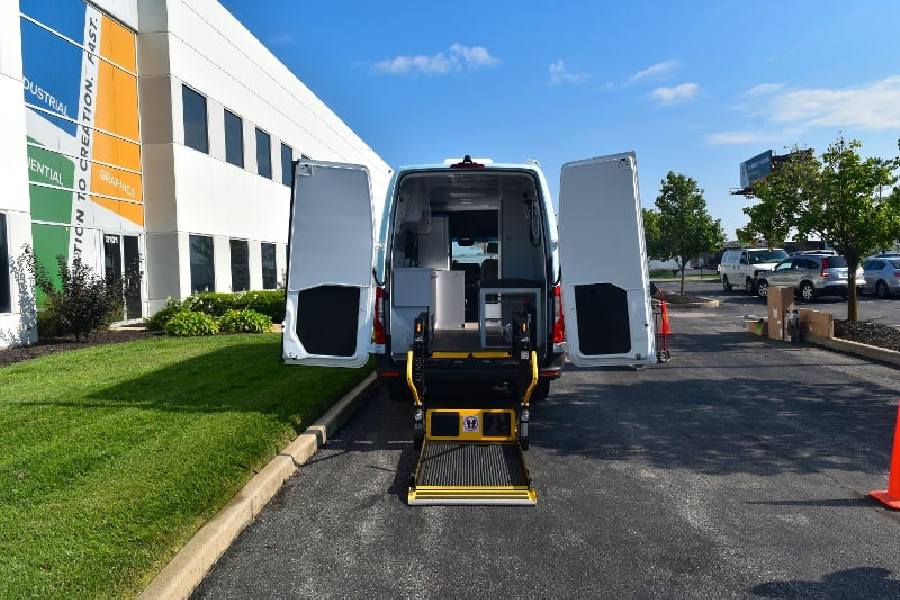
A good platform isn’t just about mobility; it’s about accessibility. That means wheelchair lifts, low steps, non-slip ramps, and weatherproof entry points. Many units also include external awnings for outdoor check-ins or shaded waiting areas. The exterior becomes the first impression, so both looks and function matter equally.
Can you convert an RV into a mobile medical unit?
Technically, yes. But most RVs aren’t built to meet medical-grade safety or electrical standards. Retrofitting can work for light-duty setups, yet for full-scale clinics, a purpose-built chassis is safer, sturdier, and easier to maintain long term.
Smart Interior Design That Improves Mobile Healthcare Operations
Once the chassis is chosen, the real magic begins inside. This is where the vehicle turns from a blank metal shell into a fully functional mobile clinic. The interior design determines how well doctors, nurses, and patients can move, interact, and get things done. It’s part architecture, part ergonomics, and part problem-solving. A strong workflow design means fewer delays, better hygiene, and smoother care, even in tight spaces.
Smart zoning for function and flow
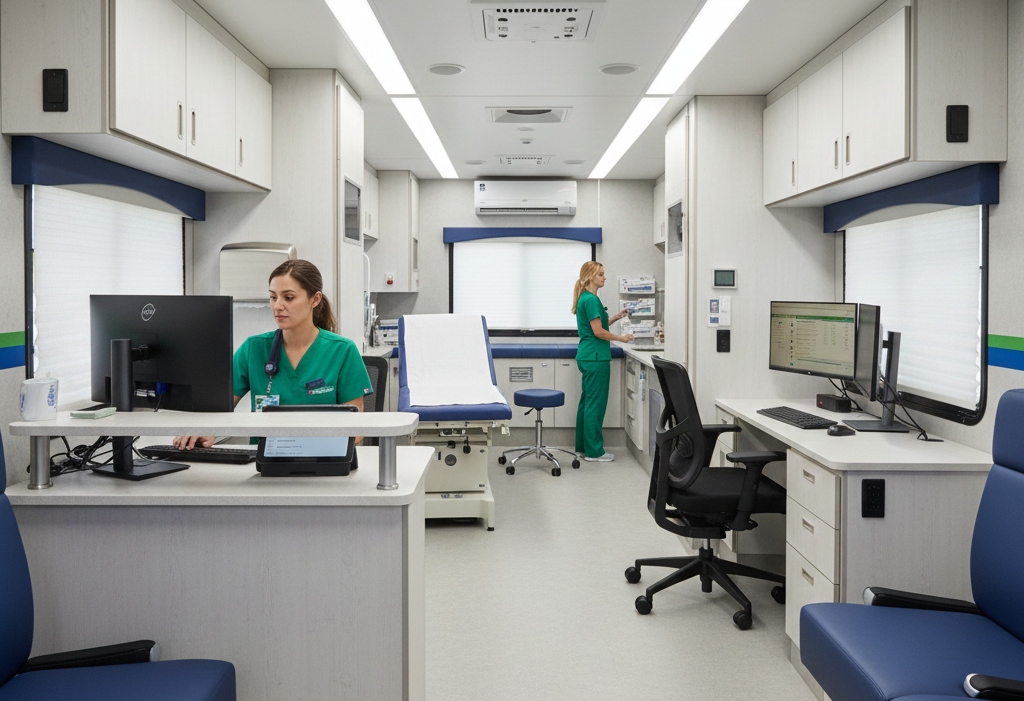
The best mobile units divide space into zones: clinical, administrative, and support. There’s usually a clear path: patients enter, register, move into exam rooms, and exit without crossing staff work areas. Designers sketch these pathways carefully to keep things simple and stress-free.
Designing for comfort and privacy
Privacy is a big deal, especially in small spaces. Sliding doors, partitions, or even clever use of sound-dampening materials can make a huge difference. It’s not just about treating people, it’s about helping them feel safe and respected. A calm, private environment builds trust between staff and patients.
Ergonomics matter more than looks
It’s easy to focus on shiny surfaces, but comfort and efficiency matter most. Everything inside, from the chair height to where the gloves are stored, needs to match human movement. The goal is to reduce strain, keep supplies within reach, and let clinicians work without awkward bending or stretching.
Integrating essential systems: plumbing, HVAC, and power
Behind the walls, there’s a complex network of systems keeping everything running. Clean water, waste tanks, HVAC design with HEPA filtration, power distribution, and lighting all have to be compact yet reliable. These systems work quietly in the background but determine whether the unit feels professional or makeshift.
What’s the ideal airflow setup for a mobile clinic?
Most medical units aim for 6–12 air changes per hour with HEPA-grade filters. This ensures clean air circulation, comfort for staff, and compliance with infection-control standards.
How Systems Integration Shapes Reliable Mobile Medical Design
This stage is where engineering meets precision. After the interior design is mapped out, it’s time to install the systems that make the mobile clinic come alive: power, water, HVAC, and medical equipment. It’s a balancing act between space, weight, and reliability. Each wire, hose, and bracket must fit perfectly because there’s no room for error once the unit hits the road. A well-integrated system means the clinic works exactly as intended, quietly, efficiently, and safely.
Power systems and backup design
Every mobile unit needs a dependable power source. Generators, shore power connections, or hybrid battery setups keep the lights, HVAC, and medical tools running. Designers calculate total load, then size the generator accordingly; too small and systems fail, too large and you waste fuel. Many setups include an uninterruptible power supply (UPS) to keep critical equipment running even during switchovers.
Clean water, waste management, and plumbing
A clinic can’t run without clean water and proper waste disposal. Tanks are fitted for both fresh and grey water, with easy access for maintenance. Plumbing lines are insulated to handle temperature changes, and materials are chosen to resist corrosion. It’s one of those systems you rarely notice, unless it’s done wrong. Similar durable systems are engineered into mobile water treatment solutions.
Mounting medical equipment for motion safety
Everything inside has to survive bumps, turns, and vibrations. Medical gear like exam tables, diagnostic machines, and monitors is mounted with reinforced brackets and tested for stability. Even small items like storage cabinets are locked down to prevent accidents. Vibration testing ensures nothing shifts or loosens over time.
Data, communications, and telehealth setup
Modern clinics rely on connectivity. Internet access, digital records, and telehealth consultations all demand reliable data links. Depending on location, that can mean cellular boosters, Wi-Fi routers, or satellite uplinks.A strong network helps doctors consult remotely and upload patient data securely, even in remote areas, supported by thoughtful HVAC design standards for mobile clinics.
How do you calculate the right generator size for a mobile clinic?
Add up the total power draw of all systems running at once, then multiply by 1.25 to cover surge loads and safety margins. That buffer ensures your generator can handle peaks without strain or power drops.
Designing Mobile Medical Units for Specialty Healthcare Applications
No two healthcare missions are the same, and neither are the vehicles that support them. Designing a mobile medical unit means building for purpose, not just for appearance. Whether it’s an imaging lab, blood donation van, or dental care unit, each requires a unique configuration. This is where customization transforms a standard chassis into a fully functional, mobile healthcare environment.
According to HRSA’s 2025 UDS Chartbook, the number of mobile van sites (health center mobile units) has been growing steadily, rising from 851 mobile van sites in 2019 to 1,093 in 2023. This growth reflects an expanding need for specialized, mobile healthcare options that bring care directly to patients.
Tailoring for specific medical practices
Every specialty brings its own technical and spatial demands. A mobile dental unit needs compact X-ray machines, suction systems, and sterilization areas. Imaging trailers require lead shielding and vibration isolation. Vaccination or screening vans prioritize patient throughput, refrigeration units, and waiting areas. Builders collaborate directly with doctors and healthcare staff to ensure that each feature serves a clinical purpose; nothing is decorative, everything is functional.
Designing with workflow logic
Efficiency drives the layout. The patient’s journey, entry, consultation, treatment, and exit must flow without bottlenecks. Designers often use mockup testing to simulate real operations before finalizing placement. For example, moving the handwash sink six inches closer to the workstation might save hours of movement each week. Small changes like these make a big difference in day-to-day use.
Balancing form, function, and compliance
Customization isn’t about creativity alone; it’s about meeting medical, structural, and ADA standards. Builders must integrate specialized gear without compromising weight limits, mobility, or accessibility. That means choosing lighter materials, modular panels, and medical-grade finishes that resist bacteria and meet hygiene codes, while keeping the space open and navigable.
Comfort and patient experience
Inside a mobile clinic, patients often feel nervous or confined. Soft lighting, temperature control, and noise insulation can change that. Designers now use ergonomic seating, low-glare LEDs, and neutral tones to reduce stress. Every inch is designed to make people forget they’re inside a vehicle, and that’s the true measure of a well-built mobile clinic.
Can a mobile medical unit serve multiple healthcare functions?
Yes. Many are designed using modular interiors that can switch between purposes, for example, from a primary care clinic to a diagnostic testing lab. This adaptability makes it easier for healthcare providers to respond to changing needs or seasonal demands without major redesigns.
Quality Assurance That Keeps Mobile Healthcare Units Road-Ready
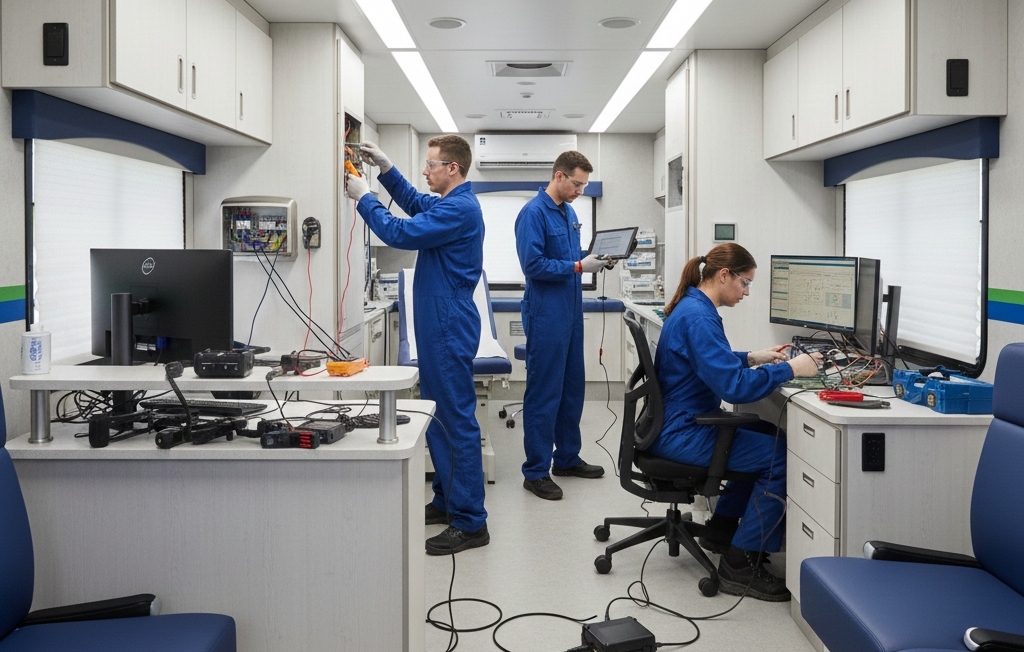
Before any mobile clinic is cleared for use, it faces rigorous testing, both in the lab and on the road. Testing ensures that everything functions safely, reliably, and consistently, even under long hours of travel or extreme weather. It’s where craftsmanship meets validation.
Structural and vibration endurance testing
A vehicle that carries sensitive medical gear can’t afford weak joints or loose fittings. Engineers perform vibration and fatigue testing, simulating thousands of miles of driving on rough surfaces. They measure frame flex, fastener strength, and noise levels to confirm nothing loosens or cracks. Reinforcement points are then adjusted to extend the vehicle’s service life.
Electrical, HVAC, and plumbing reliability
Electrical systems are checked for load balancing, grounding integrity, and redundancy. HVAC units undergo thermal mapping to confirm steady temperature and air purity across rooms. Plumbing lines are pressure-tested to prevent leaks and bacterial buildup. These systems must perform flawlessly since they directly impact patient comfort and infection control.
Equipment calibration and safety validation
Medical devices behave differently on the move. That’s why builders test all equipment under operational conditions, running X-ray machines, refrigerators, and sterilizers while the vehicle is in motion. Each tool is calibrated to ensure consistent output despite voltage fluctuations or vibration. The goal: hospital-grade performance in a mobile setting.
Final inspections and certifications
Before delivery, the clinic undergoes DOT safety inspections, NFPA 99 checks, and, where applicable, ISO 9001 quality audits. Only after it passes every requirement does it receive certification. This final stage includes a live road trial, confirming braking, suspension, and interior integrity after extended travel.
A recent Federal Motor Carrier Safety Administration (FMCSA) study shows that carriers with poor maintenance had crash rates 65 % higher than average, underscoring why rigorous testing and service routines are critical in mobile care units.
How long does the full quality testing process take for a mobile clinic?
On average, 3–6 weeks, depending on complexity. Simple vaccination units pass faster, while high-spec imaging or surgical vehicles require deeper calibration and multi-environment testing to ensure long-term reliability.
Turn Your Mobile Clinic Idea Into Reality Today
Designing and fabricating a mobile medical vehicle is more than engineering; it’s about extending care, safety, and trust to every community. Each build combines craftsmanship, compliance, and innovation to meet real-world medical demands. From structural design to on-road performance, every detail matters because lives depend on it.
If you’re ready to create a custom-built mobile medical unit that meets the highest healthcare and transport standards, connect with Craftsmen Industries, a leader in mobile medical fabrication and design. Visit CraftsmenInd.com to start your project and bring accessible, reliable healthcare to the road.
Frequently Asked Questions
How much does it cost to build a mobile medical vehicle?
The cost largely depends on design, vehicle size, and onboard equipment. A standard mobile clinic might start around $125,000, while fully customized units can reach $300,000 or more. Specialized systems like labs, imaging tools, and advanced HVAC setups also impact the final price.
How long does it take to design and fabricate a mobile clinic?
From planning to final delivery, the process usually takes four to nine months. This timeline covers concept design, fabrication, interior fitting, and systems testing. The duration can extend if there are design changes or additional compliance checks along the way.
Do mobile medical units require special certifications or regulations?
Yes, mobile medical vehicles must meet both healthcare and road-safety standards. They often need ADA accessibility compliance, ISO quality management approval, and proper infection-control protocols. These certifications ensure safe, legal, and effective healthcare delivery on the move.
What features should a mobile clinic include for patient safety and comfort?
Essential features include ADA-compliant ramps or lifts, cleanable antimicrobial surfaces, and ergonomic interior layouts. Reliable HVAC systems maintain air quality and comfort, while secure power sources ensure uninterrupted care. Every design choice aims to balance safety, function, and ease of use.
How often do mobile medical vehicles need maintenance?
Regular preventive maintenance is vital to keep operations smooth. Systems like the generator, plumbing, and HVAC should be inspected frequently to avoid unexpected breakdowns. Staying proactive with servicing helps extend the vehicle’s lifespan and minimize downtime.
Filter Posts by Tag
related posts
Discover how telemedicine, AI, and advanced tech in mobile medical RVs are shaping the future of healthcare access in rural and underserved areas.
Wondering if and how can mobile medical vans partner with schools? Discover the ways a mobile clinic can provide essential healthcare services to students!
Learn how emergency responders use medical vehicles to navigate challenges and improve reaction times in unpredictable natural disasters.
