
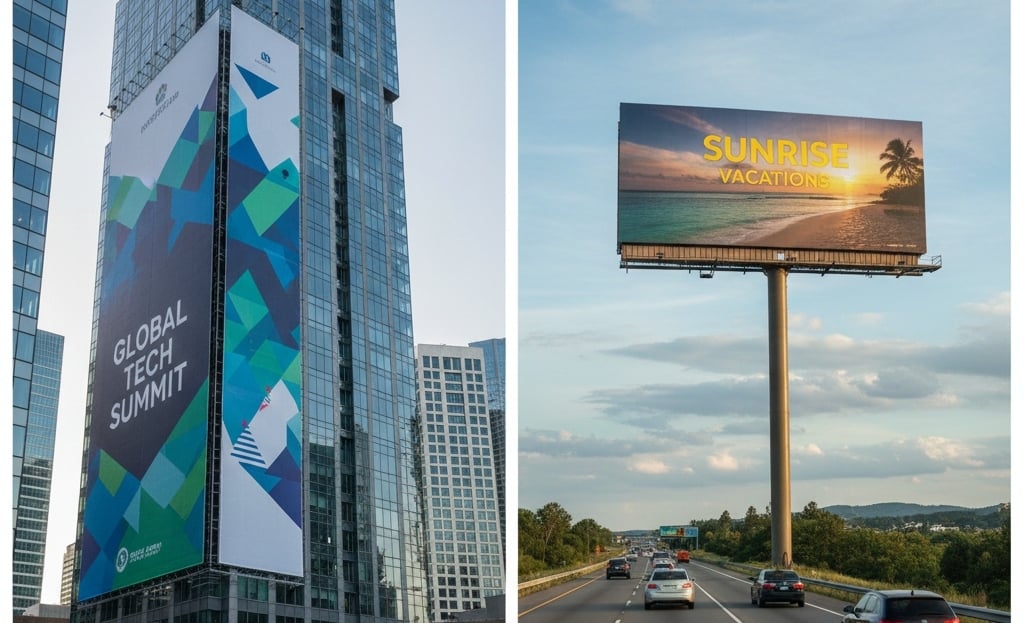
When it comes to outdoor advertising, large-format banners and billboards both offer powerful ways to capture attention, and the strength of the medium is clear, as according to the Out of Home Advertising Association of America (OAAA), U.S. out-of-home ad revenue surpassed $9 billion in 2024, an indication of the channel’s scale and staying power.
Large-format banners offer flexible, cost-effective solutions that are ideal for close-range impact and quick changes. Billboards, on the other hand, deliver broad reach and repeated exposure along busy routes over longer periods. Understanding the strengths and limitations of each will help you choose the right format to maximize your visibility and return on investment.
Banners vs Billboards: Purpose and Placement
Outdoor advertising comes in many forms, but large-format banners and billboards are two of the most common, and for good reason. Knowing exactly what each offers is the first step in choosing the right tool for your message.
Large Format Banners: Flexible, Bold, and On-Site
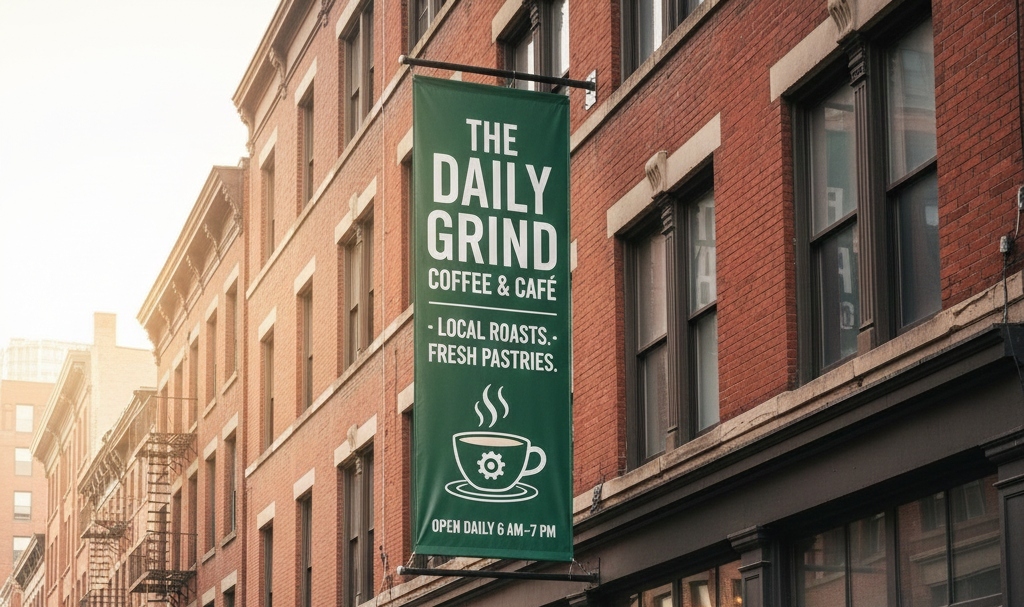
Large-format banners are printed graphics made from durable materials, such as vinyl or mesh. They can cover walls, fences, scaffolding, and even building facades. Sizes vary widely, allowing for large, bold visuals that grab attention up close.
Because banners are relatively easy to produce and install, they’re a go-to for temporary promotions, grand openings, construction site branding, and event signage. Additionally, their quick swapability makes them ideal when your message needs to change frequently.
Billboards: High-Impact Reach Along Busy Corridors
Billboards, on the other hand, are fixed or digital displays positioned alongside highways, busy streets, and high-traffic areas. They’re designed to reach a broad audience with messages that can be seen from a distance and often repeated throughout a day or week.
Billboards are usually rented through media companies that control advertising space, so you’re paying for visibility over time rather than owning the display itself. Static billboards show printed advertisements on large panels, while digital mobile billboards rotate multiple ads on an electronic screen, offering even more flexibility.
Understanding where each format thrives will help you plan your signage strategy with confidence.
What sizes do large-format banners typically come in?
Large-format banners can vary significantly in size, ranging from small fence banners measuring around 2 by 4 feet to massive building wraps that stretch over several hundred square feet, often printed in sections and assembled on-site.
Visibility Fundamentals That Drive the Choice
When deciding between large-format banners and billboards, visibility is everything. How far away your audience is, how fast they’re moving, and how long they have to take in your message all play a role in which format will perform best.
Seeing Clearly: Letter Height and Viewing Distance
One simple rule guides effective outdoor signage: your letters should be roughly one inch tall for every ten feet of viewing distance. For example, if your banner is viewed from 30 feet away, the letters need to be approximately three inches high to be read comfortably.
Billboards often use larger letters because drivers on highways have less time to process the message. So, the farther your audience is, the bigger and bolder your type needs to be.
Speed Matters: Dwell Time and Approach Speed
Consider how quickly your audience is moving. A driver speeding down a highway might have only a few seconds to glimpse a billboard, so the message must be simple, clear, and instantly readable.
On the other hand, pedestrians or slow-moving visitors near a storefront can take in more detail on a banner, including secondary text and calls to action. This is why banners often pack more information than billboards, which rely on minimal words and strong visuals.
Both distance and speed affect how your message is perceived, so matching your sign’s size and content to the viewing conditions is key to grabbing attention and staying in the mind.
How do I determine the right letter size for my sign?
Measure the average distance from where viewers will see your sign, then multiply by 1 inch per 10 feet. Adjust to a larger size for faster-moving audiences or high visibility on highways.
Comparing Expenses and Turnaround Times
Cost and timing can make or break an outdoor campaign, so it’s worth examining how banners and billboards differ in these aspects.
Large-Format Banners: Cost-Effective and Quick to Produce
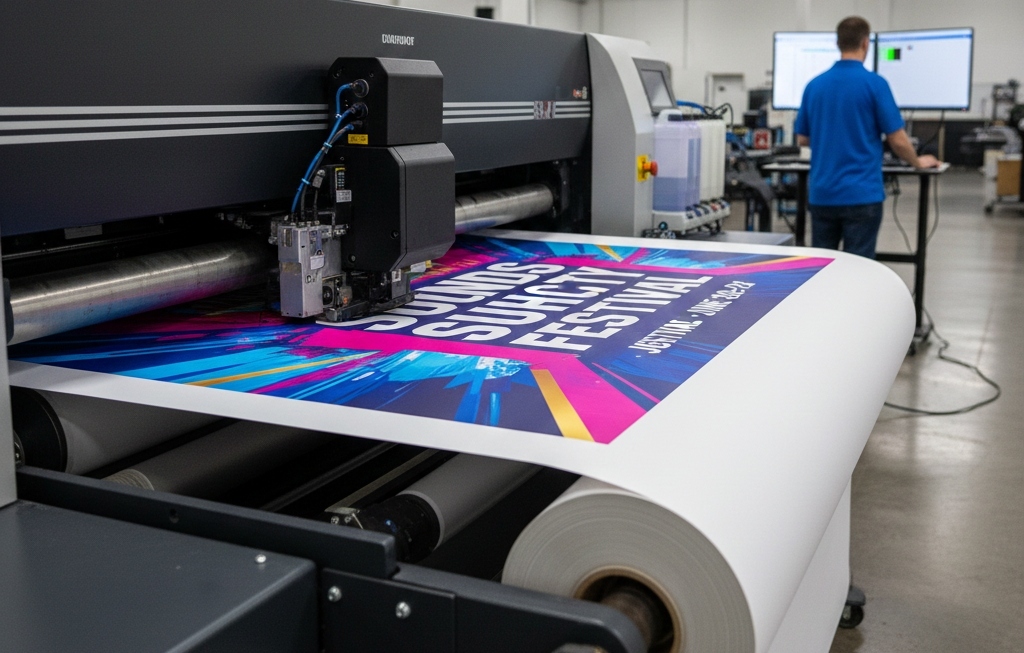
Banners typically offer a more affordable entry point. Production costs usually range from $3 to $8 per square foot, depending on material type and finishing details. Thanks to modern printing technology, banners can be produced and shipped in just a few days. This makes them ideal when you need to move fast, whether it’s a short-term promotion or a last-minute event.
Billboards: Media Costs and Longer Lead Times
Billboards use a different pricing model, mainly focused on media rental fees rather than production. A standard four-week rental can cost anywhere from $3,000 to over $10,000 per month, depending on location and market size.
Digital billboards generally cost more but allow for dynamic, rotating content. Since billboard space is limited and in high demand, securing a spot often requires booking and can take weeks or even months.
Are billboards more expensive than banners because of media rental fees?
Yes, while banners mainly incur production costs, billboards include media rental fees, which can significantly increase the overall expense depending on location and duration.
Durability and Installation Considerations for Banners and Billboards
When choosing between large-format banners and billboards, it’s important to consider how each holds up over time and fits with your specific site conditions. The right materials and installation methods can make all the difference in the lifespan and effectiveness of your signage.
Materials Built to Withstand the Elements
Large-format banners are commonly printed on vinyl, prized for its durability and vibrant color retention in sun, rain, and snow. For windy locations, mesh banners are preferred since they allow air to flow through, reducing stress and the risk of tears. Fabric banners are usually reserved for indoor or sheltered spaces where a softer, more polished appearance is desired.
Billboards are built with weather-resistant materials designed for long-term exposure. Static billboards typically use heavy-duty vinyl or laminated posters, whereas digital billboards feature weatherproof electronic screens designed to operate in various climates.
Installation and Maintenance Factors
Banners offer installation flexibility. Finishing options, such as grommets, pole pockets, and hems, allow for easy mounting on fences, buildings, or banner frames. This makes banners quick to install, swap out, or remove as needed.
Billboards, however, require professional installation and often need permits or coordination with the media company that owns the space. While billboards tend to have a longer lifespan, they still require occasional maintenance to check for damage or fading.
How often do banners need to be replaced compared to billboards?
Banners may need replacement every one to two years, depending on exposure, while billboards generally last longer but still require periodic upkeep to maintain visibility and condition.
Audience Reach and Campaign Effectiveness
The core goal of outdoor signage is to get your message in front of the right people and then measure its effectiveness. Knowing how each format reaches your audience and how to track its impact is essential to making informed decisions.
Billboards: Wide Reach with Consistent Impressions
Billboards are placed strategically along busy roads and highways to capture a broad audience. Their power comes from repeated exposure; regular commuters see the same message multiple times, which helps build strong brand awareness over the course of weeks or months. This makes billboards ideal for companies targeting broad markets or looking for long-term visibility.
To measure effectiveness, advertisers often use tools such as unique URLs, QR codes, or custom phone numbers tied to a specific campaign. Industry data indicate that when combined with other marketing channels, billboards can deliver a solid return, although success depends on factors such as location, message clarity, and duration.
Banners: Targeted Impact at the Point of Decision
Large-format banners excel at capturing attention where it matters most, close to your business or event. They’re perfect for promoting time-sensitive offers, guiding customers, or highlighting special events. Because banners target a smaller, localized audience, tracking their impact often involves analyzing foot traffic, sales changes, or coupon redemptions linked to the banner.
How can I track the success of a banner campaign?
Tracking banner success usually involves monitoring local foot traffic, sales patterns, or redemption of promotional offers featured on the banner, providing direct insight into customer response.
When Banners Are the Right Call
Large-format banners shine in situations where flexibility, speed, and close-range impact are key. They work best when you have control over the site and want to deliver a focused message quickly and effectively.
This is backed by shopper-marketing research showing a high share of purchase decisions are made in-store, e.g., POPAI’s Mass Merchant study found 82% of decisions occurred inside the store, so well-placed banners can influence behavior near the point of choice.
Quick Deployment and Local Control
If you need to get a message up fast, whether for a grand opening, a hiring push, or a limited-time promotion, banners are often the best choice. Their production and installation turnaround can be as quick as just a few days, allowing you to respond quickly to changing needs.
Since banners are typically installed on properties you manage, you avoid ongoing media rental fees, giving you complete control over when and where your message appears. This makes banners cost-effective for temporary or seasonal campaigns.
Ideal for Point-of-Decision Messaging
Banners perform well when your audience is already nearby and moving slowly, such as foot traffic around retail entrances, event venues, or construction sites. They can deliver detailed information that might be too much for a billboard, like special offers, directions, or event schedules.
Can banners be used for long-term advertising campaigns?
While banners are excellent for short to mid-term campaigns due to their flexibility and cost, they can also be used for longer-term installations if the materials and installation methods match the environment.
When Billboards Are the Right Call
Billboards excel when your goal is to build broad awareness and reach a large audience repeatedly over time. They work best in high-traffic locations where simple, impactful messages can make a lasting impression.
Maximizing Reach along Busy Routes
If your target audience includes commuters or drivers passing through key corridors, billboards offer a powerful platform. Positioned to capture attention at a glance, they deliver high-frequency exposure that helps embed your brand or message in the minds of viewers.
Simple Messages, Big Impact
Because drivers have only seconds to see and understand a billboard, the creative needs to be straightforward and uncluttered, short, bold messages paired with striking visuals ensure your message registers quickly and clearly.
Billboards are ideal for campaigns requiring a consistent, long-term presence in specific geographic areas. They can also be complemented with mobile billboards or fleet vehicle wraps to extend reach in areas where fixed inventory is limited.
Are billboards effective for detailed messages?
Billboards are best for simple, clear messages due to limited viewing time. Detailed or complex information is better suited for banners or other formats that allow viewers more time to process it.
Side-by-Side Decision Checklist
When choosing between large-format banners and billboards, a quick checklist can help clarify which option best suits your goals and circumstances.
|
Factor |
Large-Format Banners |
Billboards |
|
Primary Goal |
Point-of-decision influence, short-term messaging |
Broad market reach, long-term brand awareness |
|
Location Control |
Installed on your property or controlled sites |
Media space rented along public roads |
|
Production Time |
Days to one week |
Weeks to months for media booking |
|
Cost Structure |
Production costs only |
Media rental fees plus production |
|
Message Detail |
Can include more detailed information |
Keep it simple and bold |
|
Audience Speed |
Slow-moving or stationary audiences |
Fast-moving commuters |
|
Durability |
1–2 years, depending on materials and exposure |
Longer lifespan, with periodic maintenance |
This brief overview should help you determine which format best aligns with your project’s needs, timeline, and budget.
Maximize the Impact of Your Outdoor Advertising with the Right Choice
Choosing the right mix of large-format banners and billboards is key to making your message stand out. Whether you need fast, flexible signage close to your location or broad visibility along busy routes, matching your goals, budget, and timeline with the right format ensures you get the most impact for your investment.
When you’re ready to elevate your outdoor advertising, Craftsmen Industries is here to help. From material selection and design guidance to professional production and expert installation, their team delivers signage solutions tailored to your unique needs. Contact Craftsmen Industries today and take the next step toward signage that drives real results and makes every impression count.
Frequently Asked Questions
How long does it typically take to get permits for billboard installation?
Permit times vary widely depending on local regulations and the type of billboard. In some cities, the process can take a few weeks, while in others, it may extend to several months. Planning and collaborating with local authorities or experienced installers can help streamline the approval process.
Can large-format banners be reused for multiple events or campaigns?
Yes, depending on the material and condition, banners can be cleaned and reused. Vinyl banners with protective coatings tend to hold up better over time. However, repeated use may affect color vibrancy and durability, so regular inspection is recommended.
What environmental considerations should I consider for outdoor signage?
Outdoor signage should be designed to withstand weather extremes, including UV exposure, rain, wind, and temperature fluctuations. Sustainable materials and eco-friendly inks are becoming increasingly common, allowing for a reduction in environmental impact without compromising quality.
Are there size limits for banners and billboards that I should be aware of?
Yes, banners and billboards have size limits based on printing equipment and installation constraints. Large-format printers can produce banners up to approximately 16 feet wide in one piece, whereas billboards are often limited by local zoning laws and structural factors.
How do digital billboards compare with traditional static billboards in terms of cost and effectiveness?
Digital billboards typically have higher upfront and rental costs but offer dynamic content options and multiple ad rotations per day. They can be more engaging for audiences but require careful creative planning to maximize effectiveness.
Filter Posts by Tag
related posts
Retail signs are one of the first things potential customers see of your business. Read on what signage should you have for a start up business.
Boost brand visibility with expertly designed outdoor signage. Strategic placement, size, contrast, and lighting turn passersby into loyal customers effectively.

Vinyl backdrops are the best and most common choice for food and product photography. Learn more about the 5 reasons to choose vinyl.
