
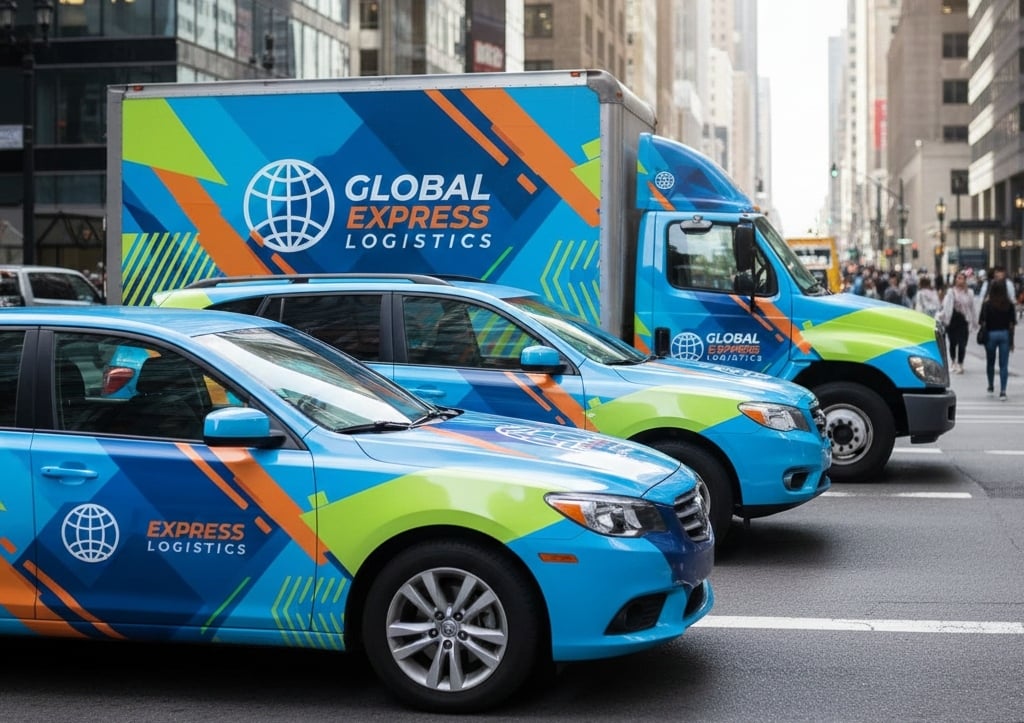
Fleet wraps are large-format printed vinyl graphics professionally applied to vehicles to promote a brand while protecting the original paint finish. They combine durable polymer films, UV-resistant coatings, and advanced digital printing to turn cars, vans, and trucks into high-impact mobile advertising.
A study cited by the Outdoor Advertising Association of America (OAAA) found that over 90% of U.S. travelers notice out-of-home (OOH) advertising in a given month, underscoring the medium’s broad real-world reach and reinforcing why fleet graphics are such effective brand touchpoints.
Read this blog to know about the materials, technologies, and fabrication methods that make modern fleet wraps durable, vivid, and consistent at scale.
The Role of Materials and Technology in Modern Fleet Wraps
The materials and technologies used in fleet wraps determine how long the graphics last, how vibrant they appear, and how efficiently they can be applied or removed. Today’s wraps combine advanced vinyl polymers, innovative adhesives, and precision printing to deliver professional, long-lasting results.
Grand View Research Automotive Wrap Films Market Report (2025) found that the global wrap films market was valued at USD 3.54 billion in 2024 and is expected to reach USD 15.32 billion by 2033, growing at a CAGR of 18.0%. This is driven by demand for vehicle customization, fleet branding, and durable, eco-friendly materials.
Key Innovations in Fleet Wrap Technology
Modern fleet wraps use advanced materials and techniques that improve durability, sustainability, and application speed.
- High-durability polymer films for flexibility and UV resistance
- Air-release adhesives for faster, bubble-free installation
- PVC-free sustainable wraps reducing environmental impact.
- UV and self-healing coatings that extend lifespan
These advancements make fleet wraps more reliable, easier to install, and longer-lasting, protecting both the brand image and the vehicle.
Why are new technologies vital in fleet wrap production?
They boost durability, color accuracy, and installation efficiency, helping fleets achieve consistent, professional-quality results.
The Foundation of Every Wrap: High-Performance Vinyl Films
The vinyl film is the heart of every fleet wrap. It determines how well the graphics look, how long they last, and how easily they can be installed or removed. A high-quality film must be durable, flexible, and resistant to UV light, moisture, and abrasion while maintaining a clean, professional finish over time.
Cast Vinyl vs. Calendered Vinyl
Vinyl films come in two main types, cast and calendered, each serving a different purpose. Cast vinyl is made by pouring liquid vinyl onto a casting sheet and curing it into a thin, lightweight film. This process makes it more flexible and dimensionally stable, ideal for wrapping complex curves, edges, and contours. It delivers a smooth, paint-like finish and can last for years without significant shrinkage.
Calendered vinyl, on the other hand, is produced by passing solid vinyl through heavy rollers to roll and stretch it. It’s thicker, less flexible, and best suited for flat surfaces or short-term promotional wraps. Although it’s more affordable, it’s not ideal for vehicles with many curves or long-term outdoor use.
Most commercial fleets prefer cast vinyl for its flexibility, glossy finish, and ability to hold color and shape over extended periods.
Surface Adaptability and Film Thickness
A vinyl film’s ability to adapt to a vehicle’s surface is crucial. Thin films (around two mils) stretch and conform to complex areas such as rivets and bumpers, while thicker options (3-4 mils) are better suited for box trucks or smooth panels. Choosing the right thickness ensures the wrap looks natural and remains secure through years of wear.
UV Resistance and Weatherproof Qualities
A quality vinyl film is designed to withstand outdoor conditions. Built-in UV inhibitors and protective topcoats prevent fading, cracking, and peeling. This keeps colors rich and surfaces intact, even when vehicles are exposed to intense sunlight, rain, or road debris.
Trusted Vinyl Manufacturers and Standards
Reputable brands like 3M, Avery Dennison, and Orafol set the benchmark for vinyl quality. Their products are tested for durability, adhesion, and ease of removal. Certified films ensure reliable performance, consistent color reproduction, and long-term protection for both the vehicle and the brand image.
Which vinyl type is best for long-term fleet wraps?
Cast vinyl is the best choice for long-term applications because it maintains its flexibility, smoothness, and vibrant finish for many years.
The Adhesive Layer That Powers the Bond
The adhesive is the unseen force that keeps every wrap securely in place. It has to create a strong, even bond that withstands changing weather and vehicle use, while still allowing for clean removal when the wrap is replaced.
Pressure-Sensitive and Air-Release Adhesives
Modern wraps use pressure-sensitive adhesives that activate when pressed onto the surface. Many premium films now feature air-release channels, tiny pathways that let air escape during installation. This helps installers achieve a bubble-free, smooth surface in less time and with less effort.
Temperature and Surface Compatibility
Adhesives are formulated for specific conditions. Cold-weather adhesives remain pliable at low temperatures, enabling winter installations. High-tack adhesives are stronger and ideal for vehicles with textured or older painted surfaces. Choosing the right adhesive ensures a lasting bond that won’t lift or peel.
Long-Term Removability and Paint Protection
A professional-grade adhesive should hold firm but also release cleanly when needed. When the wrap is removed correctly, it leaves the factory paint intact, often in better condition than before, since the vinyl and fleet wraps protect vehicle surfaces from UV rays and minor abrasions.
Can removing a wrap damage the paint?
No. When high-quality materials and professional techniques are used, wraps actually protect the paint rather than harm it.
Color and Clarity Through Advanced Printing Systems
A fleet wrap’s visual impact depends on its color quality and print precision. Modern digital printing technologies ensure that each wrap looks bold, clear, and consistent, no matter how many vehicles are in the fleet.
Digital Printing Technologies
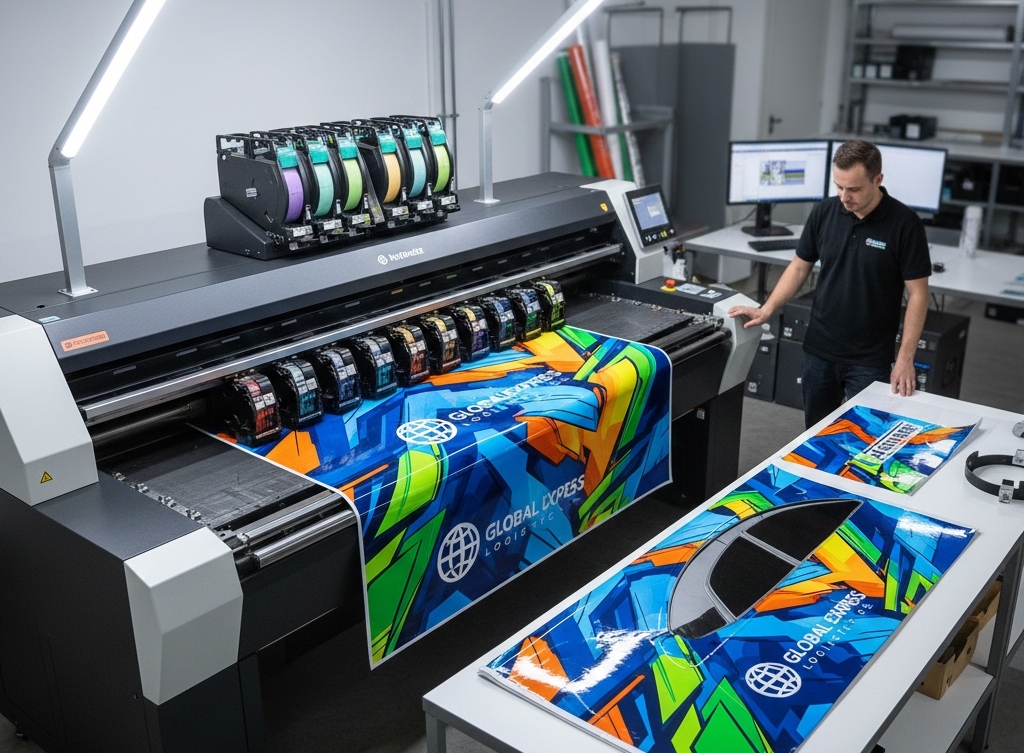
Most professional wrap facilities use one of three ink technologies:
- Eco-solvent inks: Deliver deep, rich colors ideal for detailed designs.
- Latex inks: Use water-based chemistry that’s safer and more environmentally friendly.
- UV-curable inks: Dry instantly under UV light, producing durable, scratch-resistant prints.
Each system offers unique advantages, but all are designed to produce high-resolution graphics that withstand years of outdoor exposure.
Color Accuracy and Brand Consistency
Color precision is crucial in fleet branding. By using color management software and ICC profiles, printing teams ensure that reds, blues, and other key brand tones appear exactly the same across all vehicles. This level of consistency reinforces recognition and professionalism.
Ink Durability and Fade Resistance
Outdoor wraps face constant sunlight and weather. Premium inks are designed with fade-resistant pigments and protective coatings that help colors stay bright and clear for years, even after thousands of miles on the road.
Which printing method gives the best color and durability?
Latex printing offers the best balance of vivid color, long-lasting performance, and eco-friendly production.
Protecting Every Layer with Lamination and Finishing
Lamination acts as a shield, locking in color and protecting the graphics from daily wear. It’s the final step that transforms a printed film into a long-lasting, professional-grade wrap.
Overlaminates and Protective Coatings
An overlaminate is a transparent film applied over printed vinyl. It protects against scratches, UV rays, and chemical exposure from fuel, road salt, and detergents. Available in gloss, matte, or satin finishes, laminates also enhance visual texture and depth.
Visual Appeal and Longevity
A laminated wrap looks richer and more polished. The protective coating maintains the original color tone, prevents dullness, and adds a refined surface finish. This extra layer extends the wrap’s usable life and keeps the design looking brand new even after years on the road.
Is lamination necessary for fleet wraps?
Yes. Lamination is essential because it preserves the wrap’s look, prevents color fading, and provides lasting protection from the elements.
Precision Tools and Modern Production Technology
Creating a seamless fleet wrap requires precision from start to finish. Modern production tools allow fabricators to design, cut, and install wraps with millimeter-level accuracy.
CAD Design and Digital Templates
Every wrap begins with a computer-aided design (CAD) file customized to the exact dimensions of the vehicle. This ensures that graphics align perfectly with doors, windows, and body lines, resulting in a clean, professional appearance.
Cutting and Application Equipment
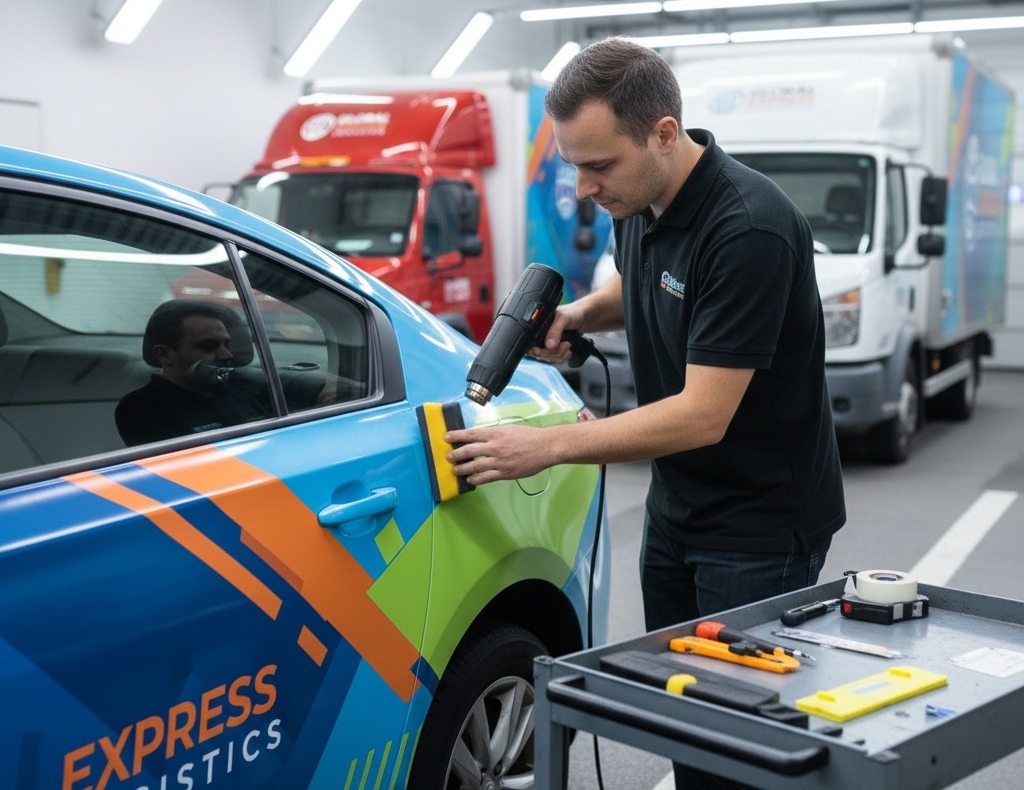
Plotters and precision cutters shape vinyl according to digital templates. During application, heat guns soften the vinyl for flexibility, while squeegees smooth the film and remove trapped air.
Visualization and Quality Control
Before installation, 3D renderings help visualize how the wrap will look on each vehicle. This preview ensures color alignment and scale accuracy. After installation, technicians inspect for imperfections or bubbles to ensure a flawless finish.
What tools ensure accurate wrap installation?
Installers depend on CAD design systems, digital plotters, and specialized heat tools to achieve a perfect fit and finish on every wrap.
Durability, Resistance, and Real-World Performance
Fleet wraps must withstand years of real-world challenges, including harsh weather, road debris, and frequent washing. Quality materials and care determine how well they hold up.
Weather and UV Resistance
Exposure to sunlight and rain can quickly degrade cheap wraps. Premium films use UV-blocking layers that reduce color fading and prevent the vinyl from shrinking or warping under extreme temperatures.
Scratch, Impact, and Chemical Protection
A laminated wrap provides a physical barrier against abrasions and minor impacts. It also resists damage from detergents, fuels, and road salts, maintaining a clean appearance longer.
Expected Lifespan and Maintenance Factors
With proper care, gentle hand washing, routine inspections, and parking in shaded areas, a professional-grade fleet wrap can last between five and seven years, sometimes longer.
How long does a fleet wrap last?
Most well-maintained fleet wraps last 5 to 7 years, though careful maintenance can significantly extend that lifespan.
Design Integrity and Brand Impact Across the Fleet
A fleet wrap is more than decoration; it’s a mobile extension of your brand identity. Each vehicle on the road communicates your company’s quality and reliability. When design integrity is consistent, your fleet instantly builds recognition and trust wherever it goes.
Seam Alignment and Full Coverage
Professional installers align every panel with precision so logos, graphics, and text flow naturally across doors and contours. This seamless look reflects craftsmanship and ensures every vehicle appears as one cohesive design.
Reflective and Specialty Finishes
Reflective films boost visibility after dark, while specialty finishes like chrome, carbon fiber, or matte textures add premium appeal. These options make fleet vehicles stand out while enhancing safety and brand impact.
Consistent Branding Across Multiple Units
Large format graphics fleets rely on color consistency and design uniformity to project the same professional image everywhere. When every unit matches perfectly, the brand feels unified and dependable.
Why is design consistency important for fleets?
Consistent design builds recognition and credibility, helping customers instantly identify and trust your brand across all regions.
The Shift Toward Greener Fleet Wrap Solutions
Sustainability is shaping the future of fleet graphics. Today’s materials and printing methods deliver the same durability and performance, with far less environmental impact.
- Eco-Friendly Material Choices: Modern PVC-free films provide the flexibility and strength of traditional vinyl while being recyclable and safer for installers and the environment.
- Water-Based and Low-VOC Inks: Latex and water-based inks emit fewer chemicals, improving indoor air quality and reducing the ecological footprint of every print run.
- Energy-Efficient Production Practices: New printing and curing systems consume less energy and generate less waste, creating high-quality graphics that are cleaner to produce and better for the planet.
Quality Standards and Trusted Certifications
Behind every flawless wrap is a process built on precision and accountability. Industry certifications and warranties ensure the use of the best materials and methods, and long-term reliability.
- Manufacturing and Process Certifications: Certifications such as ISO 9001:2015 and AS9100D verify that production meets strict quality standards for consistency and performance.
- Material Warranty Programs: Programs such as 3M™ MCS™ and Avery Dennison ICS™ guarantee results when certified films and inks are used together, giving clients confidence in lasting quality.
- The Value of Certified Professionals: Certified installers follow approved procedures for cleaning, temperature, and application, ensuring a perfect bond and finish on every vehicle.
Transform Your Fleet Into a Moving Brand Experience
The right combination of premium vinyl films, high-precision adhesives, digital print systems, and professional installation determines how well your fleet performs visually and physically. When executed correctly, wraps protect your investment, reduce repainting costs, and amplify your brand everywhere the road leads.
At Craftsmen Industries, every wrap is engineered and installed with precision, from design and color calibration to quality inspection and delivery.
Ready to give your fleet a bold, durable, and professional edge? Contact Craftsmen Industries today to turn your vision into a powerful, road-ready brand statement.
Frequently Asked Questions
How much does a fleet wrap cost per vehicle?
Fleet wrap pricing generally ranges from $2,000 to $5,000 per vehicle, depending on vehicle size, design complexity, film type (cast or calendered), and finish (gloss, matte, or specialty). Full-truck wraps with premium materials can exceed this range, while partial wraps or decals cost less.
How long does installation take?
Installation for a standard van or truck typically takes 1 to 3 business days, including cleaning, surface preparation, and application. Larger or more complex vehicles may require additional time to ensure precise alignment and curing.
Can wrapped vehicles go through automatic car washes?
Yes, but touchless or brushless car washes are strongly recommended. Brushes and high-pressure sprayers can damage laminate coatings or lift the edges of the film. Hand washing with mild detergent and a microfiber cloth is the safest maintenance option.
Does the weather affect installation quality?
Yes. For the best adhesive activation, wraps should be installed in a controlled environment between 60°F and 80°F (15°C–27°C). Extreme cold or heat can prevent proper bonding or cause stretching and bubbles during application.
What are the best maintenance practices for wrapped vehicles?
Clean wrapped vehicles regularly using mild soap, non-abrasive cloths, and low-pressure water. Avoid waxes, petroleum-based cleaners, and high-pressure washers, as they can damage laminate layers. Parking in shaded or covered areas will also extend the wrap’s lifespan and color vibrancy.
Filter Posts by Tag
related posts
Looking for an effective marketing strategy? Check this traditional ads vs fleet graphics comparison and uncover which method can boost your brand visibility!
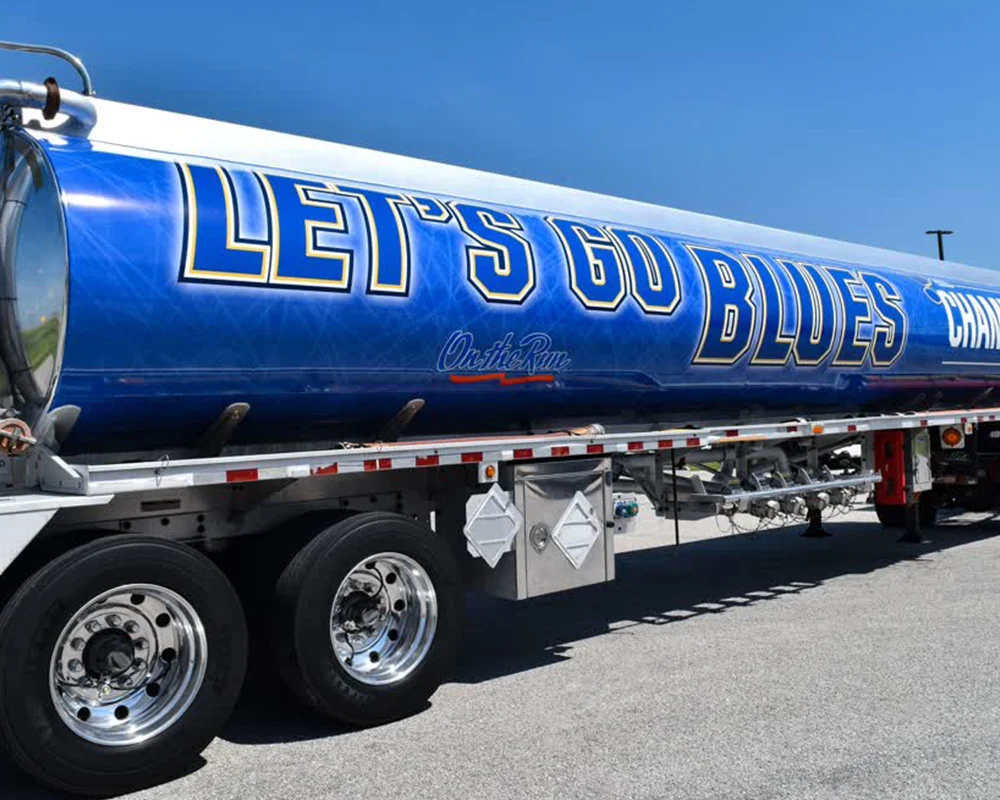
Are you in the process of designing fleet wraps for your business vehicle? Then, you must learn the common design mistakes to avoid when creating fleet wraps.
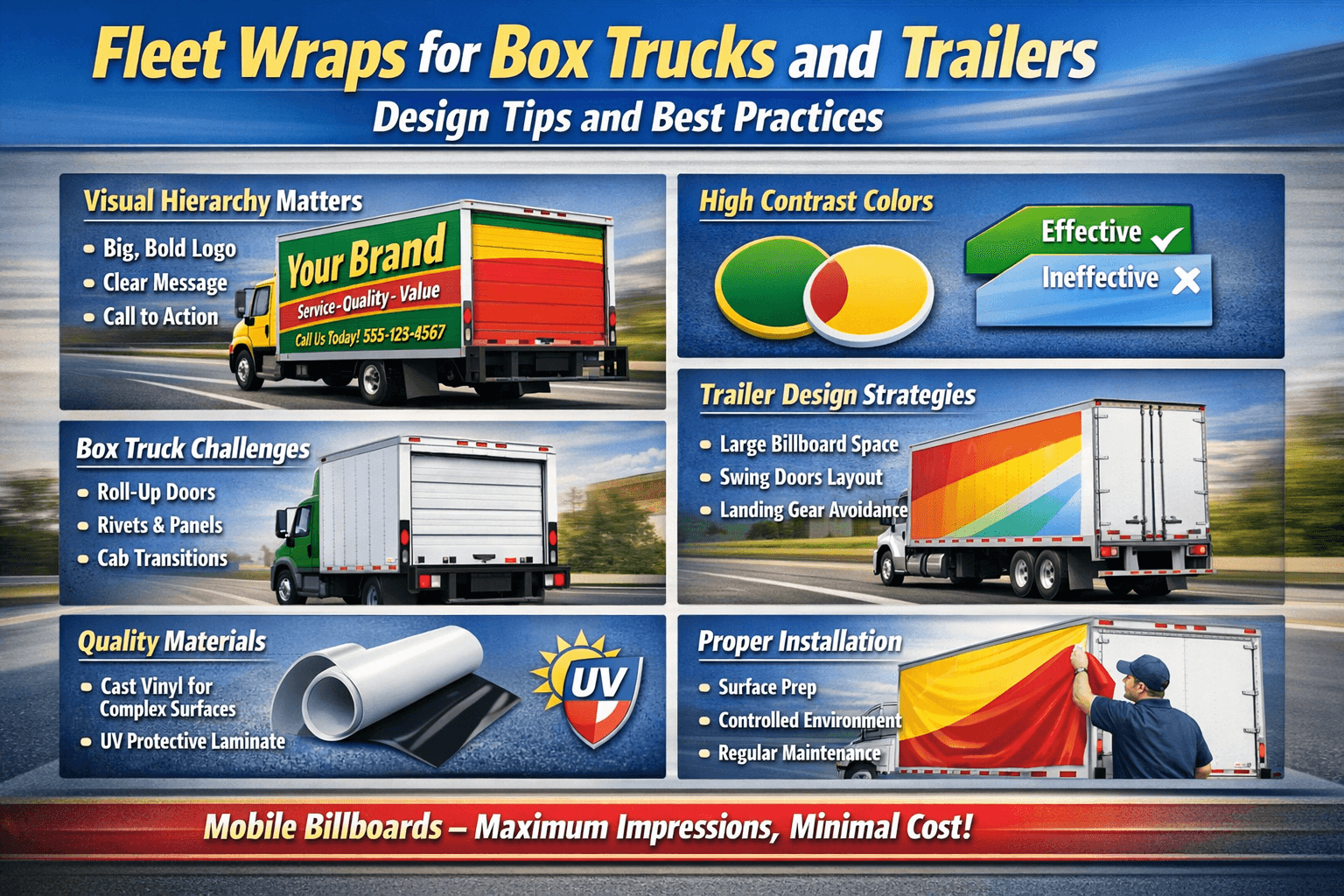
Fleet wraps for box trucks and trailers are large-format vinyl [...]
