
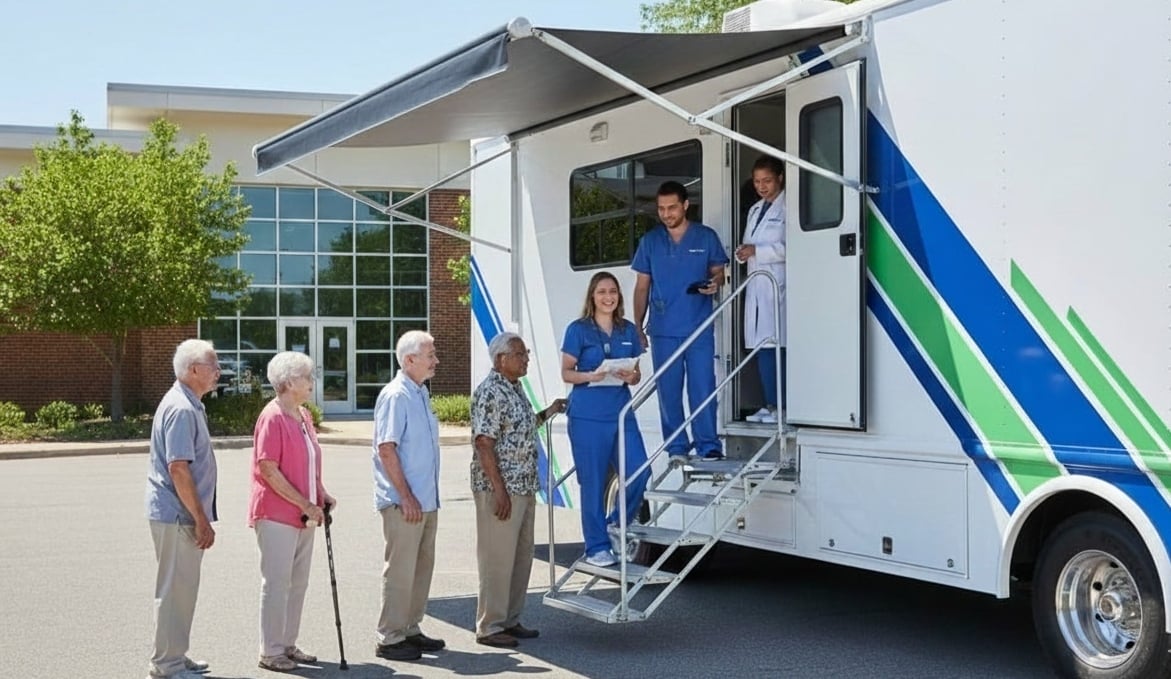
Mobile audiometric vehicles are purpose-built, transportable clinics designed to provide hearing screenings, diagnostic tests, and hearing conservation programs in communities that lack access to conventional healthcare facilities. They combine sound-treated environments, advanced diagnostic instruments, and professional workflows within a mobile structure that can reach rural, industrial, or underserved populations. This approach directly addresses accessibility challenges.
According to the National Institute on Deafness and Other Communication Disorders, approximately 15% of U.S. adults report difficulty with hearing. This blog examines the features, standards, technologies, outreach applications, costs, staffing models, and innovations of mobile audiometric vehicles while highlighting their importance in public health outreach programs.
Comprehensive Understanding of Mobile Audiometric Vehicles
Mobile audiometric vehicles merge clinical precision with mobility, ensuring that communities receive standardized hearing care without traveling to distant clinics. Unlike basic screening vans, these vehicles replicate the conditions of formal audiology centers by incorporating soundproof booths, diagnostic equipment, and ergonomically designed patient areas.
They are deployed in several contexts:
- Schools for childhood hearing screenings.
- Industrial worksites for occupational hearing conservation.
- Senior centers to detect age-related hearing loss.
- Community outreach events led by NGOs and public health organizations.
Evidence suggests that mobile healthcare enhances patient compliance and facilitates the early detection of chronic conditions. For instance, research on mobile health clinics demonstrates their effectiveness in serving underserved populations, reducing costs, and improving long-term outcomes.
Why Accessibility Matters
Barriers, including transportation, cost, and limited awareness, prevent many from accessing audiology services. Mobile audiometric vehicles directly remove these barriers by delivering:
- Convenient access for rural residents.
- Immediate testing with onsite results.
- Educational outreach for awareness on hearing protection.
- Preventive screenings that reduce long-term treatment costs.
Mobile units thus play a crucial role in bridging equity gaps in hearing healthcare.
How do mobile audiometric vehicles improve early detection of hearing loss?
By providing accessible and affordable screenings in schools, workplaces, and communities, these vehicles ensure that individuals are tested earlier, which enables timely interventions such as hearing aids or protective programs, ultimately reducing the risks of communication and cognitive decline.
Having established their importance, the next step is to explore the design standards that ensure these vehicles maintain clinical-grade accuracy.
Design Standards Ensuring Clinical-Grade Accuracy
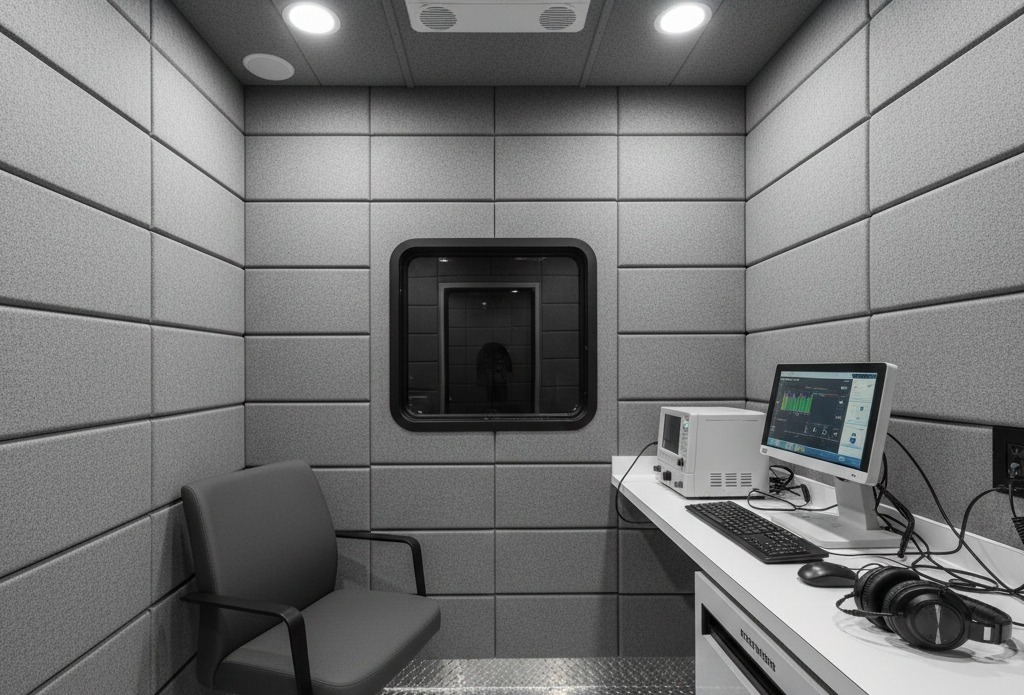
The credibility of mobile audiometric testing depends heavily on design standards. To deliver valid results, vehicles must replicate controlled clinical conditions.
Key Design Elements
- Sound-treated booths: Ensure audiograms are free from ambient noise interference.
- Vibration isolation: Reduces background interference from vehicle movement.
- Reliable power systems: Generators, shore power, or solar-battery hybrids maintain equipment stability.
- HVAC systems: Maintain proper temperature and humidity for equipment accuracy.
- Accessibility: Wheelchair lifts, non-slip flooring, and spacious interiors.
- Secure storage: Cabinets for sensitive equipment and patient data.
According to the American Speech-Language-Hearing Association, valid audiometric testing requires noise-controlled environments, calibrated instruments, and proper infection control protocols.
Benefits of Adhering to Standards
- Accurate test results.
- Compliance with occupational safety regulations.
- Reduced liability for healthcare providers.
- Enhanced patient trust and comfort.
With design integrity established, let’s examine the technologies that bring these mobile clinics to life.
Cutting-Edge Technology Powering Mobile Audiometric Care
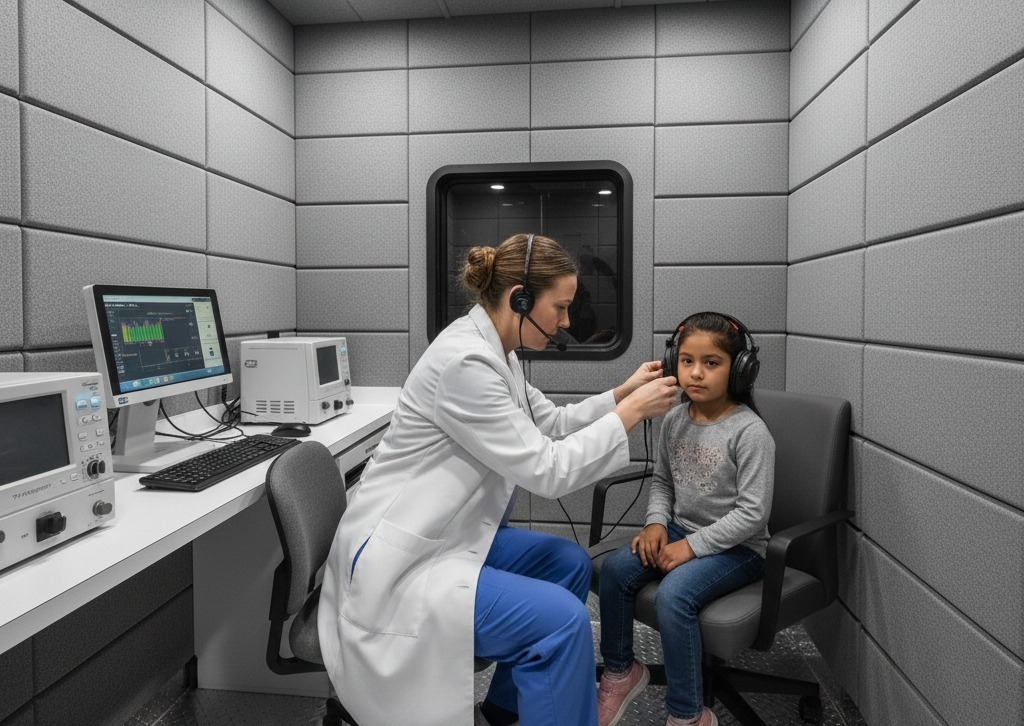
Modern mobile audiometric vehicles integrate advanced diagnostic tools and telehealth systems. These ensure not only accurate tests but also continuity of care through data connectivity.
Core Diagnostic Equipment
- Audiometers: For pure-tone and speech audiometry.
- Tympanometers: Evaluate middle-ear function.
- Otoacoustic Emission (OAE) devices: For infant and pediatric screenings.
- Real Ear Measurement (REM): For hearing aid verification.
- Sound level meters: Monitor ambient noise inside the unit.
Digital and Telehealth Enhancements
- Electronic Health Record (EHR) integration for seamless data management.
- Teleaudiology platforms allow remote consultation with specialists.
- Secure VPNs for encrypted data transfer.
- Automated screening apps validated in research for high-volume outreach.
The NIOSH Hearing Loss Prevention Program emphasizes the role of validated audiometric devices and secure data management in occupational surveillance and outreach.
Technology sets the foundation, but real impact is measured by how these vehicles are deployed in outreach programs.
Outreach Applications Driving Community Health Impact
Mobile audiometric vehicles have a wide range of applications in public health, education, and occupational safety.
Community Programs
- Schools: Detect hearing issues early to prevent language and learning delays.
- Senior centers: Address age-related hearing loss, reducing dementia risks.
- Community health fairs: Increase awareness and screenings at scale.
Workplace Compliance
Industries with high noise exposure, such as construction or aviation, use these vehicles for:
- Baseline hearing tests for employees.
- Annual surveillance for OSHA compliance.
- Training on noise protection strategies.
The Occupational Safety and Health Administration requires employers to implement hearing conservation programs for workers exposed to high noise levels, making mobile audiometric units an efficient solution.
Effective outreach also requires skilled professionals. The next section highlights the expertise and training essential for reliable programs.
Professional Expertise and Training for Reliable Programs
Qualified staff are the backbone of mobile audiometric outreach. Vehicles must be staffed with licensed audiologists, certified hearing technicians, or trained health educators, depending on the program type.
Required Expertise
- Audiologists: Handle diagnostics, counseling, and hearing aid fittings
- Technicians: Conduct screenings and maintain equipment.
- Health educators: Provide awareness sessions on noise protection.
According to ASHA, proper training and certification ensure compliance with ethical standards and the validity of results. Continuing education is recommended for staff to stay updated on new methods and technologies.
Benefits of Skilled Teams
- Accurate diagnoses.
- Patient confidence.
- Compliance with legal requirements.
- Efficient community engagement.
Beyond staffing, program planners must consider costs and logistics.
Cost Structures and Logistical Planning for Success
Deploying mobile audiometric vehicles entails both capital costs and ongoing operational expenses.
Common Cost Factors
- Vehicle fabrication and customization.
- Diagnostic equipment purchase and calibration.
- Fuel, maintenance, and insurance.
- Staff salaries and training.
- Data management and IT infrastructure.
A 2017 analysis of mobile clinics found that the average operating cost was significantly lower than fixed facilities per patient served, making them cost-effective for public health programs.
Financial Strategies
- Partnerships with local governments and NGOs.
- Employer sponsorship in occupational settings.
- Grant funding for rural outreach initiatives.
- Revenue from hearing aid sales and follow-up services.
With cost models clarified, collaborative partnerships further enhance the program’s sustainability.
Collaborative Models Enhancing Hearing Outreach Programs
Sustainable mobile audiometric outreach requires partnerships across healthcare, government, and private sectors.
Effective Collaborations
- Schools and universities for early intervention programs.
- Employers in high-noise industries should implement compliance programs.
- NGOs for community awareness campaigns.
- Hospitals and clinics for referral pathways.
Collaborative models enhance program credibility, increase funding opportunities, and improve patient follow-up rates. Evidence from public health studies indicates that multi-sector collaboration enhances health equity and improves the long-term viability of programs.
Looking forward, innovation continues to redefine the role of mobile audiometric vehicles.
Future Innovations Shaping Mobile Audiometric Vehicles
Emerging technologies and strategies are expanding the potential of mobile audiometric programs.
Innovations on the Horizon
- AI-driven audiometry: Automated test interpretation for mass screenings.
- Cloud-based EHR: Instant access to patient records across regions.
- Noise-mapping tools: Integrated workplace risk assessments.
- Green power systems: Solar energy to reduce environmental impact.
Research in telehealth and AI-assisted diagnostics indicates strong potential for scaling audiology services cost-effectively and reliably.
Having explored future trends, the final section summarizes key insights and presents a trusted solution provider.
Redefining Hearing Outreach with Confidence
Mobile audiometric vehicles stand at the intersection of innovation and accessibility. They ensure hearing care is delivered equitably, accurately, and sustainably to populations that would otherwise be left behind. Their design standards, advanced technology, skilled staffing, and collaborative models make them a cornerstone of modern outreach.
For organizations seeking the highest-quality vehicles that blend precision engineering with luxury-standard finishes, Craftsmen Industries is a trusted partner. Their expertise in fabrication, branding, and customization allows clients to deploy mobile audiometric programs that inspire confidence, meet regulatory requirements, and enhance community well-being.
Partner with Craftsmen Industries today to invest in a medical vehicle that redefines hearing outreach and positions your program for long-term success.
Frequently Asked Questions
What is a mobile audiometric vehicle?
It is a specially designed mobile unit, equipped with sound-treated spaces and professional-grade equipment, for hearing screenings and diagnostics.
How do they ensure test accuracy?
Through soundproof booths, calibrated devices, and strict adherence to audiology standards, mobile units replicate clinical testing conditions.
Who benefits from these outreach programs?
Children, seniors, industrial workers, and rural residents benefit most, as they gain access to timely hearing care.
Are mobile audiometric vehicles cost-effective?
Yes. Studies on mobile clinics have shown lower per-patient costs compared to fixed facilities, particularly for outreach and preventive services.
Why choose Craftsmen Industries?
Craftsmen Industries combines fabrication expertise with healthcare customization, delivering mobile units that meet clinical, branding, and luxury standards.
Filter Posts by Tag
related posts
How do medical trailers improve rural healthcare access? Explore mobile clinics, ROI data, costs, and emergency response solutions. Learn more.
Searching for information on how to set up mobile medical van? Click to read about mobile medical clinics and their most important features to include.
How did medical trailers transform healthcare delivery? From wartime X-ray units to 2,000+ US mobile clinics, explore growth, tech, and ROI impact.
