
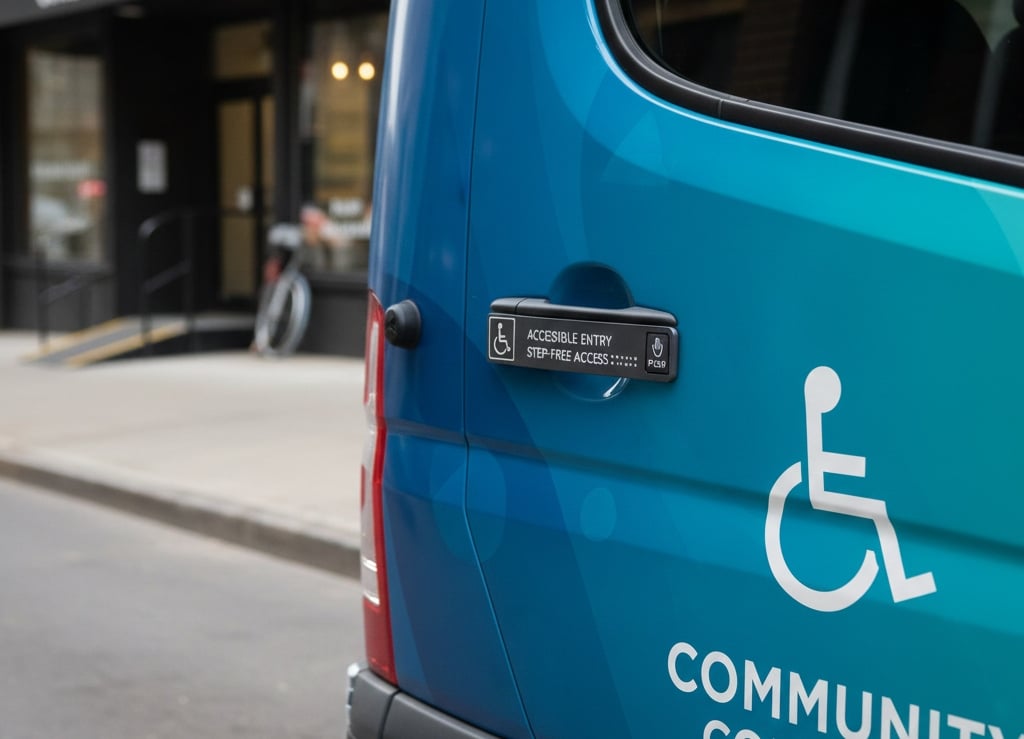
ADA signage in fleet vehicle refers to accessibility-focused signs that follow the Americans with Disabilities Act (ADA) standards. These signs help individuals with disabilities navigate, access, and use vehicles safely and independently.
According to the U.S. Census Bureau, 44.1 million people in the U.S., about 13.4% of the civilian noninstitutionalized population, had a disability in 2022. This underscores how many people can be impacted by inaccessible vehicle signage.
ADA-compliant signage is not just a legal requirement; it’s essential for safety, usability, and inclusivity.
This blog explains the standards, design practices, accessibility features, and business value of integrating ADA signage into fleet vehicles.
Key ADA Compliance Standards for Fleet Vehicles
ADA standards set out strict guidelines for how signage must be designed and installed. These include:
- Font and Lettering: Clear, sans-serif fonts in specific sizes that remain legible at different viewing distances.
- Color Contrast: High contrast between text and background ensures visibility for people with low vision.
- Placement and Height: Signs must typically be installed between 48 and 60 inches from the floor or ground for accessibility.
- Braille and Raised Text: Required on permanent signs to accommodate people with visual impairments.
Research Report 2022 highlights that improper placement and poor color contrast are leading causes of ADA signage usability failures, particularly in public-facing environments such as transportation and fleet systems.
Do all fleet vehicles need ADA-compliant signage?
Not every vehicle requires ADA signage, but fleet vehicles that serve the public, medical, or government purposes must comply with ADA standards to avoid violations and provide equal access.
Accessibility Features for Inclusive Fleet Signage

True accessibility goes beyond compliance; it creates a user-friendly experience for all passengers. Common features include:
- Braille and Tactile Graphics: Essential for people with visual impairments to read directions.
- Pictograms and Symbols: Universal icons, such as the International Symbol of Accessibility, enhance recognition across languages and cultures.
- Multilingual Signage: Beneficial in diverse communities to remove language barriers.
- Digital Enhancements: QR codes or NFC tags can provide audio instructions or larger digital text for users with low vision.
Can ADA signage incorporate technology, such as QR codes?
Yes. While tactile and braille elements are mandatory for compliance, digital tools like QR codes can enhance accessibility without replacing ADA-required physical features.
Design Elements that Support ADA Standards
Designing ADA-compliant signage for fleet vehicles requires striking a balance between aesthetics and functionality. Key design attributes include:
- Clear Icons: Standardized symbols that passengers can recognize instantly.
- Durable Materials: Weather-resistant, fade-proof materials ensure longevity under outdoor and mobile use.
- Non-Glare Surfaces: Prevent reflection issues in daylight or artificial lighting.
- Brand Integration: Companies can maintain their branding on vehicle wraps and signage while still meeting ADA rules.
Research from the National Institute of Standards and Technology (NIST) shows that proper luminance contrast and non-glare surface treatments significantly improve sign legibility for individuals with low vision.
Can ADA signage match a company’s brand colors?
Yes, as long as the contrast and legibility meet ADA standards, signage can be customized to align with fleet branding.
Functional Role of ADA Signage in Fleet Operations
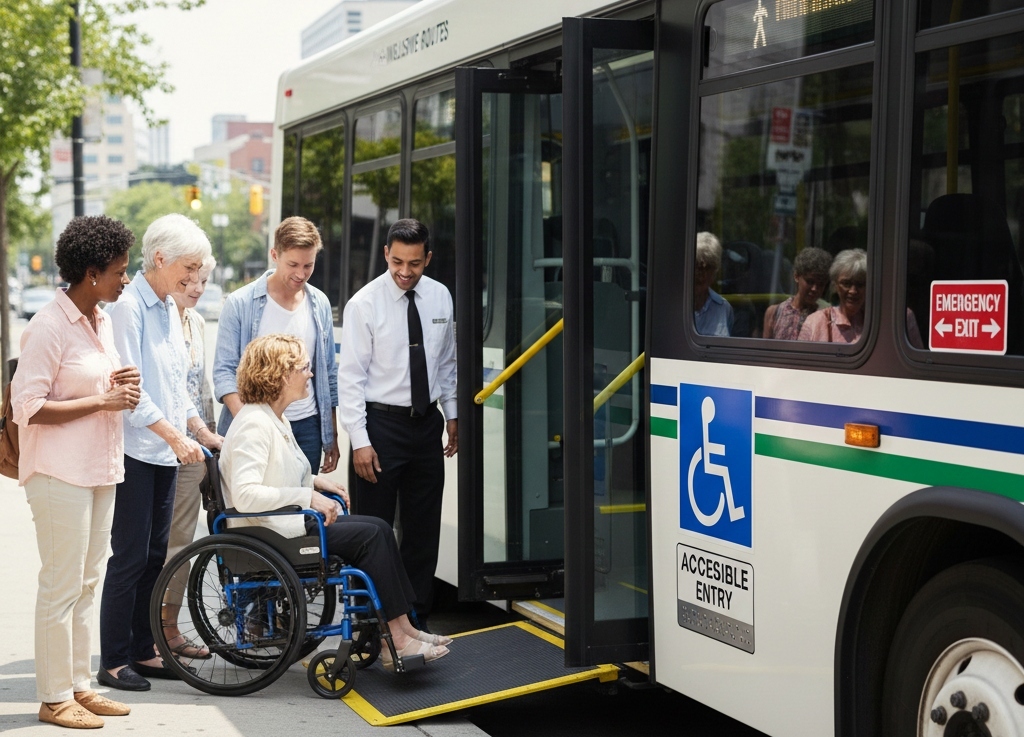
ADA signage in fleet vehicles is more than a compliance requirement; it is a practical tool that improves safety, efficiency, and user confidence.
Well-placed signage helps passengers understand how to enter, move through, and exit vehicles without delay, while also guiding staff during daily operations.
- Entry and Exit Points: Clear signage at ramps, lifts, and doors ensures passengers with mobility needs can board and exit quickly. This reduces boarding delays and improves accessibility during routine use and emergencies.
- Interior Directional Signs: Mobile units such as medical vans, training vehicles, or event trailers often contain multiple zones. Directional signage helps patients, customers, and staff move smoothly, cutting confusion and wasted time.
- Emergency Signage: In urgent situations, visible, ADA-compliant signs for exits, alarms, and safety equipment help passengers act more quickly and reduce risks.
- Consistency Across Fleets: Standardized placement and formats across multiple vehicles create predictability, allowing frequent users to instantly recognize and understand signage.
A 2023 study published on ResearchGate found that clear, strategically placed signage significantly improves wayfinding and reduces evacuation delays during emergencies, showing that effective signage directly influences both passenger behavior and overall safety outcomes.
Is ADA signage required inside fleet vehicles?
Yes. Fleet vehicles serving the public, medical needs, or government functions must include ADA-compliant interior signage to support accessibility, safety, and regulatory compliance.
Fleet-Specific Considerations for ADA Signage
Different vehicle types come with unique challenges and requirements:
- Mobile Medical Units: Need signage for treatment rooms, exits, and accessibility ramps.
- Trailers and Containers: Require modular signage that fits temporary or reconfigurable layouts.
- Leased Fleets: Benefit from removable or magnetic ADA signage that can be transferred between vehicles.
- Outdoor Exposure: Signs must withstand vibration, moisture, and temperature extremes.
Research indicates that mobile healthcare vehicles with poor signage experience 25% higher navigation-related delays, demonstrating that clear signage enhances efficiency.
How is ADA signage handled in leased fleet vehicles?
Leased fleets can use removable or modular signage to stay compliant without permanently altering the vehicle.
Safety and User Experience Benefits
Safety is one of the most important outcomes of ADA signage integration in fleet vehicles. Well-designed signage not only protects passengers with disabilities but also creates a safer and more predictable environment for everyone.
- Faster Recognition of Exits and Equipment: Clear signage ensures passengers can quickly locate emergency exits, alarms, or medical kits when seconds matter.
- Reduced Confusion During Boarding: Marked ramps, lifts, and accessible seating minimize hesitation and improve passenger flow, especially in crowded or time-sensitive operations.
- Improved Comfort and Confidence: Passengers with disabilities feel more secure knowing that navigation is straightforward and their needs are anticipated.
- Safer Travel for All Riders: ADA signage benefits everyone by creating a consistent wayfinding, reducing accidents, and supporting smoother vehicle operations.
Does ADA signage only benefit people with disabilities?
No. While ADA signage is designed with accessibility in mind, it benefits all passengers by making navigation, safety features, and emergency exits clearer and more reliable.
Business and Brand Value of ADA-Compliant Fleet Signage
Beyond compliance, ADA signage strengthens a company’s brand and reputation:
- Compliance and Risk Reduction: Avoids legal penalties and lawsuits.
- Corporate Social Responsibility: Shows commitment to inclusion and equality.
- Reputation Enhancement: Builds trust with clients, partners, and the public.
- Return on Investment: Durable, compliant signage saves money on redesigns and liability issues.
Does ADA signage improve brand reputation?
Yes. Accessibility reflects inclusivity and responsibility, both of which strengthen a company’s public image and consumer trust.
Making Fleets Safer, Smarter, and More Accessible
ADA signage in fleet vehicles is transforming fleet management by combining compliance, accessibility, safety, and branding to enhance overall fleet operations.
From tactile graphics and pictograms to durable materials and digital tools, these solutions ensure fleets are inclusive, reliable, and future-ready.
Craftsmen Industries is a trusted leader in designing and producing custom ADA-compliant signage for fleets of all sizes. If you’re ready to enhance safety, demonstrate inclusivity, and strengthen your brand, contact Craftsmen Industries today.
Our experts will help you integrate the right signage solutions to keep your fleet compliant, accessible, and built for the future.
Frequently Asked Questions
1. Why is ADA signage important for fleet vehicles?
ADA signage ensures that all passengers, including those with disabilities, can safely and confidently navigate vehicles. It’s not just about compliance; it improves accessibility, reduces risks, and strengthens brand trust.
2. What types of fleet vehicles require ADA-compliant signage?
Fleet vehicles serving the public, healthcare, education, government, or corporate events typically require ADA signage. This includes mobile medical units, shuttles, training trailers, and event vehicles.
3. Can ADA signage be customized to match my fleet’s branding?
Yes. As long as ADA standards for contrast, font, and readability are met, signage can be designed with your brand’s colors, logos, and style to maintain a professional, consistent appearance.
4. How durable is ADA signage for fleet vehicles?
Fleet signage must withstand constant vibration, weather exposure, and heavy use. High-quality ADA signage is made with durable, non-glare, fade-resistant materials to ensure long-term compliance and performance.
5. How can my organization get started with ADA signage integration?
The first step is a consultation to assess your fleet’s needs. Contact Craftsmen Industries today, and our team will help design, fabricate, and install ADA-compliant signage that keeps your fleet safe, accessible, and future-ready.
Filter Posts by Tag
related posts
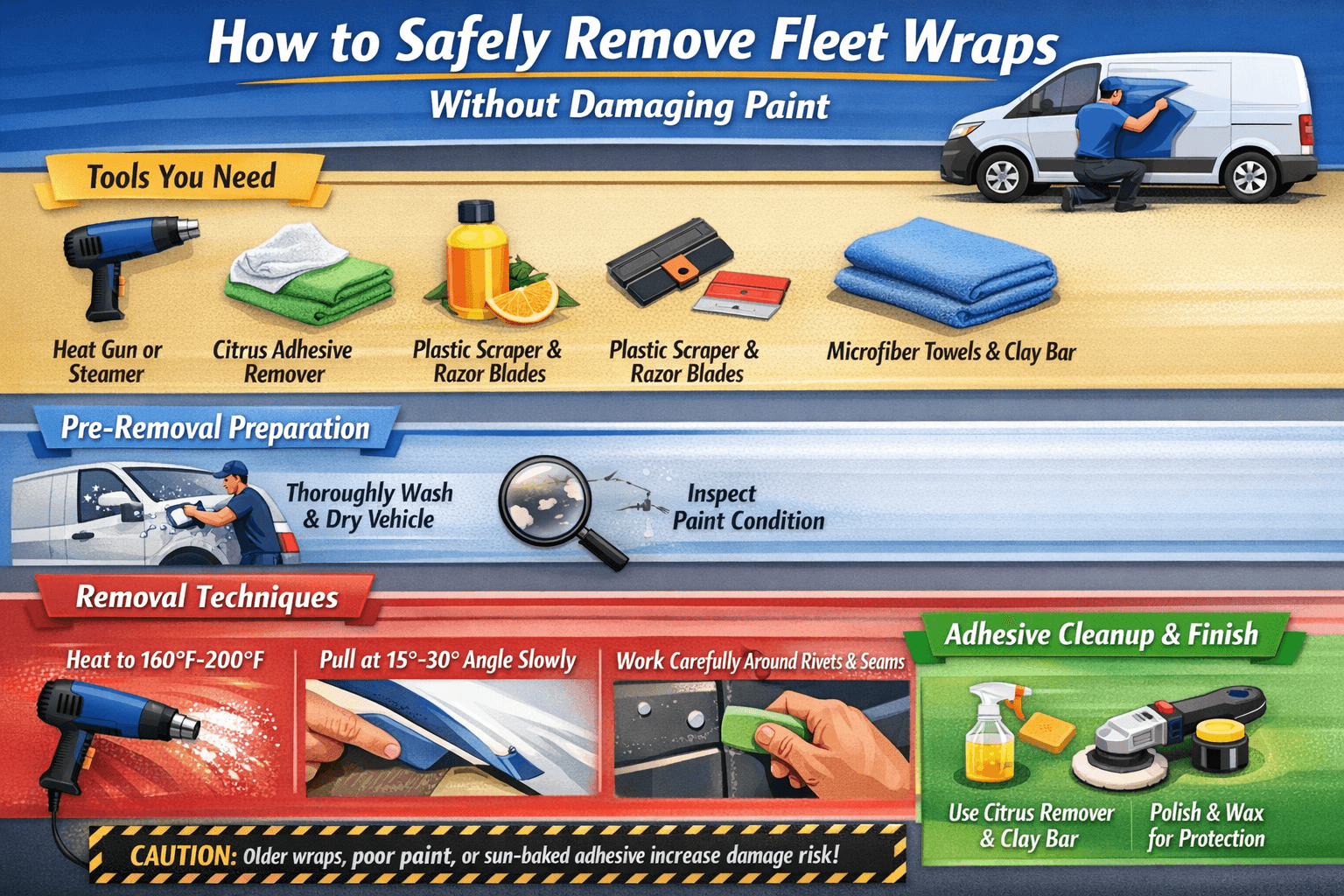
Fleet wrap removal is the process of using controlled heat, [...]

Learn how cohesive fleet wraps build brand identity with consistent design, premium materials, and expert installation for lasting recognition on the road.

Why are fleet graphics an effective marketing tool? Want to improve your marketing strategy and drive brand recognition? Click here to learn everything!
