
17 min read
What Questions Should You Ask When Evaluating Mobile Command Center Manufacturers?
Craftsmen Industries May 13, 2026 2:52:13 PM
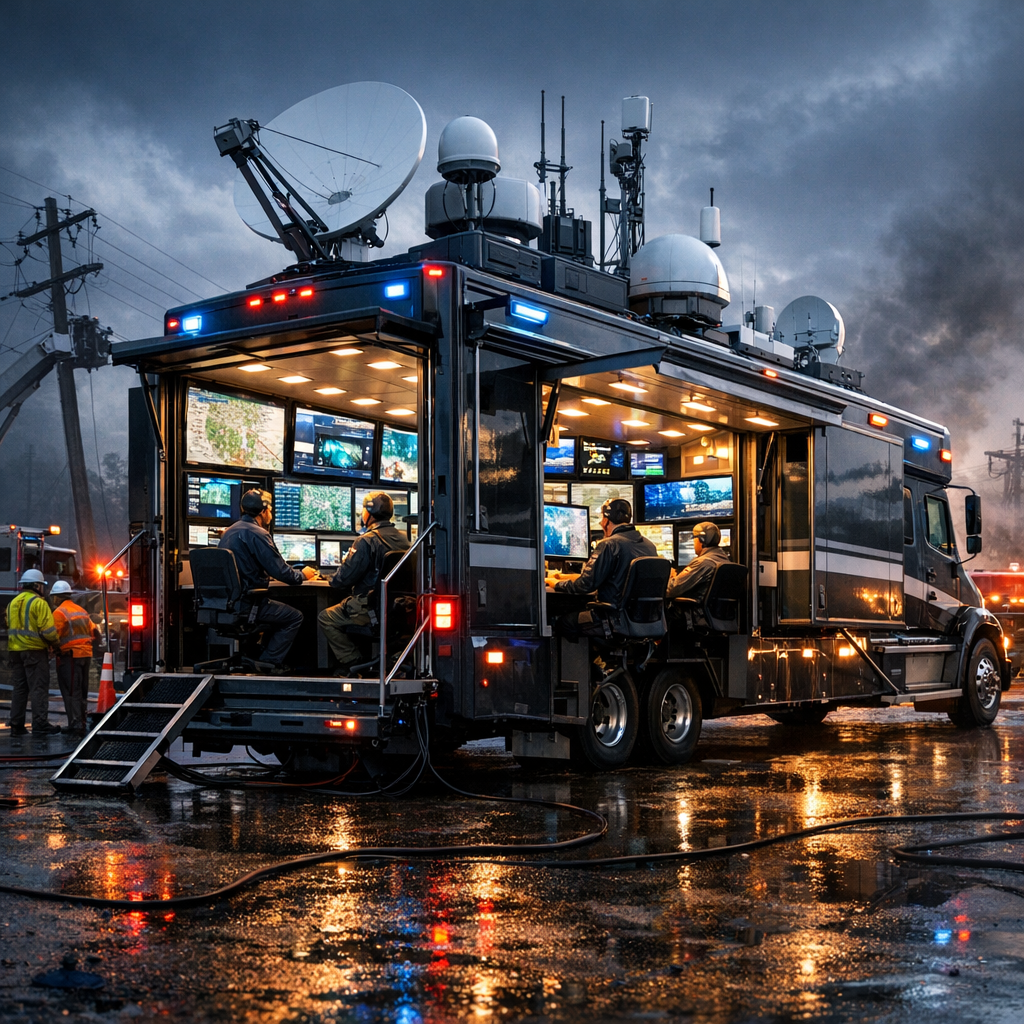
A mobile command center is a special-purpose vehicle that provides on-site workspace, communications infrastructure, and command and control capabilities for incident commanders during emergencies, planned events, or field operations. This guide covers design and engineering evaluation, fabrication and build quality standards, technology integration, sector-specific customization, manufacturer experience and project management, pricing and total cost of ownership, compliance and certification requirements, and post-delivery support.
We break down the specific questions to ask about in-house design capabilities, including how CAD modeling, structural engineering, and electrical integration should operate under one roof to reduce handoff errors and compress build timelines. Floor plan customization tied to your exact mission requirements separates a purpose-built command platform from a generic vehicle that needs costly post-delivery modifications.
Fabrication quality standards cover shell materials, chassis upfit processes, documented quality control checkpoints, and why touring the manufacturing facility before signing a contract reveals what no sales presentation can.
Technology integration spans P25-compliant communications installation, power generation and distribution sizing, multi-band satellite, cellular, and radio connectivity, and IT infrastructure with cybersecurity hardening built into the vehicle from the design phase forward.
Sector-specific customization sections address distinct configuration needs for emergency management, law enforcement, fire and EMS, military or federal, and healthcare deployments, each with unique compliance considerations such as ADA accessibility, NFPA standards, and FMVSS and DOT regulations, as well as procurement pathways like the GSA Schedule that can streamline access to specialty vehicles and related services.
We examine how to verify a manufacturer's track record through production volume, government and corporate references, and years in specialty vehicle manufacturing, then cover realistic lead times (sometimes eight to twelve months for upfit units), change order protocols, and milestone approval gates that keep builds on schedule.
Pricing evaluation goes beyond the base quote to ongoing maintenance costs, warranty terms spanning up to ten years on structure and finish, and how vertically integrated manufacturing eliminates subcontractor markups to improve cost predictability.
What Design and Engineering Capabilities Should a Manufacturer Demonstrate?
A manufacturer should demonstrate in-house design, engineering, floor plan customization, advanced 3D modeling, and integrated structural and electrical engineering. The following subsections break down each capability to evaluate.
Does the Manufacturer Offer In-House Design and Engineering?
The manufacturer should offer some degree of in-house design and engineering to maintain oversight over phases of the build. When design, structural engineering, and fabrication operate under one roof, communication gaps shrink and revisions happen faster. Outsourced engineering introduces delays, version-control issues, and accountability gaps between separate firms.
Ask whether the manufacturer employs dedicated design engineers or subcontracts this work. A vertically integrated operation, where components of concept development, CAD modeling, fabrication, and finishing occur internally, reduces handoff errors and compresses timelines. According to the California Governor's Office of Emergency Services, their 53-foot Mobile Command Unit takes just fifteen minutes to set up and become operational, a level of field readiness that reflects tightly coordinated engineering from the design phase forward.
Can They Customize the Floor Plan to Your Mission Requirements?
Yes, they can customize the floor plan to your mission requirements, and this flexibility is one of the most important capabilities to verify. A mobile command center built for law enforcement surveillance differs fundamentally from one designed for emergency management or mobile healthcare. The interior layout must reflect operational workflows, staffing levels, and equipment placement specific to your agency's mission.
Ask for examples of past floor plans across different use cases. Evaluate whether the manufacturer conducts needs assessments before drafting layouts, and whether they accommodate features such as:
- Scalable workstation configurations for varying crew sizes
- Dedicated communications rooms separated from briefing areas
- Accessible entry points and ADA-compliant interior circulation
- Slide-out sections for expanded operational space
Manufacturers that treat floor plans as templates rather than mission-driven designs often produce vehicles that require costly post-delivery modifications.
What CAD or 3D Modeling Tools Do They Use During the Design Phase?
The CAD or 3D modeling tools a manufacturer uses during the design phase reveal their engineering sophistication. Industry-standard platforms such as SolidWorks, AutoCAD, and CATIA allow engineers to model structural loads, airflow, cable routing, and component clearances before fabrication begins.
Three-dimensional modeling catches interference issues early, when changes cost hours instead of weeks. Ask whether the manufacturer provides client-facing 3D renderings or virtual walkthroughs so your team can validate the layout before any metal is cut. This step prevents expensive mid-build change orders and ensures stakeholders align on spatial relationships that flat blueprints often obscure.
How Do They Handle Structural and Electrical Engineering Integration?
Structural and electrical engineering integration is handled by coordinating load-bearing calculations, power distribution layouts, and cable routing within a unified design model. A mobile command center must support heavy roof-mounted equipment such as satellite dishes and antenna masts while simultaneously routing high-amperage electrical systems through walls and floors without compromising structural integrity.
Key questions to ask include:
- Do structural and electrical engineers collaborate on the same model simultaneously?
- How is weight distribution calculated to stay within chassis GVWR limits?
- Are redundant power circuits designed for critical communications systems?
When these disciplines are not closely coordinated, the result can be field issues such as overloaded circuits, roof deflection, or difficult-to-access wiring that complicates future maintenance. A well-integrated engineering approach from the outset helps create a more reliable, serviceable, and durable command platform over the long term.
With engineering capabilities confirmed, the next step is evaluating fabrication and build quality standards.
What Fabrication and Build Quality Standards Should You Look For?
The fabrication and build quality standards you should look for include shell material selection, in-house chassis upfit capability, documented quality control processes, and the option to tour the facility. These factors directly reveal whether a manufacturer can deliver a durable, mission-ready mobile command center.
What Materials and Construction Methods Do They Use for the Shell?
The materials and construction methods a manufacturer uses for the shell determine a mobile command center's structural integrity, weight efficiency, and field durability. Aluminum and steel are the most common shell materials, each offering different strength-to-weight ratios.
Key material and construction details to evaluate include:
- Whether the shell uses aluminum, steel, or composite panels for exterior walls and roof.
- The gauge thickness of structural framing members.
- Weld types and certifications held by fabrication staff.
- Insulation materials and R-values for climate control performance.
- Corrosion-resistant coatings or treatments applied to exposed surfaces.
For vehicles classified as special-purpose platforms for command, control, and communications during emergencies, shell construction must withstand repeated deployment cycles without compromising structural performance.
Do They Fabricate the Chassis Upfit and Interior Components In-House?
Yes, you should confirm whether the manufacturer fabricates the chassis upfit and interior components in-house. In-house fabrication gives a manufacturer direct control over tolerances, material sourcing, and build timelines. When chassis modification, cabinetry, electrical routing, and interior finishing all happen under one roof, quality issues surface faster and get resolved without third-party delays.
Outsourced upfit work introduces coordination gaps between vendors, which often leads to fitment problems or inconsistent finish quality. Asking whether the manufacturer owns the full build process, from bare chassis to completed interior, is one of the clearest indicators of production capability.
What Quality Control Processes Are in Place During Production?
The quality control processes in place during production should include documented inspection checkpoints at each major build phase. A reliable manufacturer establishes stage-gate reviews covering structural welds, electrical systems, plumbing, HVAC, and final fit-and-finish before a unit leaves the production floor.
According to FEMA's Authorized Equipment List, mobile command vehicles fall under a special-purpose category for on-site command, control, and communications during terrorist attacks and other emergencies. That classification demands production standards exceeding typical commercial vehicle builds. Ask for written QC protocols, inspection records, and whether the manufacturer assigns dedicated quality inspectors rather than relying solely on production staff to self-check their own work.
Can You Tour the Manufacturing Facility Before Committing?
Yes, you can and should tour the manufacturing facility before committing to a contract. A facility tour reveals what no brochure or sales presentation can: the actual condition of tooling, the organization of the production floor, workforce expertise, and how in-process units are handled.
During a tour, pay attention to:
- Cleanliness and organization of the fabrication area.
- Whether active builds match the complexity of your project.
- Staff engagement and willingness to explain their processes.
- Dedicated areas for electrical integration, paint, and final assembly.
Any manufacturer confident in their build quality will welcome facility visits. Reluctance to allow a tour is a significant red flag worth noting early in your evaluation process. With build quality verified firsthand, the next step is assessing how the manufacturer handles technology integration.
What Technology Integration Questions Should You Ask?
Technology integration questions should focus on communications systems, power generation, multi-band connectivity, and IT infrastructure. These four areas determine whether a mobile command center performs reliably in the field.
How Do They Approach Communications Systems Installation?
Communications systems installation should follow interoperability standards that allow multi-agency coordination. According to APCO International, Project 25 (P25) develops standards for interoperable land mobile radio (LMR) systems so emergency responders can exchange critical communications across agencies and jurisdictions, standardizing interfaces between various LMR system components.
Ask whether the manufacturer installs P25-compliant radio systems and pre-wires console positions for dispatch equipment. Confirm that antenna placement, cable routing, and RF shielding are engineered during the design phase rather than retrofitted after the build. Poorly planned communications installations create interference that degrades signal quality during critical operations.
What Power Generation and Distribution Options Do They Offer?
Power generation and distribution options typically include onboard generators, shore power connections, and battery backup systems. A mobile command center requires sufficient electrical capacity to run communications equipment, HVAC, lighting, workstations, and server racks simultaneously.
Key questions to ask include:
- What generator size (kW rating) do they recommend for your operational load?
- Is the electrical panel designed with dedicated circuits for sensitive electronics?
- Do they include automatic transfer switches between generator and shore power?
- Can the system support uninterruptible power supply (UPS) units for critical equipment?
Undersized power systems are one of the most common field failures, so verifying load calculations early in the design process prevents costly corrections later.
Can They Integrate Satellite, Cellular, and Radio Systems?
Yes, a qualified manufacturer can integrate satellite, cellular, and radio systems into a single mobile command platform. Multi-band connectivity ensures redundant communication paths when any one network fails during a large-scale incident.
Verify that the manufacturer can install and configure:
- VSAT or BGAN satellite terminals for remote connectivity
- Cellular boosters and LTE/FirstNet modems for broadband data
- VHF, UHF, and 800 MHz radio systems for interoperable voice communications
Antenna placement on the roof must account for separation distances that prevent cross-band interference. This level of integration requires RF engineering expertise, not just hardware installation.
How Do They Plan for IT Infrastructure and Cybersecurity Needs?
IT infrastructure and cybersecurity planning should begin during the initial design phase, not after delivery. The manufacturer should engineer rack space, cable pathways, cooling, and network architecture as integrated components of the vehicle layout.
Critical items to confirm include:
- Dedicated server racks with proper ventilation and vibration dampening
- Structured network cabling with clearly labeled patch panels
- Firewall and VPN hardware pre-installed for encrypted communications
- Physical access controls for sensitive IT compartments
Cybersecurity is often overlooked in mobile command center procurement, yet these vehicles connect to sensitive law enforcement and emergency management networks. Requiring hardened IT infrastructure from the start helps reduce vulnerabilities and supports more reliable long-term network security.
With technology requirements defined, the next step is evaluating customization options for your specific use case.
What Customization Options Should Be Available for Your Use Case?
Customization options should match the specific operational demands of your sector. The sections below cover key options for emergency management, law enforcement, fire and EMS, military or federal, and healthcare deployments.
What Options Exist for Emergency Management Command Centers?
The options that exist for emergency management command centers include multi-agency coordination workstations, redundant communications arrays, GIS mapping displays, and scalable interior layouts. FEMA classifies these units as special-purpose vehicles for mobile, on-site command, control, and communications during emergencies. Accessibility features also matter; under Title II of the ADA, emergency programs and facilities must be accessible to people with disabilities. Effective builds typically include satellite uplinks, backup power systems, and exterior staging areas for briefings. Agencies should confirm that any manufacturer can configure the floor plan around incident command system workflows, since a generic layout rarely supports real-world multi-agency coordination.
What Options Exist for Law Enforcement Mobile Command Posts?
The options that exist for law enforcement mobile command posts include surveillance integration bays, encrypted radio consoles, interview rooms, and tactical operations workspaces. According to the U.S. Department of Homeland Security, mobile command vehicles provide interior and exterior work spaces along with command and control capabilities for on-scene incident commanders or remote locations. Law enforcement builds often require:
- Secure evidence storage compartments
- Mobile command center integration of multi-screen monitoring systems, real-time video feeds, and operator workstations
- Hardened cybersecurity infrastructure for sensitive data
- Exterior lighting and PA systems for operational awareness
Choosing a manufacturer experienced in law enforcement configurations ensures that chain-of-custody protocols, covert operation needs, and officer safety features are designed into the vehicle from the start.
What Options Exist for Fire and EMS Incident Command Vehicles?
The options that exist for fire and EMS incident command vehicles include NFPA-compliant layouts, accountability tracking boards, hazmat reference stations, and medical triage coordination areas. These vehicles must balance rugged field durability with the technology needed for effective incident management. Critical customization considerations include:
- Rapid deployment setup, ideally under 15 minutes
- Exterior canopies for on-scene briefing areas
- Dedicated radio channels for mutual aid interoperability
- Onboard weather monitoring and mapping systems
For fire departments, verifying that the manufacturer builds to NFPA standards is non-negotiable. EMS-focused units may additionally require patient tracking integration and medical supply storage configured for quick access.
What Options Exist for Military or Federal Agency Deployments?
Military and federal deployments may include customizable configurations such as secure communications and IT systems, modular interior compartments, and integrated operator workspaces designed for mission-specific requirements. Vehicles can be equipped with ruggedized electronics for field environments, and transport-ready designs intended to support rapid deployment. Federal procurement may also utilize acquisition pathways such as the GSA Schedule, which can streamline access to pre-qualified vendors for specialty vehicles and related services. Military-grade builds also demand:
- Ruggedized electronics rated for extreme temperature ranges
- Self-contained power, HVAC, and water systems for extended off-grid operation
- Rapid air-transport compatibility for global deployment
Because federal projects involve strict compliance documentation and security clearance requirements, selecting a manufacturer with prior government contract experience significantly reduces procurement risk.
What Options Exist for Healthcare or Mobile Medical Operations?
The options that exist for healthcare or mobile medical operations include clinical examination rooms, diagnostic imaging bays, pharmacy dispensing stations, and patient intake areas. According to the Mobile Healthcare Association, the majority of mobile health clinics use one of six base-unit vehicle types, with selection driven by budget, care-delivery model, geography, and design needs. Vehicle classes range from Class B vans at up to 12,000 pounds GVWR to Class A coaches around 55,000 pounds. Healthcare builds require smooth, sanitizable interior surfaces, climate-controlled environments, and medical-grade electrical systems. ADA-compliant ramps and treatment areas are essential for community-facing deployments. Because clinical workflows vary widely between primary care, dental, and specialty screening programs, confirming that the manufacturer can adapt interior configurations to your specific care model is critical.
With sector-specific requirements defined, evaluating a manufacturer's track record reveals whether they can deliver on these specialized builds.
How Should You Evaluate a Manufacturer's Experience and Track Record?
You should evaluate a manufacturer's experience and track record by examining their production volume, client references, and years in the specialty vehicle industry. The following subsections cover unit delivery history, government and corporate references, and manufacturing longevity.
How Many Mobile Command Units Have They Built and Delivered?
The number of mobile command units a manufacturer has built and delivered reveals their production depth and operational reliability. A high unit count signals refined fabrication processes, tested quality control, and the ability to handle complex, mission-critical builds consistently.
Ask for a detailed portfolio that includes unit types, client sectors, and delivery dates. Manufacturers with broad delivery histories across emergency management, law enforcement, and federal agencies are better equipped to anticipate engineering challenges before they become costly delays. A builder with only a handful of completed units may still be refining its workflows, which increases project risk for buyers.
Can They Provide References From Government or Corporate Clients?
Yes, a qualified manufacturer can provide references from government or corporate clients who have received and deployed their vehicles. Direct references from agencies or corporations validate claims about build quality, timeline adherence, and post-delivery support that a portfolio alone cannot confirm.
Request references from clients whose mission profile matches yours. Government procurement teams and corporate fleet managers evaluate vendors rigorously, so a strong reference from these sectors carries significant weight. Ask each reference about communication during the build, how change orders were handled, and whether the final unit met operational specifications. Manufacturers reluctant to share references may lack the client satisfaction record needed for a high-stakes purchase.
How Long Have They Been Manufacturing Specialty Vehicles?
The length of time a manufacturer has been producing specialty vehicles indicates supply chain maturity, institutional knowledge, and long-term viability. Established manufacturers have weathered material shortages, regulatory changes, and evolving client requirements, all of which sharpen their ability to deliver reliably.
According to the U.S. General Services Administration, eligible customers can purchase specialty motor vehicles through GSAFleet.gov or contract with pre-approved vendors on the GSA Consolidated Schedule under Transportation and Logistics Services. Manufacturers listed on GSA schedules have met federal vetting standards, which serves as an additional credibility benchmark. A company with decades in specialty vehicle manufacturing, rather than years, is far more likely to maintain consistent build quality across complex projects.
With experience and references verified, the next step is understanding how project timelines and production milestones are managed.
What Questions Should You Ask About Project Timelines and Process?
The questions you should ask about project timelines and process cover lead times, change order management, and production milestones. These three areas determine whether your mobile command center arrives on schedule and meets specifications.
What Is the Typical Lead Time From Contract to Delivery?
The typical lead time from contract to delivery ranges from four to six months for standard factory orders and eight to twelve months for vehicles requiring custom upfitting. According to a 2024 Automotive Fleet analysis, overall order-to-delivery times have stabilized, though Holman advises customers to plan for a minimum of eight to twelve months for upfit units.
Mobile command centers sit in the upfit category. Factors that influence timelines include:
- Vehicle class and base-unit type, from Class B vans up to 55,000-pound Class A motorhomes
- Complexity of communications, power, and IT system integration
- Permit and compliance requirements specific to your agency's jurisdiction
- Availability of specialized components such as generators, mast systems, and satellite hardware
Asking for a detailed production schedule at the proposal stage helps you benchmark realistic expectations against your operational deadlines.
How Do They Manage Change Orders During the Build Process?
A manufacturer should manage change orders through a documented, formal process that defines how scope changes are requested, priced, approved, and incorporated without derailing the overall timeline. Ask whether they use a written change order protocol that includes cost impact assessments and revised delivery estimates before any modification begins.
Key questions to raise include:
- Is there a dedicated point of contact for change order requests?
- What is the typical turnaround time for a change order cost estimate?
- At what production stage do change orders become restricted or cost-prohibitive?
- How are approved changes documented and communicated across engineering and fabrication teams?
Manufacturers with vertically integrated operations can often absorb mid-build adjustments more efficiently, since design, engineering, and fabrication teams share a single facility and communication chain.
What Milestones and Approvals Will You Have During Production?
The milestones and approvals you should have during production typically include design sign-off, chassis delivery confirmation, structural fabrication review, systems integration checkpoints, and a final pre-delivery inspection. Each milestone should require your written approval before the build advances.
Ask the manufacturer to provide:
- A milestone schedule tied to specific calendar dates
- Defined approval gates where your team reviews progress in person or via detailed photo and video documentation
- Clear criteria for what constitutes a "pass" at each checkpoint
- Escalation procedures if a milestone deadline is at risk
Agencies that establish formal approval gates early reduce the likelihood of costly rework and delivery delays. With production milestones defined, the next step is understanding how pricing and total cost of ownership factor into your evaluation.
How Should You Compare Pricing and Total Cost of Ownership?
You should compare pricing and total cost of ownership by evaluating the base price, ongoing maintenance expenses, warranty coverage, and how the manufacturer's production model affects long-term value. The following subsections break down base price versus add-ons, maintenance and warranty costs, and the impact of vertically integrated manufacturing.
What Is Typically Included in the Base Price Versus Add-Ons?
The base price of a mobile command center typically includes the chassis, structural shell, basic electrical systems, HVAC, and standard interior buildout. Add-ons cover mission-specific upgrades that fall outside a standard configuration.
Common add-ons that increase the final price include:
- Satellite and cellular communications arrays
- Redundant power generation systems
- Custom IT infrastructure with cybersecurity hardening
- ADA-accessible ramps, lifts, and interior modifications
- Specialized dispatch consoles or surveillance workstations
- Exterior deployable awnings and slide-out rooms
Requesting an itemized quote that separates standard inclusions from optional upgrades prevents unexpected cost escalation during the build process.
What Ongoing Maintenance and Warranty Costs Should You Expect?
You should expect ongoing maintenance and warranty costs to represent a significant portion of total cost of ownership over the vehicle's service life. Specialty emergency vehicles can range from $120,000 to $325,000 at purchase, according to Frazer, Ltd., and agencies that buy factory direct may see 40 to 60 percent reductions in overall fleet maintenance costs by minimizing system integration issues, improving serviceability, and standardizing fleet configurations.
Key ongoing cost categories to budget for include:
- Scheduled preventive maintenance on chassis, generator, and HVAC
- Technology refresh cycles for communications and IT equipment
- Structural and paint warranty coverage, which can extend up to ten years
- Parts and labor warranties, typically covering the first year
Negotiating extended warranty terms at contract signing reduces unplanned repair expenses significantly.
How Does Vertically Integrated Manufacturing Affect Final Cost?
Vertically integrated manufacturing affects final cost by consolidating design, engineering, fabrication, and finishing under one roof, which eliminates subcontractor markups at each production stage. When a single manufacturer controls most or all of the build process, fewer handoffs occur between vendors, reducing both lead time delays and the coordination overhead that inflates project budgets.
This model also improves cost predictability. Change orders move through one approval chain instead of multiple subcontractor negotiations, keeping scope adjustments contained. For agencies managing tight procurement budgets, a vertically integrated partner simplifies financial planning and minimizes the risk of hidden costs surfacing late in production.
With total cost of ownership clearly mapped, the next step is confirming the vehicle meets all required compliance standards.
What Compliance and Certification Questions Matter Most?
The compliance and certification questions that matter most cover NFPA standards adherence, FMVSS and DOT regulatory adherence, electrical and safety certifications, and ADA accessibility standards compliance.
Does the Finished Vehicle Meet NFPA or DOT Regulations?
The finished vehicle must meet NFPA or DOT regulations to be legally deployable for its intended mission. NFPA 1901 defines requirements for new automotive fire apparatus designed for emergency conditions, covering structural integrity, electrical systems, and safety features. DOT regulations govern chassis weight ratings, lighting, braking, and roadworthiness for vehicles operating on public highways. According to the National Fire Protection Association, NFPA 1901 specifically addresses vehicles "designed to be used under emergency conditions to transport personnel and equipment and to support the suppression of fires and mitigation of other hazardous situations." Ask manufacturers to document which specific NFPA and DOT standards their builds satisfy, and request compliance verification reports before final delivery.
What Electrical and Safety Certifications Do They Hold?
The electrical and safety certifications a manufacturer holds indicate whether onboard power, wiring, and communications systems meet recognized industry standards. Key certifications held and standards followed to verify include:
- UL or ETL listing for electrical panels, generators, and power distribution systems.
- SAE International standards for automotive electrical components.
- FCC certification for integrated radio, satellite, and wireless communication equipment.
- OSHA-compliant safety features on workstations and egress points for personnel
- NEC (NFPA 70) for electrical installations safety
A manufacturer with in-house engineering, like Craftsmen Industries, can maintain tighter control over certification compliance because every subsystem is designed and installed under one roof. Request copies of all applicable certifications rather than accepting verbal assurances.
How Do They Ensure ADA Accessibility Compliance When Required?
They ensure ADA accessibility compliance by designing entry points, interior layouts, and workstation configurations that meet Title II requirements. According to ADA.gov (Department of Justice), "emergency programs, services, activities, and facilities must be accessible to people with disabilities and generally may not use eligibility criteria that screen out or tend to screen out people with disabilities." Practical ADA features in mobile command centers include wheelchair ramps or lifts, accessible restroom facilities, adjustable-height consoles, and compliant doorway widths.
With compliance requirements verified, post-delivery support determines long-term value.
What Post-Delivery Support Should a Manufacturer Provide?
A manufacturer should provide warranty coverage, operator training, and long-term repair and upgrade services. The following subsections break down what to evaluate in each area.
What Warranty Coverage Do They Offer on Structure and Systems?
Warranty coverage on structure and systems typically includes separate terms for labor, structural components, and finish quality. According to Fire Apparatus Magazine, warranties for completed apparatus commonly include around one year of parts and labor, ten years of structural coverage on the body, and ten years for paint, finish, and corrosion protection.
Ask for written documentation of each warranty tier before signing a contract. Coverage gaps between the chassis manufacturer's warranty and the upfitter's warranty are common, so confirm which party is responsible for each system if separately managed. A manufacturer that stands behind its structural work for a decade signals confidence in build quality.
Do They Provide Training for Operators and Maintenance Staff?
Yes, a manufacturer should provide training for both operators and maintenance staff as part of the delivery package. Mobile command centers contain complex subsystems, including power generation, communications arrays, and IT infrastructure, that require hands-on instruction to operate safely.
Effective training programs cover:
- System startup, shutdown, and deployment sequences.
- Routine maintenance procedures for generators, HVAC, and slide-outs.
- Troubleshooting protocols for communications and electrical systems.
- Safety procedures for operating the vehicle in emergency conditions.
Request that training materials, such as technical manuals and instructional videos, remain accessible after delivery. Agencies that skip formal training often face preventable equipment failures during critical deployments.
How Do They Handle Repairs, Retrofits, and Future Upgrades?
A manufacturer handles repairs, retrofits, and future upgrades through dedicated post-delivery service programs. Technology in mobile command centers evolves rapidly; communications equipment, computing hardware, and power systems may need replacement or expansion within a few years of delivery.
Key questions to ask include:
- Does the manufacturer maintain a dedicated service department for warranty and out-of-warranty repairs?
- Can they retrofit new technology into the existing platform without a full rebuild?
- Do they stock replacement parts for the components they installed?
- Is there a documented process for requesting and scheduling upgrades?
Choosing a vertically integrated manufacturer simplifies this process, since the same team that designed and built the unit understands its wiring, structural layout, and system architecture. With post-delivery support confirmed, evaluating a manufacturer's full project capabilities becomes the final step.
How Can a Vertically Integrated Custom Manufacturer Improve Your Mobile Command Center Project?
A vertically integrated custom manufacturer can improve your mobile command center project by consolidating a combination of processes like design, engineering, fabrication, and technology integration under one roof. This eliminates coordination gaps between subcontractors and accelerates delivery timelines.
Can Craftsmen Industries' End-to-End Capabilities Streamline Your Mobile Command Center Build?
Yes, Craftsmen Industries' end-to-end capabilities can streamline your mobile command center build. Craftsmen Industries controls every phase in-house, from initial design and engineering through fabrication, graphics, and final integration, within a 127,000 sq. ft. facility in St. Charles, Missouri. This vertically integrated approach removes delays and miscommunication that can occur when multiple vendors handle separate build stages.
The operational demands placed on modern command units illustrate why single-source manufacturing matters. According to the California Governor's Office of Emergency Services, the 53-foot California State Warning Center Mobile Command Unit accommodates up to fourteen staff, features cellular and satellite capabilities for stable network coverage, and sets up in fifteen minutes. Achieving that level of readiness requires tight coordination between structural, electrical, and communications engineering, something often more effectively managed when one or few manufacturers own the entire process.
With over 40 years of experience serving government agencies, military organizations, and healthcare providers, Craftsmen Industries brings the cross-discipline expertise needed for complex specialty vehicle builds.
What Are the Key Takeaways for Evaluating Mobile Command Center Manufacturers Before You Buy?
The key takeaways for evaluating mobile command center manufacturers before you buy center on five priorities:
- Verify in-house capabilities. Confirm the manufacturer handles all components of or a combination of design, fabrication, technology integration, and quality control under one roof rather than outsourcing critical build phases.
- Assess compliance readiness. Ensure the builder demonstrates familiarity with NFPA, DOT, ADA, and P25 interoperability standards relevant to your deployment.
- Demand realistic timelines. Request a detailed production schedule with defined milestones, approval checkpoints, and change-order protocols.
- Evaluate total cost of ownership. Look beyond the base price to warranty coverage, maintenance costs, training, and retrofit support.
- Appoint a dedicated project manager. As Joseph J. Kolb notes on Police1, assigning a project manager who understands incident management, budgeting, and negotiation can save your jurisdiction valuable time and money throughout procurement.
Choosing a manufacturer that meets these criteria positions your agency to field a reliable, mission-ready mobile command center. Craftsmen Industries can help you navigate every stage of this process, from initial concept through final delivery and beyond.