
18 min read
What Is the Best Cleaning Tech for Mobile Units?
Craftsmen Industries May 13, 2026 1:52:41 PM
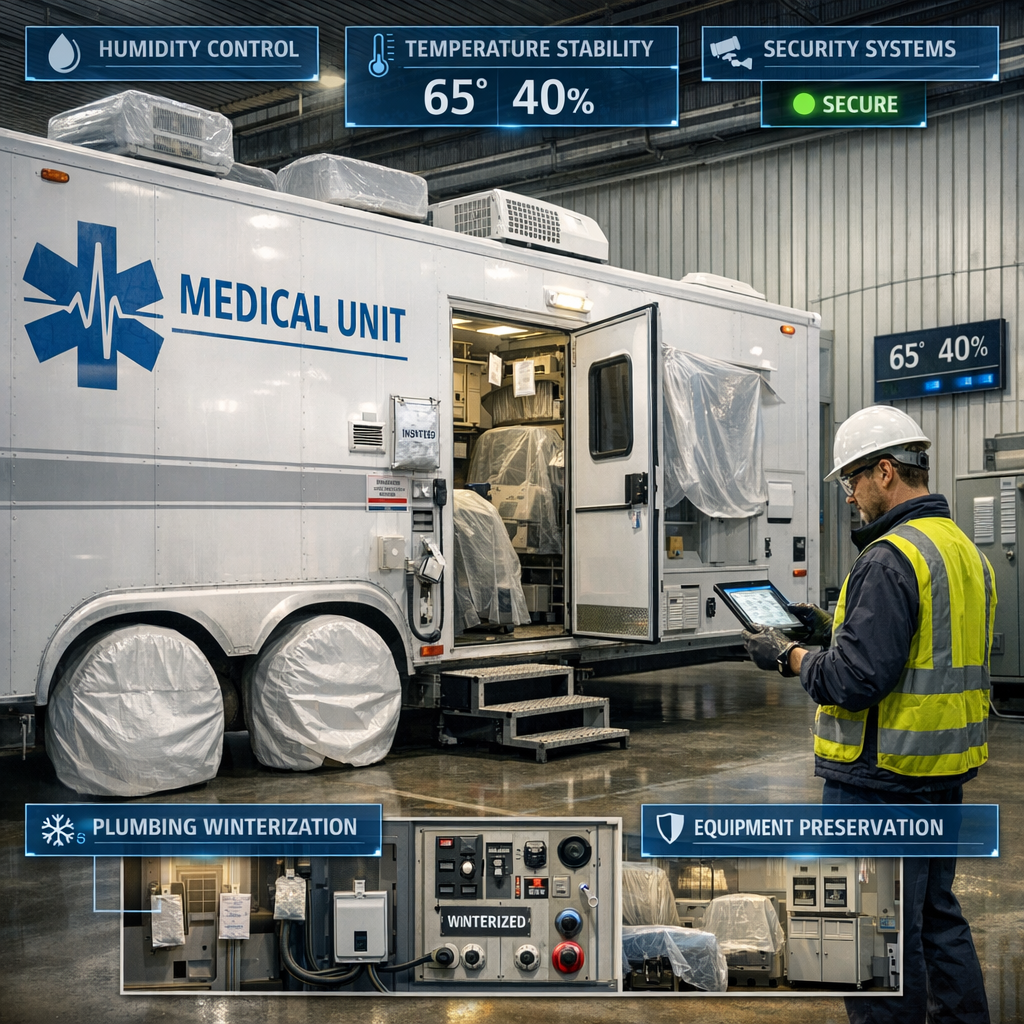
The best cleaning tech for mobile units is a layered combination of UV-C disinfection, electrostatic spraying, HEPA filtration, antimicrobial coatings, and application-specific chemical sanitizers, selected based on each unit's function, regulatory requirements, and surface materials.
This guide covers contamination risks unique to mobile environments, unit-specific cleaning demands across healthcare and food service and promotional and government applications, interior and exterior sanitation technologies, design principles that improve cleanability, compliance standards, and how custom fabrication builds hygiene into the vehicle itself.
Mobile units face compounding challenges that fixed facilities rarely encounter: frequent relocation, limited water supply, confined airspace, and rapid turnaround schedules. Advanced cleaning technologies like UV-C systems and electrostatic sprayers target pathogens at the microbial level while fitting within these operational constraints.
Different unit types carry distinct contamination profiles. Mobile medical vehicles require clinical-grade disinfection between patients, food service trailers must satisfy FDA Food Code sanitation cycles every four hours during operation, experiential marketing vehicles need wrap-safe cleaning that preserves branded graphics, and government command centers demand decontamination methods compatible with sensitive electronics and confined-space ventilation limits.
Interior technologies each address a specific vector: UV-C handles surface bioburden, HEPA filtration captures 99.97% of airborne particles at 0.3 microns, antimicrobial coatings provide residual pathogen suppression between manual cycles, and ATP monitors deliver measurable validation of cleaning effectiveness. Exterior methods range from pressure washing at 2,500 to 3,500 PSI for fleet-grade surfaces to touchless foam systems that protect vinyl wraps.
Material selection, interior layout, and integrated drainage engineered during fabrication determine how efficiently every subsequent cleaning cycle performs. Craftsmen Industries builds mobile units with these sanitation requirements embedded into the architecture, reducing turnaround time and long-term maintenance costs from day one.
Why Does Cleaning Technology Matter for Mobile Units?
Cleaning technology matters for mobile units because these enclosed, high-traffic environments face contamination risks that standard cleaning methods cannot reliably address. Compact interiors, shared surfaces, and rapid deployment schedules demand faster, more thorough sanitation than traditional approaches allow.
Mobile units operate in conditions where contamination spreads quickly and consequences escalate fast. Whether the unit serves food, delivers healthcare, or hosts public-facing brand activations, the margin for error is narrow. According to the CDC, roughly 1 in 6 Americans (48 million people) get sick from foodborne diseases each year, with 128,000 hospitalizations and 3,000 deaths. While that statistic reflects the broader food safety landscape, it underscores why any mobile environment handling consumables or clinical procedures needs cleaning systems engineered for consistent pathogen reduction, not just visible cleanliness.
The challenge with mobile units is compounded by several factors that fixed facilities rarely face:
- Frequent relocation exposes interiors to varying climates, dust loads, and biological contaminants between deployments.
- Limited water supply and wastewater capacity restrict how much traditional wet cleaning can accomplish.
- Confined spaces create airborne contamination loops that surface-only cleaning leaves unresolved.
- Rapid turnaround timelines between events or patient visits leave minimal time for multi-step manual protocols.
Advanced cleaning technologies solve these constraints by targeting pathogens at the microbial level while fitting within the operational realities of mobile deployment. UV-C disinfection, electrostatic sprayers, HEPA filtration, and antimicrobial coatings each address a different vector, from surface bioburden to airborne particulates to persistent recontamination between uses.
For operators managing fleets of experiential marketing vehicles, mobile medical clinics, or food service trailers, the right cleaning technology is not an upgrade; it is a compliance requirement. The FDA Food Safety Modernization Act, the most comprehensive reform of federal food safety laws in over 70 years, shifted regulatory focus from responding to contamination to preventing it. That preventive mandate applies directly to mobile environments, where inspection standards mirror or reference the FDA Food Code now adopted by 46 state agencies across 36 states.
From a practical standpoint, investing in purpose-matched cleaning tech reduces labor hours per sanitation cycle, extends the usable life of interior materials, and creates verifiable documentation for health inspections and client audits. The sections that follow break down specific technologies for interior sanitation, exterior maintenance, flooring and surfaces, and use-case selection criteria to help operators match the right system to their fleet.
What Types of Mobile Units Require Specialized Cleaning Tech?
The types of mobile units that require specialized cleaning tech include medical vehicles, experiential marketing units, command centers, food service trailers, and dental or veterinary clinics. Each category faces distinct contamination risks and regulatory demands.
Mobile Medical Units
Mobile medical units require clinical-grade disinfection protocols to prevent healthcare-associated infections. These vehicles function as fully operational exam rooms, diagnostic suites, and treatment spaces where patient contact surfaces must meet the same sanitation standards as fixed healthcare facilities. Bloodborne pathogen exposure, bioaerosol transmission, and cross-contamination between patients create cleaning challenges that standard methods cannot address. UV-C disinfection, HEPA filtration, and EPA-registered hospital-grade disinfectants form the baseline cleaning technology stack for these environments. Compact interiors and limited ventilation make automated, no-touch disinfection systems particularly valuable for mobile medical deployments.
Experiential Marketing Vehicles
Experiential marketing vehicles require cleaning technologies that protect branded assets while managing high-volume public contact. These units host hundreds or thousands of visitors during activations, creating rapid surface contamination cycles across touchscreens, counters, seating, and interactive displays. Electrostatic sprayers deliver uniform disinfectant coverage across irregular interior geometries without damaging sensitive electronics or custom finishes. Exterior cleaning must preserve vinyl wraps, large format graphics, and specialty paint; harsh chemical cleaners or high-pressure washing can delaminate or discolor these surfaces. For operators managing touring fleets, rapid-turnaround cleaning systems that sanitize interiors between events without extended downtime are essential.
Mobile Command and Emergency Response Units
Mobile command and emergency response units require decontamination-grade cleaning technology rated for biological, chemical, and environmental hazards. These vehicles deploy to disaster zones, crime scenes, and public health emergencies where occupants face unpredictable exposure risks. According to the EPA's emergency response research, UV-C light and electrostatic sprayer technologies have been evaluated specifically for their effectiveness in reducing pathogen exposure on contaminated surfaces. Confined-space ventilation adds complexity, since OSHA's 29 CFR 1910.146 defines atmospheric oxygen below 19.5% or above 23.5% as hazardous. Cleaning protocols for these units must account for both interior decontamination and safe chemical handling in enclosed, often windowless environments.
Mobile Kitchens and Food Service Trailers
Mobile kitchens and food service trailers require food-safe cleaning technologies that satisfy health department inspection standards. The FDA Food Safety Modernization Act represents the most comprehensive reform of federal food safety laws in over 70 years, shifting the regulatory focus from responding to contamination to preventing it. Key cleaning requirements for these units include:
- Sewage holding tanks must be 15% larger in volume than the water supply tank and sloped to drain.
- All floor, wall, ceiling, water tank, and food-contact surfaces must be smooth, durable, corrosion-resistant, and easily cleanable.
- Three-compartment sinks, chemical sanitizers, and proper wastewater management systems are mandatory in most jurisdictions.
Limited water supply and confined prep areas make compact, water-efficient cleaning equipment a practical necessity for mobile food operations.
Mobile Dental and Veterinary Clinics
Mobile dental and veterinary clinics require pathogen-specific cleaning technologies that address both human and animal health risks. The CDC recommends that dental unit waterlines be treated regularly with disinfectants to meet EPA drinking water standards of fewer than 500 colony-forming units per milliliter of heterotrophic water bacteria. For veterinary transport, Title 9 of the Code of Federal Regulations (9 CFR 91.3(d)) requires that conveyances be cleaned and disinfected prior to loading animals. These dual requirements mean mobile dental and veterinary units need waterline treatment systems, surface-level disinfection capable of addressing zoonotic pathogens, and instrument sterilization that functions reliably in a vehicle-based setting. Understanding each unit type's specific demands lays the groundwork for selecting the right cleaning technologies.
What Are the Best Cleaning Technologies for Mobile Unit Interiors?
The best cleaning technologies for mobile unit interiors include UV-C disinfection, electrostatic spraying, HEPA filtration, antimicrobial surface coatings, and ATP monitoring devices. Each technology targets a different sanitation challenge.
How Do UV-C Disinfection Systems Work in Mobile Units?
UV-C disinfection systems work in mobile units by emitting ultraviolet light at germicidal wavelengths that damage microbial DNA and prevent replication. Efficacy depends on dose, distance, exposure duration, and the presence of shadows. According to U.S. EPA emergency response research, the dose necessary to inactivate 90% of SARS-CoV-2 is approximately 3.6 mJ/cm² or as high as 10 mJ/cm². Operator safety requires attention to exposure limits; the recommended exposure limit for UVC at 254 nm is 6 mJ/cm² over eight hours for both eyes and skin. For compact mobile interiors with limited square footage, UV-C units can cycle between deployments to achieve rapid surface disinfection without chemical residue.
How Does Electrostatic Spraying Improve Interior Sanitation?
Electrostatic spraying improves interior sanitation by charging disinfectant droplets so they actively wrap around surfaces, reaching hidden areas that manual wiping misses. Most evaluated electrostatic sprayer devices produce droplets with an average volume median diameter of 40 microns or greater, creating fine, even coverage. Manufacturer-recommended disinfectant coverage rates range from 2 to 53 ounces per 1,000 square feet, depending on the device and solution. This technology is particularly effective inside mobile units where irregular shapes, equipment housings, and tight corners create hard-to-reach zones. For operators managing quick turnarounds between events or patient visits, electrostatic application dramatically cuts sanitation time compared to conventional spray-and-wipe methods.
How Do HEPA Filtration and Air Purification Systems Help?
HEPA filtration and air purification systems help by capturing airborne contaminants before they settle on interior surfaces. According to the U.S. EPA, a HEPA filter can theoretically remove at least 99.97% of dust, pollen, mold, bacteria, and other airborne particles at the most penetrating particle size of 0.3 microns; particles larger or smaller are trapped with even higher efficiency. ASHRAE confirms that HEPA filters are more efficient than MERV 16 filters. In enclosed mobile units where ventilation is limited, continuous HEPA filtration reduces bioaerosol accumulation, lowers recontamination rates after surface disinfection, and protects both occupants and operators during active use.
How Does Antimicrobial Surface Coating Reduce Cleaning Cycles?
Antimicrobial surface coating reduces cleaning cycles by providing continuous pathogen suppression between manual disinfection events. The EPA's interim guidance for antimicrobial coatings requires a 3-log reduction against viruses within a contact time of 2 hours. Newer surface technologies are exceeding this threshold significantly; researchers have described solid surfaces achieving greater than 4-log reduction within minutes against a wide spectrum of pathogenic species.
These coatings perform best when applied to surfaces designed for cleanability. Nonfood-contact surfaces should be free of unnecessary ledges, projections, and crevices to allow easy cleaning. Combining antimicrobial coatings with smooth, crevice-free interior design creates a layered defense that extends the interval between full disinfection protocols.
How Do ATP Monitoring Devices Validate Cleaning Effectiveness?
ATP monitoring devices validate cleaning effectiveness by measuring adenosine triphosphate residue on surfaces, providing a quantitative indicator of biological contamination within seconds. A review published in PubMed Central found that ATP bioluminescence is not reliable as a standalone measure of hospital cleaning, with benchmark values ranging widely from 45 RLU to 1,000 RLU across studies.
Despite these limitations, ATP testing remains valuable as one component of a verification program. Pairing ATP readings with visual inspection and microbial culture sampling gives mobile unit operators a more complete picture of sanitation quality.
With interior cleaning technologies selected, exterior maintenance requires equally specialized approaches to protect finishes and branding.
What Are the Best Cleaning Technologies for Mobile Unit Exteriors?
The best cleaning technologies for mobile unit exteriors include pressure washing systems, touchless foam cleaning, waterless wash products, and automated rinse systems. Each method addresses different surface types, graphic protection needs, and turnaround schedules.
How Do Pressure Washing Systems Handle Fleet-Grade Exteriors?
Pressure washing systems handle fleet-grade exteriors by delivering high-velocity water streams that strip road grime, salt deposits, and environmental contaminants from painted and bare metal surfaces. For most vehicles, a PSI between 1,200 and 1,900 is recommended, balancing effective cleaning power against surface damage risk. According to Mud Dog Trailers, professional fleet operations should target a minimum of 4 GPM (gallons per minute) to maintain adequate cleaning coverage across large trailer panels and cab surfaces.
Variable-pressure nozzles allow operators to adjust output between delicate trim areas and heavy-duty wheel wells. Hot water units perform best against grease and oil buildup common on mobile kitchens and service vehicles. For fleets with vinyl wraps or custom graphics, maintaining at least 12 inches of nozzle distance prevents edge lifting and adhesive degradation.
How Does Touchless Foam Cleaning Protect Graphics and Wraps?
Touchless foam cleaning protects graphics and wraps by eliminating physical contact that causes micro-abrasions, edge peeling, and premature fading. Low-pH or pH-neutral foam detergents are applied through a foam cannon, allowed to dwell, and rinsed without brushes or agitation pads touching the surface.
This approach is critical for experiential marketing vehicles and branded fleets where high-resolution wraps represent significant investment. Chemical selection matters: OSHA and NIOSH guidance on protecting workers who use cleaning chemicals emphasizes that mixing incompatible products, such as bleach and ammonia-based cleaners, can cause severe lung damage or death. Operators should use manufacturer-approved, wrap-safe formulations and ensure proper ventilation during application to protect both the surface and the cleaning crew.
How Do Waterless Wash Products Work on Wrapped Surfaces?
Waterless wash products work on wrapped surfaces by using surfactant-rich, lubricating formulas that encapsulate dirt particles and lift them away without water or mechanical scrubbing. The product is sprayed directly onto the panel, allowed to penetrate for 30 to 60 seconds, then wiped with a microfiber towel in straight, overlapping strokes.
These products suit field conditions where water access is limited, such as event sites, parking staging areas, or remote deployments. They excel at removing light dust, fingerprints, and water spots between full washes. However, waterless products are not designed for heavy soiling. Caked mud, tar, or insect residue should be pre-treated or addressed with a foam wash first to avoid dragging abrasive particles across the wrap surface.
How Do Automated Rinse Systems Save Time Between Deployments?
Automated rinse systems save time between deployments by delivering pre-programmed water and detergent cycles through fixed nozzle arrays mounted at wash bays or staging facilities. Operators position the vehicle, activate the system, and the rinse completes in minutes without manual labor.
These systems reduce turnaround time significantly for high-frequency fleets that move between events or service locations on tight schedules. Programmable settings allow adjustment for vehicle height, surface type, and detergent concentration. Recirculating water systems with filtration reduce water consumption, which is particularly valuable for operations managing environmental compliance. For organizations running multiple mobile units, automated rinse stations represent one of the most practical investments for maintaining consistent exterior appearance without expanding wash crew headcount.
With exterior cleaning systems established, selecting the right technology for flooring and interior hard surfaces ensures complete mobile unit sanitation.
What Cleaning Tech Works Best for Mobile Unit Flooring and Surfaces?
The best cleaning tech for mobile unit flooring and surfaces includes steam cleaners for non-porous floors, no-rinse disinfectants for clinical surfaces, and ozone generators for embedded odor treatment. Each method addresses a distinct sanitation challenge inside enclosed mobile environments.
How Do Steam Cleaners Sanitize Non-Porous Mobile Unit Floors?
Steam cleaners sanitize non-porous mobile unit floors by delivering pressurized vapor at temperatures high enough to kill bacteria, viruses, and other pathogens on contact. The thermal energy breaks down organic soils without chemical residue, making this method ideal for sealed flooring materials like vinyl, epoxy, and stainless steel commonly found in mobile medical and food service units.
According to Kärcher, professional steam cleaners emit vapor at approximately 212°F and a maximum pressure of up to 8 bar, producing fine droplets that penetrate surface-level contaminants. This combination of heat and pressure eliminates the need for harsh chemical cleaners on hard floors.
For operators managing tight turnaround schedules between deployments, steam cleaning offers a compelling advantage: floors dry rapidly because the moisture volume is minimal compared to traditional mopping. This reduces slip hazards and downtime simultaneously.
How Do No-Rinse Disinfectants Perform on Clinical Surfaces?
No-rinse disinfectants perform on clinical surfaces by eliminating pathogens through chemical action and then evaporating without requiring a water rinse. This characteristic makes them particularly effective inside mobile medical, dental, and veterinary units where water supply is limited and drainage capacity is constrained.
Common no-rinse formulations include quaternary ammonium compounds, accelerated hydrogen peroxide, and peracetic acid blends. Each offers a different balance of contact time, material compatibility, and spectrum of kill. Operators should match the disinfectant to the surface material, since certain agents can degrade rubber gaskets, acrylic panels, or soft-touch coatings over repeated use.
From a practical standpoint, no-rinse disinfectants are the most operationally efficient option for clinical mobile units that must cycle between patients or procedures quickly. The reduced water dependency alone justifies their place in any mobile sanitation protocol.
How Does Ozone Generation Treat Embedded Odors in Enclosed Units?
Ozone generation treats embedded odors in enclosed units by producing O₃ molecules that oxidize odor-causing organic compounds at the molecular level. Unlike air fresheners or carbon filters that mask or trap odors, ozone chemically breaks down volatile organic compounds, bacteria, and mold spores lodged in soft materials, seams, and HVAC ductwork.
This technology is especially valuable for mobile units with persistent contamination challenges. According to the CDC, untreated dental units cannot reliably produce water that meets drinking water standards of fewer than 500 CFU/mL of heterotrophic bacteria, illustrating how microbial buildup in enclosed mobile environments demands aggressive decontamination methods beyond surface wiping.
Key safety considerations for ozone use in mobile units include:
- OSHA limits worker exposure to no more than 0.10 ppm averaged over 8 hours.
- Units must be unoccupied during treatment and ventilated thoroughly before re-entry.
- Treatment duration and ozone concentration should be calibrated to the unit's cubic volume.
Ozone generation is best deployed as a periodic deep-treatment complement to daily surface cleaning, not as a standalone sanitation method. Understanding how flooring and surface technologies integrate with broader cleaning protocols helps operators select the right combination for each mobile unit application.
How Do You Choose Cleaning Tech Based on Mobile Unit Use Case?
You choose cleaning tech based on mobile unit use case by matching sanitation requirements to the specific regulatory, operational, and contamination-risk profile of each deployment type. Healthcare, food service, promotional, and government command units each demand distinct cleaning approaches.
What Cleaning Tech Is Best for Healthcare Mobile Units?
The best cleaning tech for healthcare mobile units combines UV-C disinfection, HEPA filtration, and EPA-registered hospital-grade disinfectants. Mobile medical and dental units face strict infection control requirements because patient contact surfaces harbor pathogens that resist standard cleaning methods.
A layered approach works best for these environments:
- UV-C systems deliver terminal disinfection between patients, inactivating bacteria and viruses on exposed surfaces.
- HEPA filters capture 99.97% of airborne particles at 0.3 microns, maintaining clinical air quality during procedures.
- ATP bioluminescence monitors validate surface cleanliness after each disinfection cycle.
According to the CDC, untreated dental units cannot reliably produce water meeting drinking water standards of fewer than 500 CFU/mL of heterotrophic bacteria. This makes waterline disinfection protocols essential for any mobile dental clinic. For mobile healthcare builds, designing surfaces that support rapid chemical wipe-downs is just as important as selecting the right disinfection hardware.
What Cleaning Tech Is Best for Food Service Mobile Units?
The best cleaning tech for food service mobile units centers on three-compartment sink systems, chemical sanitizers, and surface materials designed for HACCP compliance. Food contact surfaces must withstand repeated wash-rinse-sanitize cycles without degrading.
Key requirements include:
- Three-compartment sinks with water temperatures at a minimum of 110°F for wash and rinse stages.
- Quaternary ammonium sanitizers at 200 ppm concentration with at least one minute of contact time for manual surface sanitization.
- Sewage holding tanks 15% larger in volume than the water supply tank, sloped to drain.
According to the Virginia Department of Health's food regulations for mobile units, nonfood-contact surfaces must be free of unnecessary ledges, projections, and crevices, designed for easy cleaning. Operators who overlook drainage capacity and surface geometry during the build phase create persistent sanitation failures that no cleaning chemical can solve.
What Cleaning Tech Is Best for Promotional and Event Vehicles?
The best cleaning tech for promotional and event vehicles prioritizes exterior wrap protection and rapid interior turnaround between high-traffic activations. These units face different contamination challenges than clinical or food service environments; the primary concerns are surface wear, crowd-generated grime, and brand appearance preservation.
Effective cleaning strategies for event vehicles include:
- Touchless foam systems that lift contaminants without abrading vinyl wraps or printed graphics.
- Waterless wash products for quick field cleaning between tour stops.
- Antimicrobial surface coatings on high-touch interior areas to reduce bacterial load between events.
- Electrostatic sprayers for efficient disinfectant coverage across complex interior geometries.
For touring vehicles that visit multiple cities weekly, building interiors with smooth, non-porous materials during fabrication reduces cleaning time far more than upgrading chemicals after the fact.
What Cleaning Tech Is Best for Government Mobile Command Units?
The best cleaning tech for government mobile command units balances decontamination capability with electronics safety and confined-space ventilation requirements. Command centers contain sensitive communications equipment, classified material handling areas, and extended-occupancy workstations that limit which cleaning methods are practical.
Recommended technologies include:
- HEPA-grade air purification for continuous particulate and bioaerosol removal during multi-day operations.
- UV-C disinfection cycles deployed during shift changes when personnel vacate the unit.
- No-rinse disinfectant wipes for console surfaces and shared equipment between operators.
According to OSHA's 29 CFR 1910.146, atmospheric oxygen concentration below 19.5% or above 23.5% is hazardous in confined spaces. This regulation makes ozone generators impractical for occupied command environments and reinforces the need for cleaning technologies that perform effectively without displacing breathable air. Designing integrated ventilation pathways during fabrication gives command units a lasting advantage in maintaining safe air quality during decontamination.
How Does Mobile Unit Design Affect Cleaning Efficiency?
Mobile unit design affects cleaning efficiency by determining how easily surfaces can be sanitized, how quickly crews can access all areas, and how well the unit manages moisture and airflow. Material selection, interior layout, and integrated drainage and ventilation systems each play a distinct role.
Why Do Material Choices Impact Long-Term Cleanability?
Material choices impact long-term cleanability because surface properties directly determine how effectively contaminants can be removed and how well surfaces withstand repeated sanitation cycles. Smooth, non-porous materials like stainless steel and fiberglass-reinforced panels resist microbial adhesion, while porous or textured surfaces trap pathogens in microscopic crevices.
Key material properties that support long-term cleanability include:
- Corrosion resistance: Stainless steel withstands chemical sanitizers without degrading.
- Non-absorbency: Non-porous surfaces prevent moisture and bacteria from penetrating.
- Durability under abrasion: Materials must tolerate frequent scrubbing without losing their smooth finish.
- Chemical compatibility: Surfaces should resist damage from bleach, quaternary ammonium compounds, and other common disinfectants.
Choosing materials at the fabrication stage is far more cost-effective than retrofitting a unit later; the wrong surface selection compounds cleaning labor costs over the life of the vehicle.
How Does Interior Layout Design Reduce Cleaning Time?
Interior layout design reduces cleaning time by minimizing hard-to-reach areas and enabling unobstructed access for sanitization equipment. Rounded interior corners, coved flooring transitions, and flush-mounted fixtures eliminate the crevices where contaminants accumulate.
Open floor plans with modular components allow cleaning crews to reach every surface quickly. According to a study published in the American Journal of Infection Control, sodium hypochlorite applied via electrostatic spray on steel surfaces reduced C. difficile spores by 6.0 log₁₀ CFU with just a 5-minute contact time. Layouts that expose flat, unobstructed steel surfaces to such spray technologies maximize this microbial reduction.
Recessed hardware, sealed seams, and removable panels further reduce the time spent disassembling components for thorough cleaning.
Why Does Integrated Drainage and Ventilation Matter?
Integrated drainage and ventilation matter because standing water breeds microbial growth and trapped moisture accelerates material degradation inside enclosed mobile units. Sloped flooring with recessed drain channels directs wastewater to collection points, preventing pooling after washdowns.
Proper ventilation serves two functions:
- Moisture removal: Exhaust fans and air exchange systems dry interior surfaces faster, shortening turnaround time between deployments.
- Chemical safety: Ventilation prevents hazardous vapor buildup from disinfectants, protecting cleaning personnel.
Units designed without adequate drainage force crews to manually squeegee and towel-dry surfaces, adding significant labor time. When drainage and ventilation are engineered into the build from the start, every subsequent cleaning cycle becomes faster and more effective. With design fundamentals in place, selecting the right cleaning schedule keeps these advantages working long-term.
How Often Should You Clean and Sanitize Different Mobile Units?
You should clean and sanitize different mobile units at frequencies determined by their use case, contamination risk level, and regulatory requirements. The schedules below cover food service, medical, emergency response, and promotional units.
Food service mobile units require the most frequent sanitation. Food contact surfaces need cleaning and sanitizing after every use, between menu items, and at minimum every four hours during continuous operation. From a sanitary design perspective, food contact surfaces should be smooth, impervious, free of cracks and crevices, non-porous, non-absorbent, non-reactive, corrosion resistant, durable, and cleanable, according to research published in Food Protection Trends by the International Association for Food Protection. Units that meet these material standards are far easier to maintain on aggressive cleaning schedules.
Recommended cleaning frequencies by mobile unit type:
- Mobile medical and dental units require full surface disinfection between every patient encounter, with terminal cleaning at the end of each service day and deep decontamination weekly.
- Mobile kitchens and food trailers need food contact surface sanitization every four hours during operation, full interior cleaning daily, and deep cleaning of ventilation hoods and grease traps monthly.
- Experiential marketing vehicles should receive interior wipe-downs after each event day, exterior wash and graphic inspection weekly during tour season, and comprehensive deep cleaning between activations.
- Mobile command and emergency response units require decontamination after every deployment, with routine interior sanitization biweekly during standby periods.
- Mobile veterinary units need surface disinfection between animals, full interior decontamination daily, and equipment sterilization per regulatory protocol.
Operators who treat these frequencies as minimums rather than targets consistently maintain safer environments and extend unit lifespan. The most common mistake is applying a single cleaning schedule across all unit types, when contamination risks vary dramatically between a food trailer running continuous service and a promotional vehicle hosting periodic activations.
With sanitation frequency established, understanding the compliance standards behind these schedules ensures every protocol meets regulatory expectations.
What Compliance Standards Apply to Mobile Unit Sanitation?
The compliance standards that apply to mobile unit sanitation include the FDA Food Code, OSHA confined space regulations, USDA cleaning and disinfection requirements, EPA disinfectant registration guidelines, and NFPA ventilation codes. Each standard governs a different operational dimension of mobile unit hygiene.
Mobile food units, medical vehicles, and emergency response trailers all fall under overlapping federal and state frameworks. The FDA Food Code forms the sanitation baseline for food service units, while OSHA sets worker safety thresholds for enclosed cleaning environments. USDA protocols govern animal transport conveyances, the EPA regulates disinfectant efficacy claims, and NFPA 96 dictates hood and ventilation maintenance. According to the FDA, 46 state agencies in 36 states have adopted one of the three most recent versions of the FDA Food Code (2022, 2017, and 2013), representing 64.64% of the U.S. population.
Key compliance standards for mobile unit sanitation include:
- FDA Food Code: Requires food contact surfaces to be smooth, non-porous, corrosion-resistant, and easily cleanable. Hot water in wash and rinse sinks must reach a minimum of 110°F, with sanitizing rinse water at 171°F for hot-water sanitization methods.
- FSMA (Food Safety Modernization Act): The most comprehensive reform of federal food safety laws in over 70 years, shifting focus from contamination response to prevention.
- OSHA 29 CFR 1910.146: Classifies atmospheric oxygen below 19.5% or above 23.5% as hazardous in confined spaces, directly affecting enclosed mobile unit cleaning protocols.
- USDA APHIS (9 CFR Part 91): Requires conveyances to be cleaned and disinfected prior to loading, with origin health certificates verifying compliance.
- EPA disinfectant standards: Registered antimicrobial products must achieve a 5-log reduction in qualifying bacteria within 10 minutes for residual bactericidal claims. Dental unit waterlines must meet EPA drinking water standards of fewer than 500 CFU/mL.
- NFPA 96: Requires exhaust hoods in mobile kitchens to be inspected for grease buildup, typically on a semi-annual basis depending on cooking volume.
- HACCP principles: Define Critical Control Points as steps where control is essential to prevent, eliminate, or reduce food safety hazards to acceptable levels.
Operators who treat compliance as a checklist often miss the interplay between these standards. A mobile medical unit, for instance, must simultaneously satisfy OSHA confined-space ventilation limits during ozone treatment and EPA efficacy thresholds for surface disinfection. Understanding where these frameworks overlap is what separates compliant operations from truly safe ones.
With regulatory foundations established, purpose-built fabrication can embed compliance into the mobile unit itself.
How Does Custom Mobile Unit Fabrication Optimize Cleaning Outcomes?
Custom mobile unit fabrication optimizes cleaning outcomes by integrating hygienic design principles, cleanable materials, and sanitation-ready systems directly into the build. The following subsections cover how Craftsmen Industries approaches this and the key takeaways from this guide.
Can Craftsmen Industries Build Mobile Units Designed for Easier Cleaning and Maintenance?
Yes, Craftsmen Industries can build mobile units designed for easier cleaning and maintenance. As a vertically integrated fabricator with in-house design, engineering, and production capabilities, Craftsmen Industries controls every phase of the build process from its 127,000 sq. ft. facility in St. Charles, Missouri. This end-to-end control allows the team to specify smooth, corrosion-resistant surfaces, integrated drainage, and layouts that eliminate hard-to-reach areas where contaminants accumulate.
Custom builds can incorporate features aligned with high-performance cleaning standards. According to the Global Biorisk Advisory Council (GBAC), GBAC STAR accreditation represents the gold standard for cleaning and maintenance programs in institutional and commercial facilities, requiring proper cleaning protocols, disinfection techniques, and trained professionals to maintain hygienic indoor environments.
Craftsmen Industries applies this same design-for-cleanability philosophy across mobile medical units, experiential marketing vehicles, mobile kitchens, and government command centers. Every unit type benefits when sanitation is engineered into the structure rather than retrofitted after delivery. For operators managing fleet-wide hygiene, that distinction directly reduces turnaround time and long-term maintenance costs.
What Are the Key Takeaways About Best Cleaning Tech for Mobile Units?
The key takeaways about best cleaning tech for mobile units center on matching the right technology to each unit's function, regulatory environment, and surface materials:
- UV-C disinfection systems and electrostatic sprayers deliver high-level microbial reduction for healthcare and food service interiors.
- HEPA filtration maintains air quality in enclosed clinical and command environments.
- Antimicrobial coatings reduce cleaning frequency by providing continuous residual protection between manual sanitation cycles.
- ATP bioluminescence monitors validate cleaning effectiveness with measurable benchmarks.
- Steam cleaners and pressure washers address flooring, exterior surfaces, and embedded contamination without harsh chemical residues.
- Ozone generators treat persistent odors in sealed units while achieving verified pathogen reduction.
- Chemical sanitizers remain essential for food-contact surfaces, with concentration and contact time matched to regulatory thresholds.
No single technology covers every mobile unit scenario. The most effective sanitation programs layer multiple systems, pairing preventive design choices with the right combination of chemical, mechanical, and energy-based cleaning methods. Craftsmen Industries builds mobile units with these integrated cleaning requirements in mind, ensuring that hygiene performance is part of the vehicle's architecture from day one.