
9 min read
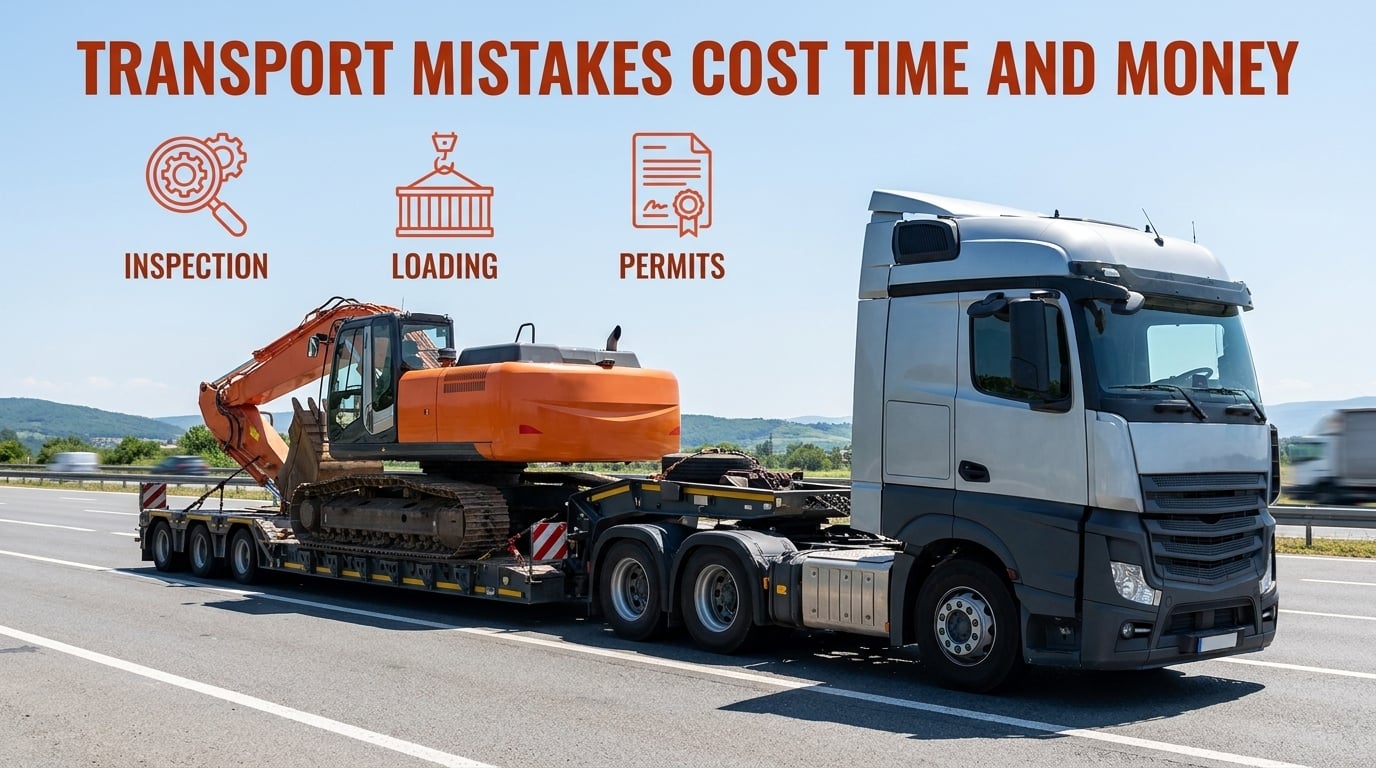
Transporting used excavators involves far more than loading a machine onto a trailer. It requires coordinated preparation, regulatory compliance, and clear communication across every party in the transport chain.
This guide covers pre-transport inspection, loading and securement, documentation, route planning, regulatory compliance, stakeholder communication, and how professional carriers like Bear Down Logistics eliminate the errors that cause damage and delays.
Skipped inspections are where most avoidable incidents begin. Undetected hydraulic leaks, worn tracks, and unsecured attachments that go unnoticed before loading become serious mechanical and safety hazards once the machine is in motion.
Incorrect loading and tie-down methods are among the most consequential errors carriers make. Using the wrong trailer type, improper chain placement, and omitting wheel chocks create load instability that can result in catastrophic damage mid-route.
Documentation and route planning failures carry their own costs. Missing or incorrect permits have been known to stall transports for as long as 14 days, while poor route planning exposes overweight and over-height loads to bridges and clearances they cannot safely pass.
Regulatory non-compliance escalates those risks further. Federal securement standards, state axle weight limits, and oversize permit requirements are not optional; operating without them voids insurance coverage and transfers full liability to the carrier.
Poor stakeholder communication compounds every other mistake. When shippers, carriers, and receivers fail to share equipment dimensions, permit status, and site constraints, assumption-based decisions drive the entire operation.
Experienced, insured carriers resolve all of these failure points before departure by applying structured processes that leave nothing to chance.
Why Is Proper Inspection Important Before Transporting Used Excavators?
Proper inspection is important before transporting used excavators because undetected mechanical issues, fluid leaks, and structural damage can escalate into costly failures, accidents, or regulatory violations during transit. The sections below cover what goes wrong when inspections are skipped and how to prepare an excavator correctly before loading.
What Problems Can Overlooking Pre-Transport Inspections Cause?
Overlooking pre-transport inspections can cause serious mechanical failures, load instability, and safety hazards during transit. Hydraulic hose leaks, worn tracks, and loose attachments that go undetected before loading create risks that compound once the machine is in motion on a trailer. According to Heavy Equipment Colleges of America, routine excavator inspections should include checking the hydraulic system for hose leaks, cracking, and bulging, because even minor hydraulic leaks or worn tracks can escalate into serious mechanical failures if not caught early. Beyond mechanical risk, an uninspected machine may also have fluid leaks that contaminate the trailer or violate carrier requirements, triggering delays or rejected loads at origin.
How Should Used Excavators Be Prepared for Safe Transport?
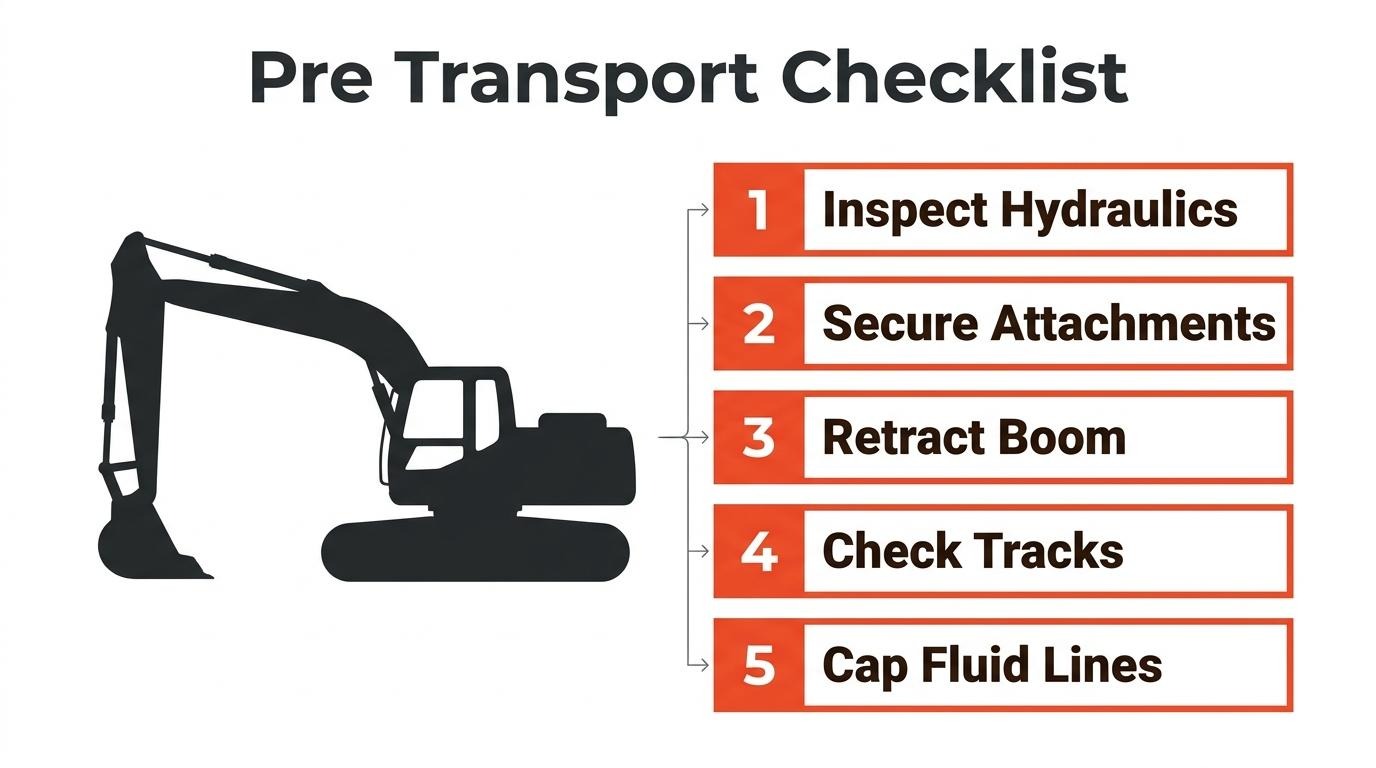
Used excavators should be prepared for safe transport by following a structured pre-transport checklist that addresses mechanical condition, fluid control, and load-readiness. Key preparation steps include:
- Inspect the hydraulic system for leaks, cracked hoses, and bulging fittings before loading.
- Drain or cap all fluid lines that pose a spill risk during transport.
- Retract and secure the arm, boom, and bucket to their lowest stable position.
- Remove or pin any detachable attachments to prevent shift during transit.
- Verify that track tension and undercarriage components are within safe operating tolerances.
All top oversize and overweight transportation companies in the United States hold membership in the Specialized Carriers & Rigging Association (SC&RA), reflecting how deeply professional standards are embedded in compliant heavy equipment transport. Skipping even one step in this preparation sequence is where most avoidable transport incidents begin.
How Do Incorrect Loading and Securing Methods Lead to Damage or Delays?
Incorrect loading and securing methods lead to damage or delays by creating instability during transit, shifting loads, and causing structural failures. The following sections cover best loading practices and the most common tie-down errors.
What Are the Best Practices for Loading Used Excavators Onto Transport Vehicles?
The best practices for loading used excavators onto transport vehicles include selecting the correct trailer type, verifying weight distribution, and using trained personnel throughout the process. Common mistakes in heavy machinery transport include failing to plan for route restrictions, using incorrect loading techniques that cause instability, and working with inexperienced or underqualified transportation providers, according to Eagle Rigging and Transport.
Key loading best practices include:
- Trailer selection: Match the trailer type to the excavator's weight class and dimensions, as using an inappropriate trailer is one of the most frequently cited shipping errors.
- Weight distribution: Center the excavator's weight evenly over the trailer axles to prevent tipping during transit.
- Boom and arm positioning: Lower and secure the boom, arm, and bucket fully before loading to reduce height and shift the center of gravity.
- Qualified operators: Use certified equipment operators for loading, not general laborers unfamiliar with excavator controls.
- Ramp angle: Approach loading ramps at the correct angle and speed to avoid sudden weight transfers that can destabilize the load.
Which Tie-Down Errors Are Most Frequently Made During Heavy Equipment Transport?
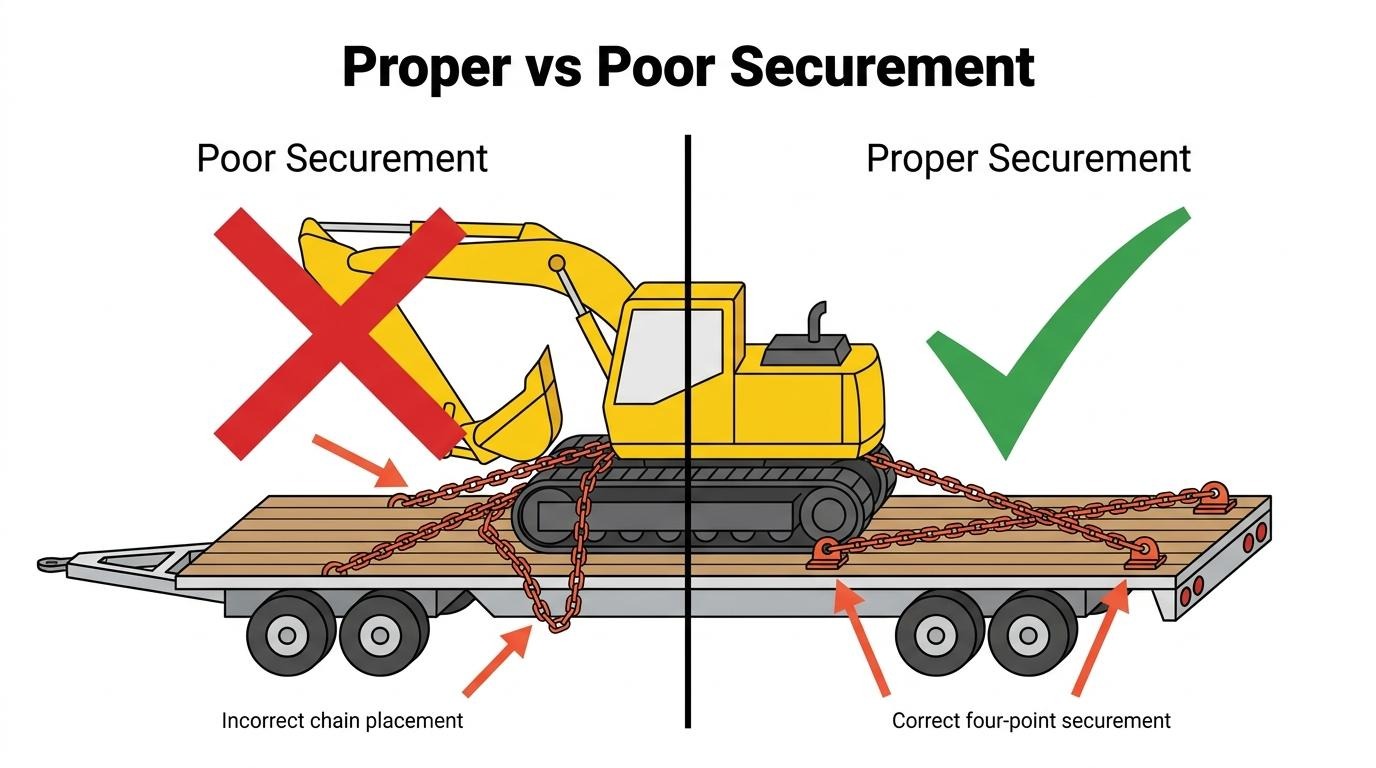
The tie-down errors most frequently made during heavy equipment transport include using too few chains, improper chain placement, and failing to account for dynamic load forces during braking and cornering. A real-world example of what poor securement can produce: in November 2025, a truck transporting a Caterpillar 323 excavator, weighing at least 55,000 pounds, struck the South Morrill Road Bridge on U.S. Highway 75 in Osage County, Kansas, causing the excavator's arm to puncture through the bridge deck, according to The Drive.
The most common tie-down errors are:
- Insufficient chain count: Using fewer chains than required for the excavator's gross weight leaves the load under-secured.
- Incorrect anchor points: Attaching chains to non-rated attachment points on the excavator's frame risks chain slip under load shift.
- Skipping binders: Failing to use load binders or using worn binders allows chain tension to loosen progressively over miles driven.
- No blocking or cribbing: Omitting wheel chocks or cribbing under tracks allows the machine to roll forward during hard braking.
- Ignoring documentation timelines: Beyond physical securement, documentation errors have been known to stall transports for as long as 14 days, compounding delays when physical damage also occurs.
Poor tie-down execution is consistently underestimated; addressing it before departure is far cheaper than recovering a shifted load mid-route.
What Documentation Mistakes Can Complicate Excavator Transportation?
Documentation mistakes can significantly complicate excavator transportation by triggering permit rejections, regulatory violations, and costly delivery delays. The subsections below cover which permits are essential and how missing or incorrect documents disrupt schedules.
Which Permits and Paperwork Are Essential for Transporting Heavy Equipment?
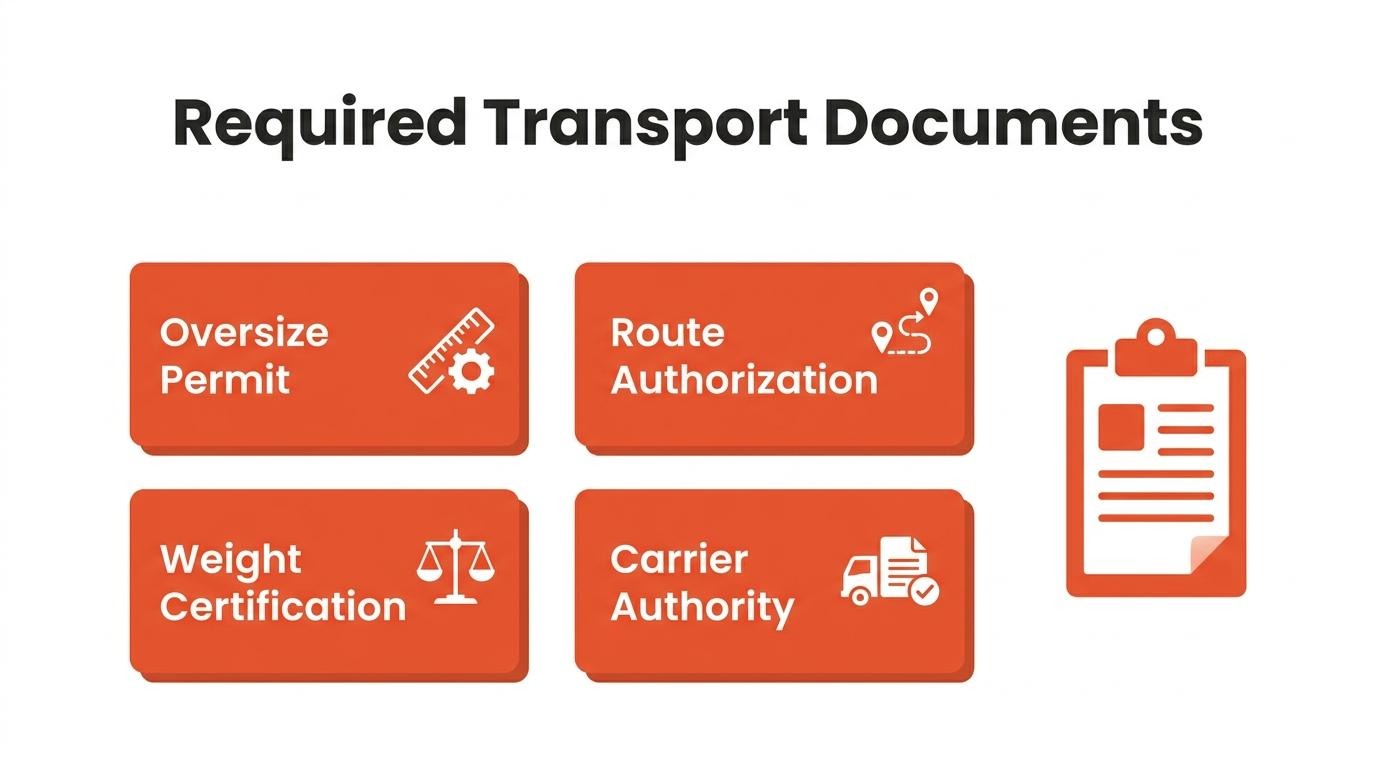
The permits and paperwork essential for transporting heavy equipment include oversize/overweight (OS/OW) load permits, route approval authorizations, axle weight certifications, and carrier operating authority documents. Most states require separate permits for each jurisdiction a load passes through, and permit requirements vary by vehicle configuration. The Federal Bridge Formula governs how axle weight is distributed across consecutive axle groups on commercial vehicles, directly determining whether a given configuration requires additional permits or route modifications. Skipping any of these documents can result in roadside holds, fines, or forced rerouting before the load reaches its destination.
How Can Missing or Incorrect Documents Affect Delivery Schedules?
Missing or incorrect documents can affect delivery schedules severely, often halting transport entirely until paperwork is corrected and resubmitted. According to Freedom Heavy Haul, documentation errors have been known to stall transports for as long as 14 days, while priority permit filing can reduce approval time by up to 72%. A single transposed weight figure or an expired carrier certificate can trigger this delay. Beyond lost time, incomplete paperwork exposes shippers and carriers to liability for any damage or regulatory violation that occurs during an unpermitted move.
How Do Route Planning Errors Impact the Safe Transport of Used Excavators?
Route planning errors impact the safe transport of used excavators by exposing loads to bridge weight restrictions, low clearances, and permit violations that cause accidents or costly delays. The factors to consider and the regulatory risks of poor planning are covered below.
What Factors Must Be Considered When Choosing a Transportation Route?
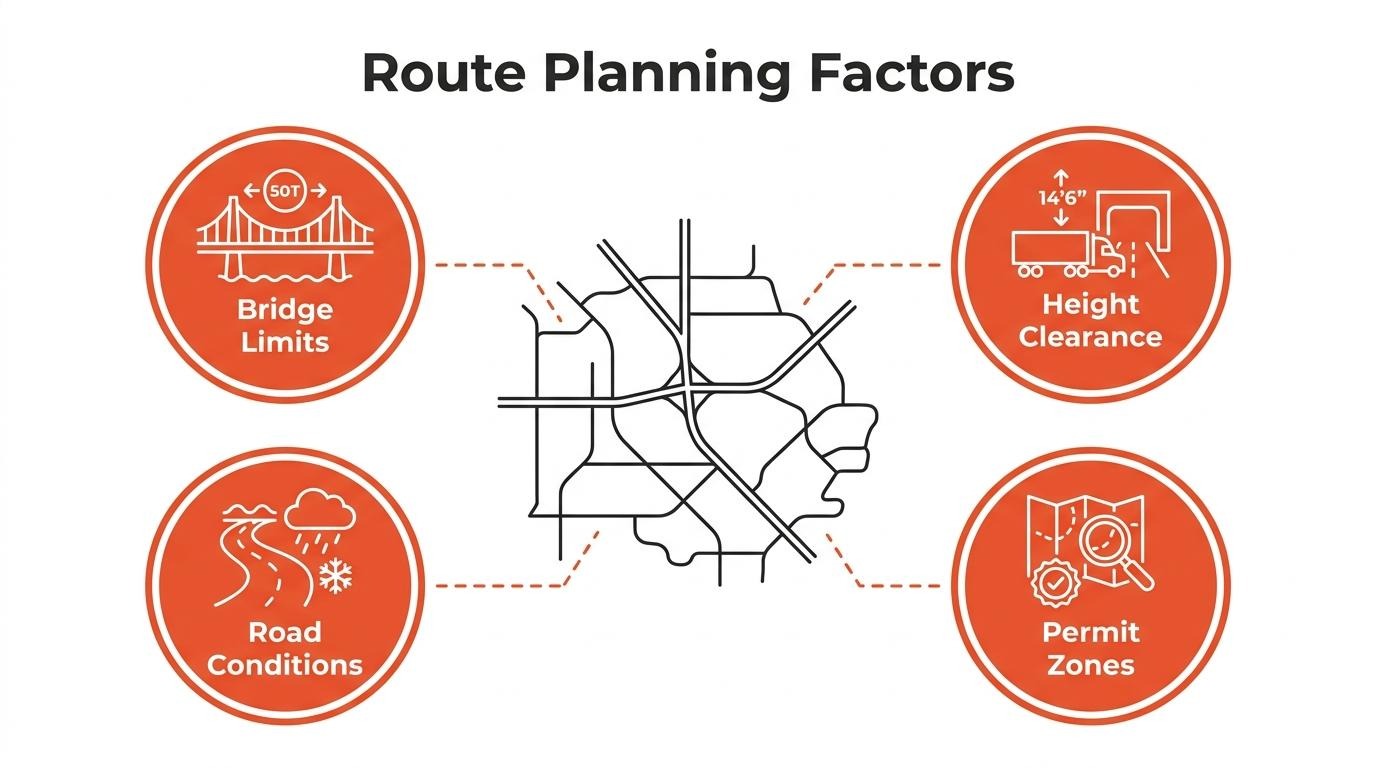
The factors that must be considered when choosing a transportation route include bridge weight limits, vertical clearances, road surface conditions, and state-specific permit requirements. The Federal Highway Administration applies the Federal Bridge Formula, W=500(LN/N-1 + 12N + 36), to calculate the maximum allowable weight on consecutive axle groups, meaning axle spacing directly determines which bridges a loaded transport can legally cross. Beyond bridge math, planners must verify overhead clearances for excavators with raised booms, identify roads with posted weight restrictions, and account for construction zones or detours that could force unapproved deviations. Skipping any of these steps turns a routine move into a compliance risk.
How Can Poor Route Planning Lead to Regulatory Violations or Accidents?
Poor route planning can lead to regulatory violations or accidents by placing overweight or over-height loads on infrastructure not rated to handle them. In November 2025, a truck transporting a Caterpillar 323 excavator weighing at least 55,000 pounds struck the South Morrill Road Bridge on U.S. Highway 75 in Osage County, Kansas, causing the excavator's arm to puncture through the bridge deck. Beyond structural damage, documentation errors tied to inadequate route planning have been known to stall transports for as long as 14 days, according to Freedom Heavy Haul. Every skipped pre-route check creates compounding liability: infrastructure damage, regulatory fines, delivery failure, and potential injury.
What Are the Risks of Not Complying with Local and Federal Transport Regulations?
The risks of not complying with local and federal transport regulations include legal penalties, delayed deliveries, voided insurance coverage, and serious liability exposure. The subsections below cover specific legal requirements for heavy equipment transport and how non-compliance directly affects delivery outcomes and liability.
What Legal Requirements Apply to Moving Heavy Equipment Like Used Excavators?
The legal requirements that apply to moving heavy equipment like used excavators include federal cargo securement standards, oversize/overweight permits, and state-specific axle weight limits. The Federal Motor Carrier Safety Administration (FMCSA) requires cargo securement systems to withstand 0.8 g deceleration forward, 0.5 g rearward, and 0.5 g lateral acceleration. State requirements add another layer: in Texas, for example, a tandem axle group carries a maximum permit weight of 46,000 pounds, while a tridem axle group is permitted up to 60,000 pounds with minimum 40-inch axle spacing, according to the Texas Department of Motor Vehicles. Skipping permit applications or misreporting axle configurations are among the most consequential compliance failures in heavy equipment transport.
How Can Non-Compliance with Regulations Affect Delivery and Liability?
Non-compliance with regulations can affect delivery and liability by triggering fines, load rejections, route shutdowns, and legal claims following accidents or property damage. Carriers operating without proper permits expose themselves to full civil liability when cargo incidents occur, since insurance policies typically exclude coverage for unpermitted loads. Documentation errors alone have been known to stall transports for as long as 14 days, according to Freedom Heavy Haul, compounding both project costs and contractual penalties for shippers. Beyond financial consequences, regulatory violations shift legal responsibility entirely onto the carrier, removing any shared liability protection that compliant operations provide.
How Does Inadequate Communication Between Stakeholders Cause Mistakes?
Inadequate communication between stakeholders causes mistakes by creating information gaps that lead to misaligned expectations, missed permits, and preventable delays. The sections below cover what information shippers, carriers, and receivers must share, and how poor coordination translates into costly transport errors.
What Information Should Be Shared Between Shippers, Carriers, and Receivers?
The information that should be shared between shippers, carriers, and receivers includes equipment dimensions, operating weight, planned route, permit status, delivery windows, and any site-access restrictions. Each party carries details the others cannot safely assume. Shippers must confirm the excavator's exact weight class and attachment configuration. Carriers must communicate trailer type, height clearance, and permit conditions. Receivers must disclose unloading site constraints, such as ground conditions or overhead obstructions, well before arrival.
Assuming a transportation provider already knows specific equipment driving requirements is one of the most commonly identified construction equipment shipping mistakes, according to Anderson Trucking Service. When any of these details go unshared, the entire transport chain is exposed to avoidable risk.
How Can Lack of Coordination Lead to Costly Errors in Transport?
Lack of coordination can lead to costly errors in transport such as route mismatches, missed permit windows, scheduling conflicts, and on-site delays that compound across the delivery chain. According to Freedom Heavy Haul, documentation errors have been known to stall transports for as long as 14 days. A single miscommunication about delivery timing can idle crews, delay job sites, and trigger penalty clauses in contracts.
Poor coordination also increases the likelihood of using incorrect loading techniques or an inappropriate trailer type, both identified as common heavy machinery transport mistakes. Establishing a single communication protocol shared across all stakeholders before departure is the most underutilized risk-reduction step in excavator transport.
When Should You Choose a Professional Heavy Equipment Transport Service?
You should choose a professional heavy equipment transport service when the load involves oversized dimensions, complex permitting, or specialized equipment like used excavators. The following H3s cover the core benefits of experienced carriers and how professional services prevent costly shipping mistakes.
What Are the Benefits of Hiring an Experienced and Insured Freight Transporter?
The benefits of hiring an experienced and insured freight transporter include proper equipment selection, regulatory compliance, and liability protection. Experienced carriers understand federal and state weight limits, select the correct trailer type for the load, and carry insurance that protects your equipment against damage or loss. For high-value assets like excavators, which can retain 52–58% of their original value after five years, the financial risk of underinsured or inexperienced transport is significant. Insured transporters also manage permit acquisition and route surveys, reducing the chance of costly delays or regulatory violations.
How Can Professional Services Reduce the Risk of Mistakes During Excavator Shipping?
Professional services reduce the risk of mistakes during excavator shipping by applying standardized processes that address the most common failure points. According to Anderson Trucking Service (ATS), utilizing inappropriate trailer types and assuming a carrier already understands specific equipment driving requirements are among the most frequently cited construction equipment shipping mistakes. Experienced providers verify trailer compatibility, confirm load dimensions before departure, and coordinate directly with permit authorities. This structured approach eliminates assumption-based decisions that lead to securement failures, route violations, and damaged equipment.
How Can Bear Down Logistics Help You Avoid Common Mistakes When Transporting Used Excavators?
Bear Down Logistics helps clients avoid excavator transport mistakes by combining over 20 years of heavy hauling experience with licensed, bonded, and insured operations. The sections below cover compliant transport services and key article takeaways.
Can Bear Down Logistics' Heavy Equipment Transport Services Ensure Safe and Compliant Excavator Shipping?
Yes, Bear Down Logistics' heavy equipment transport services can ensure safe and compliant excavator shipping through proper trailer selection, pre-transport inspection support, and route compliance. Using an inappropriate trailer type and assuming a carrier already understands specific equipment requirements are two of the most cited excavator shipping mistakes, according to Anderson Trucking Service. Bear Down Logistics addresses both directly. Shipping costs typically range between $2 to $5 per mile depending on size, distance, and complexity, and working with an experienced carrier helps clients budget accurately while avoiding costly surprises. For oversized excavators, questions like trailer compatibility and permit requirements are handled before a single wheel turns.
What Are the Key Takeaways About Common Mistakes When Transporting Used Excavators We Covered?
The key takeaways about common mistakes when transporting used excavators center on preparation, compliance, and selecting the right carrier. The most impactful lessons from this article are:
- Inspect before transport: Check hydraulic systems, tracks, and structural components before loading.
- Use the correct trailer: Mismatched trailer types cause instability and compliance violations.
- Secure permits early: Documentation errors can stall shipments for days.
- Plan routes carefully: Height, weight, and bridge restrictions must be verified in advance.
- Communicate clearly: Shippers, carriers, and receivers must align on equipment specifications and requirements.
- Choose a qualified carrier: According to Eagle Rigging and Transport, working with inexperienced providers is among the most common and costly transport errors.
Bear Down Logistics applies all of these principles on every load.