
8 min read
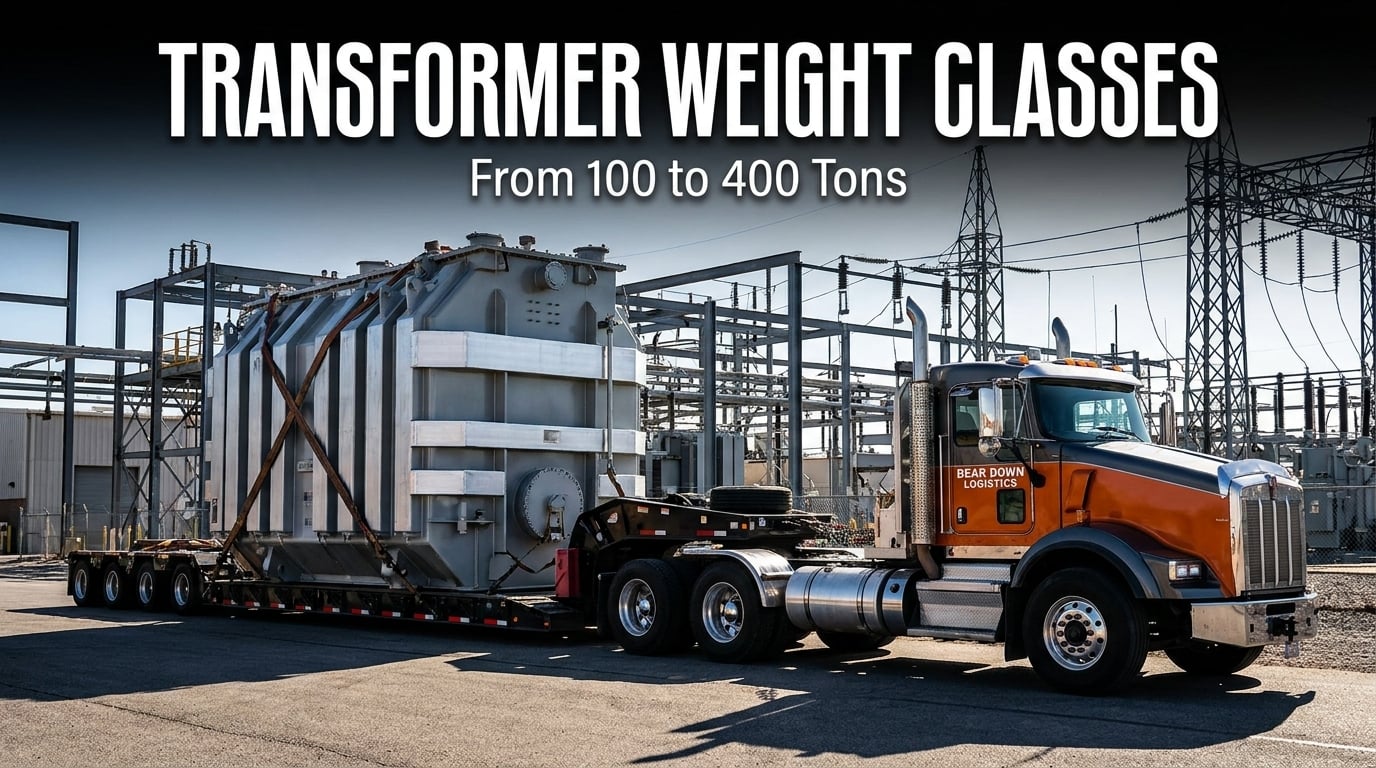
Transformer weight class is the technical designation assigned to a transformer based on its voltage rating, power capacity in MVA, and physical mass, and it directly determines every logistical decision involved in moving that unit from origin to destination.
This guide covers how transformer weight classes are defined and categorized, why those classifications drive real transport consequences, the permit and regulatory landscape carriers must navigate, the equipment and methods used across weight classes, cost implications and reduction strategies, and safety protocols that govern every move.
At the classification level, large power transformers rated 100 MVA or larger typically weigh between 100 and 400 tons, while general-purpose units rated 600 volts and below represent a fraction of that mass. Industry standards, including ANSI/IEEE Std C57.12.00-2010 and FMCSA's 49 CFR Part 393, formalize these thresholds into regulated compliance obligations.
Weight class determines route availability, equipment selection, and permit requirements. Vehicles exceeding 80,000 lbs face bridge formula restrictions on every U.S. highway, and the heaviest LPTs demand specialized trailers, such as the Goldhofer or Nicolas, along with SPMTs for final-mile delivery.
On costs, transportation and logistics for large power transformers can represent 3 to 20 percent of total LPT cost, driven by permit fees, escort requirements, and specialized equipment. Strategic planning, including rail for long hauls and early permit coordination, moves that cost toward the lower end of that range.
Safety protocols, from FMCSA cargo securement standards to tiedown conformance under §393.104, are non-negotiable prerequisites, not final-step formalities.
How Are Transformer Weight Classes Defined and Categorized?
Transformer weight classes are defined by a combination of voltage rating, power capacity (MVA), and physical mass. The sections below cover the technical criteria used to classify transformers and the industry standards that formalize those classifications.
What Criteria Are Used to Determine Transformer Weight Classes?
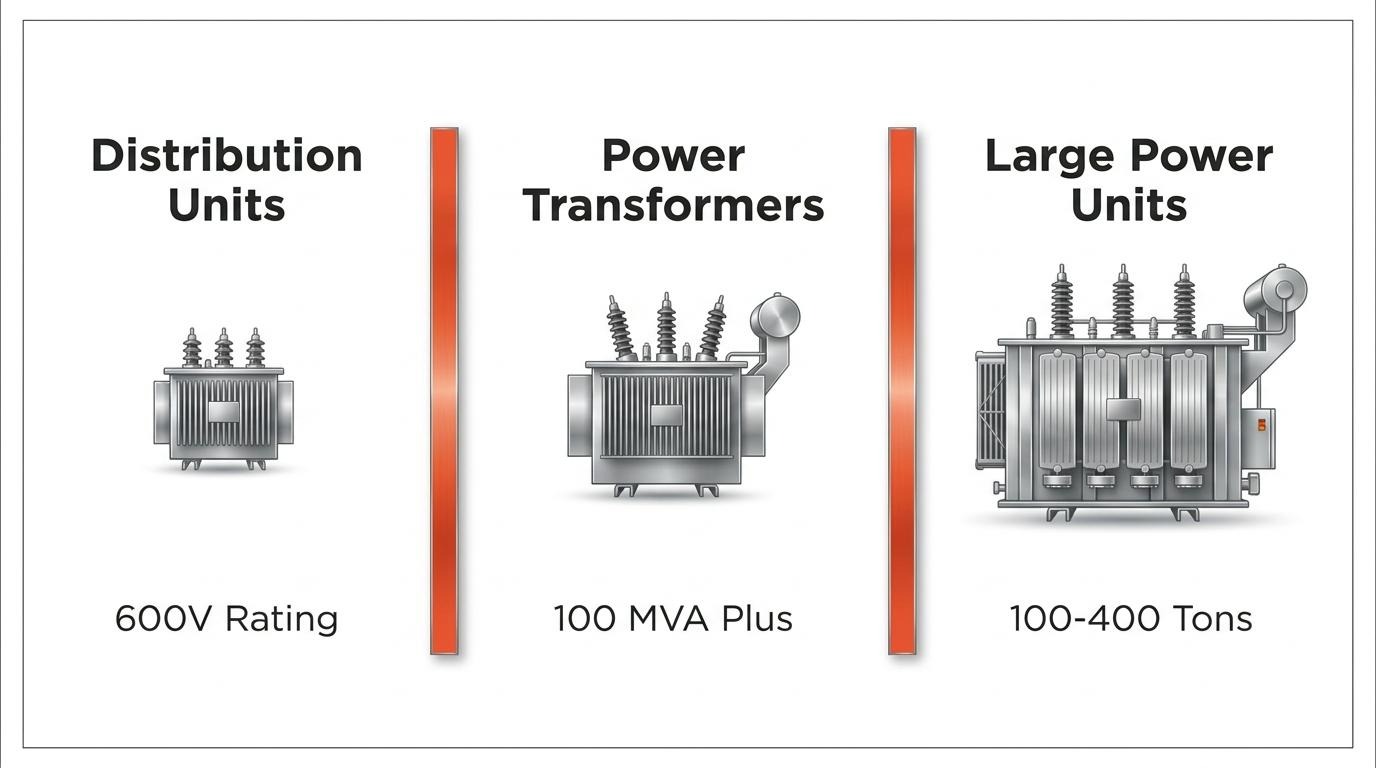
The criteria used to determine transformer weight classes include voltage rating, MVA capacity, and physical weight. According to the U.S. Department of Energy, Large Power Transformers (LPTs) are rated at 100 MVA or larger and are essential components of the electric power transmission and distribution grid. At the lighter end, general-purpose transformers are rated 600 volts and below, serving appliances, lighting, and power loads from distribution systems. Physical mass follows power capacity closely: LPTs typically weigh between 100 and 400 tons, while smaller distribution units weigh a fraction of that. These physical thresholds directly determine what transport equipment, permits, and routes are required.
How Do Industry Standards Influence Transformer Weight Classifications?
Industry standards influence transformer weight classifications by establishing formal technical thresholds that define equipment categories and govern how those categories are handled. ANSI/IEEE Std C57.12.00-2010 sets general requirements for liquid-immersed distribution, power, and regulation transformers, creating the technical boundaries that separate weight classes. On the transport side, the Federal Motor Carrier Safety Administration's 49 CFR Part 393 requires that the aggregate working load limit of all tiedowns must not be less than half the total weight of the cargo, directly tying cargo weight classification to securement obligations. Together, these standards ensure that weight class is not an informal estimate but a regulated figure with real compliance consequences.
Why Do Transformer Weight Classes Matter for Transportation Logistics?
Transformer weight classes matter for transportation logistics because they directly determine the equipment, permits, routes, and scheduling required for each move. The sections below cover the primary transport challenges by weight class and how weight classifications shape route planning decisions.
What Are the Main Transport Challenges for Different Weight Classes?
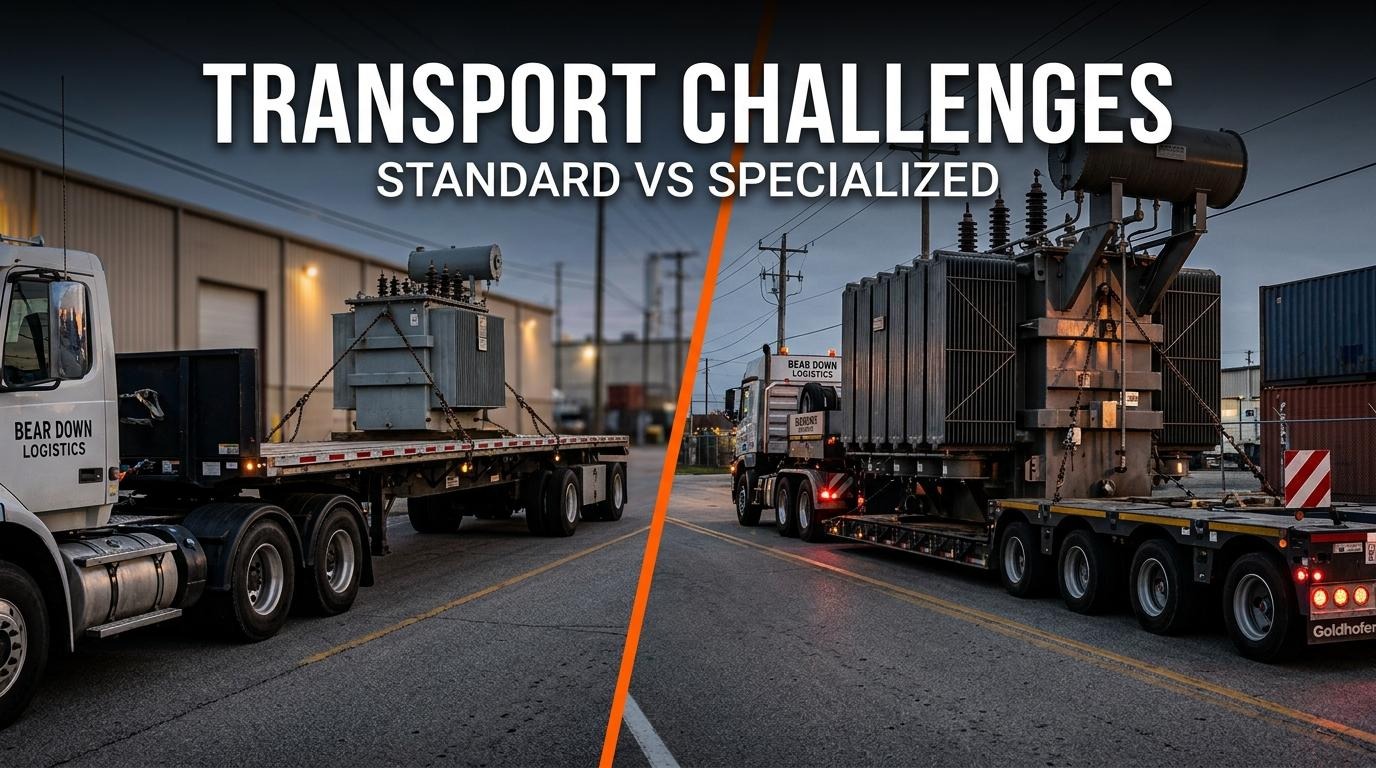
The main transport challenges for different weight classes include structural load limits, equipment availability, and regulatory compliance at every stage of the move. Lighter distribution transformers generally ship on standard flatbed trailers with minimal permitting. Heavier units, such as large power transformers weighing between 100 and 400 tons, require specialized vehicles, multi-agency coordination, and infrastructure assessments before a single wheel turns. According to the U.S. Department of Energy, transportation and logistics for large power transformers can represent 3 to 20 percent of an LPT's total cost, reflecting just how resource-intensive these moves become as weight increases. Weight class is not an administrative label; it is the variable that drives nearly every logistical decision downstream.
How Do Weight Classes Impact Route Planning and Scheduling?
Weight classes impact route planning and scheduling by restricting which roads, bridges, and travel windows are legally and structurally available for a given load. According to the National Transportation Library, route choice for commercial vehicles with a gross vehicle weight rating exceeding 80,000 lbs is often restricted by highway and bridge reconstructions. Heavier transformer classes compound this challenge, requiring bridge load analysis, detour planning, and utility coordination to clear overhead obstructions. Scheduling is equally affected, as many jurisdictions limit oversized moves to daylight hours or specific weekdays, extending overall project timelines considerably.
What Types of Permits and Regulations Apply to Transporting Various Transformer Weight Classes?
The types of permits and regulations that apply vary by load weight, dimensions, and jurisdiction, spanning both federal standards and state-specific oversize/overweight permit requirements. The H3 sections below cover legal requirements for oversized transformers and the distinctions between state and federal regulatory frameworks.
What Legal Requirements Must Be Met for Oversized or Heavy Transformers?
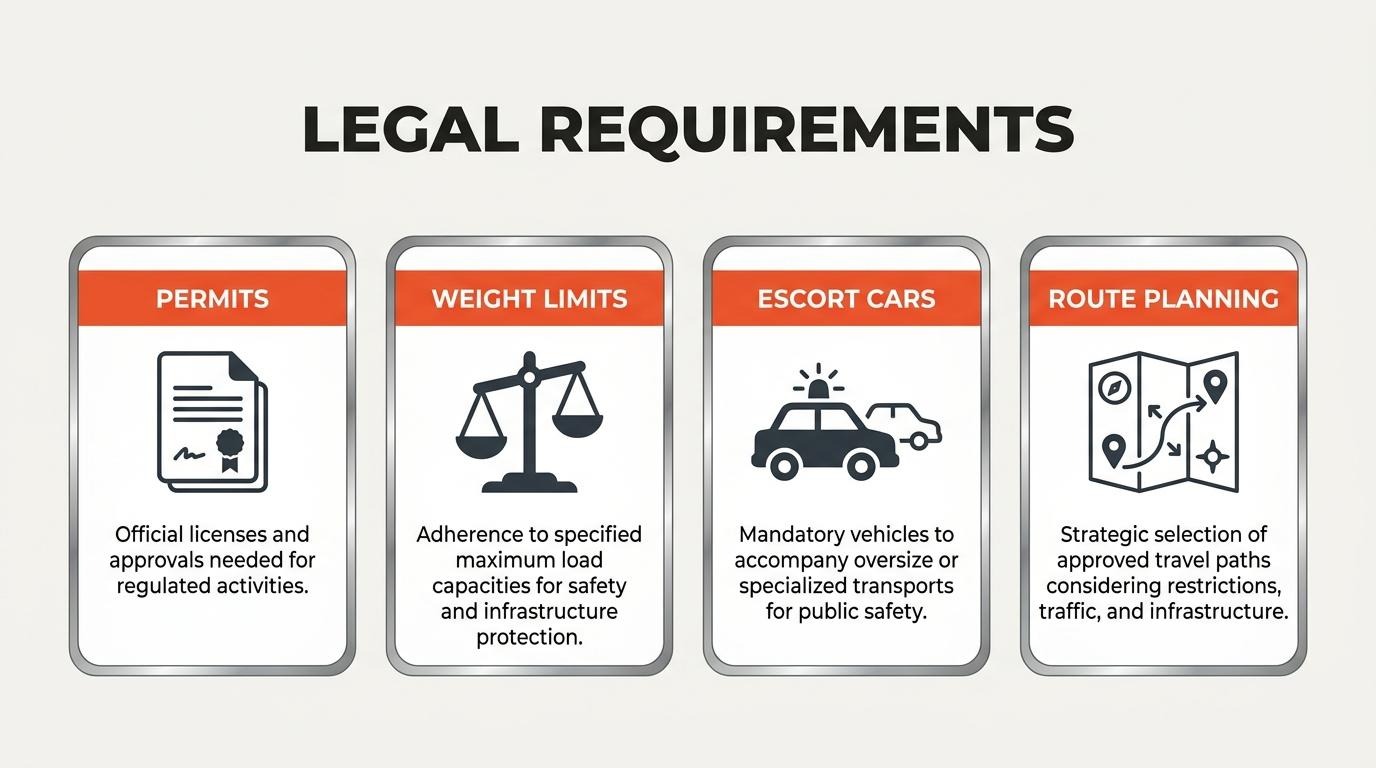
The legal requirements for oversized or heavy transformers include oversize load permits, weight compliance documentation, pilot car escorts, and adherence to equipment standards. ANSI/IEEE Std C57.12.00-2010 establishes general requirements for liquid-immersed distribution, power, and regulation transformers, setting the technical baseline carriers must reference. Beyond equipment standards, common compliance questions address:
- Maximum permissible weight for an oversized load on public roads.
- Overweight permit costs, which vary by state.
- Pilot car requirements, including when escorts are mandatory and 2025 rate structures.
Skipping any one of these requirements can delay a haul significantly, making early permit planning essential for transformer shipments.
How Do State and Federal Regulations Differ in Transporting Heavy Loads?
State and federal regulations differ in scope, thresholds, and permit issuance authority. The federal bridge formula sets a general weight limit of 80,000 pounds for trucks on U.S. highways, according to the Texas A&M Transportation Institute, and many transformer loads cannot be reduced to meet this threshold. States layer additional rules on top of federal baselines:
- Pennsylvania requires a permit for any load exceeding 8 feet wide, 13 feet high, or 80,000 lbs GVW.
- Florida's DOT allows self-issued trip permits for loads up to 200,000 pounds, 16 feet wide, 18 feet high, and 150 feet long.
- Pennsylvania's overweight permit fees include a $46 base plus $0.04 per ton-mile for vehicles under 14 feet wide, effective July 1, 2025.
- Florida charges a $35 base fee plus $0.15 per mile, with mandatory pilot car escorts adding $150 to $250.
Federal law establishes the floor; state agencies control the permit process, fee structures, and escort requirements above it.
What Equipment and Methods Are Used to Transport Different Transformer Weight Classes?
Equipment and method selection depends directly on transformer weight class. Heavier transformers require specialized multi-axle trailers, rail systems, and final-mile solutions, while lighter units move on standard flatbed configurations.
What Specialized Trailers or Vehicles Are Needed for Heavy vs. Light Transformers?
The specialized trailers needed for heavy transformers include the Goldhofer trailer and the Nicolas trailer, both designed to distribute super-heavy haul weight across the full length of the trailer. According to the U.S. Department of Energy, road transport of Large Power Transformers specifically requires these vehicles to avoid catastrophic axle overloading on public roads.
Lighter distribution transformers, typically under 80,000 lbs gross, move on standard flatbed or step-deck trailers without this requirement. The engineering principle is straightforward: load distribution determines trailer selection, and no amount of route planning compensates for the wrong equipment at the outset.
How Does Loading and Unloading Differ Between Weight Classes?
Loading and unloading differ between weight classes primarily in equipment complexity and site preparation requirements. For the heaviest transformer weight classes, self-propelled modular transporters (SPMTs) and hydraulic trailers handle the final 5 to 10 miles of transport, the most expensive and operationally challenging leg of the entire move, according to the U.S. Department of Energy.
Lighter transformers load and unload using standard cranes or forklifts with minimal site staging. Heavy units require reinforced pad preparation, coordination with utility site engineers, and precise hydraulic lift sequencing to avoid damaging internal components during the transfer from trailer to foundation.
What Are the Cost Implications of Transporting Transformers Based on Their Weight Class?
The cost implications of transporting transformers based on their weight class span permit fees, specialized equipment, pilot car requirements, and route-specific surcharges. The sections below break down how weight and complexity drive pricing and which strategies can lower overall transport costs.
How Is Pricing Impacted by Weight, Size, and Route Complexity?
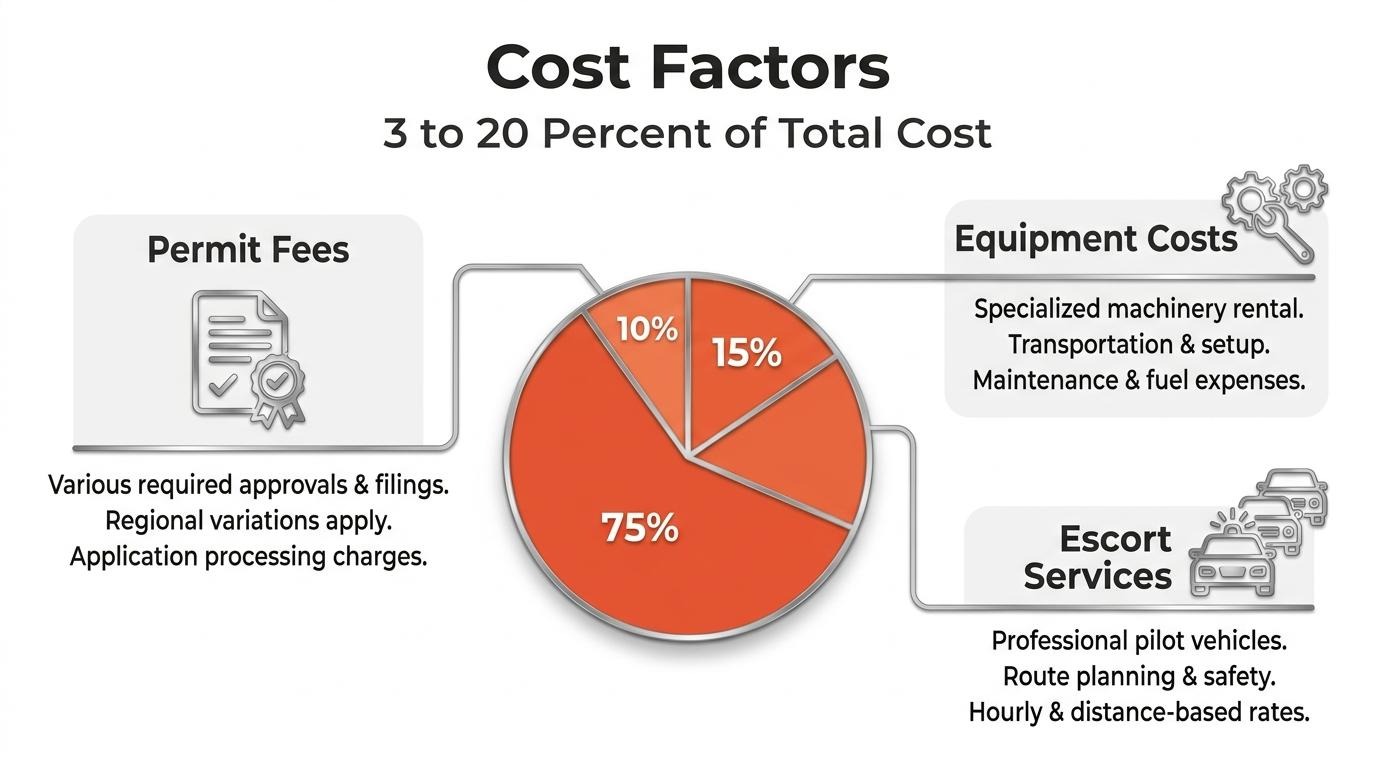
Pricing for transformer transport is impacted by weight, size, and route complexity through a combination of permit fees, equipment costs, and escort requirements. According to the U.S. Department of Energy, transportation and logistics for Large Power Transformers can represent 3 to 20 percent of the total LPT cost, reflecting how dramatically these variables compound.
Key cost drivers include:
- Permit fees: Pennsylvania charges a $46 base fee plus $0.04 per ton-mile for overweight loads under 14 feet wide; Florida charges $35 plus $0.15 per mile.
- Pilot car escorts: Mandatory pilot car escorts add $150 to $250 per movement in Florida, with West Coast lead/chase rates running approximately $2.00 per mile.
- Specialized equipment: Goldhofer or Nicolas trailers, SPMTs, and hydraulic trailers each carry distinct rental and operational costs.
- Route restrictions: Loads exceeding 80,000 lbs face highway and bridge limitations that force longer, costlier detours.
What Factors Can Help Reduce Costs When Shipping Heavy Transformers?
The factors that can help reduce costs when shipping heavy transformers include early route planning, permit consolidation, and equipment selection. Identifying the most direct approved corridor before booking eliminates expensive last-minute route changes.
Practical cost-reduction strategies include:
- Pre-route surveys: Identifying bridge weight limits and low clearances early avoids costly detours or infrastructure modifications.
- Permit bundling: Coordinating multi-state permits simultaneously reduces administrative fees and transit delays.
- Rail for long hauls: Using rail transport for the majority of a route and switching to SPMTs only for the final 5 to 10 miles limits the highest-cost road segment.
- Optimal trailer selection: Matching trailer axle configuration to load weight prevents over-permitting for unnecessary capacity.
- Scheduling flexibility: Moving loads during off-peak traffic windows reduces escort time and associated pilot car mileage charges.
Smart logistics planning is often underestimated as a cost lever; selecting the right modal combination can shift transformer transport from the high end of that 3 to 20 percent cost range toward the low end.
What Are the Key Safety Considerations When Moving Transformers of Varying Weights?
The key safety considerations when moving transformers of varying weights include cargo securement, route hazard assessment, equipment compatibility, and regulatory compliance. The sections below address risk management for extremely heavy units and the role of formal safety protocols in transport planning.
How Are Risks Managed for Oversized or Extremely Heavy Transformers?
Risks for oversized or extremely heavy transformers are managed through pre-transport engineering assessments, weight distribution planning, and equipment selection matched to the load. Bridge clearances, road surface ratings, and utility line conflicts must be evaluated before any move begins. Specialized trailers spread gross weight across multiple axles to reduce point loading on roadway infrastructure. Pilot car escorts provide real-time hazard identification along the route. Given how difficult and costly transformer replacement is, treating every transport as a high-stakes operation is not overcautious — it is the only professionally defensible standard.
What Roles Do Safety Protocols Play in Transport Planning?
Safety protocols play a foundational role in transport planning by defining the minimum legal and operational standards every load must meet before departure. According to the FMCSA, cargo securement requirements prevent cargo from leaking, spilling, blowing, or falling from a commercial vehicle and mandate minimum strength requirements for all tiedowns. Webbing tiedowns must conform to the Web Sling and Tiedown Association's (WSTDA) Recommended Standard under §393.104. These requirements are non-negotiable checkpoints, not post-load formalities. Integrating protocol review into the planning phase, rather than treating it as a final inspection step, is where serious logistics providers separate themselves from those who treat compliance as an afterthought.
How Should You Approach Transformer Weight Class Transportation with Oversized Load Transport Services?
Transformer weight class transportation requires coordinating permits, specialized equipment, and compliant securement long before the first wheel turns. The H3s below cover how Bear Down Logistics supports this process and the key lessons every shipper should carry forward.
Can Oversized Load Transport Services from Bear Down Logistics Help With Transformer Shipping?
Yes, oversized load transport services from Bear Down Logistics can help with transformer shipping across the full weight spectrum, from general purpose units rated 600 volts and below to large power transformers demanding multi-modal coordination.
Transportation and logistics costs for Large Power Transformers can represent 3 to 20 percent of total LPT cost, according to the U.S. Department of Energy, making carrier selection one of the most consequential decisions in any transformer project. With transformer lead times rising from roughly 50 weeks in 2021 to an average of 120 weeks in 2024, delays caused by poor logistics planning carry compounding financial consequences.
Bear Down Logistics manages the critical details that protect both timeline and budget:
- Permit acquisition across state jurisdictions, including states where loads exceed the federal 80,000-pound bridge formula limit
- Cargo securement compliant with FMCSA standards, including tiedowns that conform to the WSTDA Recommended Standard under §393.104
- Coordination of hydraulic modular trailers for final-mile delivery when Schnabel car loads must be transferred intact
- Pilot car scheduling and escort management throughout the haul
What Are the Key Takeaways About Transformer Weight Classes and Their Transport Implications We Covered?
The key takeaways about transformer weight classes and their transport implications center on weight-driven complexity, regulatory compliance, and the cost of every decision made from procurement through delivery.
Large power transformers, which typically weigh between 100 and 400 tons according to the National Infrastructure Advisory Council, are among the most logistically demanding cargo in existence. Their high customization means no two hauls are identical, and replacement is always difficult. The practical lessons from this article are:
- Every transformer weight class triggers different permit thresholds, equipment requirements, and route constraints.
- Federal and state regulations set hard ceilings: exceeding 80,000 lbs GVW requires oversize permits in every U.S. jurisdiction.
- Equipment selection, from Schnabel railcars to hydraulic modular trailers, must match the transformer's weight and the route's infrastructure.
- Cargo securement standards are non-negotiable and must be verified before departure.
- Logistics costs are a meaningful share of total LPT investment, so selecting an experienced heavy haul partner directly protects project ROI.
Bear Down Logistics brings over 20 years of combined experience and more than 20,000 completed loads to every transformer transport engagement.