
11 min read
Should You Lease or Buy Medical Trailers for Your Organization?
Craftsmen Industries May 13, 2026 11:55:07 AM
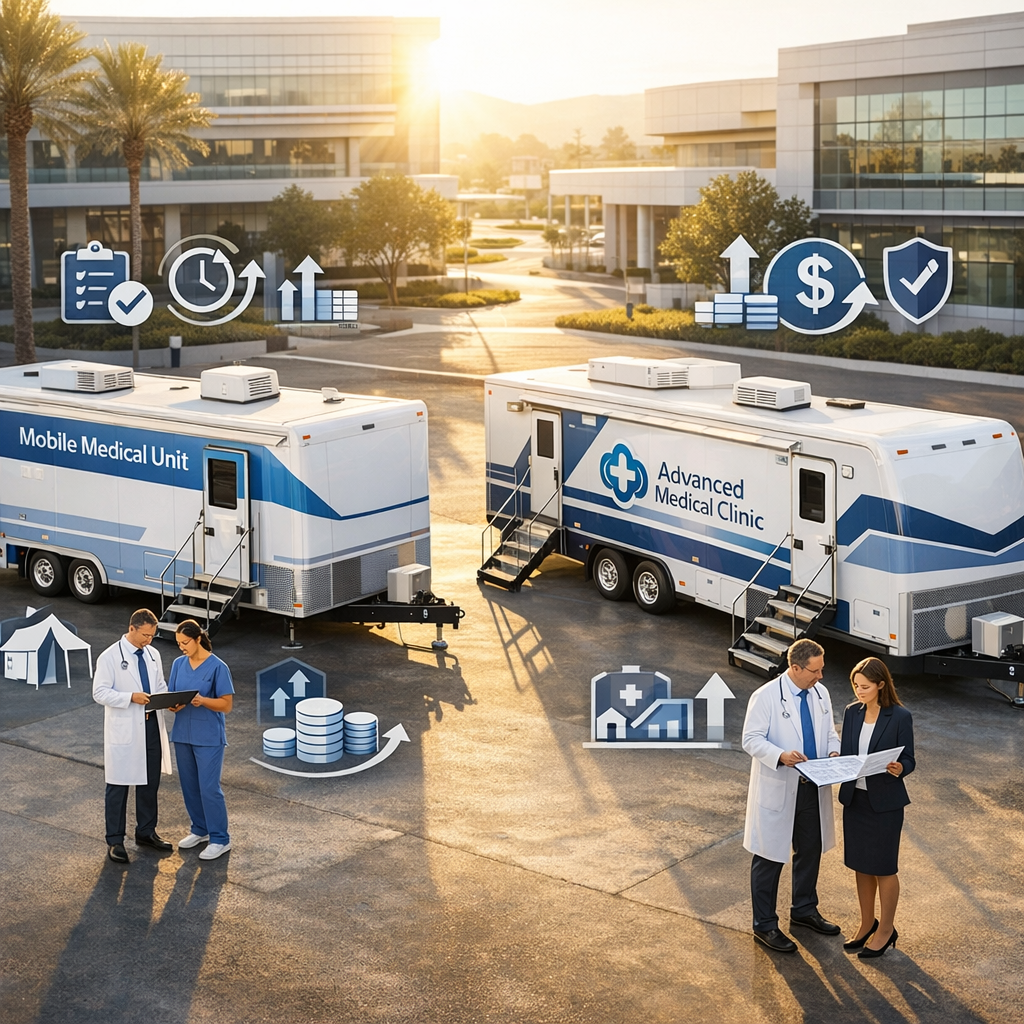
Leasing vs buying medical trailers is a financial and operational decision that determines how your organization acquires, maintains, and scales mobile healthcare capacity. The right choice depends on budget structure, deployment timeline, customization needs, and long-term strategic goals.
This guide covers the core differences between leasing and purchasing, the financial and operational advantages of each path, the drawbacks and risks both options carry, and how to align your decision with organizational needs and compliance requirements.
Medical trailers can range from $125,000 to over $800,000 depending on size and onboard equipment, so the acquisition model you choose carries significant budget implications. Leasing spreads that cost into predictable payments and lowers the initial capital barrier, while purchasing concentrates expenditure upfront but eliminates recurring lease obligations over time.
Leasing offers distinct flexibility advantages: easier equipment upgrades as medical technology evolves, reduced maintenance burden when lessors retain ownership responsibility, and simpler scaling for organizations with shifting deployment needs or temporary surge requirements.
Ownership delivers long-term value through full customization control, asset equity, and tax benefits. Purchased trailers qualify for accelerated depreciation under IRS guidelines, and owned mobile clinic programs have demonstrated returns as high as $36 saved for every $1 invested when compared to emergency department alternatives.
Both paths carry risks. Leasing can result in higher lifetime costs and restrictive contract terms, while buying exposes organizations to depreciation, maintenance liability, and potential technology obsolescence. Regulatory compliance obligations apply equally regardless of acquisition method, since mobile medical units must meet the same state licensure standards as fixed facilities.
What Are the Main Differences Between Leasing and Buying Medical Trailers?
The main differences between leasing and buying medical trailers involve the acquisition process, cost structure, and maintenance responsibility. Each approach shapes how organizations deploy and manage mobile healthcare assets.
How Does the Acquisition Process Differ When Leasing vs Buying Medical Trailers?
The acquisition process differs when leasing vs buying medical trailers in several key ways. Purchasing requires securing full capital upfront or arranging financing, followed by selecting a manufacturer, customizing the build, and taking full ownership upon delivery. Leasing, by contrast, begins with negotiating lease terms, selecting a unit from available inventory or requesting a custom build through the lessor, and making scheduled payments without assuming ownership. Buyers control every specification from the start, while lessees work within the lessor's framework. Organizations with defined long-term clinical programs often favor purchasing for full design control, whereas those piloting new outreach initiatives may find leasing a faster path to deployment.
What Are the Typical Costs Associated With Leasing Compared to Buying Medical Trailers?
The typical costs associated with leasing compared to buying medical trailers differ in structure and timing. A professionally built mobile medical vehicle generally costs between $125,000 and $800,000, depending on size, function, and onboard equipment. Purchasing demands this capital upfront or through traditional financing, while leasing converts the total into predictable monthly payments.
Leasing costs typically include:
- Monthly lease payments spread over the contract term.
- Potential fees for early termination, excess wear, or modifications.
- Compliance expenses, since mobile medical units must meet the same state licensure requirements as brick-and-mortar offices.
As more institutions adopt lease-based models, according to a 2020 analysis published in the National Center for Biotechnology Information, growing competition within the leasing market is expected to reduce costs and improve terms for lessees.
How Does Maintenance Responsibility Vary Between Leasing and Buying?
Maintenance responsibility varies between leasing and buying based on who retains ownership. Owners bear full responsibility for repairs, equipment calibration, regulatory inspections, and long-term upkeep. When equipment ownership is retained by a lessor, there is added pressure for the lessor to maintain the equipment in optimal condition, as noted in research published by the National Center for Biotechnology Information. This often means lessees benefit from manufacturer-backed service agreements and scheduled maintenance included in their contracts. Owners, however, gain the freedom to choose their own service providers and maintenance schedules. For organizations without in-house biomedical engineering teams, leasing can simplify ongoing compliance with safety and operational standards.
Understanding these structural differences sets the stage for evaluating the specific advantages each option offers.
What Are the Advantages of Leasing Medical Trailers?
The advantages of leasing medical trailers include lower upfront costs, operational flexibility, and easier access to equipment upgrades. Each benefit addresses a different organizational priority.
Does Leasing Medical Trailers Lower Upfront Costs?
Yes, leasing medical trailers lowers upfront costs by spreading the total expense across manageable periodic payments rather than requiring a single large capital outlay. This structure reduces the initial financial barrier for healthcare organizations, community health programs, and government agencies that need mobile capacity but cannot allocate six figures from a single budget cycle.
According to a 2020 analysis published by the National Center for Biotechnology Information, leasing prevents the need to hastily redistribute budgeted funds if equipment unexpectedly reaches its end of life. For organizations operating on annual grant funding or fixed appropriations, that predictability can be the difference between launching a mobile program on schedule or delaying it indefinitely.
Why Might Flexibility Be a Benefit When Leasing Medical Trailers?
Flexibility is a benefit when leasing medical trailers because lease terms can be structured around an organization's evolving needs rather than locked into a permanent asset. Programs that serve seasonal demand, disaster response surges, or pilot outreach initiatives often require mobile units for defined periods. Leasing allows these organizations to scale capacity up or down without the burden of selling or storing owned trailers when demand shifts. Short-term and renewable lease structures also let healthcare providers test configurations before committing to a permanent build, reducing the risk of investing in a trailer design that does not match real-world clinical workflows.
Are Equipment Upgrades and Replacements Easier When Leasing?
Yes, equipment upgrades and replacements are easier when leasing because the lessor retains ownership of the asset and bears responsibility for keeping it current. As the National Center for Biotechnology Information notes, when equipment ownership is retained by a lessor, there is added pressure for the lessor to maintain the equipment in optimal condition. Medical technology evolves rapidly, and a leased trailer can be swapped or refreshed at lease renewal rather than requiring the lessee to fund costly retrofits. This model shifts obsolescence risk from the healthcare organization to the leasing provider, which is particularly valuable in specialties where diagnostic or treatment technology changes within a few years.
With leasing advantages clearly outlined, the next consideration is what buying offers in return.
What Are the Advantages of Buying Medical Trailers?
The advantages of buying medical trailers include long-term cost savings, full customization control, and potential tax benefits. The following subsections cover each advantage in detail.
Does Buying Medical Trailers Offer Long-Term Cost Savings?
Buying medical trailers offers significant long-term cost savings by eliminating recurring lease payments and building equity in a depreciable asset. Once the initial purchase is complete, the organization owns the trailer outright, removing monthly financial obligations that accumulate over a lease's lifetime.
Mobile medical programs demonstrate remarkable return on investment when ownership costs are measured against the healthcare value delivered. According to a study published by the National Center for Biotechnology Information, economic analyses show that mobile clinic programs can generate annual savings of up to $36 for every $1 invested compared to emergency department alternatives. That ratio becomes especially compelling for organizations planning multi-year deployments, where ownership spreads the capital outlay across a longer useful life without the cumulative premium that leasing adds.
For organizations committed to sustained community health outreach, purchasing typically proves more economical than leasing over a five-to-ten-year operational horizon.
How Does Trailer Ownership Impact Customization Options?
Trailer ownership provides unrestricted customization options because the buyer controls every design, engineering, and equipment decision without a lessor's approval. Leased units often carry modification restrictions that protect the asset's residual value for the leasing company, limiting interior layouts, medical equipment installations, and exterior branding.
When an organization owns its medical trailer, it can:
- Reconfigure exam rooms, lab stations, or imaging suites as clinical needs evolve.
- Install specialized diagnostic or treatment equipment without third-party consent.
- Apply permanent exterior graphics and branding aligned with outreach campaigns.
- Retrofit accessibility features, HVAC upgrades, or generator systems at any time.
This level of control is particularly valuable for organizations serving diverse patient populations, where clinical workflows may shift between deployments. Ownership turns a medical trailer into a fully adaptable platform rather than a fixed-spec rental.
Are There Tax Benefits Associated with Purchasing Medical Trailers?
Yes, there are notable tax benefits associated with purchasing medical trailers. Owners can deduct the cost of a qualifying trailer through accelerated depreciation methods, reducing taxable income in the year of acquisition.
According to the IRS, the maximum Section 179 expense deduction for tax years beginning in 2024 is $1,220,000, with a phase-out threshold starting at $3,050,000 in qualifying property. Trailers fall under IRS Asset Class .26 with a recovery period of 5 years under the General Depreciation System. Organizations may also qualify for the special depreciation allowance of 60% on certain qualified property placed in service before January 1, 2025.
These provisions allow buyers to recover a substantial portion of the purchase price quickly, improving cash flow during the critical early years of operation.
With ownership advantages established, understanding the potential drawbacks of leasing helps organizations weigh both sides.
What Are the Potential Drawbacks of Leasing Medical Trailers?
The potential drawbacks of leasing medical trailers include higher cumulative costs, restrictive contract terms, and costly early termination penalties. The following subsections break down each risk.
Can leasing medical trailers lead to higher overall lifetime costs?
Yes, leasing medical trailers can lead to higher overall lifetime costs because cumulative monthly payments frequently exceed the original purchase price over extended periods. Organizations that lease for five or more years often pay a premium for the convenience of lower upfront costs, since interest charges, administrative fees, and end-of-term buyout costs compound over time. An organization that would have spent $300,000 to purchase a trailer outright may pay significantly more across the full lease term, with no equity to show at the end. For programs with stable, long-term deployment needs, this cost gap makes ownership the more economical path. Leasing works best when the commitment horizon is short or uncertain.
What are the risks associated with lease agreements and restrictions?
The risks associated with lease agreements and restrictions include limited customization rights, usage caps, and mandatory return conditions that reduce operational flexibility. Many lease contracts impose mileage limits, restrict interior modifications, and require the lessee to return the trailer in a specified condition, potentially triggering damage fees. According to a 2020 analysis published by the National Center for Biotechnology Information, as more institutions and manufacturers adopt lease-based models, competition within the leasing market will increase and reduce this risk over time. Until that market matures, however, organizations should scrutinize every clause. Wear-and-tear definitions, geographic deployment limitations, and insurance minimums vary widely between lessors, making careful contract review essential before signing.
Is early termination of a lease agreement costly or complicated?
Yes, early termination of a lease agreement is typically both costly and complicated. Most medical trailer leases include liquidated damages clauses that require the lessee to pay a substantial portion of remaining payments upon early exit. Penalties often range from several months' rent to the full balance of the contract, depending on how far into the term termination occurs. Some agreements also add administrative or restocking fees. Organizations whose clinical needs shift, whether due to grant cycles, population changes, or regulatory updates, may find themselves locked into equipment they no longer require. Negotiating flexible exit provisions before execution is the single most effective way to mitigate this risk.
With the drawbacks of leasing outlined, understanding the downsides of buying completes the comparison.
What Are the Potential Drawbacks of Buying Medical Trailers?
The potential drawbacks of buying medical trailers include significant upfront capital requirements, full maintenance responsibility, and the risk of technological obsolescence. Each factor can strain budgets and operational capacity.
How do upfront capital costs affect organizations when buying?
Upfront capital costs affect organizations by requiring a large, immediate financial commitment that can strain budgets and limit flexibility. A professionally built mobile medical vehicle generally costs between $125,000 and $800,000, depending on size, function, and onboard equipment. For smaller healthcare providers or nonprofits, allocating that amount in a single budget cycle often means diverting funds from staffing, outreach, or other clinical priorities. Unlike leasing, which spreads payments over time, purchasing demands either significant cash reserves or financing arrangements that add interest to the total cost. Organizations with limited capital access may find this barrier delays deployment by months or longer.
Does ownership lead to greater maintenance and repair responsibilities?
Yes, ownership leads to greater maintenance and repair responsibilities because the organization assumes full accountability for every mechanical, electrical, and clinical system onboard. When equipment ownership is retained by a lessor, there is added pressure for the lessor to maintain equipment in optimal condition, according to a 2020 study published in the National Center for Biotechnology Information. Owners, by contrast, must budget separately for preventive maintenance schedules, emergency repairs, and eventual component replacements. These ongoing costs are difficult to predict and can accumulate quickly, especially as trailers age. For organizations without dedicated fleet management staff, this burden often diverts clinical resources toward operational logistics. Organizations evaluating long-term ownership should consider partnering with manufacturers who can provide post-delivery support and maintenance guidance. Craftsmen Industries' vertically integrated approach means their engineering and fabrication teams remain accessible to owners throughout the vehicle's operational life.
Can rapid medical technology advances make ownership less attractive?
Yes, rapid medical technology advances can make ownership less attractive because purchased equipment depreciates while newer, more capable systems enter the market. Similar to mobile phones and computers, scientific and medical equipment has a finite lifespan and quickly trends toward obsolescence. The more rapid the rate of technological improvement, the more advantageous a lease becomes over outright purchase. Owners who invested heavily in current-generation diagnostic or treatment systems may find their trailers outdated within a few years, yet resale values rarely recover the original investment. Leasing, by comparison, allows organizations to rotate into updated units at the end of each term without absorbing depreciation losses.
With these ownership risks in mind, evaluating key decision factors helps organizations choose the right path.
How Should You Decide Between Leasing and Buying Medical Trailers?
You should decide between leasing and buying medical trailers by evaluating budget constraints, mission duration, and compliance obligations. The following subsections break down the key decision factors, time horizon considerations, and regulatory requirements.
What Key Factors Should Organizations Consider Before Deciding?
Organizations should consider budget availability, operational timeline, technology needs, and long-term strategic goals before deciding between leasing and buying a medical trailer. Key decision factors include:
- Capital budget versus cash flow: Purchasing requires significant upfront capital, while leasing preserves cash reserves for other operational priorities.
- Equipment obsolescence risk: Medical technology evolves rapidly, making leased trailers easier to upgrade at term end.
- Maintenance responsibility: Owned trailers place full repair burden on the organization; leased units often shift maintenance obligations to the lessor.
- Customization depth: Buying allows permanent, purpose-built modifications that leasing agreements may restrict.
- Program permanence: Organizations with established, ongoing mobile health programs benefit from ownership, while pilot programs or grant-funded initiatives suit leasing.
Weighing these factors against organizational capacity prevents costly mismatches between acquisition method and actual need.
Is One Option Better for Short-Term Versus Long-Term Needs?
Yes, one option is generally better depending on the time horizon. Leasing suits short-term needs, while buying favors long-term deployments.
For temporary programs, disaster response surges, or seasonal health campaigns, leasing eliminates the burden of asset disposal once the mission concludes. Organizations avoid tying capital to equipment they may not need beyond a few years. For permanent mobile clinic operations spanning five years or more, purchasing typically delivers lower total cost of ownership since lease payments can exceed the trailer's purchase price over extended periods.
According to research published by the National Center for Biotechnology Information, the more rapid the rate of technological improvement, the more advantageous a lease becomes. This makes leasing especially practical when onboard diagnostic or imaging equipment faces frequent generational upgrades.
How Do Regulatory or Compliance Requirements Affect the Decision?
Regulatory and compliance requirements affect the decision by adding costs and responsibilities that shift depending on whether you lease or buy. In most states, mobile dental, medical, or primary care must comply with the same state licensure requirements and guidelines as brick-and-mortar offices, according to Mission Mobile Medical.
Compliance obligations that influence the lease-versus-buy decision include:
- Fire and safety codes: NFPA 1, NFPA 70, NFPA 99, NFPA 101, and related standards govern electrical systems, fire suppression, and life safety in healthcare settings.
- Professional liability insurance: Contracts often require minimum coverage of $1,000,000 per occurrence, regardless of ownership structure.
- Ongoing inspection and certification: Owners bear full responsibility for maintaining compliance as codes update, while lessors may share or absorb that burden contractually.
Organizations with limited compliance infrastructure often find leasing reduces regulatory risk, since experienced lessors typically deliver units that already meet applicable standards. With these decision criteria established, partnering with the right builder ensures the chosen path aligns with both clinical goals and compliance demands.
How Can Craftsmen Industries Support Your Medical Trailer Needs?
Craftsmen Industries builds custom mobile medical units designed for both lease and purchase pathways. The following sections cover acquisition flexibility and the article's key takeaways.
Can Craftsmen Industries Deliver Custom Mobile Medical Units Tailored to Lease or Purchase?
Yes, Craftsmen Industries can deliver custom mobile medical units tailored to lease or purchase. With over 40 years of experience and a 127,000 sq. ft. vertically integrated facility near St. Louis County, Missouri, Craftsmen Industries handles design, engineering, fabrication, printing, and installation entirely in-house. This end-to-end control allows each mobile medical trailer to be configured for specific clinical workflows, diagnostic equipment, and compliance requirements, regardless of whether an organization chooses to lease or buy. Because mobile medical units must comply with state licensure requirements, working with a manufacturer experienced in healthcare builds is essential. Craftsmen Industries specializes in aligning each unit with regulatory standards from the start, reducing costly retrofits down the line.
What Are the Key Takeaways About Leasing vs Buying Medical Trailers?
The key takeaways about leasing vs buying medical trailers center on matching financial strategy to operational priorities:
- Leasing lowers the upfront financial barrier, preserves capital, and simplifies equipment upgrades as medical technology evolves.
- Buying delivers long-term cost savings, full customization control, and potential tax advantages through Section 179 deductions and bonus depreciation.
- Maintenance responsibility shifts depending on the model: lessors often maintain leased equipment, while owners bear full repair costs.
- Regulatory compliance applies equally to both pathways, since mobile clinics must meet the same standards as fixed facilities.
- Organizations with short-term or evolving needs typically benefit from leasing, while those planning sustained, multi-year programs gain more value from ownership.
The right choice depends on budget constraints, program duration, and how quickly your clinical technology requirements may change. For organizations still weighing these factors, partnering with a manufacturer like Craftsmen Industries that supports both acquisition models ensures the final decision aligns with your mission rather than your limitations.