
9 min read
Hydraulic excavator track removal for transport is the process of detaching a machine's track assemblies before hauling to bring the load within legal width, weight, and permit thresholds required by federal and state regulations.
This guide covers the legal and regulatory framework that drives track removal decisions, the procedures and safety requirements for executing removal correctly, how trackless excavators are prepared and secured for transit, the cost and liability trade-offs between keeping tracks on or taking them off, and how professional heavy hauling services handle the full process.
Federal law under 23 U.S.C. §127(a) ties state highway funding compliance to adherence to established Interstate weight limits, and 49 CFR § 393.130 governs securement for all equipment that operates on wheels or tracks. Excavators with tracks attached routinely exceed legal width thresholds, triggering oversize permits, escort requirements, and restricted travel windows before a load can move.
Safe track removal follows a specific sequence: releasing track tension through the grease adjuster, extracting the master pin or master link, and supporting machine weight with a lifting device throughout. Skipping steps or deviating from the manufacturer's technical manual introduces projectile hazards, equipment damage, and load instability that the U.S. Marine Corps identifies as a documented cause of catastrophic failure during transport.
The cost and configuration decision between removing tracks and keeping them on affects permit classification, insurance risk profiles, and total transit time. For most commercial hauls, professional removal with documented procedures reduces liability and prevents delays that DIY approaches commonly introduce.
Why Might Hydraulic Excavator Tracks Need to Be Removed Before Transport?
Hydraulic excavator tracks may need to be removed before transport due to legal width and weight restrictions, route limitations, and safety risks during hauling. The sections below cover the regulatory requirements and the consequences of skipping track removal.
What Are the Legal or Regulatory Requirements for Transporting Excavators With Tracks?
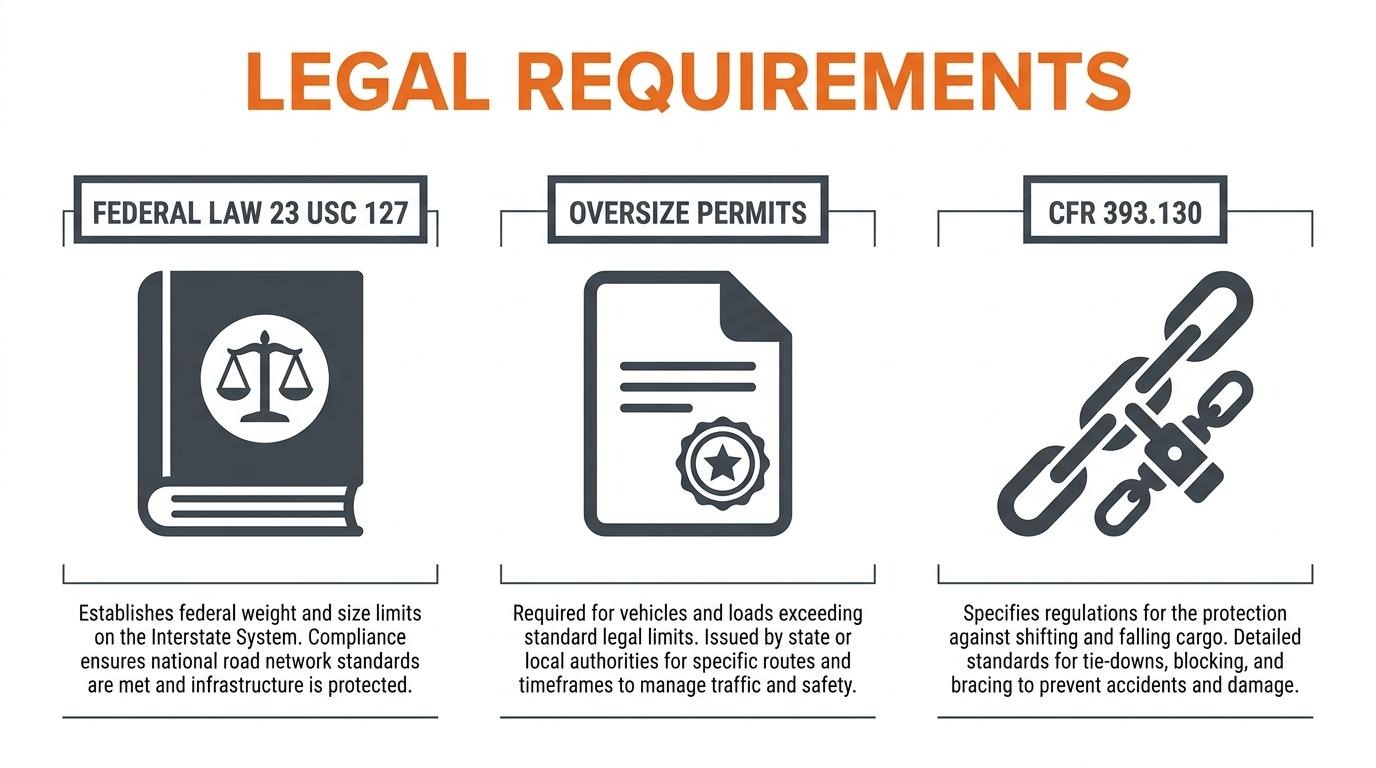
The legal requirements for transporting excavators with tracks are governed by federal and state weight and dimension laws. Under 23 U.S.C. §127(a), federal law prevents states from enforcing Interstate highway weight limits that deviate from established federal standards, with non-compliant states subject to losing 50 percent of appropriated highway funds, according to the Federal Highway Administration (FHWA). Excavators with tracks attached frequently exceed these thresholds in both width and gross weight, triggering oversize and overweight permit requirements before any transport can legally begin. Specific securement requirements for heavy vehicles and machinery operating on wheels or tracks are also governed by 49 CFR § 393.130. In practice, removing tracks is often the most direct path to keeping a load within legal limits and avoiding permit delays.
What Are the Risks of Not Removing Excavator Tracks for Transportation?
The risks of not removing excavator tracks for transportation include overwidth loads, trailer overloading, and structural damage to both equipment and transport infrastructure. An excavator transported with tracks attached may exceed legal width limits, forcing costly route deviations around low bridges and narrow lanes. Track tension can also shift unpredictably during transit, destabilizing the load. According to the U.S. Department of the Navy, proper track removal requires releasing track tension, removing the master pin or master link, and using a lifting device to support machine weight. Skipping these steps does not just create a compliance problem; it creates a genuine safety hazard for the driver, other motorists, and the equipment itself.
When Is It Necessary to Remove Tracks for Excavator Transport?
Track removal is not always required, but specific equipment dimensions, route conditions, and permit thresholds determine when it becomes mandatory. The following sections cover the key decision factors and how load size, route restrictions, and state permits shape that decision.
What Factors Determine If Track Removal Is Required for Your Equipment?
The factors that determine if track removal is required are equipment width, weight, transport corridor limitations, and applicable permit thresholds. Tracks add significant width to an excavator's overall footprint, which directly affects whether the machine falls within legal transport dimensions for a given route.
The U.S. Army utilizes Heavy Equipment Transport Systems (HETs) to move tracked vehicles that exceed standard legal dimensions, prioritizing mode selection based on speed and security requirements, according to research from the Air Force Institute of Technology. This illustrates a practical decision framework: when tracked dimensions exceed legal or logistical limits, transport configuration must change.
Key factors that trigger track removal include:
- Excavator width exceeding state or federal oversize thresholds with tracks attached
- Transport platform capacity limits that tracks push beyond safe load parameters
- Route-specific clearance restrictions, such as narrow bridges or lane widths
- Permit conditions that require the load to meet reduced width or weight limits
Track removal is one of the most consistently overlooked compliance variables in heavy equipment transport. Evaluating it before booking a carrier prevents costly delays at weigh stations or permit rejections mid-route.
How Do Load Size, Route Restrictions, or State Permits Affect Track Removal Decisions?
Load size, route restrictions, and state permits affect track removal decisions by defining the legal dimensional and weight boundaries the transported excavator must meet. According to the Bureau of Transportation Statistics, roadway conditions such as bridge heights and lane widths often restrict travel for oversize vehicles, requiring detailed route studies to identify coverage gaps in transport corridors.
When an excavator with tracks attached exceeds the permitted width for a planned route, track removal becomes a practical requirement rather than an option. State permit offices set oversize load thresholds that vary by jurisdiction, and a load legal in one state may require additional modifications in another.
Route and permit factors that directly influence track removal decisions include:
- Bridge weight and height ratings that restrict loaded trailer configurations
- Lane width restrictions on rural or urban corridors that limit overall load width
- State-specific oversize/overweight permit conditions requiring dimensional reductions
- Escort vehicle requirements triggered by width thresholds that track removal can eliminate
With these regulatory and route variables clearly mapped, the next step is executing safe and compliant track removal procedures.
How Do You Safely Remove Hydraulic Excavator Tracks for Transport?
Safely removing hydraulic excavator tracks requires the right tools, a methodical procedure, and strict adherence to manufacturer specifications. The sections below cover required equipment, step-by-step detachment procedures, and critical mistakes to avoid.
What Tools and Safety Equipment Are Needed for Track Removal?
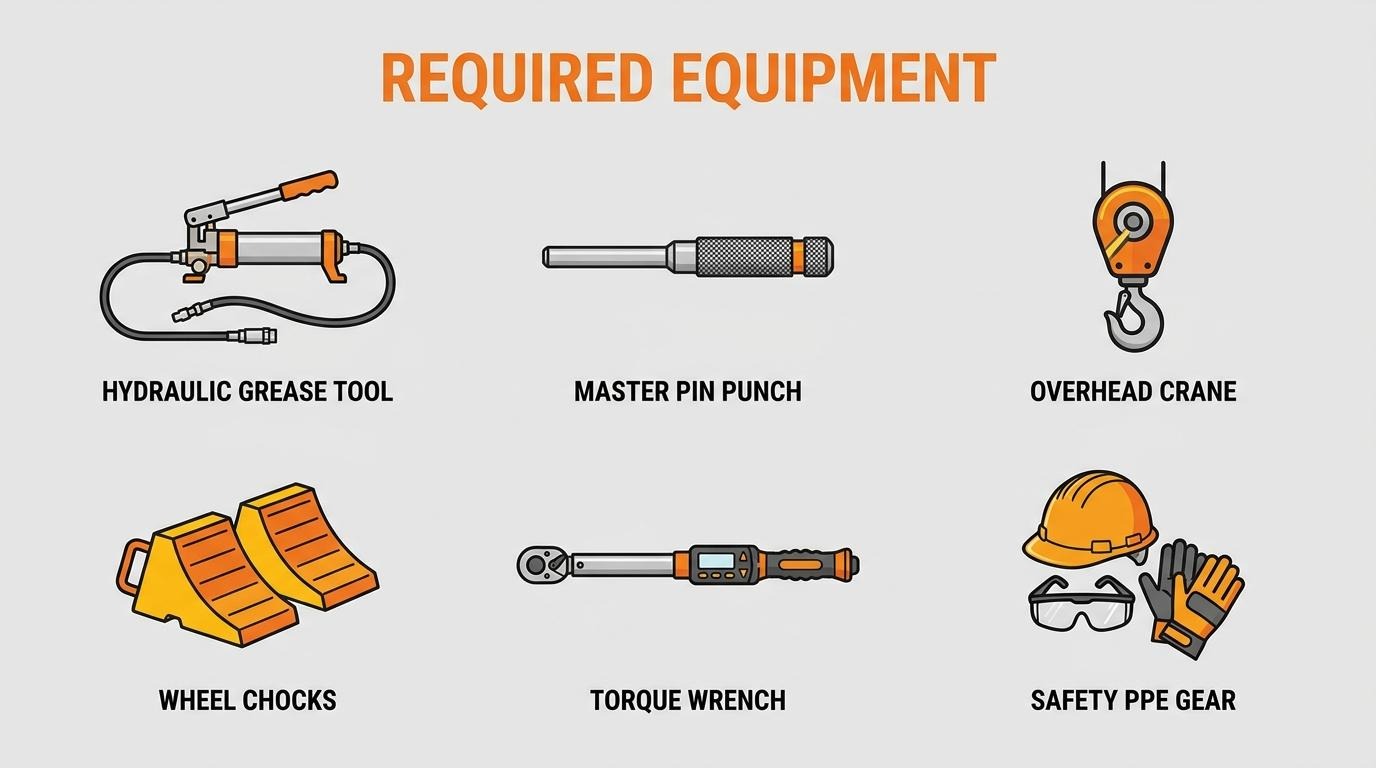
The tools and safety equipment needed for track removal include hydraulic track tensioning tools, master pin drivers, lifting devices, and personal protective equipment such as steel-toed boots, gloves, and hard hats.
Key equipment required:
- Hydraulic grease fitting tool for releasing track tension safely
- Master pin punch and hammer or hydraulic pin press to remove the master link
- Overhead crane, excavator boom, or floor jack to support machine weight during removal
- Wheel chocks and cribbing to stabilize the excavator on level ground
- Torque wrenches and track tools specific to the manufacturer's service manual specifications
- PPE: Steel-toed boots, impact-resistant gloves, safety glasses, and hard hat
Major manufacturers like Hitachi provide model-specific service manuals, such as those for the ZX 135, detailing exact track tension adjustment and undercarriage maintenance procedures. Following the correct manual for your specific machine is non-negotiable before any tool touches the undercarriage.
What Are the Step-by-Step Procedures for Detaching Excavator Tracks?
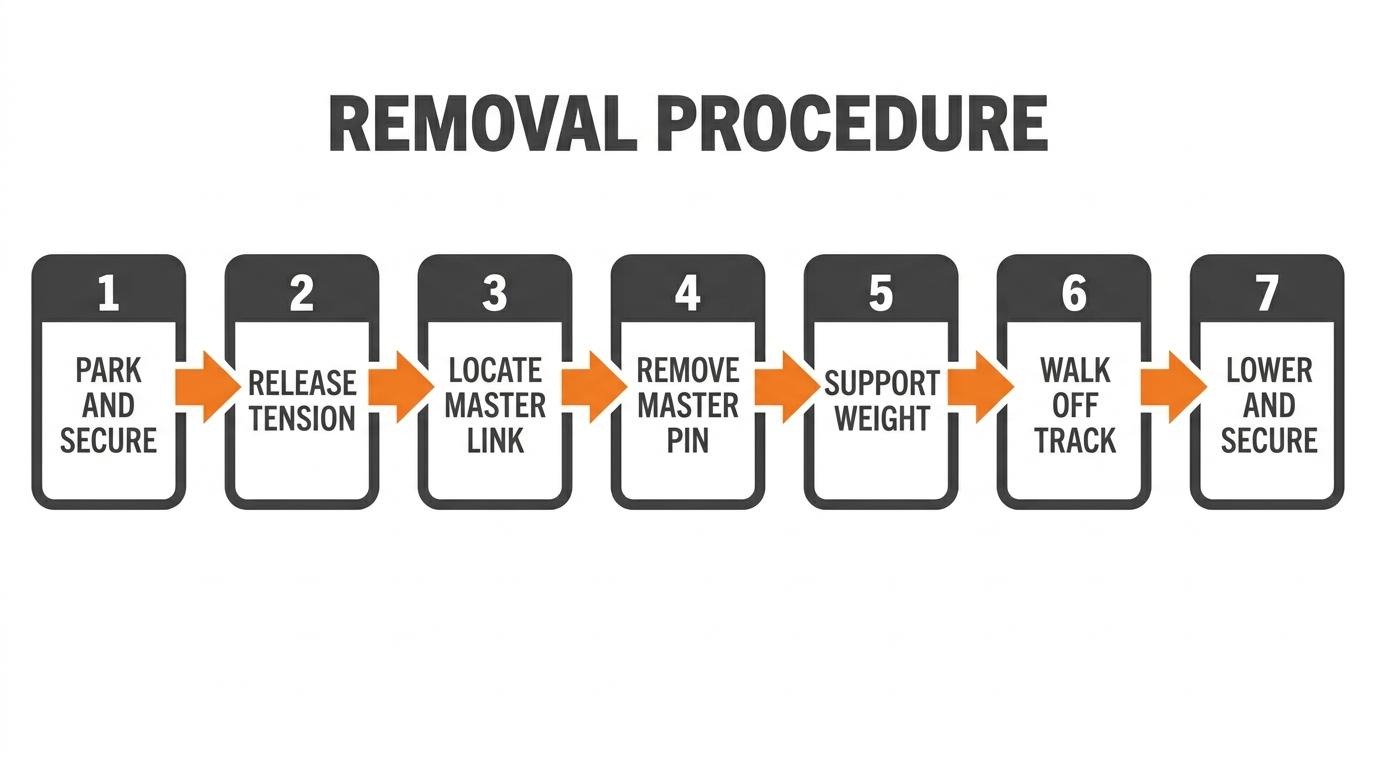
The step-by-step procedures for detaching excavator tracks are: release track tension, locate and remove the master pin or master link, and use a lifting device to support the machine while the track is pulled free.
According to the U.S. Department of the Navy, the core removal sequence involves releasing track tension, removing the master pin or master link, and using a lifting device to support machine weight throughout the process.
Follow this sequence:
- Park on firm, level ground and engage all safety locks; chock the undercarriage.
- Locate the grease fitting on the track adjuster and relieve tension by loosening the valve slowly.
- Identify the master link (the pin with a clip or keeper plate that differs from standard links).
- Drive out the master pin using a hydraulic pin press or punch tool, working in the direction specified by the service manual.
- Support the track's weight with a crane, hoist, or the excavator's own boom before it separates fully.
- Walk the track off the sprocket by carefully maneuvering the machine forward or backward a few inches.
- Lower the track flat onto the transport surface or designated skid for separate shipment.
Each step must match the manufacturer's technical manual for that specific machine model.
What Common Mistakes Should Be Avoided During Excavator Track Removal?
The common mistakes that should be avoided during excavator track removal include skipping the service manual, failing to fully release track tension, and neglecting proper machine securement before beginning work.
According to the U.S. Marine Corps, failure to follow the specific technical manual or SOP for loading and securing heavy equipment can result in load separation or catastrophic failure during transport. That consequence begins at the removal stage, not just the loading stage.
Critical mistakes to avoid:
- Skipping the manufacturer's technical manual: Every model has specific torque values, pin directions, and tensioner procedures that differ between machines.
- Releasing tension too quickly: Opening the grease valve rapidly can cause the tensioner to eject under pressure, creating a serious projectile hazard.
- Working on unstable ground: Soft or uneven surfaces shift machine weight unpredictably once a track is removed.
- Neglecting PPE: Track components are heavy and under high tension; one slip without proper gloves and eye protection can cause severe injury.
- Skipping machine lockout: Failing to engage the hydraulic lockout before removal risks accidental boom or bucket movement.
- Improper track storage post-removal: Tracks stored vertically or unsupported can roll or tip, damaging the links and creating a worksite hazard.
High-risk maintenance tasks like track removal also fall under OSHA Technical Manual compliance requirements, reinforcing that procedural discipline is not optional. Experienced operators recognize that most track removal injuries occur not from the procedure itself, but from skipping the preparation steps that make it safe.
How Is a Trackless Excavator Prepared and Loaded for Secure Transport?
Preparing a trackless excavator for transport requires additional protective measures and a precise loading sequence. The sections below cover undercarriage protection steps and professional track securement standards.
What Additional Steps Ensure the Excavator's Protection Without Its Tracks?
The additional steps that ensure a trackless excavator's protection include blocking the undercarriage, capping hydraulic fittings, and supporting exposed sprockets and rollers to prevent damage during transit. Without tracks absorbing ground contact, the undercarriage frame becomes vulnerable to direct stress on the trailer deck. Foam padding or timber blocking placed beneath the undercarriage frame distributes weight evenly and prevents metal-on-metal contact. Exposed hydraulic ports where track motors connect must be capped immediately to block contamination. The boom, arm, and bucket should be fully lowered and pinned in the manufacturer's recommended travel position to reduce the machine's center of gravity before loading.
How Do Professionals Secure Hydraulic Excavator Tracks for Separate Shipment?
Professionals secure hydraulic excavator tracks for separate shipment by palletizing each track assembly, wrapping the links to prevent abrasion, and binding the assembly with rated tie-down chains. Securement requirements for heavy vehicles and machinery operating on tracks are governed by 49 CFR § 393.130, according to the Legal Information Institute at Cornell Law School. Each track section is positioned flat on a dedicated pallet or flatbed section, preventing the assembly from rolling or shifting laterally. Chain binders and edge protectors keep the load stable without damaging the link pins or pads during transport.
What Are the Costs, Benefits, and Drawbacks of Removing Tracks vs. Keeping Them On?
The costs, benefits, and drawbacks of removing tracks vs. keeping them on depend on equipment dimensions, route regulations, and whether you use professional or DIY labor. The sections below cover how track removal affects transport costs and insurance, then compare professional versus DIY approaches.
How Does Track Removal Impact Transport Costs, Timing, and Insurance?
Track removal impacts transport costs, timing, and insurance by changing how a load is classified, permitted, and priced across state lines.
Keeping tracks on typically pushes an excavator into oversize or overweight permit territory, adding permitting fees, escort vehicle requirements, and restricted travel windows. Wisconsin Department of Transportation research confirms that aligning oversize/overweight fees with agency costs improves industry outcomes and covers both direct and indirect transport expenses, meaning permit costs should reflect real infrastructure impact.
Insurance exposure also shifts with configuration. According to the American Transportation Research Institute (ATRI), trucking auto liability premiums rose 36 percent per mile over the last eight years, driven by insurer unprofitability and rising litigation costs. Loads that eliminate oversize status through track removal can reduce the risk profile insurers price against.
Removing tracks adds labor time upfront but often shortens total transit time by enabling standard-legal transport on more routes.
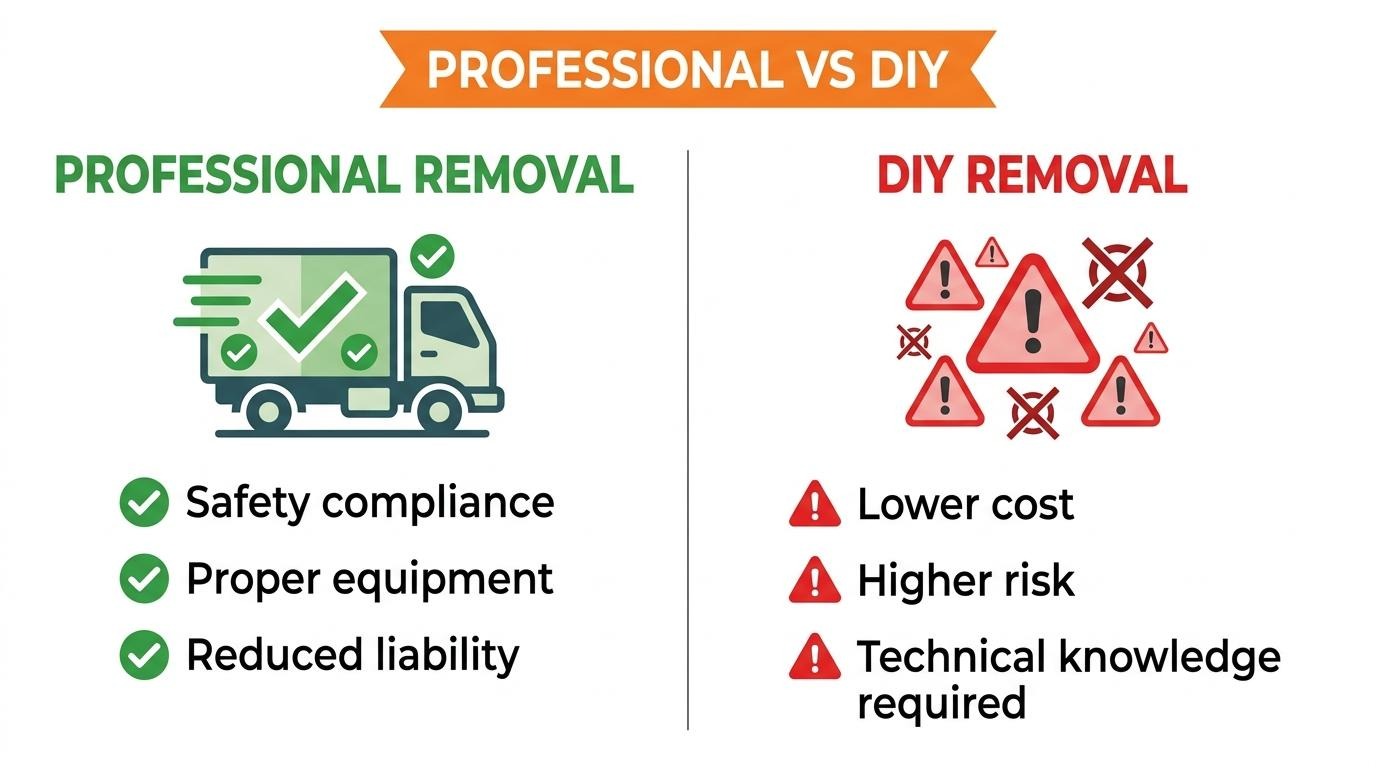
What Are the Pros and Cons of Professional vs. DIY Track Removal?
The pros and cons of professional vs. DIY track removal center on safety compliance, cost, and liability exposure.
Professional removal brings trained technicians, proper lifting equipment, and documented procedures that align with OSHA safety standards. Washington University research notes that high-risk maintenance tasks like track removal require compliance with the OSHA Technical Manual, even in remote or robotic operational contexts. A professional crew reduces injury risk, equipment damage, and procedural errors that could void insurance coverage.
DIY track removal lowers labor costs but introduces significant risk if the operator lacks familiarity with the machine's specific service manual, proper pin extraction tools, or safe ground-bearing procedures.
Key trade-offs to weigh:
- Professional removal: Higher upfront cost, documented safety compliance, reduced liability, faster execution with correct tooling.
- DIY removal: Lower labor cost, requires technical knowledge and proper equipment, increases risk of injury or undercarriage damage.
- Time factor: Professionals complete removal more predictably, avoiding transport delays caused by improper technique.
For most commercial transport situations, professional track removal is the more reliable investment given the liability and equipment value at stake.
How Should You Approach Hydraulic Excavator Track Removal for Transport With Heavy Hauling Services?
Approaching hydraulic excavator track removal for transport requires coordinating compliance, securement standards, and equipment handling expertise. The H3s below cover how Bear Down Logistics supports this process and the key takeaways for every operator.
Can Heavy Hauling and Equipment Transport Services From Bear Down Logistics Help With Excavator Track Removal and Shipping?
Yes, heavy hauling and equipment transport services from Bear Down Logistics can help with excavator track removal and shipping. Bear Down Logistics brings over 20 years of combined experience and more than 20,000 completed loads to every project, including oversized and tracked equipment transport.
Federal compliance is non-negotiable in this work. Under 23 U.S.C. §127[a], States that deviate from established Federal weight limits on Interstate highways risk losing 50 percent of their appropriated funds, making permit coordination a critical responsibility for any transport provider. Bear Down Logistics handles that compliance burden directly.
Securement of tracked or trackless excavators falls under 49 CFR § 393.130, which governs equipment that operates on wheels or tracks. Bear Down Logistics follows manufacturer service documentation, including technical manuals from heavy equipment manufacturers like Hitachi, to ensure proper track tension release and undercarriage handling before loading. According to the U.S. Marine Corps, failure to follow unit SOPs or technical manuals during heavy equipment loading can result in load separation or catastrophic failure. Bear Down Logistics treats these standards as the floor, not the ceiling.
What Are the Key Takeaways About Hydraulic Excavator Track Removal for Transport: When & How?
The key takeaways about hydraulic excavator track removal for transport center on compliance, safety, and choosing a qualified transport partner. Every decision in this process connects directly to protecting your equipment, your timeline, and your liability exposure.
The most actionable conclusions from this topic are:
- Know when removal is required. Width, weight, and route restrictions drive the decision, not preference.
- Follow technical documentation. Track tension release, master pin removal, and lifting device use must follow manufacturer specifications.
- Secure trackless excavators to federal standards. 49 CFR § 393.130 governs all wheeled and tracked equipment securement without exception.
- Permit compliance protects everyone. Interstate weight enforcement under federal law leaves no room for improvisation.
- Professional transport reduces risk. Improper loading procedures are a documented cause of catastrophic load failure.
Bear Down Logistics manages every element of this process, from route analysis and permit acquisition to loading oversight and final delivery, so your excavator moves safely and legally from origin to destination.