
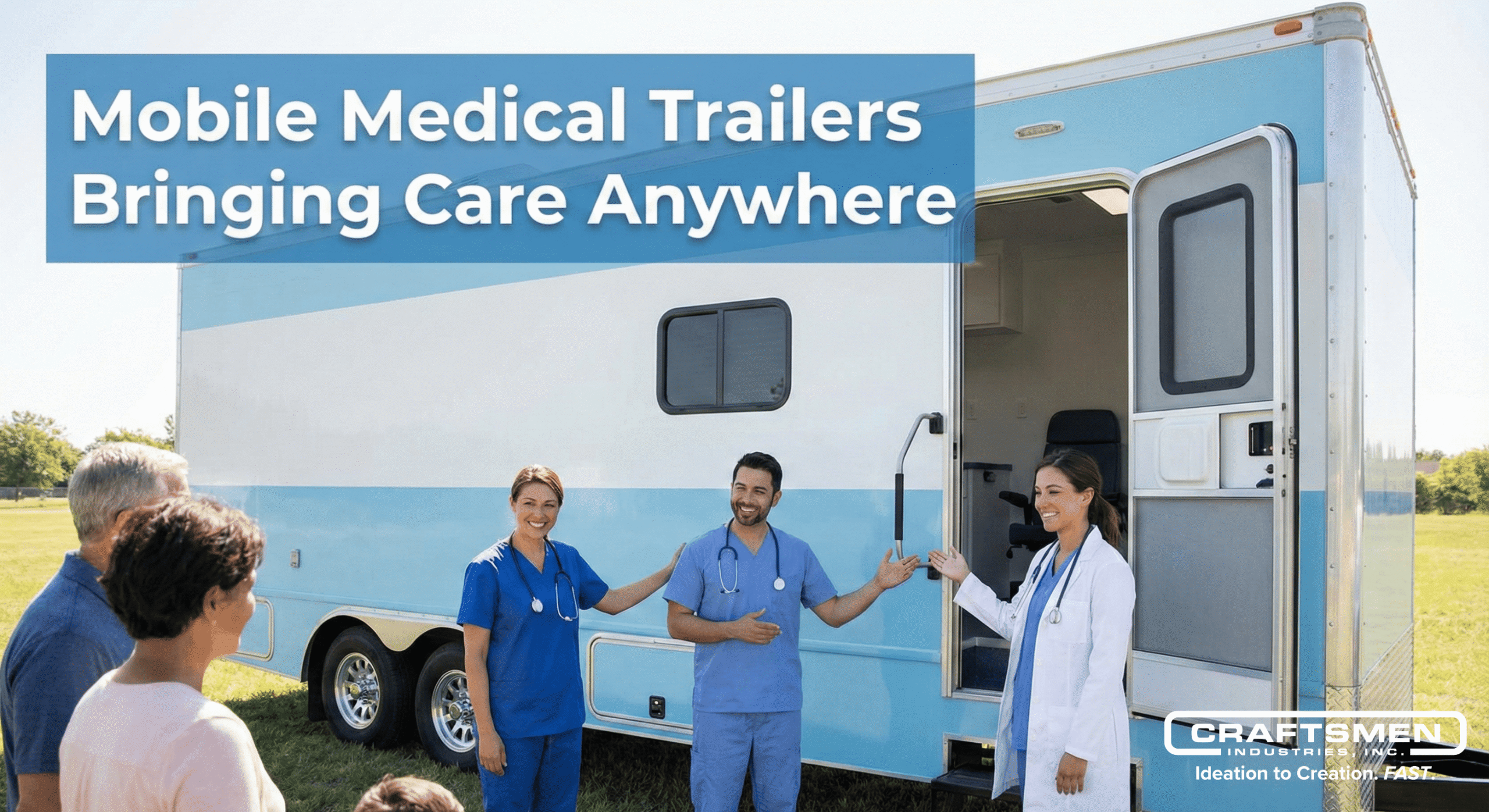
Medical trailers are sophisticated mobile healthcare facilities that deliver essential medical services directly to communities, combining advanced medical technology with transportation flexibility to overcome geographical and infrastructural barriers. We recognize that you’re seeking comprehensive information about how these innovative healthcare solutions function, whether you’re a healthcare administrator exploring mobile options, a community leader addressing local healthcare gaps, or a professional interested in the technical aspects of mobile medical units.
According to Grand View Research, 2023: The U.S. mobile clinics market was valued at USD 1.6 billion and is projected to reach USD 3.4 billion by 2032, growing at a CAGR of 8.5%. In 2023, a deployment study by Kaiser Permanente following the Maui wildfires found that mobile health vehicles provided critical first aid and wound care services to over 2,000 patients in areas where traditional healthcare infrastructure was destroyed (n=2,147).
Dr. Nancy Oriol from Harvard Medical School states: “Mobile clinics have demonstrated that for every dollar invested in mobile health, the return can be as high as $36, primarily through the prevention of costly emergency room visits and the early detection and management of chronic diseases.”
Key Takeaways:
- Medical trailers come in three main types: towable units with customizable clinical facilities, self-contained RVs with integrated spaces, and smaller truck-based units for targeted missions
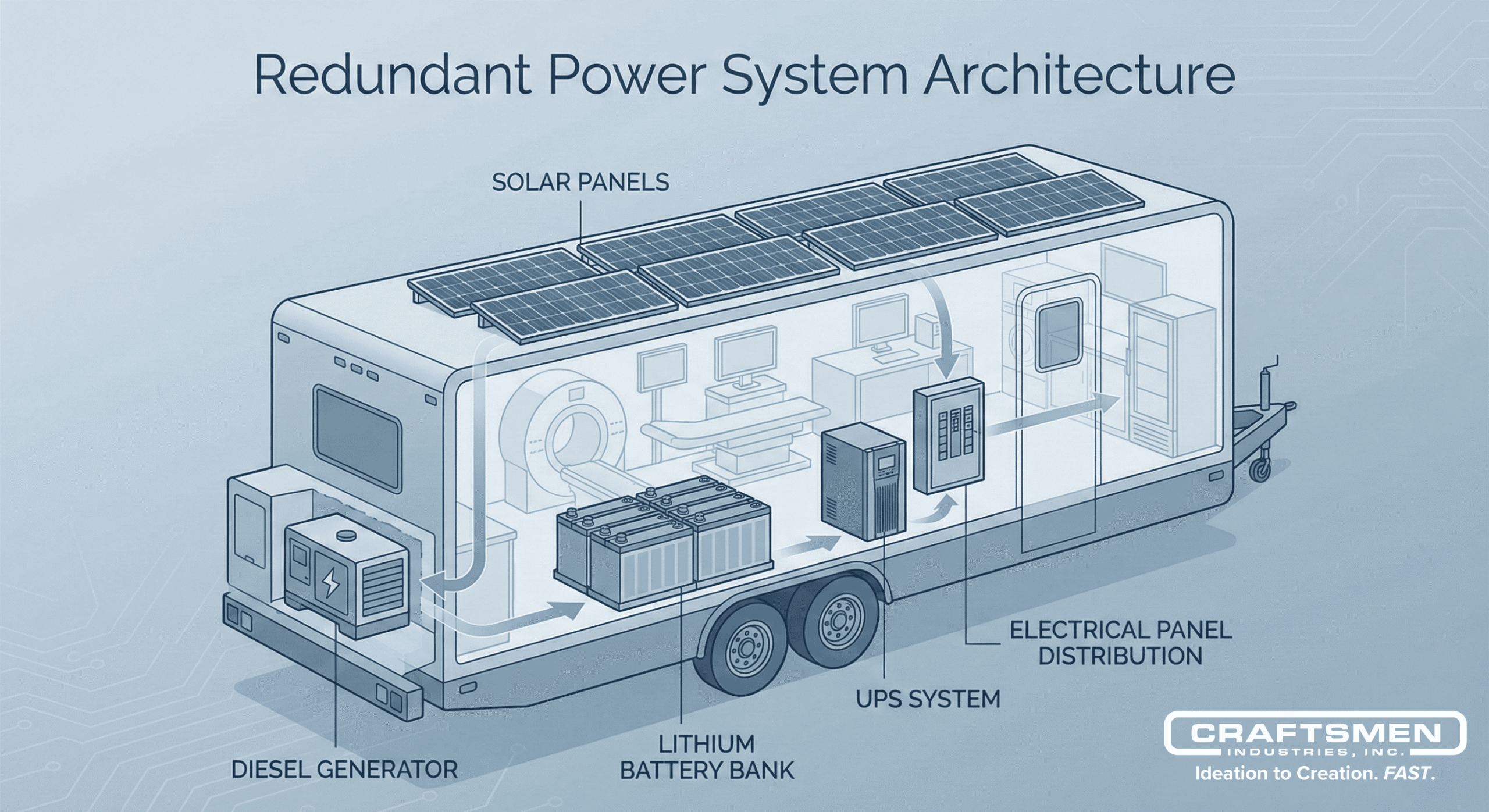
- Power systems rely on diesel generators, hybrid solar integration, UPS units, and lithium battery banks to ensure uninterrupted medical operations
- Transportation and deployment follow strict DOT regulations with specialized protocols for safe transport and site setup
- Compliance requirements include adherence to NEC and NFPA 99 electrical standards, HIPAA data protection, and state-specific licensing
- Maintenance involves daily, weekly, and monthly system checks covering vehicle engines, medical equipment, and power infrastructure
- Healthcare access improvements include serving 60 million rural Americans and providing rapid disaster response capabilities
- Industry leaders like Craftsmen Industries offer comprehensive solutions from custom manufacturing to deployment support
This introduction explores the comprehensive operational framework of medical trailers, examining their sophisticated systems, regulatory compliance, deployment protocols, and transformative impact on healthcare delivery. We’ll navigate through the technical specifications, power management, transportation logistics, regulatory landscape, maintenance requirements, and real-world applications that make medical trailers an increasingly vital component of modern healthcare infrastructure.
Practical Tips:
- When evaluating medical trailer options, prioritize units with redundant power systems including both diesel generators and solar panels to ensure continuous operation in any environment
- Establish comprehensive staff training protocols that cover medical equipment operation, emergency procedures, and mobile-specific safety challenges before deployment
Medical trailers represent a convergence of healthcare innovation and engineering excellence, transforming how we deliver medical services to underserved populations and emergency situations. Our exploration begins with understanding the fundamental types and specifications of these mobile healthcare facilities.
What Is a Medical Trailer and What Types Are Commonly Used?
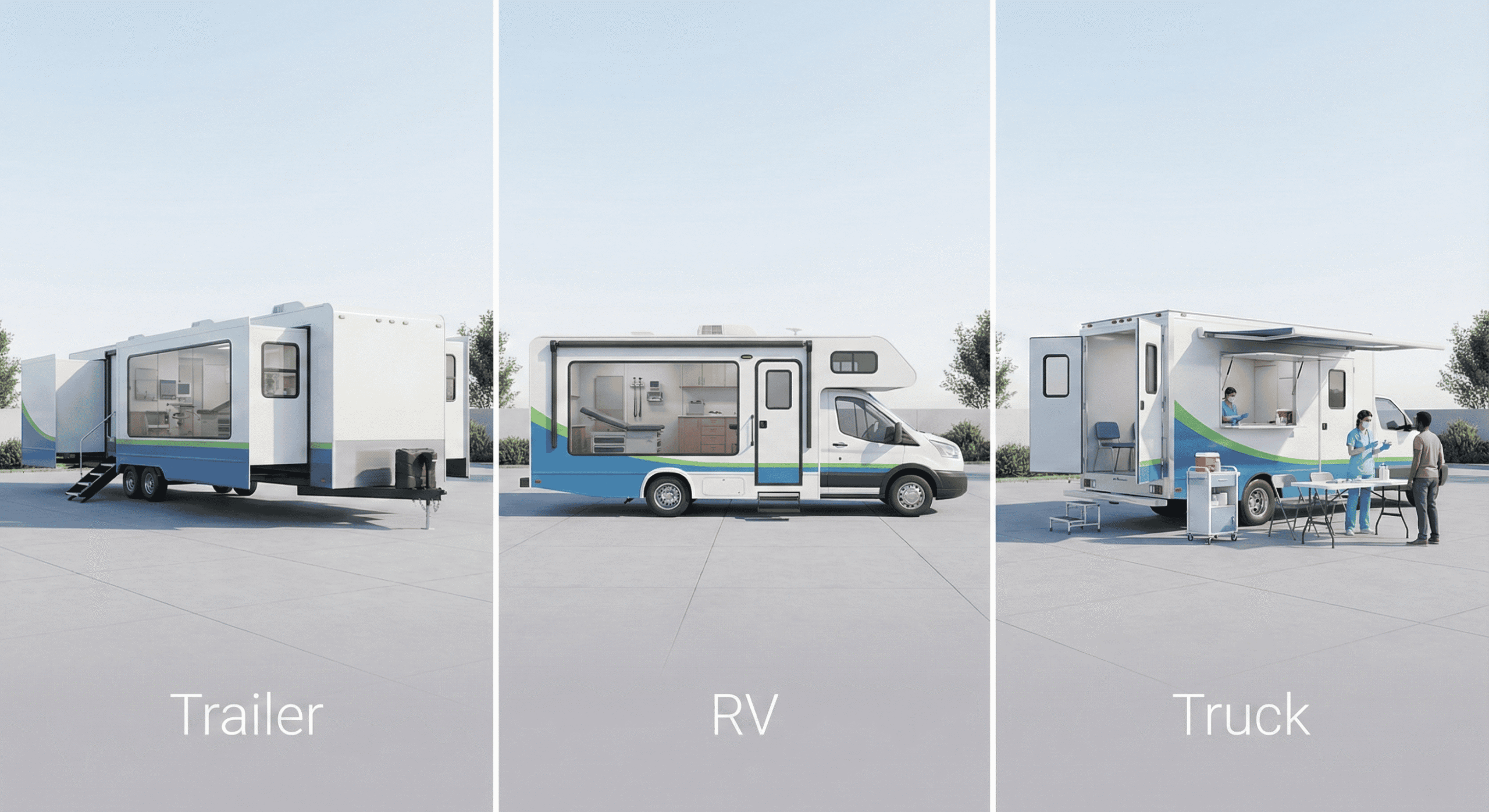
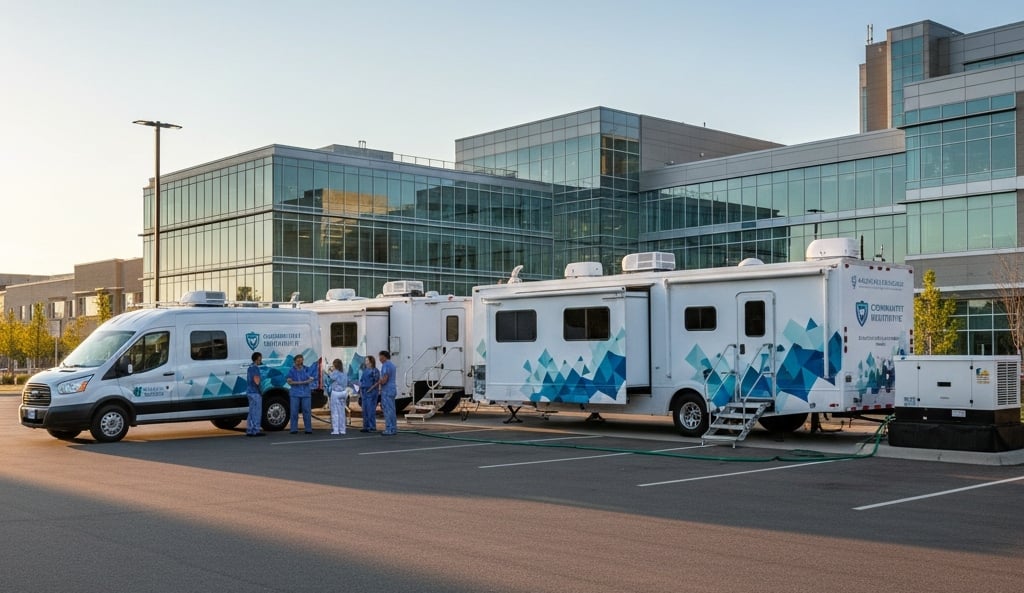
A medical trailer is a towable unit with fully customizable clinical facilities commonly used for specialty services, long-term deployments, and disaster response. These versatile healthcare platforms transform parking lots into treatment centers through three main configurations. Mobile medical trailers offer maximum space for complex procedures. Mobile medical RVs integrate clinical spaces within self-contained vehicles ideal for primary care, dental services, and health screenings. Mobile medical trucks provide smaller, highly agile units designed for targeted missions, vaccination campaigns, and first response.
Specialized configurations expand clinical capabilities significantly. A 40-foot surgical trailer can house an operating room, sterilization room, and dental suite with multiple chairs and X-ray room. Diagnostic trailers accommodate advanced imaging equipment and point-of-care laboratories, with equipment costs ranging from $50,000 to $200,000. Each configuration serves distinct healthcare missions while maintaining hospital-grade standards.
How Do Medical Trailers Differ from Other Mobile Medical Units?
Medical trailers differ from other mobile medical units through their towable design, expandable capacity, and deployment flexibility. Trailers require external towing vehicles but offer larger clinical spaces than self-propelled units. Fixed mobile clinics built on RV chassis provide integrated driving capabilities but limit interior customization. Trailers support permanent infrastructure additions such as expandable sides, multiple examination rooms, and heavy diagnostic equipment installations.
Operational differences define appropriate use cases. Trailers excel in long-term deployments where vehicles remain stationary for weeks. Mobile RVs suit frequent relocations and community outreach programs. Deployment logistics favor trailers for disaster response scenarios requiring maximum clinical capacity at single locations.
What Key Features Are Found in Different Types of Medical Trailers?
Key features in medical trailers include all-aluminum construction, hospital-grade non-slip flooring, and specialized service configurations for diagnostics, surgery, and dental care. Construction standards emphasize durability through reinforced frames supporting medical equipment loads up to 10,000 pounds. Climate control systems maintain sterile environments across temperature extremes from -20°F to 120°F.
|
Medical Trailer Type |
Key Feature Category |
Standard Configuration |
|
Surgical Trailers |
Operating Capacity |
2-4 procedures daily |
|
Diagnostic Units |
Imaging Equipment |
X-ray, ultrasound, mammography |
|
Dental Trailers |
Chair Configuration |
2-6 treatment stations |
|
Primary Care Units |
Exam Rooms |
2-4 private spaces |
Advanced features enhance clinical capabilities through integrated laboratory spaces, telemedicine stations, and negative pressure isolation rooms for infectious disease control.
Which Medical Services Can Medical Trailers Provide?
Medical trailers provide over 40 medical specialties including dialysis, dental, surgical, and primary care services. Comprehensive service delivery spans preventive screenings, acute care treatment, chronic disease management, and emergency response. Kaiser Permanente deployed mobile health vehicles following the 2023 Maui wildfires to provide first aid and wound care, demonstrating rapid disaster response capabilities.
Service categories include:
- Primary care consultations and health screenings
- Dental cleanings, extractions, and restorative procedures
- Dialysis treatments requiring specialized water purification
- Surgical procedures from minor biopsies to cataract removal
- Diagnostic imaging including mammography and CT scans
- Mental health counseling and substance abuse treatment
Mobile trailers bridge healthcare gaps by delivering specialized services directly to underserved communities, eliminating transportation barriers while maintaining clinical quality standards comparable to traditional facilities.
What Systems and Technologies Enable Medical Trailers to Function?
Medical trailers function through integrated systems combining power generation, medical equipment, and digital connectivity infrastructure. These self-contained units require diesel generators producing 30-100kW for primary power, backup battery systems storing 10-50kWh, and redundant utility connections supporting full clinical operations. Modern trailers incorporate Class II FDA-regulated medical devices, telemedicine platforms, and HIPAA-compliant data systems to deliver healthcare services comparable to fixed facilities.
How Are Power and Utilities Managed in Medical Trailers?
Power and utilities in medical trailers are managed through multi-layered systems ensuring continuous operation. Diesel-powered generators serve as primary power sources, delivering 30-100kW output with 99.9% uptime reliability for critical medical equipment. Hybrid configurations combine 5-20kW solar panel arrays with traditional generators, reducing fuel consumption by 30-40% while maintaining operational capacity.
Uninterruptible power supply (UPS) units provide instantaneous backup during generator transitions, preventing equipment shutdown during the 3-10 second switchover period. Advanced lithium battery banks store 10-50kWh of energy, supporting 4-12 hours of emergency operation for essential systems such as ventilators, monitors, and lighting.
Power management systems distribute electricity through medical-grade outlets featuring isolated ground circuits and surge protection rated for 6000V transients. Automatic transfer switches monitor voltage stability and seamlessly transition between power sources when parameters fall outside 208-240V operational ranges. These integrated systems ensure medical trailers maintain the consistent power quality required for sensitive diagnostic equipment and life-support devices.
What Medical Equipment Is Integrated Into Mobile Trailers?
Medical equipment integrated into mobile trailers spans diagnostic, treatment, and monitoring categories regulated by FDA standards. Most mobile medical applications qualify as Class II medical devices, requiring FDA 510(k) premarket submission demonstrating substantial equivalence to existing approved devices. Standard equipment configurations include portable X-ray machines ($15,000-$50,000), ultrasound systems ($20,000-$100,000), and point-of-care laboratory analyzers ($10,000-$30,000).
AI-powered diagnostic tools enhance mobile clinic capabilities through automated image analysis, predictive health assessments, and clinical decision support. Virtual consultation platforms enable real-time specialist collaboration, connecting mobile unit providers with remote physicians through high-definition video systems and secure data sharing protocols.
Conversational agents streamline patient intake and triage, processing symptoms through natural language interfaces while maintaining HIPAA-compliant documentation. Equipment mounting systems use shock-absorbing brackets and seismic restraints meeting California Building Code requirements for mobile installations. This comprehensive equipment integration transforms trailers into fully functional medical facilities capable of delivering primary care, emergency treatment, and specialty services.
How Is Connectivity and Data Security Maintained in Medical Trailers?
Connectivity and data security in medical trailers operate through encrypted networks meeting HIPAA technical safeguards. All patient health information (PHI) requires protection via AES-256 encryption for stored data and TLS 1.3 protocols for transmission across networks. Secure wireless systems utilize WPA3 Enterprise authentication with certificate-based access controls limiting connectivity to authorized devices and personnel.
Satellite internet connections provide 25-100 Mbps bandwidth in remote locations, enabling telemedicine consultations and electronic health record access. Cellular backup systems using 4G/5G networks ensure redundant connectivity with automatic failover capabilities maintaining 99.5% uptime requirements.
Access control systems implement role-based permissions, multi-factor authentication, and session timeouts preventing unauthorized PHI exposure. Network segmentation isolates medical devices from administrative systems, reducing cyber attack surfaces while maintaining operational efficiency. Regular security audits verify compliance with NIST Cybersecurity Framework standards, identifying vulnerabilities before exploitation. These layered security measures ensure medical trailers maintain the confidentiality, integrity, and availability of patient data while delivering mobile healthcare services.
How Are Medical Trailers Transported, Deployed, and Set Up?
Medical trailers are transported, deployed, and set up through systematic procedures that ensure safe transit and rapid operational readiness. Mobile clinics were deployed extensively during the COVID-19 pandemic for testing and vaccination. Self-driving vehicles equipped with medical diagnostic equipment and telemedicine capabilities are currently in the prototype stage. The following sections detail the specific requirements for transportation, setup, and site preparation.
What Steps Are Required for Safely Transporting Medical Trailers?
The steps required for safely transporting medical trailers include pre-transport inspection, proper hitching procedures, route planning, and regulatory compliance. All mobile units must comply with U.S. Department of Transportation (DOT) regulations for roadworthiness and safety. Pre-transport checklists cover brake systems, tire pressure, lighting, and secure equipment storage. Route planning considers bridge heights, weight restrictions, and road conditions. Drivers require commercial licenses for units exceeding 26,000 pounds. Medical equipment requires specialized securing methods such as locking brackets, straps, and foam padding. Transportation speeds typically remain under 65 mph to prevent equipment damage.
How Are Medical Trailers Set Up at a New Location?
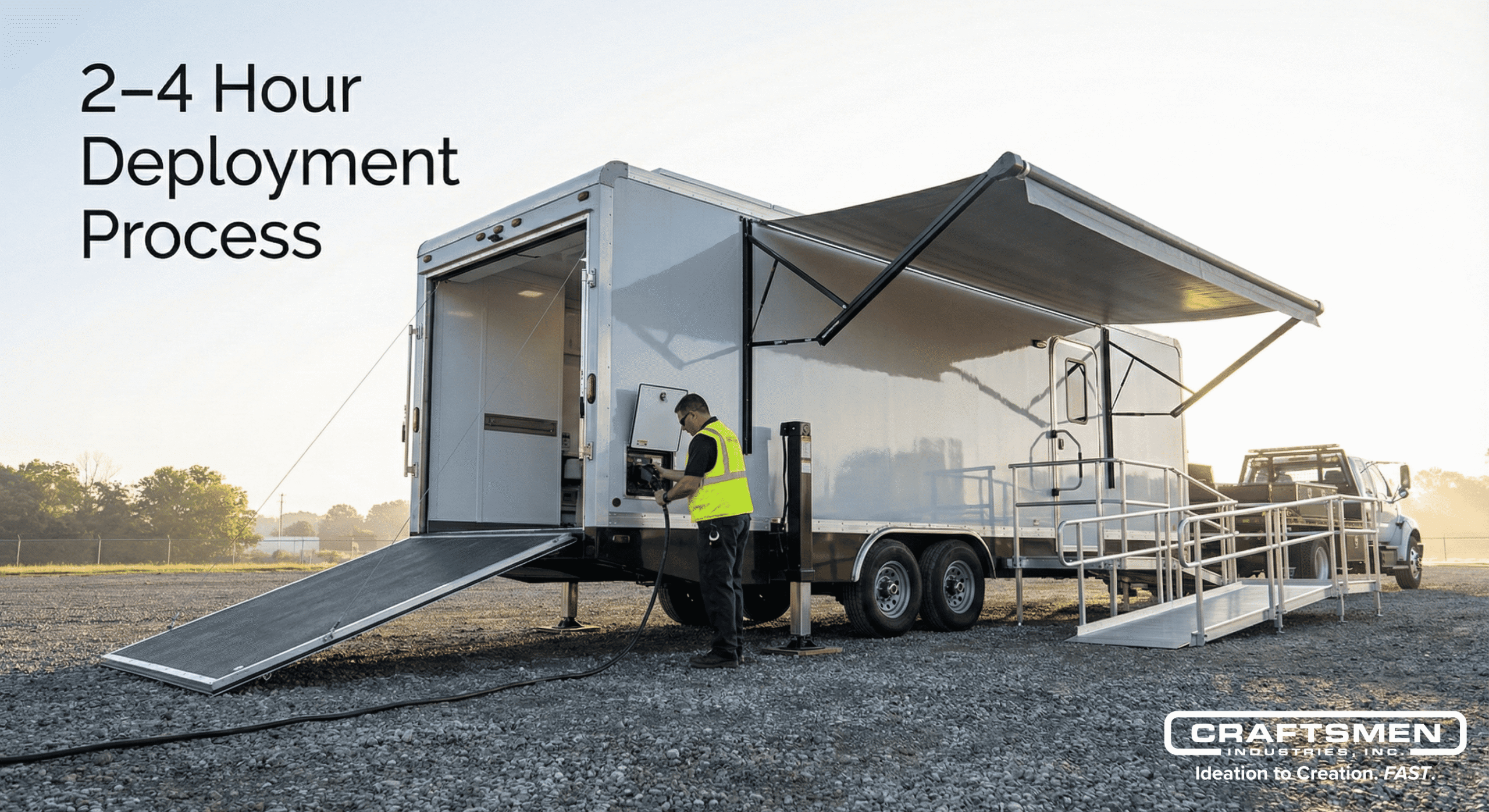
Medical trailers are set up at a new location through a standardized deployment sequence that typically takes 2-4 hours. Setup begins with site assessment and leveling using hydraulic jacks or stabilizing blocks. Power connections follow, connecting to local grid sources or activating onboard generators. HVAC systems activate to establish climate control before medical equipment initialization. Water and waste connections link to municipal systems or self-contained tanks. Medical equipment undergoes calibration checks and safety tests. Communication systems connect through satellite, cellular, or local networks. Final steps include establishing patient flow patterns and completing regulatory documentation. Setup teams typically consist of 2-4 trained technicians following manufacturer-specific protocols.
What Site Requirements Are Necessary for Medical Trailer Operation?
The site requirements necessary for medical trailer operation include level ground, adequate space, utility access, and regulatory compliance. Sites require minimum dimensions of 60×20 feet for standard 40-foot trailers with additional clearance for awnings and ramps. Ground surfaces must support 15,000-30,000 pounds distributed across axles and stabilizers. Electrical hookups need 50-amp service minimum, with 100-amp preferred for surgical units. Water connections require potable supply at 40-60 PSI. Waste disposal needs sewer access or scheduled pump-out services. ADA compliance mandates accessible pathways, proper lighting, and designated parking. Emergency vehicle access requires 20-foot minimum lane width. Weather protection considerations include wind barriers and drainage systems. These requirements ensure medical trailers deliver safe, effective healthcare services across diverse deployment locations.
What Compliance, Licensing, and Safety Standards Govern Medical Trailers?
Medical trailers operate under strict regulatory frameworks that ensure patient safety and healthcare quality. These mobile units must meet the same standards as traditional healthcare facilities while addressing unique challenges of mobility and deployment.
How Do Medical Trailers Meet Healthcare Regulatory Requirements?
Medical trailers meet healthcare regulatory requirements through compliance with multiple federal and state standards. All electrical systems must adhere to the National Electrical Code (NEC) and NFPA 99 standards. Mobile units must comply with OSHA workplace safety requirements and ADA accessibility guidelines.
State-specific licensing adds another layer of requirements. States like California require specific licenses for primary care clinic operations in mobile units. CMS certification enables Medicare and Medicaid reimbursement for services provided in mobile settings.
Manufacturers demonstrate compliance through comprehensive certifications. Odulair’s mobile units are CMS-certified and comply with ADA, CDC, WHO, and ISO 9001 standards. These certifications validate that mobile units meet international quality management and healthcare delivery standards.
The following sections detail specific sanitation protocols and safety measures that support regulatory compliance.
What Sanitation and Infection Control Measures Are Used in Medical Trailers?
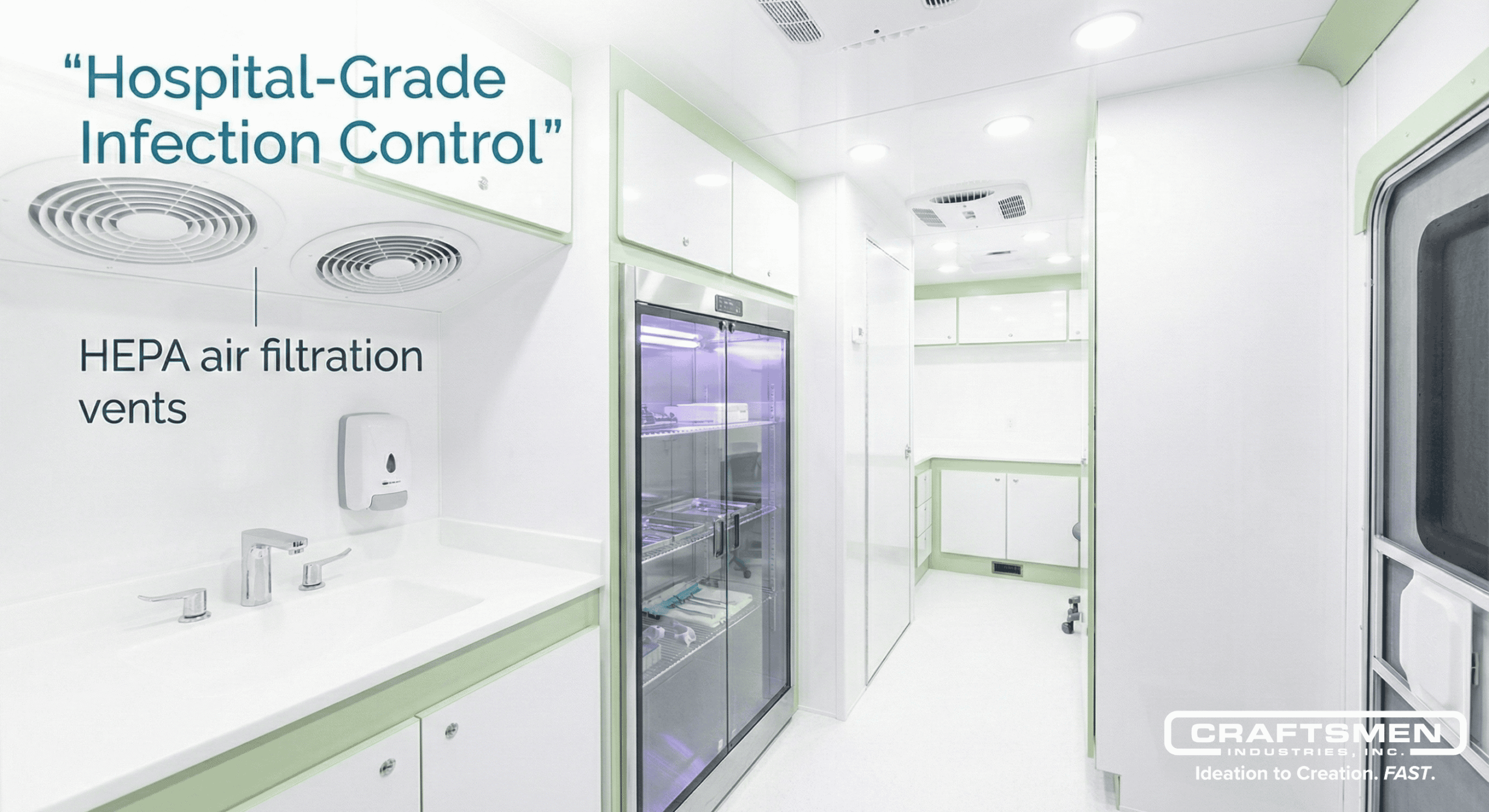
Sanitation and infection control measures in medical trailers follow EPA guidelines for medical waste disposal. These systems include segregated waste containers, proper labeling protocols, and secure storage areas for hazardous materials.
Electrical safety supports infection control through specialized infrastructure. Medical-grade outlets, proper insulation, and redundant power paths prevent electrical hazards and ensure patient safety. These features maintain sterile environments during procedures and protect sensitive medical equipment.
Environmental controls maintain clinical standards through:
- HEPA filtration systems for air quality
- Antimicrobial surface materials
- Hands-free fixtures to reduce contamination
- UV sterilization equipment for instruments
These measures create healthcare environments that match or exceed traditional facility standards while accommodating the unique challenges of mobile operations.
How Are Staff and Patient Safety Protected Inside Medical Trailers?
Staff and patient safety inside medical trailers relies on integrated emergency systems and ergonomic design. Safety protocols include clearly marked emergency exits and fire suppression systems. Panic button systems are installed to ensure staff safety in volatile situations.
Patient handling follows OSHA-mandated protocols. Safe patient handling protocols comply with OSHA standards, including use of transfer aids and lift devices. These tools prevent injuries during patient transfers between the trailer and external locations.
Physical safety features protect against common hazards:
- Non-slip flooring prevents falls
- Grab bars provide stability during transport
- Secured storage prevents equipment shifting
- Emergency lighting activates during power failures
Medical trailers integrate these safety standards while maintaining clinical functionality, ensuring both regulatory compliance and operational effectiveness for healthcare delivery.
What Maintenance and Operational Practices Keep Medical Trailers Running Effectively?
Medical trailer maintenance involves systematic inspections and operational protocols that ensure reliable healthcare delivery. Regular maintenance schedules, staff training programs, and performance monitoring systems form the foundation of effective mobile medical operations. These practices address both mechanical systems and clinical equipment to maintain optimal functionality.
How Often Do Medical Trailers Require Maintenance or Inspection?
Medical trailers require maintenance or inspection daily, weekly, and monthly to ensure operational readiness. Daily checks include visual inspections of tires, lights, and fluid levels. Weekly maintenance covers generator testing, medical gas system verification, and equipment calibration. Monthly inspections encompass comprehensive systems checks from vehicle engines to medical equipment and power systems.
Preventive maintenance schedules follow manufacturer specifications for both chassis and medical components. Generator maintenance occurs every 250 operating hours. HVAC filters need replacement monthly in high-use environments. Medical equipment requires calibration according to FDA guidelines and manufacturer recommendations.
What Common Challenges Affect the Operation of Medical Trailers?
Common challenges affecting medical trailer operation include power system failures, temperature control issues, equipment malfunctions, and connectivity disruptions. Power interruptions occur when generators fail or fuel supplies deplete. Temperature fluctuations compromise medication storage and patient comfort. Equipment breakdowns delay patient care and require backup protocols.
Environmental factors create operational difficulties. Extreme weather conditions stress HVAC systems and affect trailer stability. Remote locations limit access to technical support and replacement parts. Road conditions damage suspension systems and sensitive medical equipment during transport. Space constraints complicate workflow and equipment placement.
Regulatory compliance presents ongoing challenges. State-specific licensing requirements vary across jurisdictions. Equipment certification lapses disrupt services. Staff credentialing issues arise when crossing state lines. These operational hurdles require proactive planning and redundant systems.
How Do Operators Ensure Consistent Performance and Reliability?
Operators ensure consistent performance through comprehensive training for clinical staff, drivers, and administrative personnel. Training programs cover medical equipment operation, emergency procedures, safety protocols, and mobile environment challenges. Staff complete initial certification and annual refresher courses. Simulation exercises prepare teams for equipment failures and emergency scenarios.
Performance monitoring systems track key metrics including equipment uptime, patient throughput, and service quality indicators. Digital maintenance logs document all repairs and inspections. Predictive maintenance software analyzes equipment data to prevent failures. Quality assurance protocols include patient satisfaction surveys and clinical outcome measurements.
Redundancy strategies maintain service continuity. Backup generators provide secondary power sources. Spare medical equipment enables rapid replacement. Cross-trained staff members fill multiple roles. Partnership agreements with local facilities offer overflow capacity during equipment failures. These integrated practices sustain medical trailer operations across diverse deployment scenarios.
How Can Medical Trailers Improve Healthcare Access and Response?
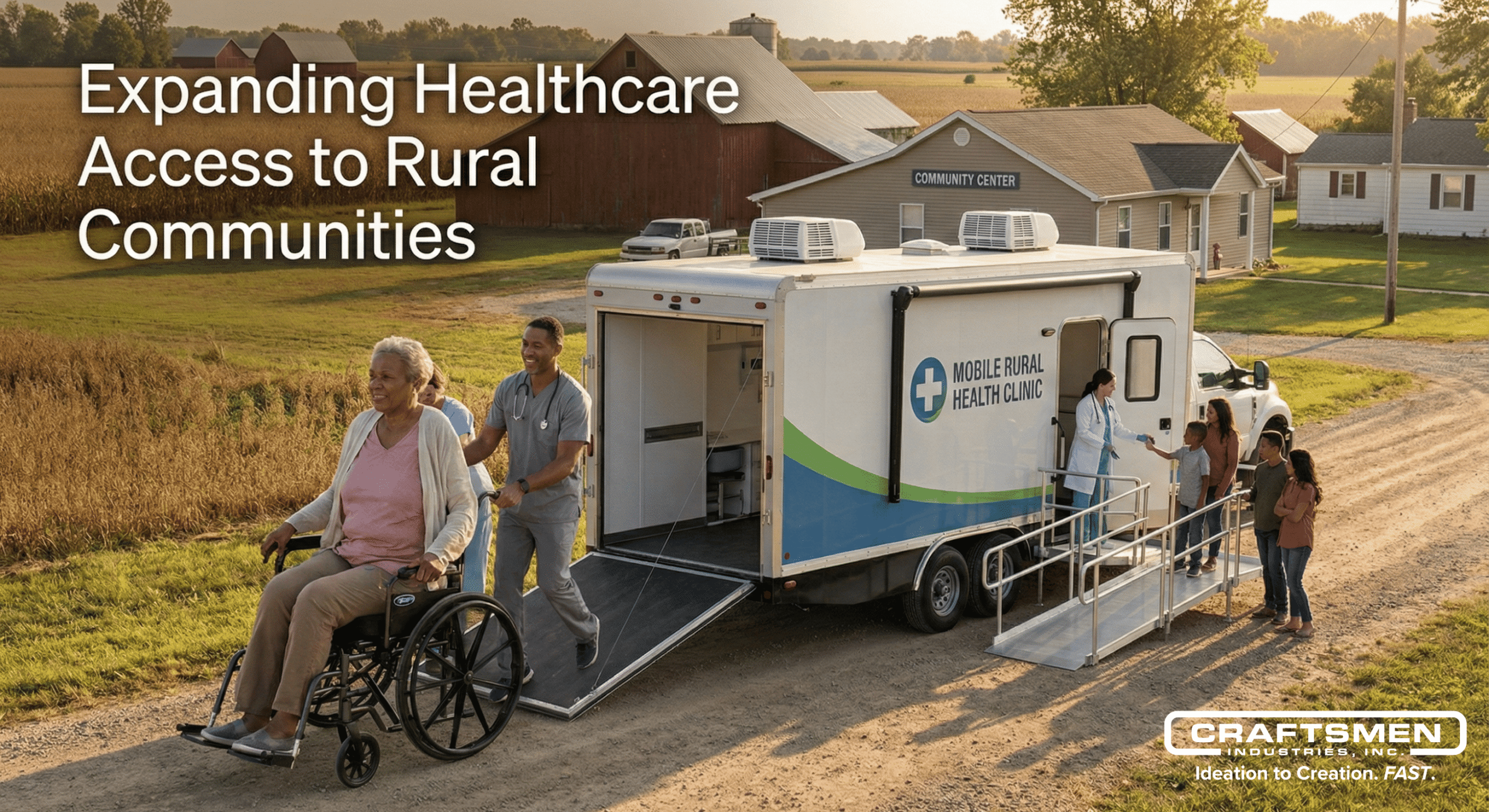
Medical trailers improve healthcare access and response by bringing essential medical services directly to underserved populations and disaster zones. Mobile clinics serve as a lifeline for over 60 million Americans living in rural areas with limited access to healthcare. The U.S. mobile clinics market was valued at USD 1.6 billion in 2023 and is projected to reach USD 3.4 billion by 2032, growing at a CAGR of 8.5%. For every dollar invested in mobile health, the return can be as high as $36, primarily through prevention of costly emergency room visits. These mobile solutions address critical gaps in three key areas: emergency response capability, rural healthcare delivery, and cost-effective preventive care.
In What Situations Are Medical Trailers Most Beneficial?
The situations where medical trailers are most beneficial include natural disasters, rural healthcare gaps, and public health emergencies. Mobile clinics are often the first to provide medical aid following natural disasters, hurricanes, wildfires, and floods. ARPA-H is funding innovative projects to develop next-generation mobile clinics for rural America. Medical trailers excel in scenarios requiring rapid deployment, such as mass vaccination campaigns, disease outbreak responses, and temporary healthcare coverage during hospital renovations. They provide critical services in underserved urban neighborhoods, migrant worker camps, and Native American reservations where permanent facilities are scarce.
How Do Medical Trailers Enhance Healthcare Delivery in Remote or Emergency Settings?
Medical trailers enhance healthcare delivery in remote or emergency settings by eliminating geographical barriers and providing immediate on-site care. Mobile units bring primary care, dental services, and specialty care directly to communities, overcoming barriers of distance and transportation. The global mobile healthcare market is expected to reach USD 6.7 billion by 2034. These units deploy with complete medical equipment, telemedicine capabilities, and trained staff to deliver care comparable to fixed facilities. Medical trailers reduce response times in emergencies from hours to minutes by positioning resources at disaster sites. They enable continuous care in remote areas through scheduled rotations and predictable service patterns.
What Are the Limitations and Considerations When Using Medical Trailers?
The limitations and considerations when using medical trailers include space constraints, weather dependencies, and operational complexities. Medical trailers cannot accommodate all medical equipment found in permanent facilities, limiting complex surgical procedures and intensive care capabilities. Weather conditions affect deployment schedules, patient comfort, and equipment functionality. Power requirements demand reliable generator systems or grid connections, creating logistical challenges in remote locations. Regulatory compliance varies by state, requiring multiple licenses and certifications for interstate operations. Staff retention poses challenges due to mobile work environments and irregular schedules. Initial investment costs range from $100,000 to $500,000 depending on customization levels. These mobile units require specialized maintenance protocols and regular equipment calibration to ensure consistent performance across varying environmental conditions.
How Can Experienced Providers Like Craftsmen Industries Support Medical Trailer Solutions?
Experienced providers like Craftsmen Industries support medical trailer solutions through custom manufacturing, specialized configurations, and comprehensive deployment services. Craftsmen Industries manufactures mobile medical vehicles ranging from small trucks to large, expandable trailers. These providers offer turnkey solutions that include design consultation, equipment integration, and regulatory compliance support. Industry leaders bring decades of expertise in healthcare mobility, ensuring each unit meets specific clinical requirements and operational standards.
The mobile medical industry includes specialized manufacturers addressing different market segments. Hospitainer focuses on mobile clinics, field hospitals, and medical containers with comprehensive deployment and supply chain management services. REE Automotive collaborates with mobile medical providers to develop electric-powered mobile clinics. These partnerships demonstrate how experienced providers adapt to emerging technologies and sustainability requirements in healthcare delivery.
What Services Does Craftsmen Industries Offer for Medical Trailer Projects?
Craftsmen Industries offers comprehensive services for medical trailer projects including custom design, manufacturing, and equipment integration. The company specializes in creating mobile medical units tailored to specific healthcare services such as primary care, diagnostics, and specialty treatments. Their engineering team collaborates with healthcare providers to configure layouts that maximize clinical efficiency within compact mobile spaces.
Manufacturing capabilities at Craftsmen Industries encompass structural fabrication, electrical system integration, and medical equipment installation. The company ensures each unit meets regulatory standards including DOT requirements for roadworthiness and healthcare compliance standards. Project management services guide clients from initial concept through final deployment, addressing site requirements, power systems, and connectivity solutions.
Post-delivery support from Craftsmen Industries includes maintenance planning, warranty services, and operational training. Their technical team provides guidance on system operations, troubleshooting procedures, and regulatory updates. This comprehensive approach ensures medical trailers remain operational and compliant throughout their service life.
What Are the Key Takeaways About How Medical Trailers Operate We Covered?
Medical trailers operate as fully functional healthcare facilities through integrated systems including power generation, medical equipment, and connectivity solutions. Key operational components include diesel generators for primary power, UPS systems for backup, and hybrid solar configurations for enhanced efficiency. These mobile units support over 40 medical specialties through customizable configurations ranging from surgical suites to diagnostic laboratories.
Regulatory compliance governs medical trailer operations through standards from DOT, OSHA, ADA, and healthcare-specific requirements. Units must maintain HIPAA-compliant data security, EPA-approved waste disposal systems, and NFPA 99 electrical standards. Regular maintenance schedules encompass daily system checks, equipment calibration, and structural inspections to ensure consistent performance.
The impact of medical trailers extends beyond basic healthcare delivery to emergency response and underserved community support. Mobile clinics serve 60 million Americans in rural areas while generating returns of $36 per dollar invested through emergency room visit prevention. As the mobile healthcare market grows toward $6.7 billion by 2034, providers like Craftsmen Industries continue advancing trailer capabilities through electric powertrains, AI-powered diagnostics, and enhanced telemedicine integration.
Filter Posts by Tag
related posts
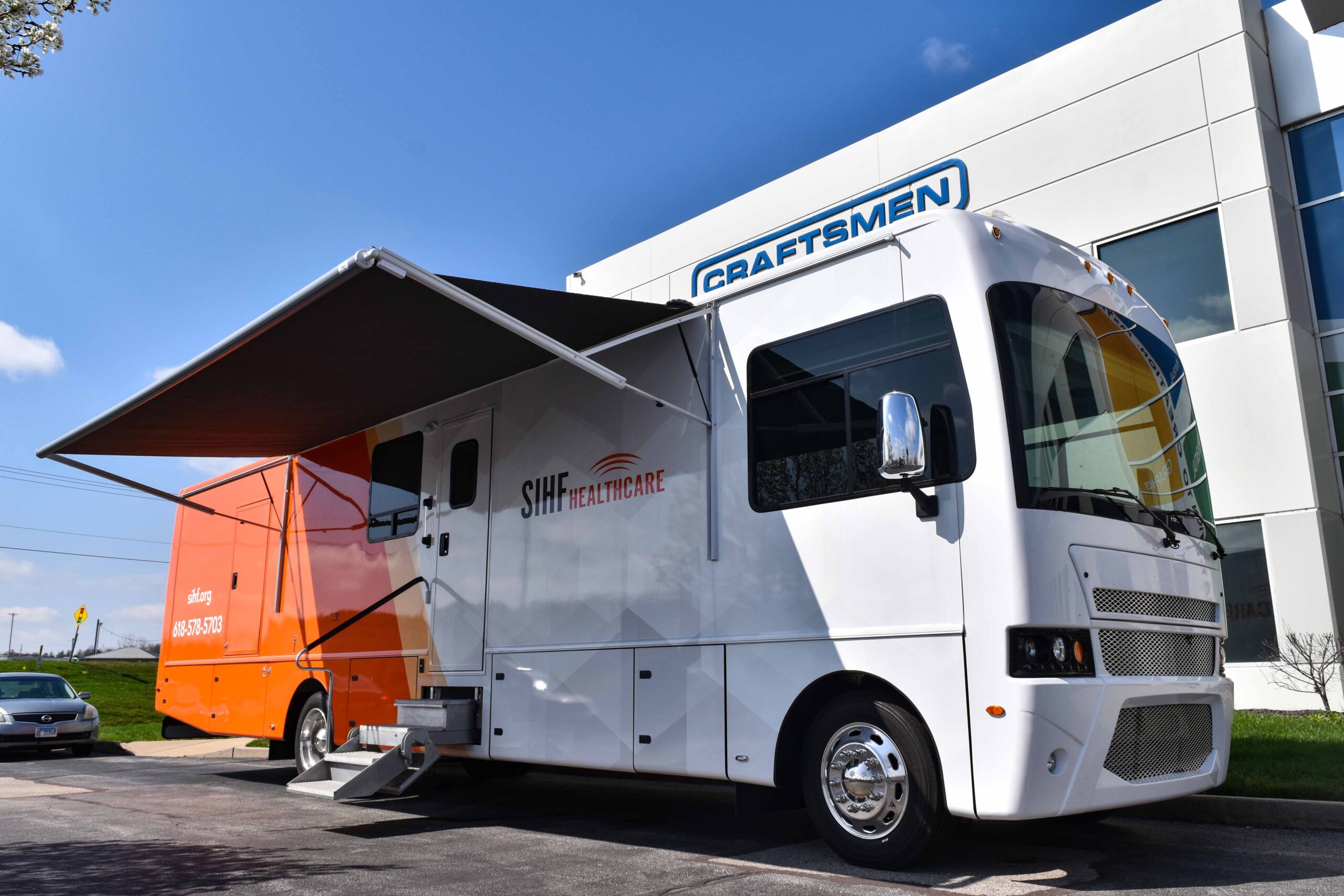
Are you searching for how are mobile medical coaches funded? Read this comprehensive article that states all the ways you can have your mobile unit funded
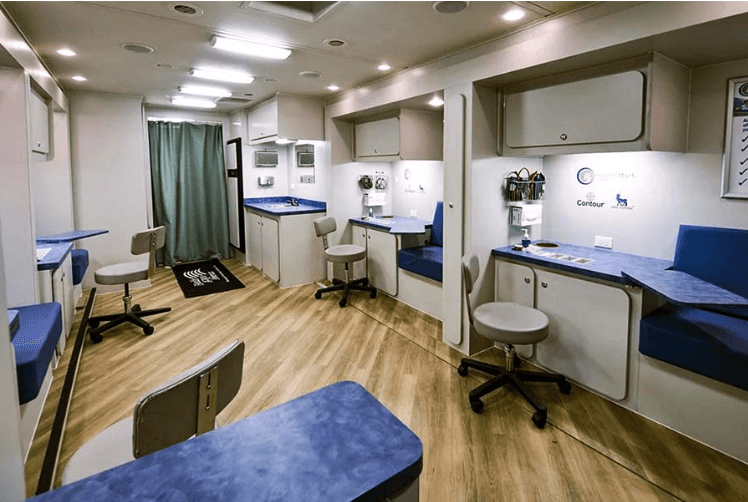
See what makes a mobile medical clinic both safe and comfortable for patients. From layout to ventilation, discover features that support mobile healthcare success.
Explore the top U.S. manufacturers of mobile specialty and medical vehicles, offering reliable designs, advanced technology, and solutions that support outreach and care.
