
23 min read
How Do Medical Gas Systems Work in Mobile Vehicles?
Craftsmen Industries May 13, 2026 3:21:36 PM
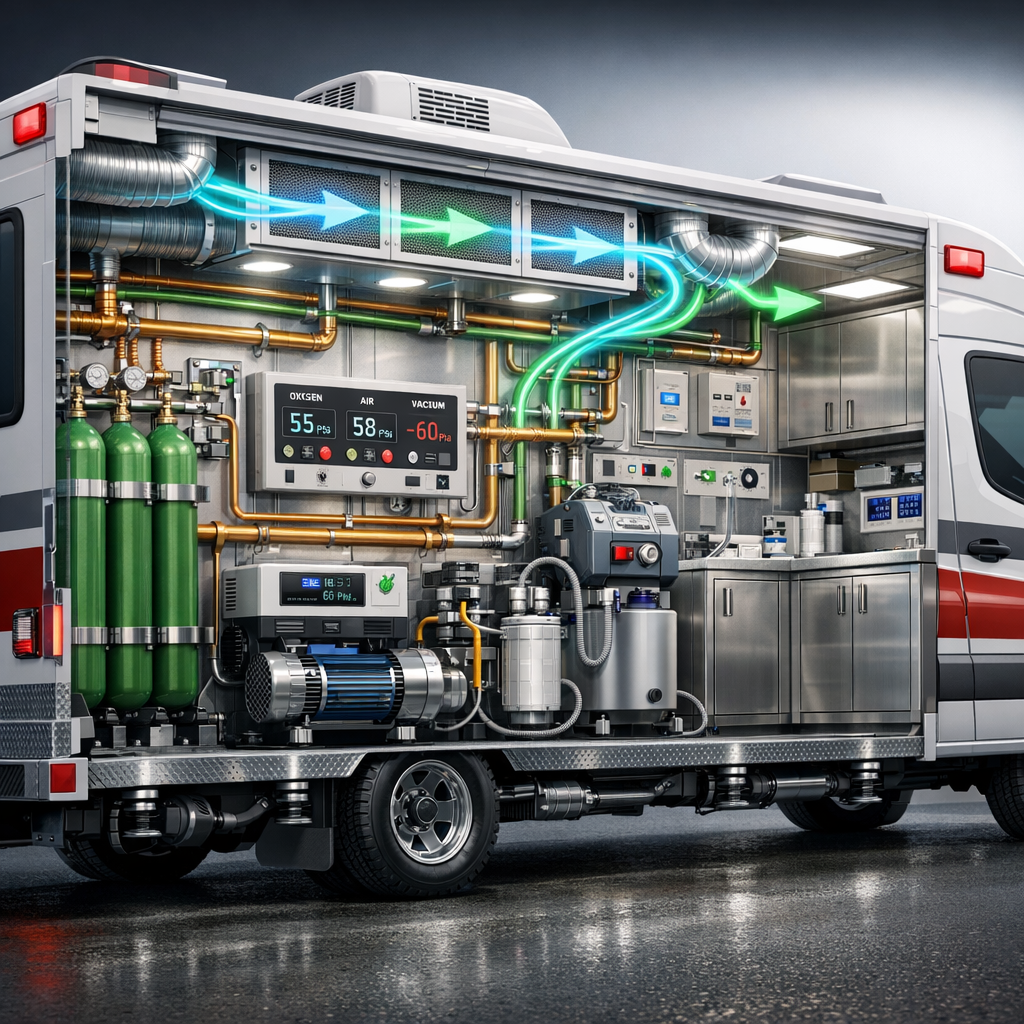
Medical gas systems in mobile vehicles are integrated networks of supply, distribution, and monitoring components that deliver therapeutic gases, suction, and ventilation inside ambulances, mobile clinics, and medical trailers. These systems must function reliably despite road vibration, limited space, and variable power sources.
This guide covers gas types and oxygen delivery methods, suction and ventilation design, regulatory compliance, piping and distribution, safety and vibration protection, and power and maintenance planning.
Mobile vehicles use five primary medical gases: oxygen, medical air, nitrous oxide, nitrogen, and carbon dioxide. Oxygen delivery relies on three supply methods (onboard concentrators, compressed cylinders, and liquid storage), each paired with pressure regulation equipment calibrated for transit conditions.
Suction systems require age-specific vacuum pressure calibration, ranging from newborn to adult settings. We compare portable and built-in configurations, cover sealed waste containment for biohazardous fluids, and detail redundancy strategies that keep airway clearance available if primary equipment fails.
Ventilation design addresses fresh air intake positioning, HEPA-based HVAC filtration capable of removing particles down to 0.3 microns, waste gas scavenging for anesthetic agents, and positive pressure differentials that protect sterile treatment zones from contamination.
NFPA 99, OSHA, FDA, and DOT each govern distinct aspects of mobile medical gas systems, from piping materials and alarm monitoring to cylinder transport and device classification. We map these overlapping requirements to practical design decisions.
Piping distribution uses ASTM B819 seamless copper tubing with zone valves, DISS outlets, and multi-stage post-installation testing. Vibration management through flexible connectors, dampened fittings, and reinforced routing protects system integrity over rough terrain. Power sources, from diesel generators to solar-battery hybrids, and scheduled maintenance protocols complete the operational framework.
What Are Medical Gas Systems in Mobile Vehicles?
Medical gas systems in mobile vehicles are integrated networks of supply, distribution, and monitoring components that deliver therapeutic gases, suction, and ventilation inside ambulances, mobile clinics, and medical trailers. These systems include oxygen delivery equipment, vacuum suction units, medical air compressors, piping distribution lines, alarm panels, and HVAC ventilation controls. Each subsystem must function reliably despite road vibration, limited space, and variable power sources.
According to NFPA 99 standards developed by the National Fire Protection Association, medical gas systems require specific guidelines for designing, installing, testing, maintaining, and operating gas delivery infrastructure in healthcare settings. Mobile vehicles add unique constraints: compressed gas cylinders need secure mounting, piping must withstand constant motion, and alarm systems must detect pressure fluctuations while in transit. Flexible connectors, both metallic and non-metallic, help absorb vibration between supply sources and clinical outlets.
Unlike fixed hospital installations, mobile medical gas systems operate within strict weight and space limitations. Oxygen can be supplied through compressed cylinders, liquid oxygen tanks, or onboard concentrators. Suction systems range from portable battery-powered units to permanently plumbed vacuum networks. Ventilation design must maintain medical-grade air quality in compact treatment areas while managing exhaust and waste gas scavenging.
For mobile healthcare units, every gas system component must balance clinical performance with the realities of vehicle operation, including power demands, structural reinforcement, and regulatory compliance across NFPA, OSHA, FDA, and DOT requirements.
Why Is Medical Gas System Design Critical for Mobile Units?
Medical gas system design is critical for mobile units because vehicle motion, limited space, and remote deployment create hazards that fixed facilities never face. Proper design ensures patient safety, regulatory compliance, and uninterrupted gas delivery under demanding conditions.
Mobile medical vehicles operate in environments where road vibration loosens fittings, temperature swings stress storage systems, and confined interiors concentrate leaked gases faster than in permanent buildings. According to Tri-Tech Medical, NFPA 99 requires healthcare facilities to install and maintain alarm systems that monitor medical gas systems continuously to detect pressure fluctuations or leaks, allowing staff to address them promptly. In a mobile unit, where a single corridor may house oxygen lines, suction pumps, and ventilation ducts within inches of each other, the consequences of design failure escalate rapidly.
Unlike stationary hospitals with dedicated mechanical rooms, mobile units must integrate every component into a compact, road-worthy chassis. Piping must resist fatigue from constant vibration. Cylinder mounts must secure tanks against sudden deceleration. Ventilation systems must maintain medical-grade air quality despite variable airflow from vehicle movement. Each of these challenges demands purpose-built engineering rather than adapted fixed-facility solutions.
For any organization deploying mobile healthcare, treating gas system design as an afterthought risks both patient harm and regulatory violations. The sections that follow examine how oxygen delivery, suction, and ventilation systems address these mobile-specific demands through specialized components, redundancy strategies, and code-compliant configurations.
What Types of Medical Gases Are Used in Mobile Vehicles?
The types of medical gases used in mobile vehicles include oxygen, medical air, nitrous oxide, nitrogen, and carbon dioxide. Each gas serves a distinct clinical function, from life support to surgical applications.
Oxygen
Oxygen is the most critical medical gas in mobile vehicles. It supports respiratory therapy, emergency resuscitation, and patient ventilation during transport. According to World Health Organization specifications, medical-use oxygen produced by air-liquefaction must contain not less than 99.5% v/v of O2, while pressure swing adsorption systems produce oxygen at 93%±3% purity from ambient air. Mobile units deliver oxygen through compressed cylinders, liquid oxygen systems, or onboard concentrators. Purity requirements vary by delivery method, but all must meet pharmacopoeia standards. In mobile settings where space is limited, selecting the right oxygen source directly impacts both treatment capacity and system weight.
Medical Air
Medical air is a filtered, compressed mixture of gases that mirrors the composition of ambient atmosphere, containing approximately 21% oxygen and 78% nitrogen. Mobile vehicles use medical air to power ventilators, deliver nebulized medications, and calibrate diagnostic instruments. Unlike pure oxygen, medical air reduces the risk of oxygen toxicity during prolonged ventilation. Piping systems that carry medical air must be clearly labeled per NFPA 99 guidelines to prevent cross-connection with other gas lines. For mobile units performing respiratory therapy or anesthesia support, medical air is essential as a carrier gas that dilutes oxygen to safe, therapeutic concentrations.
Nitrous Oxide
Nitrous oxide is an analgesic and anesthetic gas used in mobile vehicles for pain management and procedural sedation. Mobile dental clinics, surgical trailers, and emergency units administer nitrous oxide blended with oxygen to reduce patient anxiety and discomfort. Because nitrous oxide supports combustion, storage and piping in mobile environments require strict separation from flammable materials. Waste gas scavenging systems must capture exhaled nitrous oxide to protect vehicle occupants. Proper ventilation design prevents ambient accumulation, which is especially important given the confined spaces typical of mobile medical platforms.
Nitrogen
Nitrogen is an inert gas used in mobile vehicles primarily to power surgical instruments and pneumatic tools. Orthopedic mobile units and surgical trailers rely on nitrogen-driven drills, saws, and tourniquets. Nitrogen also serves as a purge gas during medical gas piping installation and testing, clearing contaminants before the system goes live. Because nitrogen displaces oxygen in enclosed spaces, mobile units must incorporate oxygen depletion monitoring in any compartment where nitrogen cylinders are stored or where nitrogen flows through open circuits.
Carbon Dioxide
Carbon dioxide is a medical gas used in mobile surgical units for insufflation during laparoscopic and minimally invasive procedures. CO2 inflates the abdominal cavity to create a working space for surgical instruments and cameras. Mobile vehicles equipped for endoscopic or laparoscopic work require medical-grade carbon dioxide with precise flow regulation. Since CO2 accumulation poses asphyxiation risks in confined vehicle interiors, exhaust ventilation and real-time gas monitoring are non-negotiable design elements. Understanding each gas type and its safety requirements is the foundation for designing effective delivery and ventilation systems.
How Are Oxygen Delivery Systems Designed for Mobile Vehicles?
Oxygen delivery systems are designed for mobile vehicles using three primary supply methods: onboard concentrators, compressed gas cylinders, and liquid oxygen storage, each paired with pressure regulation equipment suited to transit conditions.
How Do Onboard Oxygen Concentrators Work in Mobile Units?
Onboard oxygen concentrators work in mobile units by drawing ambient air through a Pressure Swing Adsorption (PSA) process that separates oxygen from nitrogen and argon. Ambient air contains approximately 21% oxygen, 78% nitrogen, and 0.9% argon; PSA technology selectively adsorbs nitrogen using zeolite molecular sieves, concentrating the remaining oxygen for patient delivery.
A typical medical oxygen concentrator consists of an air compressor, filters, dual adsorption chambers, a reservoir, and electronic controls. The dual-chamber design allows one bed to adsorb nitrogen while the other regenerates, producing a continuous oxygen stream. According to WHO-UNICEF technical specifications, concentrators should deliver concentrated oxygen greater than 82% from room air, while medical guidelines recommend maintaining purity levels around 90 to 95% across different flow settings.
Mobile units most commonly use continuous flow concentrators that dispense oxygen at a set liters-per-minute rate, typically between 1 and 10 LPM for stationary models. Higher flow rates can reduce purity percentages, so matching concentrator capacity to anticipated patient demand is critical during the vehicle design phase. The FDA classifies portable oxygen generators as Class II devices under 21 CFR 868.5440, requiring performance standards compliance before integration into any mobile medical platform.
How Are Compressed Oxygen Cylinders Mounted Safely in Vehicles?
Compressed oxygen cylinders are mounted safely in vehicles using secured brackets, ventilated compartments, and separation protocols that prevent movement and reduce fire risk during transit. According to Tri-Tech Medical, NFPA 99 requires medical gas cylinders to be stored in well-ventilated, designated areas with proper signage, separated from flammable materials and ignition sources, with full and empty cylinders stored separately.
In a mobile environment, cylinder mounting must account for additional forces:
- Brackets and restraint systems hold cylinders upright and prevent shifting during acceleration, braking, and lateral movement.
- Valve protection caps remain in place and tightened whenever cylinders are not actively connected to the delivery system.
- Each cylinder requires labeling with gas type, supplier name, and inspection date.
- Regular inspections check for corrosion, leaks, and valve damage before and after each deployment.
For mobile medical vehicles that require extended oxygen supply, some state standards set minimum capacity thresholds. Maryland ambulance regulations, for example, specify that optional onboard cylinders for BLS ground ambulances hold at least 3,000 liters. Designing mounting systems that accommodate both primary and reserve cylinders ensures uninterrupted supply during patient transport.
What Are Liquid Oxygen Storage Requirements for Mobile Use?
Liquid oxygen storage requirements for mobile use center on cryogenic containment, thermal insulation, and pressure management. Liquid oxygen is a cryogenic liquid with a boiling point of -183°C, demanding specialized equipment that standard compressed gas hardware cannot provide.
According to INOXCVA, liquid oxygen systems typically consist of cryogenic storage tanks, vaporizers, and pressure control systems designed to handle cryogenic liquid safely. Key requirements for mobile installations include:
- Vacuum-insulated tanks that minimize heat transfer and slow boil-off rates during transit.
- Vaporizers that convert liquid to gaseous oxygen at controlled rates before delivery to patient outlets.
- Pressure relief valves sized to safely vent gas if internal pressure exceeds design limits.
- Secure mounting that prevents tank movement while accommodating thermal expansion and contraction.
Liquid oxygen requires significantly less space than gaseous oxygen, making it advantageous for mobile units where every square foot matters. This storage density is one reason larger mobile medical platforms, such as surgical trailers, often prefer liquid systems over banks of compressed cylinders. However, the cryogenic handling demands specialized training and stricter environmental controls than either concentrators or cylinders require.
How Is Oxygen Pressure Regulated in a Moving Vehicle?
Oxygen pressure is regulated in a moving vehicle through multi-stage regulators, flexible connectors, and continuous monitoring systems that compensate for vibration, altitude changes, and dynamic forces. Consistent delivery pressure is essential because fluctuations can compromise patient therapy and damage downstream equipment.
Pressure sensors continuously monitor oxygen tank pressure and transmit a linear output signal to onboard alarm systems, enabling real-time detection of pressure changes during transit. NFPA 99 requires alarm systems that monitor medical gas systems to detect pressure fluctuations or leaks, allowing staff to respond promptly.
Flexible connectors play a key role in maintaining system integrity. Metallic connectors on central supply sources mitigate machine vibration, while non-metallic hoses interconnect secondary and clinical equipment to wall outlets. NFPA 99 requires all non-stationary assemblies to be tested for leaks every 18 months or as determined by risk assessment.
For mobile medical vehicles operating across varied terrain, pairing robust pressure regulation with real-time monitoring is the most reliable approach to maintaining therapeutic oxygen delivery. With pressure management in place, the next critical system to address is medical suction design.
How Does Suction System Design Differ in Mobile Medical Units?
Suction system design in mobile medical units differs through specialized vacuum pressure calibration, compact equipment selection, sealed waste containment, and built-in redundancy. The following sections cover required pressure levels, portable versus built-in configurations, onboard waste disposal, and failover strategies.
What Vacuum Pressure Levels Are Required for Mobile Suction?
Vacuum pressure levels required for mobile suction vary by patient age group. According to the National Institutes of Health/National Library of Medicine, suction pressure should be adjusted as follows: adults require 100 to 150 mm Hg, children 100 to 120 mm Hg, infants 80 to 100 mm Hg, and newborns 60 to 80 mm Hg.
Mobile suction regulators must maintain these ranges despite vehicle vibration and altitude changes. Consistent negative pressure is critical because insufficient vacuum fails in crucial situations like clearing airways, while excessive pressure risks mucosal tissue damage. Adjustable regulators with clearly marked gauge increments allow clinicians to dial in age-appropriate settings quickly during transport.
How Are Portable vs Built-In Suction Systems Compared?
Portable and built-in suction systems are compared across several key factors:
- Power source: Portable units run on rechargeable batteries, while built-in systems connect to the vehicle's electrical system or generator.
- Suction capacity: Built-in systems typically deliver higher sustained vacuum levels and greater airflow volume than battery-operated portables.
- Catheter compatibility: A 2022 study published in MDPI found that suction catheters with larger air vents (2.5 to 3 mm diameter) at the tip are preferred for portable suction units.
- Mobility: Portable units transfer with the patient from vehicle to facility; built-in systems remain chassis-mounted.
- Maintenance: Built-in systems require periodic inspection of plumbed connections, whereas portables need battery cycling and filter replacement.
For most mobile medical builds, integrating both types provides the greatest operational flexibility.
What Waste Collection and Disposal Methods Apply On-Board?
Waste collection and disposal methods that apply on-board mobile medical units include sealed canister systems, disposable liners, and overflow protection valves. Suction canisters collect aspirated fluids, secretions, and particulate matter in rigid containers fitted with hydrophobic filters to prevent backflow into the vacuum pump.
Key onboard waste management practices include:
- Using single-use disposable liners inside rigid canisters for quick, no-spill changeovers.
- Installing overflow shutoff valves that automatically stop suction when canisters reach capacity.
- Securing canisters in vibration-dampened brackets to prevent spills during transit.
- Following OSHA bloodborne pathogen standards for handling and disposing of collected biohazardous fluids at designated facilities.
Proper containment prevents cross-contamination and protects onboard air quality in confined mobile treatment spaces.
How Is Suction System Redundancy Achieved in Mobile Vehicles?
Suction system redundancy in mobile vehicles is achieved by pairing built-in vacuum systems with independent portable backup units. If the primary plumbed system loses power or experiences a mechanical failure, a charged portable suction device provides immediate continuity of care.
Additional redundancy strategies include:
- Dual vacuum pumps with automatic failover switching when primary pump pressure drops.
- Separate electrical circuits for suction equipment so a single breaker trip does not disable all suction capability.
- Onboard spare canisters, tubing sets, and replacement filters stored in accessible compartments.
NFPA 99 requires alarm systems that monitor medical gas systems to detect pressure fluctuations and out of range conditions, and this principle extends to vacuum circuits in mobile builds. Audible and visual alarms should alert staff the moment suction pressure deviates from the set range.
With redundancy protocols established, ventilation design becomes the next critical layer of mobile medical gas system planning.
What Are the Ventilation Design Requirements for Mobile Units?
The ventilation design requirements for mobile units include managed fresh air intake, medical-grade HVAC filtration, exhaust and waste gas scavenging, and positive pressure control in patient areas.
How Is Fresh Air Intake Managed in a Mobile Medical Vehicle?
Fresh air intake in a mobile medical vehicle is managed through dedicated exterior intake vents positioned away from exhaust outlets, engine fumes, and road-level contaminants. Intakes are typically roof-mounted or placed high on the vehicle body to draw cleaner ambient air. Pre-filters remove coarse particulates before air enters the HVAC system, while motorized dampers regulate volume based on occupancy and clinical activity. According to CDC/NIOSH guidance, facilities should aim for 5 or more air changes per hour (ACH) of clean air to reduce airborne viral particles. In a compact mobile environment where interior volume is significantly smaller than a fixed facility, achieving adequate ACH demands precisely engineered intake sizing and continuous airflow monitoring.
What HVAC Specifications Support Medical-Grade Air Quality?
HVAC specifications that support medical-grade air quality include multi-stage filtration, precise temperature control, and humidity regulation within a sealed vehicle envelope. According to the U.S. Environmental Protection Agency, a HEPA filter can theoretically remove at least 99.97% of airborne particles sized 0.3 microns or larger, including dust, bacteria, and mold spores. Mobile medical HVAC systems typically incorporate the following components:
- HEPA or high-MERV final-stage filters for particulate removal
- Activated carbon pre-filters to neutralize volatile organic compounds and anesthetic gas traces
- Variable-speed blowers calibrated to maintain target ACH rates in reduced cabin volumes
- Thermostatic controls holding temperatures between 68°F and 75°F for clinical comfort
- Humidity management between 30% and 60% relative humidity to limit microbial growth
For mobile units that run procedural suites or imaging equipment, oversizing the HVAC capacity is a practical necessity rather than a luxury; the heat load from medical devices in a confined space can overwhelm a system designed only for standard occupancy.
How Are Exhaust and Waste Gas Scavenging Systems Configured?
Exhaust and waste gas scavenging systems are configured to capture and discharge anesthetic gases, suction effluent vapors, and stale cabin air safely outside the vehicle. Dedicated exhaust ports route waste gases through sealed ductwork to discharge points located on the vehicle exterior, positioned downwind and away from fresh air intakes to prevent recirculation. In mobile units where nitrous oxide or other anesthetic agents are administered, active scavenging interfaces connect directly to the anesthesia machine's adjustable pressure-limiting valve. NFPA 99 requires alarm monitoring to detect pressure fluctuations or leaks in medical gas systems, according to Tri-Tech Medical Inc. Negative-pressure exhaust zones near procedure areas pull contaminated air away from clinicians and toward the scavenging outlet, preventing occupational exposure.
How Does Positive Pressure Ventilation Protect Patient Areas?
Positive pressure ventilation protects patient areas by maintaining higher air pressure inside clinical zones compared to adjacent corridors, storage compartments, and the external environment. This pressure differential prevents unfiltered air, particulates, and contaminants from migrating into sterile or semi-sterile treatment spaces. Supply fans deliver HEPA-filtered air into patient compartments at a rate that slightly exceeds exhaust extraction, creating a continuous outward airflow through door gaps and pass-throughs. Differential pressure monitors verify the gradient in real time and trigger alerts if pressure drops below the design threshold. In mobile vehicles, where door openings during patient loading can momentarily equalize pressure, rapid-recovery blower systems restore the positive differential within seconds. Properly designed positive pressure ventilation is one of the most effective contamination barriers available for mobile surgical and procedural environments.
With ventilation architecture established, the codes and standards governing these mobile medical gas systems define the compliance framework every design must meet.
What Codes and Standards Govern Mobile Medical Gas Systems?
Mobile medical gas systems are regulated by a combination of federal agencies and industry standards, including NFPA codes, OSHA safety regulations, FDA medical device requirements, and DOT hazardous materials transport rules. State and local authorities also enforce permitting and inspection requirements, creating a comprehensive regulatory framework for system design, handling, and transport.
What Does NFPA 99 Require for Mobile Healthcare Facilities?
NFPA 99 requires mobile healthcare facilities to follow the same foundational safety standards applied to fixed medical gas installations. Developed by the National Fire Protection Association, NFPA 99 provides guidelines for designing, installing, testing, maintaining, and operating medical gas systems in healthcare settings.
According to Tri-Tech Medical, NFPA 99 mandates that medical gas piping systems use proper materials, undergo testing and inspection procedures, and carry clear labeling by qualified personnel to prevent confusion between gas types. Key requirements for mobile applications include:
- Medical gas cylinders must be stored in well-ventilated, designated areas separated from flammable materials, with full and empty cylinders stored separately.
- Alarm systems must monitor gas systems to detect pressure fluctuations or leaks.
- All non-stationary booms and articulating assemblies require leak testing every 18 months or per risk assessment.
For mobile units subject to vibration and transit stress, these requirements carry even greater weight than in stationary facilities.
How Does OSHA Regulate Medical Gas Handling in Vehicles?
OSHA regulates medical gas handling in vehicles through workplace safety standards that protect healthcare personnel from compressed gas hazards. OSHA's General Duty Clause requires employers to maintain work environments free from recognized hazards, which applies directly to mobile medical settings where staff handle oxygen cylinders and suction equipment in confined spaces.
Specific OSHA provisions cover proper cylinder securement, ventilation in enclosed vehicle compartments, and hazard communication labeling for all gas types on board. Workers must receive training on safe handling procedures, emergency shutoff protocols, and the risks of oxygen-enriched atmospheres. In mobile environments, where space constraints amplify exposure risks, strict adherence to OSHA's ventilation and storage separation guidelines becomes essential for personnel safety.
What FDA Requirements Apply to Medical Gas Equipment?
FDA requirements for medical gas equipment center on device classification and premarket controls. Under 21 CFR 868.5440, the FDA classifies portable oxygen generators as Class II medical devices subject to special controls. This classification applies to devices that release oxygen for respiratory therapy through chemical reactions or physical means such as molecular sieves.
Class II designation requires manufacturers to demonstrate substantial equivalence through the 510(k) premarket notification process. Oxygen concentrators, flow regulators, and pressure monitoring devices used in mobile medical vehicles must meet FDA quality system regulations covering design controls, manufacturing processes, and post-market surveillance. For mobile units deploying multiple gas delivery devices, every component must carry appropriate FDA clearance.
How Do DOT Regulations Affect Medical Gas Transport?
DOT regulations affect medical gas transport by classifying compressed and liquefied medical gases as hazardous materials under 49 CFR. The Department of Transportation mandates specific packaging, labeling, and placarding requirements for any vehicle carrying pressurized oxygen cylinders or cryogenic liquid oxygen containers on public roadways.
Cylinders must meet DOT specification ratings for construction and periodic hydrostatic testing. Vehicles transporting medical gases require proper hazmat placards, shipping documentation, and driver training certifications. These rules apply whether the vehicle is a dedicated ambulance or a custom mobile medical unit traveling between deployment sites. Failing to meet DOT standards during transit can result in regulatory violations regardless of how well the onboard system meets NFPA or FDA requirements.
Understanding these overlapping regulatory frameworks is critical when specifying gas systems for custom mobile medical builds.
How Are Medical Gas Piping and Distribution Systems Routed?
Medical gas piping and distribution systems are routed through mobile vehicles using approved materials, strategically placed valves, standardized outlet connections, and rigorous post-installation testing. The following subsections cover pipe material selection, zone valve positioning, outlet specifications, and verification protocols.
What Pipe Materials Are Approved for Mobile Gas Lines?
The pipe materials most commonly used for mobile gas lines are seamless copper tubes conforming to ASTM B819. According to ASTM International, ASTM B819 establishes requirements for two wall thickness schedules of specially cleaned, straight lengths of seamless copper tube identified as Types K and L, furnished in H58 (Drawn General Purpose) temper and suitable for medical gas systems. While copper is the predominant material under NFPA 99, alternative materials such as stainless steel may be used in specialized applications or equipment connections depending on system design requirements.
Type K copper offers thicker walls for higher-pressure oxygen lines, while Type L suits lower-pressure applications such as medical air and suction. Both types undergo factory cleaning to remove oils and particulates that could contaminate gas purity.
In mobile environments, where vibration and road stress are constant factors, the choice between Type K and Type L should account for routing length and expected mechanical strain, not just pressure ratings.
How Are Zone Valves and Shutoff Points Positioned?
Zone valves and shutoff points are positioned to isolate specific treatment areas within a mobile unit without disrupting gas supply to other zones. Each patient care compartment typically requires its own zone valve, installed in an accessible location outside the area it controls.
This placement allows personnel to shut off gas flow during emergencies or maintenance without entering the affected zone. In mobile vehicles, compact layouts demand careful coordination between valve placement and interior cabinetry to maintain unobstructed access.
NFPA 99 requires all pipes to be clearly labeled by qualified personnel to prevent confusion between different types of medical gases, a requirement that extends to every valve and shutoff point in the distribution system.
What Are DISS and Quick-Connect Outlet Requirements?
DISS and quick-connect outlet requirements ensure gas-specific connections prevent cross-contamination between oxygen, suction, and medical air lines. DISS (Diameter Index Safety System) outlets use unique thread-diameter combinations for each gas type, making it physically impossible to connect the wrong supply to a patient delivery device.
Quick-connect outlets offer tool-free attachment for portable equipment and faster clinical workflows. According to Compliant Healthcare Technologies, NFPA 99 requires all non-stationary booms and articulating assemblies to be tested for leaks every 18 months, with confirmation of safe working conditions and testing of all internal DISS connectors for leakage.
In mobile units, outlet placement must balance clinical accessibility with structural reinforcement to withstand transit vibration.
How Is Piping Tested and Verified After Installation?
Piping is tested and verified after installation through a multi-stage process that includes pressure testing, purging, and cross-connection verification before the system enters clinical service. The system undergoes standing pressure tests using dry nitrogen to detect leaks at joints, fittings, and valve connections.
According to Medpipe, most healthcare facilities conduct an annual medical gas inspection as part of their compliance program, typically including functional testing of alarm panels, inspection of medical gas outlets and inlets, and review of source equipment. For mobile units, initial commissioning tests are even more critical because road vibration can loosen fittings that passed bench testing.
Verified piping systems must maintain documented test results for ongoing compliance, forming the baseline for all future inspections and maintenance cycles.
What Safety Features Are Essential in Mobile Gas Systems?
The essential safety features in mobile gas systems include alarm and monitoring networks, leak detection sensors, cylinder securement hardware, and fire prevention controls. Each subsystem addresses a distinct hazard introduced by vehicle motion, confined spaces, and oxygen-enriched environments.
How Do Alarm and Monitoring Systems Function On-Board?
Alarm and monitoring systems function on-board by using pressure sensors and electronic panels to detect abnormal conditions in real time. According to Compliant Healthcare Technologies, three types of medical gas alarms exist: master alarms that monitor source equipment, area alarms that monitor pressure in specific zones, and local alarms that monitor conditions at individual equipment.
In mobile environments, pressure sensors continuously track oxygen tank levels and transmit linear output signals to the vehicle's alarm system. Master alarm panels for oxygen systems typically signal conditions such as:
- High or low mainline pressure
- Low primary liquid level (less than an average day's supply)
- Reserve in use
- Low reserve liquid level or pressure
For mobile units, consolidating master and area alarm functions into a single accessible panel is the most practical approach, since dedicated maintenance offices do not exist on-board.
What Leak Detection Methods Work in Vehicle Environments?
Leak detection methods that work in vehicle environments combine electronic gas sensors, automated pressure-decay testing, and manual inspection protocols. Fixed oxygen sensors mounted near connection points and ceiling areas detect elevated O2 concentrations before they reach hazardous levels. Because vehicle vibration loosens fittings over time, continuous electronic monitoring is far more reliable than periodic manual checks alone.
NFPA 99 requires non-stationary booms and articulating assemblies to be tested for leaks every 18 months or as determined by risk assessment, according to Compliant Healthcare Technologies. Additional methods used in vehicle settings include:
- Pressure-decay tests on isolated pipeline segments after each transit cycle
- Ultrasonic leak detectors for pinpointing small joint failures
- Soapy-solution checks at threaded connections during routine maintenance
How Is Gas Cylinder Securement Handled During Transit?
Gas cylinder securement during transit is handled through dedicated mounting brackets, restraint straps, and compartment isolation designed to prevent cylinder movement under dynamic road forces. Cylinders must remain in a secure, upright position with valve protection caps in place and tightened at all times.
Key securement requirements include:
- Heavy-gauge steel brackets bolted to the vehicle chassis or subframe
- Redundant strap or chain restraints rated for anticipated G-forces during braking and cornering
- Separation of full and empty cylinders within ventilated compartments
- Clear labeling showing gas type, supplier name, and inspection date
According to Tri-Tech Medical Inc, cylinders require regular inspection for corrosion, leaks, and valve damage. In a mobile setting, pre-trip and post-trip securement checks should be standard operating procedure, since road vibration accelerates wear on restraint hardware.
What Fire Prevention Measures Apply to Oxygen-Rich Areas?
Fire prevention measures that apply to oxygen-rich areas include material separation, ignition source elimination, ventilation controls, and oxygen-compatible equipment selection. Oxygen does not burn, but it accelerates combustion; even slightly elevated concentrations turn ordinary materials into serious fire hazards.
NFPA 99 requires storage areas to be separated from flammable materials and ignition sources, according to Tri-Tech Medical Inc. Specific fire prevention practices for mobile oxygen zones include:
- Prohibiting open flames, smoking, and spark-producing tools within oxygen compartments
- Using only oxygen-compatible lubricants, seals, and cleaning agents on fittings
- Maintaining ventilation to prevent localized oxygen accumulation above 23.5%
- Installing fire suppression systems rated for oxygen-enriched atmospheres
Keeping oxygen storage and delivery zones free of petroleum-based products is one of the most critical precautions in mobile medical vehicle design. With fire prevention protocols established, managing the mechanical stresses of vehicle motion becomes the next design priority.
How Does Vibration and Vehicle Motion Affect Gas Systems?
Vibration and vehicle motion affect gas systems by stressing fittings, loosening joints, and accelerating fatigue in rigid piping connections. The subsections below cover fitting protection strategies, flexible connection methods, and approaches for maintaining system integrity over rough terrain.
How Are Fittings and Joints Protected Against Vibration?
Fittings and joints are protected against vibration through isolation mounting, secure bracketing, and regular leak testing protocols. Vibration-dampening brackets and cushioned clamps prevent metal-on-metal contact that accelerates wear at threaded connections. Rubber-lined supports absorb road shock before it reaches brazed or soldered joints in copper piping runs.
According to NFPA 99’s mandate that healthcare facilities must install alarm systems monitoring medical gas systems to detect pressure fluctuations or leaks, this monitoring becomes even more critical in mobile applications because road vibration can gradually loosen connections that would remain stable in a fixed building. Torque-verified fittings and locking mechanisms on DISS connections add another layer of protection against vibration-induced loosening.
What Flexible Connection Methods Prevent Fatigue Failure?
Flexible connection methods prevent fatigue failure by absorbing movement between rigid piping sections and equipment. According to Compliant Healthcare Technologies, flexible connectors include metallic connectors on central supply sources to mitigate machine vibration, and non-metallic hoses that interconnect secondary and clinical equipment to wall inlets and outlets. These flexible segments act as stress relief points, allowing controlled movement without transferring cyclic loads to rigid joints.
Key flexible connection types used in mobile medical gas systems include:
- Metallic braided hoses rated for medical gas pressure at connection points between fixed piping and mounted equipment.
- Corrugated stainless steel flexible connectors
- Non-metallic flexible hoses linking clinical devices to wall-mounted gas outlets.
- Expansion loops in copper tubing runs that accommodate thermal expansion and chassis flex.
- Vibration isolation mounts
For mobile units specifically, flexible connectors at every equipment-to-piping junction represent one of the most cost-effective ways to extend system life.
How Is System Integrity Maintained Over Rough Terrain?
System integrity is maintained over rough terrain through reinforced mounting, strategic pipe routing, and scheduled inspection protocols. Piping routed along structural members of the vehicle chassis, rather than across unsupported spans, minimizes deflection during travel. Every support bracket should be spaced at intervals tight enough to prevent pipe oscillation between anchor points.
Leak testing every 18 months as mandated by NFPA 99 requires confirmation of safe working conditions and testing of all internal DISS connectors for leakage. Mobile vehicles operating on unimproved roads should consider more frequent testing intervals, since cumulative vibration stress compounds faster than in highway-only applications. Combining real-time pressure monitoring with scheduled physical inspections creates a layered verification approach that catches degradation before it becomes a safety event.
With vibration management addressed, reliable power sources ensure these gas systems operate consistently during transit and deployment.
What Power Sources Support Medical Gas Equipment in Vehicles?
The power sources that support medical gas equipment in vehicles include diesel generators, shore power connections, hybrid solar-battery systems, and onboard vehicle electrical systems. The right choice depends on the unit's clinical scope, equipment load, and deployment setting.
Medical trailer power requirements range from 15–20 kW for primary care units to 150 kW or more for imaging coaches with CT scanners. Diesel generators dominate for high-demand imaging units, while hybrid solar-battery systems gain traction for smaller clinics. Each source carries distinct advantages for powering oxygen concentrators, suction pumps, ventilation controls, and monitoring alarms.
The primary power sources for mobile medical gas equipment are:
- Diesel generators provide high-output, self-contained power for large medical trailers running multiple gas systems simultaneously. A 500 kW diesel generator suitable for large medical trailers costs between $120,000 and $180,000 new. Regular maintenance following NFPA 110 schedules can reduce generator failure rates from 50% to 20% over extended operation periods, according to Craftsmen Industries. Safety compliance requires adherence to NFPA 99, NFPA 110, and NEC Article 517 standards for healthcare electrical systems.
- Shore power connections eliminate fuel costs and reduce maintenance requirements compared to generator operation, providing consistent power without runtime limitations when trailers remain stationary for extended periods with available grid connection. For mobile clinics parked at hospitals or deployment sites, this option delivers the most reliable, uninterrupted supply for continuous oxygen delivery and suction systems.
- Solar-battery hybrid systems combine solar panels with Battery Energy Storage Systems (BESS) to provide continuous power during peak sunlight and cloudy periods, offering low operating costs and quiet operation after initial installation. These configurations suit smaller mobile clinics where gas equipment loads stay moderate.
- Onboard vehicle alternators and auxiliary batteries power portable suction units, pulse dose oxygen concentrators, and alarm panels in ambulances and smaller response vehicles where dedicated generator installation is impractical.
For most mobile medical builds, matching the power source to actual clinical demand prevents both undersizing (risking equipment failure during patient care) and oversizing (adding unnecessary weight and cost). A primary care mobile unit running a single oxygen concentrator and portable suction device needs fundamentally different power architecture than an imaging coach operating a full piped medical gas system.
Understanding power requirements helps ensure uninterrupted gas system performance across every deployment scenario.
How Are Mobile Medical Gas Systems Maintained and Inspected?
Mobile medical gas systems are maintained and inspected through scheduled assessments that cover alarm functionality, piping integrity, cylinder condition, and source equipment performance. The subsections below detail inspection frequency, routine maintenance tasks, and compliance documentation requirements.
How Often Should Mobile Medical Gas Systems Be Inspected?
Mobile medical gas systems should be inspected at least annually. According to Medpipe, most healthcare facilities conduct an annual medical gas inspection as part of their compliance program, typically including functional testing of master and area alarm panels, inspection of medical gas outlets and inlets, and review of source equipment.
Certain components demand more frequent attention. While NFPA 99 requires all non-stationary booms and articulating assemblies to be tested for leaks every 18 months or as determined by a risk assessment, master and local alarm activations are recommended annually per ASSE 6000, and area alarm activations are recommended every five years or as determined by risk assessment. Mobile environments, where vibration accelerates wear, often benefit from tightening these intervals beyond the statutory minimums.
What Routine Maintenance Tasks Keep Mobile Gas Systems Safe?
Routine maintenance tasks that keep mobile gas systems safe include cylinder inspection, piping checks, alarm verification, and filter replacement. Each task targets a specific failure mode amplified by vehicle operation.
Key maintenance items include:
- Inspecting cylinders for corrosion, leaks, and valve damage while confirming labels show gas type, supplier name, and current test date.
- Verifying that all piping remains clearly labeled by qualified personnel to prevent confusion between different medical gases.
- Testing alarm systems to confirm they detect pressure fluctuations and leaks, enabling staff to respond before conditions become dangerous.
- Replacing HEPA filters in ventilation systems to maintain particle removal efficiency.
- Checking flexible connectors and DISS fittings for fatigue caused by road vibration.
- Confirming cylinder storage areas remain well ventilated, separated from flammable materials, with full and empty cylinders stored separately.
Consistent execution of these tasks is what separates a compliant mobile unit from one that accumulates hidden risk between annual inspections.
What Documentation Is Required for Medical Gas Compliance?
Documentation required for medical gas compliance includes inspection records, alarm test logs, piping verification reports, and cylinder tracking records. These records demonstrate adherence to NFPA 99, ASSE 6000, and applicable state health codes.
Essential compliance documents are:
- Dated inspection reports for each annual medical gas system review, covering outlets, inlets, and source equipment.
- Alarm activation test records showing master, area, and local alarm functionality at prescribed intervals.
- Piping test and labeling verification logs signed by qualified personnel.
- Cylinder inspection records noting condition, test dates, and storage compliance.
- Maintenance logs for generators and power systems following NFPA 110 schedules, since regular maintenance can reduce generator failure rates from 50% to 20% over extended operation periods.
Thorough documentation does more than satisfy auditors; it creates a traceable maintenance history that identifies recurring issues before they compromise patient safety. With compliance records in place, designing a custom mobile unit around these maintenance requirements becomes far more straightforward.
How Should You Design Medical Gas Systems for Custom Mobile Units?
Medical gas systems for custom mobile units should be designed around the specific clinical mission, integrating oxygen delivery, suction, ventilation, and monitoring into a unified, code-compliant platform. The following sections cover Craftsmen Industries' custom build capabilities and the key takeaways for mobile medical gas design.
Can Craftsmen Industries Build Custom Mobile Medical Units?
Yes, Craftsmen Industries can build custom mobile medical units. With over 40 years of experience in design, engineering, and fabrication, Craftsmen Industries operates from a 127,000 sq. ft. vertically integrated facility in St. Charles, Missouri. This in-house capability allows Craftsmen Industries to control every phase of a mobile medical build, from initial concept through final delivery.
Craftsmen Industries specializes in mobile medical vehicles that range from primary care clinics to specialized diagnostic and treatment units. Each build is engineered to accommodate medical gas piping, oxygen supply systems, suction equipment, HVAC configurations, and alarm monitoring as needed tailored to the unit's clinical purpose. Medical trailer power requirements vary significantly by application; Craftsmen Industries matches power infrastructure to each unit's demands, whether that calls for diesel generators, shore power connections, or hybrid solar-battery configurations.
Craftsmen Industries manages compliance with NFPA 99, NFPA 110, and NEC Article 517 standards for healthcare electrical systems throughout the fabrication process. For organizations that need a custom mobile medical unit with fully integrated gas systems, Craftsmen Industries delivers a turnkey solution built to clinical and regulatory standards.
What Are the Key Takeaways About Medical Gas Systems in Vehicles?
The key takeaways about medical gas systems in vehicles center on five principles: clinical safety, regulatory compliance, system redundancy, environmental adaptation, and ongoing maintenance.
- Match oxygen delivery to mission scope. Compressed cylinders, onboard concentrators, and liquid oxygen each serve different clinical scenarios. Selecting the right source depends on patient volume, flow rate needs, and deployment duration.
- Design suction systems for patient variability. Suction pressure requirements differ by patient age, ranging from 60 mm Hg for newborns to 150 mm Hg for adults, so adjustable systems are essential.
- Build ventilation to medical-grade standards. HEPA filtration removes at least 99.97% of airborne particles at 0.3 microns, and targeting 5 or more air changes per hour supports infection control inside enclosed mobile spaces.
- Follow NFPA 99 throughout design and installation. Piping materials, labeling, alarm systems, cylinder storage, and inspection protocols all fall under this standard. Compliance is not optional for mobile healthcare facilities.
- Protect systems against vehicle motion. Flexible connectors, vibration-dampened fittings, and secure cylinder mounting prevent leaks and fatigue failure during transit and over rough terrain.
- Plan for reliable power. Medical gas equipment depends on consistent electrical supply. Generator sizing, shore power compatibility, and backup configurations must align with the unit's total load requirements.
Every mobile medical gas system is ultimately a balance between clinical capability and the physical constraints of a vehicle platform. Prioritizing integration over piecemeal component selection produces safer, more reliable units that serve patients effectively from day one. Craftsmen Industries brings this integrated approach to every custom mobile medical build.