8 min read
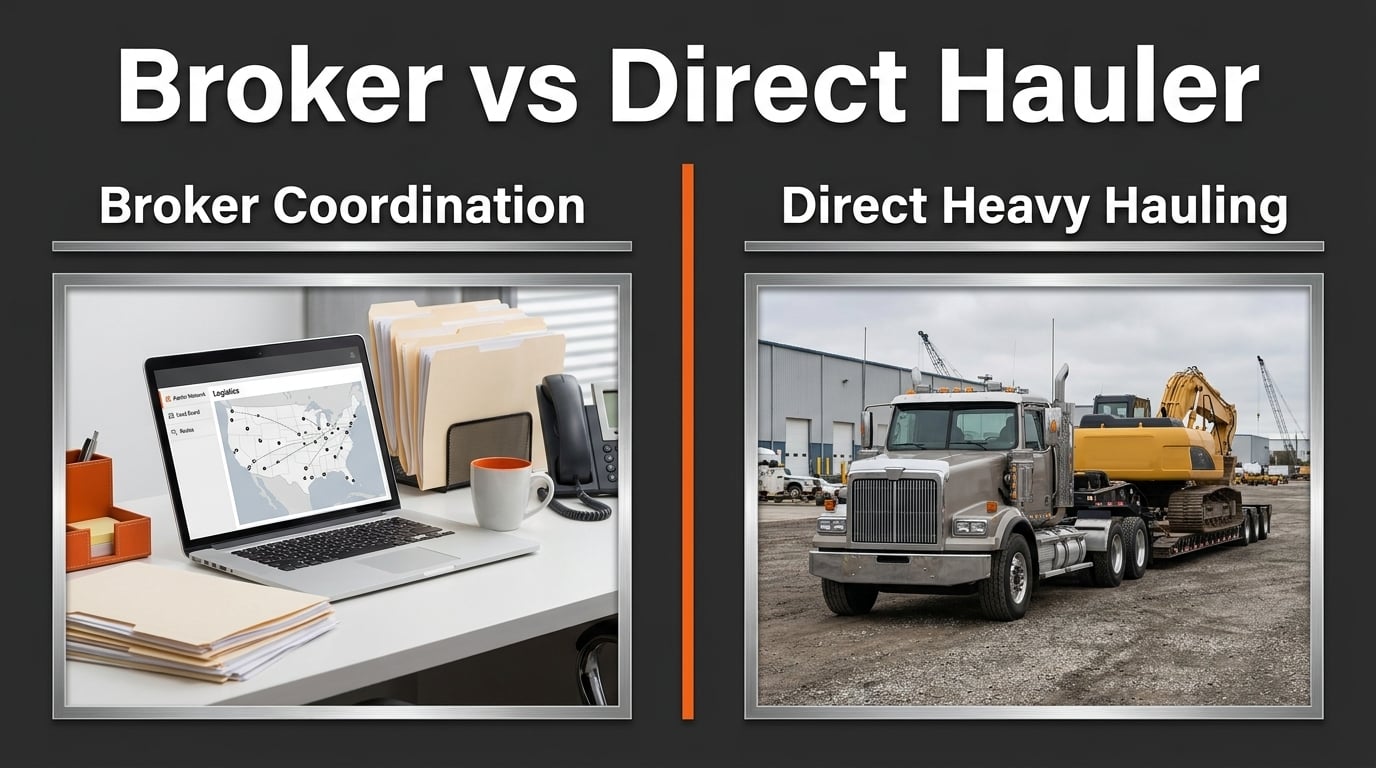
Choosing between a freight broker and a specialized heavy hauler for excavator transport is a decision defined by who physically moves the load, who holds accountability when something goes wrong, and whether the assigned carrier has the expertise your machine actually requires.
This guide covers how each option works, the key factors shaping the right choice, a clear-eyed look at the pros and cons of each approach, safety and compliance differences, and how to identify which provider fits your specific move.
Freight brokers and specialized heavy haulers operate through fundamentally different service models, and understanding those models is the starting point for every transport decision. The factors driving the right choice, including excavator weight class, route complexity, and permitting requirements, determine whether a broker's carrier network or a hauler's dedicated expertise is the appropriate fit.
Each option carries real advantages and real limitations. Brokers offer pricing flexibility and fast carrier access, particularly for smaller machines on standard routes, while specialized heavy haulers provide direct accountability, oversize permit management, and purpose-built equipment for complex moves. Safety, compliance, and insurance obligations also differ substantially between the two, with carrier liability minimums and regulatory standards that shippers often underestimate until a problem surfaces.
Knowing when each provider is the right call, and how to work with a heavy equipment transport specialist who manages permitting, carrier vetting, and compliance under one roof, is where informed transport decisions are made.
What Are the Main Differences Between Freight Brokers and Specialized Heavy Haulers?
The main differences between freight brokers and specialized heavy haulers come down to who physically moves your excavator, what services each provides, and where accountability sits. The sections below cover how each option operates and which services each delivers.
How Does Each Option Work in Relation to Excavator Transport?
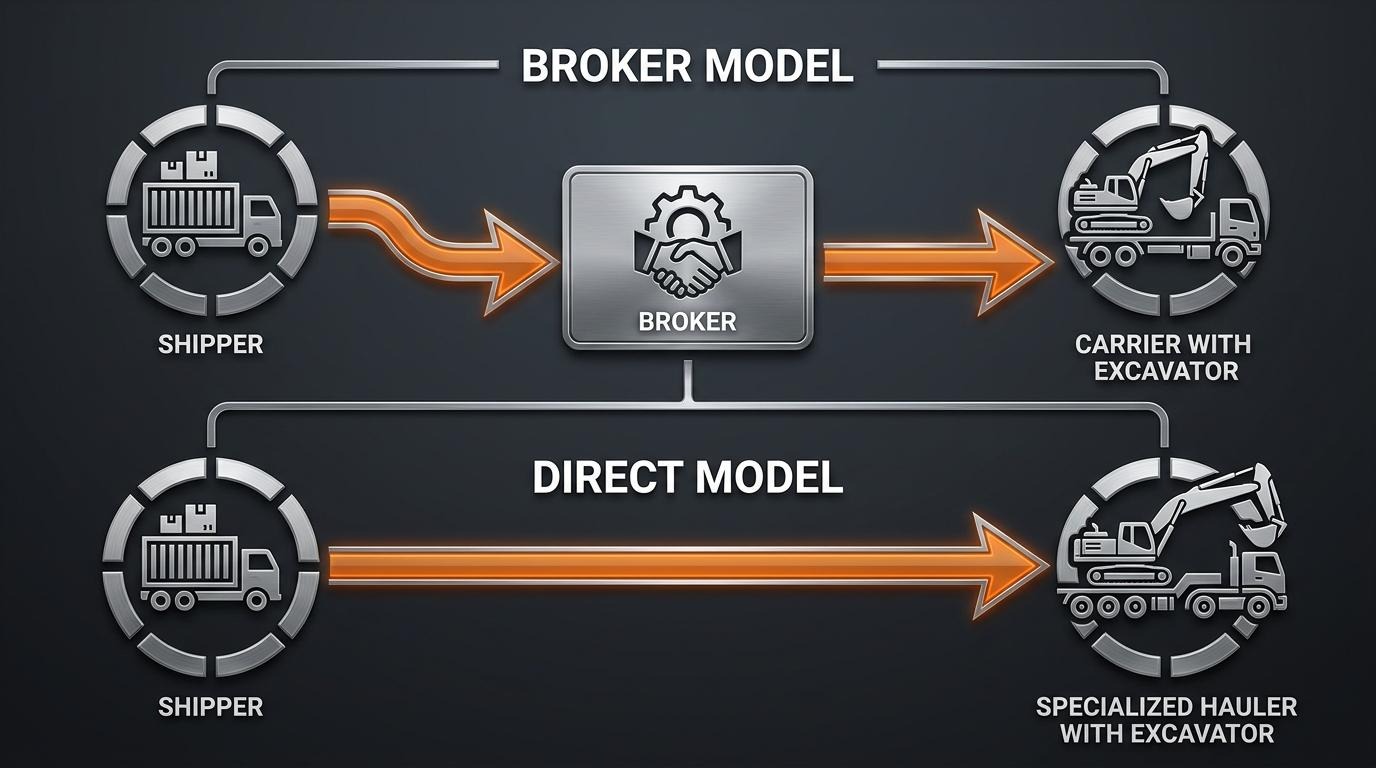
Each option works differently in how it connects a shipper with the carrier moving the excavator. According to the Federal Motor Carrier Safety Administration (FMCSA), a broker is the "middle person" between a shipper and a motor carrier who arranges transportation but does not physically haul the load. A specialized heavy hauler, by contrast, owns and operates the equipment, taking direct responsibility for loading, transport, and delivery.
This distinction matters considerably for excavator moves. Because brokers source available carriers from a pool, the specific hauler assigned may lack heavy equipment experience. Specialized heavy haulers bring dedicated expertise, trained crews, and purpose-built trailers to every job.
What Are the Typical Services Provided by Freight Brokers Versus Heavy Haulers?
The typical services provided by freight brokers versus heavy haulers differ significantly in scope and hands-on execution. The key distinctions include:
- Freight brokers match shippers with carriers, negotiate rates, coordinate booking, and handle paperwork, but they do not load, secure, or transport the equipment themselves.
- Specialized heavy haulers provide end-to-end services, including equipment inspection, load securement, oversize permit acquisition, route planning, and physical delivery.
- Permit handling is a critical differentiator: heavy haulers manage state-specific oversize permits directly, while brokers may delegate this to the assigned carrier with less oversight.
For an excavator, which requires oversize permits and specialized rigging, a heavy hauler's direct service model reduces handoff risk and keeps accountability in one place.
What Factors Affect the Choice Between a Freight Broker and a Specialized Heavy Hauler?
The factors that affect this choice include excavator size and weight class, route complexity, and permitting requirements. The following sections break down how each factor shapes the right transport decision.
How Do Project Size and Equipment Weight Influence Your Decision?
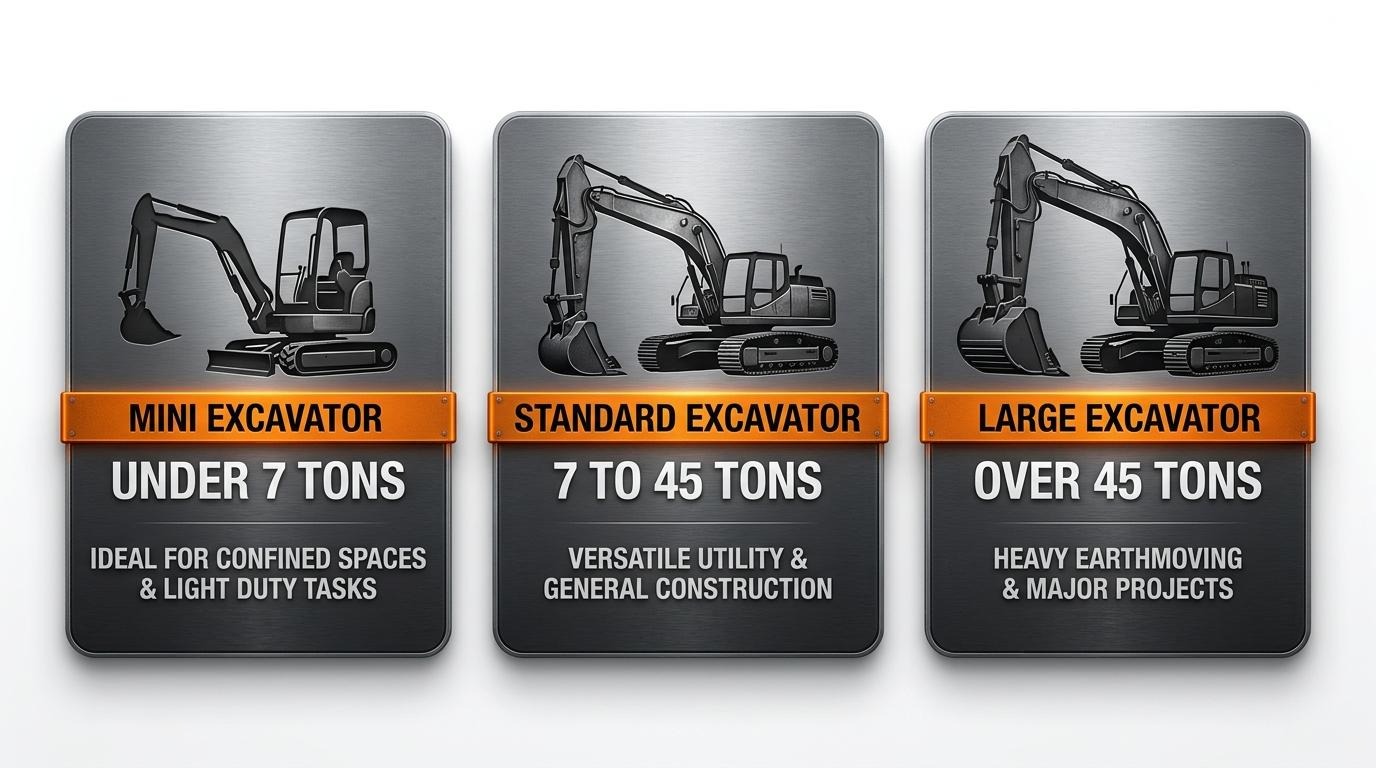
Project size and equipment weight influence your decision by determining which transport option can legally and safely handle the load. According to Heavy Equipment Colleges of America, mini excavators weigh under seven metric tons, standard excavators weigh between seven and 45 metric tons, and large excavators exceed 45 metric tons. Lighter machines within standard weight thresholds are more accessible through freight brokers, who can match them to available carriers. Large excavators, however, are notably trickier to transport, meaning a specialized heavy hauler with purpose-built equipment is the more reliable choice. For high-value, heavy machines, relying on a generalist broker introduces unnecessary risk that experienced operators routinely avoid.
How Important Are Route Planning and Permitting for Excavator Moves?
Route planning and permitting are critically important for excavator moves because oversize loads require state-specific permits before transport begins. Oregon law requires permits to be acquired before any oversize load moves, and Washington State only issues permits for loads that cannot be divided and exceed legal dimensions or weight. Pennsylvania adds per-ton-mile fees on top of base permit costs for hauled excavators. These requirements vary by state, making expert route planning essential. Specialized heavy haulers manage this permitting process directly, while brokers may delegate it to the assigned carrier, adding a layer of uncertainty to compliance timelines.
What Are the Pros and Cons of Using a Freight Broker to Move an Excavator?
The pros and cons of using a freight broker to move an excavator depend on your project's scope, timeline, and equipment size. The sections below cover the key advantages brokers offer and the drawbacks worth weighing before you book.
What Are the Advantages of Freight Brokers for Equipment Transport?
The advantages of freight brokers for equipment transport include competitive pricing, carrier flexibility, and broad network access. Because brokers connect shippers with multiple carriers, they can source available capacity quickly, which helps when timelines are tight. For lighter excavators, such as mini excavators under seven metric tons, this flexibility often translates to faster scheduling and lower per-move costs compared to booking a dedicated hauler directly. Brokers also handle carrier vetting and coordination, reducing administrative burden on the shipper. FMCSA rules require brokers to maintain $75,000 in financial security, giving shippers a baseline level of accountability.
What Are the Potential Drawbacks of Freight Brokers?
The potential drawbacks of freight brokers center on reduced control, liability ambiguity, and variable carrier expertise. As the FMCSA defines it, a broker arranges transportation but does not physically perform it, meaning the actual carrier quality depends on who the broker selects. For large excavators exceeding 45 metric tons, which American Excavator notes are "trickier to transport and store," a broker's general carrier pool may lack the specialized equipment and permitting knowledge those moves require. Liability gaps can also emerge: if damage occurs, responsibility between the broker and carrier may be disputed. For complex heavy equipment moves, this ambiguity carries real financial risk.
What Are the Pros and Cons of Hiring a Specialized Heavy Hauler for Excavator Transport?
The pros and cons of hiring a specialized heavy hauler for excavator transport span operational expertise, compliance handling, and premium pricing. The following sections cover the key advantages and the cost or access limitations to weigh before committing.
What Are the Advantages of Specialized Heavy Haulers?
The advantages of specialized heavy haulers include equipment-specific expertise, dedicated oversize permitting, and direct accountability for your load. Unlike brokers who arrange transport through third parties, specialized heavy haulers own or directly manage the equipment and personnel assigned to your move.
This distinction matters most when transporting large excavators exceeding 45 metric tons, which American Excavator identifies as "trickier to transport and store." Specialized haulers handle route surveys, load securement, and state-by-state oversize permits without passing that burden to the shipper. For high-value, high-risk moves, direct carrier accountability reduces the risk of miscommunication across the transport chain.
What Limitations or Costs Are Associated With Heavy Haulers?
The limitations associated with heavy haulers include higher base rates, reduced scheduling flexibility, and narrower geographic availability compared to broker networks. Specialized carriers command premium pricing because they invest in flatbeds, lowboys, and the trained operators required for oversized loads.
Permit costs add further expense. Pennsylvania's load type quick reference guide lists single-trip permit fees for specific excavators at $38 or $81, plus $0.04 per ton-mile, and those costs scale with route complexity. Availability can also be constrained in rural markets where heavy haulers are sparse. In practice, specialized haulers are the right call for complex or oversized moves, but shippers with simpler, time-flexible jobs may find the cost premium hard to justify.
How Do Safety, Compliance, and Insurance Compare Between Freight Brokers and Heavy Haulers?
Safety, compliance, and insurance differ significantly between freight brokers and specialized heavy haulers. The sections below cover licensing, bonding, insurance minimums, regulatory obligations, and safety accountability standards for each option.
What Should You Know About Licensing, Bonding, and Insurance Coverage?
Licensing, bonding, and insurance coverage requirements differ meaningfully between brokers and heavy haulers. According to the FMCSA, freight brokers must maintain $75,000 in financial security through either a surety bond (Form BMC-84) or a trust fund agreement (Form BMC-85). Effective January 16, 2026, the FMCSA will immediately suspend any broker whose available financial security falls below that threshold.
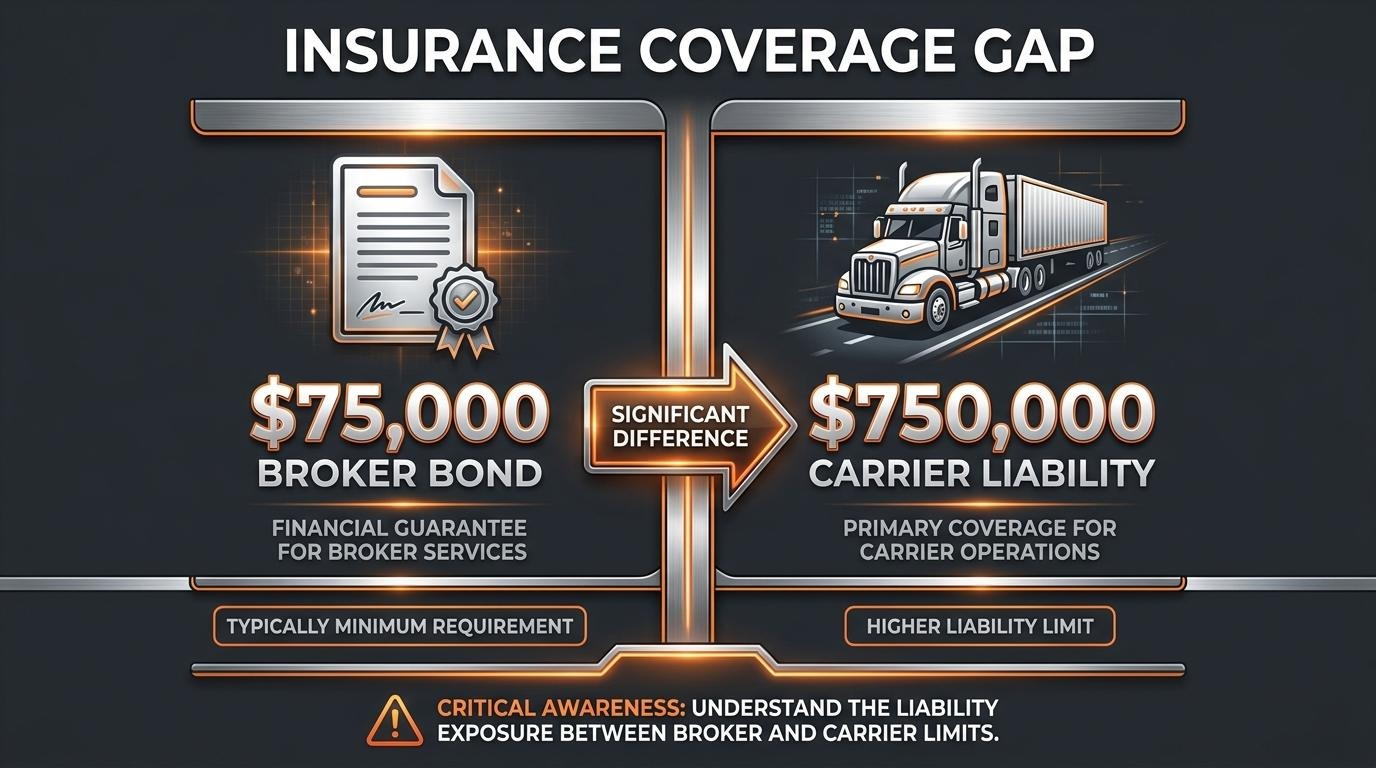
For-hire carriers hauling property in vehicles with a GVWR of 10,001 pounds or more must carry a minimum liability of $750,000 for non-hazardous loads. That gap between a broker's $75,000 bond and a carrier's $750,000 liability minimum is often underappreciated by shippers. When moving a high-value excavator, the carrier's insurance coverage is the layer that actually protects your equipment.
How Do Regulations and Safety Standards Differ for Each Option?
Regulations and safety standards differ for freight brokers and heavy haulers based on their distinct roles in the transport chain. Brokers arrange transport but do not operate vehicles, so their regulatory obligations center on registration and financial responsibility rather than operational safety. Heavy haulers, by contrast, are evaluated directly under the FMCSA's Compliance, Safety, Accountability (CSA) program, which uses safety performance data as the basis for assessing motor carrier fitness.
The International Transport Forum at the OECD further notes that dynamic stability and productivity are key performance indicators for heavy vehicle safety across 10 countries. Specialized heavy haulers manage these standards firsthand; brokers rely entirely on the carriers they select to meet them.
When Is It Better to Use a Freight Broker Instead of a Heavy Hauler for Your Excavator?
The better choice between a freight broker and a heavy hauler depends on excavator size, route complexity, and project urgency. The sections below identify which loads suit brokers and which scenarios require specialized heavy haulers.
What Types of Projects or Loads Are Best Suited for Freight Brokers?
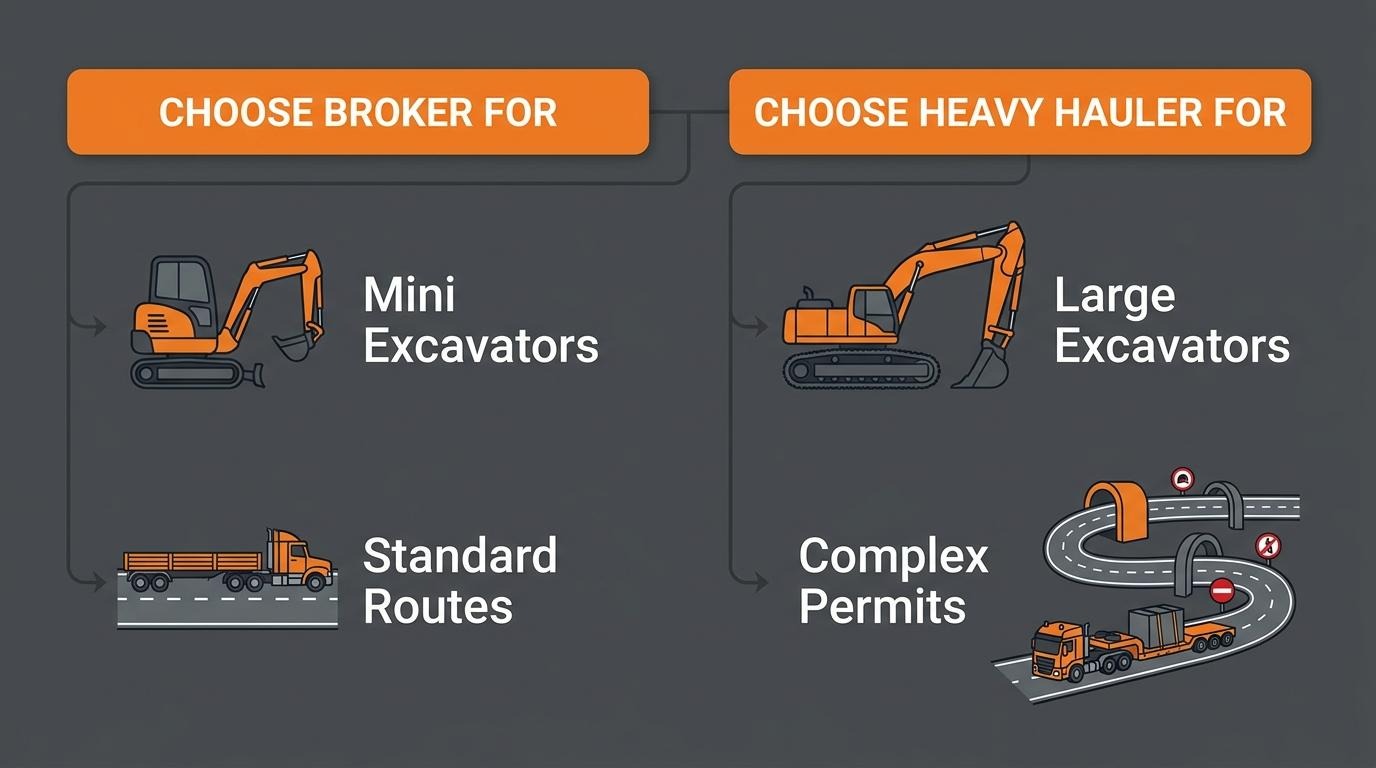
The types of projects best suited for freight brokers involve smaller excavators, standard routes, and time-sensitive moves where carrier flexibility matters most. Mini excavators weighing less than seven metric tons and standard excavators up to 45 metric tons on routine corridors are strong candidates, as brokers can tap wide carrier networks to find availability quickly. According to Heavy Equipment Colleges of America, standard excavators in the seven-to-45 metric ton range are ideal for commercial construction projects, meaning their transport requirements are well within what vetted carriers in a broker's network routinely handle. Brokers also work well for shippers who need competitive pricing without committing to a single carrier relationship.
- Mini excavators (under 7 metric tons) on local or regional routes
- Standard excavators (7 to 45 metric tons) moving between established construction corridors
- Time-sensitive moves requiring rapid carrier sourcing
- Shippers prioritizing cost competitiveness across multiple bids
What Scenarios Make Specialized Heavy Haulers Essential?
The scenarios that make specialized heavy haulers essential involve large excavators, complex permitting requirements, and non-standard routes where deep operational expertise is non-negotiable. Large excavators weighing more than 45 metric tons are described by American Excavator as "trickier to transport and store," requiring escort vehicles, multi-state oversize permits, and route surveys that only experienced heavy haulers reliably coordinate. State regulations reinforce this: Oregon law requires oversize permits before any movement begins, and Washington State only issues permits for indivisible loads exceeding legal dimensions or weight. For these moves, assigning transport to a generalist broker introduces meaningful risk.
- Excavators exceeding 45 metric tons requiring oversize/overweight permits
- Multi-state moves with route surveys and escort vehicle coordination
- Demolition or major construction sites with tight delivery windows and heavy-load infrastructure needs
- Moves through jurisdictions with strict pre-movement permitting rules
In high-stakes scenarios, specialized heavy haulers are the only option that matches equipment complexity with operational certainty.
How Should You Approach Excavator Transport With a Heavy Equipment Transport Specialist?
Approaching excavator transport correctly means partnering with a specialist who handles permitting, carrier vetting, and compliance on your behalf. The H3s below cover what Bear Down Logistics offers and the key takeaways from this topic.
Can Heavy Equipment Transport Services From Bear Down Logistics Help With Moving Your Excavator?
Yes, heavy equipment transport services from Bear Down Logistics can help with moving your excavator, regardless of size or project scope. Bear Down Logistics operates a network of over 30,000 A+ rated carriers specializing in heavy hauling across diverse industries, giving clients access to vetted, compliant capacity without coordinating carriers independently.
Large excavators exceeding 45 metric tons present the most complex transport challenges, requiring oversize permits, route surveys, and properly rated equipment. Bear Down Logistics manages these requirements directly, including permit applications that state agencies like California's Caltrans require to be filed as a "haul" for excavator moves. With over 20 years of combined experience and more than 20,000 completed loads, Bear Down Logistics applies that depth to every move.
What Are the Key Takeaways About Freight Brokers vs. Specialized Heavy Haulers for Excavator Moves?
The key takeaways about freight brokers vs. specialized heavy haulers for excavator moves center on fit, accountability, and risk. The most actionable conclusions from this topic are:
- Match the provider to the load: Mini excavators under seven metric tons may move through a freight broker without complication; machines above 45 metric tons require a specialized heavy hauler with dedicated oversize expertise.
- Verify licensing and financial security: FMCSA requires brokers to maintain $75,000 in financial security, and for-hire carriers must carry a minimum $750,000 liability, so confirm both before signing any agreement.
- Treat permitting as non-negotiable: Every state issues oversize permits on its own terms, and a provider unfamiliar with those requirements creates costly delays or violations.
- Prioritize carrier accountability: Freight brokers arrange transport but do not perform it; specialized heavy haulers own the relationship between equipment and road, which reduces gaps in liability.
Choosing Bear Down Logistics consolidates these concerns under a single, experienced partner built on consistency, reliability, and transport excellence as the standard.