
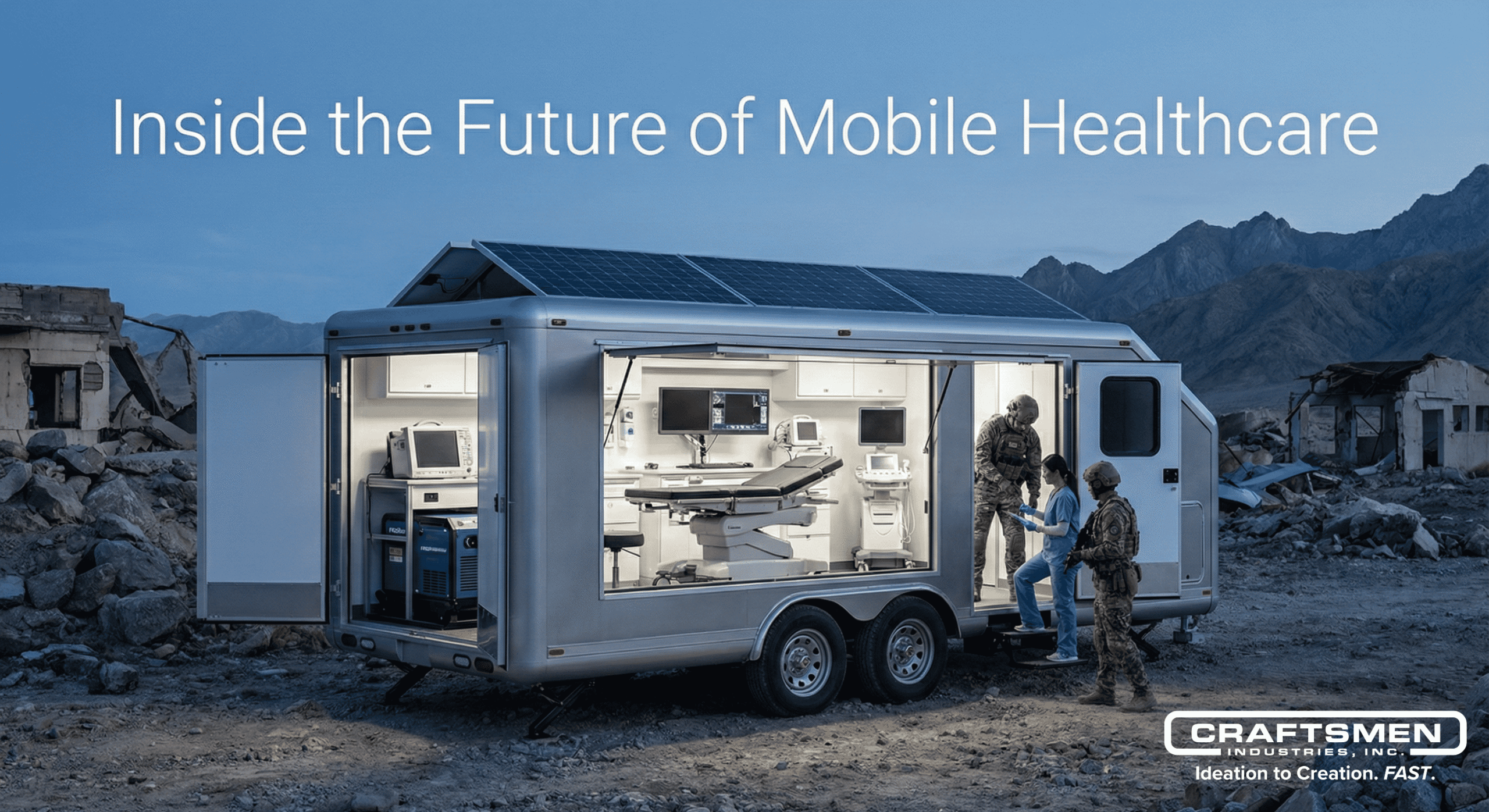
Medical trailers are sophisticated mobile healthcare facilities that require comprehensive equipment systems to deliver quality care in diverse environments. We understand you’re seeking detailed information about the essential equipment needed to operate medical trailers effectively, whether for disaster response, rural healthcare delivery, or specialized medical services. You’re in the right place to discover the critical systems, diagnostic tools, and safety features that transform these vehicles into fully functional healthcare facilities capable of serving communities anywhere.
According to Harvard Medical School research, mobile clinics deliver cost savings of up to $36 for every $1 invested, demonstrating their value in modern healthcare delivery. The global mobile health clinic market is projected to reach $7.1 billion by 2035 with a 7% compound annual growth rate, reflecting their growing importance in addressing healthcare accessibility challenges.
“Mobile medical units have proven to be instrumental in providing critical care during disasters. Their ability to deploy rapidly and operate independently makes them invaluable assets for emergency response teams,” states the Disaster Medical Assistance Teams (DMAT) leadership, as demonstrated during Hurricane Katrina deployments.
Key Equipment Takeaways:
- Medical trailers require specialized equipment ranging from power generation systems to advanced diagnostic tools, with equipment costs typically accounting for 40-60% of total project value
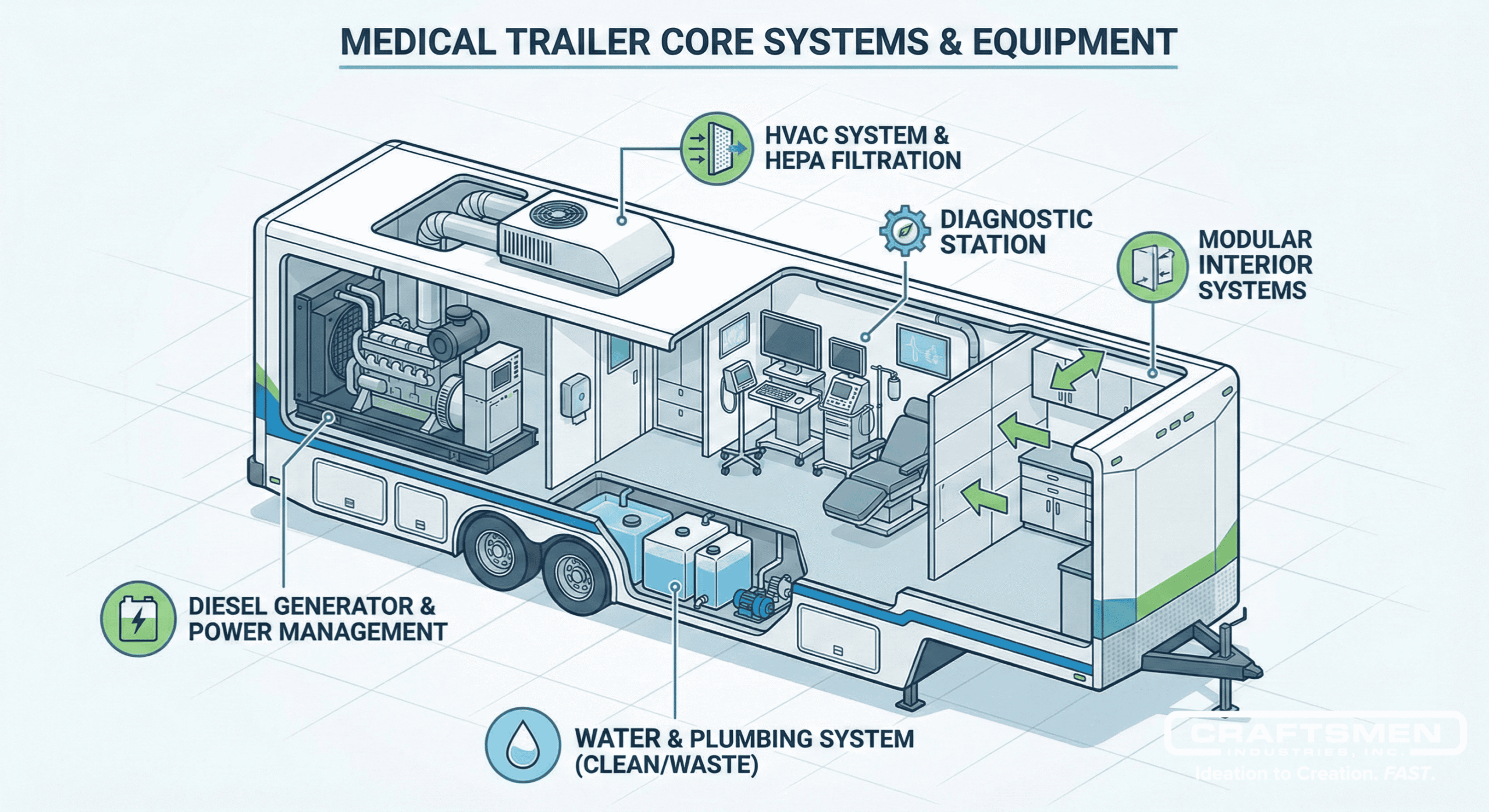
- Diesel generators provide 10-year lifespans and support critical life-support systems including HVAC, water purification, and medical gas delivery
- Diagnostic equipment includes portable ultrasound units ($3,000-$35,000), mobile CT scanners, and telemedicine systems enabling remote specialist consultation
- Infection control requires HEPA H14 filtration at 99.995% efficiency, antimicrobial surfaces, and sterilization equipment like portable autoclaves
- Modular designs improve equipment flexibility by 106% in time efficiency and 203% in cost efficiency compared to traditional setups
This comprehensive guide examines the core systems powering medical trailers, from onboard generators and HVAC systems meeting ASHRAE Standard 170 requirements to specialized medical equipment supporting everything from mobile dialysis units to disaster response capabilities. We explore how modern medical trailers integrate advanced technologies like 5G-enabled telemedicine, portable imaging systems, and modular interior designs that adapt to changing healthcare needs while maintaining strict compliance with FDA, ADA, and infection control standards.
Practical Implementation Tips:
- Prioritize diesel generators with modular parts for easy replacement and 10-year operational lifespans when selecting power systems
- Implement HEPA filtration systems with balanced airflow maintaining minimum 50 cfm exhaust in patient areas to meet infection control standards
As we explore the essential equipment requirements for medical trailers, you’ll discover how these mobile healthcare facilities combine sophisticated technology with practical design to deliver care where it’s needed most, setting the foundation for understanding the specific equipment categories and configurations that make effective mobile healthcare possible.
Which Types of Medical Trailers Require Specialized Equipment?
Medical trailers require specialized equipment based on their operational purpose and patient capacity. Mobile clinics focus on preventive care equipment while disaster response units prioritize trauma and mass casualty capabilities.
How Do Mobile Clinics Differ From Emergency Medical Trailers in Equipment Needs?
Mobile clinics differ from emergency medical trailers in equipment needs by prioritizing routine preventive care equipment, while emergency trailers focus on acute trauma and mass casualty management systems. Mobile clinics require exam tables, ECG machines, OB/GYN equipment, and educational TVs for patient education. Emergency medical trailers prioritize trauma care equipment for lacerations, abrasions, and fracture dislocations.
The cost differential reflects these equipment variations. Mobile clinic vans cost $160,000 to $315,000 including specialized medical equipment and delivery. Medical trailers range from $120,000 to $250,000. Emergency medical trailers like ROLE 1 units include 6 kW onboard generators with 3,500 kg gross weight capacity for rapid deployment.
Operational capacity distinguishes these trailer types. Mobile clinics handle 54 visits daily for routine care. Emergency trailers support 175 patients daily in full deployment scenarios. Emergency trailers require specialized trauma equipment because fracture dislocations become more prevalent weeks after disaster onset.
The equipment configuration determines each trailer’s response capability and patient care scope.
What Equipment Defines a Disaster Response Medical Trailer?
Disaster response medical trailers are defined by high-capacity treatment systems and rapid deployment capabilities. According to Bhishma Cube specifications, disaster response trailers must support 200 patients daily with 10-15 surgeries per day capability.
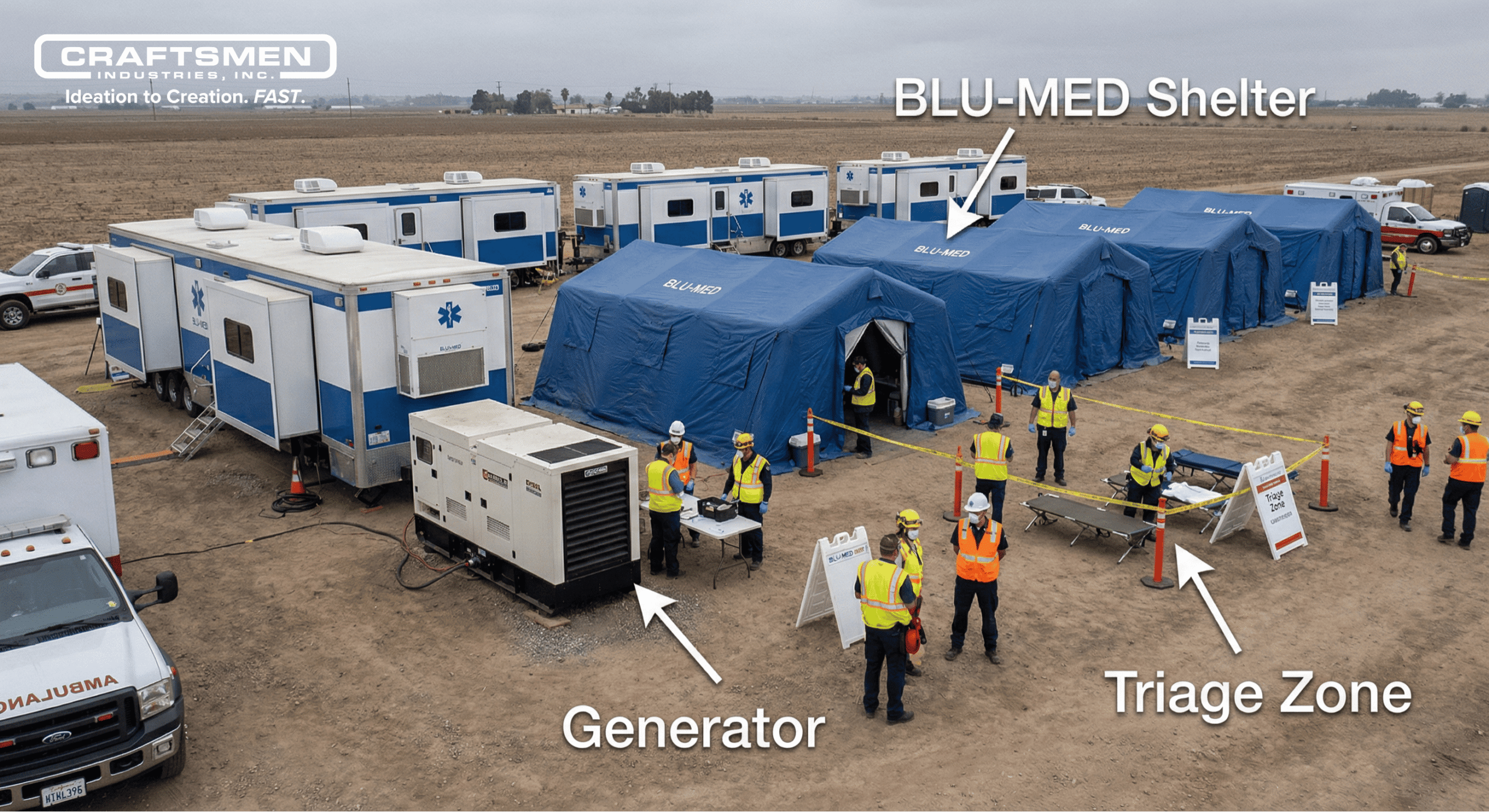
Government agencies deploy specialized configurations for disaster response. FEMA mobile medical units served as vaccination centers during COVID-19 using buses, RVs, and trailers with daily movement capability. Disaster Medical Assistance Teams (DMATs) deploy within 72 hours with mobile field hospitals, as proven during Hurricane Katrina.
Essential disaster response equipment includes:
- BLU-MED EXT systems with 14′ or 20′ rapidly deployable medical shelters
- Built-in generators and fuel tanks for autonomous operation
- Vinyl flooring for easy decontamination
- Primary care and vaccination equipment for refugee camps (WHO specifications)
- Wound care and basic surgical equipment
- Mental health support resources
- Chronic disease medication storage
Nine mobile medical vans deployed during Hurricane Wilma demonstrated the critical need for comprehensive equipment including wound care supplies, surgical instruments, mental health resources, and chronic disease medications.
These specialized equipment requirements enable medical trailers to function as complete healthcare facilities during disasters, supporting both immediate trauma care and sustained community health needs.
What Are the Core Life-Support and Treatment Systems Needed in Medical Trailers?
The core life-support and treatment systems needed in medical trailers are onboard power generators, HVAC climate control, water purification units, waste management systems, and medical gas delivery equipment. These systems maintain operational continuity and patient safety in mobile healthcare environments. Modern medical trailers integrate diesel generators with 10-year lifespans, HEPA filtration meeting ISO 14644 standards, and reverse osmosis water systems for clinical procedures.
Why Are Onboard Power and HVAC Systems Critical for Medical Trailers?
Onboard power and HVAC systems are critical for medical trailers because they maintain temperature-controlled environments, ensure sterile air quality, and power essential medical equipment continuously. Diesel generators provide 10-year operational lifespans versus 3-year averages for other generator types. Generator ECU Trailer Systems combine power generation and environmental control on single HMMWV-towable platforms.
ASHRAE Standard 170 mandates 68°F to 78°F temperature ranges with zoned controls separating driver cabins from exam rooms. Air filtration systems must achieve:
|
System Component |
Requirement |
Performance Standard |
|
HEPA Filtration |
H14 Grade |
99.995% efficiency at 0.3 microns |
|
Production Areas |
Air Changes |
45 changes per hour minimum |
|
PAL ISO-7 Areas |
Air Changes |
24 changes per hour minimum |
|
UV-C Sterilization |
Pathogen Control |
Complete elimination capability |
|
Humidity Control |
Pharmaceutical Compliance |
+/- 60% relative humidity |
Modern HVAC systems incorporate activated carbon filters alongside UV-C light sterilization for comprehensive pathogen elimination. These integrated systems ensure pharmaceutical compliance while protecting sensitive medical equipment from environmental damage.
How Are Water Purification and Waste Management Systems Integrated?
Water purification and waste management systems are integrated through centralized pre-treatment units connecting to individual point-of-use systems and touchless waste disposal fixtures. Centralized pre-treatment configurations include carbon filter tanks, water softeners, and instant hot water heaters. Individual reverse osmosis systems with automatic heat disinfection ensure water quality meets dialysis unit requirements.
Waste management solutions feature incinerator toilets with touchless fixtures in 18-foot and 30-foot mobile clinic configurations. Handwashing stations positioned throughout dialysis treatment areas support infection control protocols. These integrated systems eliminate cross-contamination risks while maintaining operational efficiency in remote deployment scenarios.
What Medical Gas Delivery Equipment Is Required?
The medical gas delivery equipment required for medical trailers includes Size C and Size D oxygen cylinders, multi-gas storage systems, and NFPA 99-compliant separation infrastructure. Size C cylinders measure 16 inches height by 4.5 inches diameter weighing under 10 pounds for emergency respiratory support. Size D cylinders measure 18 inches height by 4.4 inches diameter weighing 14 pounds for outpatient and ambulatory care.
Medical gas storage requirements encompass:
- Oxygen, nitrous oxide, and medical air for respiratory support
- Carbon dioxide, helium, and nitrogen for specialized procedures
- Temperature-controlled storage not exceeding 125°F per NFPA 99
- Physical separation between flammable and non-flammable gases
- Segregated storage for empty versus full cylinders
According to NFPA 99-2012 compliance standards, nonflammable compressed gas storage exceeding 3,000 cubic feet requires specific safety measures. These systems ensure continuous medical gas availability while preventing hazardous mixing or contamination during mobile operations.
Which Diagnostic and Monitoring Tools Are Standard in Medical Trailers?
The diagnostic and monitoring tools standard in medical trailers include portable imaging systems, patient monitoring devices, and telemedicine technologies that balance portability, accuracy, and cost-effectiveness. The imaging equipment and telemedicine systems in these units determine their diagnostic capabilities and patient care quality.
What Imaging Equipment Is Typically Included?
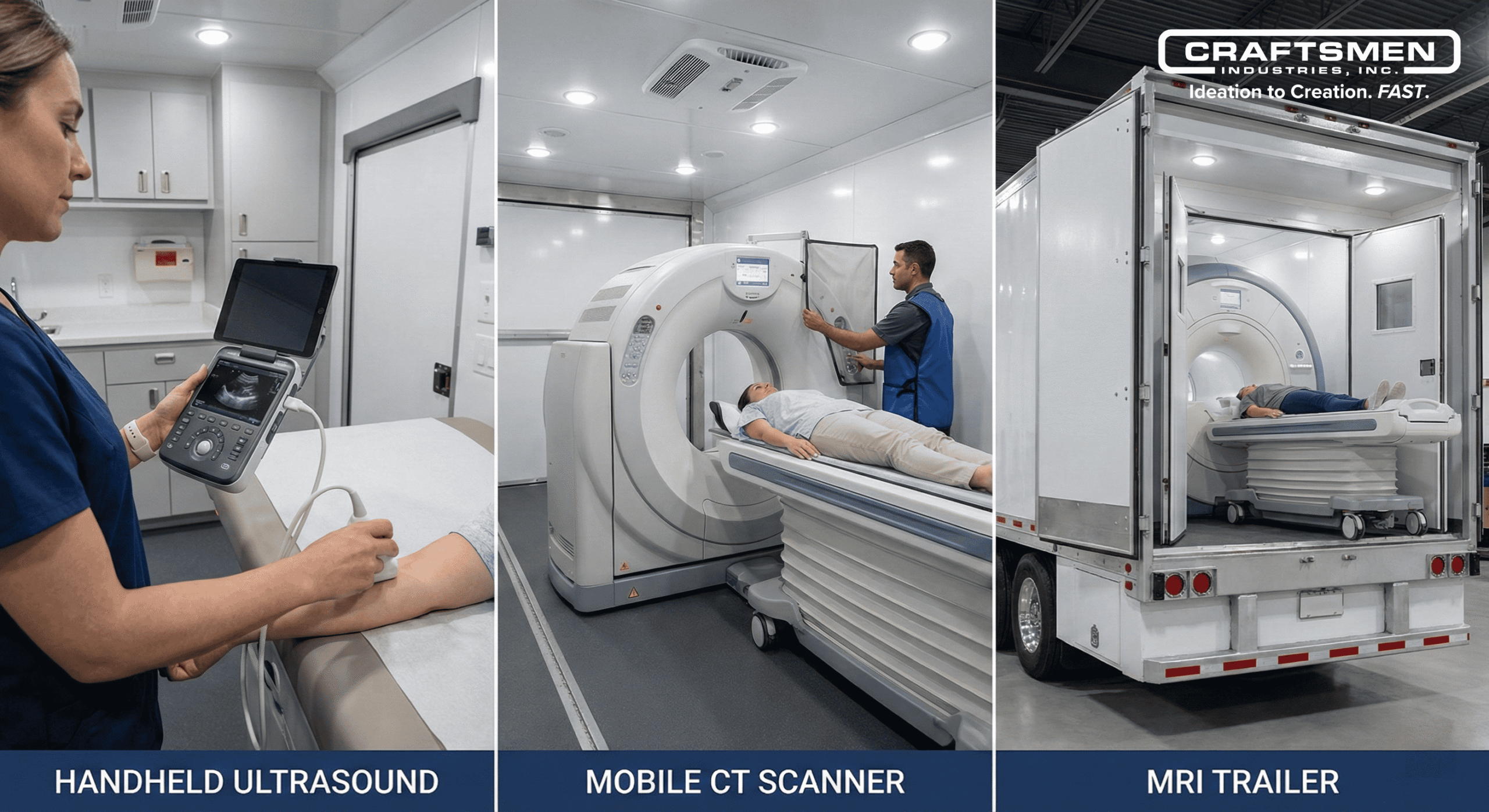
The imaging equipment typically included in medical trailers ranges from handheld ultrasound units to advanced mobile CT and MRI scanners. Portable ultrasound machines cost between $5,000 and $100,000+, with handheld POCUS units available at $3,000-$6,000. The Butterfly Network handheld ultrasound provides 20+ clinical applications at $420/year subscription. GE Vivid iQ portable ultrasound systems cost $25,000-$35,000 as the most advanced portable option.
Mobile MRI scanners combine MAGNETOM technology with specialist trailers, costing $50,000-$500,000. Mobile CT scanners offer rapid-deploy capability up to 128-slice for trauma, stroke, and oncology applications. The Philips Gemini 16 PET CT systems cost approximately $140,000 for 16-channel configuration.
These imaging systems enable medical trailers to perform diagnostics ranging from basic ultrasounds to complex oncology scans without transferring patients to fixed facilities.
How Are Patient Monitoring and Telemedicine Systems Set Up?
Patient monitoring and telemedicine systems in medical trailers are set up through integrated networks that connect onsite clinical devices with remote specialists in real time. Telemedicine systems enable remote specialist consultation, reducing unnecessary in-person referrals and wait times. Advanced telemedicine capabilities integrate into solar-powered mobile clinic vans with zero setup time.
Remote monitoring includes web-based apps for blood pressure, blood sugar, and oxygen level data upload. Wearable devices automatically record and send heart rate, blood sugar, physical activity, and sleep data. Virtual visits support treatment for conditions such as migraines, skin conditions, diabetes, depression, anxiety, and COVID-19.
5G-enabled ambulances allow paramedics to access medical records in real time during transport. Network slicing technology provides guaranteed quality of service for critical care situations.
Medical trailers equipped with these diagnostic and monitoring tools deliver hospital-quality care in remote locations, ensuring patients receive timely diagnosis and continuous monitoring regardless of their distance from traditional healthcare facilities.
What Storage and Organization Solutions Are Needed for Medical Trailers?
The storage and organization solutions needed for medical trailers include secure medication storage, rapid-access emergency equipment systems, and inventory management technologies that support regulatory compliance. Medical trailers require secure medication storage, rapid-access emergency equipment systems, and RFID-enabled inventory management. These solutions must balance space constraints with operational demands while maintaining strict security protocols.
How Should Medications and Medical Supplies Be Stored Securely?
Medications and medical supplies should be stored securely in medical trailers using locked cabinets, integrated security systems, and temperature-controlled storage solutions. All cabinet doors require locks for secure medication storage per mobile trailer specifications. BHISMCUBE systems organize supplies in 72 RFID-tagged boxes containing modular medical supplies, enabling real-time inventory tracking and automated reordering.
Storage configurations include integrated compartments built into 20 FT and 40 FT modular shipping container configurations. High-definition security cameras and alarm systems protect medication inventory from theft and tampering. Temperature-controlled storage maintains pharmaceutical integrity through dedicated refrigeration systems for vaccine storage and temperature-sensitive medications.
According to Hurricane Wilma response data, mobile pharmacy capabilities proved essential for chronic disease medication distribution. The deployment demonstrated that proper medication storage systems prevented supply degradation during extended disaster response operations.
|
Storage System |
Security |
Specification |
|
BHISMCUBE |
Storage capacity |
72 RFID-tagged boxes |
|
Cabinet doors |
Security feature |
Required locks |
|
Container configurations |
Standard sizes |
20 FT, 40 FT |
|
Security systems |
Components |
HD cameras, alarms |
|
Refrigeration |
Purpose |
Vaccine storage |
These secure storage solutions ensure medication integrity while meeting DEA controlled substance regulations and state pharmacy board requirements for mobile medical facilities.
What Solutions Facilitate Quick Access to Emergency Equipment?
The solutions that facilitate quick access to emergency equipment in medical trailers include strategic equipment placement, rapid deployment systems, and modular mounting configurations. BHISMCUBE rapid deployment systems set up in as little as 12 minutes for emergency response. Rolling sharps containers positioned throughout dialysis treatment areas provide immediate access to waste disposal during critical procedures.
Safety equipment placement follows strict regulatory standards:
- Fire extinguishers at entry/exit points
- Carbon monoxide detectors in generator proximity
- Smoke detectors throughout patient areas
- Emergency oxygen within 10-foot reach zones
Modular equipment mounts allow quick reconfiguration without specialized tools, enabling staff to adapt layouts for different emergency scenarios. Pre-wired technology panels enable rapid connection of emergency monitoring equipment, reducing setup time from hours to minutes.
Wide doors and defined waiting areas separate from exam areas facilitate patient flow during emergencies. This spatial organization prevents bottlenecks during mass casualty events while maintaining clear evacuation routes.
The combination of rapid deployment systems, strategic equipment placement, and modular configurations enables medical trailers to transition from transport mode to full operational capacity faster than traditional field hospitals, improving patient survival rates during golden hour trauma care.
How Are Infection Control and Sterilization Maintained in Medical Trailers?
Infection control and sterilization in medical trailers are maintained through specialized surfaces, sterilization equipment, and environmental control systems that meet healthcare facility standards. Medical trailers achieve infection prevention through antimicrobial finishes, sterilization systems, and environmental controls that parallel traditional healthcare settings.
What Surfaces and Materials Support Infection Control?
The surfaces and materials that support infection control in medical trailers include medical-grade finishes such as stainless steel cabinetry, seamless flooring, and antimicrobial coatings. Non-porous surfaces resistant to harsh disinfectants reduce healthcare-associated infections by up to 60%. Medical-grade vinyl flooring provides durability in dialysis units while meeting CDC Core Infection Prevention requirements.
Key infection control surfaces include:
- Stainless steel cabinetry with sealed edges
- Seamless antimicrobial flooring systems
- Cleanable medical-grade wall materials
- Touchless bathroom fixtures
- Non-porous ceiling panels
Cabinet installations feature sealed edges that prevent contamination between surfaces. Touchless fixtures in bathrooms reduce cross-contamination risks during patient care. These materials withstand daily cleaning with hospital-grade disinfectants while maintaining structural integrity throughout the trailer’s operational lifespan.
Which Sterilization Equipment Is Essential Onboard?
The sterilization equipment essential onboard medical trailers includes portable autoclaves, HEPA filtration systems, and negative-pressure isolation zones. Portable Autoclave LPOA-A15 operates at 105-126°C with 24L chamber capacity and 0-99 minute sterilization cycles. Portable Autoclave AUT41-24 functions with electric or LPG heating at 126°C sterilization temperature.
|
Equipment |
Specification |
Value |
Application |
|
Tuttnauer 3870 HSG |
Class |
B |
High-volume clinics |
|
Working Pressure |
Range |
0.14-0.16 MPa |
Standard operation |
|
Maximum Pressure |
Limit |
0.165 MPa |
Safety threshold |
|
HEPA Filtration |
Exhaust Rate |
50 cfm minimum |
Patient areas |
|
Isolation Zones |
Pressure Type |
Negative |
Higher-class clinics |
HEPA filtration systems with balanced airflow maintain minimum 50 cfm exhaust in patient areas per ASHRAE standards. Negative-pressure isolation zones protect against airborne pathogen transmission in higher-class mobile clinics. These integrated systems ensure medical trailers maintain hospital-grade sterilization capabilities during field operations
.
What Accessibility and Safety Features Should Medical Trailers Have?
The accessibility and safety features medical trailers should have include ADA-compliant entry systems, interior layouts, emergency exits, and integrated safety monitoring systems. ADA compliance drives design requirements for entry systems, interior layouts, and emergency features. Modern medical trailers incorporate wheelchair lifts, security monitoring, and emergency systems that exceed minimum standards.
How Do Trailers Meet ADA and Patient Accessibility Standards?
Medical trailers meet ADA and patient accessibility standards by incorporating wheelchair ramps, widened doorways, and specialized equipment configurations that support patient mobility. Entry systems require minimum 32-inch clear openings per ADA Standards. Wheelchair lifts integrate into 18-foot and 30-foot box truck configurations.
Interior layouts prioritize wheelchair maneuverability through widened corridors and accessible restroom designs. Dialysis treatment areas include wheelchair-accessible weight scales. Stairways incorporate handrails for ambulatory patients.
Heavy-duty all-terrain capability ensures access to remote communities. Medical trailers accommodate ADA requirements more effectively than vans due to larger interior dimensions. The expanded space allows proper turning radiuses and equipment placement without compromising accessibility.
What Security and Emergency Exit Systems Are Required?
The security and emergency exit systems required in medical trailers include high-definition cameras, alarm systems, NFPA-compliant emergency exits, and backup safety lighting. CMS, FDA, and ISO 9001 standards mandate comprehensive security monitoring. Integrated alarm systems protect medication inventory and equipment throughout mobile units.
Uninterruptible Power Supply systems maintain critical operations during power transitions. Emergency exit configurations comply with NFPA 99 Health Care Facilities Code. There are multiple safety components: 12V DC emergency lights, carbon monoxide detectors, smoke detectors, and strategically placed fire extinguishers.
Awning canopy systems provide weather protection during emergency evacuations. These integrated safety features ensure continuous operation and patient protection during critical situations.
Medical trailer accessibility and safety features create inclusive healthcare environments while maintaining operational security. The combination of ADA-compliant access systems and comprehensive emergency protocols enables effective healthcare delivery across diverse patient populations and challenging deployment scenarios.
How Can Essential Medical Trailer Equipment Be Customized for Specific Needs?
Essential medical trailer equipment can be customized for specific needs by configuring mobile units with specialized systems, modular layouts, and service-specific medical equipment. Craftsmen Industries designs modular systems that adapt to diverse clinical requirements while maintaining operational efficiency.
What Options Exist for Specialty Medical and Lab Equipment?
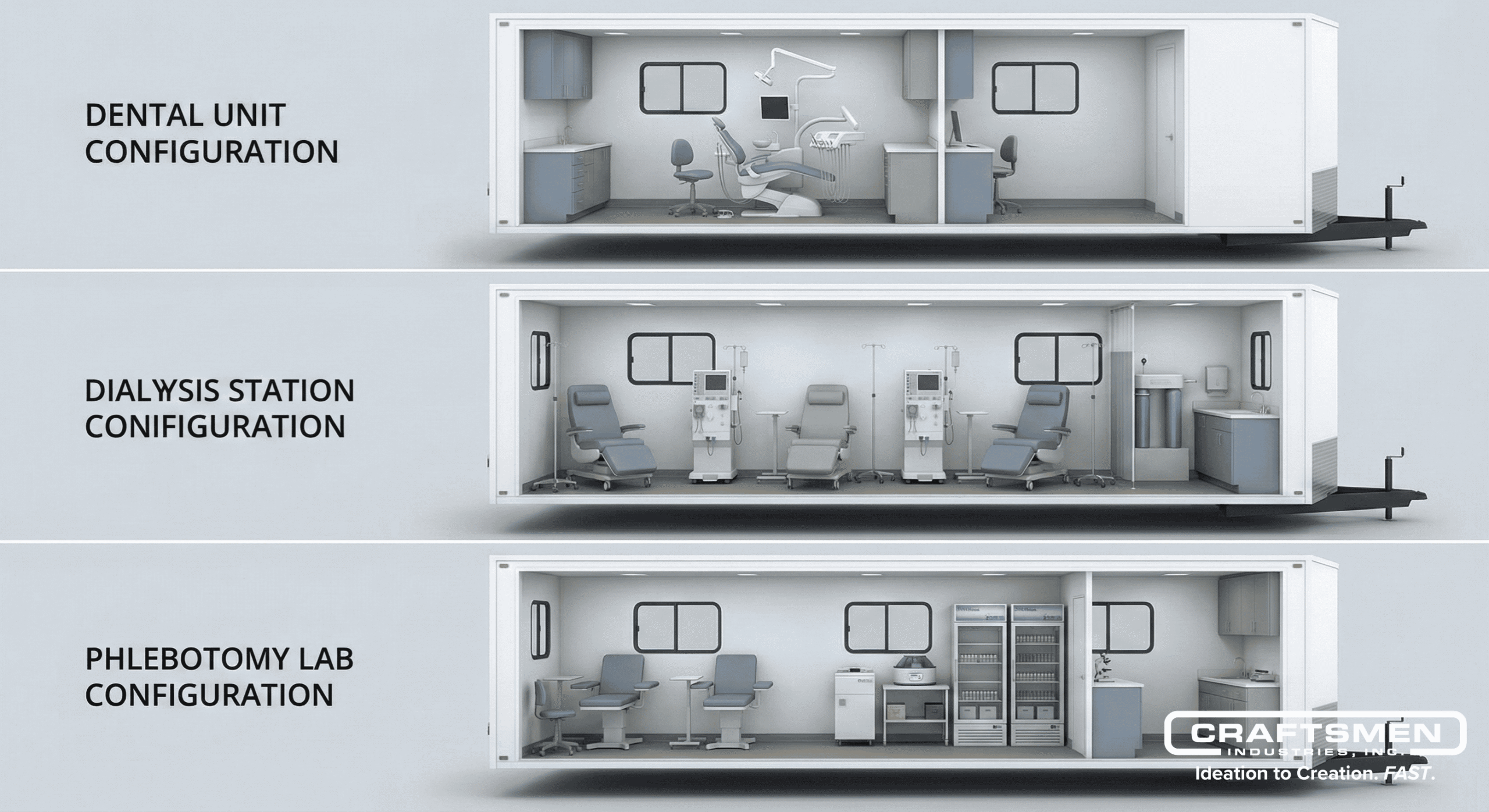
The options that exist for specialty medical and lab equipment in medical trailers include mobile dialysis units, mammography systems, dental configurations, and advanced imaging capabilities. Mobile dialysis units configure 1-3 stations in 20 FT or 40 FT shipping containers with reverse osmosis water systems. Mobile mammography units deliver digital imaging to underserved communities.
Medical trailers support dental chairs and on-site laboratories, unlike space-limited van configurations. Lab and pharmacy spaces accommodate basic diagnostic tests, phlebotomy, and sample collection. Mobile imaging options include:
- PET/CT scanners for oncology diagnostics
- CT systems for trauma assessment
- MRI units for neurological imaging
- Ultrasound stations for point-of-care diagnostics
Dialysis stations feature configurable layouts with open or partitioned designs for nurse monitoring flexibility. Each configuration meets specific patient volume and treatment requirements.
How Do Modular Designs Improve Equipment Flexibility?
Modular designs improve equipment flexibility by using pre-fabricated components and rapid reconfiguration capabilities that allow trailers to adapt to different clinical missions. According to industry data, modular healthcare construction improves time efficiency by 106% and cost efficiency by 203%.
Pre-fabricated components streamline installation:
- Medical-grade cabinetry with adjustable shelving
- Ergonomic workstations for clinical staff
- Integrated storage solutions for supplies
- Patient seating with antimicrobial surfaces
- Equipment mounts for diagnostic devices
Lightweight materials enable rapid reconfiguration between missions. These materials include aluminum frameworks, medical-grade plastics, and composite panels. Movable partitions and privacy panels allow healthcare providers to switch between examination, consultation, and treatment functions.
Technology-ready modules feature pre-wired panels that accommodate future equipment upgrades without structural modifications. Adjustable LED lighting systems and efficient HVAC units adapt to changing clinical needs. Setup and deployment require no specialized tools, reducing response time during emergencies.
This customization approach ensures medical trailers serve multiple healthcare programs throughout their 15-20 year operational lifespan while maintaining compliance with evolving medical standards.
How Should You Approach Outfitting a Medical Trailer with Craftsmen Industries?
You should approach outfitting a medical trailer with Craftsmen Industries by strategically planning equipment integration, customization, and budget allocation. Medical equipment represents 40-60% of total project value, with integration costs ranging from $50,000 to $250,000. The company’s ISO 9001 quality management certification and AS9100D aerospace quality standards ensure safety-critical systems meet healthcare regulations. Operating costs account for 23% of annual budgets for maintenance, fuel, and staff considerations. The following subsections detail Craftsmen Industries’ custom solutions and key equipment considerations.
Can Craftsmen Industries Provide Custom Solutions for Essential Medical Trailer Equipment?
Yes. Craftsmen Industries provides custom solutions for essential medical trailer equipment through modular configurations and certified quality systems. The company offers specialty medical and lab equipment configurations tailored to specific healthcare program needs. Technology integration features include telemedicine capabilities, EHR synchronization, and Wi-Fi systems costing $50,000 to $250,000.
Modular interior components utilize flame-retardant materials meeting NFPA compliance requirements. These components support rapid reconfiguration between missions without specialized tools. Custom builds accommodate diverse medical specialties such as:
- Mobile dialysis units with 1-3 treatment stations
- Dental examination rooms with integrated chair systems
- Laboratory spaces for diagnostic testing and phlebotomy
- Mammography units with digital imaging capabilities
The company’s AS9100D aerospace quality standards ensure precision manufacturing for safety-critical medical systems. This certification guarantees equipment mounts, electrical systems, and structural components meet stringent healthcare facility codes.
What Are the Key Takeaways About Essential Medical Trailer Equipment We Covered?
The key takeaways about essential medical trailer equipment highlight their long-term value, operational longevity, and measurable impact on healthcare access and cost savings. Medical trailers last 15-20 years compared to 5-10 years for vans, providing superior return on investment. A 2012 Harvard Medical School study on mobile health delivery found cost savings up to $36 for every $1 invested.
According to a 2019 Tulane University report, each mobile clinic reduces emergency room visits by 600 annually. The global mobile health clinic market projects $7.1 billion valuation by 2035 with 7% compound annual growth rate. There are 3,000 mobile clinics operating in the U.S., providing 10 million visits annually to underserved populations.
Mobile clinics improve patient access by 28% in metropolitan areas with over 100 units launched. A 2018 study on emergency response timing reveals that 30-second delays increase fatalities by 8% within 24 hours, emphasizing equipment readiness importance. These statistics underscore medical trailers’ critical role in expanding healthcare access while reducing system costs through preventive care and emergency preparedness.
Filter Posts by Tag
related posts
A custom medical trailer is a mobile healthcare unit designed [...]
Medical trailer troubleshooting is the systematic process of diagnosing and [...]
Mobile pharmacy vehicles bring prescriptions and health services to underserved areas, improving access, patient safety, and healthcare equity.
