
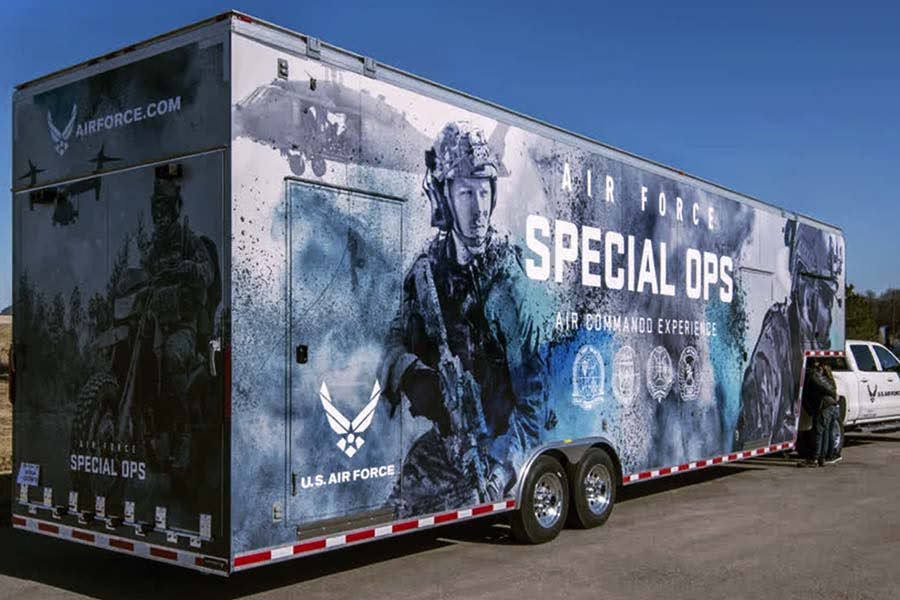
DOT and FMCSA compliance for fleet graphics is the set of federal regulations governing how commercial motor vehicles display carrier identification, USDOT numbers, reflective conspicuity markings, and safety signage within or alongside vehicle wraps and branded graphics.
This guide covers federal vehicle marking standards under 49 CFR Part 390, FMCSA identification rules for fleet wraps, reflective tape and conspicuity requirements, safety feature obstruction risks, state-level regulatory variations, common compliance violations and penalties, and compliant design and maintenance practices.
Federal marking standards require every power unit to display the carrier’s legal name and USDOT number on both sides in contrasting letters legible from 50 feet, with a minimum height of 2 inches. The displayed name must match FMCSA registration on Form MCS-150 exactly.
FMCSA identification rules dictate MC number display for for-hire carriers, mandatory placement on the power unit rather than the trailer, and specific timelines for marking leased vehicles based on lease duration.
Retroreflective sheeting and conspicuity standards apply to trailers over 80 inches wide with a GVWR exceeding 10,000 lbs. Fleet graphics cannot cover or replace this federally mandated sheeting, and vinyl wraps do not meet certified retroreflective performance standards.
Graphics that obstruct required lights, reflectors, hazmat placards, or GVW ratings create immediate violations. Civil penalties for noncompliant markings range from $3,000 to over $115,000 per infraction.
State regulations layer additional requirements on top of federal minimums; some states mandate location details and vehicle-specific markings that federal law leaves optional.
Designing compliant fleet graphics requires mapping every regulated marking zone before creative layout begins, following a pre-installation checklist, and maintaining markings through rebrands with certified installation support. Craftsmen Industries offers vertically integrated large format graphics services that handle design, printing, and installation in-house, ensuring every compliance requirement is accounted for from initial concept through final vehicle delivery.
What DOT Regulations Apply to Graphics on Commercial Vehicles?
DOT regulations for graphics on commercial vehicles center on 49 CFR Part 390, which governs vehicle identification, USDOT number display, font legibility, and legal name markings. The following subsections break down each requirement.
What Does 49 CFR Part 390 Require for Vehicle Identification?
49 CFR Part 390 requires every self-propelled commercial motor vehicle to display the operating carrier’s legal name or single trade name, exactly as listed on Form MCS-150, and the company’s USDOT number on both sides of the power unit. Markings may be painted or applied as removable devices, provided they meet identification and legibility standards outlined in §390.21.
All required DOT markings must appear on the power unit, not the trailer. Standard placement includes the driver’s and passenger side doors, or the sleeper or access panel on a semi truck cab. According to the Electronic Code of Federal Regulations, any CMV added to a fleet on or after July 3, 2000 must meet these marking requirements before being placed into service on public roads.
Fleet managers frequently overlook that markings on both sides must remain visible from 50 feet away; treating this as optional invites roadside violations.
What Are the USDOT Number Display Requirements for Fleet Graphics?
The USDOT number display requirements for fleet graphics mandate that every self-propelled CMV show the FMCSA-issued motor carrier identification number, preceded by the letters “USDOT,” on both sides of the vehicle. The displayed name must match the FMCSA registration on Form MCS-150 exactly. If another entity’s name appears on the vehicle, the operating carrier’s information must be preceded by “operated by.”
For short-term rentals of 30 calendar days or fewer, the lessor’s legal name and USDOT number may satisfy these requirements instead. According to an FMCSA compliance checklist published by Foley Services, common marking mistakes include name mismatches between the truck and registration, faded or obscured decals, and leased units running under the wrong name. Noncompliance can result in civil penalties ranging from $3,000 to over $115,000.
What Font Size and Contrast Standards Must Fleet Graphics Meet?
The font size and contrast standards for fleet graphics require that all §390.21 markings appear in letters that contrast sharply in color with the background. Markings must be readily legible during daylight hours from a distance of 50 feet (15.24 meters) while the CMV is stationary. A minimum letter height of 2 inches meets this 50-foot visibility threshold, per the Electronic Code of Federal Regulations.
Carriers must also maintain markings so legibility is retained throughout the vehicle’s operational life. Faded vinyl, peeling decals, or graphics that blend regulatory text into a branded color scheme can all trigger violations during roadside inspections. Working with a certified professional installer helps ensure proper material handling and application that preserves long-term contrast and readability.
What Legal Name and Address Markings Are Required on the Vehicle?
The legal name and address markings required on a commercial vehicle include the carrier’s legal name or single trade name and USDOT number on both sides of the power unit, with clearly legible letters at least two inches in height. Federal rules under §390.21 do not require city and state markings, though they do not prohibit them either.
State-level requirements may add obligations. According to the Texas Department of Public Safety, operating a CMV without compliant identifying markings on each side of the power unit is a Class C misdemeanor. Tow trucks in Texas must additionally display the operator’s city of business and telephone number with area code. For rental or leased CMVs, the rental agreement must be carried on the vehicle and include the renting carrier’s full physical address, USDOT number, and a law enforcement cooperation statement.
Understanding these display standards is only part of the compliance picture; FMCSA imposes additional marking and identification rules that directly affect how fleet wraps are designed and applied.
What FMCSA Marking and Identification Rules Affect Fleet Wraps?
FMCSA marking and identification rules affect fleet wraps by dictating what information must appear on the vehicle, where it must be positioned, and how quickly it must be applied. The subsections below cover MC number display for for-hire carriers, required placement locations, and leased vehicle marking timelines.
How Must the MC Number Be Displayed on For-Hire Carriers?
The MC number must be displayed on for-hire carriers as part of the FMCSA’s motor carrier identification requirements, though its role is shifting. FMCSA has proposed no longer assigning MC numbers; under this modernization plan, the USDOT number would become the sole identifier for all registrants. According to an FMCSA modernization FAQ, new suffixes would indicate operating authority type, such as C for property, P for passenger, and B for broker, but these suffixes would apply only to business documents, not vehicle markings.
Until MC numbers are fully phased out, for-hire carriers holding an active MC number should continue displaying it alongside the USDOT number. Designing fleet wraps with modular marking zones makes it easier to remove or update the MC number if FMCSA eliminates the requirement entirely.
Where Must FMCSA-Required Markings Be Placed on the Vehicle?
FMCSA-required markings must be placed on both sides of the self-propelled power unit. According to 49 CFR §390.21 in the Electronic Code of Federal Regulations, all required markings belong on the power unit; the numbers should not go on the trailer. Standard practice positions them on the driver’s and passenger’s side doors, or on the sleeper or access panel of a semi truck cab.
Fleet wrap designers should account for these mandatory placement zones early in the layout process. Key placement considerations include:
- Markings must appear on both sides of the cab, not the trailer.
- Door panels and sleeper panels are the most common compliant locations.
- Wrap artwork surrounding these zones must not reduce legibility below the 50-foot daylight standard.
Overlooking door-panel clearance during the design phase is one of the most common causes of compliance failures at roadside inspections.
How Long Do Carriers Have to Display Markings on Leased Vehicles?
Carriers have to display markings on leased vehicles according to the lease term and vehicle type. For rental agreements of 30 calendar days or fewer, FMCSA allows an alternative: the lessor’s legal name and USDOT number may remain on the CMV instead of the renting carrier’s information. According to 49 CFR §390.21, the rental agreement must be carried on the vehicle during the full term and must include the renting carrier’s name, physical address, and USDOT number.
For leases exceeding 30 days, the operating carrier’s markings must appear on the vehicle in full compliance with standard requirements. This means fleet wraps on long-term leased units need the lessee’s legal name and USDOT number displayed on both sides before the vehicle enters service.
With marking placement and lease timelines addressed, the next consideration is how reflective tape and conspicuity standards interact with fleet graphic designs.
What Are the Reflective Tape and Conspicuity Requirements for Fleet Graphics?
The reflective tape and conspicuity requirements for fleet graphics are federal standards that mandate retroreflective sheeting on trailers and truck tractors to ensure nighttime visibility. The following subsections cover trailer sheeting rules, truck tractor placement, and how fleet graphics interact with these markings.
What Does FMCSA Require for Retroreflective Sheeting on Trailers?
FMCSA requires retroreflective sheeting on trailers that are 80 or more inches wide and have a GVWR exceeding 10,000 lbs, provided they were manufactured after December 1, 1993. Under FMVSS No. 108, these trailers must be equipped with one of the following:
- Retroreflective sheeting per FMVSS No. 108, Section S5.7.1
- Reflex reflectors per FMVSS No. 108, Section S5.7.2
- A combination of sheeting and reflectors per FMVSS No. 108, Section S5.7.3
Reflective tape is a federal requirement, distinct from mud flap regulations governed at the state level. Fleet graphic designers must account for these conspicuity zones during layout planning, since covering or removing compliant sheeting creates an immediate safety violation.
How Do Reflective Tape Rules Apply to Truck Tractors?
Reflective tape rules apply to truck tractors by requiring that retroreflective sheeting remain visible on specific mounting locations. According to Safety Compliance and Training LLC, the sheeting must be placed on either the brackets, a fender, or on the back of the truck. Mud flap requirements are state law, while reflective tape placement falls under federal regulation.
This distinction matters when designing wraps for truck tractors. Graphics installers must verify that sheeting on fenders and rear-facing surfaces remains unobstructed after installation. Failing to preserve these federally mandated reflective zones can trigger out-of-service violations during roadside inspections, regardless of how well the rest of the vehicle meets state-level requirements.
Can Fleet Graphics Cover or Replace Required Conspicuity Markings?
No, fleet graphics cannot cover or replace required conspicuity markings. Retroreflective sheeting and reflex reflectors mandated under FMVSS No. 108 must remain fully visible and functional at all times. Vinyl wraps, even those printed with reflective ink or bright colors, do not meet the certified retroreflective performance standards that federal conspicuity regulations require.
Any graphic installation that obscures, overlaps, or removes factory-installed conspicuity tape puts the vehicle out of compliance. The practical solution is to map all reflective tape locations before designing the wrap layout, then cut the graphics around those zones. For fleet managers planning rebrands, treating conspicuity markings as fixed design constraints from the start prevents costly rework and inspection failures.
How Do Fleet Graphics Affect Vehicle Lighting and Safety Markings?
Fleet graphics affect vehicle lighting and safety markings by potentially obstructing required lights, reflectors, mud flap reflectors, and safety decals if not designed and installed carefully. The following subsections cover specific obstruction risks and compliance consequences.
Can a Vehicle Wrap Obstruct Required Lights or Reflectors?
Yes, a vehicle wrap can obstruct required lights or reflectors if the graphic material extends over or adjacent to these safety features. Federal regulations mandate that all lighting elements, reflectors, and conspicuity markings remain fully visible and unobstructed during vehicle operation.
According to the FMCSA handbook, all vehicles manufactured after July 1, 1997 are required to have mud flaps with reflectors on them. Wrap installers must account for these reflector positions during layout, ensuring vinyl does not cover or reduce reflector visibility. Headlights, taillights, brake lights, turn signals, and side marker lights all fall under the same protection; no graphic element may diminish their function. Professional installers with proper training understand how to template around these components, cutting vinyl precisely to maintain clear zones. Any wrap that blocks even a portion of a required reflector or light creates an immediate compliance violation during roadside inspection.
What Happens if Graphics Interfere with Mud Flaps or Safety Decals?
Graphics that interfere with mud flaps or safety decals create DOT compliance violations that can trigger inspection citations and civil penalties. Mud flap reflectors, required safety decals, and hazmat placards must remain clearly visible at all times.
When fleet wraps extend onto or near mud flaps, the reflective elements embedded in those flaps can become partially covered, reducing nighttime visibility. Safety decals, including GVW ratings and warning labels, lose their regulatory function the moment a graphic layer obscures them. During roadside inspections, officers specifically check that these markings are legible and unobstructed. The safest approach is to map every required safety marking before the design phase begins, building exclusion zones directly into the graphic layout. This proactive planning eliminates costly removal and reinstallation after a failed inspection.
Understanding lighting and safety marking requirements prepares fleet managers to address placard visibility rules next.
What GVW and Hazmat Placard Rules Impact Fleet Graphic Design?
GVW ratings and hazmat placard rules impact fleet graphic design by requiring that all placards and weight-related markings remain fully visible and unobstructed by wraps or graphics. The following subsections cover display positioning and visibility thresholds.
How Must GVW Ratings Be Displayed Alongside Fleet Graphics?
GVW ratings must be displayed in locations where fleet graphics do not obscure or interfere with their visibility. Federal placard regulations set clear positioning standards that directly constrain graphic layout decisions.
According to Daniels Training Services, each placard on a motor vehicle must be clearly visible from the direction it faces, displayed on each side and each end, and cannot be obscured by fleet graphics or wraps. For straight trucks, the front-facing placard must remain visible from the front. For tractor-trailer combinations, the placard on the front of the trailer may be obstructed by the tractor’s presence without constituting a violation.
Designers should map every required placard and rating location before beginning layout work; treating these zones as permanent exclusion areas prevents costly rework after installation.
What Hazmat Placard Visibility Rules Must Graphics Preserve?
Hazmat placard visibility rules require that all placards and safety markings remain unobstructed and clearly legible from their intended viewing direction. Fleet graphics cannot cover, partially conceal, or reduce the conspicuity of any hazmat placard.
When conspicuity tape or reflective markings are mounted on the back of the cab rather than on mud flaps, the tape must be at least 75% visible when viewed from the rear. This threshold applies to any rear-mounted safety marking that could be affected by graphic coverage.
For fleet managers balancing brand impact with regulatory compliance, building hazmat placard clearance zones into every graphic template from the start is the most reliable way to avoid violations during roadside inspections.
Understanding placard and weight marking constraints allows designers to focus on compliant branding across the remaining vehicle surface.
How Do State-Level DOT Regulations Differ for Fleet Graphics?
State-level DOT regulations differ for fleet graphics primarily in additional marking requirements that go beyond federal 49 CFR §390.21 standards. While federal rules set the baseline, individual states can impose extra identification mandates on specific vehicle types.
Texas provides one of the clearest examples of state-level variation. According to the Texas Department of Public Safety, any commercial motor vehicle with three or more axles, a truck-tractor, a road-tractor, or a tow truck must display identifying markings on each side of the power unit that either comply with 49 CFR §390.21 or show the owner/operator name in letters at least two inches tall along with the motor carrier registration number. Tow trucks in Texas face an additional layer: they must also display the city of the operator’s place of business and the telephone number, including area code, in clearly legible lettering. Violating these Texas marking requirements constitutes a Class C misdemeanor, and the Texas Department of Transportation retains authority to prescribe further marking requirements beyond the statute.
The federal FMCSA final rule does not require motor carriers to mark vehicles with city and state information, though it does not prohibit the practice either. This gap is precisely where states step in. Some states mandate location details that federal law leaves optional, creating a patchwork of obligations for carriers operating across multiple jurisdictions.
Fleet managers running vehicles through several states should account for the most restrictive requirements along their routes. A graphic layout designed solely around federal minimums may fall short in states with supplemental mandates. For multi-state fleets, building flexibility into the design, such as dedicated areas for state-specific markings, prevents costly re-wraps or last-minute decal additions down the road.
With over 40 years of experience serving corporations and government agencies, Craftsmen Industries designs fleet graphics that accommodate both federal requirements and state-level variations, helping multi-jurisdiction fleets maintain consistent compliance.
What Are Common DOT and FMCSA Compliance Violations Related to Fleet Graphics?
Common DOT and FMCSA compliance violations related to fleet graphics include missing or obscured USDOT numbers, non-compliant reflective markings, and obstructed safety signage. Each violation carries distinct penalties.
What Penalties Apply for Missing or Obscured USDOT Numbers?
The penalties for missing or obscured USDOT numbers include substantial civil fines and potential out-of-service orders. FMCSA requires every self-propelled CMV to display the carrier’s legal name and USDOT number on both sides of the power unit, legible from 50 feet during daylight. When fleet graphics fade, cover, or crowd out these markings, the vehicle fails inspection.
Common scenarios that trigger violations include:
- Name mismatch between the truck markings and FMCSA registration (Form MCS-150).
- Faded or peeling USDOT decals obscured by surrounding wrap graphics.
- Leased units operating under the wrong carrier name.
- Failure to re-mark vehicles after a company name or number change.
Fleet managers who treat USDOT visibility as a design afterthought rather than a compliance requirement consistently face the most preventable enforcement actions.
What Fines Result from Non-Compliant Reflective Markings?
Fines resulting from non-compliant reflective markings fall under the broader penalty structure for CMV safety violations. According to DotNumberStore, fines for operating a CMV outside FMCSA guidelines range from $3,000 to $115,000 or more, depending on the infraction. Reflective conspicuity tape that is covered, damaged, or missing during a roadside inspection counts as a separate citable violation.
Because reflective tape requirements are federal law while mud flap standards vary by state, a single vehicle can accumulate multiple penalties across jurisdictions during one trip. Proactively auditing retroreflective sheeting before graphic installation is far less expensive than absorbing compounding fines on the road.
What Are the Consequences of Obstructing Required Safety Signage?
The consequences of obstructing required safety signage include roadside citations, out-of-service orders, and increased Compliance, Safety, Accountability (CSA) scores. Hazmat placards, GVW labels, and emergency equipment markings must remain fully visible at all times; fleet graphics that cover or partially block these elements create immediate enforcement exposure.
Key consequences include:
- Out-of-service orders that halt the vehicle until the obstruction is corrected.
- Elevated CSA scores that trigger more frequent FMCSA audits and inspections.
- Potential liability exposure if obscured signage contributes to an accident.
For carriers transporting hazardous materials, the stakes increase significantly because placard visibility is both a DOT marking requirement and a public safety mandate. Designing fleet graphics with clear exclusion zones around all required signage is the most reliable way to avoid these violations entirely.
How Should You Design Fleet Graphics to Stay Fully Compliant?
You should design fleet graphics to stay fully compliant by integrating DOT marking requirements into the layout from the earliest design phase. The subsections below cover design best practices, graphic layout planning around required markings, and a pre-installation compliance checklist.
What Design Best Practices Prevent DOT Marking Violations?
Design best practices that prevent DOT marking violations start with reserving dedicated, unobstructed zones for the legal name, USDOT number, and any required state markings on both sides of the power unit. Letters must contrast sharply with the background and remain legible from 50 feet during daylight hours, so color palette selection should account for regulatory visibility before brand aesthetics.
Working with PDAA-certified installers reduces violation risk. Professional certification programs typically require passing written tests and demonstrating proficiency in both flat and compound vinyl installation techniques.This verified skill set helps prevent common issues like faded decals, name mismatches, and improperly placed markings that trigger roadside citations.
How Should You Plan Graphic Layouts Around Required Markings?
You should plan graphic layouts around required markings by mapping every federally mandated element onto the vehicle template before adding branding artwork. USDOT numbers, carrier names, and conspicuity tape zones each need fixed placement areas that the creative design works around, not over.
Practical layout priorities include:
- Reserving both cab doors or side panels for USDOT number and legal name display at minimum 2-inch letter height.
- Keeping retroreflective sheeting zones on trailers completely clear of graphic overlays.
- Ensuring hazmat placard holders and GVW rating locations remain fully visible and accessible.
- Accounting for leased vehicle “operated by” text if a third-party name appears on the wrap.
Treating compliance zones as fixed design constraints, rather than afterthoughts, prevents costly rework after installation.
What Compliance Checklist Should You Follow Before Installation?
The compliance checklist you should follow before installation confirms that every regulatory marking meets federal and state standards prior to applying fleet graphics:
- Verify that the displayed legal name or trade name matches the FMCSA registration on Form MCS-150 exactly.
- Confirm the USDOT number appears on both sides of the power unit, preceded by “USDOT.”
- Test letter contrast and legibility from 50 feet in daylight conditions.
- Inspect all retroreflective sheeting, reflectors, and conspicuity markings for unobstructed visibility.
- Check that no graphics cover lights, placards, or safety decals.
- Document the completed audit with photographs for each vehicle.
With a verified checklist in place, maintaining compliance during rebrands and fleet updates becomes far more manageable.
How Do You Maintain Compliance When Rebranding or Updating Fleet Graphics?
You maintain compliance when rebranding or updating fleet graphics by updating FMCSA registration records before changing vehicle markings and ensuring every power unit displays correct information throughout the transition. The subsections below cover number changes and partial fleet refreshes.
What Steps Are Required When Changing a USDOT or MC Number?
The steps required when changing a USDOT or MC number include updating your MCS-150 form with FMCSA, obtaining the new number, and re-marking every power unit before it returns to service. The displayed legal name or trade name must match your updated registration exactly. According to DotNumberStore, the main reason a carrier faces inspection outside of scheduled reviews is accidents or traffic violations, so outdated markings discovered during a roadside stop can compound an already costly situation. Each vehicle needs new vinyl decals or permanent markings on both sides of the cab that meet the 50-foot legibility standard. Removing old numbers completely, rather than layering over them, prevents confusion and potential citation for displaying incorrect carrier information.
How Do You Handle Compliance During a Partial Fleet Wrap Refresh?
You handle compliance during a partial fleet wrap refresh by maintaining all required USDOT markings on every vehicle, including units still waiting for updated graphics. Phased rollouts create a window where some trucks carry the old branding while others display the new design. Both versions must show the correct legal name and USDOT number in contrasting, legible lettering. Temporary removable markings can bridge the gap on vehicles awaiting installation, provided they meet the same size, contrast, and durability requirements as permanent graphics. Keeping a documented schedule of which units have been completed helps fleet managers track compliance across the entire fleet. Prioritizing high-visibility or high-mileage vehicles first reduces exposure to roadside citations during the transition.
With rebranding compliance managed, working alongside an experienced fleet graphics provider streamlines the entire process.
How Does Working with an Integrated Fleet Graphics Provider Ensure DOT and FMCSA Compliance?
Working with an integrated fleet graphics provider ensures DOT and FMCSA compliance by combining design expertise, certified installation, and regulatory knowledge into a single accountable workflow. The following sections cover how Craftsmen Industries delivers this integration and the key compliance takeaways for fleet operators.
Can Craftsmen Industries’ Large Format Graphics Services Help You Meet DOT and FMCSA Fleet Compliance Standards?
Yes, Craftsmen Industries’ large format graphics services can help you meet DOT and FMCSA fleet compliance standards. Craftsmen Industries operates as a vertically integrated provider, handling design, printing, and installation in-house. This single-source model eliminates the coordination gaps that often lead to marking errors, such as name mismatches between vehicle graphics and FMCSA registration or improperly sized USDOT lettering.
Certifications matter in this spaceQuality vehicle graphics providers complete industry training, pass inspections, and use certified products to meet the highest industry standards for surface preparation, adhesive curing, and installation techniques.
Craftsmen Industries produces fleet graphics that maintain the 50-foot legibility standard, sharp color contrast, and correct legal name placement that FMCSA requires. For fleet managers overseeing hundreds of vehicles, that integration is the difference between consistent compliance and costly per-vehicle corrections.
What Are the Key Takeaways About DOT and FMCSA Compliance for Fleet Graphics on Commercial Vehicles?
The key takeaways about DOT and FMCSA compliance for fleet graphics on commercial vehicles center on three priorities: accurate markings, material durability, and proactive maintenance.
- Every power unit must display the carrier’s legal name or single trade name and USDOT number on both sides, with lettering that contrasts sharply against the background and remains legible from 50 feet.
- Fleet graphics must never obstruct required safety elements, including retroreflective conspicuity tape, hazmat placards, lighting, and mud flap reflectors.
- Biennial FMCSA updates are mandatory; failure to complete them subjects carriers to civil penalties of up to $1,000 per day.
- Leased and intermodal units carry the same marking obligations as owned vehicles, so every vehicle entering the fleet needs verification before it operates on public roads.
- Working with a certified, integrated graphics provider reduces compliance risk by ensuring design, production, and installation all account for federal and state marking requirements from the start.
Compliance is not a one-time event. It requires ongoing audits, prompt re-marking after rebrands, and durable materials that hold up across the vehicle’s operational life. Partnering with a provider like Craftsmen Industries, with end-to-end capabilities and industry certifications, builds that discipline into every fleet graphics project.
Filter Posts by Tag
related posts
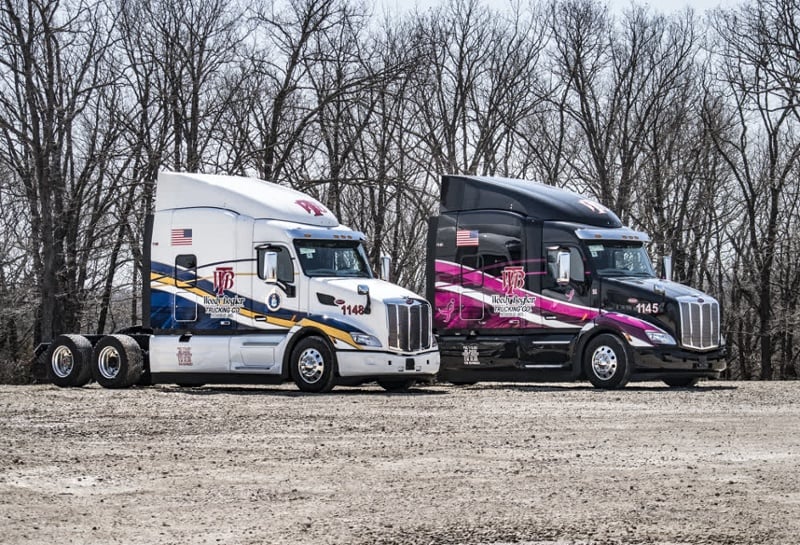
Transform your small business vehicles into mobile billboards with strategic fleet branding ideas, creative wrap designs, and lead-generating features like QR codes.

Discover how color, design, and psychology shape effective fleet graphics that boost visibility, brand recognition, and marketing ROI on every mile.
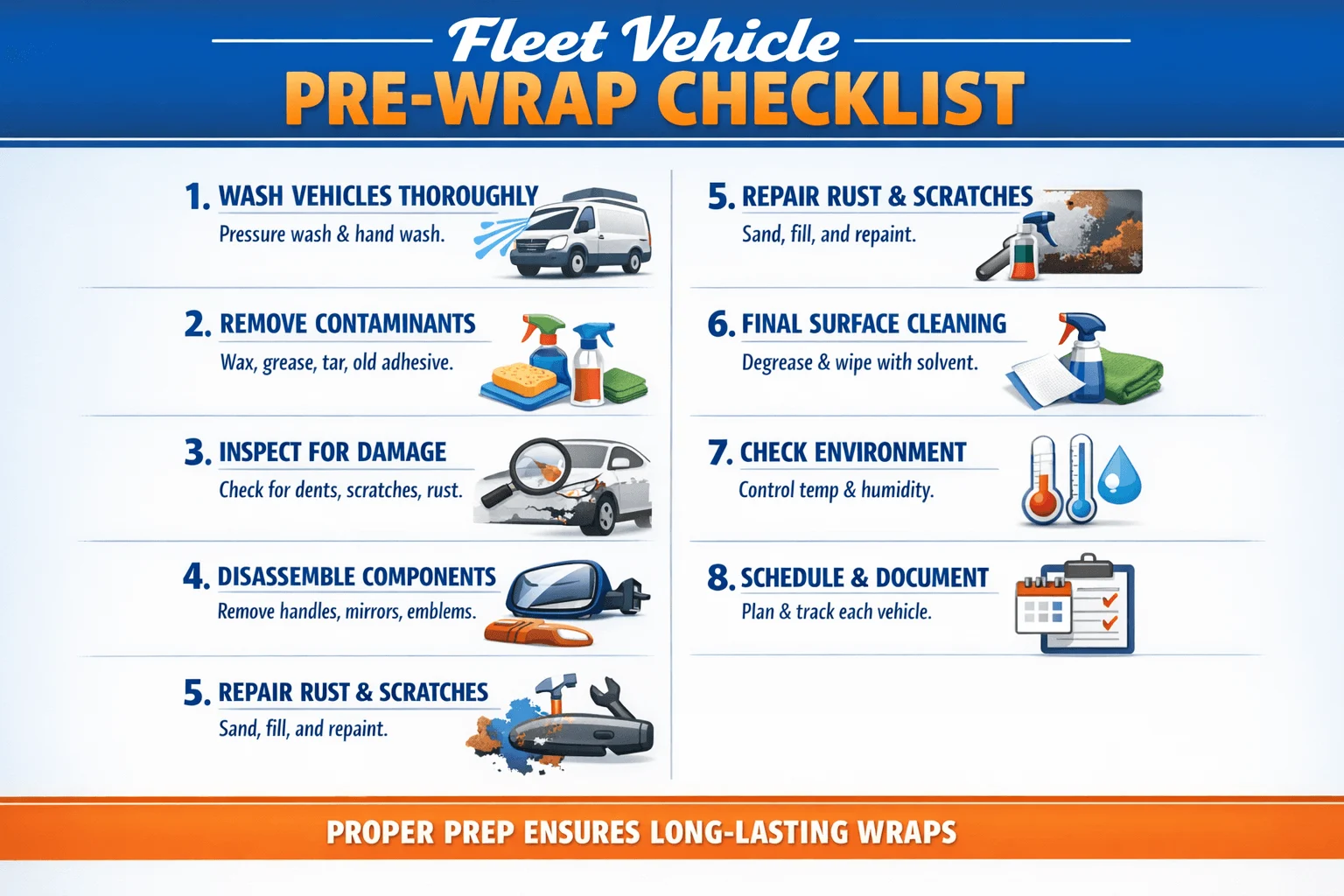
Preparing a fleet of vehicles for wrapping is the process [...]
