
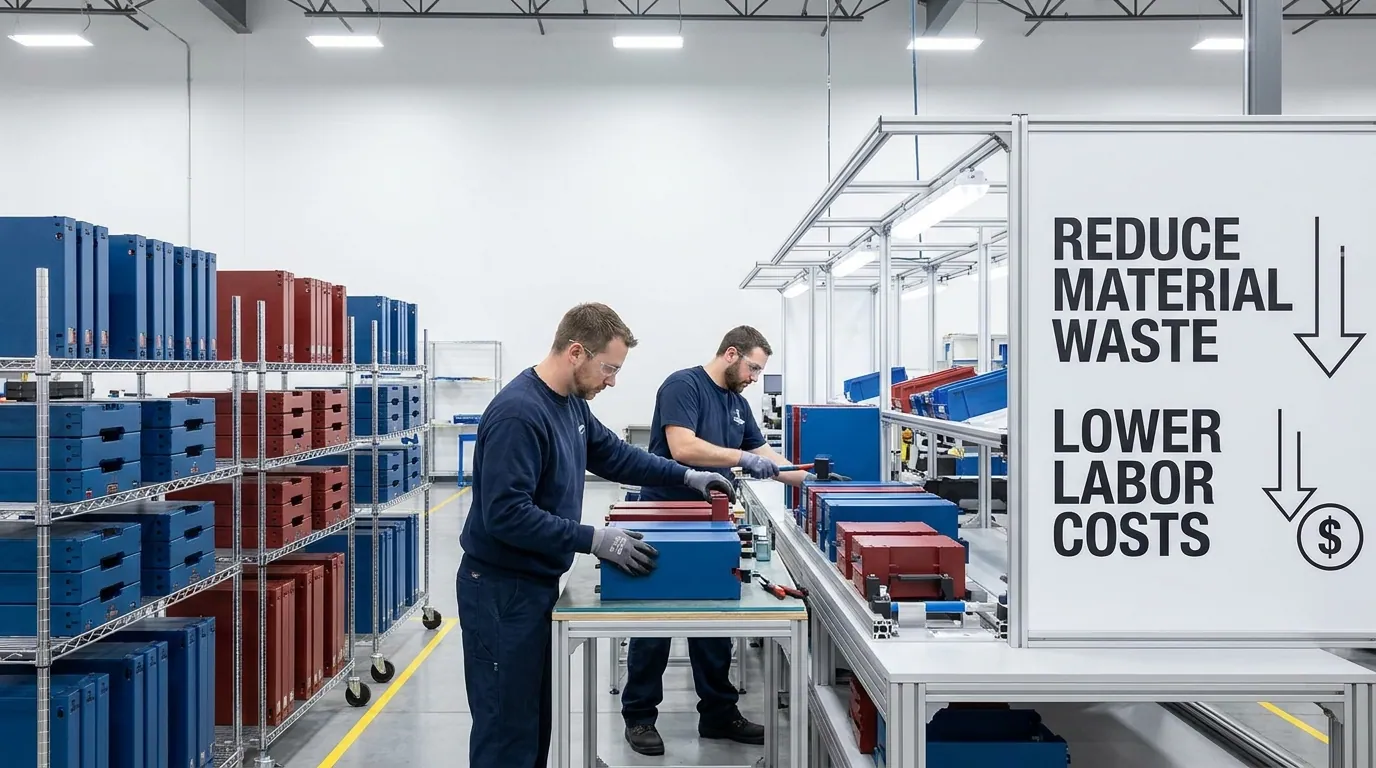
Modular design in manufacturing is a production strategy that uses standardized, interchangeable components to build complex systems, replacing one-off engineering with reusable modules that lower costs at every phase of a project lifecycle.
This guide covers production cost mechanics, the specific cost categories modularity reduces, timeline compression through parallel workflows, scalability across project scopes, industry applications, common implementation mistakes, ROI measurement, and the role of vertically integrated fabrication.
Standardized components eliminate the excess scrap and overages typical of custom fabrication, while module reuse spreads original design and tooling investments across multiple deployments. Fewer unique parts consolidate procurement, and simplified assembly sequences cut labor hours per build.
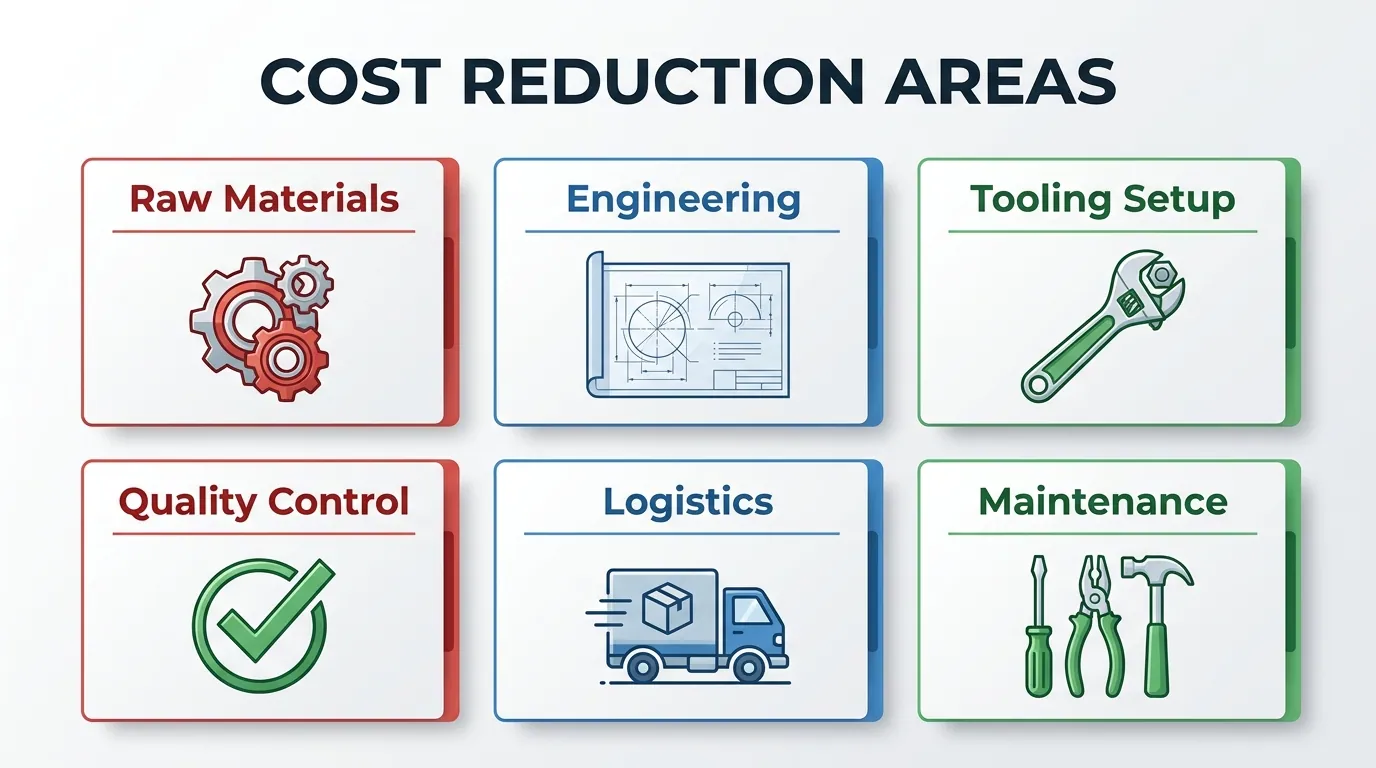
Modular frameworks reduce costs across raw materials, engineering iteration, tooling and setup, quality control, logistics, and long-term maintenance. Each category benefits from repeatable processes and standardized inspection criteria that make defect patterns easier to identify and eliminate.
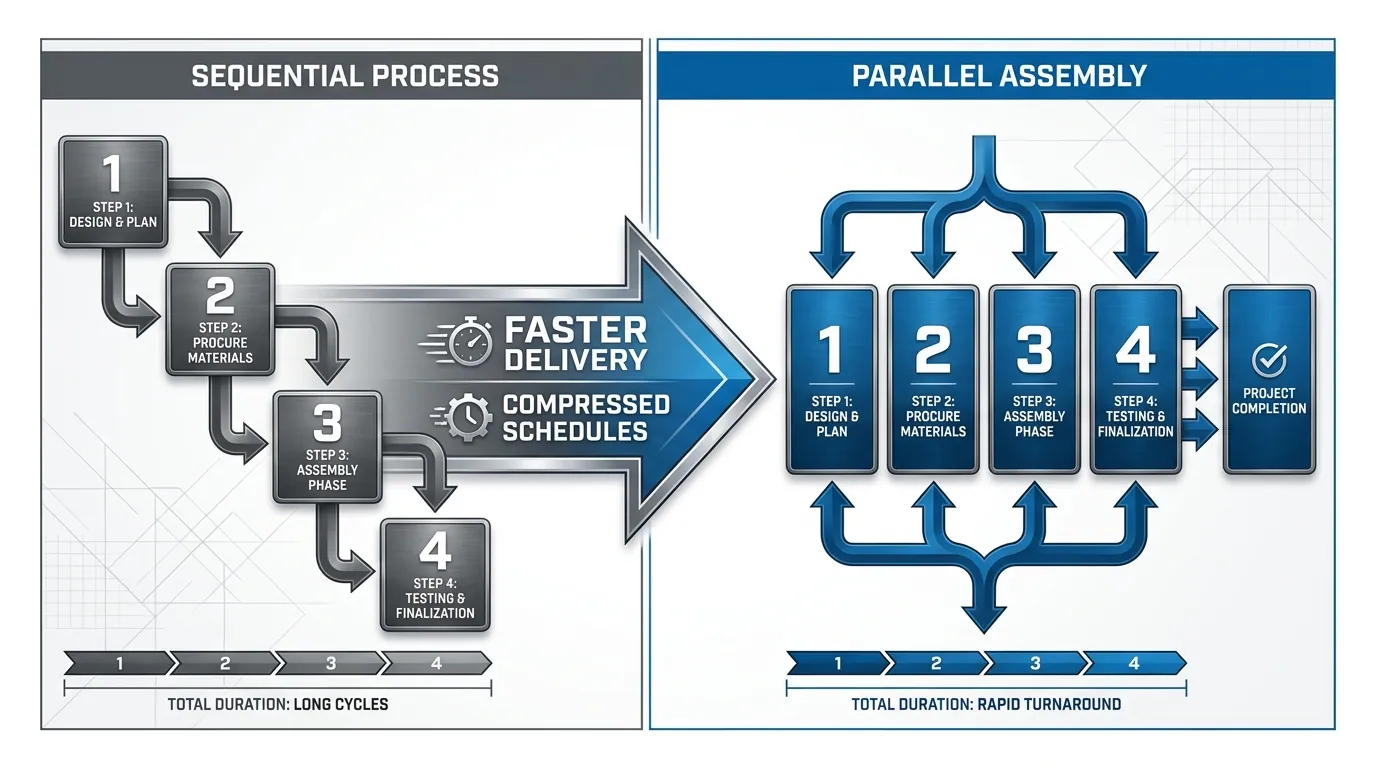
Parallel assembly allows multiple modules to be fabricated simultaneously rather than sequentially, and pre-validated designs remove redundant prototyping cycles. These two mechanisms compress project schedules significantly.
Reconfigurable modules serve diverse project scopes without requiring new engineering for each variation, making modularity especially effective for high-mix, low-volume production environments.
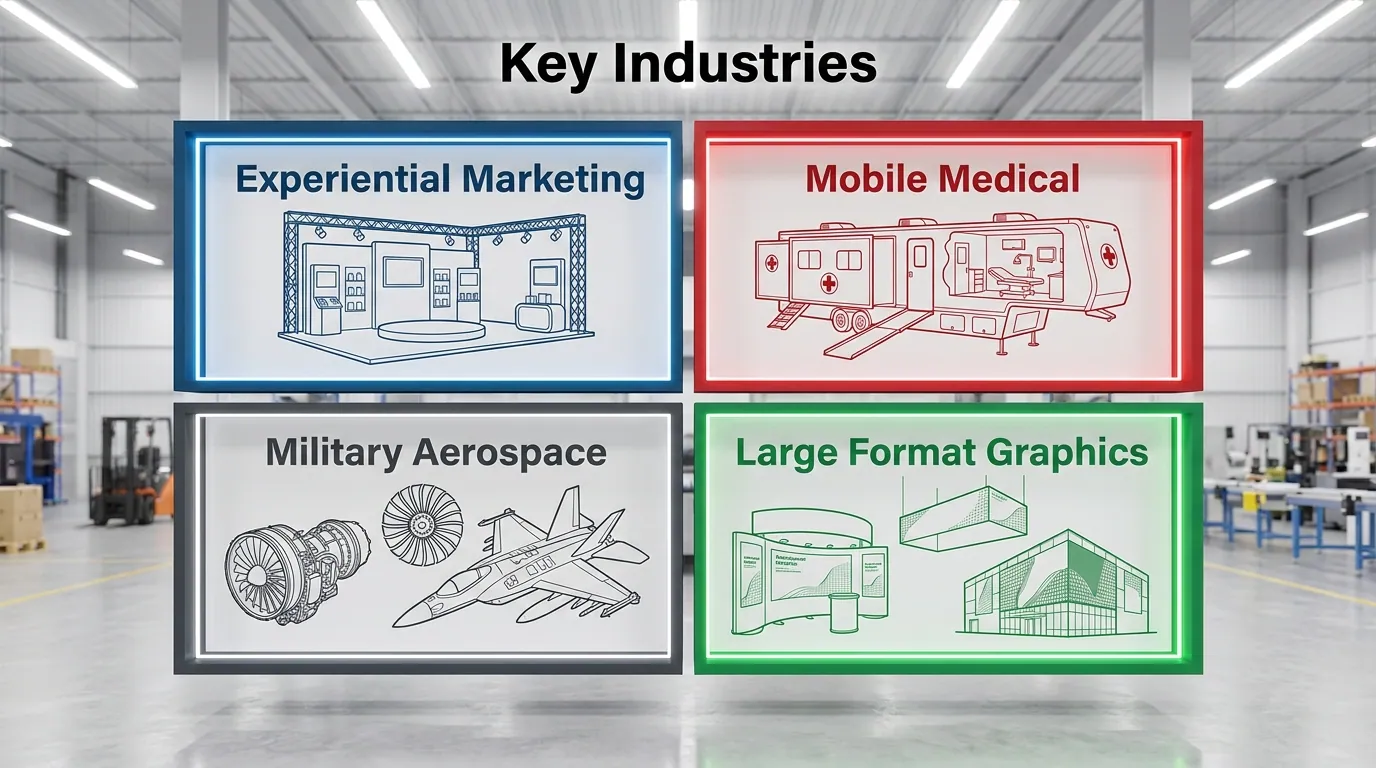
Experiential marketing, mobile medical units, military and aerospace programs, and large format graphics each leverage modularity differently, from reusable exhibit structures to rapidly deployable clinical facilities built from standardized shipping container modules.
Over-customizing modules and neglecting interface standardization are the most common errors that erode savings. Tracking metrics like component reuse ratio, per-unit production cost, and simple payback period ensures modular investments deliver measurable returns, particularly when paired with a vertically integrated fabrication partner.
What Is Modular Design in Manufacturing?
Modular design in manufacturing is a production strategy that uses standardized, interchangeable components to build complex systems. The subsections below explain how this approach differs from traditional custom fabrication and outline its core operating principles.
How Does Modular Design Differ From Traditional Custom Fabrication?
Modular design differs from traditional custom fabrication by replacing one-off, project-specific engineering with standardized components that can be reused, recombined, and replaced independently. Traditional custom fabrication starts each project from scratch, requiring unique design work, bespoke tooling, and non-standardized approval processes for every build.
According to the Federal Aviation Administration, to be modular means to be designed with standardized or uniform components, and if one component fails, it is easier to replace. This interchangeability stands in direct contrast to custom-fabricated assemblies, where a single failed part can require redesigning adjacent elements.
Key differences include:
- Design reuse: Modular components can be mix-and-matched across projects, eliminating redundant engineering cycles.
- Parallel workflows: Off-site module construction can occur simultaneously with site preparation, compressing schedules.
- Standardized interfaces: Modules connect through defined specifications rather than custom-fitted joints.
For manufacturers handling diverse project types, this distinction is practical, not just theoretical. Modular frameworks let teams invest engineering effort once, then deploy that work repeatedly across programs.
What Are the Core Principles Behind Modular Design?
The core principles behind modular design are decomposition, standardization, and interface management. These three principles govern how complex systems get divided into manageable, interchangeable units.
- Decomposition breaks complex problems into loosely coupled modules that are easier to manage and can be designed in parallel. However, a study published in the Journal of Mechanical Design (ASME) found that complexity can increase substantially when modules are fully decoupled, making thoughtful decomposition boundaries critical.
- Standardization ensures each module uses uniform dimensions, materials, and connection points so components from different production runs remain compatible.
- Interface management defines how modules connect, communicate, and transfer loads or data between one another.
When these principles work together, they enable what the Defense Acquisition University describes as modifications to systems, recombination of existing capabilities, and upgrades of system elements. The result is a design architecture built for adaptability rather than single-use performance.
Understanding these foundations clarifies why modular design directly influences production costs, which the following sections examine in detail.
Why Does Modular Design Lower Production Costs?
Modular design lowers production costs by reducing material waste, enabling module reuse, simplifying assembly, and consolidating procurement. The following sections break down each cost-reduction mechanism.
How Do Standardized Components Reduce Material Waste?
Standardized components reduce material waste by enabling precise, repeatable cuts and assemblies that eliminate the excess scrap generated by one-off custom fabrication. When every module follows a fixed specification, raw materials can be ordered in exact quantities rather than overestimated to account for design variability.
The scale of waste in non-modular approaches is striking. According to a San Francisco Museum of Modern Art report, a large-scale show can generate up to 200 cubic yards of non-recyclable drywall waste, with materials that have a lifespan of fifty years often used for only five or six months. Standardized, reusable components directly eliminate this cycle of single-use disposal. For any organization running repeat programs, the cumulative material savings alone justify the shift to modular systems.
How Does Module Reuse Cut Per-Unit Manufacturing Expenses?
Module reuse cuts per-unit manufacturing expenses by spreading the original design, engineering, and fabrication costs across multiple deployments instead of absorbing them in a single project. Each time a validated module ships again, the amortized cost per use drops.
This effect compounds over time. A module built once and deployed across ten campaigns divides its tooling and material investment by ten, making each subsequent use dramatically cheaper than a ground-up custom build. Reuse also removes repeated prototyping cycles, so teams move directly to production-ready assets. For high-frequency programs like touring activations or recurring trade show presences, module reuse is often the single largest driver of long-term cost efficiency.
How Does Simplified Assembly Reduce Labor Costs?
Simplified assembly reduces labor costs by replacing complex, skill-intensive fabrication steps with repeatable connection processes that require less specialized training and fewer labor hours. Modules designed with standardized interfaces snap, bolt, or lock together using documented procedures.
This predictability shortens on-site build times significantly. Crews follow consistent assembly sequences rather than interpreting unique blueprints for every project, which reduces errors and overtime. Fewer custom welds, custom brackets, and improvised fixes mean fewer billable hours per build. The result is a leaner labor footprint across both shop fabrication and field installation.
How Do Fewer Unique Parts Lower Procurement Costs?
Fewer unique parts lower procurement costs by consolidating purchase orders, increasing volume leverage with suppliers, and reducing the administrative overhead of managing diverse specifications. When a design library draws from a shared catalog of components, purchasing teams negotiate better pricing through bulk agreements.
Inventory management becomes simpler as well. Warehousing fewer distinct SKUs reduces carrying costs, minimizes obsolescence risk, and streamlines receiving inspections. Each eliminated unique part also removes a separate vendor qualification cycle, lead-time variable, and potential supply-chain disruption point. For manufacturers balancing multiple concurrent projects, this procurement consolidation translates into measurable savings on every build.
With production cost drivers addressed, the next section examines the specific cost categories modular design impacts most.
What Types of Costs Does Modular Design Help Reduce?
Modular design helps reduce costs across raw materials, engineering, tooling, quality control, logistics, and long-term maintenance. The following subsections break down each cost category.
Raw Material and Inventory Costs
Raw material and inventory costs drop when modular design standardizes components across product lines. Fewer unique parts means bulk purchasing of common materials, which lowers per-unit material pricing and reduces excess inventory sitting in warehouses. Standardized modules also minimize material waste because components are pre-engineered to exact specifications, eliminating the cut-off scrap and overages typical of custom fabrication.
According to the American Productivity & Quality Center’s benchmarking data from a sample of 5,843 companies, the median total cost to procure materials and services is $15.00 per $1,000 of purchases. Organizations that streamline procurement through standardized, repeatable component orders can push that cost well below the median. For manufacturers evaluating the switch, tracking simple payback on modular investments provides a clearer financial picture than ROI alone.
Engineering and Design Iteration Costs
Engineering and design iteration costs decrease significantly under modular frameworks. Pre-validated module designs eliminate the need to re-engineer every component from scratch for each new project. Engineers reuse proven subsystems and focus effort only on configuration-level changes, which compresses design cycles and reduces billable engineering hours.
According to a 2025 study published in Scientific Reports (Nature), increased investment in design significantly reduces costs in subsequent production phases, with design having the greatest impact on overall cost control. This finding reinforces a core advantage of modularity: the initial engineering investment in a well-designed module pays dividends across every future project that reuses it.
Tooling and Setup Costs
Tooling and setup costs shrink when modules share common dimensions, fastening systems, and manufacturing processes. Instead of creating custom jigs, fixtures, and dies for every new build, manufacturers reuse existing tooling across multiple module variants. Changeover time between production runs also decreases because setup procedures remain consistent.
This consistency is particularly valuable for high-mix production environments where frequent job changes would otherwise require extensive retooling. The cumulative savings grow with each additional project that leverages the same tooling infrastructure, making modular tooling investments increasingly cost-effective over time.
Quality Control and Rework Costs
Quality control and rework costs are reduced because modular components undergo standardized inspection processes. Each module type has established quality benchmarks, test procedures, and acceptance criteria that inspectors apply consistently. Defects caught in one module batch inform corrections across all identical modules, preventing the same error from recurring.
According to the National Institute of Standards and Technology, establishments that prioritize preventive and predictive maintenance show an 87% lower defect rate compared to those relying primarily on reactive approaches. Modular systems amplify this effect because repeatable designs make defect patterns easier to identify, track, and eliminate systematically.
Logistics and Shipping Costs
Logistics and shipping costs decrease when modules are designed with transport constraints in mind from the outset. Standardized module dimensions allow efficient container loading, palletization, and stacking. Pre-assembled modules also reduce the amount of on-site assembly labor required at the destination, cutting travel costs for installation crews.
Because each module is self-contained and pre-tested before shipping, the risk of field rework drops. Fewer site visits, shorter installation windows, and predictable freight dimensions all contribute to lower total logistics expenditure per project.
Long-Term Maintenance and Replacement Costs
Long-term maintenance and replacement costs fall because modular systems allow targeted component swaps instead of full-system overhauls. When a single module fails or becomes outdated, technicians replace only that unit while the rest of the system continues operating. This isolation of failure reduces both downtime and repair expense.
Spare parts inventories also become more manageable. Rather than stocking unique components for dozens of custom builds, organizations maintain a smaller catalog of standardized modules that serve multiple deployed systems. Over a product’s lifecycle, this approach to maintenance represents one of the most substantial and sustained cost advantages of modular design.
Understanding these cost categories sets the stage for examining how modularity also compresses production timelines.
How Does Modular Design Shorten Production Timelines?
Modular design shortens production timelines by enabling parallel assembly and eliminating redundant prototyping cycles. The subsections below explain how simultaneous module fabrication and pre-validated designs compress project schedules.
How Does Parallel Assembly of Modules Accelerate Delivery?
Parallel assembly of modules accelerates delivery by allowing multiple components to be fabricated simultaneously rather than sequentially. According to the U.S. Department of Energy’s Advanced Building Construction Initiative, off-site module construction can occur at the same time as site preparation and foundation activities, enabling significant schedule compression. This concurrent workflow means teams are not waiting idle for one phase to finish before the next begins.
Design components can also be reused and mix-and-matched across projects, so the design process does not restart from scratch each time. For manufacturers handling complex, multi-system builds, this overlap between design reuse and simultaneous fabrication is one of the most practical ways to cut weeks or months from a delivery schedule.
How Does Pre-Validated Module Design Reduce Prototyping Time?
Pre-validated module design reduces prototyping time by replacing custom, project-by-project engineering with standardized components that have already been tested and approved. When modules use proven interfaces and specifications, teams skip repetitive design verification cycles and move directly into production.
This advantage does require disciplined planning. As noted in a study published in IOP Conference Series: Materials Science and Engineering, modular construction demands detailed construction planning and tight coordination between production and assembly phases. Without that upfront rigor, the time savings from standardized modules can erode quickly.
Still, the tradeoff favors modular approaches for most repeat-production environments. Investing in thorough module validation once pays dividends across every subsequent build, making it a reliable strategy for compressing prototyping timelines.
With faster production timelines established, the next consideration is how modular systems scale across varying project sizes without proportional cost increases.
How Does Modular Design Improve Scalability Without Raising Costs?
Modular design improves scalability without raising costs by allowing manufacturers to reconfigure existing modules for new project scopes and support varied production runs using the same standardized components.
How Can Modules Be Reconfigured for Different Project Scopes?
Modules can be reconfigured for different project scopes because standardized interfaces allow individual components to be rearranged, added, or removed without redesigning the entire system. A mobile medical unit built from interchangeable wall panels, utility modules, and structural frames can be expanded for a large deployment or scaled down for a single-clinic setup, all from the same component library.
This flexibility eliminates the need to engineer a new solution for every project variation. According to the Defense Acquisition University, modular design enables “recombination of existing capabilities and upgrade of system elements” to respond rapidly to changing requirements. For manufacturers handling diverse project sizes, that reconfigurability translates directly into cost control: one set of validated modules serves dozens of configurations, spreading tooling and engineering investment across a broader output.
How Does Modularity Support High-Mix Low-Volume Production?
Modularity supports high-mix low-volume production by decoupling the design of individual components from the final assembly configuration. Instead of creating a unique design for each low-volume order, manufacturers draw from a library of pre-engineered modules and combine them to meet specific requirements.
This approach is particularly valuable for industries like experiential marketing, military fabrication, and mobile medical units, where no two projects are identical yet budgets rarely justify fully custom engineering. A research team at the National Renewable Energy Laboratory confirmed that materials and equipment for modular builds “can be standardized off-the-shelf components that do not require custom project-by-project design, engineering, product customization, and non- standardized approval processes” The result is shorter lead times and lower per-unit costs, even when every finished product differs.
Understanding how modularity scales across varied production demands reveals why certain industries capture disproportionate savings from this approach.
What Industries Benefit Most From Modular Design Cost Savings?
The industries that benefit most from modular design cost savings are experiential marketing, mobile medical, military and aerospace, and large format graphics. Each sector leverages modularity differently, from reusable exhibit structures to rapidly deployable medical units.
How Does Modular Design Save Costs in Experiential Marketing?
Modular design saves costs in experiential marketing by enabling brands to reuse structural components across multiple trade shows, mobile tours, and brand activations. Instead of building entirely new exhibits for each event, modular frameworks allow teams to reconfigure layouts, swap branded panels, and adapt a single platform to different venue requirements.
This reusability directly addresses a major industry pain point. According to UFI, The Global Association of the Exhibition Industry, significant volumes of waste, including packaging, wood, and booth materials, are generated during events due to fast turnaround schedules and the international nature of exhibitors. Modular systems reduce this disposable cycle by replacing single-use builds with adaptable, multi-event assets. For brands running multiple activations per year, the cumulative savings on fabrication, materials, and setup labor compound quickly.
How Does Modular Design Reduce Costs in Mobile Medical Units?
Modular design reduces costs in mobile medical units by standardizing core structural and clinical components that can be manufactured off-site and deployed rapidly without custom engineering for each project. Standardized modules built from repurposed shipping containers, for example, can be fabricated in advance and shipped anywhere in the United States, Canada, or Mexico within days, as demonstrated by a New Jersey R&D consortium documented by University Hospital, Newark.
This approach compresses timelines dramatically. During COVID-19, modular construction enabled China’s Leishenshan Hospital to reach operational status in two weeks; conventional construction would have required three to five years. Upfront design investment is the key cost lever. A 2025 study published in Scientific Reports (Nature) found that increased investment in design significantly reduces costs in subsequent production and installation phases, with design having the greatest impact on overall cost control.
How Does Modular Design Lower Costs in Military and Aerospace?
Modular design lowers costs in military and aerospace by enabling software and hardware reuse across multiple platforms, reducing redundant development and integration expenses. The U.S. Army’s Future Airborne Capability Environment (FACE) Consortium advances modularity, portability, and interoperability through a unified software standard, and reuse of software across platforms reduces both development costs and time to field.
Despite these advantages, formal cost-benefit analysis remains inconsistent across defense programs. A 2025 U.S. Government Accountability Office review found that none of the 20 programs examined had conducted a formal analysis of costs and benefits for a modular open systems approach, because Department of Defense policy did not explicitly require one. This gap suggests that military organizations likely undercount the savings modularity already delivers, making standardized measurement a critical next step.
How Does Modular Design Cut Costs in Large Format Graphics?
Modular design cuts costs in large format graphics by creating reusable display structures that accept interchangeable graphic panels, eliminating the need to fabricate new frameworks for every campaign or installation. Reconfigurable wall systems with removable baseboards, for instance, allow structures to be attached to one another in different layouts and moved on wheels between locations, as documented by Williams College’s reusable gallery wall initiative.
The alternative is wasteful. According to the San Francisco Museum of Modern Art, a large-scale show can generate up to 200 cubic yards of non-recyclable drywall waste, with materials that have a lifespan of fifty years often used for only five or six months. Modular graphic systems break this cycle by separating the permanent structure from the replaceable visual surface, so only the printed graphics change between campaigns while the underlying framework remains in service for years.
Understanding which industries gain the most from modularity helps organizations prioritize where to implement these strategies first.
What Are Common Mistakes That Reduce Modular Cost Savings?
Common mistakes that reduce modular cost savings include over-customizing individual modules and failing to standardize interfaces between components. These errors erode the reuse, interchangeability, and procurement efficiencies that make modular design cost-effective.
What Happens When Modules Are Over-Customized?
Modules are over-customized when project-specific modifications eliminate the standardization that enables reuse and cost reduction. Each custom alteration introduces unique engineering, tooling, and materials that cannot transfer to the next project, effectively turning a modular system back into traditional custom fabrication. A study published in Scientific Reports (Nature) found that increased investment in design significantly reduces costs in subsequent phases, with design having the greatest impact on cost control. When teams bypass proven module designs in favor of one-off changes, they sacrifice that downstream cost leverage. The most effective approach treats customization as a last-resort exception applied only where standard modules genuinely cannot meet requirements.
How Does Poor Interface Standardization Undermine Savings?
Poor interface standardization undermines savings by making modules incompatible across projects, preventing the mix-and-match reuse that drives long-term cost efficiency. When connection points, mounting hardware, or data protocols differ from one build to the next, each integration requires custom engineering and unique hardware. According to NASA Langley Research Center, the goal of interface management is to identify, define, control, and verify interfaces to ensure compatibility, efficient system development, and delivery on time and within budget. Without that discipline, teams lose the ability to source interchangeable components from multiple suppliers, which increases procurement costs and extends lead times. Standardized interfaces are the single most overlooked factor in sustaining modular savings over multiple project cycles.
Measuring these savings accurately requires clear ROI metrics, which the next section covers.
How Do You Measure the ROI of Switching to Modular Design?
You measure the ROI of switching to modular design by tracking cost reduction metrics across production phases and calculating the break-even point on your initial tooling investment.
What Metrics Track Cost Reduction From Modular Manufacturing?
The metrics that track cost reduction from modular manufacturing include:
- Material waste rate: Percentage of raw material scrapped per production run compared to pre-modular baselines.
- Component reuse ratio: Number of times a standardized module deploys across distinct projects before replacement.
- Per-unit production cost: Total labor, material, and overhead divided by units produced, measured before and after modular adoption.
- Procurement cost per purchase dollar: Total process cost for acquiring materials and services, benchmarked against industry medians.
- Engineering hours per new project: Time spent on design iteration when leveraging pre-validated modules versus starting from scratch.
According to the National Bureau of Standards, adequate standards that ensure compatibility of modular system components from competitive suppliers are the key to enabling cost-effective integrated manufacturing, particularly for small and medium firms. Tracking these metrics over quarterly cycles reveals whether standardization is compressing costs or whether interface misalignment is eroding expected savings.
How Do You Calculate Break-Even on Modular Tooling Investment?
You calculate break-even on modular tooling investment by dividing the total upfront tooling cost by the annual cost savings the modular system generates. This method, known as simple payback, produces a timeline in years rather than a simple percentage. According to the New York State Energy Research and Development Authority, simple payback is a more precise calculation than return on investment because it measures how long recouping the initial investment takes through ongoing savings each year.
The formula is straightforward: Break-Even Period = Initial Tooling Investment ÷ Annual Cost Savings. Annual savings should include reduced material waste, lower per-unit labor costs, decreased engineering hours, and fewer procurement transactions. For most fabrication operations, the break-even period shortens significantly after the second or third project reuses the same modular tooling.
Understanding ROI measurement creates a data-driven foundation for evaluating vertically integrated fabrication partners.
How Does Vertically Integrated Fabrication Maximize Modular Savings?
Vertically integrated fabrication maximizes modular savings by consolidating design, engineering, production, and finishing under one roof. This eliminates handoff delays, markup layers, and coordination gaps between vendors. The subsections below explore how an in-house design-to-build model enhances cost efficiency and summarize the key takeaways about modular cost reduction.
Can Craftsmen Industries’ In-House Design-to-Build Process Enhance Modular Cost Efficiency?
Yes, Craftsmen Industries’ in-house design-to-build process can enhance modular cost efficiency by keeping every phase of fabrication within a single 127,000 sq. ft. facility. When design, engineering, fabrication, printing, and installation operate under one roof, the markup and coordination overhead associated with outsourcing each phase to separate vendors is eliminated.
This vertically integrated model is especially effective for modular projects because standardized modules require tight interface tolerances. If one team designs a module and a different vendor fabricates it, misalignment risks increase, driving rework costs. Craftsmen Industries controls that entire chain internally.
For organizations deploying modular assets across experiential marketing, mobile medical, or industrial applications, this single-source approach compresses timelines and reduces total project cost compared to multi-vendor workflows.
What Are the Key Takeaways About How Modular Design Reduces Costs?
The key takeaways about how modular design reduces costs center on five principles:
- Standardized components cut waste and procurement overhead. Reusable modules reduce raw material consumption and simplify purchasing.
- Parallel assembly compresses timelines. Multiple modules can be fabricated simultaneously, reducing overall project duration.
- Module reuse lowers per-unit expenses. Pre-validated designs eliminate redundant engineering and prototyping for each new deployment.
- Simplified interfaces reduce rework. Consistent module connections minimize quality control failures and costly corrections.
- Vertical integration amplifies every savings layer. Consolidating design through production under one operation, as Craftsmen Industries does, removes the vendor coordination gaps that erode modular cost advantages.
Modular design is not a single cost lever; it is a system of compounding efficiencies. The organizations that capture the greatest savings are those that pair modular architecture with integrated fabrication, ensuring no value is lost between concept and delivery.
Filter Posts by Tag
related posts
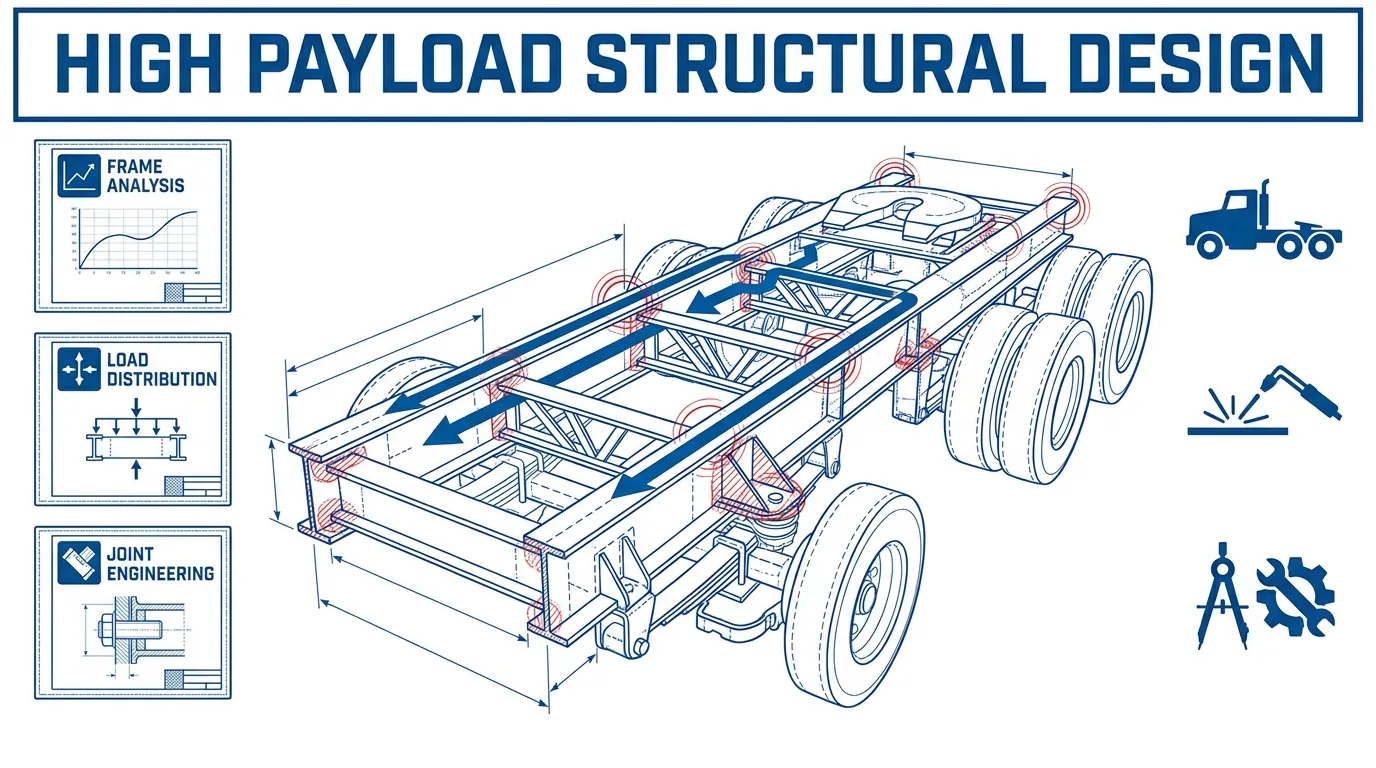
Structural design for high payload mobile units is the engineering [...]

Powder coating is a dry electrostatic finishing process that cures [...]

Automation and robotics in modern industrial fabrication is the application [...]
