

Fleet graphics for electric vehicles are vehicle wraps and branded visual elements engineered specifically for EV body construction, thermal profiles, and aerodynamic surfaces. EV fleet graphics require distinct material selection, adhesive systems, and design strategies that differ fundamentally from conventional internal combustion engine vehicle wraps.
This guide covers EV-specific structural and thermal challenges, material and adhesive selection, surface geometry and design layout, printing and color strategy, weight and range impact, durability and installation protocols, and removability planning.
Electric vehicles use aluminum alloys, carbon fiber composites, and mixed-material panels that present lower surface energy than traditional steel, forcing graphic installers to account for multiple substrate types on a single vehicle. Battery packs and power electronics create concentrated heat zones beneath body panels that can soften adhesive bonds and accelerate vinyl degradation in locations where ICE vehicles generate no thermal stress.
Cast vinyl films offer the conformability and dimensional stability needed for curved EV panels, lasting 5 to 11 years with immeasurable shrinkage. Non-PVC films eliminate chlorine and phthalates, aligning wrap materials with the environmental values electric fleets represent. Adhesive systems must overcome low-surface-energy coatings common on EVs, where standard pressure-sensitive adhesives often fail to wet and bond reliably.
Flush door handles, integrated sensor arrays, and daily-use charging ports create exclusion zones and design interruptions that traditional fleet vehicles lack. Every gram of wrap material reduces range; specifying ultra-thin cast films with lightweight laminates preserves the efficiency advantage that justified electrification.
Printing method selection, color and finish strategy, installation safety near 400V battery systems, and clean removability from sensitive EV surfaces all require planning before production begins.
Why Do Electric Vehicles Require Different Fleet Graphic Strategies?
Electric vehicles require different fleet graphic strategies because their body construction, thermal management systems, and aerodynamic profiles diverge significantly from traditional internal combustion engine (ICE) vehicles. These differences affect substrate compatibility, graphic placement zones, and design layout.
How Does EV Body Construction Differ From Traditional Fleet Vehicles?
EV body construction differs from traditional fleet vehicles in its extensive use of lightweight materials, such as aluminum alloys, carbon fiber composites, and mixed-material panels. Manufacturers prioritize weight reduction to extend battery range; according to Innovation News Network, a 10% weight reduction yields a 6–8% improvement in range or fuel economy. These substrates present lower surface energy than the steel panels common on ICE fleet vehicles, which means standard adhesive systems often struggle to form reliable bonds. Where a traditional fleet van offers large, flat steel surfaces ideal for vinyl application, an EV body may combine stamped aluminum doors, composite fenders, and polymer rocker panels within a single vehicle, requiring graphic installers to account for multiple substrate types in one project.
Why Do EV Thermal Management Systems Affect Graphic Placement?
EV thermal management systems affect graphic placement because battery packs, inverters, and electric motors generate concentrated heat zones in locations that differ from ICE vehicles. According to a review published by ScienceDirect, lithium-ion battery packs must maintain a stable temperature range between 15°C and 35°C to maximize efficiency. Active cooling loops, heat exchangers, and thermal interface plates run beneath body panels to regulate this range. These components create localized surface temperature fluctuations that can soften adhesive bonds, accelerate vinyl degradation, or cause premature edge lifting. Graphic designers must map these thermal zones before finalizing placement, avoiding areas directly above battery cooling channels or power electronics housings where sustained heat exposure compromises material longevity.
How Does Aerodynamic Efficiency Impact Graphic Design on EVs?
Aerodynamic efficiency impacts graphic design on EVs because range-critical vehicles are engineered with smooth, flush body surfaces that minimize drag. According to MDPI research, the aerodynamic characteristics of an electric vehicle body significantly affect power performance and handling stability. Features like sealed grilles, flush door handles, and integrated side mirrors create uninterrupted contours that maximize airflow efficiency. Thick vinyl layers, raised graphic edges, or improperly sealed film transitions can introduce micro-turbulence along these optimized surfaces. Designers must account for material thickness, edge sealing, and panel transitions to preserve the vehicle’s aerodynamic profile while still delivering high-impact fleet branding.
With these structural and performance differences established, material selection becomes the next critical decision for EV fleet graphics.
What Material Considerations Matter Most for EV Fleet Graphics?
The material considerations that matter most for EV fleet graphics include film type, sustainability profile, and compatibility with paint protection layers. Each factor influences durability, conformability, and brand alignment across an electric fleet.
How Do Cast Vinyl Films Perform on EV Curved Body Panels?
Cast vinyl films perform exceptionally well on EV curved body panels due to their thin, conformable construction. The casting process produces films with minimal memory, allowing them to stretch smoothly over complex compound curves found on aerodynamic EV body shapes. According to Arlon Graphics, cast films are manufactured for long-term use spanning 5 to 11 years, with immeasurable shrinkage compared to calendered alternatives.
This dimensional stability matters because EV panels feature tighter radii and flowing contours designed to reduce drag. A film that resists shrinkage over time prevents graphic distortion on fenders, bumper transitions, and sculpted side panels. For fleets expecting multi-year branding cycles, cast vinyl remains the most reliable choice for curved EV surfaces.
How Do Calendered Vinyl Films Hold Up on Flat EV Surfaces?
Calendered vinyl films hold up well on flat EV surfaces where extreme conformability is unnecessary. These films are produced by pressing vinyl through heated rollers, creating a thicker, more rigid material suited to broad, planar areas like cargo van sides, tailgates, and roof sections.
The trade-off is clear: calendered films cost less per square foot but carry higher shrinkage potential over time. On flat panels, this shrinkage risk is manageable because the film faces minimal stretching stress during installation. For fleet managers wrapping large flat sections with simple graphics or solid-color accents, calendered vinyl delivers a cost-effective solution. Reserving cast films for complex curves while using calendered material on flat zones is a practical way to balance budget and performance across an EV fleet.
What Role Do Non-PVC and Sustainable Films Play in EV Branding?
Non-PVC and sustainable films play an increasingly important role in EV branding by aligning vehicle graphics with the environmental values that electric fleets represent. Wrapping a zero-emission vehicle in conventional PVC film creates a messaging disconnect that sustainability-conscious audiences notice.
According to Avery Dennison, their PVC-free films are made without chlorine, phthalates, or other halogens, reducing volatile organic compound emissions and making the products safer for both the environment and installers. These materials reinforce a fleet’s green commitment from surface to substrate. For brands investing in electrification specifically to demonstrate environmental responsibility, specifying non-PVC wrap materials strengthens that narrative at every customer touchpoint.
How Do Paint Protection Films Interact With Graphic Overlays?
Paint protection films interact with graphic overlays by creating a transparent urethane barrier between the vehicle’s factory paint and the printed vinyl layer. This layered approach protects EV finishes, which often feature advanced multi-stage coatings, while still allowing full branding coverage.
The key consideration is adhesion compatibility. Graphic vinyl applied over PPF must use adhesive systems tested for bonding to urethane surfaces rather than clearcoat alone. Sequencing also matters: PPF should be installed first in high-impact zones like front fascias and rocker panels, with graphic overlays applied on top or adjacent. When the fleet graphic cycle ends, the PPF preserves the original paint underneath, protecting resale value. This layered strategy is especially valuable for leased EV fleets where return-condition requirements are strict.
With film types and layering strategies defined, understanding how adhesives bond to EV-specific surfaces becomes the next critical factor.
What Adhesive Challenges Are Unique to Electric Vehicle Surfaces?
Adhesive challenges unique to electric vehicle surfaces stem from lightweight substrates, battery enclosure proximity, and low-surface-energy coatings. The following subsections cover bonding to aluminum and composites, issues near battery zones, and how EV coatings affect adhesion.
How Do Adhesives Bond to Aluminum and Composite EV Panels?
Adhesives bond to aluminum and composite EV panels through pressure-sensitive adhesive systems engineered for non-porous, lightweight substrates. Aluminum panels, widely used in EV body construction, present a naturally oxidized surface that can inhibit mechanical adhesion. Composite panels made from carbon fiber or fiberglass reinforced polymers add further complexity because their resin-rich surfaces resist standard adhesive chemistries.
Proper surface preparation is critical for both materials:
- Aluminum requires thorough cleaning with isopropyl alcohol to remove oxidation and contaminants before adhesive application.
- Composite panels benefit from light abrasion or primer application to increase the bonding area at a microscopic level.
- Acrylic-based pressure-sensitive adhesives generally outperform rubber-based alternatives on these substrates due to superior shear strength and temperature resistance.
For fleet graphic installers, treating every EV panel as a unique bonding challenge, rather than assuming uniformity, prevents costly lift and failure down the road.
What Adhesive Issues Arise Around EV Battery Enclosures?
Adhesive issues around EV battery enclosures arise from heat cycling, vibration, and restricted surface access. Battery packs generate sustained thermal loads during charging and discharging, creating expansion and contraction cycles that stress adhesive bonds on adjacent panels. Graphics applied directly over or near battery enclosure seams face accelerated edge lifting as a result.
Key concerns include:
- Thermal fluctuation near battery housings weakens standard adhesive tack over time.
- Sealed enclosure edges leave minimal surface area for graphic overlap, reducing bond strength.
- Vibration from battery pack mounting points transmits micro-movement to surrounding body panels.
Selecting adhesives with high-temperature shear resistance and flexible polymer backings helps mitigate these stresses. Installers should also map battery enclosure locations before graphic layout to avoid placing critical brand elements in high-risk zones.
How Does Surface Energy on EV Coatings Affect Adhesion?
Surface energy on EV coatings affects adhesion by determining how readily an adhesive wets and bonds to the painted surface. Many electric vehicles use advanced ceramic, hydrophobic, or nano-coatings that dramatically lower surface energy, causing standard pressure-sensitive adhesives to bead rather than spread evenly. When surface energy drops below the adhesive’s wetting threshold, bond failure becomes inevitable.
According to Tekra, 3M High Strength Acrylic Adhesive 300LSE is designed to overcome bonding obstacles on low-surface-energy substrates without requiring flame, corona, or solvent-based primer treatments. This makes it particularly well-suited for coated EV panels where traditional surface modification is impractical at fleet scale.
Testing surface energy with dyne pens before installation remains the most reliable way to match the correct adhesive system to each vehicle’s coating profile.
How Does EV Surface Geometry Influence Graphic Design Layout?
EV surface geometry influences graphic design layout by introducing flush components, embedded sensors, and unique port placements that interrupt traditional wrap surfaces. The following subsections cover adjustments for flush door handles, sensor arrays, and charging port locations.
What Design Adjustments Are Needed for Flush Door Handles?
The design adjustments needed for flush door handles include modifying graphic templates to account for seamless, recessed handle mechanisms that sit level with the body panel. Unlike protruding handles on conventional fleet vehicles, flush handles create an unbroken surface that affects how vinyl seams and cut lines are positioned.
Designers must map exact handle locations during the template phase, since graphics that overlap flush handle recesses can interfere with deployment mechanisms or suffer premature edge lifting. According to a 2026 NPR report, China has introduced regulations starting in 2027 requiring all car doors to open manually from both sides, which could ban electric door handles entirely. This regulatory shift may alter handle geometry on future EV models, making flexible graphic templates essential for fleet managers planning long-term branding programs.
How Should Graphics Account for Integrated Sensor Arrays?
Graphics should account for integrated sensor arrays by mapping exclusion zones around every camera, lidar module, radar unit, and ultrasonic sensor before the design phase begins. These arrays are critical to advanced driver-assistance systems (ADAS), and even partial vinyl coverage can degrade sensor accuracy or trigger system faults.
Fleet graphic designers should obtain manufacturer sensor placement diagrams for each EV model in the fleet. Clear vinyl or precision die-cuts around sensor housings preserve both branding continuity and safety functionality. For fleets operating multiple EV models, maintaining a digital library of sensor-mapped templates prevents costly installation errors and ensures consistent brand appearance across the entire lineup.
What Design Approaches Work Around Charging Port Locations?
The design approaches that work around charging port locations involve creating graphic layouts with deliberate negative space, reinforced edge sealing, or removable panel sections near port doors. Charging ports on EVs are accessed daily, sometimes multiple times, which subjects surrounding vinyl to repeated flexing, abrasion, and edge stress.
Effective strategies include terminating graphics at least two inches from the port door perimeter and using overlaminate reinforcement on adjacent edges. Some fleet operators opt for a branded accent design around the port area that incorporates the port door into the visual layout rather than competing with it. This approach turns a functional interruption into a design feature while reducing maintenance cycles on high-wear zones.
With surface geometry mapped, understanding how temperature and heat factors affect wrap durability becomes the next priority.
How Do Temperature and Heat Factors Affect EV Fleet Wraps?
Temperature and heat factors affect EV fleet wraps by stressing adhesive bonds and vinyl films through repeated thermal cycling, concentrated drivetrain heat zones, and sustained surface temperatures unique to electric platforms. The sections below cover battery heat cycling, EV hot zone differences, and thermal tolerance requirements.
How Does Battery Heat Cycling Impact Vinyl Durability?
Battery heat cycling impacts vinyl durability by subjecting wrap adhesives and films to repeated expansion and contraction as the battery pack heats during discharge and cools during charging or rest periods. According to a review published by ScienceDirect on battery thermal management systems, lithium-ion battery packs require a stable temperature range between 15°C and 35°C to maximize efficiency. When pack temperatures fluctuate outside this window, the body panels above the battery enclosure experience thermal stress that transfers directly to the vinyl layer.
This cyclical heating and cooling gradually weakens the adhesive bond at panel edges and seams. Over hundreds of charge-discharge cycles, micro-lifting can develop where the film pulls away from curves or recessed areas near the battery housing. Selecting cast vinyl with heat-rated adhesive systems helps resist this degradation.
How Do EV Drivetrain Hot Zones Differ From ICE Engine Bays?
EV drivetrain hot zones differ from ICE engine bays in both location and intensity distribution. Internal combustion vehicles concentrate extreme heat under the hood, where temperatures routinely exceed 200°C around exhaust manifolds and turbochargers. Wraps rarely cover these areas, so traditional fleet graphics largely avoid direct heat exposure.
Electric vehicles, by contrast, spread moderate heat across a wider footprint. Electric motors, inverters, and battery packs generate heat beneath the floor pan, along the rear axle area, and near charging inlets. Although peak temperatures are lower than combustion engines, the heat disperses across more wrappable surface area. This broader thermal footprint means a larger percentage of the graphic faces sustained warmth, making material selection across the entire vehicle more critical than on conventional fleet trucks.
What Thermal Tolerances Should Wrap Materials Meet for EVs?
Wrap materials for EVs should meet thermal tolerances that account for sustained moderate heat rather than brief extreme spikes. Films rated for continuous exposure up to 90°C (194°F) handle the steady warmth radiating from battery enclosures and electric motor housings without premature adhesive softening or vinyl distortion.
Key thermal tolerance criteria for EV wrap materials include:
- Cast vinyl films with heat-stable plasticizers that resist shrinkage through repeated 15°C to 90°C cycles.
- Pressure-sensitive adhesives engineered for consistent bond strength across wide temperature swings.
- UV-resistant laminates that maintain color stability when thermal and solar loads combine on exterior panels.
- Adhesive systems that avoid residue or ghosting during removal after years of heat exposure.
For fleet managers planning large-scale EV programs, specifying materials against these thresholds prevents premature graphic failure and costly rewraps. With thermal performance defined, the next consideration is which printing methods deliver the most durable results on these heat-rated films.
What Printing Methods Work Best for EV Fleet Graphics?
The best printing methods for EV fleet graphics are latex, UV-curable, and solvent or eco-solvent printing, each suited to different production needs. The following sections compare how each technology performs for electric vehicle wrap applications.
How Does Latex Printing Perform on EV Graphic Applications?
Latex printing performs on EV graphic applications by using water-based inks that produce vibrant, durable output with minimal volatile organic compound emissions. This aligns well with the sustainability messaging many EV fleet operators prioritize in their branding.
Latex prints cure through a heated drying process, producing flexible ink layers that conform to the complex curves common on electric vehicle body panels. The resulting prints resist scratching and UV fading, making them practical for outdoor fleet use over multi-year cycles. Because latex inks contain no hazardous air pollutants, production facilities face fewer ventilation requirements. For fleet managers coordinating large-scale EV graphic rollouts, latex printing offers a balance of environmental compatibility, color accuracy, and material versatility that suits most cast vinyl substrates. Craftsmen Industries operates in-house large format printing capabilities at their St. Charles, Missouri facility, allowing fleet managers to work directly with the production team to specify the right printing method for their EV fleet requirements.
How Does UV-Curable Printing Suit EV Fleet Wrap Production?
UV-curable printing suits EV fleet wrap production by instantly curing inks with ultraviolet light, enabling faster throughput and immediate post-processing. This speed advantage matters when wrapping large EV fleets on tight deployment schedules.
UV-cured inks bond to the film surface as a solid layer rather than absorbing into the substrate. The result is sharper image detail and consistent color density across wide-format panels. These inks also exhibit strong chemical resistance, which protects graphics from road salts, cleaning agents, and environmental contaminants that EV fleet vehicles encounter daily. One consideration is that UV-cured ink layers can be slightly less flexible than latex prints, so pairing them with high-conformability cast films helps maintain graphic integrity on the compound curves typical of aerodynamic EV designs.
When Is Solvent or Eco-Solvent Printing Preferred for EV Wraps?
Solvent or eco-solvent printing is preferred for EV wraps when maximum outdoor durability and deep ink penetration into vinyl substrates are the primary requirements. Solvent inks chemically bond with the vinyl surface, creating exceptional adhesion that withstands prolonged UV exposure and harsh weather conditions.
Eco-solvent variants reduce the intensity of volatile organic compounds compared to traditional solvent inks while retaining much of the same durability profile. Fleet operators often select eco-solvent printing for partial wraps, spot graphics, or decal programs where individual panels need long-lasting adhesion without a full vehicle commitment. Traditional solvent printing remains relevant for high-mileage fleet vehicles that face extreme environmental stress. However, production facilities require proper ventilation systems, which adds to operational overhead.
With the right printing method selected, color and finish choices further define how an EV fleet communicates its brand identity.
How Should Color and Finish Choices Reflect an EV Brand Identity?
Color and finish choices should reflect an EV brand identity by aligning visual design with the sustainability values and forward-thinking positioning that electric fleets represent. The right palette and texture communicate brand messaging before a single word is read.
Matte finishes, satin wraps, and low-gloss textures convey the clean, modern aesthetic commonly associated with electric vehicle design language. Gloss finishes, by contrast, project bold visibility suited to consumer-facing brands that prioritize attention on the road. Each finish interacts differently with EV body curves, so the choice affects both brand perception and material performance on contoured panels.
Color selection carries strategic weight as well. Cool tones like whites, silvers, and blues reinforce associations with technology, efficiency, and environmental responsibility. Bolder brand colors remain effective when balanced against the vehicle’s inherent design lines, particularly on EVs where flush surfaces and seamless panels create large uninterrupted graphic zones.
For fleet consistency, specifying exact color matches across vehicles prevents brand drift as units are added over time. This becomes especially important as fleets scale; matching across different EV models with varying panel materials requires controlled color management from design through production.
Finish choices also carry practical implications. Matte and satin films may show less surface contamination between washes, while gloss finishes tend to highlight swirl marks and dust more readily. Selecting a finish that balances brand aesthetics with real-world maintenance demands keeps wrapped EVs looking professional throughout their service life.
With visual identity established, understanding how wrap weight and material thickness affect EV driving range adds another critical layer to the specification process.
How Do Weight and Material Thickness Impact EV Range?
Weight and material thickness impact EV range directly: every gram added to the vehicle reduces the distance it can travel on a single charge. Thinner, lighter graphic films help fleet managers preserve the efficiency gains that make electric vehicles cost-effective.
Electric vehicles are engineered with aggressive lightweighting strategies across body panels, structural components, and battery enclosures. According to Innovation News Network, a 10% weight reduction yields a 6–8% improvement in fuel economy and range. While a full vehicle wrap adds relatively modest mass compared to structural components, the cumulative effect across a large fleet becomes meaningful. A fleet of 200 vehicles, each carrying even a few extra pounds of heavy vinyl and laminate, collectively sacrifices range that translates into more frequent charging stops and higher operating costs.
Film thickness varies significantly between product types. Cast vinyl films typically measure 2–3 mils, while calendered films often run 3–4 mils or thicker. Laminate overlays add another 1–2 mils. For fleet operators prioritizing range preservation, selecting the thinnest cast film that still meets durability requirements is a practical optimization. Monomeric or polymeric calendered options, though less expensive per square foot, carry both weight and performance penalties on curved EV surfaces.
Material density matters as much as thickness. PVC-based films are inherently denser than newer non-PVC alternatives, so switching to chlorine-free polyurethane or polyolefin films can reduce weight without sacrificing print quality or conformability. This aligns well with the sustainability positioning many EV fleet operators already embrace.
For fleet managers evaluating total cost of ownership, the conversation around graphics should include range impact alongside durability and aesthetics. Specifying ultra-thin, high-performance cast films with lightweight laminates is one of the simplest ways to protect the efficiency advantage that justified the transition to electric vehicles in the first place.
What Durability and Maintenance Factors Apply to EV Fleet Wraps?
Durability and maintenance factors for EV fleet wraps include graphic lifespan expectations, cleaning protocols safe for vinyl surfaces, and the effects of regenerative braking vibration on adhesion over time.
How Long Do Fleet Graphics Last on Electric Vehicles?
Fleet graphics last between 5 and 11 years on electric vehicles when high-quality cast vinyl films are used and properly maintained. According to Arlon Graphics, cast films are manufactured for long-term use of 5 to 11 years and exhibit immeasurable shrinkage compared to calendered alternatives.
Several factors influence actual lifespan on EVs specifically:
- UV exposure intensity based on geographic operating region and outdoor parking frequency.
- Heat cycling from battery thermal management systems, which can accelerate adhesive fatigue in adjacent panel zones.
- Surface material compatibility, since aluminum and composite substrates common on EVs respond differently to adhesive aging than traditional steel.
Fleet operators who select the right film grade for each panel zone consistently get closer to the upper end of that range. For most commercial EV fleets, scheduling a professional inspection at the three-year mark helps catch early edge lifting before it spreads.
What Cleaning Methods Are Safe for Wrapped EV Surfaces?
Safe cleaning methods for wrapped EV surfaces avoid high-pressure washing, abrasive compounds, and petroleum-based solvents. These can damage printed vinyl, compromise laminate clarity, or weaken adhesive bonds along panel edges.
Recommended practices include:
- Hand washing with a mild automotive detergent diluted in water, using a soft microfiber cloth or sponge.
- Rinsing from top to bottom to prevent dirt from dragging across graphic surfaces.
- Avoiding automated brush car washes, which can catch vinyl edges and cause peeling.
- Spot-treating bug splatter, bird droppings, or tree sap promptly with isopropyl alcohol on a soft cloth.
Waterless wash solutions designed for vinyl wraps also work well for quick maintenance between full washes. Because EVs lack exhaust residue, wrapped surfaces tend to stay cleaner than those on internal combustion vehicles, which reduces overall wash frequency.
How Does Regenerative Braking Vibration Affect Wrap Longevity?
Regenerative braking vibration affects wrap longevity by introducing repetitive micro-stresses at adhesive bond lines, particularly on lower body panels and wheel-arch areas closest to the drivetrain. Unlike conventional friction braking, regenerative systems engage the electric motor as a generator during deceleration, producing a distinct vibration profile that transfers through the chassis.
Over thousands of braking cycles, this continuous low-frequency vibration can gradually fatigue adhesive bonds, especially where vinyl wraps span panel seams or curved transitions. Installers can mitigate this by using overlapping edge-seal techniques and selecting adhesives rated for dynamic stress environments.
Proper surface preparation before installation remains the most effective countermeasure. Ensuring panels are free of contaminants and fully primed gives the adhesive its best chance of resisting vibration-induced creep across the vehicle’s service life. With the right installation approach, maintaining wrap integrity through EV-specific stresses becomes a manageable part of fleet upkeep.
What Installation Best Practices Apply to Electric Vehicle Wraps?
Installation best practices for electric vehicle wraps center on thorough surface preparation, strict high-voltage safety protocols, and modified curing procedures. The following subsections cover each critical phase.
What Surface Preparation Steps Are Critical for EV Panels?
The surface preparation steps critical for EV panels include thorough decontamination, surface energy testing, and panel-specific priming. Aluminum and composite substrates common on EVs often carry factory coatings with lower surface energy than traditional steel, which weakens adhesive bond strength if not addressed.
Installers should follow a consistent prep sequence:
- Clean panels with isopropyl alcohol to remove manufacturing residues, road film, and silicone contaminants.
- Test surface energy with dyne pens to confirm the substrate will accept the adhesive system.
- Apply adhesion promoter on low-energy panels, particularly around composite fender sections and aluminum door skins.
- Verify panel temperature sits between 60°F and 80°F before film application begins.
Skipping the surface energy check is one of the most common mistakes on EV installs, because the mixed-material construction means two adjacent panels can behave very differently under the same adhesive. Working with an experienced provider that handles both material specification and installation in-house can help fleet managers avoid these common pitfalls when transitioning their fleet graphics to electric vehicles.
How Should Installers Handle High-Voltage Safety During Wrapping?
Installers should handle high-voltage safety during wrapping by following lockout protocols and avoiding contact with battery enclosures and high-voltage cable routing paths. Electric vehicles contain battery systems operating at 400V or higher, presenting serious electrical hazard during body panel work.
Key safety measures include:
- Powering the vehicle completely off and confirming the high-voltage system is de-energized before beginning any installation.
- Avoiding heat gun application directly over battery enclosure seams, high-voltage junction covers, or underbody cable runs.
- Using non-conductive tools when working near labeled high-voltage zones.
- Consulting the OEM service manual for each vehicle model to identify exact component locations beneath panels.
Even experienced wrap installers benefit from EV-specific safety orientation, since high-voltage component placement varies significantly between manufacturers.
What Post-Installation Curing Adjustments Do EVs Require?
The post-installation curing adjustments EVs require involve lower heat thresholds and extended ambient cure times compared to internal combustion vehicles. Battery packs positioned beneath the cabin floor are sensitive to external heat; excessive post-heat during curing can stress battery thermal management systems designed to maintain cell temperatures between 15°C and 35°C, according to a review published in ScienceDirect on battery thermal management.
Recommended curing adjustments include:
- Reducing post-heat gun temperature to no higher than 200°F when finishing edges above battery enclosures.
- Allowing 24 to 48 hours of ambient temperature curing before the vehicle enters service.
- Avoiding infrared oven curing methods that expose the vehicle underside to sustained radiant heat.
For fleet managers scaling across dozens of vehicles, these adjusted timelines should be factored into production scheduling from the start. With curing protocols established, planning for eventual graphic removal becomes the next consideration.
How Does Removability Factor Into EV Fleet Graphic Planning?
Removability factors into EV fleet graphic planning by determining whether graphics can be swapped or updated without damaging sensitive EV surfaces. Clean removal matters more on electric vehicles because their aluminum panels, composite substrates, and specialized coatings are costlier to refinish than conventional steel body panels.
Fleet managers cycling through lease terms or rebranding campaigns need films that release cleanly from low-surface-energy finishes common on EVs. Cast vinyl films, with their thinner profiles and conformable adhesive systems, generally remove more predictably than calendered alternatives, which can leave residue or stretch unevenly during pull-off.
Adhesive selection plays a critical role. Repositionable or air-egress adhesives allow installers to lift and reapply sections during installation, and they tend to separate from the clear coat more reliably at end of life. For fleets operating vehicles under warranty, residue-free removal protects OEM paint coverage.
Planning for removability at the specification stage, rather than treating it as an afterthought, reduces total cost of ownership across an EV fleet’s graphic lifecycle. With removal planning addressed, the right production partner can turn these specifications into scalable fleet branding.
How Can Large Format Graphics Elevate Your EV Fleet Branding?
Large format graphics elevate EV fleet branding by combining high-impact visual design with materials engineered for electric vehicle surfaces. The sections below cover how Craftsmen Industries supports this process and the essential takeaways for EV fleet graphic planning.
Can Craftsmen Industries’ In-House Design-Through-Installation Help With EV Fleet Graphics?
Yes, Craftsmen Industries’ in-house design-through-installation capability can help with EV fleet graphics. Craftsmen Industries operates from a 127,000 sq. ft. facility in St. Charles, Missouri, where design, engineering, fabrication, large format printing, and installation happen under one roof. This vertically integrated workflow gives fleet managers a single point of accountability, from initial concept through final application on complex EV body panels.
That level of control matters now more than ever. According to Cox Automotive data, only 14% of fleets currently operate EVs, yet a significant trend toward EV adoption is expected in the next five years. Fleet operators preparing for that transition need a graphics partner who understands how aluminum substrates, flush surfaces, and thermal zones affect material selection and installation technique. Craftsmen Industries brings over 40 years of custom fabrication and large format graphics experience to these emerging challenges.
What Are the Key Takeaways About EV Fleet Graphic Design and Material Considerations?
The key takeaways about EV fleet graphic design and material considerations center on how electric vehicles differ from conventional fleet vehicles in ways that directly affect wrap planning:
- EV body construction relies heavily on aluminum and composite panels, which require adhesives formulated for low surface energy substrates.
- Battery thermal management systems create heat zones that influence graphic placement and adhesive durability.
- Aerodynamic body designs with flush door handles, integrated sensors, and sealed charging ports demand precise design layouts.
- Cast vinyl films provide the conformability and long-term dimensional stability needed for curved EV panels.
- Non-PVC and sustainable film options align EV branding with the environmental values electric fleets represent.
- Material weight and thickness should be minimized to preserve driving range.
Partnering with a provider like Craftsmen Industries, one that controls the entire process from ideation to installation, ensures these technical factors are addressed before production begins.
Filter Posts by Tag
related posts
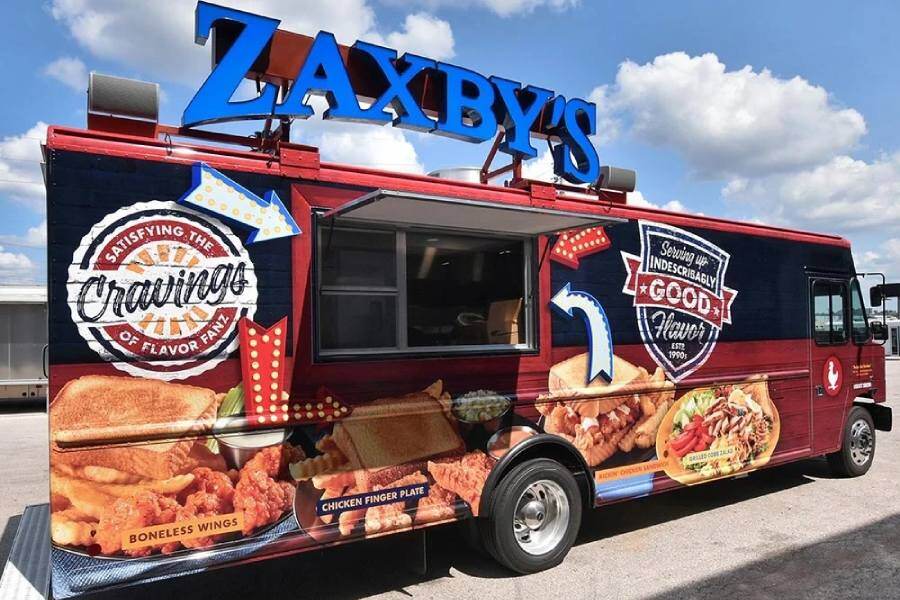
Transform your fleet into brand ambassadors with effective vehicle graphics. This guide covers design, messaging, and impact for maximum mobile exposure.
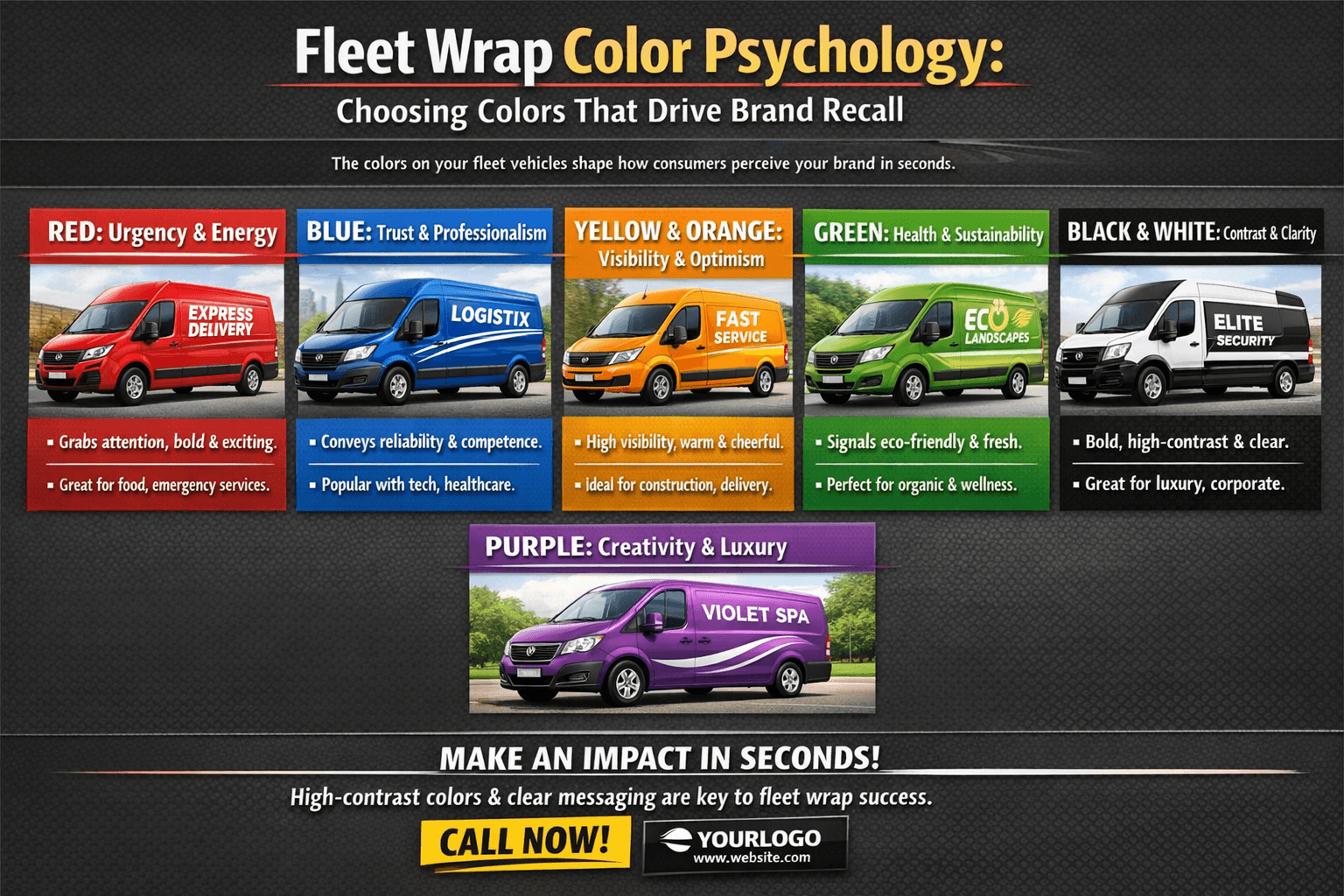
Fleet wrap color psychology is the strategic application of color [...]

Vehicle vinyl wraps are cost-effective advertising that makes a strong impression. Read on the benefits of wrapping your company trucks.
