
Experiential marketing is a marketing approach that directly engages consumers through participation in a branded experience, replacing passive ad exposure with live, interactive moments that build emotional connections and reinforce brand identity. This guide covers the definition and core attributes of experiential marketing, how it compares to other approaches, the main activation formats, its measurable benefits, campaign strategy and technology, measurement frameworks, real-world examples, common mistakes and challenges, emerging trends, and the process of turning concepts into physical builds. Experiential marketing is defined by ten core attributes, from active participation and multi-sensory engagement to measurability, and these qualities collectively distinguish immersive brand activations from conventional advertising. Nine distinct format types give brands flexibility in how they reach audiences. Live events, pop-ups, product sampling, guerrilla activations, mobile tours, trade shows, interactive installations, retail experiences, and hybrid digital formats each serve different objectives and audience contexts. The benefits extend across the full marketing funnel. Experiential campaigns build brand recall through sensory-rich interactions, generate organic word of mouth and user-generated content, capture first-party data through consent-based engagement, and drive purchase intent through direct product trial. Building an effective campaign follows a ten-step strategic framework covering objective setting, audience insight, experience design, format and location selection, participant journey mapping, staffing, data capture, promotion, and post-event optimization. Technology layers including AR, VR, interactive displays, RFID, and CRM-driven personalization deepen engagement and close the loop between participation and revenue attribution. Success measurement spans five metric categories: reach, brand sentiment, social amplification, lead conversion, and ROI. The guide also examines common execution mistakes, scaling challenges, and how brands work with fabrication partners to engineer concepts into tour-ready physical experiences.
What Is Experiential Marketing?
Experiential marketing is a marketing approach that directly engages consumers through participation in a branded experience. The sections below explain how this strategy works and what distinguishes it from conventional advertising.
How Does Experiential Marketing Work?
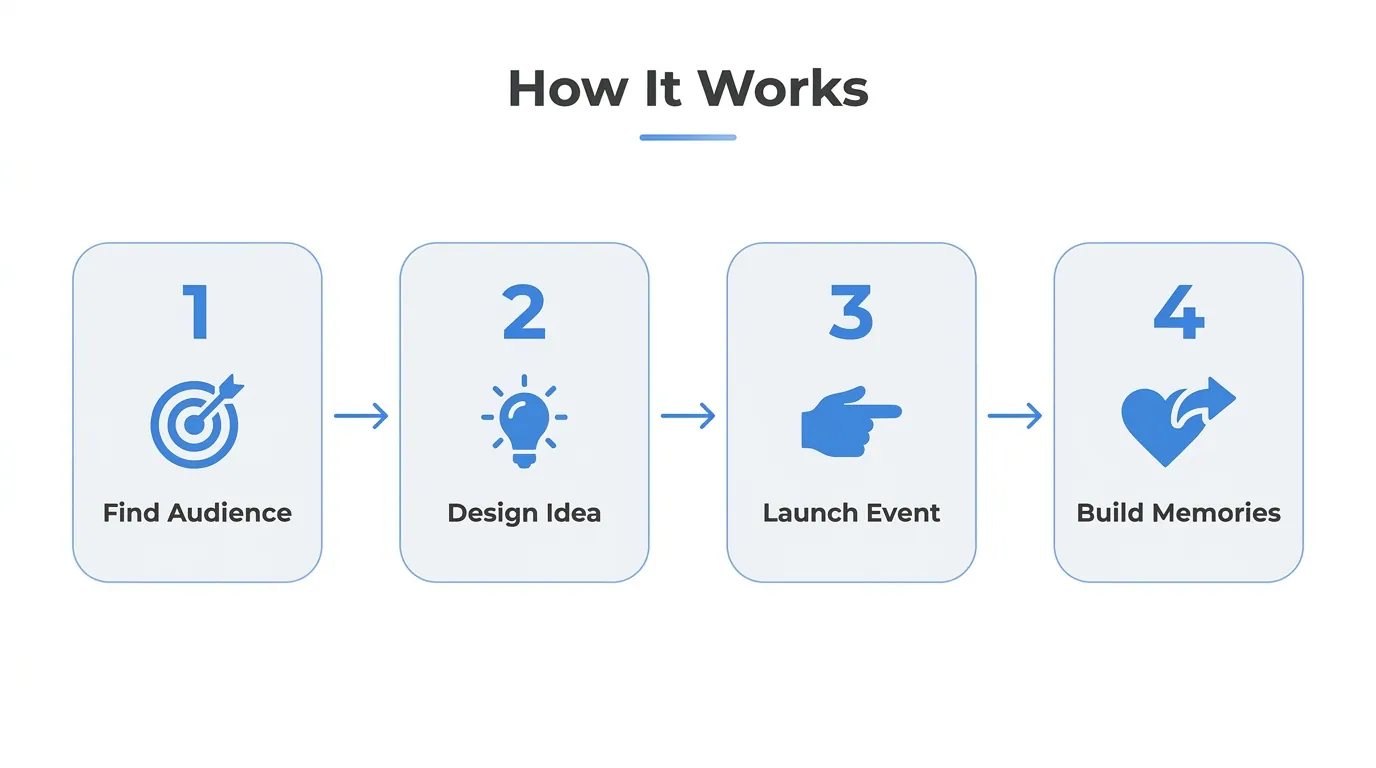
Experiential marketing works by inviting consumers to interact with a brand firsthand rather than passively receiving a message. Instead of telling audiences about a product’s value, brands create live, tangible moments where people can see, touch, and engage with it directly. The process typically follows a structured sequence:
- A brand identifies a specific audience and defines a clear campaign objective.
- Designers develop an interactive concept tied to the brand’s core message.
- The experience launches in a physical or digital environment where consumers participate voluntarily.
- Each interaction generates emotional responses, product familiarity, and shareable content.
As the American Marketing Association describes across its experiential marketing resources, this approach matters because it can stimulate an emotional connection and reinforce the essence of the brand. Because participation is voluntary, consumers arrive with higher receptivity, which makes the resulting impressions far more durable than those produced by passive ad exposure.
What Makes Marketing “Experiential”?
What makes marketing “experiential” is the shift from observation to participation. Traditional marketing evaluates only the rational side of consumer behavior, focusing on the functional benefit of a purchase. Experiential marketing, by contrast, addresses both rational and emotional dimensions, making the approach more personal and individual, as noted by The Romanian Economic Journal.
- Active involvement: Consumers do something, whether testing a product, exploring an installation, or co-creating content.
- Sensory depth: The experience engages multiple senses, not just sight or sound.
- Emotional resonance: The interaction creates a feeling tied to the brand’s identity.
- Real-time connection: The moment happens live, creating immediacy that recorded media cannot replicate. When these elements combine, the result is a memory rather than a mere impression. That distinction is what separates experiential marketing from every other approach in a brand’s toolkit, and it is why the discipline continues to command growing investment worldwide.
What Are the Core Attributes of Experiential Marketing?
The core attributes of experiential marketing are the defining qualities that separate immersive brand experiences from passive advertising. These ten attributes shape how campaigns engage audiences, build trust, and deliver results.
1. Active Participation and Interactivity
Active participation and interactivity require the audience to do something, not just watch. Effective experiential campaigns transform consumers from passive observers into active contributors through hands-on product trials, live challenges, gesture-driven installations, or collaborative problem-solving. When participants physically engage with a brand, they process information more deeply and form stronger associations. The most successful activations give each person a role in the experience rather than a seat in the audience.
2. Brand Relevance and Authenticity
Brand relevance and authenticity ensure that every element of the experience ties directly to the brand’s identity, values, and product truth. A visually stunning activation that feels disconnected from the brand it represents wastes budget and confuses audiences. Authentic experiences reflect what the company actually delivers, building credibility rather than raising expectations that cannot be met. This alignment between the experience and the brand promise is what turns a memorable moment into lasting brand equity.
3. Emotional Connection
Emotional connection is the attribute that transforms a marketing interaction into a personal memory. According to research published in the International Journal of Multicultural and Multireligious Understanding, experiential marketing variables have a significant direct influence on both satisfaction and word-of-mouth behavior. Experiences that trigger surprise, joy, pride, or nostalgia bypass rational evaluation and create associations stored in long-term memory. Emotional resonance is often the single strongest predictor of whether a participant will advocate for a brand after leaving the activation.
4. Multi-Sensory Engagement
Multi-sensory engagement activates sight, sound, touch, taste, or smell to create richer, more immersive brand interactions. Layering multiple senses deepens cognitive processing and makes experiences feel more vivid. A product demo that lets someone feel material texture while hearing a brand soundtrack and seeing dynamic lighting encodes the brand across several memory pathways simultaneously. The most effective activations deliberately design for at least two or three sensory channels rather than relying on visuals alone.
5. Tangible Value for the Participant
Tangible value for the participant means the person walks away with something useful, whether that is a product sample, new knowledge, exclusive access, or a skill they practiced during the experience. Activations that only benefit the brand while asking for the consumer’s time feel extractive. Offering genuine value, such as a hands-on workshop, a personalized product, or insider content, reframes the interaction as an exchange rather than an interruption.
6. Memorability
Memorability is the attribute that gives an experiential campaign a lifespan beyond the event itself. Experiences built around unexpected moments, novel formats, or personal stakes are encoded more strongly in long-term memory. A forgettable activation, regardless of its budget, produces minimal return. Designing for memorability means creating peak moments that participants recall and recount weeks or months later, extending the campaign’s influence well past its physical duration.
7. Personalization and Co-Creation
Personalization and co-creation invite participants to shape the experience around their own preferences, choices, or input. When someone customizes a product, selects a pathway through an activation, or contributes content that becomes part of the installation, their psychological ownership of the brand deepens. This attribute shifts the dynamic from “brand talks, consumer listens” to a collaborative exchange. Co-created experiences also yield more authentic user-generated content because the output genuinely reflects the participant’s involvement.
8. Social Shareability
Social shareability is the attribute that extends an activation’s reach far beyond its physical footprint. Shareable moments, such as visually striking backdrops, personalized outputs, or surprising reveals, encourage participants to post content organically. Each share introduces the brand to new audiences through a trusted peer endorsement rather than a paid impression. However, shareability should serve the experience, not replace it; designing solely for the camera often undermines the participant’s in-person engagement.
9. Physical and Digital Integration
Physical and digital integration connects on-site experiences with online platforms to create a unified participant journey. QR codes, RFID wristbands, companion apps, live social feeds, and post-event email sequences bridge the gap between a physical moment and ongoing digital engagement. This attribute ensures the relationship does not end when the participant walks away. It also enables real-time data capture that informs personalization both during and after the activation.
10. Measurability
Measurability is the attribute that ties experiential marketing to business outcomes. According to EventTrack by Mosaic and Event Marketer (2020 survey data), 88% of brands measure the effectiveness of their event and experiential marketing programs. Trackable KPIs include foot traffic, dwell time, lead capture volume, social mentions, sentiment scores, and post-event conversion rates. Without measurability built into the experience from the design phase, even the most engaging activation cannot prove its value to stakeholders. Understanding these core attributes provides the foundation for distinguishing experiential marketing from other approaches.
How Is Experiential Marketing Different From Other Marketing Approaches?
Experiential marketing differs from other marketing approaches by prioritizing active consumer participation over passive message delivery. The sections below clarify how it compares to traditional marketing, event marketing, brand activation, and interactive or immersive marketing.
Experiential Marketing vs. Traditional Marketing
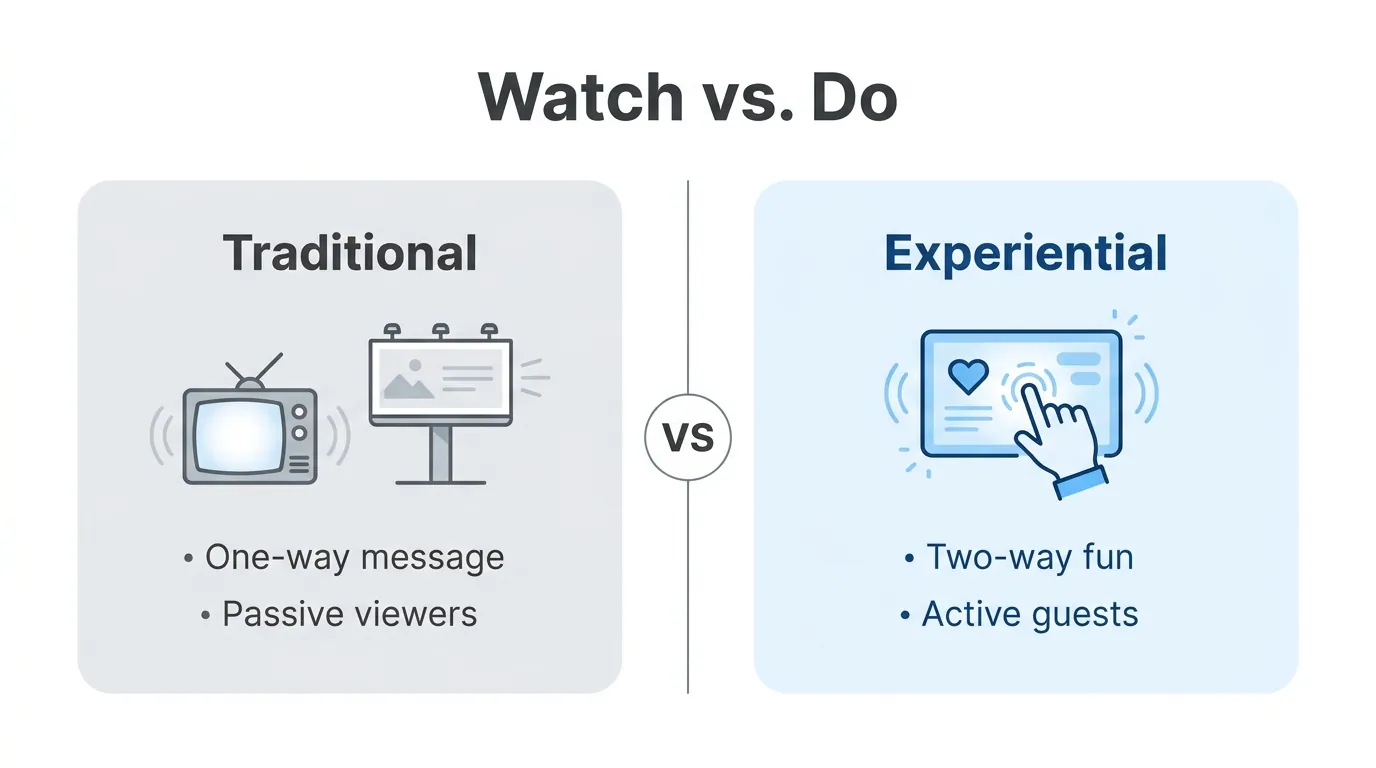
Experiential marketing differs from traditional marketing by engaging both the rational and emotional sides of consumer behavior, while traditional marketing evaluates only rational purchase motivation. As framed in AMA experiential marketing resources, experiential marketing directly engages, invites, and encourages consumers to participate in a branded experience, stimulating an emotional connection that reinforces brand essence.
Traditional marketing pushes messages outward through channels such as television, print, and display ads. The audience receives information passively, with limited opportunity to interact with the brand. Experiential marketing reverses that dynamic; consumers become active participants in a live, sensory, and personal encounter.
This distinction matters at scale. A study published in The Sport Journal found that experiential marketing had a significantly positive influence on customer purchase intention, with an explanatory power of 47.7%. Passive ad exposure rarely produces that level of measurable behavioral impact, which is why brands increasingly allocate budget toward participatory formats.
Experiential Marketing vs. Event Marketing
Experiential marketing differs from event marketing in scope and intent. Event marketing centers on organizing or sponsoring a specific occasion, such as a conference, concert, or trade show. Experiential marketing may occur at an event, but it can also happen in retail spaces, on mobile tours, in digital environments, or through guerrilla activations in public settings.
The defining line is participation. An event gathers an audience; an experiential activation invites that audience to interact with the brand directly. According to EventTrack (2020 survey data), 88% of brands measure the effectiveness of their event and experiential marketing programs, reflecting how closely the two disciplines overlap in practice. However, not every event qualifies as experiential, and not every experiential campaign requires an event venue. When participation and brand immersion drive the format, event marketing becomes experiential.
Experiential Marketing vs. Brand Activation
Experiential marketing differs from brand activation in specificity. Brand activation is a broader category that includes any campaign designed to drive consumer action toward a brand, from in-store promotions and loyalty programs to digital coupon campaigns. Experiential marketing is one method within that category. What separates experiential marketing from other brand activation tactics is the emphasis on immersive, sensory, and participatory encounters. A coupon is a brand activation; a fully themed pop-up store where visitors touch, taste, and co-create with the brand is an experiential activation. For brands seeking deeper emotional resonance rather than a transactional prompt, experiential formats consistently outperform standard activation tactics in memorability and word-of-mouth generation.
Experiential Marketing vs. Interactive and Immersive Marketing
Experiential marketing differs from interactive and immersive marketing primarily in physical presence and brand context. Interactive marketing encompasses any two-way digital exchange, including quizzes, configurators, chatbots, and personalized web content. Immersive marketing uses technologies such as augmented reality, virtual reality, or projection mapping to surround the user in a controlled sensory environment. Experiential marketing frequently incorporates both interactive and immersive elements, but it anchors them within a broader branded experience that often includes a physical component. A standalone AR filter is interactive; a branded mobile tour featuring AR, live product sampling, and on-site staff guidance is experiential. The overlap continues to grow as physical-digital hybrid formats become standard, making clear strategic intent the best way to classify which approach a campaign actually represents. Understanding these distinctions helps brands select the right format for each campaign objective.
What Are the Main Types of Experiential Marketing?
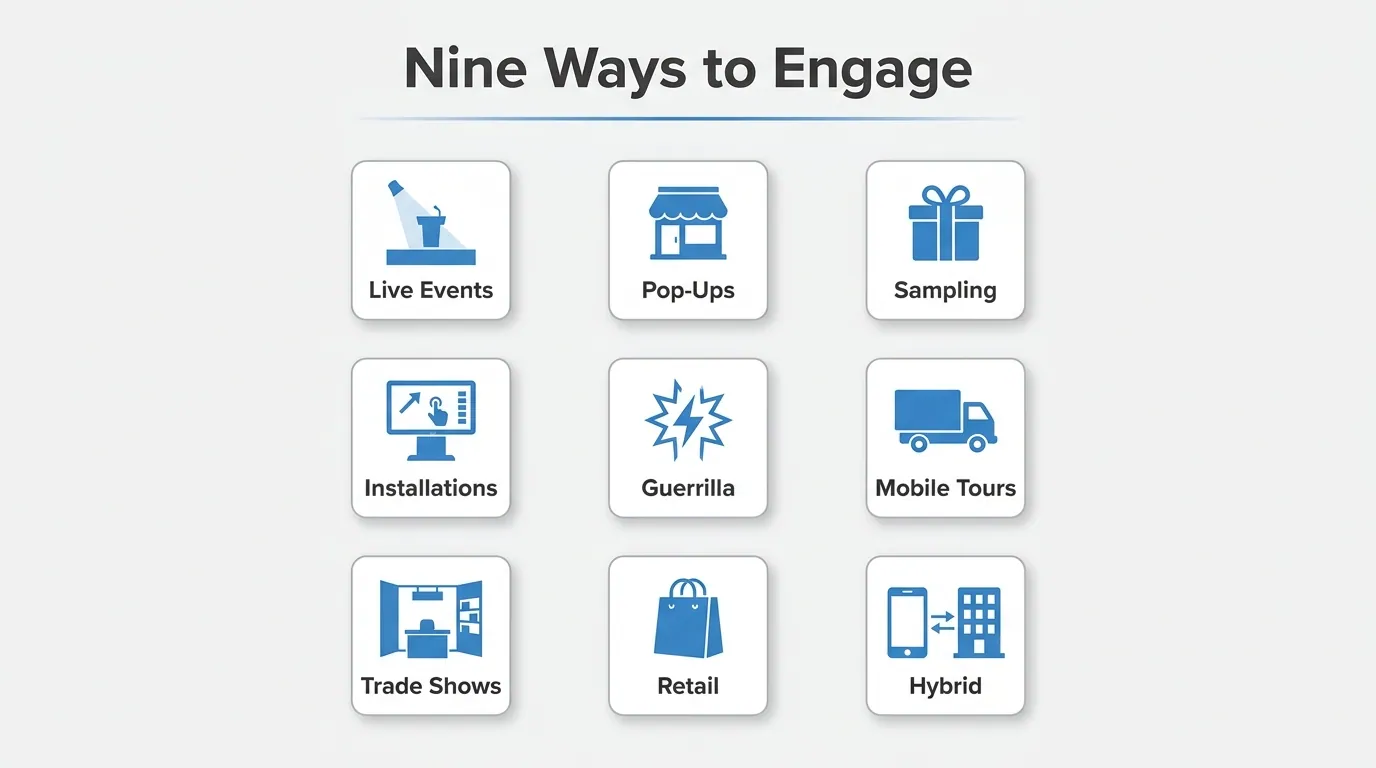
The main types of experiential marketing include live events, pop-up shops, product demonstrations, interactive installations, guerrilla activations, mobile tours, trade shows, retail experiences, and digital or hybrid formats. Each type creates distinct opportunities for consumer participation.
Live Events and Brand Experiences
Live events and brand experiences are planned, in-person activations where consumers interact directly with a brand in a controlled environment. These include festivals, concerts, branded conferences, and launch parties designed to immerse attendees in a brand’s story.
According to Freeman’s 2023 Trust Report (with Edelman DXI), 77% of consumers say their trust increased somewhat or a lot following interaction with a brand at a live event. That level of trust-building is difficult to replicate through passive advertising alone, which makes live events one of the highest-impact formats available.
Pop-Up Shops and Temporary Brand Spaces
Pop-up shops and temporary brand spaces are short-term physical locations that create urgency and exclusivity around a brand experience. They operate for days or weeks in high-traffic areas, generating concentrated consumer engagement. Brands use pop-ups to test new markets, launch products, or build buzz without long-term lease commitments. The temporary nature drives foot traffic through scarcity, while the physical space allows full sensory control over the brand environment. For brands seeking memorable first impressions in unfamiliar markets, pop-ups remain one of the most flexible experiential formats.
Product Demonstrations and Sampling
Product demonstrations and sampling are experiential formats that let consumers physically test, taste, or use a product before purchasing. This hands-on interaction reduces purchase hesitation by replacing passive awareness with direct, personal evaluation. Sampling works particularly well for food, beverage, beauty, and consumer electronics brands where sensory experience influences buying decisions. When consumers form their own opinion through trial rather than advertising, the resulting preference tends to be stronger and longer-lasting.
Interactive Installations
Interactive installations are physical or digital environments that respond to participant actions, creating a two-way exchange between the brand and the consumer. Common formats include touch-screen displays, motion-activated projections, and gamified brand challenges. The key distinction is responsiveness. Unlike static signage or passive exhibits, interactive installations adapt based on user input, making each experience feel personalized. This format excels at generating social media content because participants naturally share moments they helped create.
Guerrilla Marketing Experiences
Guerrilla marketing experiences are unexpected, unconventional activations placed in public spaces to surprise and engage consumers outside traditional advertising contexts. They rely on creativity and placement rather than large media budgets. Street art, flash mobs, branded street furniture, and surprise performances all qualify. The element of surprise amplifies memorability and social sharing. However, guerrilla campaigns carry higher reputational risk if the activation feels intrusive or is poorly received by the public, so careful audience and location planning is essential.
Mobile Tours and Roadshows
Mobile tours and roadshows are experiential campaigns that travel across multiple locations, bringing a branded experience directly to target audiences. Custom-built vehicles, trailers, and mobile stages serve as the activation platform. This format solves a core experiential challenge: geographic reach. Rather than relying on consumers to travel to one venue, mobile tours meet audiences where they already gather. Multi-city routing also allows brands to gather comparative market data across regions, making roadshows both an engagement tool and a research opportunity.
Trade Shows and Exhibitions
Trade shows and exhibitions are industry-specific events where brands showcase products, services, and capabilities to targeted professional audiences. Experiential elements within trade show booths, such as live demos, immersive displays, and hands-on testing stations, differentiate exhibitors from competitors. In B2B contexts, trade shows often represent the first physical touchpoint between a brand and a potential buyer. The quality of the booth experience directly shapes perception of the company’s capabilities. A well-executed trade show activation compresses what might take months of digital nurturing into a single memorable interaction.
Retail and Community Experiences
Retail and community experiences are experiential activations embedded within existing retail locations or local gathering spaces. In-store workshops, community events, and branded retail environments transform routine shopping into participatory brand engagement. This format leverages existing foot traffic rather than building an audience from scratch. Retailers benefit from increased dwell time and deeper product exploration, while brands gain credibility through community-level presence. For regional or emerging brands, community activations often deliver stronger loyalty returns than national campaigns.
Digital, Virtual and Hybrid Experiences
Digital, virtual, and hybrid experiences are experiential formats that extend brand activations beyond physical spaces through online platforms, virtual reality, augmented reality, or livestreamed participation. Hybrid experiences combine in-person and digital elements simultaneously.
According to a 2023 Associations Now report, hybrid meeting adoption grew from 18% in 2021 to 47%, reflecting a permanent shift in how audiences expect to participate. For experiential marketers, this means designing activations with both physical attendees and remote participants in mind. Hybrid formats expand audience reach significantly while preserving the engagement depth of in-person interaction. With these formats as a foundation, brands can combine multiple types to maximize both reach and depth of engagement.
What Are the Benefits of Experiential Marketing?
The benefits of experiential marketing span awareness, engagement, data collection, sales, and content creation. Below, each advantage is explored in detail.
Builds Brand Awareness and Recall
Experiential marketing builds brand awareness and recall by placing consumers inside memorable, sensory-rich interactions rather than in front of passive advertisements. When people physically engage with a brand, the experience encodes more deeply into memory than a digital ad impression or print placement. According to the Freeman Trust Report 2023 (with Edelman DXI), 77% of consumers say their trust increased following interaction with a brand at a live event. That trust compounds into stronger unaided recall, because participants associate the brand with a lived moment rather than a fleeting message.
Creates Stronger Engagement and Emotional Connections
Experiential marketing creates stronger engagement and emotional connections by inviting consumers to participate actively rather than observe passively. This two-sided approach addresses both rational and emotional dimensions of consumer behavior, making the relationship more personal and individual. A 2009 study published in the Journal of Marketing by Columbia Business School demonstrated that brand experience affects consumer satisfaction and loyalty directly, and also indirectly through brand personality associations. When participants feel something genuine during an activation, that emotional imprint drives repeat engagement long after the event ends.
Lets Customers Try Products Before They Buy
Experiential marketing lets customers try products before they buy by embedding hands-on demonstrations into the brand experience. Product sampling, test drives, and interactive stations reduce purchase hesitation by replacing uncertainty with firsthand knowledge. This direct trial creates a tangible reference point that digital content alone cannot replicate. For brands launching new products or entering competitive categories, in-person trial remains one of the most effective ways to convert curiosity into confidence.
Generates Word of Mouth and User-Generated Content
Experiential marketing generates word of mouth and user-generated content by giving participants something worth sharing. A study published in the International Journal of Multicultural and Multireligious Understanding found that experiential marketing variables have a direct influence on word-of-mouth behavior. Shareable moments, whether photo-worthy installations or surprising interactive elements, prompt attendees to post organically across social platforms. This peer-driven amplification extends campaign reach well beyond the physical footprint of the activation, creating earned media at no additional cost.
Provides Customer Insights and First-Party Data
Experiential marketing provides customer insights and first-party data through direct, consent-based interactions at the point of engagement. Registrations, surveys, RFID tracking, QR code scans, and interactive kiosks capture behavioral and demographic information in real time. Unlike third-party cookies or purchased lists, this first-party data reflects genuine interest and voluntary participation. As privacy regulations tighten, live activations offer a compliant, high-quality data source that fuels personalization across future marketing channels.
Supports Lead Generation and Sales
Experiential marketing supports lead generation and sales by moving consumers from awareness to purchase intent within a single interaction. A study published in The Sport Journal analyzing the Taipei International Sports Cycle Show found that experiential marketing had a significantly positive influence on customer purchase intention, with an explanatory power of 47.7%. Face-to-face engagement shortens the decision cycle because prospects can ask questions, see demonstrations, and receive personalized recommendations on the spot.
Creates Reusable Content for Other Channels
Experiential marketing creates reusable content for other channels by producing authentic visual and video assets during live activations. Behind-the-scenes footage, attendee testimonials, and highlight reels extend the campaign lifecycle across social media, email, websites, and paid advertising. This content often outperforms studio-produced material because it captures genuine reactions and real participation. For brands investing in a single activation, the content output multiplies return by feeding months of multichannel marketing. With these benefits established, the next step is building a strategy that captures them systematically.
How Do You Create an Experiential Marketing Strategy and Campaign?
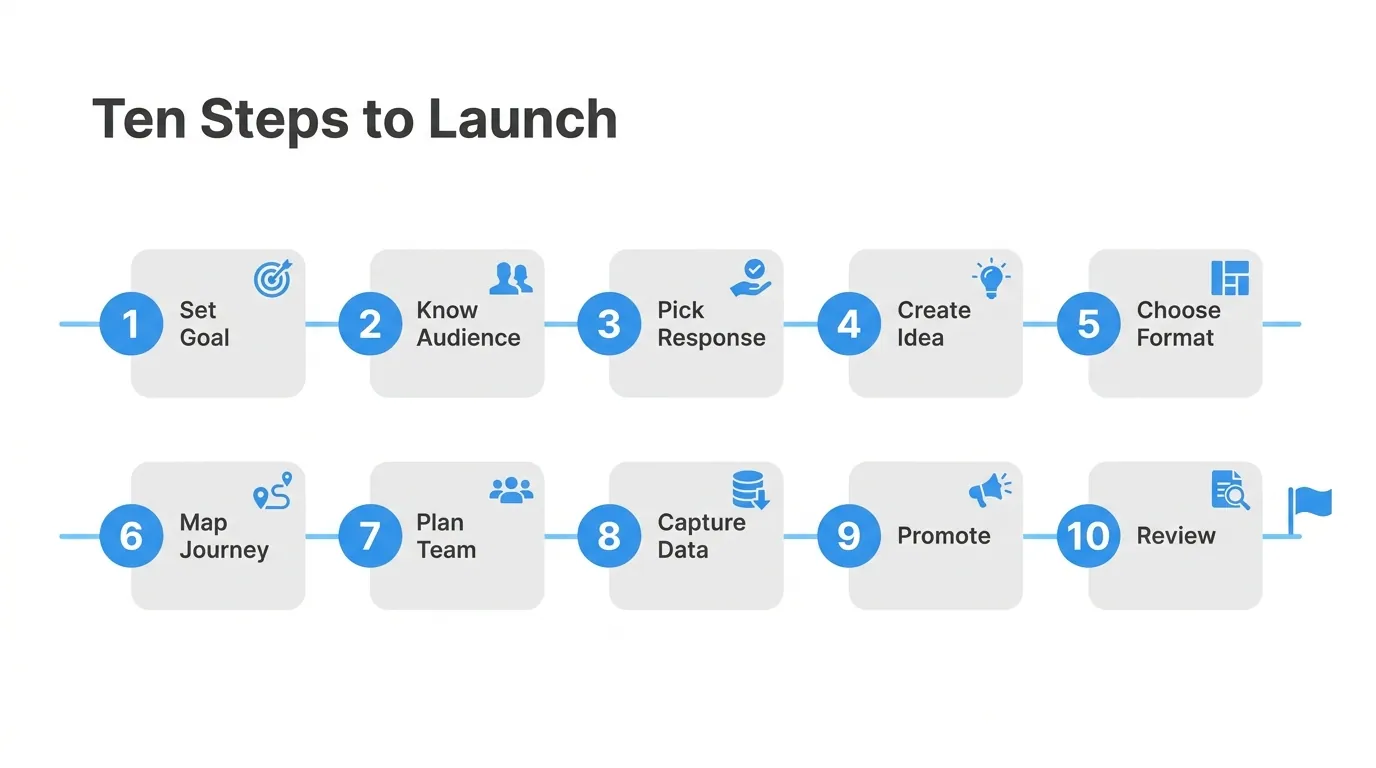
You create an experiential marketing strategy and campaign by following a structured sequence: setting objectives, understanding your audience, designing the experience concept, and planning execution. The ten steps below cover each phase.
1. Set a Measurable Business Objective
A measurable business objective anchors every decision in the campaign. According to the Interactive Advertising Bureau’s 2024 Cross-Channel Measurement Playbook, establishing specific, measurable, attainable, relevant, and time-bound (SMART) goals and KPIs is essential for alignment and clarity in measurement strategies. Before designing anything, determine whether the campaign exists to generate leads, increase brand awareness, drive product trials, or support a product launch. A single, clearly defined objective prevents scope creep and gives the entire team a shared success metric from day one.
2. Define the Target Audience and Customer Insight
The target audience defines who the experience is built for, and customer insight reveals why they would engage. Effective campaigns ground creative decisions in real behavioral data, such as purchase motivations, content preferences, and lifestyle patterns. Audience research methods include surveys, social listening, CRM segmentation, and on-site intercept interviews. The clearer the audience profile, the more precisely the experience concept, location, and messaging can be tailored to drive participation and emotional resonance.
3. Decide the Response You Want (Think, Feel, Do)
The response you want determines whether the experience is designed to educate, inspire, or convert. “Think” responses aim to shift perception or communicate a product benefit. “Feel” responses target emotional association, such as excitement, nostalgia, or trust. “Do” responses drive a specific action, such as signing up, purchasing, or sharing content. Most effective activations layer all three, but one should lead. Prioritizing the primary response keeps the creative brief focused and prevents the experience from trying to accomplish too much at once.
4. Develop an On-Brand Experience Concept
An on-brand experience concept translates the campaign objective into a tangible, participatory idea. The concept should reflect the brand’s identity, values, and visual language while offering something participants cannot get through a screen alone. Strong concepts solve a real audience need or curiosity within the brand’s territory. For example, an outdoor apparel brand might build a gear-testing trail course rather than a static product display. The best concepts feel inevitable for the brand, not borrowed from another category.
5. Choose the Format, Location and Channels
The format, location, and channels determine how and where the audience encounters the experience. Common formats include mobile tours, pop-up environments, trade show activations, and experiential vehicles. Location selection should weigh accessibility, foot traffic, audience density, and logistical feasibility. Digital channels, including social media, email, and paid promotion, extend the activation’s reach before, during, and after the live event. Aligning the format to the objective is critical; a sampling campaign needs high-traffic retail locations, while a thought-leadership activation may suit a conference setting.
6. Map the Participant Journey
The participant journey maps every touchpoint from initial awareness through post-experience follow-up. This includes pre-event digital outreach, arrival and check-in, the core interactive moment, secondary engagement zones, data capture, and exit. Each stage should reinforce the campaign’s primary response goal. Journey mapping also identifies potential friction points, such as long wait times or unclear wayfinding, so they can be resolved before launch. A well-mapped journey ensures every participant moves smoothly toward the intended outcome.
7. Plan Staffing, Technology, Budget and Logistics
Staffing, technology, budget, and logistics form the operational backbone of any experiential activation. Brand ambassadors need clear training on messaging, product knowledge, and data collection protocols. Technology requirements range from registration tablets and RFID scanners to augmented reality stations, depending on the concept. Budget planning should account for fabrication, transportation, permits, insurance, staffing, and contingency reserves. Underestimating logistics is one of the most common causes of activation failure, so detailed production timelines and load-in schedules are essential.
8. Build Data Capture Into the Experience
Data capture built into the experience turns participant interactions into measurable business intelligence. Registration forms, QR code scans, RFID check-ins, social media hashtag tracking, and on-site surveys all collect first-party data without disrupting the experience. Every data capture point should tie back to a specific KPI defined in step one. The goal is to gather actionable insights, such as contact information, product preferences, and dwell time, that fuel post-event nurture campaigns and inform future activations.
9. Promote the Activation Across Channels
Promoting the activation across channels ensures the right audience knows about the experience before it happens. Campaigns planned using the OASIS framework, as outlined by the UK Government Project Delivery Function, incorporate defined objectives, audience insight, a strategic approach, an implementation plan, and effectiveness evaluation. Pre-event promotion typically spans owned social media, email marketing, influencer partnerships, and paid digital ads. During the activation, live social content and real-time updates sustain momentum and attract walk-in traffic.
10. Execute, Follow Up and Optimize
Execution requires real-time coordination between production teams, brand ambassadors, and technology systems. On-site managers should monitor participant flow, troubleshoot issues, and collect qualitative observations. Post-event follow-up includes personalized outreach to captured leads, social media engagement with user-generated content, and internal debrief sessions. Optimization relies on comparing actual performance data against the SMART KPIs set in step one. Each activation becomes a learning cycle; insights from one campaign directly improve the next, compounding results over time.
How Is Technology Used in Experiential Marketing?
Technology is used in experiential marketing to create immersive, interactive, and measurable brand experiences. Key technologies include augmented and virtual reality, interactive displays, mobile integrations, livestreaming tools, and CRM-driven personalization.
Augmented and Virtual Reality
Augmented reality (AR) overlays digital content onto physical environments, while virtual reality (VR) immerses participants in fully simulated worlds. Both technologies transform passive observers into active participants within branded experiences. AR activations can drive massive real-world engagement. According to a Campaign report, AXA’s partnership with the AR game Ingress generated more than 600,000 player visits to AXA agencies, over three million in-game actions, and brand exposure to four million-plus players. VR, meanwhile, lets brands simulate product use or transport audiences to otherwise inaccessible settings. For brands investing in physical activations, these technologies add a participatory layer that static displays simply cannot replicate.
Interactive Displays, Projection and Sensors
Interactive displays use touchscreens, gesture recognition, motion sensors, and projection mapping to turn physical surfaces into responsive brand canvases. Projection mapping can transform building facades, vehicles, or exhibit walls into dynamic visual storytelling surfaces. Sensor-based installations detect participant movement, proximity, or touch, then trigger customized audiovisual responses in real time. This creates a feedback loop where the audience shapes the experience rather than passively watching it. When paired with experiential marketing vehicles or trade show exhibits, these technologies make branded environments feel alive and personally responsive to each visitor.
Mobile Apps, QR Codes, RFID and NFC
Mobile apps, QR codes, RFID, and NFC connect physical activations to digital content and data capture. QR codes placed throughout an activation direct participants to exclusive content, registration forms, or social sharing prompts with a single scan. RFID wristbands and NFC-enabled badges track participant movement through an experience, enabling:
- Personalized content delivery at each touchpoint.
- Seamless check-in and access control.
- Behavioral data collection for post-event analysis.
- Gamification elements like point accumulation or leaderboards. These integrations turn every physical interaction into a trackable data point, bridging the gap between on-site engagement and measurable marketing outcomes.
Livestreaming and Social Media Integration
Livestreaming and social media integration extend the reach of physical experiential activations to remote audiences in real time. Brands broadcast live from pop-ups, mobile tours, or trade show booths through platforms where their audiences already engage. Social media integration at the activation site encourages participants to share content organically. Photo booths with branded overlays, hashtag displays showing live social feeds, and shareable AR filters turn attendees into content creators. This amplification means a single physical activation can generate impressions far beyond its on-site attendance, making every participant a potential distribution channel.
CRM, Automation and Real-Time Personalization
CRM systems, marketing automation, and real-time personalization engines connect experiential activations to broader customer relationship strategies. CRM platforms capture participant data on-site, including contact information, product preferences, and engagement behavior. Marketing automation then triggers personalized follow-up sequences:
- Post-event emails tailored to products a participant interacted with.
- Retargeting ads based on activation engagement data.
- Lead scoring that prioritizes high-intent participants for sales outreach. Real-time personalization adjusts the experience itself based on participant inputs, delivering customized content, product recommendations, or messaging during the activation. This closes the loop between experiential engagement and revenue attribution. With these technology layers in place, the next consideration is how to measure whether they actually drive results.
How Do You Measure Experiential Marketing Success?
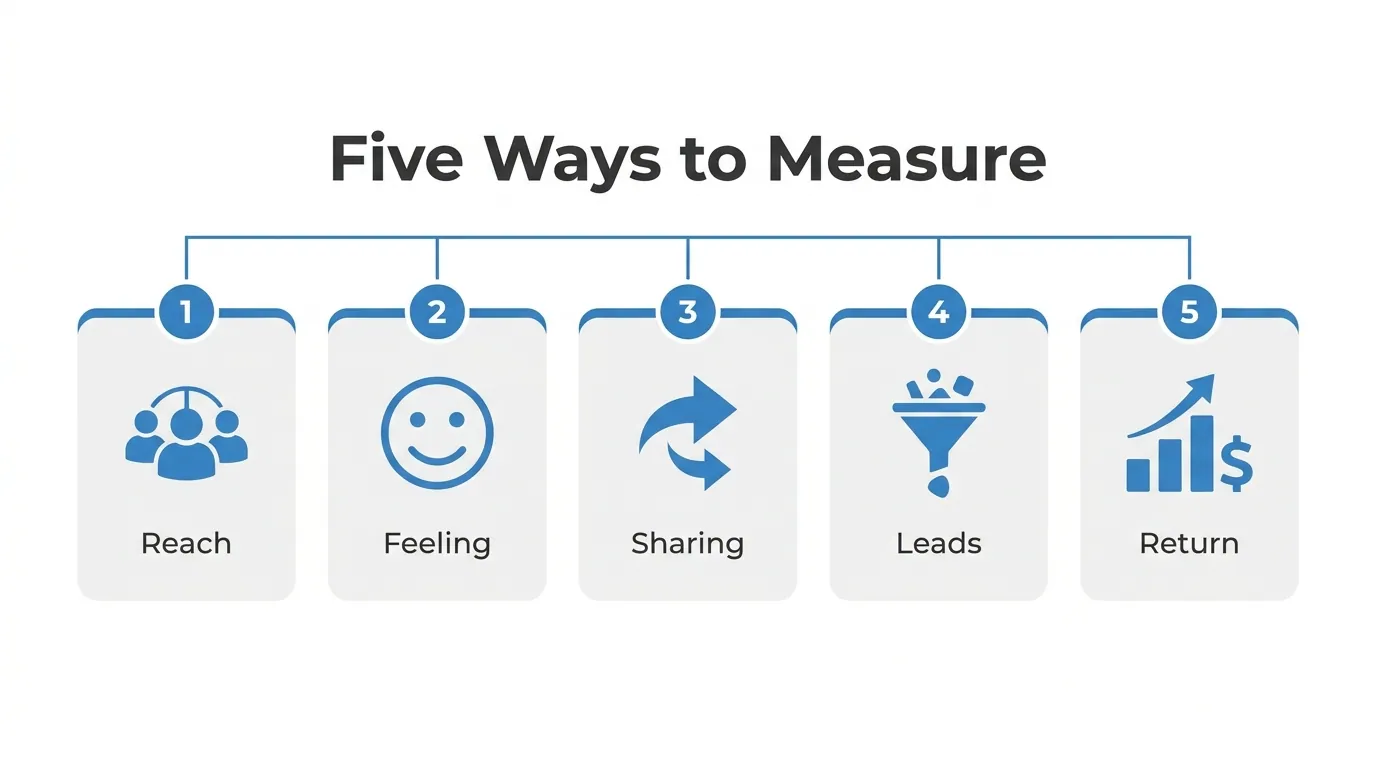
You measure experiential marketing success by tracking metrics across five categories: reach and engagement, brand sentiment, social amplification, lead conversion, and revenue ROI.
Reach and Engagement Metrics
Reach and engagement metrics quantify how many people encountered and interacted with an experiential activation. These indicators reveal whether the experience attracted its intended audience and held their attention. Key reach and engagement metrics include:
- Foot traffic and attendance count: total visitors who entered the activation space.
- Dwell time: average minutes each participant spent engaged with the experience.
- Interaction rate: percentage of attendees who completed a hands-on activity, demo, or challenge.
- Repeat visits: number of participants who returned during a multi-day activation. Foot traffic alone can be misleading. Dwell time and interaction rate together paint a more accurate picture of genuine engagement versus passive observation.
Brand and Sentiment Metrics
Brand and sentiment metrics measure how an experiential campaign shifts audience perception, recall, and trust. These are typically captured through pre- and post-event surveys. Core brand metrics to track include:
- Aided and unaided brand recall: whether participants remember the brand without prompting.
- Net Promoter Score (NPS): likelihood of recommending the brand after the experience.
- Brand favorability shift: change in positive perception from pre-event baseline to post-event survey.
- Trust increase: measured through direct post-event survey questions.
According to Freeman’s 2023 Trust Report (with Edelman DXI), 77% of consumers say their trust increased following interaction with a brand at a live event. That trust shift is one of the most valuable outcomes experiential campaigns can produce, yet it requires deliberate pre/post measurement to capture.
Social Amplification Metrics
Social amplification metrics track how far an experiential activation extends beyond the physical space through participant sharing. These metrics measure earned media value generated organically by attendees. Key social amplification indicators include:
- User-generated content volume: total posts, stories, and videos created by participants.
- Branded hashtag usage: frequency and reach of campaign-specific hashtags.
- Social mentions and share of voice: how often the brand appears in social conversations during and after the event.
- Earned media impressions: total audience reached through organic social shares and press coverage. Social amplification often delivers the highest return per dollar because participants become voluntary brand advocates, extending campaign reach at no additional media cost.
Lead and Conversion Metrics
Lead and conversion metrics connect experiential participation directly to pipeline activity. These KPIs bridge the gap between engagement and measurable business outcomes. Essential lead and conversion metrics include:
- Leads captured: total contacts collected through registrations, QR scans, RFID taps, or sign-ups during the activation.
- Lead qualification rate: percentage of captured leads meeting target audience criteria.
- Post-event conversion rate: proportion of leads who take a defined next action, such as scheduling a demo, making a purchase, or visiting a landing page.
- Sales cycle acceleration: whether experiential leads convert faster than leads from other channels. Building data capture directly into the experience, rather than adding it as an afterthought, consistently improves both lead volume and quality.
Revenue and ROI Metrics
Revenue and ROI metrics determine whether an experiential campaign generated financial returns that justify its investment. According to EventTrack (2020 survey data), 88% of brands measure the effectiveness of their event and experiential marketing programs, with ROI ranking among the top KPIs at 55%.
- Direct revenue attributed: sales closed from leads traced back to the activation.
- Cost per lead and cost per acquisition: total campaign spend divided by leads or customers generated.
- ROI formula: (revenue attributed minus total campaign cost) divided by total campaign cost, expressed as a percentage.
- Customer lifetime value of experiential leads: long-term revenue from acquired customers versus acquisition cost. Isolating experiential ROI requires consistent attribution tagging from point of capture through CRM. Without that pipeline visibility, even the most successful activations appear unmeasurable on paper. Understanding which metrics matter most prepares brands to avoid common pitfalls in campaign planning and execution.
What Are Examples of Experiential Marketing?
Examples of experiential marketing range from immersive brand environments and interactive product demonstrations to AR activations and hybrid physical-digital campaigns. The following examples illustrate how different formats create participant engagement.
Immersive Brand Environment Example
An immersive brand environment transforms a physical space into a fully themed world that reflects a brand’s identity. Taco Bell executed one of the most notable examples by converting an entire hotel in Palm Springs, California, into “The Bell: A Taco Bell Hotel & Resort.” According to Marketing Dive, reservations sold out in under two minutes of going live in June, with nightly rates ranging from $169 to $299 for pool-view suites. Every detail, from room decor to poolside experiences, reinforced the brand story. This format works because it surrounds participants with the brand for an extended period, deepening emotional connection far beyond what a single touchpoint achieves.
Interactive Product Demonstration Example
An interactive product demonstration lets consumers physically use, test, or customize a product in a controlled brand setting. IKEA’s showroom strategy is a well-known example: the retailer builds fully styled rooms on its show floor, complete with details like food on a kitchen table and children’s drawings on the fridge, giving visitors the impression they have walked into a real home. This hands-on format removes the guesswork from purchasing decisions. When customers interact directly with a product in a realistic context, they build confidence and personal attachment, both of which accelerate purchase intent.
Experiential Pop-Up Example
An experiential pop-up is a temporary branded space designed to generate urgency, exclusivity, and concentrated engagement within a limited timeframe. These activations appear in high-traffic urban locations, festivals, or cultural events, often lasting a few days to several weeks. The format combines retail, entertainment, and storytelling in a single environment. Pop-ups succeed because scarcity drives attendance and social sharing. For brands testing new markets or product lines, a pop-up provides real-time consumer feedback without the overhead of a permanent location.
Mobile Tour or Roadshow Example
A mobile tour or roadshow is an experiential activation that travels across multiple cities or venues using custom-built vehicles or trailers. This format brings the brand directly to target audiences rather than relying on a single fixed location. Brands use mobile tours to reach geographically dispersed markets with a consistent, repeatable experience. Each stop functions as its own activation, with product sampling, interactive displays, or live demonstrations built into the vehicle itself. For brands with national or regional reach, mobile tours offer scalable engagement that accumulates impressions across every stop on the route.
AR or VR Experience Example
An AR or VR experience uses augmented reality or virtual reality technology to create a digitally enhanced brand interaction. AXA partnered with Niantic’s AR game Ingress to integrate branded in-game items across real-world locations. According to Campaign, more than 600,000 players visited AXA agencies, generating three million in-game actions and exposing over four million players to the AXA brand promise. This format blends physical movement with digital gameplay, making brand engagement feel like entertainment rather than advertising. AR and VR activations are most effective when the technology serves the narrative, not the other way around.
Trade Show Activation Example
A trade show activation is an experiential installation within an exhibition or industry event designed to attract attendees, demonstrate capabilities, and generate qualified leads. Unlike a standard booth with printed signage, an experiential trade show activation incorporates interactive elements such as:
- Live product demonstrations or hands-on testing stations
- Touchscreen displays with custom configurators
- Theatrical lighting, video walls, or projection mapping
- Scheduled presentations or micro-events within the booth These elements pull foot traffic and extend dwell time. The most effective trade show activations align every sensory detail with a single campaign message, making the booth itself an argument for the brand.
Hybrid Physical-Digital Example
A hybrid physical-digital experience combines an in-person activation with a simultaneous online component, extending reach beyond the physical venue. Livestreamed product launches, real-time social media integrations, and virtual participation layers all qualify. According to Associations Now, the percentage of organizations hosting hybrid meetings jumped from 18 percent in 2021 to 47 percent the following year. This shift reflects growing demand for experiences that serve both on-site and remote audiences. Hybrid formats multiply the return on a single activation by capturing digital engagement data alongside in-person interactions, making them one of the most cost-efficient experiential formats available today.
What Are the Challenges of Experiential Marketing?
The challenges of experiential marketing include high costs, difficulty scaling physical activations, complex attribution, logistical demands, and converting participants into loyal customers. Each challenge requires proactive planning to protect campaign ROI.
High Production and Execution Costs
High production and execution costs represent the most significant barrier to experiential marketing campaigns. Custom fabrication, venue rental, technology integration, staffing, and insurance all compound quickly. According to a 2019 Event Marketer benchmarking report, “high level” experiential service packages ranged from $1,000 to $3 million, illustrating how relative budget tiers can be depending on program scope. Unlike digital campaigns where spend scales incrementally, experiential activations require substantial upfront investment before a single participant engages. Brands that underestimate production costs risk cutting corners on quality, which directly undermines the immersive experience participants expect.
Scaling Physical Experiences Across Locations
Scaling physical experiences across locations is inherently difficult because each venue introduces unique variables. Floor plans, local permits, climate conditions, and audience demographics shift from city to city. Key scaling obstacles include:
- Maintaining consistent brand quality across different venues and markets.
- Adapting spatial designs for varying footprints without losing the core experience.
- Coordinating shipping, setup, and teardown timelines across a multi-city tour.
- Training local staff to deliver the same participant experience as the flagship activation. Mobile tours and modular builds help mitigate these issues, but replicating an identical sensory experience at every stop demands meticulous planning and flexible design.
Attribution and Measurement
Attribution and measurement remain persistent challenges because experiential marketing blends physical interactions with digital engagement. Isolating which touchpoint drove a conversion, a social share, or a purchase decision is rarely straightforward. Common measurement difficulties include:
- Connecting in-person foot traffic to downstream online conversions.
- Separating experiential impact from concurrent paid media campaigns.
- Quantifying emotional brand lift with standard analytics tools.
- Establishing control groups when activations occur in open public spaces. Integrating QR codes, RFID badges, CRM tagging, and post-event surveys into the activation design helps close attribution gaps. Without these mechanisms built in from the start, proving ROI becomes speculative rather than data-driven.
Logistics and Staffing
Logistics and staffing pose operational challenges that can derail even well-conceived experiential campaigns. Coordinating venue access, permits, freight, power supply, and Wi-Fi connectivity requires detailed advance planning for every location. Staffing adds another layer of complexity:
- Brand ambassadors need thorough training on messaging, product knowledge, and participant engagement techniques.
- Multi-day or touring activations face staff fatigue and turnover.
- Remote locations may require hiring and onboarding local talent on short timelines. One overlooked logistical factor is contingency planning. Weather disruptions, equipment failures, and permit delays happen. Brands without backup plans face costly cancellations or diminished participant experiences.
Turning One-Time Participants Into Long-Term Customers
Turning one-time participants into long-term customers is the conversion challenge that determines whether an experiential campaign generates lasting business value. A memorable moment means little if there is no structured path from engagement to relationship. IKEA demonstrates one approach: its showroom includes staged rooms with details like food on a kitchen table and children’s drawings on the fridge, giving visitors the impression of walking into a real home, as described by Rutgers Master of Business and Science. This immersive context naturally bridges the gap between experience and purchase intent. Effective post-experience conversion strategies include:
- Capturing participant contact information during the activation through opt-in forms or digital check-ins.
- Deploying personalized follow-up emails within 24 to 48 hours.
- Retargeting participants with social ads tied to their specific experience.
- Offering exclusive post-event incentives that reward continued engagement. Without deliberate follow-up systems, even the most impactful activation becomes a standalone moment rather than the start of a customer relationship.
What Experiential Marketing Mistakes Should Brands Avoid?
Brands should avoid experiential marketing mistakes that disconnect the activation from its strategic purpose. The most common errors involve chasing visual impact without brand alignment, neglecting the live participant, and failing to measure or follow up.
Prioritizing Spectacle Over Brand Relevance
Prioritizing spectacle over brand relevance is the most common experiential marketing mistake. A visually stunning activation that fails to reinforce core brand messaging wastes budget and confuses audiences. Research published in the Journal of Marketing by Columbia Business School demonstrated across six studies that brand experience affects consumer satisfaction and loyalty directly, and indirectly through brand personality associations. When the experience aligns with the brand’s identity, it strengthens recognition and attachment. When it does not, participants remember the spectacle but forget who created it. Every activation element, from staging to interactive features, should ladder back to a specific brand promise.
Designing for Social Media Instead of the Participant
Designing for social media instead of the participant creates experiences optimized for the camera rather than the person in the room. Shareable moments matter, but they should emerge naturally from a genuinely engaging activation. When brands prioritize photo ops over meaningful interaction, participants sense the inauthenticity. The live experience becomes a backdrop rather than a conversation. Effective activations focus first on delivering real value to attendees; social content follows organically when participants feel compelled to share something they actually enjoyed.
Creating Passive Experiences
Creating passive experiences undermines the core principle of experiential marketing: active participation. If attendees are simply watching a presentation or walking past a display, the activation functions no differently than traditional advertising. Strong experiential campaigns require participants to do something, whether that involves touching, building, tasting, or problem-solving. Interactivity transforms a spectator into a stakeholder. Passive formats miss the opportunity to form the emotional connections that drive recall and loyalty.
Adding Technology Without a Purpose
Adding technology without a purpose is a mistake that inflates costs while adding no strategic value. AR, VR, touchscreens, and sensors should solve a specific engagement problem or enhance the brand story. Technology works best when it is invisible to the participant, meaning it removes friction or deepens immersion rather than drawing attention to itself. If an activation team cannot articulate why a particular technology improves the participant experience, it does not belong in the build.
Failing to Define KPIs Before Launch
Failing to define KPIs before launch makes it impossible to evaluate whether an activation succeeded. Without predetermined metrics, teams cannot distinguish a high-performing campaign from an expensive one. KPIs should be established during the planning phase and tied directly to the business objective, whether that is lead capture volume, dwell time, social impressions, or post-event purchase rate. Measurement infrastructure, including data capture tools and staff training, must be in place before doors open.
Ignoring Accessibility and Participation Barriers
Ignoring accessibility and participation barriers excludes potential customers and creates reputational risk. Physical layout, sensory design, language, and digital interfaces all affect who can participate. Brands should evaluate venues for wheelchair access, provide multilingual signage where relevant, and ensure digital components meet basic accessibility standards. An activation that only works for a narrow demographic fails to represent the brand’s full audience.
Skipping Follow-Up After the Experience
Skipping follow-up after the experience wastes the engagement momentum an activation generates. The live interaction is a starting point, not an endpoint. Post-event follow-up strategies include:
- Sending personalized emails within 48 hours using data captured on-site.
- Retargeting participants through digital ads tied to activation engagement.
- Sharing user-generated content across owned channels to extend reach.
- Surveying attendees to capture sentiment and refine future campaigns. Without follow-up, even the most powerful in-person experience fades quickly. Sustained brand relationships require converting that initial connection into ongoing dialogue.
What Is the Future of Experiential Marketing?
The future of experiential marketing centers on blending physical and digital touchpoints, using real-time data for personalization, empowering communities and creators, and prioritizing sustainability. These four shifts are reshaping how brands design and deliver memorable experiences.
Physical-Digital and Immersive Experiences
Physical-digital and immersive experiences merge tangible environments with technologies such as augmented reality, virtual reality, and mixed reality. Brands increasingly layer digital interactivity onto live activations so participants can engage through multiple channels simultaneously. A visitor at a pop-up shop, for instance, might scan a product to trigger an AR overlay on their phone while physically handling the item. Hybrid event formats also extend reach; attendees who cannot be present in person join through livestreams or virtual platforms that replicate key interactive elements. This convergence means a single activation can serve both on-site and remote audiences without sacrificing the participatory quality that defines experiential marketing.
Greater Personalization With Real-Time Data
Greater personalization with real-time data allows brands to tailor experiential activations to individual participants as interactions unfold. Sensors, RFID wristbands, mobile app inputs, and CRM integrations feed live behavioral signals into the experience, enabling dynamic content, product recommendations, or pathway adjustments on the spot. This level of responsiveness transforms a static activation into a conversation between brand and participant. However, collecting and acting on real-time data introduces responsibilities around privacy, consent, and unintended consequences. For any brand investing in data-driven activations, building transparent opt-in mechanisms is just as important as the technology itself; trust lost through careless data practices erodes the goodwill an experience is meant to create.
Community-Led and Creator-Amplified Experiences
Community-led and creator-amplified experiences shift creative ownership from the brand to its audience. Instead of designing every detail internally, brands co-create activations with loyal customers, micro-influencers, and niche content creators who carry authentic credibility within their communities. This approach generates organic word of mouth because participants feel genuine investment in the outcome. Creators document and share activations through their own channels, extending reach far beyond the physical footprint of the event. For most brands, partnering with even a handful of well-aligned creators produces more trusted social proof than a high-budget campaign directed entirely from headquarters.
Sustainable Experiential Marketing
Sustainable experiential marketing integrates environmental responsibility into activation design, logistics, and materials. According to a PCMA report, audience travel accounted for 39% of total event carbon emissions, making venue selection and hybrid format options critical levers for reducing environmental impact. Brands are adopting reusable modular structures, biodegradable materials, and local sourcing to minimize waste. Despite growing awareness, progress remains uneven; a Vision 2025 industry survey found that only 24% of event organizations have a net zero strategy in place. Sustainability is no longer a differentiator but an expectation, and brands that embed it into their experiential programs build credibility with increasingly environmentally conscious audiences. With these trends accelerating, the next step is understanding how brands translate an experiential concept into a tangible, buildable activation.
How Do Brands Turn an Experiential Idea Into a Physical Experience?
Brands turn an experiential idea into a physical experience by selecting the right format, fabricating custom environments, and partnering with specialists who can engineer concepts into tangible activations. The subsections below cover format selection, vehicles, exhibits, pop-ups, props, graphics, specialized activations, and fabrication partnerships.
Match the Format to the Campaign Objective
The format of an experiential activation should directly reflect the campaign objective. A product launch may call for an interactive exhibit, while a nationwide awareness campaign benefits from a mobile tour vehicle that reaches multiple markets. Sampling programs often use branded trailers or pop-up containers, and community engagement efforts might require mobile retail or fitness environments. When Taco Bell wanted to deepen fan loyalty, the brand refurbished an entire Palm Springs hotel into “The Bell: A Taco Bell Hotel & Resort,” and according to Marketing Dive, reservations sold out in under two minutes. Matching format to goal ensures every physical element serves a measurable marketing purpose rather than existing as spectacle alone.
Experiential Marketing Vehicles and Trailers
Experiential marketing vehicles and trailers are mobile brand environments built on truck, van, or trailer platforms. These assets travel directly to target audiences, eliminating the need for consumers to visit a fixed location. Custom vehicle builds can incorporate interactive product displays, sampling stations, stage deployments, and full audio-visual systems. Because they are self-contained, branded vehicles reduce venue rental costs and offer repeatable activations across dozens of cities on a single tour. For brands seeking high-visibility transit between stops, the vehicle exterior itself functions as a rolling brand billboard that generates impressions throughout the route.
Since 1982, Craftsmen Industries has designed and built custom experiential marketing vehicles with in-house fabrication, graphics production, and technology integration, delivering vertically integrated solutions that reduce vendor coordination and accelerate project timelines. Brands also compare formats across promotional vehicles and custom trailers and containers.
Experiential Exhibits and Interactive Displays
Experiential exhibits and interactive displays are built environments designed to immerse visitors in a brand story. These range from modular trade show booths to large-scale installations featuring touchscreens, motion sensors, projection mapping, and product demonstration zones. Effective exhibits guide participants through a curated journey, with each station reinforcing a specific message or product benefit. Structural engineering, lighting design, and digital integration all factor into fabrication. The most impactful exhibits balance visual drama with hands-on interaction, giving visitors a reason to stay, explore, and share.
Pop-Ups, Containers and Temporary Brand Environments
Pop-ups, containers, and temporary brand environments are short-term physical spaces that create urgency and exclusivity. Shipping containers offer a rigid, weatherproof structure that can be customized with interior buildouts, branded wraps, and climate control. Temporary retail spaces, product showcases, and hospitality lounges all fall into this category. Key advantages include:
- Rapid deployment to high-traffic locations such as festivals, city centers, and sporting events.
- Lower long-term commitment compared to permanent retail leases.
- Modular configurations that allow reconfiguration for different campaign phases. Pop-ups work especially well for limited-edition launches where scarcity drives foot traffic and social sharing.
Experiential Props and 3D Brand Elements
Experiential props and 3D brand elements are oversized or custom-sculpted physical objects that anchor an activation’s visual identity. Giant product replicas, branded photo-op structures, and sculptural installations all serve this function. These elements accomplish two things simultaneously: they create an unmistakable brand presence on-site and generate user-generated content when attendees photograph and share them. Fabrication typically involves CNC machining, foam sculpting, fiberglass layup, and precision painting. Props must be engineered for structural safety, transport durability, and quick assembly at each activation site.
Graphics and Environmental Branding
Graphics and environmental branding transform raw structures into fully branded experiences. Large-format printed wraps, dimensional signage, floor graphics, window clings, and backlit displays all contribute to the sensory environment. High-resolution vehicle wraps turn trailers and trucks into mobile canvases visible from significant distances. Interior environmental graphics guide participant flow, reinforce messaging at key touchpoints, and establish the visual tone of the activation. Material selection matters: outdoor activations demand UV-resistant, weatherproof substrates, while indoor installations can use thinner, lighter materials for faster installation and teardown.
Specialized Activations (Gaming, Tech, Mobile Retail, Mobile Gyms)
Specialized activations are purpose-built environments tailored to specific industries or audience behaviors, such as gaming lounges, mobile retail stores, tech demo labs, and mobile fitness facilities. As defined in the Clark County Code and documented in a 2022 Clark County Department of Public Works report, a mobile billboard is “one or more sign structures that are mounted on a vehicle or trailer, regardless of weight or length, and are used for general advertising or advertising for hire.” Specialized builds extend well beyond signage into fully functional spaces with custom HVAC, power systems, connectivity, and interior buildouts designed for repeated use across multi-city tours.
Craftsmen Industries engineers and fabricates specialized experiential vehicles from their 127,000 sq. ft. St. Charles, Missouri facility, integrating climate control, power distribution, and custom interiors into tour-ready mobile environments designed for multi-city deployment.
Working With an Experiential Marketing Fabrication Partner
Working with an experiential marketing fabrication partner streamlines the process from concept to finished asset. A fabrication partner handles design engineering, structural fabrication, graphics production, technology integration, and logistics coordination under one roof. This vertically integrated approach reduces timelines and miscommunication between separate vendors. According to research published through the University of North Carolina Wilmington, experiential consumers identify with an experience in the pre-experience stage through experience imagination and emotional significance, and that identification directly influences loyalty and word-of-mouth post-experience. A skilled fabrication partner translates that emotional blueprint into physical reality, ensuring every structural and visual detail supports the brand narrative. Working with an experienced fabrication partner who offers integrated design, engineering, fabrication, printing, and installation capabilities helps turn ambitious brand visions into tour-ready assets.
Frequently Asked Questions About Experiential Marketing
These common questions cover experiential marketing basics, costs, timelines, and industry fit.
What is experiential marketing in simple terms?
Experiential marketing is a marketing approach that directly engages consumers through participation in a branded experience. Rather than passively viewing an ad, people interact with a brand through activities like live events, product sampling, pop-up shops, or interactive installations. As the University of Birmingham notes, “experiential” means “based on experience,” and this approach typically centers on a live, visual, and interactive spectacle. The goal is to create a memorable, emotional connection that traditional advertising cannot replicate, encouraging deeper brand loyalty and word-of-mouth sharing.
Can experiential marketing be digital?
Yes, experiential marketing can be digital. Brands use augmented reality, virtual reality, interactive apps, gamified campaigns, and livestreamed events to create participatory digital experiences. The defining factor is active engagement, not a physical location. Hybrid formats that combine in-person and digital touchpoints have become increasingly common, extending campaign reach beyond a single venue. Any digital activation that invites consumers to interact with a brand, rather than passively consume content, qualifies as experiential marketing.
How much does an experiential marketing campaign cost?
Experiential marketing campaign costs range widely based on scope, format, and duration. According to an Event Marketer benchmarking report, “high-level” service packages ranged from $1,000 to $3 million, demonstrating that terms like “high,” “medium,” and “low” are relative to program size. Key cost drivers include:
- Venue rental or vehicle fabrication
- Staffing and training
- Technology integration (AR, VR, interactive displays)
- Production, materials, and logistics
- Pre-event promotion and post-event follow-up Small, single-location activations can start in the low thousands, while multi-city mobile tours or large-scale immersive builds reach six or seven figures.
How long does it take to plan an experiential campaign?
Planning an experiential campaign typically takes 8 to 16 weeks for moderately complex activations. Large-scale programs involving custom vehicle fabrication, multi-city logistics, or complex technology builds can require 6 months or more. Key planning phases include objective setting, concept development, venue or route selection, permitting, fabrication, staffing, promotion, and rehearsal. Simpler activations, such as a single-day product sampling at a local event, may need only 4 to 6 weeks. Starting early allows time for iteration and avoids the rushed execution that undermines participant experience.
Is experiential marketing worth it for small businesses?
Yes, experiential marketing is worth it for small businesses. Smaller brands often benefit disproportionately because face-to-face interaction builds trust quickly in local markets. Low-cost formats that work well for smaller budgets include:
- Product sampling at farmers’ markets or community events
- Pop-up demonstrations in shared retail spaces
- Interactive social media challenges tied to a local activation
- Partnering with complementary brands to share event costs For most small businesses, even a modest activation that generates authentic word-of-mouth and social content delivers stronger returns than equivalent spend on passive digital ads.
What industries use experiential marketing the most?
The industries that use experiential marketing the most include consumer packaged goods, automotive, technology, food and beverage, entertainment, healthcare, and financial services. These sectors rely on experiential strategies because their products benefit from hands-on trial or emotional storytelling. However, adoption continues expanding; B2B companies, nonprofits, and government agencies also invest in experiential formats like mobile tours, trade show activations, and interactive exhibits. According to PQ Media’s 2024 forecast, global experiential marketing spending was expected to reach $128.35 billion, reflecting broad cross-industry demand.
Filter Posts by Tag
related posts
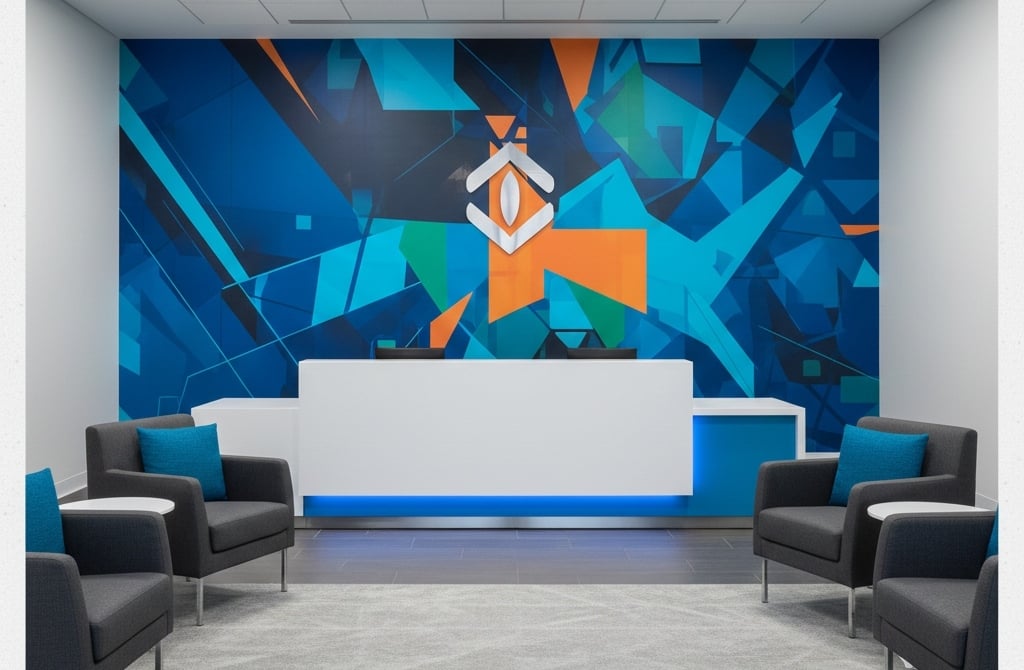
Transform your office with large-format graphics. Boost branding, inspire teams, and create memorable client experiences with vibrant, high-impact visuals.

3 Successful Retail Brand Activation Tours to Inspire You. View the whole article here!
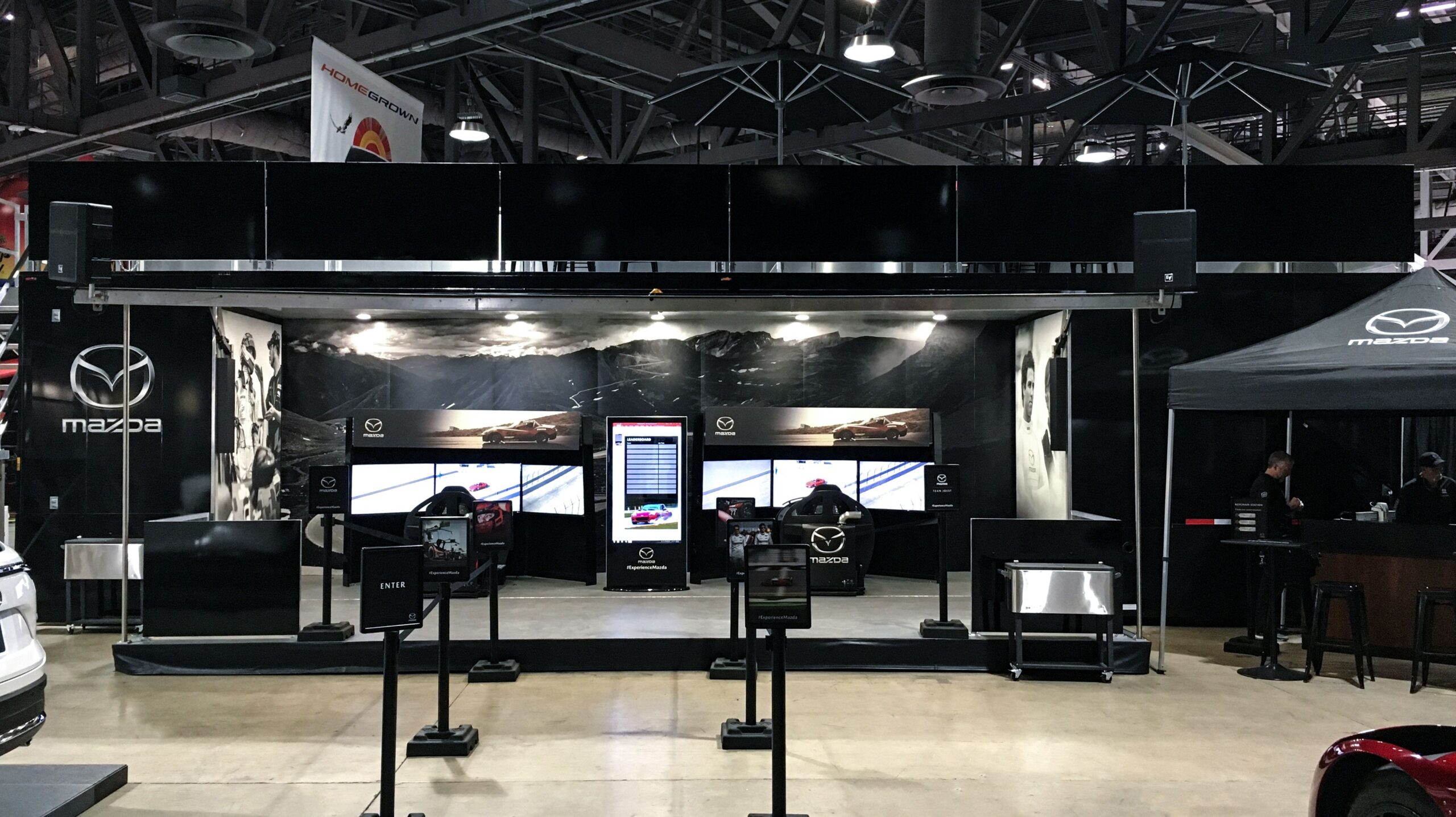
The Craftsmen LoJoe™ is a cutting-edge, easy to deploy drop trailer engineered for maximum space and easy access. Learn more about this customized trailer here.
