
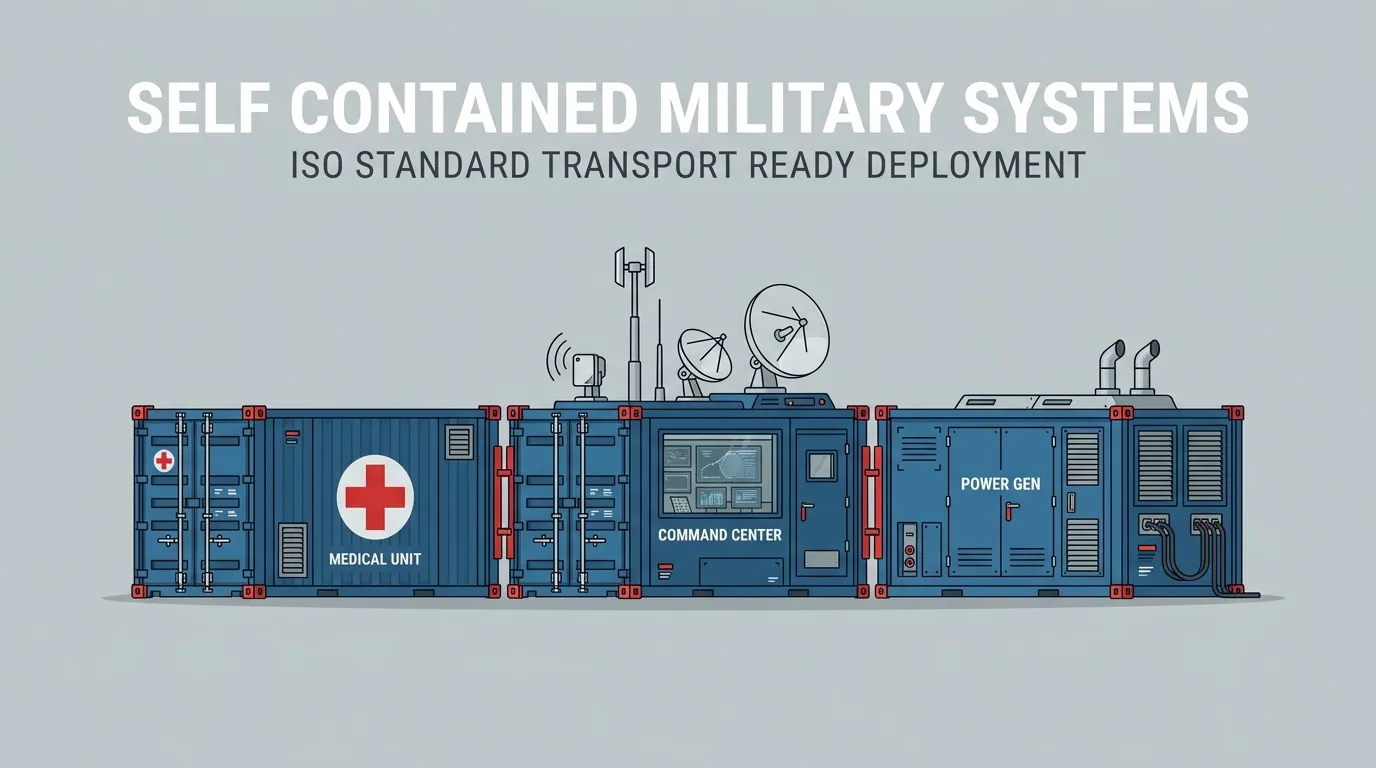
Containerized military units are self-contained, mission-ready systems housed inside standardized ISO enclosures that serve as both shipping containers and operational shelters once deployed. They enable military forces to project functional capabilities (command posts, field hospitals, power plants, communications nodes) into austere environments using existing air, sea, and ground transport networks.
This guide covers the definition and operational importance of containerized systems, the full range of unit types and their missions, governing standards and engineering requirements, transport and deployment methods, strategic advantages and limitations compared to fixed facilities, service branch and allied force adoption, and how custom fabrication is shaping next-generation solutions.
Military containerization replaces months-long construction timelines with hours-to-days deployment cycles. Standard 8-by-8-by-20-foot enclosures move between aircraft, ships, trains, and trucks through ISO corner fittings, eliminating cargo rehandling at every transfer point.
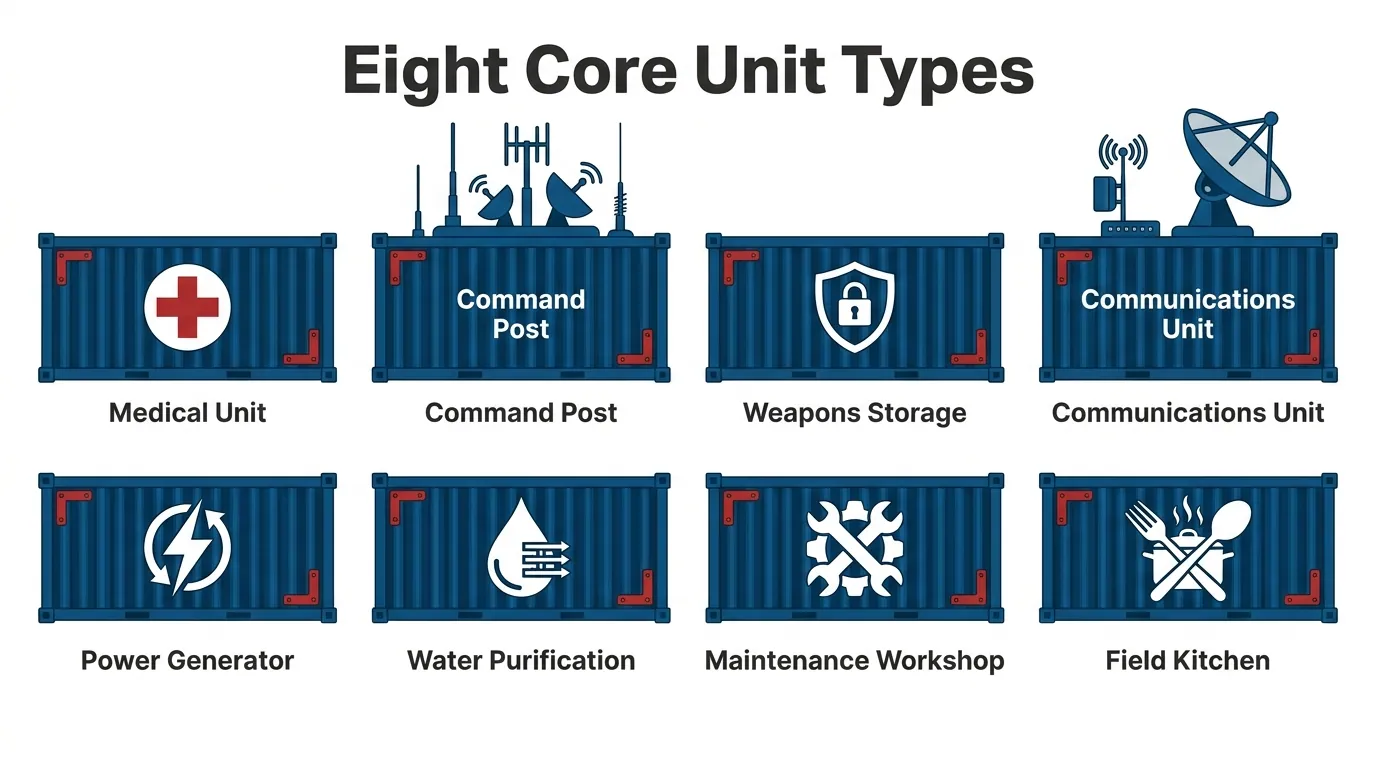
Unit types span command and control, mobile medical and surgical, weapons and ammunition storage, communications, power generation, water purification, maintenance workshops, field kitchens, and CBRN detection and decontamination. Each converts a standard container frame into a specialized operational platform.
Compliance with ISO 668 dimensional classifications, NATO STANAGs for interoperability and environmental testing, and MIL-STD specifications for durability and electromagnetic compatibility ensures these units work across U.S. and allied force structures without modification.
Every DoD branch and multiple NATO partners rely on containerized systems for expeditionary basing, from Army brigade combat teams to Navy prepositioning ships and Marine Corps logistics programs. Custom fabrication now allows purpose-built units tailored to exact mission specifications, compressing production timelines while meeting demanding military standards.
What Does Containerized Mean in a Military Context?
Containerized, in a military context, means housing mission-critical equipment, systems, or living quarters inside standardized, transportable enclosures built to ISO and NATO specifications. These enclosures function as both shipping containers and operational shelters once deployed. The concept covers everything from command posts and field hospitals to power generation units and communications platforms, all designed for rapid movement across air, sea, and land transport networks.
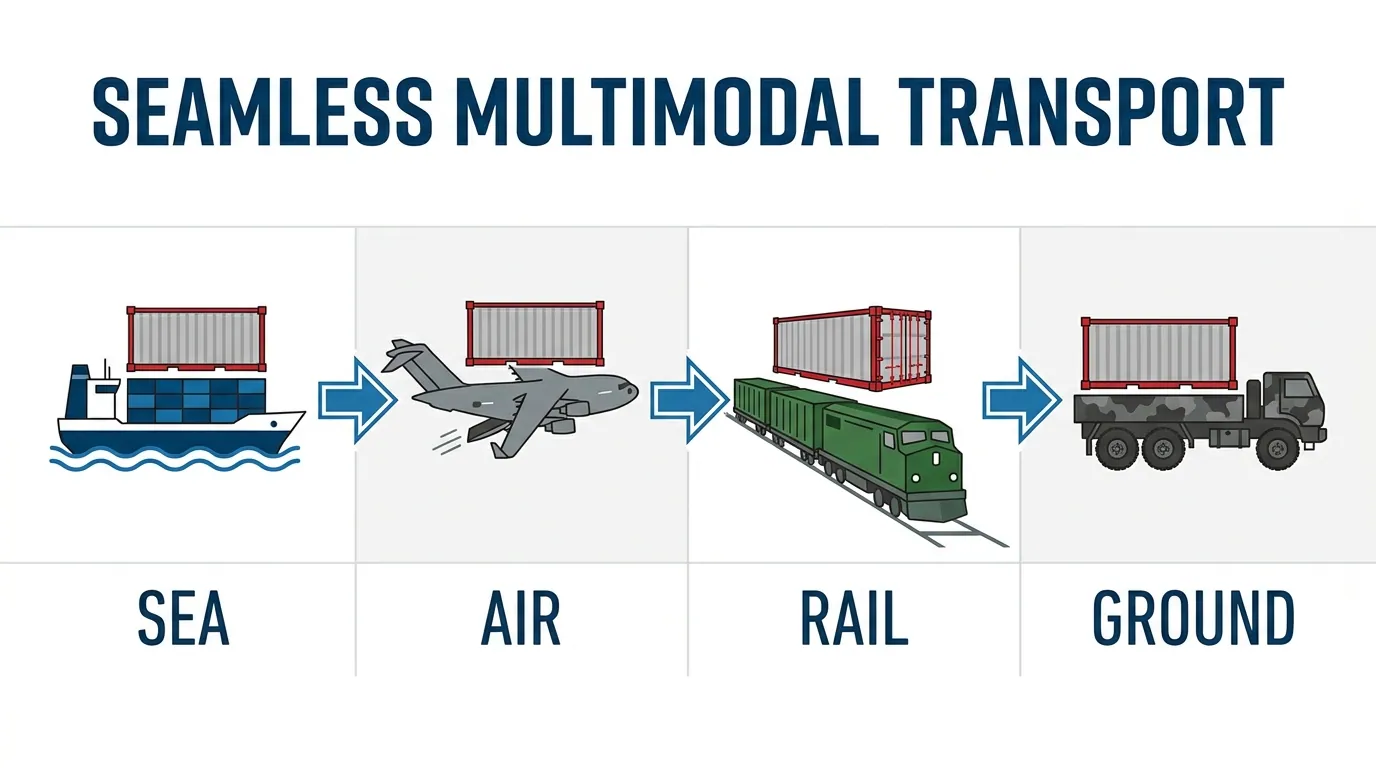
According to Marine Corps Order 4690.1B, “Containerization is a method of transporting freight by placing it in large containers configured with ISO corner fittings,” encompassing “transportation of cargo in containers (interchangeable between aircraft, ships, trains, and trucks) with standardized handling equipment without re-handling the contents.” This intermodal capability is what distinguishes military containerization from simply placing gear in a box.
Containerized military units typically measure 8 feet by 8 feet by 20 feet in their standard configuration, though some are expandable. As noted in Air Force Handbook 10-222, Volume 2, “These facilities serve as their own shipping container and as a shelter once deployed. Commonly sized at 8 feet x 8 feet x 20 feet, some are expandable to provide about 400 square feet. They are normally used for specialized purposes such as hospital operating rooms or command posts.”
What makes this approach so valuable is the elimination of rehandling. A containerized medical suite loaded at a stateside depot can travel by truck to a port, transfer to a vessel, fly aboard a C-17, and arrive at a forward operating base without anyone unpacking or reconfiguring the internal systems. That seamless chain of custody protects sensitive equipment and dramatically compresses deployment timelines.
DoD branches rely on containerized living units (CLUs) alongside traditional B-Huts and TEMPER tents as standard deployment housing solutions. The approach extends well beyond living quarters into virtually every functional area a deployed force needs, from water purification and CBRN detection to maintenance workshops and ammunition storage.
Understanding what containerized means in this context sets the foundation for examining why these systems matter, what types exist, and how they are designed to meet demanding military specifications.
Why Are Containerized Systems Critical for Military Operations?
Containerized systems are critical for military operations because they enable rapid deployment of self-contained capabilities to austere, off-grid, and contested environments where fixed infrastructure does not exist. Their importance spans logistics, survivability, and operational readiness.
Containerized units solve a fundamental military challenge: delivering functional facilities where none exist. This capability extends across every service branch and mission type, from water purification to field hospitals to command centers.
The operational advantages that make these systems indispensable include:
- Rapid force projection. Pre-configured containers ship on standard transport platforms and arrive mission-ready, cutting setup time from weeks to hours.
- Logistics standardization. ISO-compatible dimensions allow seamless movement across ships, aircraft, rail, and trucks without repackaging cargo.
- Survivability in contested zones. Self-contained systems reduce dependence on vulnerable supply lines by bringing critical capabilities forward.
- Scalability. Commanders can add or remove container modules to match evolving mission requirements without redesigning entire base camps.
Maritime operations illustrate this criticality well. Containerized solutions support dispersed forces operating far from established ports and airfields. For military planners, containerized systems represent one of the most practical approaches to force sustainment because they compress the gap between deployment order and operational capability. Fixed facilities require construction timelines measured in months; containerized units compress that to days. Understanding the specific types of containerized units reveals just how broadly this architecture supports the modern warfighter.
What Are the Types of Containerized Military Units?
The types of containerized military units span command, medical, weapons storage, communications, power generation, water purification, maintenance, field feeding, and CBRN defense. Each type converts a standard ISO container into a mission-specific system.
Command and Control Containers
Command and control containers are mobile operations centers that house battle management systems, tactical displays, and secure communications equipment inside hardened ISO shelters. These units enable commanders to coordinate forces from forward-deployed positions. Because they conform to standard ISO dimensions, they integrate with existing military logistics chains. According to the U.S. Army Transportation Corps and Transportation School, cargo handler training covers ISO container ground stacking, chassis loading and unloading, and top handler operations, ensuring these units move seamlessly between transport modes.
Mobile Medical and Field Hospital Containers
Mobile medical and field hospital containers are containerized clinical facilities that deliver surgical, laboratory, and patient care capabilities in austere environments. These units range from individual trauma modules to multi-container hospital complexes with operating rooms, radiology suites, and blood banking. According to the NATO Support and Procurement Agency, its contract with the Italian Army includes options for three additional fully equipped containerized field hospitals supplied upon official request. The U.S. Army’s FY 2026 budget estimates further underscore this priority, listing “Combat Support Medical” as a dedicated Other Procurement line item alongside generators, field feeding equipment, and prefabricated relocatable buildings.
Weapons and Ammunition Storage Containers
Weapons and ammunition storage containers are reinforced ISO shelters designed to secure munitions under strict safety and environmental controls. These containers typically incorporate fire suppression, climate regulation, and blast-resistant construction. Proper containerized storage reduces the risk of accidental detonation while keeping ordnance ready for rapid distribution to forward units.
Communications and Signal Intelligence Containers
Communications and signal intelligence containers are self-contained shelters that house radio systems, satellite terminals, encryption hardware, and signals processing equipment. These units provide secure, deployable communication nodes for tactical networks. Shielding against electromagnetic interference is often built into the container walls, allowing sensitive intelligence collection and data relay in contested electromagnetic environments.
Power Generation and Electrical Distribution Containers
Power generation and electrical distribution containers are containerized energy systems that package generators, switchgear, transformers, and fuel management into a single transportable unit. They supply reliable electrical power to forward operating bases, medical facilities, and command posts. Containerizing power equipment simplifies logistics and protects components from dust, moisture, and physical damage during transit.
Water Purification and Life Support Containers
Water purification and life support containers are deployable treatment systems that convert raw or contaminated water sources into potable supply for military personnel. These units integrate filtration, reverse osmosis, and chemical treatment equipment within a standard ISO frame. Containerized water systems reduce dependence on vulnerable supply convoys, particularly in remote or off-grid locations where transporting water is dangerous or costly.
Maintenance and Workshop Containers
Maintenance and workshop containers are mobile repair facilities equipped with tool sets, diagnostic equipment, welding stations, and parts storage. They allow technicians to perform vehicle, weapons, and electronics maintenance at forward positions rather than evacuating damaged equipment to rear areas. This reduces turnaround time and keeps operational assets in the fight longer.
Kitchen and Field Feeding Containers
Kitchen and field feeding containers are containerized food preparation and service facilities that support sustained troop nutrition in the field. They house cooking appliances, refrigeration, water heating, and sanitation systems. Standardized container dimensions allow these kitchens to deploy alongside other containerized infrastructure, creating integrated base camps with minimal setup time.
CBRN Detection and Decontamination Containers
CBRN detection and decontamination containers are specialized units designed to identify chemical, biological, radiological, and nuclear hazards, then neutralize contamination on personnel and equipment. According to NATO, its Combined Joint CBRN Defence Task Force includes containerized components for reconnaissance, agent detection and identification, personnel and equipment decontamination, and deployable analytical laboratories capable of forensic sampling and explosive ordnance disposal support. These modular CBRN systems give commanders rapid hazard assessment and response capability across the full threat spectrum.
Understanding the range of containerized unit types establishes the operational need; the standards governing their design ensure interoperability across allied forces.
What Standards and Specifications Govern Military Containers?
The standards and specifications governing military containers include ISO dimensional classifications, NATO Standardization Agreements (STANAGs), and U.S. Department of Defense MIL-STD requirements. These frameworks ensure interoperability, environmental survivability, and electromagnetic compatibility across all service branches.
What Is the ISO 1C Standard for Military Shelters?
The ISO 1C standard for military shelters is a dimensional classification defined under ISO 668, which establishes external dimensions, weight ratings, and corner fitting specifications for series 1 freight containers used in intercontinental traffic. Military shelters built to the 1C footprint (20 feet long) can move seamlessly across ships, rail, aircraft, and trucks using standardized handling equipment.
The Joint Standardization Board for Expeditionary Shelters and Basing Equipment (JSB-ESBE) maintains an approved list of rigid shelters conforming to these dimensional standards. According to the U.S. Department of Defense Defense Standardization Program, shelters listed under a particular service were initially developed and fielded by that service but are approved for use by all DoD organizations. This cross-service approval makes ISO-compliant shelter dimensions a foundation for joint operational planning and procurement.
What Are STANAG Requirements for NATO Containers?
STANAG requirements for NATO containers are interoperability agreements that standardize container dimensions, environmental testing, and handling interfaces across member nations. These agreements ensure that containerized equipment from one NATO country can be transported, stored, and operated by another without modification.
STANAG 4370 addresses environmental testing, specifying allied environmental conditions and climatic standards that containers must withstand. For multinational operations, compliance with these STANAGs is non-negotiable; containers that fail dimensional or environmental requirements cannot integrate into allied logistics chains.
What MIL-STD Specifications Apply to Containerized Units?
The MIL-STD specifications that apply to containerized units cover environmental durability and electromagnetic interference control. Two primary standards shape containerized system design:
- MIL-STD-810 provides engineering direction for evaluating how environmental stresses, such as temperature extremes, humidity, vibration, and shock, affect materiel throughout its service life.
- MIL-STD-461 establishes verification requirements for controlling electromagnetic interference emission and susceptibility in electronic, electrical, and electromechanical equipment procured by the DoD.
Containerized command posts, communications shelters, and medical systems must satisfy both standards before fielding. MIL-STD-810 ensures the container survives harsh operational climates, while MIL-STD-461 ensures onboard electronics operate without degrading or being degraded by surrounding electromagnetic signals. Together, these specifications form the baseline for mission-ready containerized units.
Understanding these governing standards clarifies why containerized units require specific engineering and material choices during design.
How Are Containerized Military Units Designed and Engineered?
Containerized military units are designed and engineered through a combination of ruggedized material selection, environmental hardening, structural load compliance, and electromagnetic shielding. The following subsections cover construction materials, environmental protection, stacking requirements, and EMI shielding.
What Materials Are Used in Military Container Construction?
The materials used in military container construction include corrosion-resistant steel framing, aluminum alloy panels, and composite insulation systems. Steel provides the structural backbone needed to withstand repeated handling, transport shocks, and long-term field exposure. Aluminum panels reduce overall weight while maintaining rigidity.
According to the Department of the Air Force’s Air Force Handbook 10-222, Volume 2, these facilities serve as their own shipping container and as a shelter once deployed, commonly sized at 8 feet x 8 feet x 20 feet, with some expandable to approximately 400 square feet. Because these containers must survive loading onto prepositioning ships, aircraft, and ground vehicles without cargo rehandling, every material choice balances durability against transportability. Selecting the wrong alloy or insulation grade can compromise a unit’s service life before it ever reaches the theater of operations.
How Are Environmental Protection Systems Integrated?
Environmental protection systems are integrated into containerized military units through sealed construction, climate control subsystems, and pressure management. Designers incorporate gasket-sealed doors, weatherproof cable penetrations, and HVAC systems rated for extreme temperature ranges, from desert heat exceeding 120°F to arctic conditions well below minus 40°F.
Negative-pressure ventilation is critical for medical isolation containers, where controlled airflow prevents cross-contamination. MIL-STD-810 provides engineering direction for evaluating how environmental stresses, such as humidity, sand, salt fog, and vibration, affect materiel throughout its service life. NATO’s STANAG-4370 further standardizes climatic testing conditions across allied nations. These layered protections ensure that sensitive electronics, medical equipment, and personnel remain operational regardless of deployment location.
What Structural Load and Stacking Requirements Must Be Met?
The structural load and stacking requirements that must be met include ISO corner fitting specifications, rated top-load capacities for multi-container stacking, and dynamic load tolerances for air, sea, and ground transport. ISO 668:2020 establishes the classification and dimensional requirements for series 1 freight containers used in intercontinental traffic.
Military containers must withstand:
- Vertical stacking loads of multiple fully loaded units during shipboard storage.
- Forklift and crane handling forces applied through standardized corner castings.
- Dynamic shock and vibration profiles encountered during C-17 airlift operations and overland convoy movement.
- Racking loads caused by ship motion during ocean transit.
Underengineering any of these load paths risks catastrophic failure during the one phase where a container is most vulnerable: transit.
How Is Electromagnetic Shielding Incorporated?
Electromagnetic shielding is incorporated into containerized military units through conductive enclosure materials, shielded cable penetrations, filtered power entry points, and bonded panel joints. These measures create a Faraday cage effect that protects sensitive electronics from external interference and prevents internal emissions from being detected.
MIL-STD-461, as referenced by the NASA Technical Standards System, establishes interface and verification requirements for controlling electromagnetic interference emission and susceptibility characteristics of equipment procured for DoD use. The National Institute of Standards and Technology defines electromagnetic compatibility as the capability of electronic equipment to operate in its intended electromagnetic environment at designed efficiency levels. Achieving compliance typically requires RF-gasket seals at every panel seam and door interface, with shielding effectiveness validated through testing across specified frequency ranges.
Understanding these engineering disciplines sets the stage for how finished containerized units move from factory to forward operating base.
How Are Containerized Units Transported and Deployed?
Containerized units are transported and deployed through air, sea, and overland logistics networks using standardized ISO interfaces. The following sections cover each transport mode and field setup timelines.
How Are Containerized Units Moved by Air?
Containerized units are moved by air using strategic and tactical airlift aircraft designed to carry ISO-standard cargo. The C-17 Globemaster III is the most flexible cargo aircraft in the airlift force, according to the U.S. Air Force, capable of rapid strategic delivery of troops and all types of cargo to main operating bases or directly to forward bases in the deployment area. ISO corner fittings on containerized units allow standardized tie-down and load securing inside aircraft bays. Tactical airlifters can deliver containers to austere airfields with minimal ground infrastructure, enabling forces to position mission-critical systems like command posts and medical shelters within hours of receiving deployment orders.
How Are Containerized Units Shipped by Sea?
Containerized units are shipped by sea aboard prepositioning vessels, transport ships, and commercial sealift assets. Military Sealift Command prepositioning ships can discharge containerized cargo both pier side and while anchored offshore using shallow-draft watercraft called lighterage. This dual capability ensures containers reach locations without deep-water port access. Sealift remains the primary method for moving large volumes of containerized equipment across intercontinental distances. Once offshore, containers transfer to smaller craft or directly onto port handling equipment. For a force projection strategy that depends on sustained logistics, sea transport offers unmatched volume capacity per movement cycle.
How Are Containerized Units Transported Overland?
Containerized units are transported overland using flatbed trucks, rail cars, and tactical transport vehicles equipped for ISO-standard loads. As defined by Marine Corps Order 4690.1B from Headquarters United States Marine Corps, containerization encompasses transportation of cargo in containers interchangeable between aircraft, ships, trains, and trucks with standardized handling equipment without re-handling the contents. This intermodal compatibility eliminates the need to unpack and repack cargo between transport legs. Military logisticians use Rough Terrain Container Handlers to load and stack containers at staging areas, transfer points, and forward operating bases. Overland transport bridges the gap between ports or airfields and the final deployment site.
How Quickly Can a Containerized Unit Be Set Up in the Field?
A containerized unit can be set up in the field within hours, depending on mission complexity and system type. The U.S. Army Corps of Engineers describes the Deployable Tactical Operations System as a pre-configured, mobile, self-sustaining platform for use in emergency operations that provides an expedient tactical operations and communications platform for forward deployed emergency response personnel. Simpler systems like power generation or water purification containers often require only basic utility connections and leveling. Expandable shelters that open from a standard 8-by-8-by-20-foot footprint to roughly 400 square feet need slightly more setup time but remain operational the same day. This rapid deployment capability makes containerized units essential for time-sensitive missions.
Understanding how containerized units move across global logistics chains reveals why their standardized design is also a strategic advantage.
What Are the Advantages of Containerized Military Systems?
The advantages of containerized military systems include rapid deployability, multimodal transportability, modular scalability, standardized interoperability, and reduced logistics complexity. These benefits span operational, logistical, and lifecycle dimensions.
- Rapid deployment and setup: Containerized units arrive mission-ready, cutting field assembly time significantly compared to traditional constructed facilities.
- Multimodal transport compatibility: ISO-standard dimensions allow the same container to move seamlessly between aircraft, ships, rail, and trucks without rehandling contents. According to Marine Corps Order 4690.1B, containerization encompasses transportation of cargo in containers interchangeable between aircraft, ships, trains, and trucks with standardized handling equipment.
- Modular scalability: Commanders can combine individual containers into larger functional complexes, such as field hospitals, command posts, or maintenance depots, then reconfigure as mission needs evolve.
- Standardized interoperability: Compliance with ISO 668 and MIL-STD specifications ensures containerized systems work across U.S. and allied force structures without custom adaptation.
- Reduced logistics footprint: Self-contained units consolidate equipment, shelter, and climate control into a single package, eliminating the need to source separate building materials, tools, and construction labor in theater.
- Built-in environmental protection: Sealed steel structures shield sensitive electronics, medical equipment, and ammunition from weather, dust, and contaminants, extending equipment service life.
- Lifecycle cost efficiency: Durable construction and reusability across multiple deployments lower per-mission costs compared to expendable tent-based or B-Hut solutions.
- Force protection enhancement: Hardened container walls provide ballistic and blast resistance that soft-walled shelters cannot match, improving personnel safety in contested environments.
For planners weighing capability against constraints, containerized systems represent the strongest balance of speed, flexibility, and protection available in expeditionary infrastructure today. Understanding these advantages in context requires examining the limitations that accompany them.
What Are the Limitations of Containerized Military Systems?
The limitations of containerized military systems include weight constraints during transport, fixed interior dimensions that restrict equipment layouts, dependency on material handling equipment, and vulnerability to extreme environmental conditions. These challenges affect logistics planning, operational flexibility, and total lifecycle costs.
Weight and Dimensional Constraints
Containerized military units must conform to ISO 668:2020 external dimensions for intermodal compatibility, which limits usable interior space. According to ISO 668:2020, series 1 freight containers follow fixed external dimensions and associated ratings intended for intercontinental traffic. A standard 8-by-8-by-20-foot container offers limited floor area for complex mission sets. Expandable variants increase usable space to roughly 400 square feet, but the expansion mechanisms add weight and mechanical complexity. Every added pound of shielding, HVAC, or armor reduces the cargo allowance for mission equipment, forcing engineers into constant trade-offs between protection and payload capacity.
Dependency on Handling and Transport Assets
Containerized systems require specialized material handling equipment for loading, unloading, and repositioning. Rough Terrain Container Handlers, forklifts, and cranes must be available at every node in the logistics chain. Without this equipment, a fully mission-capable container sits immobile. The U.S. Army Transportation School trains RTCH operators on hydraulic controls, boom operation, top handler use, ISO container ground stacking, and chassis loading and unloading. This dependency means that austere forward locations lacking heavy equipment face significant delays before a containerized unit becomes operational.
Environmental and Electromagnetic Vulnerabilities
Extreme heat, arctic cold, sand, salt spray, and humidity all stress container structures and the sensitive electronics inside them. MIL-STD-810 provides engineering direction for considering environmental stresses across all phases of a system’s service life, though it does not impose specific design solutions. Maintaining electromagnetic compatibility adds another layer of difficulty; MIL-STD-461 governs EMI emission and susceptibility requirements for DoD electronic equipment. Meeting both environmental hardening and EMI shielding standards simultaneously increases unit cost, production lead time, and maintenance burden. For mission-critical systems like field hospitals or command posts, even minor environmental seal failures can compromise the entire operation.
Sustainment and Lifecycle Cost Challenges
Containerized military systems demand ongoing maintenance to remain mission-ready. HVAC filters, NBC overpressure seals, electrical generators, and corrosion-resistant coatings all require scheduled replacement. Spare parts for specialized subsystems may have long procurement lead times, particularly for units built to custom specifications rather than commercial off-the-shelf standards. The GAO found that 14 of the 20 programs it reviewed reported implementing a Modular Open Systems Approach to at least some extent, suggesting that proprietary designs still limit interoperability and drive up long-term sustainment costs. Planners should factor total lifecycle expenditure, not just acquisition price, into every containerized system procurement decision.
Understanding these constraints is essential when evaluating containerized solutions against mission requirements.
How Do Containerized Units Compare to Traditional Fixed Facilities?
Containerized units compare to traditional fixed facilities by trading permanent infrastructure for rapid deployability, modularity, and lower upfront cost, while accepting trade-offs in space and long-term capacity. The key differences span setup time, mobility, scalability, and lifecycle cost.
According to the Air Force Handbook 10-222, Volume 2, containerized facilities serve as their own shipping container and shelter once deployed, commonly sized at 8 ft × 8 ft × 20 ft, with some expandable to approximately 400 square feet for specialized purposes such as hospital operating rooms or command posts.
Fixed facilities excel when a mission requires large-scale, permanent capacity with unlimited floor space and infrastructure integration. Containerized units, however, dominate in expeditionary and contingency scenarios where speed of deployment and the ability to relocate assets outweigh the benefits of permanence. For most forward-deployed operations, the ability to move a fully functional medical suite or command post within hours represents an operational advantage that no fixed facility can match.
Understanding how containerized and fixed solutions compare helps clarify which military branches rely most heavily on each approach.
Which Military Branches and Allied Forces Use Containerized Units?
All Department of Defense branches and multiple NATO allied forces use containerized units for expeditionary operations. The following covers how each service and coalition partner relies on these systems.
Every DoD branch depends on containerized solutions to deploy personnel into austere environments. According to the Naval Postgraduate School Acquisition Research Program, DoD branches rely on traditional solutions such as temporary forward deployed barracks huts (B-Huts), containerized living units (CLUs), and Tent Extendable Modular Personnel (TEMPER) tents. The U.S. Army fields containerized medical, maintenance, power generation, CBRN, and field feeding systems across brigade combat teams. The U.S. Air Force operates expeditionary base sets through units like the 635th Materiel Maintenance Group, which manages deployable shelter and equipment assets. The U.S. Navy and Marine Corps integrate containerized cargo aboard prepositioning ships and support distributed maritime operations through expeditionary programs. The Marine Corps standardizes ISO container management under Marine Corps Order 4690.1B, treating containerization as a core logistics method across air, sea, rail, and truck transport.
Among allied forces, NATO members share containerized capabilities through interoperability agreements and joint procurement. The NATO Support and Procurement Agency coordinates containerized field hospitals for member nations such as the Italian Army. NATO’s Combined Joint CBRN Defence Task Force deploys containerized analytical laboratories and decontamination systems across member contributions. These coalition programs ensure that containerized units from different nations can operate together on shared transport infrastructure and within joint task force environments.
For any military branch or allied force, containerized units remain the foundational building block of rapid expeditionary basing. Understanding how custom fabrication supports these requirements reveals the next step in mission-ready capability.
How Is Custom Fabrication Changing Containerized Military Solutions?
Custom fabrication is changing containerized military solutions by enabling purpose-built units tailored to exact mission specifications, from medical isolation systems to mobile command platforms. The subsections below explore how industrial fabrication partners deliver mission-ready assets and the key takeaways from containerized unit development.
Can Industrial Fabrication for Military and Government Applications Deliver Mission-Ready Containerized Units?
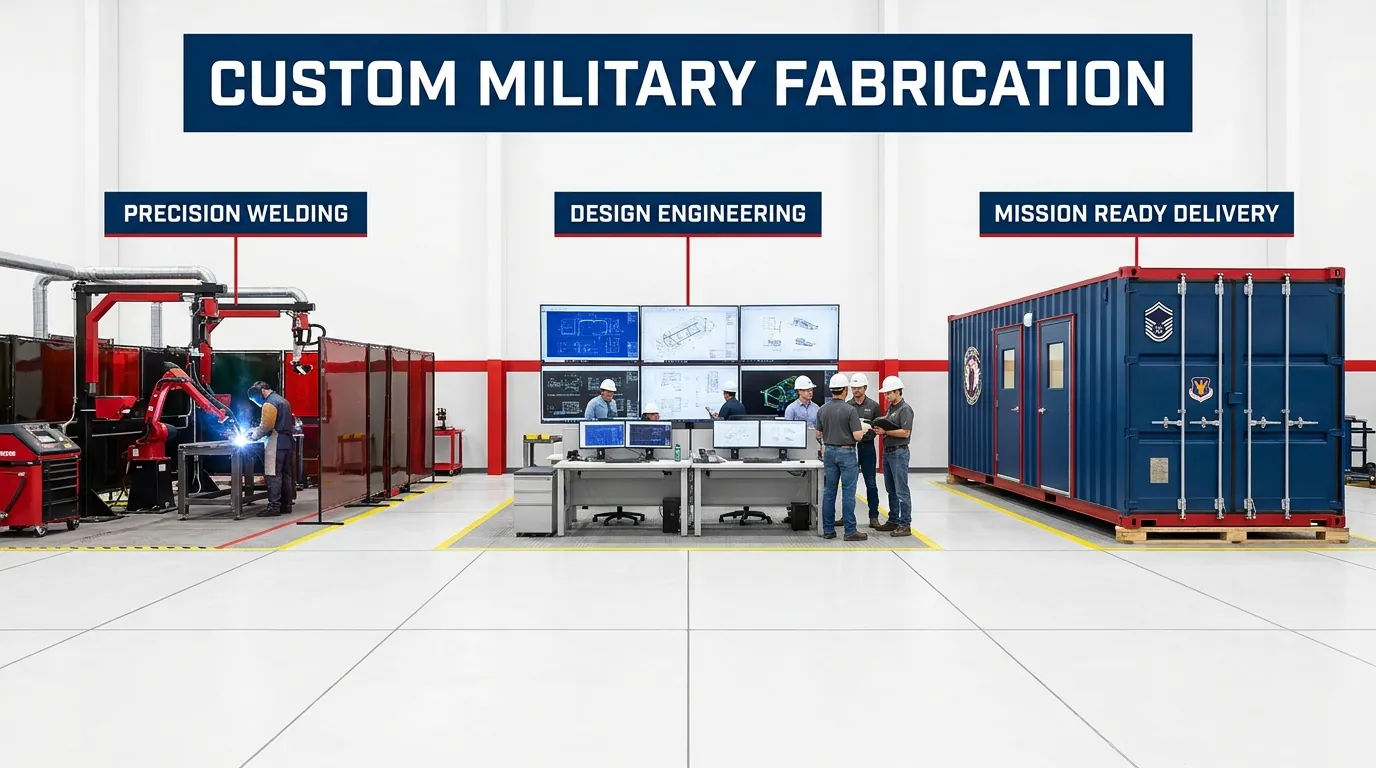
Yes, industrial fabrication for military and government applications can deliver mission-ready containerized units. Custom fabricators with vertically integrated capabilities handle design, engineering, structural welding, environmental system integration, and final outfitting under one roof. This approach compresses production timelines and ensures each unit meets specific operational requirements before delivery.
Craftsmen Industries specializes in industrial fabrication for military and government applications, operating from a 127,000 sq. ft. facility with in-house design, engineering, and fabrication capabilities. That level of vertical integration mirrors the rapid-build methodology military programs demand, where a single production partner controls quality from concept through deployment. For organizations needing containerized assets that comply with ISO dimensional standards and MIL-STD environmental specifications, working with a fabricator experienced in defense applications eliminates the coordination gaps that slow multi-vendor projects.
What Are the Key Takeaways About Containerized Military Units?
The key takeaways about containerized military units center on speed, standardization, precision engineering, and adaptability across mission types.
- Containerized units function as both shipping containers and operational shelters, enabling rapid deployment to austere environments without separate construction phases.
- ISO and STANAG dimensional compliance ensures intermodal transportability across air, sea, and ground platforms.
- Integrated environmental controls, including HVAC, negative-pressure ventilation, and electromagnetic shielding, transform standard containers into mission-capable facilities.
- Custom fabrication accelerates fielding timelines considerably.
- Applications span command and control, mobile medical, CBRN detection, power generation, water purification, and ammunition storage.
The ability to combine standardized form factors with highly specialized interior configurations makes containerized units one of the most versatile platforms in modern expeditionary operations. For military planners evaluating next-generation deployable infrastructure, partnering with an experienced custom fabricator like Craftsmen Industries bridges the gap between operational need and production reality.
Filter Posts by Tag
related posts
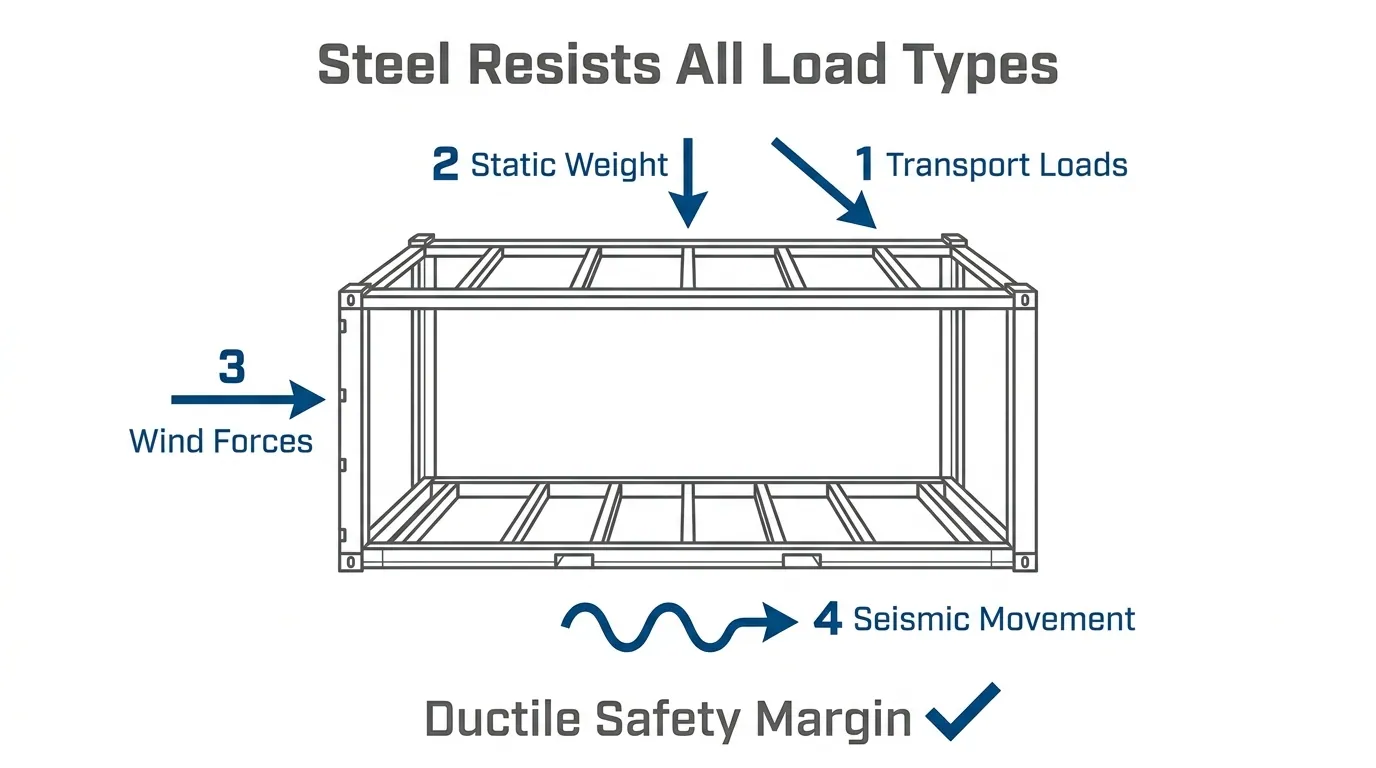
Structural steel in containerized fabrication is a high-strength, weldable framing [...]
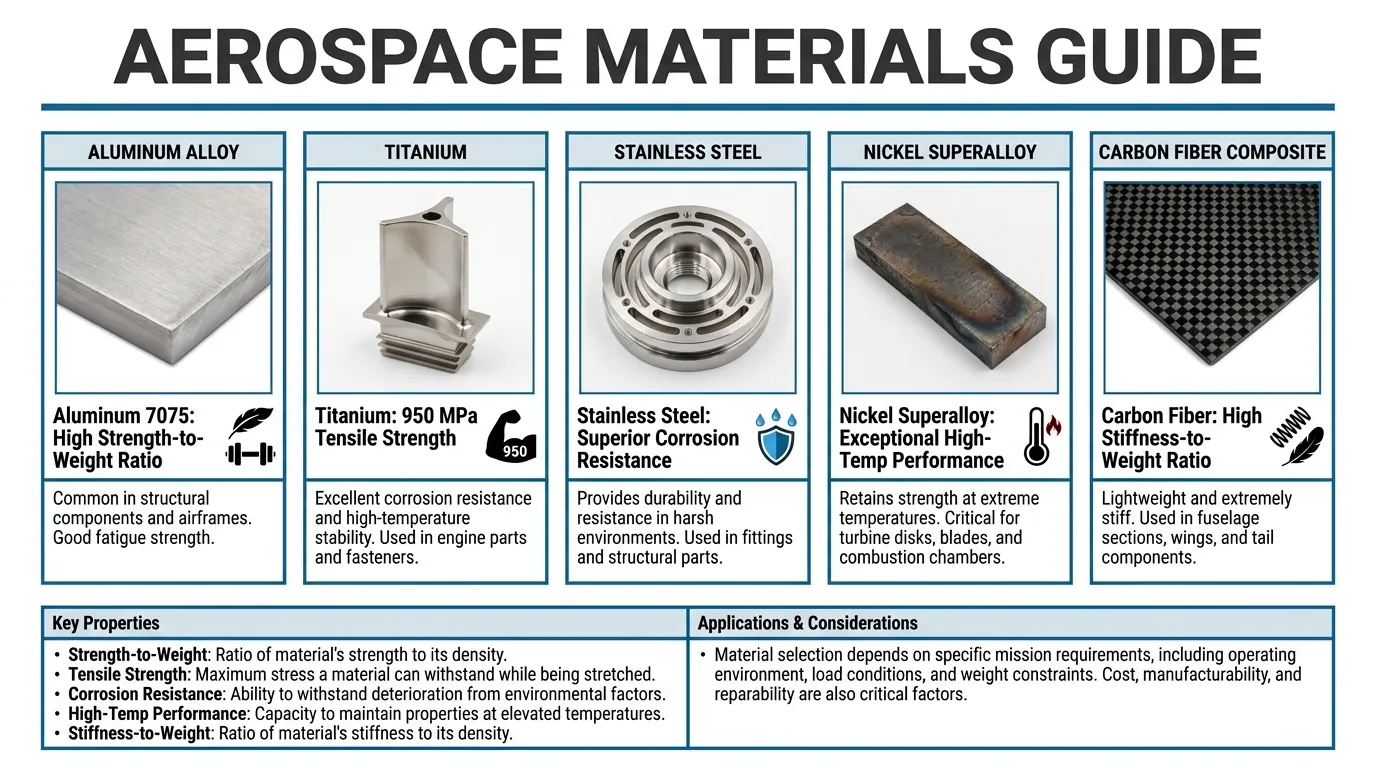
Aerospace fabrication is the specialized discipline of cutting, forming, joining, [...]

Looking for ways to streamline your operations and reduce facility costs? Here's 5 ways modular buildings can help you achieve that today. Read it here!
