
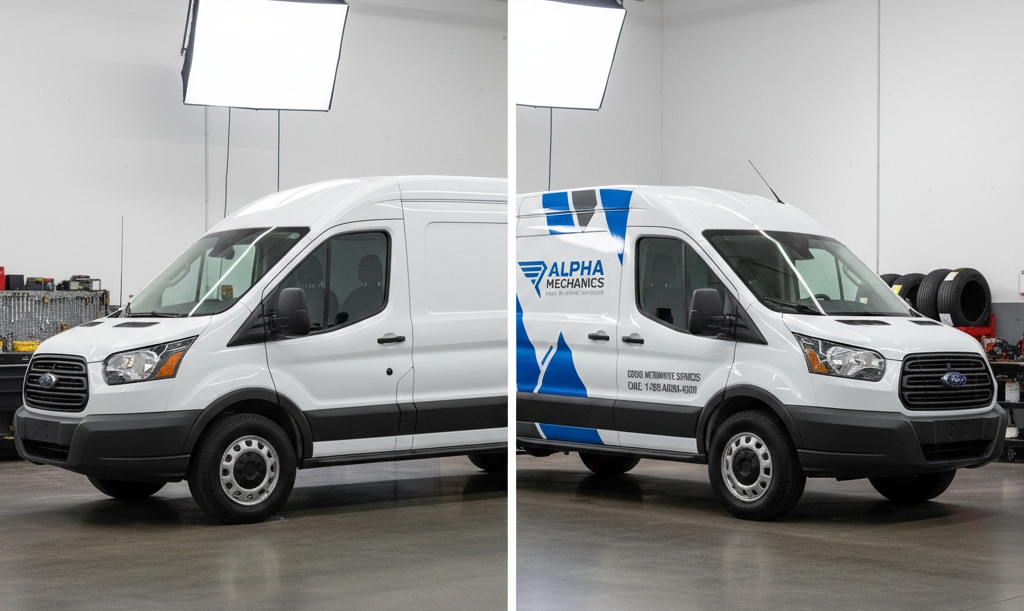
Fleet graphics are adhesive vinyl applications installed directly onto commercial vehicles, while vehicle magnets are removable magnetic panels that attach to steel body surfaces for temporary branding. Both options turn company vehicles into mobile advertisements, but they differ sharply in performance, longevity, and value.
This guide covers the core distinctions between these two formats, their cost structures and ROI potential, brand visibility and impression performance, vehicle safety and paint protection considerations, and how fleet size and business needs shape the right choice.
Durability is where the gap starts. Full vinyl wraps last 3 to 5 years across extreme temperature ranges, while magnetic signs often warp, fade, or detach within a single season, forcing replacements every 6 to 12 months.
Cost comparisons reveal a similar split. Magnets run $50 to $200 per vehicle upfront, but repeated replacements erode that savings quickly. Fleet wraps range from roughly $2,000 to $6,000 per vehicle yet generate impressions at a fraction of the cost of digital advertising.
Brand visibility heavily favors full wraps. Covering the entire vehicle surface creates consistent, high-impact exposure from every angle; magnets cover only a small door panel and lose impression hours every time they are removed for washes or personal use.
Vehicle safety varies by maintenance habits. Professional vinyl wraps protect factory paint from UV damage and road wear when removed within the recommended lifespan. Magnets can trap moisture against the paint surface, leading to corrosion and discoloration if not cleaned and stored regularly.
Choosing the right option also depends on fleet size, lease terms, rebranding frequency, and whether vehicles serve dual personal and business purposes.
What Are Fleet Graphics?
Fleet graphics are branded visual applications installed directly onto commercial vehicles using adhesive vinyl materials. There are three main types of fleet graphics: full wraps, partial wraps, and vinyl decals.
According to Avery Dennison, fleet graphics consist of full wraps that cover the entire vehicle surface, partial wraps that cover specific areas like the hood, doors, and tailgate, and vinyl decals that are smaller cut graphics, with full wraps typically using cast vinyl materials for superior conformability and durability. Cast vinyl film, the preferred material for professional fleet applications, measures just 1 to 2 mils thick yet delivers superior color and gloss stability compared to calendered alternatives. This combination of thin-profile construction and long-term resilience makes cast vinyl the standard for vehicles exposed to daily road conditions.
For businesses operating multiple vehicles, fleet graphics transform every car, van, or truck into a consistent mobile advertisement. Unlike temporary signage options, these graphics are produced using large format printing technology and professionally installed to conform precisely to each vehicle’s body lines and contours. The result is a seamless, paint-like finish that reinforces brand identity wherever the vehicle travels.
What Are Vehicle Magnets?
Vehicle magnets are removable magnetic panels that attach to a vehicle’s steel body panels to display business branding, contact information, or promotional messaging. They use magnetic force instead of adhesive, making them easy to place and remove without tools. According to CarSigns, car magnets cost between $50 and $200, with installation and removal requiring no tools, heat, or professional assistance. Most vehicle magnets use flexible magnetic sheeting printed with custom graphics, though higher-end options incorporate neodymium alloy compositions for stronger hold. Because they rely on direct contact with ferromagnetic surfaces, vehicle magnets only work on flat steel panels and are incompatible with aluminum, fiberglass, or heavily contoured body sections. For businesses needing occasional branding without a permanent commitment, this simplicity makes magnets an accessible entry point into vehicle advertising.
How Do Fleet Graphics and Vehicle Magnets Differ in Durability?
Fleet graphics and vehicle magnets differ in durability primarily through lifespan, weather resistance, and material construction. Full vinyl wraps last years; magnetic signs often need replacement within months.
How Long Do Full Vinyl Fleet Wraps Typically Last?
Full vinyl fleet wraps typically last 3 to 5 years, with some lasting up to 7 years depending on material quality and maintenance. Cast vinyl film, at just 1 to 2 mils thick, delivers superior color and gloss stability compared to calendered alternatives. According to General Formulations, cast vinyl is specifically designed to extend exterior life through resistance to fading and degradation.
Full wraps use cast vinyl materials for superior conformability, allowing the film to adhere tightly around curves, rivets, and recesses without lifting. That secure bond is what separates a wrap that holds up season after season from one that peels prematurely. For fleets logging heavy daily mileage, this kind of longevity makes vinyl wraps a set-it-and-forget-it branding asset. Craftsmen Industries produces fleet graphics using high-quality cast vinyl materials and professional installation techniques designed to maximize wrap lifespan and maintain brand consistency across commercial vehicle fleets.
How Long Do Vehicle Magnets Typically Last?
Vehicle magnets typically last 6 to 12 months before requiring replacement. Heat warps magnetic panels, highway speeds peel them from vehicle surfaces, and UV exposure fades printed graphics within a single season. According to Extreme Color, businesses relying on magnetic signs often face recurring replacement costs every 6 to 12 months per vehicle.
Although magnets are coated with nickel, zinc, or epoxy to resist corrosion, they are not waterproof. Moisture that seeps between the magnet and the vehicle body accelerates rust on both surfaces. For any fleet operating in humid or rainy conditions, this moisture vulnerability creates a maintenance burden that quickly offsets the magnet’s low upfront cost.
How Does Weather Exposure Affect Fleet Graphics vs. Magnets?
Weather exposure affects fleet graphics and magnets in fundamentally different ways. High-quality vinyl wraps endure temperatures from -40°F to 180°F without peeling or cracking, according to Detail Solutions. That range covers virtually every climate a commercial fleet encounters.
Magnetic signs, by contrast, deteriorate rapidly under environmental stress. Key weather vulnerabilities include:
- Heat: Sustained high temperatures warp magnetic panels, reducing adhesion.
- Wind at highway speeds: Aerodynamic lift peels magnets from the vehicle surface.
- Rain and humidity: Trapped moisture between the magnet and paint promotes rust and corrosion.
- UV radiation: Direct sunlight fades magnetic sign graphics noticeably within one season.
For fleets that operate year-round across diverse climates, vinyl wraps are the far more reliable choice. Understanding how each option holds up over time also shapes the real cost comparison between the two.
How Do Fleet Graphics and Vehicle Magnets Compare in Cost?
Fleet graphics and vehicle magnets differ significantly in upfront cost, but the true comparison depends on long-term value. Below, each option’s pricing and return on investment are broken down per vehicle.
How Much Do Fleet Graphics Cost Per Vehicle?
Fleet graphics cost between $2,125 and $6,005 per vehicle, depending on coverage level and vehicle size. According to VehicleWrapping.com, a standard cargo van’s full wrap ranges from $3,025 to $6,005, while partial wraps fall between $2,125 and $3,675. Design complexity, vinyl grade, and professional installation all influence the final price.
This upfront investment covers 3 to 5 years of continuous advertising exposure. When amortized across that lifespan, the annual cost of a full wrap on a cargo van can drop below $1,200 per year. For businesses running multiple vehicles daily, that per-year figure makes fleet graphics one of the most cost-efficient branding channels available.
How Much Do Vehicle Magnets Cost Per Vehicle?
Vehicle magnets cost between $50 and $200 per vehicle, according to CarSigns. This low entry point requires no professional installation, no specialized tools, and no surface preparation beyond a clean panel.
However, replacement frequency erodes that initial savings. Heat warping, UV fading, and highway-speed displacement often force businesses to purchase new magnetic panels every six to twelve months. Over a three-year period, repeated replacements can push the cumulative cost of magnets well past $400 per vehicle, while still delivering far less coverage area and visual impact than even a partial wrap. For budget-conscious operators needing temporary signage, magnets serve a purpose, but the low sticker price can be misleading when factored across multiple replacement cycles.
Which Option Offers a Better Long-Term Return on Investment?
Fleet graphics offer a substantially better long-term return on investment than vehicle magnets. According to WPI Color, the average ROI for vehicle advertising has been measured at 1,054%, with brands seeing $5 to $10 in return per $1 spent across a wrap’s 3-to-5-year lifespan.
The cost-per-impression gap reinforces this advantage. Fleet graphics generate impressions at roughly $0.15 per thousand, while online ads can reach $21 per thousand impressions. Vehicle magnets, with their limited surface area and inconsistent visibility, cannot match the impression volume that a full or partial wrap delivers daily.
For any business treating its fleet as a long-term marketing asset, the higher upfront cost of fleet graphics pays for itself many times over. Magnets make sense for short-term or occasional use, but they rarely compete on cumulative value.
Understanding cost differences sets the stage for evaluating which option drives stronger brand visibility.
Which Option Creates More Brand Visibility and Impact?
Full fleet wraps create significantly more brand visibility and impact than magnetic signs. The difference comes down to surface coverage, impression volume, and perceived professionalism.
How Does a Full Fleet Wrap Perform for Brand Impressions?
A full fleet wrap performs exceptionally well for brand impressions by turning every vehicle into a continuous, high-exposure advertising surface. Because wraps cover the entire vehicle, they remain visible from every angle in traffic, at job sites, and while parked.
According to 3M, fleet graphics can cost as little as $0.15 per thousand impressions, while online ads cost up to $21 per thousand impressions. That efficiency compounds across a multi-vehicle fleet operating daily routes.
Full wraps also project a level of brand cohesion that smaller signage simply cannot match. When multiple wrapped vehicles appear in the same area, the cumulative effect on brand recognition is substantial. For businesses investing in long-term market presence, few advertising formats deliver this kind of passive, always-on exposure.
How Do Magnetic Signs Perform for Brand Impressions?
Magnetic signs perform modestly for brand impressions, limited primarily by their small surface area and inconsistent visibility. A standard magnetic panel covers only a portion of the vehicle door, which reduces readability at distance and from certain angles.
Visibility drops further because magnets are routinely removed for car washes, personal use, or adverse weather. Every hour off the vehicle is an hour of lost impressions. Additionally, magnets that warp, fade, or sit crooked can project an unprofessional image, potentially working against the brand rather than for it.
For businesses needing occasional or temporary identification, magnetic signs serve a basic purpose. However, they lack the scale and consistency required to build meaningful brand awareness over time.
With brand visibility considerations in mind, installation differences further separate these two options.
How Do Fleet Graphics and Vehicle Magnets Differ in Installation?
Fleet graphics and vehicle magnets differ in installation complexity, time, and professional requirements. Fleet wraps demand surface preparation, skilled technicians, and multi-day timelines, while magnets require no tools or expertise. The sections below cover each process.
Fleet graphics installation begins with thorough surface preparation. According to Wrap Solutions, proper vehicle wrapping preparation includes washing and buffing the car’s exterior to remove all debris and grime before applying the wrap. Trained installers then use heat guns, squeegees, and precision cutting tools to conform cast vinyl panels around curves, recesses, and body lines. A standard fleet wrap project requires approximately 2 to 5 weeks from design to completion, with production typically taking 3 days and installation requiring about 2 days per vehicle. Complex designs or larger fleets extend that timeline further.
Vehicle magnet installation, by contrast, is essentially a self-service process. Magnets require no tools, heat, or professional assistance. A user simply positions the magnetic panel on a clean, flat metal surface and presses it into place. The entire process takes minutes rather than days. However, this simplicity comes with maintenance obligations; according to Signs.com, magnets should be removed before any vehicle wash, whether automated or manual, to prevent damage to both the signs and the vehicle surface.
The gap between these two approaches reflects a fundamental trade-off. Fleet graphics lock in a polished, permanent brand presence that stays consistent across every vehicle, but they require planning and scheduling. Vehicle magnets offer instant deployment with zero downtime, making them practical for businesses that need signage the same day. For fleets where consistent quality and long-term durability matter more than speed of application, professional installation typically proves worthwhile.
Understanding how each option installs also raises questions about what happens to the vehicle underneath.
Can Fleet Graphics or Vehicle Magnets Damage Your Vehicle?
Fleet graphics and vehicle magnets can both be safe for vehicle paint when properly installed and maintained. The risk of damage depends on material quality, application technique, and removal method.
Do Fleet Wraps Damage Vehicle Paint?
Fleet wraps do not damage vehicle paint when high-quality vinyl is applied to clean, healthy factory paint and removed correctly. According to MetroCenter Signworks, a professional vinyl wrap can actually help protect the paint underneath from UV exposure, light scratches, and road wear.
Premium cast vinyl uses solvent-based pressure-sensitive adhesive that bonds securely yet comes off cleanly with proper technique. However, leaving a wrap beyond 5 to 7 years can increase risk, as the adhesive gradually hardens over time. Improper removal techniques or harsh chemicals also cause problems.
Key factors that prevent paint damage include:
- Using cast vinyl film rated for exterior vehicle applications
- Applying wraps only to original factory paint in good condition
- Following correct heat-assisted removal procedures
- Replacing wraps within the manufacturer’s recommended lifespan
For fleet managers weighing long-term vehicle value, wraps are one of the safest exterior treatments available when the installation and removal process is handled professionally.
Do Vehicle Magnets Damage Vehicle Paint?
Vehicle magnets can damage vehicle paint if not maintained properly. Moisture trapped between the magnet and the vehicle surface is the primary cause of paint damage, leading to corrosion, discoloration, and etching over time.
According to Signs.com, magnets should be removed before every car wash, whether automated or manual, to prevent damage to both the magnetic signs and the vehicle surface. Regular removal also allows trapped moisture and debris to dry, which is essential for preventing rust spots.
Proper magnet maintenance requires:
- Removing magnets weekly to clean both the vehicle surface and the magnet backing
- Lifting magnets along the sides rather than from corner edges to avoid bending
- Storing magnets flat on a clean, dry surface when not in use
- Never applying magnets over chipped, cracked, or repainted surfaces
Although magnets are coated with nickel, zinc, or epoxy for corrosion resistance, they are not waterproof. Neglecting regular removal and cleaning is the most common way vehicle magnets cause lasting paint damage.
Understanding paint safety helps clarify which option best fits different fleet sizes and operational needs.
Which Option Works Better for Different Fleet Sizes?
The better option depends on fleet size. Large commercial fleets benefit from fleet graphics, small businesses gain flexibility from vehicle magnets, and mixed-use vehicles require a case-by-case approach.
Are Fleet Graphics Better for Large Commercial Fleets?
Fleet graphics are better for large commercial fleets because they deliver uniform branding across every vehicle while reducing per-unit costs at scale. When wrapping 10 or more vehicles, businesses lock in consistent brand visibility on every route, every day. A standard fleet wrap project requires approximately 2 to 5 weeks, with production typically taking 3 days and installation 2 days per vehicle, according to Craftsmen Industries. Coordinating magnet maintenance, removal before washes, and replacement cycles across dozens of vehicles creates operational headaches that permanent wraps eliminate entirely. For any fleet operating more than five vehicles, the long-term simplicity of graphics outweighs the higher upfront investment.
Are Vehicle Magnets Better for Small Businesses or Solo Operators?
Vehicle magnets are better for small businesses or solo operators who need affordable, low-commitment branding. With magnets costing between $50 and $200 per set, a single-vehicle operator can start advertising immediately without a significant financial outlay. Installation requires no professional help, no tools, and no downtime. However, this convenience comes with trade-offs. Magnets fade and warp faster under regular use, often needing replacement every six to twelve months. For a solo operator testing a new service area or brand identity, magnets provide a practical entry point. Once the business stabilizes and the brand solidifies, upgrading to a partial or full wrap typically delivers stronger returns.
Which Option Suits Mixed-Use or Personal Vehicles?
The option that suits mixed-use or personal vehicles is vehicle magnets. Magnets attach and detach in seconds, allowing drivers to brand the vehicle during business hours and remove signage for personal use. This flexibility matters for employees who drive company-assigned vehicles home or contractors using personal trucks for work. Fleet graphics, by contrast, are semi-permanent. Removing a wrap for occasional personal use is neither practical nor cost-effective. For businesses with mixed-use fleets, a hybrid approach often works best: permanent wraps on dedicated work vehicles and magnets on personal or dual-purpose ones.
With fleet size considerations addressed, customization options further differentiate these two branding methods.
How Do Fleet Graphics and Vehicle Magnets Compare in Customization?
Fleet graphics and vehicle magnets compare in customization primarily through design scope, surface coverage, and production capability. Fleet graphics offer significantly more customization options, while vehicle magnets are limited to basic, portable designs.
Fleet graphics support full wraps covering the entire vehicle surface, partial wraps targeting specific areas like the hood, doors, and tailgate, and vinyl decals for smaller cut graphics. According to Avery Dennison, full wraps typically use cast vinyl materials for superior conformability, allowing designs to follow complex curves, recesses, and body lines seamlessly. This conformability means designers can treat the entire vehicle as a unified canvas, incorporating photographic imagery, gradients, intricate patterns, and precise color matching across every panel.
Vehicle magnets, by contrast, restrict customization to flat or near-flat surfaces. Because magnetic panels must maintain full contact with the vehicle body to stay secure, they cannot conform to curves, ridges, or textured areas. Design dimensions are limited to standard rectangular or rounded-corner shapes, typically covering only door panels or tailgates. Color vibrancy and print resolution tend to degrade faster on magnetic substrates, particularly under UV exposure.
The production process behind each option further separates their customization potential:
- Fleet graphics use large format digital printing, which produces high-resolution, full-color output that can be tiled to create images of virtually any size.
- Cast vinyl film, at just 1 to 2 mils thick, conforms to compound curves without distortion, preserving design integrity across complex vehicle geometries.
- Vehicle magnets use standard digital printing on magnetic sheeting, which limits output to smaller, flat-panel formats.
- Magnetic signs cannot incorporate specialty finishes like matte, satin, or textured laminates that fleet graphics readily support.
For businesses that require precise brand identity execution across multiple vehicles, fleet graphics deliver consistency that magnets simply cannot match. Every vehicle in a fleet can carry identical, pixel-accurate branding regardless of make or model. Magnets, while functional for basic logo and contact information display, lack the design flexibility to create a cohesive, professional fleet presence.
Understanding how easily each option can be updated or swapped is equally important when planning your branding strategy.
How Easy Is It to Update or Remove Each Option?
Updating or removing fleet graphics requires professional service, while vehicle magnets can be swapped in seconds by hand. The ease of each option depends on the material, adhesive type, and whether you need a full replacement or a simple design change.
Vehicle magnets offer the simplest update process. Removing a magnetic sign requires no tools, heat, or professional assistance. According to Printastic, when removing magnetic signs, you should lift along the sides and never from the corner edges to avoid bending or creasing the rounded corners. Swapping an outdated magnet for a new one takes under a minute per panel. However, because magnets fade from UV exposure within a single season, “updating” often means replacing worn-out panels rather than making a strategic rebrand.
Fleet graphics require a more involved process for updates. Professional removal uses controlled heat to soften the vinyl adhesive, allowing technicians to peel the wrap cleanly without damaging factory paint. A full wrap removal and reinstallation typically takes one to two days of shop time per vehicle. Partial updates are possible when only specific panels, such as a phone number or logo placement, need changing. For businesses that rarely rebrand, this longer update cycle is a minor inconvenience spread across years of continuous use.
The practical trade-off comes down to frequency. If your branding, contact information, or promotions change quarterly, magnets let you pivot without scheduling downtime. If your brand identity stays consistent for years, the permanence of fleet graphics becomes an advantage rather than a limitation. For most growing businesses, investing in a durable wrap and planning design updates around natural fleet replacement cycles delivers the strongest long-term value.
Understanding how each option handles updates helps clarify which best fits your rebranding strategy.
What Should You Consider When Choosing Between Fleet Graphics and Vehicle Magnets?
You should consider how often your branding changes, how long you need visual consistency, and whether your vehicles are owned or leased. The following subsections address each scenario.
Which Option Is Better if You Rebrand Frequently?
Vehicle magnets are better if you rebrand frequently. Magnets cost between $50 and $200 per set, according to CarSigns, and require no tools or professional assistance for installation or removal. When a logo, phone number, or color scheme changes, old magnets can simply be swapped for new ones in minutes. Fleet graphics, by contrast, require professional removal and reinstallation, with full wraps on a standard cargo van costing $3,025 to $6,005 per application. For businesses that update their identity every year or two, magnets keep transition costs manageable. That said, frequent rebranding itself can undermine recognition; the savings only matter if the brand shifts are genuinely strategic.
Which Option Is Better for Long-Term Brand Consistency?
Fleet graphics are better for long-term brand consistency. Full vinyl wraps deliver uniform color, imagery, and messaging across every vehicle in a fleet, creating a cohesive mobile identity that reinforces recognition daily. Cast vinyl materials maintain superior color and gloss stability over multiple years of outdoor exposure. Magnets, on the other hand, fade from UV exposure within a single season, often requiring replacement every six to twelve months, as documented by Extreme Color. Each replacement cycle introduces slight color and print variations that dilute brand uniformity. For any business committed to a stable visual identity over three or more years, fleet graphics are the clear choice because they lock in consistent brand presentation from day one.
Which Option Is Better for Leased Vehicles?
Both fleet graphics and vehicle magnets can work for leased vehicles, but the best choice depends on lease terms. Magnets are the simplest option because they attach and detach without altering the vehicle surface. However, they must be removed before every car wash and stored flat to prevent warping, which adds ongoing maintenance.
Fleet wraps are also lease-compatible when high-quality vinyl and professional installation are used. A professional vinyl wrap does not damage healthy factory paint when removed correctly, according to MetroCenter Signworks. Most lease agreements permit wraps as long as the vehicle is returned in original condition. For leased fleets needing strong brand presence, wraps deliver far greater impact without violating return terms.
With the right option selected, professional production ensures your fleet branding performs at its best.
How Can Custom Large Format Graphics Elevate Your Fleet Branding?
Custom large format graphics elevate fleet branding by combining high-resolution printing, precision installation, and durable materials into a cohesive visual identity across every vehicle. The following sections cover in-house production capabilities and the essential takeaways from the fleet graphics vs. vehicle magnets comparison.
Can Craftsmen Industries’ In-House Graphics Production Deliver Custom Fleet Solutions?
Yes, Craftsmen Industries’ in-house graphics production can deliver custom fleet solutions from design through installation. Operating from a 127,000 sq. ft. facility in St. Charles, Missouri, Craftsmen Industries maintains complete vertical integration, handling design, engineering, large format printing, fabrication, and graphic installation under one roof. This consolidated workflow enables full quality control at every stage.
A standard fleet wrap project timeline varies based on fleet size, vehicle types, and design complexity, with typical production and installation completed efficiently through in-house control. Fleet size, vehicle types, and design complexity shift that range, but in-house control keeps timelines predictable. For businesses managing dozens or hundreds of vehicles, this single-source approach eliminates the coordination delays that come with outsourcing design, print, and installation to separate vendors. With over 40 years of experience serving corporations, government agencies, and non-profit organizations, Craftsmen Industries specializes in scalable fleet branding solutions that maintain quality control from initial design through final installation.
What Are the Key Takeaways About Fleet Graphics vs. Vehicle Magnets?
The key takeaways about fleet graphics vs. vehicle magnets center on durability, cost efficiency, brand impact, and use case fit.
- Fleet graphics deliver superior long-term ROI. With a CPM as low as $0.15 compared to $21 for online ads, vinyl wraps generate continuous impressions over 3 to 5 years from a single investment.
- Vehicle magnets suit short-term or low-budget needs. At $50 to $200 per set, magnets work for solo operators or personal vehicles where removability matters most.
- Durability separates the two options. Vinyl wraps withstand temperatures from -40°F to 180°F, while magnets risk warping, fading, and detachment within months under harsh conditions.
- Paint safety depends on proper handling. Professional vinyl wraps protect factory paint when installed and removed correctly; magnets require frequent removal to prevent moisture trapping and surface damage.
- Brand consistency favors fleet graphics. Full or partial wraps maintain uniform visual identity across an entire fleet, reinforcing recognition at every touchpoint.
For any business prioritizing long-term visibility and professional brand presence, fleet graphics consistently outperform vehicle magnets. Craftsmen Industries can help translate that advantage into a custom fleet branding program built around your specific vehicles, brand standards, and timeline.
Filter Posts by Tag
related posts

Learn how promotional vehicles boost brand visibility, drive local engagement, and offer cost-effective marketing for small businesses on the move.

Maximize fleet graphic lifespan with expert maintenance tips. Learn cleaning, storage, and repair strategies to keep wraps vibrant 3–7 years.
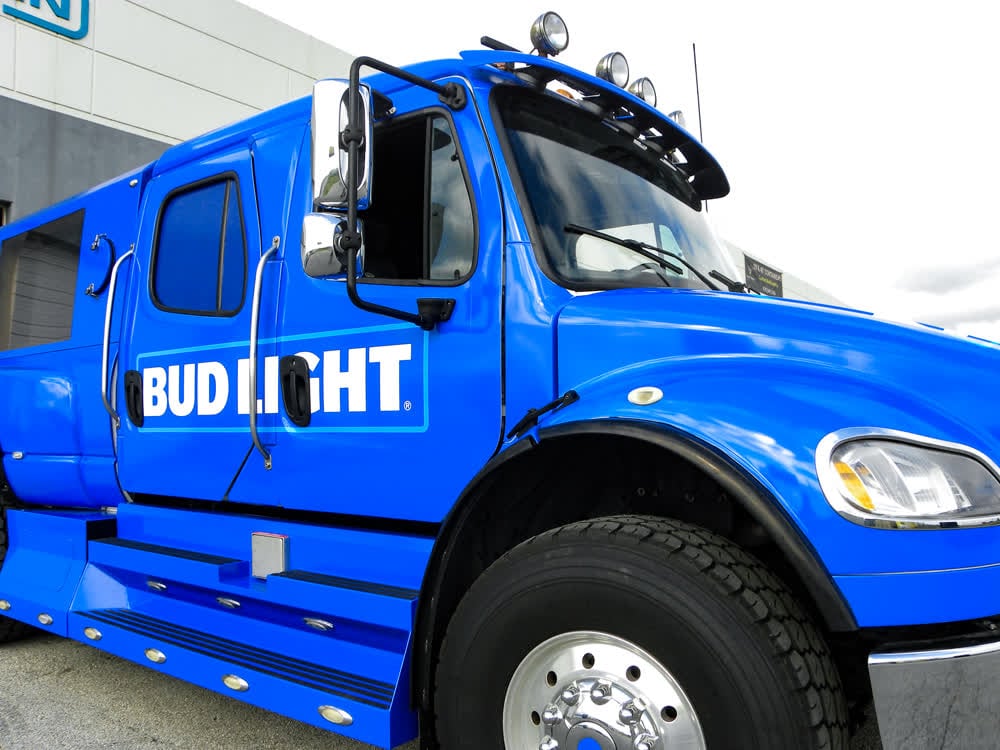
Why do so many companies invest in fleet graphics? Read on why Custom vinyl graphics can unify your vehicles and increase business levels.
