

Reflective fleet graphics are vehicle markings made from retroreflective materials that return headlight beams back toward approaching drivers, making commercial trucks and trailers visible at night. These graphics serve as both a federal safety requirement and a practical branding tool for fleet operators.
This guide covers nighttime fleet risk factors, retroreflective material science and types, placement and regulatory compliance, real-world safety outcomes, and the integration of reflective graphics with fleet branding, installation, and provider selection.
Over a third of fatal large truck crashes occur at night, when darkness obscures vehicle outlines and compounds the effects of driver fatigue. Understanding how low-light conditions, reduced conspicuity, and fatigue interact helps fleet managers prioritize the right visibility investments.
Retroreflective sheeting relies on microprismatic or glass-bead structures to redirect light on a narrow return path to the driver’s eyes. Material choices range from high-performance microprismatic films with visibility ranges up to 250 meters to cost-effective glass-bead alternatives and dual-function fluorescent-reflective combinations that provide round-the-clock conspicuity.
Federal standards under FMVSS 108 mandate conspicuity tape on trailers over 80 inches wide exceeding 10,000 pounds GVWR, while FMCSA requirements extend to ongoing maintenance. State mandates can add stricter contrast and marking rules, making multi-state compliance audits essential.
Strategic placement across rear panels, side rails, cab surfaces, and box truck bodies reduces rear-end collisions by up to 29% and closes lateral visibility gaps at intersections. When designed with proper color contrast and material layering, reflective wraps merge brand identity with safety performance in a single application.
Choosing a vertically integrated provider with in-house large format printing can keep quality consistent and compress project timelines across entire fleets.
Why Does Night Visibility Matter for Commercial Fleet Vehicles?
Night visibility matters for commercial fleet vehicles because reduced light dramatically increases collision risk, limits conspicuity, and compounds the effects of driver fatigue. The following sections cover low-light accident risk, the role of vehicle conspicuity, and how fatigue interacts with poor visibility.
How Do Low-Light Conditions Increase Fleet Accident Risk?
Low-light conditions increase fleet accident risk by reducing the time drivers have to detect and react to large commercial vehicles on the road. Darkness obscures vehicle outlines, lane markings, and road hazards, making trucks and trailers especially difficult for surrounding motorists to see. According to 2022 FMCSA data, there were 5,266 fatal crashes involving large trucks and buses that year, with 37 percent occurring at night between 6:00 PM and 5:59 AM. That share is disproportionate given the lower traffic volumes during nighttime hours. For fleet managers, these figures underscore why passive visibility measures, such as reflective graphics and conspicuity markings, are not optional additions but essential safety investments.
What Role Does Vehicle Conspicuity Play in Preventing Collisions?
Vehicle conspicuity plays a critical role in preventing collisions by ensuring other road users can detect and identify a commercial vehicle early enough to react safely. Conspicuity refers to how visually prominent a vehicle appears against its surroundings, particularly at night or in adverse weather. When a trailer lacks adequate reflective markings, its silhouette can blend into dark backgrounds, leaving approaching drivers with dangerously short reaction windows. Reflective sheeting, conspicuity tape, and high-visibility graphics work together to outline a vehicle’s shape and position from a distance. For fleets operating across varied conditions, maintaining strong conspicuity is one of the most cost-effective ways to reduce both rear-end and lateral collisions.
How Does Driver Fatigue Interact With Poor Fleet Visibility?
Driver fatigue interacts with poor fleet visibility by compounding the dangers each condition creates independently. A fatigued driver has slower reaction times, reduced attention, and impaired judgment; when paired with a poorly marked vehicle ahead, the margin for error shrinks to nearly zero. The FMCSA Large Truck Crash Causation Study found that fatigue was coded as an associated factor for 13 percent of commercial motor vehicle drivers involved in crashes. High-visibility reflective graphics help compensate for these human limitations by making vehicles detectable at greater distances. High-Intensity Prismatic (RA2) sheeting, for example, achieves visibility ranges up to 250 meters, giving fatigued drivers additional seconds of reaction time that can prevent a collision.
Understanding these nighttime risk factors sets the foundation for choosing the right reflective materials.
What Are Reflective Fleet Graphics?
Reflective fleet graphics are vehicle markings made from retroreflective materials that return light back toward its source, making commercial vehicles visible at night. These graphics serve both safety and branding functions across trucks, trailers, and fleet vehicles. The sections below explain how retroreflective materials work and how they differ from standard non-reflective graphics.
How Do Retroreflective Materials Return Light to Drivers?
Retroreflective materials return light to drivers by redirecting incoming light rays back toward the original source rather than scattering them. When a vehicle’s headlights strike retroreflective sheeting on a truck or trailer, tiny prismatic elements or glass beads embedded in the material bend that light through a process called retroreflection, sending it on a narrow return path directly to the driver’s eyes. Standard reflective surfaces bounce light at equal but opposite angles, which often directs it away from the observer. Retroreflection is different because the light retraces its incoming path regardless of the angle of incidence. This optical property is what makes fleet vehicles appear to “glow” in headlight beams, giving approaching drivers critical reaction time during nighttime driving conditions.
What Is the Difference Between Reflective and Non-Reflective Graphics?
The difference between reflective and non-reflective graphics is the material’s ability to return light under low-light conditions. Reflective fleet graphics use retroreflective sheeting that bounces headlight beams back to the driver, while non-reflective graphics rely entirely on ambient or direct lighting to remain visible. At night or in fog, non-reflective vinyl becomes nearly invisible unless illuminated by external light sources positioned at close range.
Key distinctions include:
- Reflective graphics maintain high contrast visibility at distances up to 250 meters, whereas non-reflective graphics lose legibility beyond the reach of streetlights or overhead illumination.
- Reflective materials contain microprismatic or glass-bead structures engineered for light return; non-reflective vinyl uses standard pigmented films with no optical retroreflection properties.
- Non-reflective wraps serve daytime branding effectively but offer no passive safety benefit after dark.
For fleet managers balancing safety compliance with brand exposure, reflective graphics deliver both functions simultaneously. Understanding the specific material types behind this performance is the next step.
What Types of Reflective Materials Are Used on Fleet Vehicles?
The types of reflective materials used on fleet vehicles include microprismatic sheeting, glass-bead sheeting, fluorescent-reflective combination films, and metalized reflective vinyl. Each material differs in brightness, durability, and cost.
Microprismatic Reflective Sheeting
Microprismatic reflective sheeting is a high-performance retroreflective material that uses tiny, precisely engineered prisms to redirect light back toward its source. These prisms capture incoming light at wide angles, making vehicles highly visible from greater distances. According to Grokipedia, a key performance metric for retroreflective sheeting is the coefficient of retroreflection (RA), expressed in candelas per lux per square meter (cd/lx/m²). Microprismatic films consistently achieve the highest RA values among commercially available sheeting types. For fleets operating in highway corridors or rural routes with minimal ambient lighting, this material delivers the strongest nighttime conspicuity available.
Glass-Bead Reflective Sheeting
Glass-bead reflective sheeting is an older retroreflective technology that uses microscopic glass spheres embedded in the film surface. Light enters each bead, refracts through the sphere, reflects off a backing layer, and returns along a similar path. While cost-effective and widely available, glass-bead sheeting returns less light than prismatic alternatives. According to ResearchGate, prismatic sheeting reflects more light directly back to the source and appears brighter to drivers. Glass-bead sheeting remains suitable for short-range, low-speed applications where budget constraints outweigh maximum brightness needs. However, for long-haul fleets prioritizing safety, microprismatic options offer a measurably better return on investment.
Fluorescent-Reflective Combination Films
Fluorescent-reflective combination films merge daytime fluorescent pigments with nighttime retroreflective technology in a single material. During daylight hours, the fluorescent layer absorbs UV light and re-emits it as bright, high-contrast color, typically lime-yellow or orange-red. At night, the retroreflective layer activates under headlight illumination. This dual-function design provides round-the-clock conspicuity, which makes it especially valuable for emergency response fleets, utility vehicles, and any application requiring maximum visibility across all lighting conditions. For fleet managers balancing 24-hour operational safety, these films eliminate the compromise between daytime and nighttime performance.
Metalized Reflective Vinyl
Metalized reflective vinyl is a reflective film that incorporates a thin metallic layer to produce a mirror-like, chrome-adjacent finish while maintaining retroreflective properties. According to DERFLEX, ASTM D4956 Type I engineering grade reflective film typically lasts 3 to 7 years, with white film producing approximately 100 cd/lx/m² at a two-degree observation angle. This positions metalized vinyl as a practical option for fleet branding applications where visual impact matters alongside basic conspicuity. The metallic finish suits fleets seeking a distinctive aesthetic without sacrificing reflective function entirely, though its RA values fall below microprismatic alternatives.
Understanding material options makes selecting the right placement strategy the logical next step.
Where Should Reflective Graphics Be Placed on Fleet Vehicles?
Reflective graphics should be placed on trailer rear panels, trailer side panels, cab and chassis surfaces, and box truck bodies. Each placement zone serves a distinct visibility and compliance purpose.
What Reflective Markings Are Required on Trailer Rear Panels?
Reflective markings required on trailer rear panels include alternating red and white conspicuity tape applied horizontally across the full width and vertically on each side of the rear. These markings outline the trailer’s shape for approaching drivers, making the vehicle’s dimensions recognizable at night. According to the Legal Examiner, passenger vehicle collisions with the rear and side of tractor-trailers were reduced by 29% due to reflective tape. Rear panel placement is the single most critical zone because following vehicles have the least reaction time when closing distance on a slower or stopped trailer.
What Conspicuity Tape Patterns Work Best on Trailer Side Panels?
The conspicuity tape patterns that work best on trailer side panels use alternating red and white segments applied in a continuous or evenly spaced strip along the lower body. According to Brady Corporation, conspicuity tape must cover 50% or more of the trailer’s length and sit between 15 and 60 inches above the road surface. This height range positions the tape within a passenger vehicle’s headlight beam, maximizing retroreflective return. For longer trailers, evenly distributed segments create a consistent visual outline that helps oncoming and cross-traffic drivers gauge the trailer’s full length.
How Should Reflective Graphics Be Applied to Cab and Chassis?
Reflective graphics should be applied to the cab and chassis along the lower door panels, fender edges, and bumper faces. While federal conspicuity mandates focus on trailers, adding reflective elements to the cab improves overall vehicle visibility from multiple angles. Reflective striping along the rocker panels connects visually with trailer-mounted tape, giving other drivers a complete outline of the entire rig. Curved cab surfaces require careful material handling during installation; heat-forming the sheeting around compound curves prevents air pockets that degrade reflective performance over time.
What Placement Works Best on Box Trucks and Straight Trucks?
The placement that works best on box trucks and straight trucks covers the rear panel, both side bodies, and the upper cab-over profile. Because box trucks lack the separation between tractor and trailer, a continuous reflective outline along the lower rails and rear creates a unified silhouette visible from every approach angle. According to the FMCSA, 37% of the 5,266 fatal crashes involving large trucks and buses in 2022 occurred at night. Prioritizing both rear and side coverage on these single-unit vehicles addresses the lateral exposure gap that makes them especially vulnerable at intersections.
With placement zones defined, understanding the federal and DOT regulations behind these requirements ensures full compliance.
What Federal and DOT Regulations Govern Reflective Fleet Markings?
Federal and DOT regulations governing reflective fleet markings include FMVSS 108 conspicuity standards, FMCSA reflective tape requirements for commercial motor vehicles, and state-level visibility mandates that may exceed federal minimums.
What Does FMVSS 108 Require for Trailer Conspicuity?
FMVSS 108 requires retroreflective sheeting on every trailer with an overall width of 80 inches or more and a GVWR exceeding 10,000 pounds, provided it was manufactured on or after December 1, 1993. According to the Electronic Code of Federal Regulations (49 CFR § 393.11), these trailers must be equipped with retroreflective sheeting that meets FMVSS No. 108 specifications for placement, color, and material performance. The standard mandates alternating red and white conspicuity tape in specific patterns on rear and side surfaces. Fleets operating trailers below these weight and width thresholds are exempt, though voluntary compliance remains a practical safety measure worth considering.
What Are the FMCSA Reflective Tape Requirements for CMVs?
The FMCSA reflective tape requirements for CMVs mandate that conspicuity treatments remain functional and visible throughout a vehicle’s service life. Tape must be properly maintained, with damaged or degraded sections replaced promptly. Even routine cleaning can make a meaningful difference; a study published via LinkedIn Pulse found that tape brightness improved by an average of 25% after cleaning, yet many strips still failed to meet minimum retroreflectivity requirements. This highlights a critical gap: compliance is not a one-time installation event. Fleet managers should schedule regular retroreflectivity inspections, because tape that appears intact to the naked eye may still fall below the performance thresholds FMCSA enforcement officers measure during roadside checks. Non-compliance penalties can reach $50,000 per violation.
How Do State-Level Visibility Mandates Differ From Federal Rules?
State-level visibility mandates differ from federal rules by adding jurisdiction-specific marking, lettering, and contrast requirements that go beyond FMVSS 108 and FMCSA baseline standards. Federal regulations set the floor for conspicuity tape placement and retroreflectivity, but individual states can impose stricter criteria. Texas, for example, requires commercial vehicle markings to appear on both sides of a self-propelled CMV in letters that contrast sharply in color with the background. Other states may specify minimum font sizes, USDOT number display locations, or additional reflective treatments for vehicles operating on certain roadways. Fleets crossing state lines should audit markings against each state’s transportation code to avoid citations during multi-state operations.
With regulatory requirements established, the next step is understanding how these markings perform in real-world safety outcomes.
How Do Reflective Fleet Graphics Improve Nighttime Safety Outcomes?
Reflective fleet graphics improve nighttime safety outcomes by making commercial vehicles visible to approaching drivers from greater distances, reducing collision risk. The following sections cover rear-end collision reduction, lateral crash prevention, and intersection visibility gains.
How Much Do Reflective Markings Reduce Rear-End Collisions?
Reflective markings reduce rear-end collisions by giving trailing drivers earlier visual detection of slow-moving or stationary trucks ahead. Retroreflective tape bounces headlight beams back toward approaching vehicles, extending recognition distance by hundreds of feet in dark conditions. A 2019 study published in ScienceDirect found that retroreflective tape on heavy trucks significantly reduces the likelihood of rear-end and side collisions during nighttime, particularly in rural areas where ambient lighting is minimal. Rural highways pose the greatest rear-end risk because drivers have fewer contextual cues to judge closing speed. Consistent, well-maintained reflective markings on rear panels remain one of the most cost-effective collision countermeasures available to fleet operators.
How Do Side Conspicuity Graphics Prevent Lateral Crashes?
Side conspicuity graphics prevent lateral crashes by outlining a trailer’s full profile for drivers approaching from adjacent lanes or cross streets. Without side markings, a long trailer can appear nearly invisible on unlit roads, especially when crossing intersections or merging. Alternating red and white conspicuity patterns along the lower side rail define the vehicle’s length, height, and direction of travel. This visual outline helps nearby motorists gauge the truck’s position and speed before attempting a lane change or pass. For fleet managers, extending conspicuity graphics beyond minimum DOT coverage creates an even larger detection zone, which is particularly valuable on multi-lane highways where lateral encroachment happens quickly.
What Impact Do Reflective Wraps Have on Intersection Visibility?
Reflective wraps have a significant impact on intersection visibility by illuminating large surface areas of the vehicle when struck by headlights from any angle. Standard conspicuity tape covers limited zones, but full or partial reflective wraps turn entire side panels and rear doors into high-visibility surfaces. This broader coverage matters most at intersections, where vehicles approach from multiple directions simultaneously. Pedestrians and cyclists, who generate no headlight return, also benefit because reflective wraps make the truck itself a visual landmark in the intersection environment. For fleets operating in urban corridors with frequent stop-and-go traffic, reflective wraps offer a measurable safety advantage over tape-only configurations.
With nighttime collision risks addressed, combining reflective elements with fleet branding creates dual-purpose graphics that protect and promote simultaneously.
Can Reflective Graphics Also Serve Fleet Branding Purposes?
Yes, reflective graphics can serve fleet branding purposes by combining high-visibility safety materials with custom brand elements. The sections below cover how reflective wraps unify branding with compliance and which design factors balance visual appeal with reflective performance.
How Do Custom Reflective Wraps Combine Branding With Safety?
Custom reflective wraps combine branding with safety by embedding company logos, colors, and messaging directly into retroreflective sheeting. This dual-purpose approach turns every vehicle into a mobile advertisement that remains visible and compliant after dark. Fleet operators can position brand elements alongside required conspicuity markings, ensuring DOT compliance without sacrificing promotional impact.
Regulatory requirements actually reinforce this integration. According to the Texas Department of Public Safety, commercial vehicle markings must appear on both sides of the self-propelled CMV in letters that contrast sharply in color with the background. That contrast requirement aligns naturally with bold brand design, since high-contrast logos and text are both more legible and more reflective under headlights.
For fleet managers weighing the investment, reflective branded wraps eliminate the need to choose between safety spending and marketing spending; one application accomplishes both objectives simultaneously. Craftsmen Industries’ 127,000 sq. ft. facility in St. Charles, Missouri, houses integrated design, printing, and fabrication capabilities that allow fleet operators to source both DOT-compliant conspicuity markings and custom branded graphics from a single provider, streamlining coordination and maintaining consistent quality throughout the production process.
What Design Considerations Balance Aesthetics and Reflectivity?
The design considerations that balance aesthetics and reflectivity include color selection, graphic placement, material layering, and contrast ratios. Each factor directly affects how well the wrap performs under headlights while maintaining daytime brand appeal.
Key considerations include:
- Color palette: Lighter colors such as white, yellow, and fluorescent lime produce higher retroreflectivity values than darker hues. Dark brand colors can be used strategically in non-critical zones while reflective colors dominate safety areas.
- Graphic placement: Positioning branded elements adjacent to, rather than overlapping, required conspicuity zones preserves both compliance and visual cohesion.
- Material layering: Combining reflective vinyl for primary brand areas with non-reflective accents creates visual depth during the day without reducing nighttime performance.
- Contrast ratios: Maintaining sharp color contrast between text and background improves legibility at distance, serving both brand recognition and regulatory standards.
Balancing these factors requires experienced designers who understand both retroreflective material behavior and brand identity systems. With branding and safety aligned, proper installation practices ensure these graphics perform over time.
How Are Reflective Fleet Graphics Installed and Maintained?
Reflective fleet graphics are installed through careful surface preparation, professional application within specific temperature ranges, and ongoing cleaning routines. The subsections below cover pre-application steps, expected lifespan, and maintenance practices that preserve reflective performance.
What Surface Preparation Is Needed Before Application?
The surface preparation needed before application involves thorough cleaning, temperature control, and inspection of the substrate. According to 3M, reflective tapes should be applied when the temperature is between 50°F and 100°F (10°C to 38°C), after washing surfaces with detergent and water to remove dirt and road film.
Key preparation steps include:
- Washing all panel surfaces with a mild detergent solution to remove grease, road film, and debris.
- Drying the substrate completely before positioning any graphic material.
- Inspecting for rust, peeling paint, or surface irregularities that could trap air bubbles.
- Verifying that ambient and surface temperatures fall within the recommended application range.
Skipping any of these steps risks premature adhesion failure, which directly compromises nighttime conspicuity.
How Long Do Reflective Fleet Graphics Last Before Replacement?
Reflective fleet graphics last between 3 and 7 years before replacement, depending on material grade, environmental exposure, and maintenance frequency. ASTM D4956 Type I engineering grade reflective film, for example, carries a general service life of 3 to 7 years.
Several factors accelerate degradation:
- Prolonged UV exposure in southern or high-altitude climates.
- Frequent chemical contact from road salts, fuel spills, or harsh cleaning agents.
- Physical abrasion from loading docks, brush contact, or debris impact.
Higher-grade prismatic films tend to outlast entry-level engineering grades under the same conditions. Fleet managers should schedule retroreflectivity inspections annually to identify panels that have dropped below minimum performance thresholds, rather than waiting for visible damage.
What Maintenance Practices Preserve Reflective Performance?
Maintenance practices that preserve reflective performance include regular cleaning, periodic retroreflectivity testing, and prompt replacement of damaged sections. One analysis published on LinkedIn Pulse found that tape brightness improved by an average of 25% after cleaning, yet many strips still failed to meet minimum retroreflectivity requirements.
Effective maintenance involves:
- Washing reflective surfaces with mild soap and water at least monthly.
- Avoiding abrasive scrubbers or petroleum-based solvents that degrade prismatic structures.
- Using a retroreflectometer or visual inspection under headlights to check brightness levels.
- Replacing any panel segment showing cracking, delamination, or dull reflectivity.
Consistent upkeep extends graphic lifespan and ensures compliance during DOT inspections. Choosing the right graphics provider simplifies both installation and long-term maintenance.
What Should You Look for in a Reflective Fleet Graphics Provider?
You should look for a reflective fleet graphics provider that offers in-house large format printing and vertically integrated production. These two capabilities directly affect quality control and project turnaround.
Why Does In-House Large Format Printing Matter for Quality?
In-house large format printing matters for quality because it keeps every production step under one roof, eliminating handoffs to third-party print shops where color accuracy, material handling, and reflective film calibration can drift. When a provider prints reflective fleet graphics internally, technicians control ink adhesion to retroreflective substrates, monitor lamination pressure, and verify output against brand standards before anything ships. Outsourced printing introduces variables that are difficult to audit after the fact. Working with experienced installers who understand retroreflective materials helps ensure graphics are applied correctly and maintain performance over time. A provider that prints and installs under one quality system reduces defect risk significantly.
How Does Vertical Integration Speed Up Fleet Graphics Projects?
Vertical integration speeds up fleet graphics projects by consolidating design, engineering, printing, and installation into a single production workflow. Rather than coordinating between separate vendors for artwork approval, material sourcing, print production, and field installation, a vertically integrated provider manages each phase sequentially within its own facility. This removes the scheduling gaps and communication delays that fragment multi-vendor timelines. For fleet managers rolling out reflective graphics across dozens of vehicles, compressed lead times mean less fleet downtime. Providers operating from a single large-scale facility can also stage materials in advance, batch similar vehicle types, and shift resources between departments as project demands change. With over 40 years of experience and vertically integrated production workflows, Craftsmen Industries manages fleet graphics projects from initial design through final installation within their single St. Charles facility, eliminating the coordination delays that occur when design, printing, and installation are handled by separate vendors.
With the right provider capabilities identified, the next step is exploring how custom large format graphics elevate fleet safety.
How Can Custom Large Format Graphics Enhance Fleet Safety?
Custom large format graphics enhance fleet safety by combining high-visibility reflective materials with branded design in a single, vertically integrated production process. The sections below cover Craftsmen Industries’ in-house capabilities and the key takeaways from this guide.
Can Craftsmen Industries Build Reflective Fleet Graphics In-House?
Yes, Craftsmen Industries can build reflective fleet graphics in-house. The company operates from a 127,000 sq. ft. facility in St. Charles, Missouri, with vertically integrated capabilities spanning design, engineering, large format printing, and installation. This end-to-end control allows Craftsmen Industries to produce custom reflective wraps and conspicuity markings without relying on outside vendors, which reduces turnaround time and ensures consistent quality across entire fleets.
Consistent branding in commercial fleet graphics enhances visibility, builds trust, and maximizes advertising potential across a fleet. Craftsmen Industries applies this principle by merging DOT-compliant reflective elements with custom brand graphics in a single production workflow. For fleet managers who need both safety compliance and professional brand presence, this integrated approach eliminates the coordination gaps that often arise when branding and safety marking are handled separately.
What Are the Key Takeaways About Night Visibility and Reflective Fleet Graphics?
The key takeaways about night visibility and reflective fleet graphics center on three priorities: regulatory compliance, proper material selection, and strategic placement.
- Retroreflective sheeting is federally required on trailers over 80 inches wide with a GVWR exceeding 10,000 pounds, and non-compliance penalties can reach $50,000 per violation.
- Microprismatic materials outperform glass-bead sheeting in brightness and detection distance, making them the stronger choice for nighttime conspicuity.
- Proper placement on rear panels, side rails, and cab surfaces maximizes visibility from multiple approach angles, directly reducing rear-end and lateral collision risk.
- Reflective fleet graphics serve dual purposes when designed correctly, combining brand identity with safety performance in a single application.
- Routine cleaning and scheduled inspections preserve retroreflective performance over the material’s lifespan.
Craftsmen Industries brings these elements together through in-house large format printing and fabrication, delivering reflective fleet graphics that meet federal standards while reinforcing consistent brand visibility across every vehicle.
Filter Posts by Tag
related posts
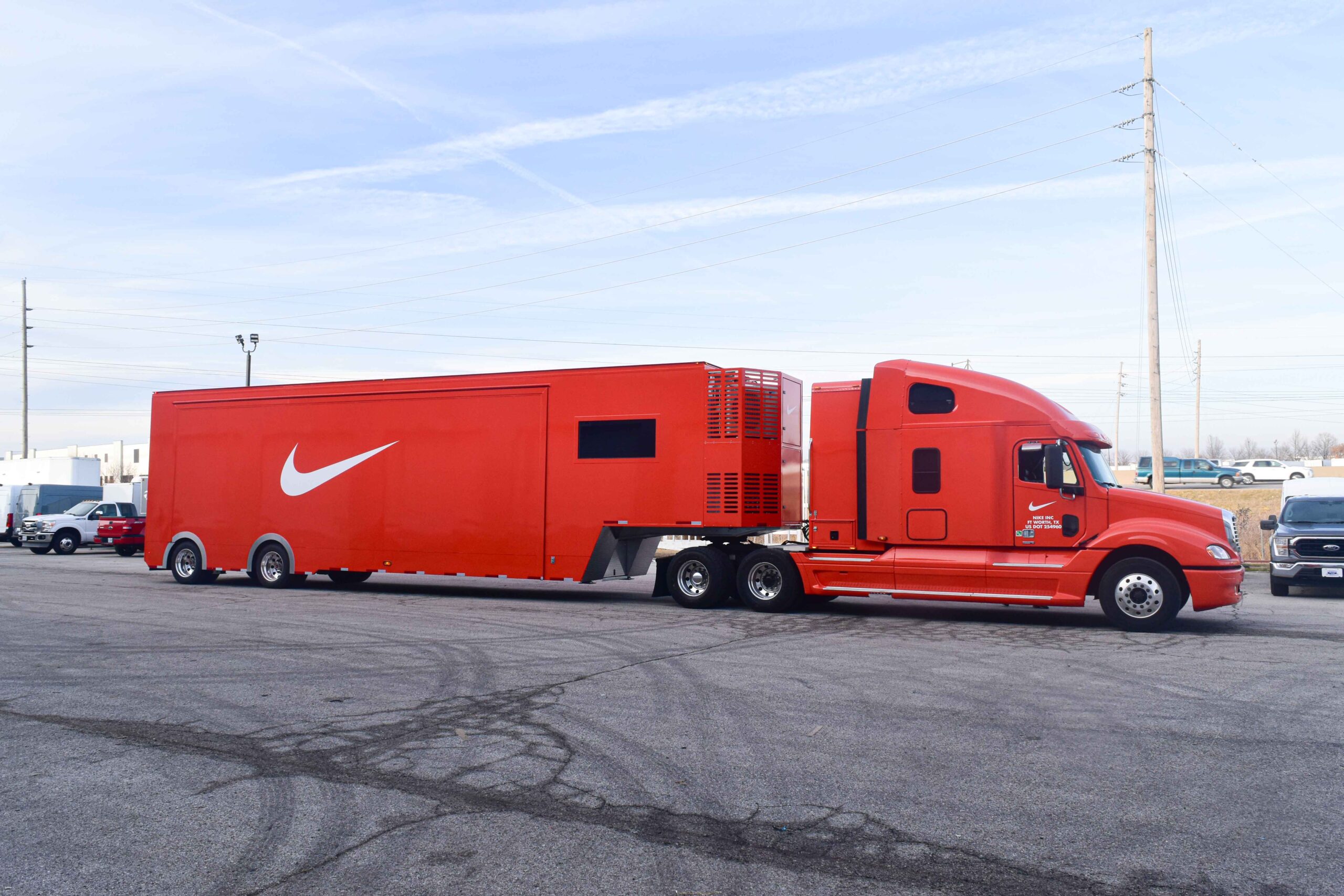
Have trouble navigating through the complexities of fleet graphic regulations? Discover all you need to know regarding fleet compliance!
Many people living in rural areas don’t have full access to proper medical care. Visit this page to discover the medical coach vs. ambulance differences.
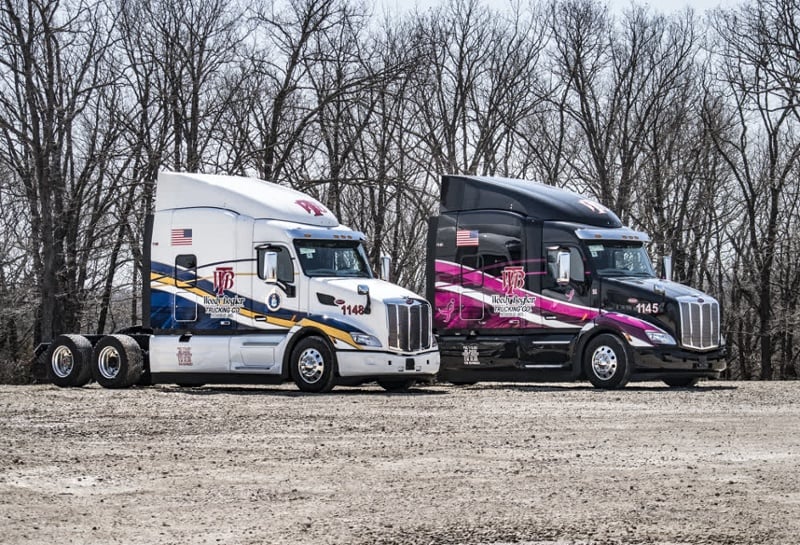
Transform your small business vehicles into mobile billboards with strategic fleet branding ideas, creative wrap designs, and lead-generating features like QR codes.
