
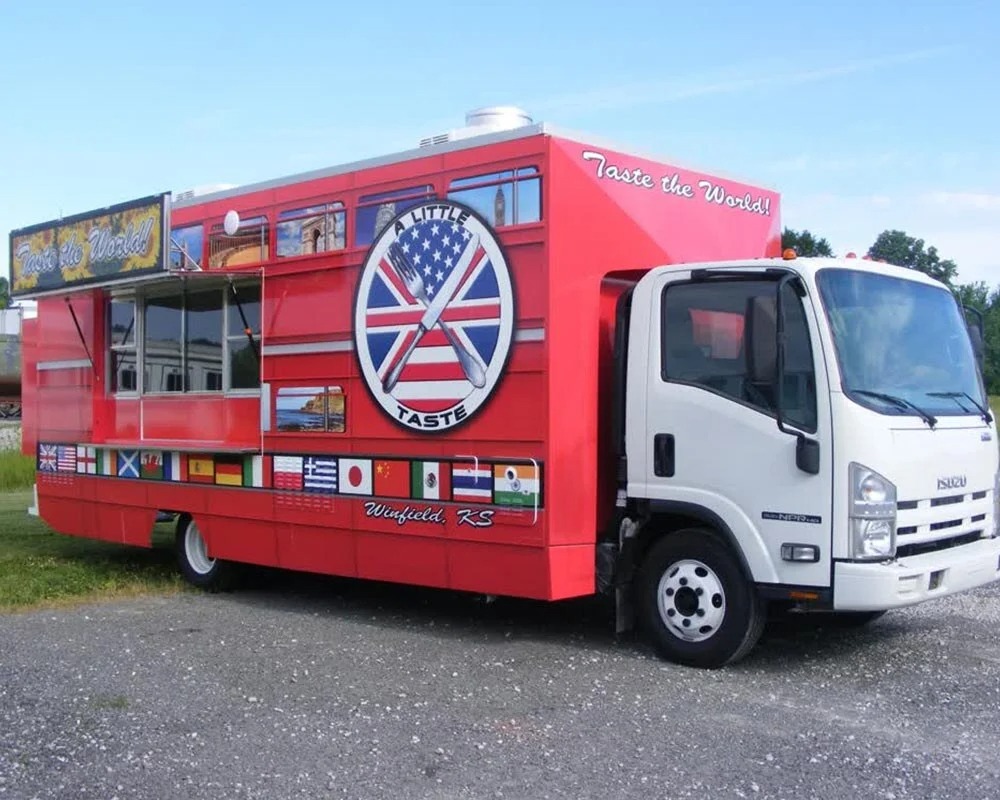
Fleet graphics are large-format vinyl applications installed on commercial vehicles to display branding and advertising. Extreme heat, cold, and UV radiation each degrade vinyl films, adhesives, and printed inks through distinct mechanisms that shorten graphic lifespan and diminish brand visibility.
This guide covers heat and cold damage mechanisms, UV degradation, vinyl material selection, protective laminates and coatings, installation best practices, maintenance protocols, and climate-specific lifespan expectations.
High heat softens adhesive bonds, causes vinyl to expand at rates far exceeding the metal panels beneath it, and accelerates ink fading. Surface temperatures above 150°F on dark vehicles trigger bubbling and lifting, while prolonged exposure breaks down pigment binders and dulls colors within a single season.
Freezing temperatures push vinyl below its glass transition point, where the material shifts from flexible to brittle and becomes prone to cracking. Ice cycling wedges moisture beneath exposed edges, and repeated freeze-thaw events cumulatively weaken adhesive bonds throughout winter months.
UV radiation breaks chemical bonds in pigment molecules and triggers photooxidative degradation that fragments vinyl polymer chains. Without laminate protection, even premium vinyl shows visible fading within 18 months in tropical climates.
Cast vinyl films engineered with UV inhibitors and temperature-resistant formulations consistently outperform calendered alternatives, offering 5 to 7 year warranties in extreme conditions. Pairing the right film with UV-blocking laminates and heat-resistant coatings creates the strongest defense system.
Climate-controlled installation, thorough surface preparation, and post-heat techniques lock adhesive bonds against thermal shock. Routine inspections and gentle cleaning practices then preserve those bonds across every operating season, with expected graphic lifespans ranging from 2 years in harsh deserts to 7 years in temperate zones.
What Are Fleet Graphics and Why Does Weather Resistance Matter?
Fleet graphics are large-format vinyl applications installed on commercial vehicles to display branding, messaging, and advertising. Weather resistance matters because extreme heat, cold, and UV exposure directly degrade vinyl materials, adhesives, and printed inks, shortening graphic lifespan and diminishing brand visibility.
Fleet vehicles operate across every climate zone, often logging thousands of miles through temperature swings that stress vinyl films daily. According to 3M, vehicle advertising generates 30,000 to 70,000 daily vehicular impressions, making each wrapped truck or trailer a high-value marketing asset. When weather damage causes fading, cracking, or peeling, that mobile billboard shifts from a brand asset to a brand liability.
The financial stakes reinforce why durability cannot be treated as optional. Fleet graphics can cost as little as $0.15 per thousand impressions, while online ads can reach up to $21 per thousand impressions. That cost efficiency only holds, however, when graphics maintain their visual integrity through seasonal extremes. A wrap that fails prematurely due to heat softening, cold cracking, or UV fading erases the ROI advantage entirely.
Understanding how environmental stressors interact with vinyl chemistry, adhesive systems, and protective laminates is essential for fleet managers who need consistent brand presentation year-round. The sections that follow examine what extreme heat, freezing cold, and prolonged UV exposure actually do to fleet graphics at the material level, which vinyl types resist degradation best, and how proper installation and maintenance extend graphic longevity across harsh operating conditions.
What Happens to Fleet Graphics in Extreme Heat?
Extreme heat degrades fleet graphics through adhesive failure, thermal expansion stress, bubbling, and ink breakdown. The following sections explain each mechanism and the temperature thresholds that trigger damage.
How Does High Heat Cause Vinyl Adhesive Failure?
High heat causes vinyl adhesive failure by softening the adhesive bond layer until it can no longer hold the film against the vehicle surface. As temperatures climb above 80°F, the adhesive becomes overly pliable and loses its structural grip, allowing edges to peel and panels to shift.
According to Florida Car Wrap, calendered vinyl typically shows degradation within 2 to 3 years in harsh climates like Florida, with color fading, adhesive failure, and edge lifting. Temperature extremes at both ends compromise the bond; below 60°F, vinyl adhesive becomes too rigid and may not stick properly, while sustained heat above application range accelerates chemical breakdown. For fleet managers operating in the Sun Belt, this means adhesive integrity demands constant attention. Choosing premium cast vinyl with heat-resistant adhesive formulations is one of the most effective ways to extend graphic lifespan in high-temperature environments.
How Does Thermal Expansion Affect Fleet Wraps on Metal Surfaces?
Thermal expansion affects fleet wraps on metal surfaces by creating a mismatch between how much the vinyl film and the underlying panel grow when heated. PVC vinyl has a thermal expansion coefficient of 54 to 110 (10⁻⁶ m/(m·°C)), while aluminum panels expand at just 23 (10⁻⁶ m/(m·°C)), according to Engineering Toolbox.
This means vinyl can expand at two to nearly five times the rate of the metal beneath it. During hot afternoons, the film stretches beyond its substrate, generating shear stress at the adhesive interface. When temperatures drop overnight, the vinyl contracts faster than the panel, pulling at edges and seams. Over repeated thermal cycles, this differential movement fatigues the adhesive bond and produces wrinkles, lifting, or permanent distortion, particularly on large flat surfaces like box truck sides where expansion forces accumulate across wider spans.
What Temperatures Cause Fleet Graphics to Bubble or Lift?
Fleet graphics begin to bubble or lift when surface temperatures consistently exceed 150°F, a threshold dark-colored vehicles parked in direct sunlight reach regularly during summer months. At these temperatures, trapped air and moisture beneath the film expand, pushing the vinyl away from the substrate and forming visible bubbles.
The process accelerates when installation quality is marginal or the adhesive has already been weakened by prior heat cycles. Horizontal surfaces like hoods and roof panels are especially vulnerable because they absorb more solar radiation than vertical side panels. Given that fleet graphics deliver impressions at a fraction of traditional advertising costs, premature bubbling represents both a brand image problem and a financial loss. Parking in shaded areas and selecting air-release adhesive channels during installation significantly reduce bubbling risk.
How Does Prolonged Heat Exposure Degrade Printed Inks?
Prolonged heat exposure degrades printed inks by accelerating the evaporation of solvent-based ink components and breaking down pigment binders. As temperatures remain elevated over weeks and months, the chemical structure of the ink film deteriorates, causing colors to dull, shift, or chalk.
Reds and yellows tend to fade fastest because their pigment molecules are more susceptible to thermal energy. Without a protective laminate layer, printed graphics in high-heat climates can show noticeable color loss within a single season. The combination of heat and UV radiation compounds the problem, as heat opens the polymer matrix of the ink layer while UV photons attack exposed pigment bonds. For fleets operating in extreme heat, overlaminating printed graphics is not optional; it is the primary defense against premature ink degradation.
Understanding how heat attacks every layer of a fleet wrap sets the stage for examining how cold temperatures create an entirely different set of challenges.
What Happens to Fleet Graphics in Extreme Cold?
Extreme cold compromises fleet graphics by making vinyl brittle, weakening adhesive bonds, and accelerating edge failure. The sections below cover how freezing temperatures crack vinyl, how ice cycling damages edges, what cold thresholds compromise adhesion, and how freeze-thaw cycles shorten graphic longevity.
How Does Freezing Temperature Make Vinyl Brittle and Crack?
Freezing temperature makes vinyl brittle and crack by pushing the material below its glass transition temperature (Tg), the point at which amorphous solids shift from ductile to brittle. According to MIT’s School of Engineering, this Tg threshold is where polymer chain mobility drops sharply, eliminating the flexibility vinyl needs to absorb stress.
Cold temperatures cause the plasticizers in vinyl films to lose elasticity, leaving the material stiff and prone to fracturing under mechanical loads like road vibration or routine cleaning. Because the optimal application range for vinyl wraps falls between 60 and 80 degrees Fahrenheit, installed films that regularly endure sub-freezing conditions face cumulative stress well outside their designed performance window. Even minor impacts that a warm wrap would absorb can propagate cracks through cold-stiffened vinyl.
How Does Ice and Frost Cycling Damage Wrap Edges?
Ice and frost cycling damages wrap edges by forcing moisture beneath lifted film margins, where it expands upon freezing. Edges and corners are the most vulnerable points on any fleet graphic because they present the thinnest adhesive contact area. When frost forms along an exposed edge, the expanding ice crystal wedges the vinyl away from the substrate. Each overnight freeze widens the gap slightly, and daytime thaw allows fresh moisture to migrate further underneath.
This progressive peel-back is particularly damaging on curved panels and recessed body lines where tension already stresses the adhesive bond. Without timely edge repair, a small lift can escalate into panel-scale delamination within a single winter season.
What Cold Thresholds Compromise Fleet Graphic Adhesion?
Cold thresholds that compromise fleet graphic adhesion begin at approximately 60 degrees Fahrenheit. Below this point, vinyl wrap adhesive becomes too rigid to maintain a reliable bond with the vehicle surface. Pressure-sensitive adhesives rely on molecular flow to wet the substrate; cold slows that flow dramatically, reducing contact area at the microscopic level.
As temperatures drop further toward freezing and below, adhesive tack can decline to the point where normal driving forces, such as wind shear and vibration, begin separating the film from the panel. For fleet managers operating in northern climates, this means graphics installed during warm months may begin losing adhesion once sustained cold arrives, making pre-winter inspections essential.
How Do Rapid Freeze-Thaw Cycles Affect Graphic Longevity?
Rapid freeze-thaw cycles affect graphic longevity by repeatedly expanding and contracting the bond layer between the vinyl film and the vehicle surface. Each cycle stresses the adhesive at a molecular level, gradually weakening its cohesive strength.
The damage is cumulative rather than catastrophic. A single freeze-thaw event may produce no visible change, but dozens of cycles over a winter season can degrade the bond enough to cause edge lifting, bubbling, or full delamination. Regions that experience frequent temperature swings across the freezing point, rather than sustained deep cold, often produce worse outcomes for fleet graphics than consistently frigid climates. Proactive monitoring during transitional months helps catch early adhesive failure before costly graphic replacement becomes necessary.
With cold-weather risks understood, selecting the right vinyl material becomes the next critical defense.
How Does UV Exposure Degrade Fleet Graphics Over Time?
UV exposure degrades fleet graphics over time by breaking chemical bonds in dyes, destroying vinyl polymer chains, and accelerating fading. The following subsections cover color fading mechanisms, polymer and laminate breakdown, and the rate of unprotected UV damage accumulation.
How Does UV Radiation Cause Fleet Graphic Colors to Fade?
UV radiation causes fleet graphic colors to fade by breaking down the chemical bonds within pigment and dye molecules. According to the Library of Congress, ultraviolet rays are one of the causes of fading because they can break down chemical bonds and fade the color in an object. When UV photons strike chromophore groups in printed inks and colored vinyl films, the absorbed energy disrupts the molecular structures responsible for reflecting specific wavelengths. Reds and yellows tend to degrade fastest because their chromophores absorb higher-energy UV wavelengths more readily. Over repeated exposure cycles, this bond-breaking process is cumulative and irreversible, progressively shifting vibrant fleet branding toward washed-out, inconsistent hues that undermine brand perception on the road.
How Does UV Break Down Vinyl Polymers and Laminates?
UV breaks down vinyl polymers and laminates through a process called photooxidative degradation. As documented by the National Center for Biotechnology Information (NCBI), UV radiation causes photooxidative degradation, which results in breaking of the polymer chains, produces free radicals, and reduces molecular weight. These free radicals trigger chain reactions that further fragment the PVC matrix, weakening the film’s structural integrity. Laminates designed to shield printed graphics suffer similar degradation when their UV-absorbing additives become exhausted over time. The visible result is chalking, surface cracking, and increased brittleness, all of which make the graphic vulnerable to peeling and mechanical damage. For fleet managers, this molecular-level deterioration is why material selection with built-in UV stabilizers matters so much.
How Quickly Does UV Damage Accumulate Without Protection?
UV damage accumulates rapidly without protection, with visible fading possible within 18 months in high-UV environments. Vehicles wrapped without laminate in tropical climates typically show fading within that timeframe, even with premium base vinyl. South Florida, for example, receives approximately 30% more UV radiation annually than northern states, significantly accelerating wrap degradation. Conversely, vehicles garaged or parked in covered areas can achieve the full seven-year lifespan from premium materials, while those left in unshaded lots year-round typically show measurable degradation by year four. The gap between protected and unprotected graphics is substantial, making UV-blocking laminates and covered parking two of the most cost-effective investments a fleet operator can make.
With UV degradation mechanisms in focus, selecting the right vinyl materials becomes the next critical decision.
What Vinyl Materials Best Withstand Extreme Weather Conditions?
The vinyl materials that best withstand extreme weather conditions are premium cast films engineered with UV inhibitors and temperature-resistant formulations. The following sections compare cast versus calendered vinyl, examine polymeric film performance, and explain how film thickness affects durability.
How Does Cast Vinyl Perform Compared to Calendered Vinyl?
Cast vinyl performs significantly better than calendered vinyl in extreme weather conditions. According to a General Formulations technical paper, cast vinyl was originally formulated with lower internal tension, higher gloss, and longer exterior life compared to calendered vinyl. These properties make cast films more dimensionally stable when subjected to heat cycling, UV bombardment, and freezing temperatures.
Premium cast vinyl wraps from manufacturers like 3M and Avery Dennison include UV inhibitors and stabilizers that provide 5 to 7 year warranties, even in extreme conditions. Calendered vinyl, while more affordable, typically degrades faster under harsh exposure. Without laminate protection in tropical climates, even premium base vinyl shows visible fading within 18 months.
For fleets operating across multiple climate zones, cast vinyl consistently delivers the best return on investment despite its higher upfront cost.
How Do Polymeric Films Handle Temperature Extremes?
Polymeric films handle temperature extremes by using plasticizer-enhanced formulations that maintain flexibility across a broader operating range than standard monomeric vinyl. Polymeric calendered films sit between monomeric and cast grades in both performance and price.
In high heat, polymeric films resist softening and stretching better than monomeric alternatives. In cold conditions, their plasticizer content helps delay the onset of brittleness, though they still stiffen more readily than cast vinyl. This middle-ground performance makes polymeric films a practical choice for regional fleets in moderate climates, where temperature swings are less severe than desert or arctic environments.
What Role Does Film Thickness Play in Weather Durability?
Film thickness plays a direct role in weather durability by determining how well vinyl resists UV penetration, mechanical abrasion, and thermal stress. Thicker films provide a greater physical barrier against ultraviolet radiation reaching the adhesive layer and printed inks beneath.
However, increased thickness also raises internal stress during thermal expansion and contraction cycles, which can accelerate edge lifting on curved surfaces. The most weather-durable configurations balance film thickness with conformability. Cast films achieve this balance effectively because their manufacturing process produces low-tension sheets that remain stable at various gauges.
For fleet managers prioritizing longevity, pairing appropriate film thickness with a UV-blocking laminate overlay delivers the strongest defense against all three weather threats.
With the right vinyl selected, protective laminates and coatings add another critical layer of weather resistance.
How Do Laminates and Coatings Protect Fleet Graphics?
Laminates and coatings protect fleet graphics by forming a sacrificial barrier that absorbs UV radiation, resists abrasion, and shields printed inks from environmental damage. The following sections cover UV-blocking laminates, matte versus gloss performance, and coatings suited for high-heat climates.
How Does UV-Blocking Laminate Extend Graphic Lifespan?
UV-blocking laminate extends graphic lifespan by absorbing ultraviolet radiation before it reaches the printed ink and vinyl layers beneath. This barrier prevents the photooxidative chain reactions that break polymer bonds and fade colors over time. According to Florida Car Wrap, vehicles wrapped without laminate in tropical climates typically show fading within 18 months, even with premium base vinyl. With a quality overlaminate applied, that same vinyl can maintain color integrity for years longer. For fleet managers operating vehicles across sun-intensive regions, laminate is not optional; it is the single most cost-effective upgrade for preserving graphic appearance and delaying replacement cycles.
How Do Matte Versus Gloss Laminates Differ in UV Resistance?
Matte and gloss laminates differ in UV resistance primarily through how each finish interacts with light and heat absorption. Gloss laminates reflect a higher percentage of incoming sunlight, which reduces surface heat buildup and lowers the thermal stress transferred to underlying ink layers. Matte laminates scatter light across their textured surface, producing less glare but absorbing slightly more radiant energy. Both finishes contain UV-inhibiting additives, so the core protective chemistry remains comparable. However, in high-UV environments, gloss finishes tend to maintain color vibrancy marginally longer because of that reflective advantage. Matte finishes remain a strong choice when brand aesthetics require a non-reflective look, provided inspection frequency increases accordingly.
What Protective Coatings Work Best for High-Heat Climates?
The protective coatings that work best for high-heat climates are ceramic-infused overlaminates and UV-stabilized clear coats designed to withstand sustained thermal exposure. These coatings reduce surface temperatures by reflecting infrared energy, which limits heat transfer to the adhesive bond layer. Standard overlaminates can soften and lose structural integrity when vehicle surfaces exceed 160°F during prolonged sun exposure; heat-rated formulations maintain film stability at higher thresholds. For fleets operating in desert or southern regions, pairing a premium cast vinyl with a heat-resistant overlaminate creates the most durable graphic system. Choosing coatings rated for extreme conditions is one of the most overlooked decisions in fleet graphic specification, yet it directly determines replacement timelines.
With the right laminate system selected, proper installation techniques ensure those protective layers perform as intended.
How Does Proper Installation Affect Weather Performance?
Proper installation directly determines how well fleet graphics resist heat, cold, and UV stress over time. The subsections below cover surface preparation, installation temperature control, and post-heat techniques.
Why Does Surface Preparation Matter in Extreme Climates?
Surface preparation matters in extreme climates because contaminants trapped beneath vinyl create weak points that weather exposure rapidly exploits. Dust, wax, or oil residue prevents the adhesive from forming a continuous bond with the vehicle panel. In regions with intense heat or freezing cycles, even microscopic gaps between the film and substrate allow moisture ingress and thermal stress to concentrate at those imperfections.
Proper preparation involves a multi-step process:
- Wash the vehicle thoroughly to remove road grime and salt deposits.
- Degrease all panels with an isopropyl alcohol solution to eliminate oils.
- Dry surfaces completely before applying any vinyl film.
- Inspect for rust, paint chips, or clear coat failure that could compromise adhesion.
Skipping any of these steps in harsh operating environments virtually guarantees premature edge lift and adhesive failure. For fleets that operate across multiple climate zones, consistent surface preparation protocols are the single most controllable factor in long-term graphic durability.
How Does Installation Temperature Affect Long-Term Adhesion?
Installation temperature affects long-term adhesion by controlling how vinyl and its adhesive layer bond to the vehicle surface. The optimal temperature range for applying a vinyl wrap falls between 60 and 80 degrees Fahrenheit (15 to 26 degrees Celsius). Outside this window, adhesion quality drops significantly.
When temperatures fall below 60°F, vinyl wrap adhesive becomes too rigid and may not stick properly, as cold causes plasticizers in the film to lose elasticity. According to Carlike Wrap, cold temperatures make vinyl feel stiff or brittle, increasing the risk of cracking during application. Conversely, temperatures above 80°F make vinyl overly pliable, causing excessive stretching and poor conformability.
Climate-controlled installation bays eliminate these variables entirely. For fleets operating in temperature extremes, this upfront investment in environment control pays dividends through fewer warranty claims and longer graphic life.
What Post-Heat Techniques Improve Durability in Weather Extremes?
Post-heat techniques improve durability in weather extremes by relieving internal stress in the vinyl film after application. When installers use a heat gun or torch to warm the vinyl during wrapping, the material conforms to curves, rivets, and recesses. However, without a secondary post-heating pass, the film retains memory stress that temperature cycling later exploits.
Key post-heat practices include:
- Apply controlled heat (typically 210 to 225°F) to all edges, corners, and recessed areas after the initial wrap.
- Focus on complex curves where the vinyl was stretched most during application.
- Allow the adhesive a full 24 to 48 hour cure period before the vehicle returns to service.
These steps lock the adhesive bond and relax internal film tension, which reduces the likelihood of lifting or tunneling when the fleet encounters extreme heat or sub-freezing cold. Post-heating is especially critical for vehicles that transition rapidly between climate zones, where thermal shock would otherwise exploit any residual stress.
With installation fundamentals addressed, ongoing maintenance determines how long these protections hold.
How Should You Maintain Fleet Graphics Exposed to Harsh Weather?
You should maintain fleet graphics exposed to harsh weather through regular inspections, proper cleaning techniques, and timely replacements. The following subsections cover inspection frequency, cleaning best practices, and replacement timing.
How Often Should Fleet Wraps Be Inspected in Extreme Climates?
Fleet wraps should be inspected at least biweekly in extreme climates, with weekly checks recommended during peak summer or winter months. Inspection frequency matters because heat, cold, and UV exposure accelerate wear at different rates depending on region and parking conditions.
According to Ghost Labs, vehicle wraps in extremely hot climates like Arizona might only survive about two years without proper care due to extreme heat degradation. That compressed lifespan makes catching early signs of edge lifting, discoloration, or adhesive softening critical before small problems become full panel failures. Fleets operating in freezing climates should similarly increase inspection intervals during freeze-thaw season, when repeated thermal cycling stresses adhesive bonds. Washing frequency also serves as a built-in inspection opportunity; wraps should be washed at least once per week, increasing to two or three times weekly for vehicles exposed to dirt, rain, or road debris.
What Cleaning Practices Prevent Weather-Related Graphic Damage?
The cleaning practices that prevent weather-related graphic damage include hand washing with non-abrasive solutions, avoiding harsh chemicals, and controlling water pressure during rinse cycles. These precautions protect both the vinyl surface and the laminate layer that shields against UV and heat damage.
Key cleaning guidelines for weather-exposed fleet graphics include:
- Wash with a mild automotive detergent and soft cloth or sponge to avoid scratching laminates.
- If pressure washing is necessary, keep pressure under 2,000 psi and water temperature under 140°F to prevent edge lifting or adhesive softening.
- Rinse road salt, tree sap, and industrial fallout promptly, since these contaminants accelerate vinyl degradation when baked on by heat or frozen into surface micro-cracks.
- Avoid solvent-based cleaners that strip UV-protective laminate coatings.
Consistent, gentle cleaning is one of the most cost-effective ways to extend graphic life across any climate zone.
When Should Fleet Graphics Be Replaced Due to Weather Wear?
Fleet graphics should be replaced when visible degradation compromises brand appearance or protective film integrity. Common replacement indicators include persistent color fading, cracking, edge lifting that no longer responds to re-adhesion, and widespread bubbling across panels.
In high-heat or high-UV regions, replacement timelines shorten significantly compared to temperate zones. Wraps showing laminate peeling or chalky surface texture have lost their UV barrier, and continued exposure only accelerates underlying vinyl breakdown. For fleets that prioritize brand consistency, even moderate fading across multiple vehicles can justify replacement before structural failure occurs. Scheduling proactive replacements based on climate-adjusted timelines, rather than waiting for obvious failure, protects both vehicle surfaces and advertising ROI.
With a solid maintenance routine established, understanding how long graphics last across different climate zones helps fleet managers plan replacement budgets effectively.
How Long Do Fleet Graphics Last in Different Climate Zones?
Fleet graphics last anywhere from 2 to 7+ years depending on the climate zone. Hot deserts, freezing northern regions, tropical high-UV areas, and temperate four-season zones each impose distinct stresses that shorten or extend wrap lifespan.
How Long Do Fleet Wraps Last in Hot Desert Climates?
Fleet wraps last approximately 2 to 4 years in hot desert climates. Sustained surface temperatures above 150°F accelerate adhesive softening, vinyl warping, and ink degradation simultaneously. According to Ghost Labs, vehicle wraps in extremely hot climates like Arizona might only survive about two years without proper care due to extreme heat degradation. Parking in shaded or covered areas and scheduling regular inspections can push lifespan closer to the 4-year mark. For fleets operating daily across desert corridors, premium cast vinyl with UV-blocking laminate is not optional; it is the baseline requirement for any reasonable return on investment.
How Long Do Fleet Wraps Last in Northern Freezing Climates?
Fleet wraps last approximately 4 to 6 years in northern freezing climates. Persistent cold causes plasticizers in vinyl films to lose elasticity, making the material stiff and prone to cracking at edges and seams. Repeated freeze-thaw cycles compound this damage by expanding and contracting the adhesive bond layer between the vinyl and the vehicle surface. Although UV exposure is lower than in southern regions, road salt and chemical deicers erode laminate integrity over successive winters. Fleets in these zones benefit most from thicker cast vinyl films and frequent edge inspections after harsh weather events.
How Long Do Fleet Wraps Last in Tropical High-UV Climates?
Fleet wraps last approximately 2 to 5 years in tropical high-UV climates. South Florida, for example, receives approximately 30% more UV radiation annually than northern states, which accelerates wrap degradation significantly. Vehicles wrapped without laminate in these regions typically show visible fading within 18 months, even with premium base vinyl. When UV-blocking laminate and covered parking are combined, however, premium materials can achieve their full 5 to 7-year rated lifespan. Tropical zones demand the most aggressive protection strategy of any climate; skipping laminate here is the single costliest shortcut a fleet manager can make.
How Long Do Fleet Wraps Last in Temperate Four-Season Climates?
Fleet wraps last approximately 5 to 7 years in temperate four-season climates. Moderate summers, mild winters, and balanced UV exposure create the least destructive environment for vinyl graphics. Vehicles garaged or parked in covered areas can achieve the full 7-year lifespan from premium materials, while those parked in unshaded lots year-round typically show measurable degradation by year 4. Temperate climates still cycle through seasonal temperature swings, so routine maintenance remains important. Even in favorable conditions, consistent washing and periodic edge inspections ensure graphics maintain brand-quality appearance throughout their full service life.
With expected lifespans established by zone, large format graphic solutions can further maximize fleet durability.
How Can Large Format Graphics Maximize Fleet Durability?
Large format graphics maximize fleet durability by combining premium materials, expert installation, and climate-specific engineering. The following sections cover Craftsmen Industries’ capabilities and the essential takeaways for fleet graphics in extreme weather.
Can Craftsmen Industries’ Large Format Graphics Withstand Extreme Conditions?
Yes, Craftsmen Industries’ large format graphics can withstand extreme conditions. Craftsmen Industries operates from a 127,000 sq. ft. vertically integrated facility in St. Charles, Missouri, where in-house design, printing, and installation ensure complete quality control over every fleet graphic project. This end-to-end process allows material selection, adhesive systems, and protective laminates to be matched precisely to each fleet’s operating climate.
With over 40 years of experience producing large format graphics for corporations, government agencies, and healthcare providers, Craftsmen Industries engineers solutions built for real-world durability. Fleets operating in desert heat, northern freeze-thaw cycles, or high-UV tropical environments all benefit from graphics specified to resist the exact stresses those conditions create. For fleets that demand graphics performing reliably across diverse climate zones, that level of precision matters more than most operators realize.
What Are the Key Takeaways About Fleet Graphics in Extreme Heat, Cold, and UV Exposure?
The key takeaways about fleet graphics in extreme heat, cold, and UV exposure center on material choice, installation quality, and proactive maintenance. The most critical lessons include:
- Cast vinyl outperforms calendered vinyl in every extreme climate, offering lower internal tension, higher dimensional stability, and longer exterior life.
- Heat above 80°F causes vinyl to become overly pliable, while cold below 60°F makes adhesive rigid; both extremes demand climate-controlled installation.
- UV radiation breaks polymer chains through photooxidative degradation, making UV-blocking laminates essential for any sun-exposed fleet.
- Freeze-thaw cycles weaken wrap adhesion by repeatedly expanding and contracting the bond layer.
- Regular washing and scheduled inspections catch edge lifting, fading, and adhesive failure before costly full replacements become necessary.
Investing in premium materials and professional installation from the start consistently costs less than premature replacements driven by preventable weather damage.
Filter Posts by Tag
related posts
Learn how to choose the right vendors and manage fleet wrap projects with clear planning, quality control, budgeting, and expert strategies for consistent branding.
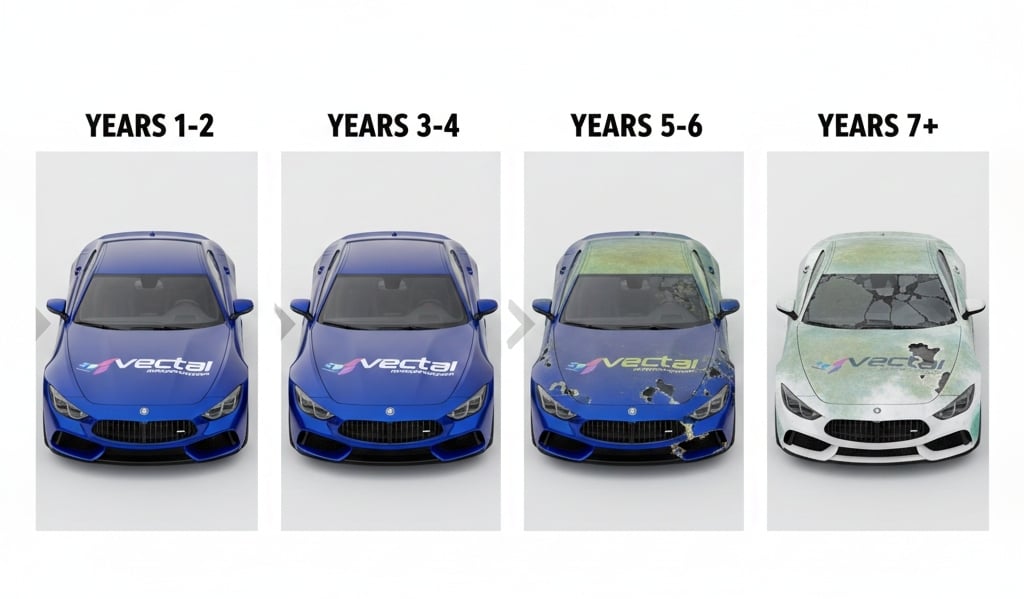
Discover how long vinyl car wraps last—typically 5–7 years. Learn factors affecting lifespan, maintenance tips, and when replacement is needed.
Why are fleet graphics an effective marketing tool? Want to improve your marketing strategy and drive brand recognition? Click here to learn everything!
