
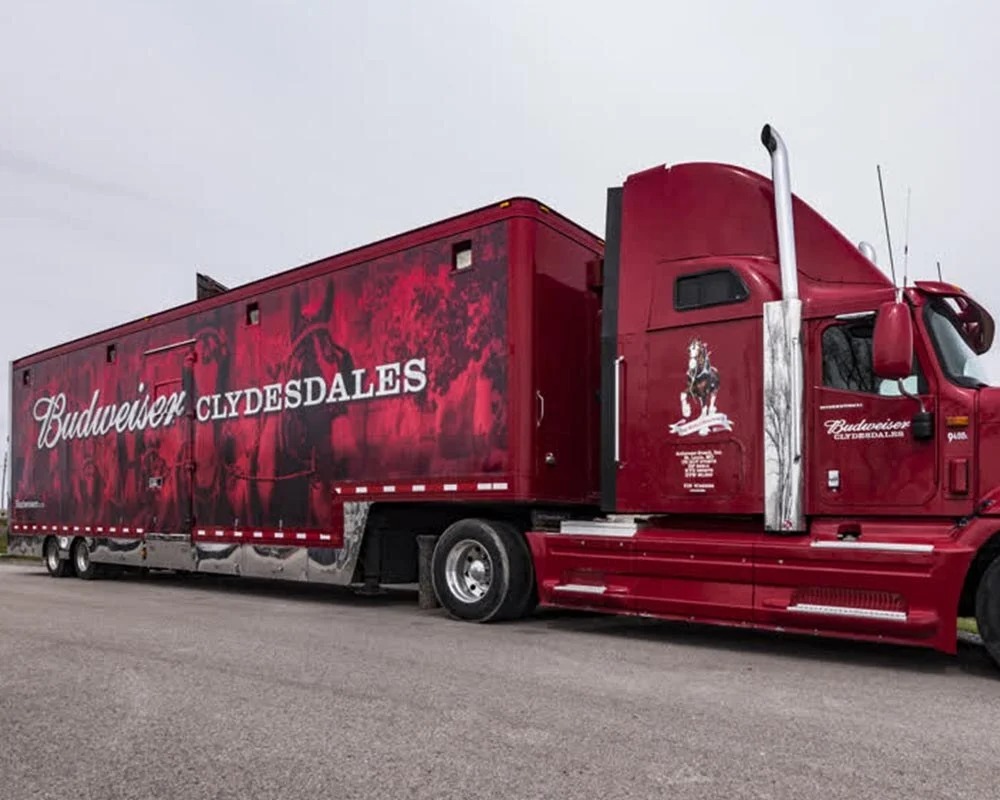
The psychology of fleet graphics is the study of how visual design elements on branded vehicles shape consumer perceptions of credibility, professionalism, and reliability. Fleet vehicles generate tens of thousands of daily impressions, and the brain processes each one in milliseconds, forming trust judgments before conscious thought begins.
This guide covers instant visual judgment and cognitive bias in fleet contexts, trust-building design elements, brand consistency across fleets, credibility differences by industry and vehicle type, psychological persuasion principles, the damage caused by poor design, cultural perception factors, and measurement strategies.
Fleet graphics trigger snap judgments through first impression bias, the mere exposure effect, and motion-based visual processing. Repeated exposure to the same branded vehicle on a daily commute gradually shifts neutral viewers toward positive sentiment, while the movement of a vehicle through traffic activates deeper neural engagement than static signage.
Specific design elements carry measurable trust weight. Color selection triggers emotional associations before conscious processing; typography choices shift perceived trustworthiness by quantifiable margins; logo placement in the upper visual field reinforces brand authority; and strategic white space reduces cognitive load so viewers absorb key information in seconds.
Uniform branding across an entire fleet compounds these effects through cognitive fluency, where identical visual encounters require less mental effort and generate automatic preference. Inconsistent designs break this cycle, registering as separate stimuli rather than trust-building repetitions.
Psychological principles including the halo effect, social proof from multiple vehicle sightings, and the Von Restorff effect (where visually distinctive stimuli are remembered over homogeneous ones) amplify fleet graphic persuasion. Conversely, faded wraps, visual clutter, and misalignment between fleet and digital branding erode confidence rapidly.
Vehicle shape, cultural color symbolism, and regional aesthetics further filter how audiences interpret fleet designs. Measuring trust impact through brand recall surveys, impression tracking, and behavioral metrics connects these psychological principles to actionable fleet strategy.
Why Does Fleet Vehicle Design Trigger Instant Consumer Judgments?
Fleet vehicle design triggers instant consumer judgments because the human brain processes visual stimuli in milliseconds, forming opinions about brand quality before conscious thought begins. The sections below examine first impression bias, the mere exposure effect, and how motion-based fleet visuals outperform static advertising.
How Does First Impression Bias Apply to Fleet Graphics?
First impression bias applies to fleet graphics because a single branded vehicle generates 30,000 to 70,000 daily vehicular impressions, according to 3M Graphics & Signage. Each of those exposures triggers a rapid, largely unconscious evaluation of the brand’s professionalism and trustworthiness.
What makes this bias so powerful in fleet contexts is sheer volume at minimal cost. Fleet graphics achieve a CPM as low as $0.15, compared to up to $21 for online ads. That cost efficiency means branded vehicles deliver tens of thousands of first impressions daily, and viewers retain them: fleet graphics earn a 97% recall rate. For brands investing in fleet programs, the design quality of that first glance is not a minor detail; it is the single most repeated brand interaction most consumers will ever have.
What Role Does the Mere Exposure Effect Play in Fleet Branding?
The mere exposure effect plays a central role in fleet branding by turning repeated visual contact into preference. In 1968, psychologist Robert Zajonc hypothesized that mere repeated exposure to a stimulus enhances an individual’s attitude toward it, according to APA PsycNet. Familiarity, built through seeing the same branded vehicle on daily commutes, gradually shifts neutral observers toward positive sentiment.
Fleet vehicles are uniquely suited to this principle. A delivery truck running a fixed route exposes the same neighborhoods to consistent brand visuals dozens of times per week. Over time, that repetition converts unfamiliar logos into trusted symbols. Modern fleet media companies even offer real-time GPS tracking, allowing advertisers to verify that their mobile ads saturate specific geographic zones consistently.
How Do Consumers Process Fleet Visuals Differently Than Static Ads?
Consumers process fleet visuals differently than static ads because motion activates the brain’s visual processing centers more aggressively. According to The Rolling Ads, moving images can boost recall by up to 80% compared to static images, since motion stimulates deeper neural engagement.
A fleet vehicle rolling through traffic introduces an element of surprise that disrupts the monotony of roadside signage. Although static ads accumulate more total viewing time, three-quarters of people notice animated or moving ads more readily. The fleeting nature of a passing vehicle also creates urgency, encouraging viewers to absorb the message quickly. Research published in the Journal of Marketing Research confirms that even static visuals generating dynamic mental imagery produce greater consumer engagement than those evoking less dynamic imagery.
Understanding how motion and urgency shape fleet graphic processing sets the stage for examining which specific design elements build lasting consumer trust.
What Visual Design Elements Build Trust in Fleet Graphics?
The visual design elements that build trust in fleet graphics include color selection, typography, logo placement, white space, and image resolution. According to a ScienceDirect study, high information density can reduce advertising effectiveness because different visual elements require distinct cognitive resources. The sections below break down how each element shapes viewer perception.
How Does Color Psychology Shape Perception of a Fleet Brand?
Color psychology shapes perception of a fleet brand by triggering emotional associations before a viewer consciously processes the message. Blue tones, for instance, are widely linked to reliability and corporate trust, while red signals urgency or energy.
The effect goes deeper than simple emotion. As reported in Wiley’s Psychology & Marketing journal, processing fluency of a brand name and logo promotes self-brand connection through narrative processes in which the brand is connected to aspects of one’s life. When fleet colors match the feelings a brand wants to evoke, viewers form stronger personal associations at a glance. Choosing palette colors that align with your brand promise is one of the highest-leverage decisions in fleet graphic design.
Why Does Typography Choice Signal Credibility or Inconsistency?
Typography choice signals credibility or inconsistency because typefaces carry implicit personality traits that viewers interpret instantly. A clean, well-matched font suggests professionalism; a mismatched or overly decorative font creates doubt about a company’s attention to detail.
Specific typeface families produce measurable trust differences. Geometric sans serifs communicate modern reliability, while serif fonts convey tradition and authority. When a fleet uses multiple conflicting typefaces across vehicles, the visual dissonance undermines brand coherence. For fleet applications where text must be read at highway speed, legibility and consistency matter more than stylistic novelty. Selecting one or two typefaces and applying them uniformly across every vehicle keeps the brand message clear and credible.
How Do Logo Size and Placement Affect Brand Authority?
Logo size and placement affect brand authority by leveraging spatial psychology. According to a study published on ScienceDirect, brands able to position the brand logo higher on packaging or in advertising are perceived as stronger.
On fleet vehicles, this translates directly. Placing the logo in the upper portion of a trailer side panel or near the cab roof line reinforces dominance and brand strength. Conversely, logos positioned low on a vehicle or scaled too small relative to the panel area can make even established brands appear subordinate. Oversized logos, however, risk cluttering the design. The goal is a prominent, proportionally balanced placement in the upper visual field that commands attention without overwhelming the overall composition.
What Role Does White Space Play in Fleet Graphic Legibility?
White space plays a pivotal role in fleet graphic legibility by reducing cognitive load and directing the viewer’s eye to key information. As noted by Think Design, ample spacing between text elements reduces cognitive load, improving readability and comprehension.
On a moving vehicle, this principle intensifies. Viewers have seconds to absorb a message, so every element competes for limited attention. Strategic white space isolates the brand name, phone number, or call to action, making each one easier to process independently. Cramming additional graphics or text into open areas may feel like maximizing the investment, but it actually suppresses retention. The most effective fleet wraps treat open space as a functional design element rather than wasted real estate. Craftsmen Industries applies these principles in their large format graphics division, where over 40 years of in-house design and printing experience ensures that fleet wraps balance visual impact with message clarity across vehicle types ranging from compact service vans to full commercial trailers.
How Do Image Quality and Resolution Impact Perceived Professionalism?
Image quality and resolution impact perceived professionalism by serving as an immediate visual proxy for business standards. Low-resolution graphics that appear pixelated or blurry on a vehicle panel signal carelessness, triggering the same negative judgment a stained uniform or cluttered storefront would produce.
Fleet vehicles are viewed at varying distances, from highway lanes to parking lot proximity. Images must maintain sharpness at both scales, which requires source files at 150 DPI or higher for large format printing. Stretched logos, compressed photography, and color banding all erode the polished appearance that builds consumer confidence. Investing in high-resolution assets from the outset protects brand perception across the entire lifespan of the wrap.
With each visual element working in concert, the next consideration is how maintaining these standards uniformly across an entire fleet compounds their trust-building effect.
How Does Brand Consistency Across a Fleet Strengthen Consumer Trust?
Brand consistency across a fleet strengthens consumer trust by creating visual predictability that signals reliability, professionalism, and organizational competence. The following sections cover what happens when fleet designs are inconsistent, how uniformity reinforces cognitive fluency, and why repeated exposure to consistent visuals builds lasting familiarity.
What Happens to Trust When Fleet Vehicles Display Inconsistent Designs?
Trust erodes when fleet vehicles display inconsistent designs. Mismatched colors, varying logo placements, and conflicting typography across a fleet signal disorganization to consumers. As the Oxford College of Marketing Blog notes, inconsistent branding breaks down customer trust, and logos must be clearly displayed across all forms of communication.
Even subtle inconsistencies carry measurable consequences. A Monotype and Neurons study found that specific typeface choices alone can shift perceived trustworthiness by up to 9%, meaning that swapping fonts between vehicles actively undermines the confidence each individual wrap could build. When one van displays a dated logo while another shows a refreshed version, consumers question whether the company manages its operations with the same carelessness. For fleet operators, standardizing every visual element across the entire fleet is not a design preference; it is a trust requirement.
How Does Uniform Fleet Branding Reinforce Cognitive Fluency?
Uniform fleet branding reinforces cognitive fluency by reducing the mental effort consumers need to recognize and process a brand. When every vehicle in a fleet shares identical colors, typography, logo placement, and layout, the brain processes each encounter faster. That speed of recognition translates directly into positive feelings toward the brand, because people instinctively prefer stimuli they can interpret without strain.
According to a Marq study, 68% of business professionals stated that maintaining brand consistency boosted their revenue. This connection makes sense through the lens of processing fluency: consistent visual presentation across a fleet creates a seamless experience that feels familiar, even during a consumer’s first conscious encounter with the brand. Fleets that achieve this level of uniformity essentially pre-load trust before any direct interaction occurs.
Why Does Repetition of Consistent Fleet Visuals Build Familiarity?
Repetition of consistent fleet visuals builds familiarity because each identical encounter reinforces the same neural pattern, deepening recognition and preference over time. Ad recall directly measures how memorable an advertisement is, which, according to Mailchimp, is vital to ensuring a brand stays top of mind for consumers. A fleet operating across daily commute routes delivers this repetition organically.
The compounding value is significant. Lucidpress studies show that companies maintaining brand consistency across all platforms see revenue increases between 23% and 33%. Each sighting of a consistently branded vehicle acts as a low-effort reinforcement, strengthening the association between the visual identity and positive brand attributes. Inconsistent fleets break this compounding cycle because each mismatched vehicle registers as a separate, unrelated stimulus rather than a trust-building repetition.
Understanding how consistency builds trust at the fleet level reveals how much damage poor design choices can inflict on credibility.
How Does Fleet Graphic Design Influence Perceived Business Credibility?
Fleet graphic design influences perceived business credibility by shaping snap judgments about professionalism, reliability, and brand legitimacy. The effect varies by industry context: service companies benefit from clean layouts, consumer brands gain from bold visual energy, and corporate fleets project authority through minimalist restraint.
How Do Clean Professional Wraps Affect Trust for Service Companies?
Clean professional wraps affect trust for service companies by signaling competence and attention to detail before a technician ever reaches the door. When an HVAC, plumbing, or electrical van arrives with a well-maintained wrap featuring a clear logo, readable phone number, and cohesive color palette, the homeowner’s confidence rises immediately.
This response is driven by the halo effect; a polished vehicle appearance transfers positive assumptions to the quality of the service itself. Cluttered or outdated wraps, by contrast, introduce doubt. For service companies competing in local markets, a clean wrap functions as a trust credential that no amount of digital advertising can replicate at the point of arrival.
How Do Bold Branded Wraps Affect Trust for Consumer Product Brands?
Bold branded wraps affect trust for consumer product brands by creating visual energy that signals market confidence and cultural relevance. High-contrast colors, oversized product imagery, and geometric sans-serif typography communicate that a brand is established enough to command attention at scale.
Typography choice alone shapes perception more than most marketers realize. According to a Monotype and Neurons study, Gilroy Bold produced a 5% increase in how honest respondents felt a slogan was, confirming that geometric sans serifs have become visual shorthand for reliability and success. When multiple branded vehicles appear across a city, they also generate social proof. Seeing the same bold design repeatedly suggests popularity and legitimacy, reinforcing purchase intent through sheer visual presence.
How Do Subtle Minimalist Wraps Affect Trust for Corporate Fleets?
Subtle minimalist wraps affect trust for corporate fleets by projecting discipline, stability, and institutional credibility. A restrained palette, generous white space, and a single well-placed logo communicate that the organization prioritizes substance over spectacle.
This approach works because reduced visual complexity lowers cognitive load, making the brand name easier to read and remember at highway speed. Corporate audiences, investors, and B2B partners interpret minimalism as a sign of operational maturity. Where consumer brands need energy, corporate fleets need composure. A fleet of identically wrapped vehicles in muted tones with precise logo placement conveys the kind of organizational control that builds long-term institutional trust.
With credibility signals established across fleet types, the next step is understanding which psychological principles make these designs persuasive.
What Psychological Principles Make Fleet Graphics More Persuasive?
Fleet graphics become more persuasive when they leverage cognitive biases that shape how people form opinions. According to research published in the Psychological Science Journal, observers form snap judgments on character traits within 100 milliseconds, and those fundamental judgments do not change with additional exposure time. The subsections below cover the halo effect, social proof, and the Von Restorff effect.
How Does the Halo Effect Transfer From Vehicle Appearance to Brand Reputation?
The halo effect transfers from vehicle appearance to brand reputation by causing a positive impression in one area to influence judgment across all others. When someone sees a polished, professionally wrapped fleet vehicle, that visual quality signals competence, reliability, and attention to detail for the entire brand.
According to the Journal of Consumer Research, the halo effect can increase perceived value by up to 22% for brands. This means a well-designed fleet wrap does not just look good; it elevates how consumers perceive service quality, pricing fairness, and trustworthiness. The connection is automatic and subconscious, which makes vehicle appearance one of the most underrated brand equity tools available. With 75% to 90% of viewers remembering the brand from vehicle wraps, each positive visual impression compounds into lasting reputation gains.
Why Does Social Proof Emerge From Seeing Multiple Branded Vehicles?
Social proof emerges from seeing multiple branded vehicles because repeated visual encounters signal market presence and popularity. When consumers spot the same branded fleet across different locations and times, they unconsciously interpret that frequency as evidence of a successful, established business.
This perception works on a simple principle: if a company has enough vehicles on the road to be noticed regularly, it must be doing something right. The effect intensifies with fleet size and visual consistency. Five identically wrapped trucks in a single week create a stronger trust signal than any single advertisement could. For fleet operators, uniform branding across every vehicle transforms routine deliveries into a rolling endorsement that builds credibility without requiring a single word of persuasion.
How Does the Von Restorff Effect Help Fleet Graphics Stand Out?
The Von Restorff effect helps fleet graphics stand out by making visually distinctive stimuli more memorable than homogeneous ones. On a road filled with plain white vans and unmarked vehicles, a boldly wrapped fleet truck becomes the isolated stimulus that captures attention and sticks in memory.
According to 3M Street Smart Advertising, fleet graphics generate an average of 6 million Prime Daily Effective Circulation per truck, annualized. That massive exposure only converts to brand recall when the design is visually distinctive enough to trigger the isolation effect. Bold color contrasts, unexpected graphic elements, and clean layouts all amplify this principle. The most persuasive fleet graphics are not just well-designed; they are deliberately different from everything else on the road.
With these psychological principles working in concert, the next consideration is what happens when fleet graphic design falls short of these standards.
How Do Poorly Designed Fleet Graphics Erode Consumer Confidence?
Poorly designed fleet graphics erode consumer confidence by signaling neglect, overwhelming viewers with visual noise, and creating brand confusion across channels. The following subsections cover faded wraps, visual clutter, and fleet-to-digital branding misalignment.
What Negative Signals Do Faded or Damaged Fleet Wraps Send?
Faded or damaged fleet wraps send negative signals of neglect, unreliability, and low attention to detail. When vinyl peels, colors wash out, or graphics crack, consumers associate that visible deterioration with the quality of service behind the brand. A vehicle that looks abandoned on the outside suggests the company cuts corners everywhere else.
This perception directly undermines lead generation. According to Davis Signs, fleet wraps generate a 30% average increase in inquiries, but that lift depends entirely on wraps that look maintained and current. A deteriorating wrap reverses the equation; instead of attracting prospects, it actively repels them. For any fleet operating as a mobile brand asset, wrap maintenance is not cosmetic. It is a credibility requirement. Craftsmen Industries addresses wrap durability through vertically integrated production that controls material quality and installation precision, helping ensure fleet graphics maintain their trust-building appearance throughout their operational lifespan.
Why Does Visual Clutter on a Fleet Vehicle Reduce Message Retention?
Visual clutter on a fleet vehicle reduces message retention by overloading the viewer’s cognitive processing capacity. When too much text, competing graphics, and dense imagery crowd a vehicle surface, the brain struggles to extract a single clear message during brief roadside exposure.
According to a 2024 Yale University study, visual clutter alters how information flows in the brain, with the location of clutter within the visual field directly affecting processing efficiency. That finding is critical for fleet design, where viewers have only seconds to absorb a message at speed. Cluttered layouts also contribute to cognitive overload in multimedia advertising, as reported by the Knowledge-International Journal.
White space offers a direct countermeasure. It strategically reduces visual clutter, organizes information hierarchically, and directs attention to the most critical content. Clean fleet graphics that prioritize one core message over a crowded design consistently outperform busy layouts in recall and brand recognition.
How Does Misaligned Branding Between Fleet and Digital Presence Hurt Trust?
Misaligned branding between fleet and digital presence hurts trust by creating cognitive dissonance when consumers encounter conflicting visual identities. If a prospect sees one color palette, logo treatment, or typography style on a vehicle and then visits a website with different branding, their confidence in the company drops immediately.
According to Buffalo 7, inconsistent branding can damage trust between a brand and its audience, confuse understanding of the company’s mission, and negatively impact profits. Even subtle differences, such as mismatched color shades between a wrap and a landing page, introduce doubt. Color carries measurable psychological weight in trust formation; research published in the Journal of Marketing Theory and Practice found that blue increases trust more than red across three separate studies.
Aligning fleet graphics with digital touchpoints is one of the simplest ways to protect brand credibility across every customer interaction.
What Role Does Vehicle Type and Shape Play in Design Psychology?
Vehicle type and shape play a foundational role in design psychology by triggering automatic personality judgments before a viewer even reads the brand name. Different vehicle silhouettes carry distinct psychological associations that influence how consumers perceive the company behind the wrap.
According to research published on ResearchGate, vehicle appearance serves as an indication of the vehicle’s sociability and power, leading to stereotypes about the type of people who own it and their driving behavior. People unconsciously assign human personality traits to vehicle shapes, a process called anthropomorphism. Station wagons, for example, are rated as dominant and offensive on psychological dominance scales, while subcompact cars are rated as submissive and defensive. Interestingly, subcompact cars receive negative evaluations on mechanical attributes but positive evaluations on personality traits when measured with anthropomorphic adjectives.
These psychological associations matter for fleet graphic strategy because the vehicle itself becomes part of the brand message. A large box truck conveys authority and operational scale before any graphic is applied, while a compact service van may project approachability and neighborhood familiarity. The shape of the vehicle primes the viewer’s expectations, and the wrap design must either reinforce or carefully redirect those expectations.
Typography and visual elements layered onto the vehicle must complement these shape-driven perceptions. Even typeface selection contributes measurably to the overall response; a joint study by Monotype and Neurons found that typeface choice alone can boost positive consumer response by up to 13%.
For fleet managers, this means graphic design cannot be treated as a one-size-fits-all template applied uniformly across sedans, vans, and trailers. Each vehicle type carries its own psychological baseline that shapes how viewers interpret the brand. Matching wrap design strategy to vehicle form factor is one of the most underutilized levers in fleet branding, yet it directly shapes whether consumers perceive competence, friendliness, or authority at first glance.
Understanding how cultural context further filters these shape-driven perceptions adds another layer to effective fleet graphic planning.
How Do Cultural and Regional Perceptions Affect Fleet Graphic Trust?
Cultural and regional perceptions affect fleet graphic trust by shaping how audiences interpret colors, symbols, imagery, and design styles based on local values and expectations. The subsections below explore color symbolism across cultures, regional design preferences, and strategies for adapting fleet graphics to diverse markets.
How Does Color Symbolism Vary Across Cultures in Fleet Branding?
Color symbolism varies across cultures in fleet branding because identical hues carry different emotional and psychological associations depending on geographic context. White signals purity and cleanliness in Western markets, making it a common choice for medical and service fleets. In several East Asian cultures, white is associated with mourning, which could undermine trust for the same vehicle design. Red conveys urgency or danger in North American contexts but represents prosperity and good fortune across much of China and Southeast Asia.
According to a study published in the Journal of Marketing Theory and Practice, blue increases trust more than red across multiple experiments, providing solid empirical evidence of color-trust relationships. Still, these findings were tested primarily in Western populations; fleet operators entering new markets should validate color choices against local associations before committing to a palette.
Why Do Regional Aesthetics Influence Fleet Graphic Expectations?
Regional aesthetics influence fleet graphic expectations because local visual norms set the baseline for what audiences perceive as professional and trustworthy. In Northern European markets, minimalist design with generous white space signals sophistication and competence. Audiences in parts of Latin America, the Middle East, and South Asia often respond more positively to rich color saturation and ornamental detail, reading sparse designs as unfinished or low-effort.
Typography preferences also shift regionally. Markets accustomed to geometric sans-serif typefaces may associate serif-heavy designs with outdated branding, while audiences in luxury-oriented regions may view serif fonts as authoritative. Fleet graphics that ignore these local conventions risk triggering a mismatch between viewer expectations and brand presentation, quietly eroding trust before the message is ever read.
How Should Fleet Graphics Be Adapted for Multi-Regional Campaigns?
Fleet graphics should be adapted for multi-regional campaigns by establishing a core visual identity system with flexible regional modules. This approach preserves brand consistency while respecting local perception differences.
Effective adaptation strategies include:
-
Locking primary brand elements (logo, core typography, layout grid) across all regions to maintain recognition.
-
Creating regional color accent palettes that complement the master brand without contradicting local symbolism.
-
Adjusting imagery and iconography to reflect cultural context, replacing symbols that carry unintended meanings in specific markets.
-
Testing prototype designs with local focus groups or regional marketing teams before full fleet rollouts.
-
Providing bilingual or multilingual text layouts where fleets cross language boundaries.
For brands operating nationally or internationally, this modular approach prevents the trust erosion that comes from forcing a single design across audiences with fundamentally different visual expectations. Craftsmen Industries’ in-house design and engineering teams work with clients to develop adaptable fleet graphic systems that maintain core brand identity while accommodating regional market requirements, a capability supported by their end-to-end fabrication control. Measuring how audiences respond to fleet graphics in each region is the next step toward quantifying that trust impact.
How Can You Measure the Trust Impact of Your Fleet Graphic Design?
You can measure the trust impact of your fleet graphic design through brand recall surveys, impression tracking, and consumer perception scales. The following subsections cover specific methodologies for quantifying trust signals.
Brand Recall Surveys and Trust Perception Scales
Brand recall surveys measure how effectively fleet graphics imprint your brand in consumer memory. The Likert Scale is commonly used to measure consumer trust, where respondents rate their level of agreement or disagreement with statements related to trust, according to ResearchGate. Aided and unaided recall tests reveal whether viewers can identify your brand after fleet exposure. If 40% of the exposed audience answers “yes” to brand recall, that 40% becomes your ad recall rate, and higher numbers signal stronger trust-building design. Pairing recall data with trust-specific survey questions (perceived professionalism, reliability, willingness to hire) gives a direct line between graphic design choices and consumer confidence.
Impression Volume and Cost Efficiency Tracking
Impression volume tracking quantifies how many consumers encounter your fleet graphics daily. According to 3M Graphics and Signage, fleet graphics cost as little as $0.15 per thousand impressions, while online ads cost up to $21 per thousand impressions. Fleet graphics also generate an average of 6 million annualized Prime Daily Effective Circulation per truck. Some fleet media companies now offer real-time GPS tracking systems that pinpoint vehicle locations and interface with audience databases. These tools let you correlate route data with inquiry spikes, connecting geographic exposure to measurable trust outcomes like inbound calls and website visits.
Behavioral Metrics That Connect Design to Consumer Action
Behavioral metrics connect fleet graphic design directly to consumer action. Fleet wraps generate a 30% average increase in inquiries, according to Davis Signs, which links visual trust signals to tangible business outcomes. Key behavioral indicators to track include:
-
Inbound call volume attributed to fleet sighting mentions
-
Website traffic spikes correlated with fleet route schedules
-
Lead source data from “how did you hear about us” intake forms
-
Social media mentions and photo shares of branded vehicles
-
Conversion rate differences between fleet-exposed and non-exposed audiences
Tracking these metrics over time reveals whether specific design updates, such as simplified layouts or refreshed color schemes, move the needle on consumer trust. The most overlooked measurement opportunity is simply asking new customers what prompted their first contact; fleet sightings often rank higher than businesses expect.
With trust metrics established, the next step is applying these psychological principles to large format fleet solutions.
How Should You Apply Fleet Graphic Psychology to Custom Large Format Solutions?
You should apply fleet graphic psychology to custom large format solutions by partnering with a provider that integrates design science into every stage of vehicle branding. The following sections cover how Craftsmen Industries delivers trust-driven fleet design and the core takeaways from fleet graphic psychology.
Can Craftsmen Industries’ Large Format Graphics and Custom Vehicle Builds Maximize Trust-Driven Fleet Design?
Yes, Craftsmen Industries’ large format graphics and custom vehicle builds can maximize trust-driven fleet design. With over 40 years of in-house design, engineering, printing, and installation capability, Craftsmen Industries controls every variable that influences consumer perception, from color accuracy and typography to logo placement and white space balance.
Most vehicle wrap designs fail at the same handful of common mistakes: too much text, poor color contrast, and logos that cannot be read at speed. Craftsmen Industries addresses each of these failure points through vertically integrated production in a 127,000 sq. ft. facility, ensuring consistent output across entire fleets. According to 3M Graphics & Signage, a single branded vehicle generates between 30,000 and 70,000 impressions per day, and Americans spend an average of 20 hours per week on the road. That scale of exposure demands precision; even minor inconsistencies in graphic quality erode the trust signals this article has outlined.
For brands investing in fleet-wide visual identity, few decisions matter more than choosing a fabrication partner that understands both the psychology and the production.
What Are the Key Takeaways About How Fleet Graphic Design Psychology Influences Consumer Trust?
The key takeaways about how fleet graphic design psychology influences consumer trust center on several core principles:
-
Speed of judgment matters. Consumers form trust impressions in milliseconds, making color, typography, and logo placement the first credibility signals a fleet vehicle communicates.
-
Consistency builds familiarity. Uniform branding across every vehicle in a fleet activates the mere exposure effect, strengthening recognition and trust with each repeated sighting.
-
Simplicity improves recall. White space, clear visual hierarchy, and minimal text reduce cognitive load, allowing viewers to process and remember brand messaging at highway speeds.
-
Condition signals competence. Faded, damaged, or cluttered wraps trigger negative halo effects that transfer directly to perceptions of service quality.
-
Design must match the medium. Fleet vehicles are moving stimuli; graphics optimized for motion and distance outperform designs borrowed from static formats.
Measuring trust impact through tools such as Likert scale surveys, ad recall studies, and impression tracking turns these psychological principles into actionable fleet branding strategy.
