
Engineering custom containerized solutions for extreme environments is the process of designing, fabricating, and validating purpose-built, self-contained units that operate reliably where standard modular construction fails.
This guide covers environment-specific container types, core engineering principles, material selection, design and prototyping workflows, testing and certification standards, common failure modes, logistics constraints, and vertically integrated manufacturing.
Extreme environments span arctic and subarctic zones, deserts, offshore marine platforms, high-altitude sites, CBRN hazard areas, and remote locations without infrastructure. Each imposes distinct stresses; arctic deployments demand permafrost-stable foundations and cold-start power systems, while desert conditions require reflective coatings, sand filtration, and HVAC systems rated for sustained cooling above 120°F.
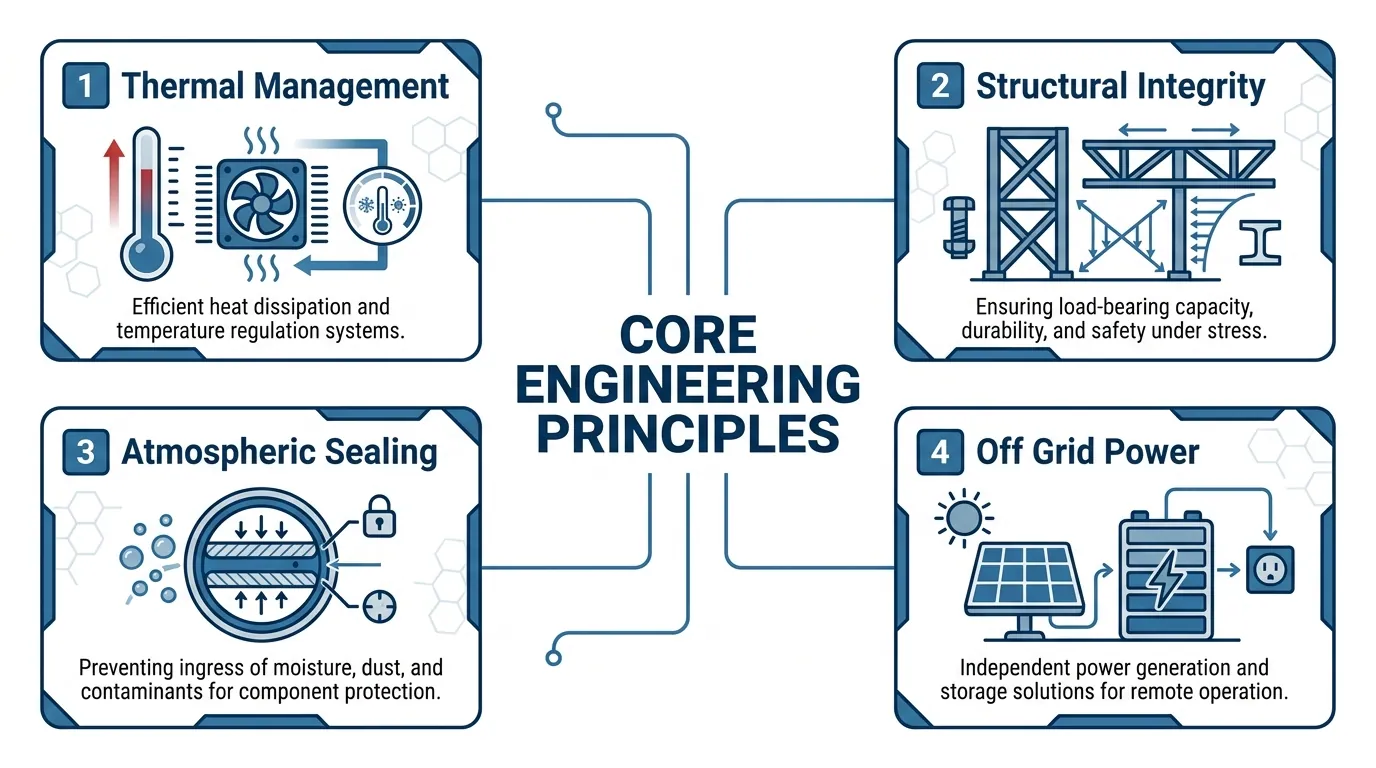
Thermal management, structural integrity, atmospheric sealing, and off-grid power form the engineering foundation for every build. Insulation gaps alone can cut a wall system’s R-value by half, and seal degradation during temperature cycling compromises the entire atmospheric envelope. These principles dictate wall thickness, frame design, and utility integration from the earliest design phase.
Material selection links directly to the deployment zone. Corten steel suits most outdoor exposures but requires supplemental coatings in saltwater spray; aluminum alloys reduce transport weight across permafrost and ice roads; composite panels minimize thermal bridging in desert builds; stainless steel resists pitting corrosion in chemical exposure zones.
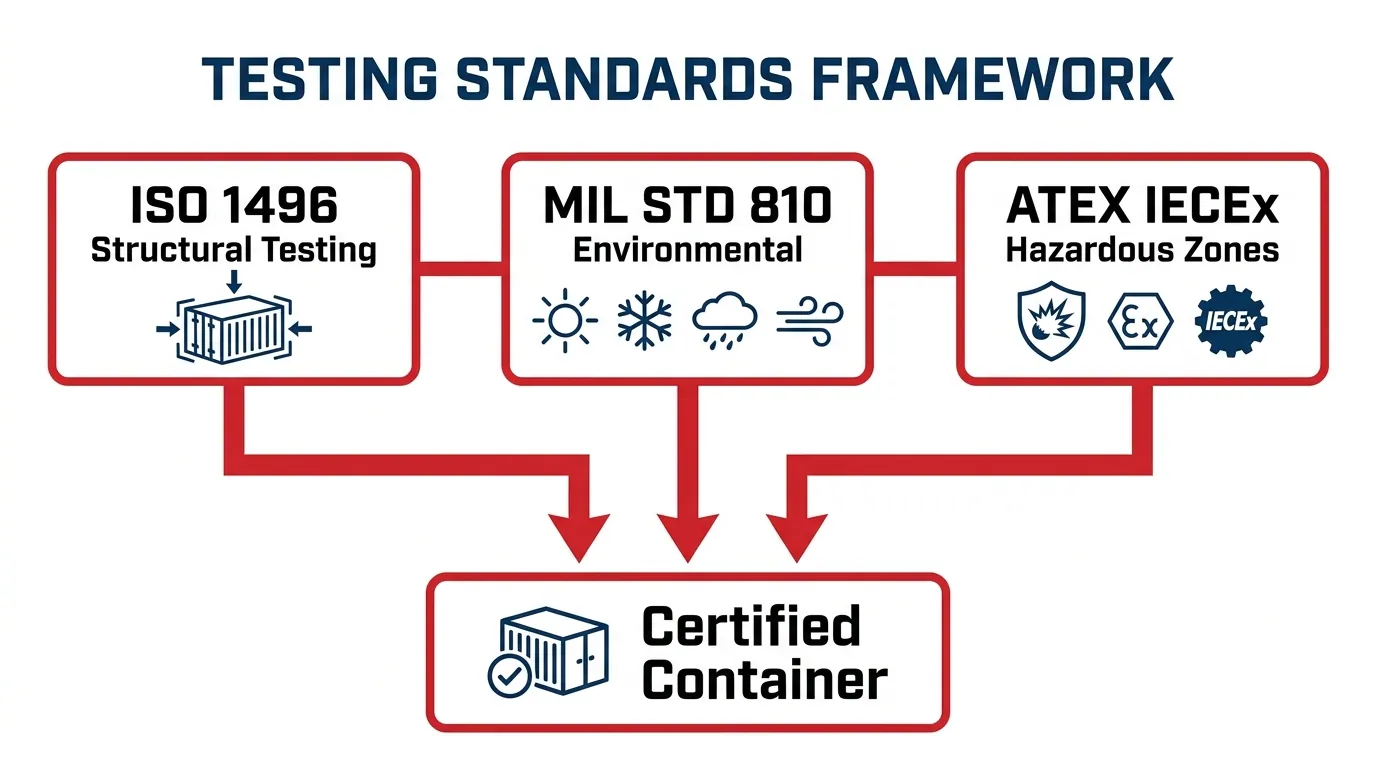
Validated designs move through CAD modeling, finite element analysis, and physical prototyping before entering certification against ISO 1496, MIL-STD-810, ATEX, and IECEx standards. Federal weight limits, transport mode restrictions, and field assembly without skilled labor further constrain dimensions and connection methods. Vertically integrated manufacturing consolidates these decisions under one roof, reducing handoff risk and accelerating delivery timelines.
What Are Custom Containerized Solutions for Extreme Environments?
Custom containerized solutions for extreme environments are purpose-built, self-contained units engineered to operate reliably where standard modular construction cannot survive. The sections below clarify how these solutions differ from off-the-shelf modules and which environmental conditions demand custom engineering.
What Makes a Containerized Solution Different from Standard Modular Units?
A containerized solution differs from standard modular units in its engineering scope, material selection, and environmental specificity. Standard modular units follow fixed shipping container form factors, typically 10-, 20-, and 40-foot sizes. Custom containerized solutions, by contrast, are purpose-built from the ground up. According to Lawrence Berkeley National Laboratory, although most units conform to standard container dimensions, an increasing number are delivered as purpose-built configurations tailored to mission-specific requirements.
This distinction matters because extreme environments impose stresses that generic modules cannot withstand. Custom units integrate specialized insulation, reinforced structural frames, corrosion-resistant alloys, and sealed utility systems during initial fabrication rather than as aftermarket modifications. The modular construction industry has grown from 2.1% of new construction starts in 2015 to 6.64% in 2023, reflecting rising demand for factory-controlled, application-specific builds.
What Qualifies as an Extreme Environment for Containerized Deployments?
An extreme environment for containerized deployments is any operational setting where temperature, pressure, humidity, chemical exposure, vibration, or geographic isolation exceeds the tolerances of conventional construction. These conditions include:
- Sustained temperatures below -40°C or above 60°C
- Rapid thermal cycling between temperature extremes
- High salinity, sand abrasion, or corrosive chemical atmospheres
- Elevated seismic or transit-induced vibration loads
- Remote locations lacking road access, grid power, or skilled labor
As NASA’s Small Spacecraft Systems Virtual Institute explains, thermal cycling involves heating and cooling at ambient pressure to expose units to specific temperature extremes and controlled rates of change between those extremes. Containerized solutions destined for such conditions must be validated against these precise stress profiles before deployment.
For engineers evaluating whether a project site qualifies, the deciding factor is not a single hazard but the combination of simultaneous stresses. Understanding these environmental thresholds sets the foundation for selecting the right container types and engineering approaches.
What Types of Extreme Environments Require Custom Containerized Engineering?
The types of extreme environments that require custom containerized engineering include arctic regions, deserts, offshore marine zones, high-altitude sites, CBRN hazard areas, and remote locations without infrastructure. Each environment imposes distinct engineering demands.
Arctic and Subarctic Environments
Arctic and subarctic environments demand containerized solutions engineered to withstand prolonged sub-zero temperatures, heavy snow loads, sustained high winds, and unstable permafrost foundations. According to a joint publication by the U.S. Army Corps of Engineers, Naval Facilities Engineering Systems Command, and Air Force Civil Engineer Center, special designs and construction techniques are required for buildings in these regions, primarily due to prolonged and extreme low temperatures, snow, wind, and permafrost.
Key engineering challenges in arctic deployments include:
- Thermal insulation systems capable of maintaining interior temperatures despite ambient conditions reaching minus 40 degrees or colder
- Structural reinforcement to handle cumulative snow loading on container roofs and adjacent support frames
- Foundation systems designed for permafrost, which shifts seasonally and undermines rigid footings
- Cold-start power generation and battery heating, since standard fuel and electrical systems lose efficiency in extreme cold
These conditions make standard shipping containers entirely unsuitable without significant modification to insulation, structural framing, and utility systems.
Desert and Arid High-Heat Environments
Desert and arid high-heat environments subject containerized solutions to sustained ambient temperatures exceeding 120°F, intense solar radiation, abrasive sand infiltration, and extreme diurnal temperature swings. Steel containers absorb and radiate heat rapidly, turning unmodified units into uninhabitable ovens within hours.
Effective desert container engineering addresses:
- Reflective exterior coatings and double-roof sunshade structures to reduce solar heat gain
- High-capacity HVAC systems rated for continuous cooling under peak thermal loads
- Sand and dust filtration on all air intake points to protect sensitive electronics and mechanical components
- Seal designs that accommodate daily thermal expansion and contraction cycles without cracking
For military testing programs, these concerns are well documented. The U.S. Army’s Yuma Proving Ground has noted that giving sensitive test equipment extra protection from heat and dust are major concerns, and ensuring containers are rugged and portable usually means modifications become necessary.
Offshore and High-Humidity Marine Environments
Offshore and high-humidity marine environments expose containerized systems to persistent salt spray, high relative humidity, wave-induced vibration, and corrosive atmospheric conditions. Saltwater accelerates corrosion on unprotected steel surfaces at rates far exceeding inland environments.
Critical engineering requirements for offshore containers include:
- Marine-grade coatings and sacrificial anode cathodic protection systems on all exposed steel
- Sealed cable penetrations and IP-rated enclosures to prevent moisture ingress into electrical systems
- Vibration-dampened internal mounting for sensitive equipment subjected to wave and wind loading
- Ventilation systems with dehumidification to prevent condensation on interior electronics
Containerized systems designed for offshore installation benefit from minimal moving parts and compact, self-contained configurations that simplify transport and placement on platforms or vessels.
High-Altitude and Low-Pressure Environments
High-altitude and low-pressure environments challenge containerized solutions with reduced atmospheric pressure, lower oxygen concentrations, increased UV exposure, and rapid temperature fluctuations. Standard cooling systems lose efficiency as air density drops, and pressure differentials can stress sealed enclosures.
The U.S. Department of Energy’s Atmospheric System Research program demonstrated this operational reality when its SAIL campaign deployed over 50 instruments in a containerized ARM Mobile Facility near Crested Butte, Colorado, to study atmospheric influences on mountain hydrology.
Engineering for high altitude addresses:
- HVAC systems derated or redesigned for reduced air density at elevation
- Pressurized or pressure-equalized enclosure designs to protect sensitive instrumentation
- UV-resistant exterior materials and coatings to prevent polymer degradation
- Enhanced sealing against wind-driven precipitation common at exposed mountain sites
Chemical, Biological, or Radiological Hazard Zones
Chemical, biological, or radiological hazard zones require containerized solutions with specialized containment, filtration, and pressurization systems that prevent cross-contamination between the interior workspace and the external threat environment. Standard containers offer no protection against airborne or contact-based CBRN agents.
Essential CBRN container engineering features include:
- Negative-pressure ventilation with HEPA filtration to contain biological agents within the workspace
- Positive-pressure overpressure systems to prevent external chemical or radiological infiltration into clean areas
- Decontamination airlocks and material pass-throughs at all entry and exit points
- Electrical and HVAC components rated for hazardous classified locations
The U.S. Air Force has validated the operational need for deployable CBRN capability, confirming that small CBRN teams can now be deployed during wartime operations to protect air power anywhere, anytime.
Remote and Infrastructure-Deficient Locations
Remote and infrastructure-deficient locations require containerized solutions that operate entirely independent of external power grids, water systems, road networks, and communication infrastructure. Every utility and support function must be self-contained within the deployable package.
Engineering priorities for remote deployment include:
- Integrated microgrid power systems combining generators, solar panels, and battery storage
- Water purification and waste management systems housed within the container footprint
- Satellite communication systems for connectivity where terrestrial networks do not exist
- Modular designs enabling transport by helicopter, barge, or unpaved road
For communities in Alaska’s remote interior, this self-sufficiency requirement shaped real-world deployments. The U.S. Department of Energy’s Office of Indian Energy awarded a $1 million grant to install solar photovoltaic arrays on 20-foot shipping containers in the communities of Buckland, Deering, and Kotzebue, where wind and snow loading for each container directly influenced the number of solar panels each unit could support.
Understanding these six environment categories clarifies the specific threats each container must be engineered to survive.
What Are the Core Engineering Principles Behind Extreme Environment Containers?
The core engineering principles behind extreme environment containers are thermal management, structural integrity under dynamic loads, atmospheric sealing, and self-sufficient power generation. Each principle addresses a specific environmental threat that standard containers cannot withstand.
How Does Thermal Management Drive Container Design?
Thermal management drives container design by dictating insulation systems, HVAC capacity, and condensation control strategies before any other specification is finalized. Extreme temperature swings create thermal stress on internal equipment and personnel, making heat transfer the primary engineering constraint.
Insulation gaps and voids can reduce a wall system’s R-value by as much as 50%, according to research published by the National Institute of Standards and Technology. This reality forces engineers to prioritize continuous insulation envelopes that eliminate thermal bridging at every junction point. Condensation control at thermal bridges is equally critical; without it, moisture accumulates inside wall assemblies and accelerates corrosion.
The U.S. Department of Defense’s environmental tailoring standard describes a planning process that considers environmental stresses across all phases of a container’s service life, resulting in realistic designs matched to actual performance requirements rather than generic specifications. For extreme environment containers, this means thermal management is not a secondary system added after structural design. It is the starting constraint that shapes wall thickness, material selection, and HVAC integration from the earliest design phase.
How Do Structural Load and Vibration Requirements Shape the Frame?
Structural load and vibration requirements shape the frame by determining material gauge, reinforcement placement, and joint design throughout the container chassis. Containers deployed to extreme environments endure transit shock, forklift handling, crane lifts, and sustained operational loads that far exceed static warehouse conditions.
According to research from the Virginia Tech Center for Packaging and Unit Load Design, Huang’s study analyzed average vibration levels generated by forklifts to provide insights for pre-shipment testing of packaging systems. These findings are directly relevant because containerized solutions must survive repeated material handling cycles before they even reach the deployment site.
Frame design must also account for thermal bridging through structural members. The National Renewable Energy Laboratory notes that exterior insulation significantly reduces the effects of thermal bridging through remaining framing members, meaning structural and thermal engineering are inseparable disciplines. Engineers who treat the frame as purely a structural element, without considering its role as a heat transfer pathway, introduce failure modes that compound over time.
How Is Atmospheric Sealing Engineered for Hostile Conditions?
Atmospheric sealing is engineered for hostile conditions through multi-layer gasket systems, positive or negative pressure differentials, and ingress protection ratings matched to the specific threat profile. Sand, saltwater spray, chemical vapors, and biological contaminants each demand distinct sealing strategies.
The International Electrotechnical Commission developed IP ratings to grade enclosure resistance against dust and liquid intrusion. These ratings provide a standardized framework for specifying seal performance. NEMA enclosure ratings offer a complementary classification for electrical and electronic equipment protection against hazardous and environmental conditions.
Effective atmospheric sealing requires more than selecting the right gasket material. Engineers must account for thermal expansion cycles that repeatedly stress seal interfaces, pressure differentials created by HVAC systems, and the cumulative degradation that occurs when seals are exposed to UV radiation or chemical agents over months of field deployment. Overlooking any single vector often leads to progressive seal failure that compromises the entire containerized system.
How Are Power and Utility Systems Designed for Off-Grid Operation?
Power and utility systems are designed for off-grid operation through integrated microgrids that combine localized generation, energy storage, and intelligent load management within the container footprint. The U.S. Department of Energy defines a microgrid as a network of connected electrical devices that can operate while connected to or disconnected from the larger electric grid, with components typically including energy storage devices, photovoltaic solar cells, and control systems.
Remote and hostile deployments demand energy independence because grid connections are either unavailable or unreliable. Battery technology must function across the full operational temperature range; lithium-ion electrolytes developed at Pacific Northwest National Laboratory now operate from negative 40 degrees Celsius to 60 degrees Celsius, which directly supports containerized deployments in both arctic and desert conditions.
Redundancy is essential. A single-source power architecture in an extreme environment is a single point of failure, so combining generators, solar arrays, and battery banks with automatic transfer switching ensures continuous operation even when one source is compromised. Understanding these power principles alongside material selection helps engineers choose components that perform reliably across the container’s full deployment lifecycle.
What Materials Are Best Suited for Extreme Environment Containers?
The best materials for extreme environment containers are Corten steel, aluminum alloy, composite panels, and stainless steel. Each material excels under specific operational stresses, from marine corrosion to arctic weight constraints, desert heat, and chemical exposure.
How Does Corten Steel Perform in Corrosive Marine Conditions?
Corten steel performs in corrosive marine conditions by forming a stable oxide layer that acts as a protective barrier against atmospheric corrosion. This weathering steel contains copper, chromium, and nickel, which slow the corrosion cycle and reduce the need for protective coatings in most outdoor exposures. However, coastal environments with high chloride concentrations can undermine the patina’s stability. A 2024 Federal Highway Administration report on uncoated weathering steel provides quantitative recommendations for coastal environments and highway overpasses with heavy deicing agent use, cautioning that salt-laden air accelerates corrosion beyond the oxide layer’s protective capacity. For marine container applications, supplemental coatings or hybrid material strategies are often necessary when direct saltwater spray is constant.
How Does Aluminum Alloy Perform in Weight-Sensitive Arctic Deployments?
Aluminum alloy performs in weight-sensitive Arctic deployments by offering a high strength-to-weight ratio that reduces transport loads across permafrost, ice roads, and helicopter sling operations. Unlike carbon steel, aluminum does not become brittle at subzero temperatures, maintaining ductility well below -40°C. Heat-treated aluminum alloys also retain useful strength at elevated temperatures when needed for dual-environment flexibility. According to NASA Marshall Space Flight Center research, NASA 398 heat treatment alloys can achieve tensile strength 3 to 4 times higher than conventional cast aluminum alloys when tested at 600°F (315°C) after soaking at that temperature for 100 hours. For Arctic container frames and panels, the weight savings directly translate to fewer transport sorties, lower fuel costs, and reduced ground-bearing pressure on fragile terrain.
How Do Composite Panels Perform in High-Heat Desert Conditions?
Composite panels perform in high-heat desert conditions by combining low thermal conductivity with high UV resistance and minimal thermal expansion. Materials such as fiberglass-reinforced polymer (GFRP), extruded polystyrene (XPS), and polyurethane (PUR) cores deliver insulation values that far exceed metal panels of equivalent thickness. These composites resist sand abrasion and do not conduct heat into the container interior the way steel or aluminum panels do. Composite construction also eliminates thermal bridging at panel joints, which is a common failure point in desert deployments where surface temperatures can exceed 70°C. For engineers selecting wall and roof materials, composites represent one of the most effective ways to maintain interior climate control without oversizing HVAC systems.
How Does Stainless Steel Perform in Chemical Exposure Zones?
Stainless steel performs in chemical exposure zones by resisting oxidation and pitting corrosion from acids, solvents, and reactive agents. Grades such as 316L contain molybdenum, which provides enhanced resistance to chloride attack and crevice corrosion in environments where chemical splashes or vapors are persistent. Stainless steel maintains structural integrity across wide temperature ranges, making it suitable for CBRN containment shelters and industrial processing enclosures. According to a Sandia National Laboratories study, corrosion rates increased as the dissolved chloride content of molten salt mixtures increased, confirming that material grade selection must match the specific chemical profile of the deployment zone. For containers housing decontamination equipment or hazardous material storage, stainless steel’s cleanability and non-reactive surface make it the default choice.
Selecting the right material is only the first step; validating that choice through structured design and prototyping ensures mission readiness.
What Design and Prototyping Steps Ensure Mission-Ready Containers?
The design and prototyping steps that ensure mission-ready containers include defining operational requirements, validating designs through CAD and finite element analysis, and building physical prototypes to catch failures before field deployment.
How Do You Define Operational Requirements Before Engineering Begins?
You define operational requirements before engineering begins by documenting every environmental stress, regulatory constraint, and performance threshold the container must meet in its intended deployment zone. This process starts with a detailed mission profile: temperature extremes, vibration loads, atmospheric hazards, transport modes, and power demands.
Regulatory frameworks shape these requirements significantly. According to the European Commission, the ATEX Directive 2014/34/EU covers equipment intended for use in potentially explosive atmospheres, defining essential health and safety requirements and conformity assessment procedures before products enter the EU market. Requirements like these must be identified early because they dictate material choices, sealing standards, and electrical component ratings.
Overlooking even one operational parameter at this stage forces costly redesigns later. A thorough requirements document should specify:
- Target temperature range and thermal cycling frequency
- Ingress protection ratings for dust and moisture
- Structural load and vibration profiles during transit
- Applicable certification standards for the deployment region
- Power generation and storage needs for off-grid operation
How Does CAD and Finite Element Analysis Validate Container Designs?
CAD and finite element analysis validate container designs by simulating real-world stresses digitally before any material is cut. CAD modeling creates a precise three-dimensional representation of every structural member, insulation layer, and utility routing within the container.
Finite element analysis then subdivides this digital model into thousands of small elements, calculating how each responds to thermal loads, mechanical stress, and vibration. As documented in a U.S. Nuclear Regulatory Commission analysis, finite element analysis of stiffened plates was used to evaluate a foundation slab on a rigid base, demonstrating how FEA identifies stress concentrations that hand calculations would miss.
This digital validation process catches design weaknesses at a fraction of the cost of physical failure. For extreme environment containers, FEA is particularly valuable because it can model scenarios that are difficult to replicate in a lab, such as simultaneous wind loading at sub-zero temperatures or repeated thermal cycling over thousands of hours.
How Does Physical Prototyping Catch Failures Before Deployment?
Physical prototyping catches failures before deployment by subjecting a real-world build to the stresses that digital models cannot fully replicate. Material interfaces, weld quality, gasket compression, and assembly tolerances all behave differently in physical form than in simulation.
A functional prototype undergoes environmental chamber testing, vibration table runs, and seal integrity checks that reveal problems invisible in CAD. Thermal bridging at panel joints, condensation accumulation in unexpected cavities, and fastener loosening under vibration are common issues discovered only through hands-on evaluation. Building and testing a prototype before committing to full production saves significant time and cost, especially when the container must perform flawlessly in a remote or hazardous location where field repairs are impractical.
With validated prototypes in hand, the next step is confirming that the final design meets the formal testing and certification standards required for deployment.
What Testing and Certification Standards Apply to Extreme Environment Containers?
Testing and certification standards for extreme environment containers span structural validation, environmental durability, and hazardous-area compliance. The subsections below cover ISO 1496 structural testing, MIL-STD-810 environmental qualification, and ATEX/IECEx hazardous zone certifications.
How Does ISO 1496 Apply to Custom Container Structural Testing?
ISO 1496 applies to custom container structural testing by defining the baseline specifications and test procedures that freight containers must satisfy for international transport interchange. According to the International Organization for Standardization, ISO 1496-1:2013 specifies testing requirements for ISO series 1 freight containers of totally enclosed general purpose and certain specific purpose types, suitable for conveyance by road, rail, and sea, including interchange between these transport forms.
Custom containers engineered for extreme environments use ISO 1496 as a structural foundation. Tests include stacking, racking, floor strength, and lifting from corner fittings. When a container departs from standard dimensions or incorporates reinforced framing for harsh conditions, engineers still benchmark against these protocols. Third-party organizations such as the American Bureau of Shipping verify the container’s structural integrity in compliance with applicable rules.
How Does MIL-STD-810 Validate Environmental Durability?
MIL-STD-810 validates environmental durability by providing a structured framework for testing materiel against real-world environmental stresses across every phase of its service life. The standard covers temperature extremes, humidity, vibration, shock, sand, dust, salt fog, and altitude, among other conditions. Rather than prescribing rigid pass/fail thresholds, MIL-STD-810 describes an environmental tailoring process that produces realistic test methods based on actual mission performance requirements.
For containerized solutions deployed in deserts, arctic zones, or transit-heavy operations, this tailoring approach is especially valuable. Engineers define the specific stresses a container will face, then design test sequences that replicate those conditions. Thermal vacuum testing, as NASA’s Johnson Space Center notes, is critical for hardware destined for spaceflight, ensuring resilience under extreme environment variations encountered in outer space. MIL-STD-810’s flexibility makes it the most practical durability benchmark for mission-specific container programs.
How Do ATEX and IECEx Certifications Apply in Hazardous Zones?
ATEX and IECEx certifications apply in hazardous zones by ensuring that containerized equipment meets explosion protection requirements before deployment in potentially explosive atmospheres. The European Commission’s ATEX Directive 2014/34/EU defines essential health and safety requirements and conformity assessment procedures for equipment placed on the EU market. The IECEx System complements this framework internationally, using IEC standards such as IEC 60079-1 for flameproof enclosures, IEC 60079-2 for pressurized enclosures, and IEC 60079-14 for electrical installation design and erection.
Containers destined for oil and gas facilities, chemical processing sites, or munitions storage must carry the appropriate certification for their designated zone classification. Selecting the right protection concept during the engineering phase prevents costly redesigns after fabrication.
With certification pathways established, understanding common failure modes helps engineers avoid the defects these standards are designed to catch.
What Are Common Failures When Containerizing for Extreme Conditions?
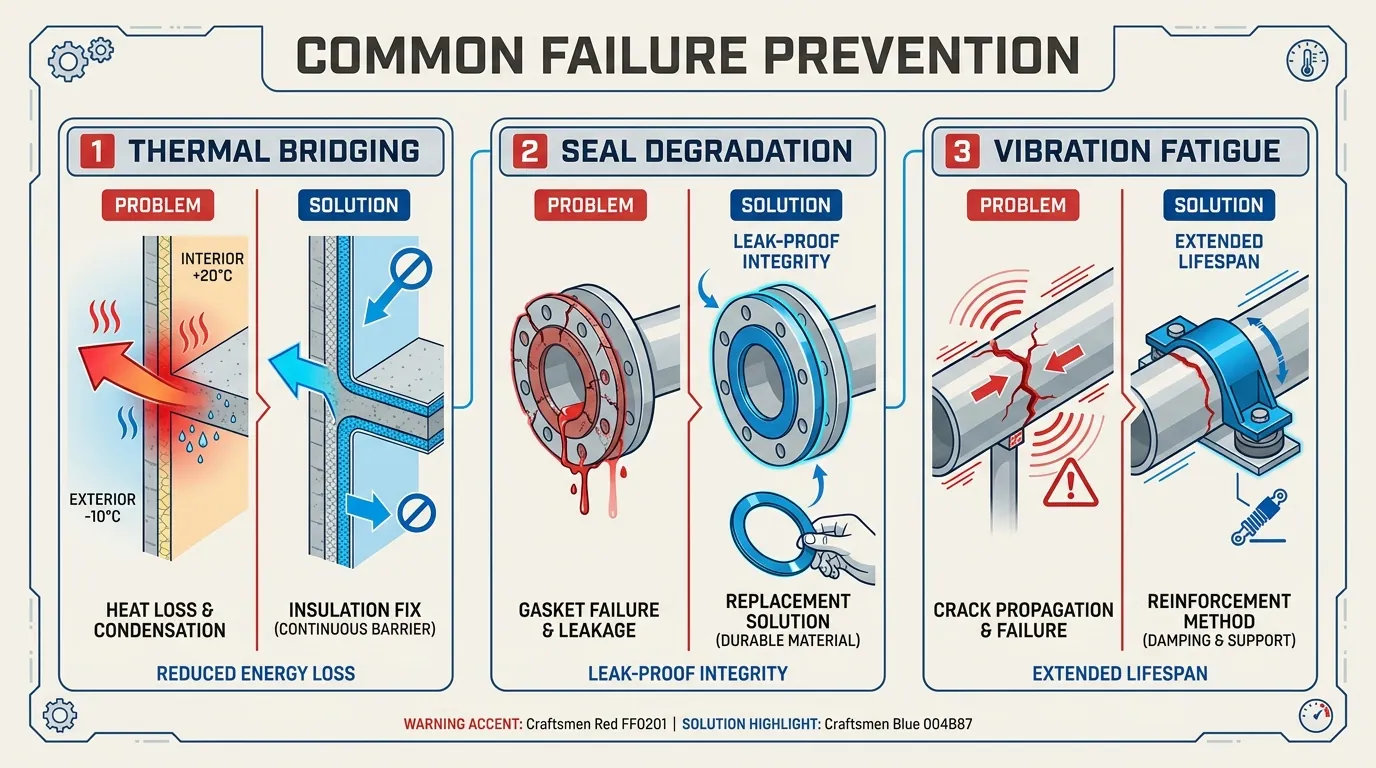
Common failures when containerizing for extreme conditions include unaddressed thermal bridging, degraded seal integrity during temperature cycling, and underestimated vibration fatigue during transit.
What Happens When Thermal Bridging Is Not Addressed?
When thermal bridging is not addressed, localized heat transfer through structural steel members bypasses insulation and creates condensation, ice formation, and internal temperature instability. Steel studs, corner posts, and penetration points act as conductive pathways that short-circuit the thermal envelope. According to the National Institute of Standards and Technology, insulation gaps and voids can reduce the R-value of a wall system by as much as 50%. The consequences compound in extreme environments: condensation corrodes electronics, ice buildup stresses seals, and HVAC systems overwork to compensate. Exterior continuous insulation is the most effective countermeasure, yet it remains one of the most frequently omitted steps in containerized builds.
What Happens When Seal Integrity Degrades in Temperature Cycling?
When seal integrity degrades in temperature cycling, gaskets and weatherstripping lose elasticity through repeated expansion and contraction, allowing moisture, dust, and contaminants to infiltrate the enclosure. As noted by NASA’s Small Spacecraft Systems Virtual Institute, thermal cycling exposes units to specific temperature extremes and controlled rates of change between those extremes. Each cycle fatigues elastomeric seals at the molecular level, accelerating hardening and cracking. Once a seal fails, the entire atmospheric envelope is compromised; HVAC systems lose pressure control, filtration becomes ineffective, and sensitive equipment faces direct environmental exposure. Specifying silicone or fluoroelastomer gaskets rated for the full operational temperature range prevents premature degradation.
What Happens When Vibration Fatigue Is Underestimated During Transit?
When vibration fatigue is underestimated during transit, welds crack, fasteners loosen, and internally mounted components shift or fail before the container reaches its deployment site. A study by Virginia Tech’s Center for Packaging and Unit Load Design analyzed average vibration levels generated by forklifts to provide insights for pre-shipment testing of packaging systems. Road, rail, sea, and forklift handling each impose distinct vibration frequency profiles that accumulate over long logistics chains. Failing to simulate these combined loads during design leads to field failures that are expensive and often impossible to repair at remote sites. Pre-shipment vibration testing aligned with MIL-STD-810 profiles is essential for any container destined for multi-modal transport.
Understanding these failure modes highlights why logistics and deployment constraints must be factored in from the earliest engineering phase.
How Do Logistics and Deployment Constraints Affect Container Engineering?
Logistics and deployment constraints affect container engineering by imposing hard limits on dimensions, weight, and assembly complexity. Transport regulations, site accessibility, and available labor determine what can be built, shipped, and installed.
How Does Transport Mode Limit Container Dimensions and Weight?
Transport mode limits container dimensions and weight by enforcing regulatory ceilings that vary across road, rail, sea, and air corridors. Every kilogram of structural reinforcement or insulation added for extreme environment performance must be reconciled against these fixed transport limits.
Road transport in the United States follows federally mandated maximums under 23 CFR Part 658.17:
- 80,000 pounds gross vehicle weight
- 20,000 pounds single axle weight
- 34,000 pounds tandem axle weight
According to the Federal Highway Administration, U.S. Department of Transportation, loads exceeding these thresholds require oversize/overweight permits that add cost and scheduling delays. In Europe, the Weights and Dimensions Directive sets separate maximum authorised dimensions and weights for heavy-duty vehicles in international and national commercial transport, creating a second constraint layer for globally deployed containers.
Maritime shipping follows ISO standard container form factors (typically 20-foot and 40-foot units), and containerized systems designed for offshore installation benefit from minimal moving parts that simplify transport and crane operations at remote sites.
For engineers, this means material selection and wall thickness are not purely performance decisions; they are logistics negotiations. Choosing aluminum over steel, for instance, can recover hundreds of pounds of payload capacity within the same regulatory envelope.
How Do You Engineer for Rapid Field Assembly Without Skilled Labor?
You engineer for rapid field assembly without skilled labor by designing modular connection systems, pre-wired utility interfaces, and clearly sequenced installation steps that minimize on-site decision-making. Remote and extreme environment sites rarely have access to certified welders, electricians, or heavy crane operators, so the container must arrive substantially complete from the factory.
Key design strategies include:
- Pre-terminated electrical and plumbing connections using color-coded quick-connect fittings
- Bolted structural joints instead of field-welded connections
- Integrated lifting points aligned with standard forklift and crane rigging
- Step-numbered assembly guides printed directly on structural components
A DOE-funded tribal deployment project in Buckland, Deering, and Kotzebue, Alaska, demonstrated this approach by installing modular solar PV arrays on 20-foot shipping containers, where wind and snow loading for each container dictated panel count without requiring specialized structural engineering on-site.
Vertical integration during manufacturing, where design, fabrication, and system integration occur under one roof, reduces the number of field connections and eliminates coordination gaps between subcontractors. The more complete a container leaves the factory, the less skill the field crew needs.
How Should You Approach Custom Containerized Fabrication with Vertically Integrated Manufacturing?
You should approach custom containerized fabrication with vertically integrated manufacturing by consolidating design, engineering, material selection, fabrication, and testing under one operational roof. The subsections below cover how an in-house design-to-delivery model addresses extreme environment challenges and the key engineering takeaways.
Can Craftsmen Industries’ In-House Design-to-Delivery Process Solve Extreme Environment Container Challenges?
Yes, Craftsmen Industries’ in-house design-to-delivery process can solve extreme environment container challenges by unifying every phase of production within a single 127,000 sq. ft. facility. Vertical integration eliminates the handoff delays and miscommunications that commonly occur when design, structural fabrication, thermal insulation, electrical integration, and quality testing are split across separate vendors.
Craftsmen Industries controls each critical step:
- Custom CAD and FEA modeling tailored to site-specific thermal, structural, and atmospheric loads.
- In-house metal fabrication using materials selected for the target environment, whether corrosive marine coasts, sub-zero arctic sites, or high-heat desert locations.
- Integrated HVAC, power, and sealing systems installed and tested before the container leaves the facility.
- Large format graphics and exterior finishing applied under the same quality oversight.
A 2024 report from the U.S. Department of Transportation, Federal Highway Administration, provides quantitative recommendations for material use in coastal environments and highway overpasses with heavy deicing agent use, reinforcing why material decisions must be tightly coupled with engineering from the earliest design stage. Craftsmen Industries embeds this kind of environment-specific material intelligence directly into the fabrication workflow, rather than treating it as an afterthought.
What Are the Key Takeaways About Engineering Custom Containerized Solutions for Extreme Environments?
The key takeaways about engineering custom containerized solutions for extreme environments center on matching every design decision to the specific environmental threat profile:
- Define operational requirements first. Temperature extremes, vibration loads, atmospheric contaminants, and logistical constraints must drive the engineering scope before any fabrication begins.
- Select materials based on validated performance data. Corrosion rates, tensile strength at temperature, and fatigue resistance vary dramatically across environments.
- Eliminate thermal bridging and seal failures early. These two failure modes account for a disproportionate share of field performance issues in containerized systems.
- Test against recognized standards. ISO 1496, MIL-STD-810, ATEX, and IECEx certifications provide the validation framework that separates mission-ready containers from prototypes.
- Design for transport and field assembly constraints. Federal weight limits, remote site access, and the availability of skilled labor on-site shape container dimensions and connection methods.
Vertically integrated manufacturing, where design, fabrication, testing, and delivery operate under unified control, consistently reduces risk and accelerates timelines for these complex builds. Craftsmen Industries specializes in exactly this approach, bringing over 40 years of custom fabrication expertise to containerized solutions engineered for the world’s most demanding conditions.
Filter Posts by Tag
related posts
Laser cutting is a precise, noncontact fabrication method that [...]

A fabrication drawing is a technical document that provides all [...]

Choosing the right metal for a fabrication project is the [...]
