
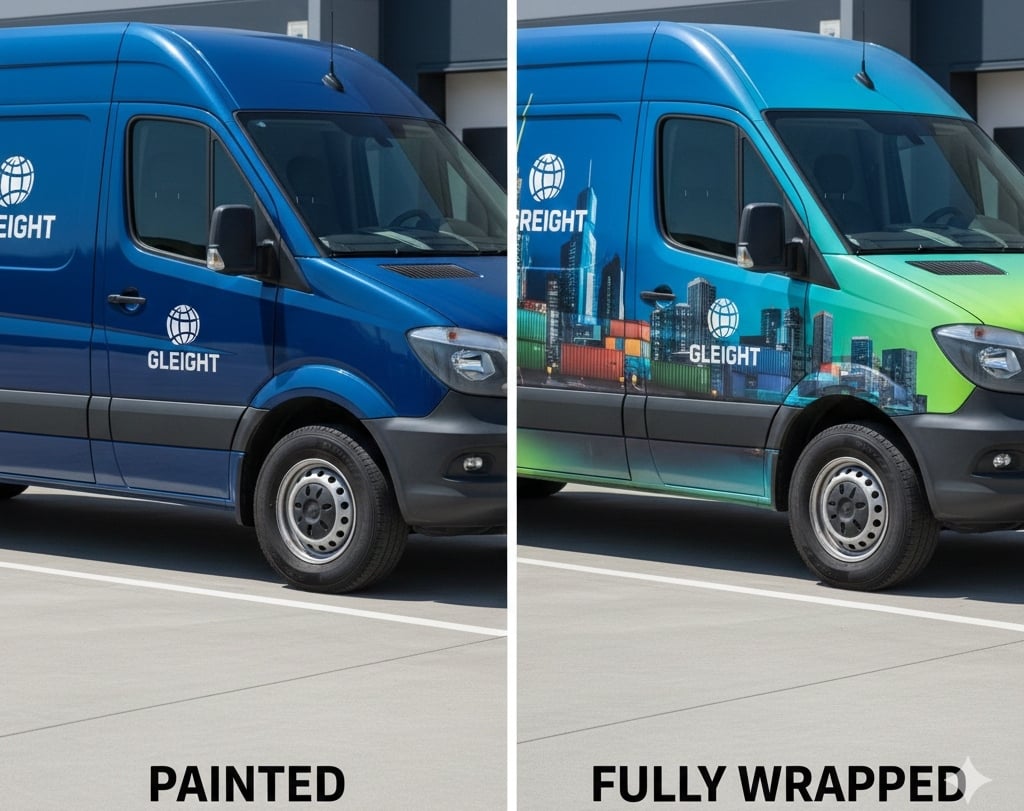
Every business wants its vehicles to stand out while driving across town, but deciding between traditional paint and modern vehicle wraps is not always straightforward. The choice impacts visibility, cost, durability, and long-term ROI. Full paint provides a permanent, uniform look, while wraps offer customization, protection, and flexibility.
According to the Small Business Administration , professionally branded vehicles, including wraps, can significantly increase customer recognition and marketing effectiveness compared to unbranded or DIY approaches. Understanding the benefits, limitations, and appropriate applications of each option allows businesses to make informed decisions that enhance brand identity and protect their investment over time.
The Evolution of Vehicle Graphics in Branding
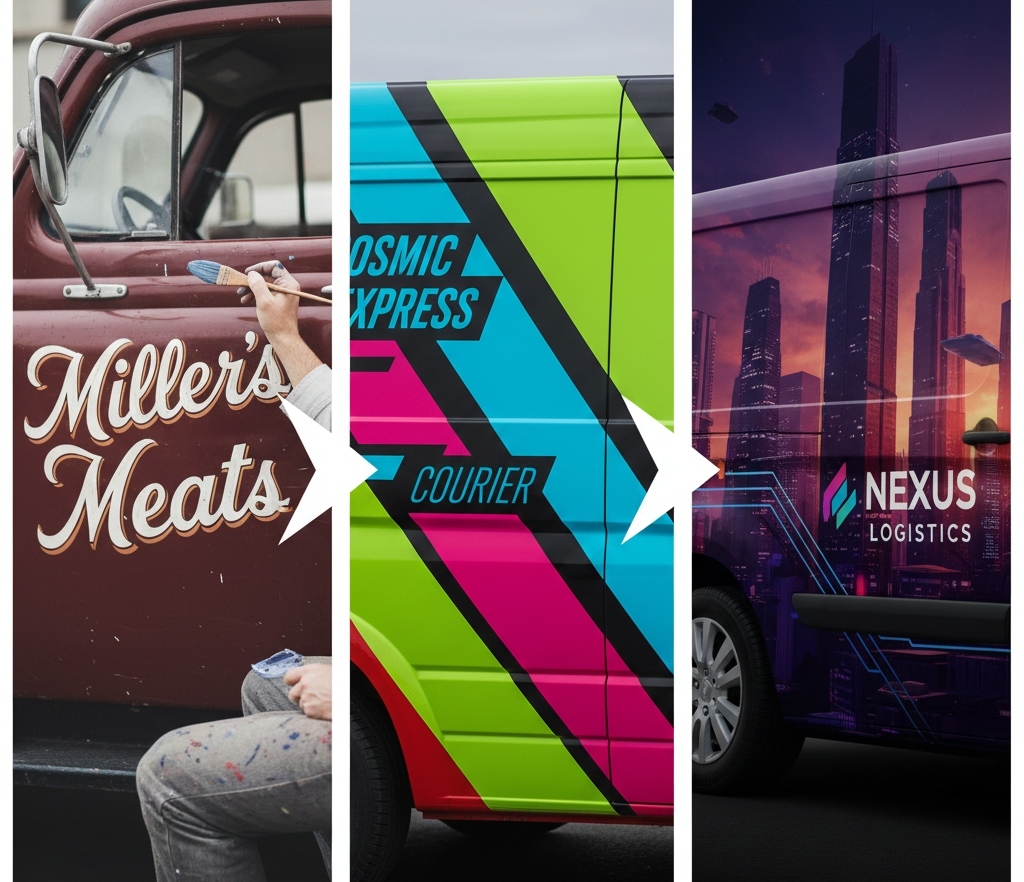
Vehicle graphics have been central to advertising for decades. Originally, businesses relied exclusively on paint-based lettering and airbrushed art. In the 1970s, vinyl technology emerged, introducing the first vehicle wraps. By the early 2000s, digital printing transformed wraps into a scalable, affordable option for businesses of all sizes.
- Paint dominance (1900s–1970s): Hand-painted signs, requiring skilled artists.
- Vinyl decals (1970s–1990s): Early adhesive lettering improved consistency.
- Full wraps (2000s onward): Wide-format printers enabled high-resolution images.
Today, mobile advertising is one of the most cost-effective channels, delivering thousands of impressions per dollar spent compared to traditional media. According to the Outdoor Advertising Association of America, vehicle ads generate up to 70,000 daily impressions in metropolitan areas, highlighting the impact of well-designed graphics .
Paint vs. Wrap: Defining the Basics
Before deciding on the right vehicle branding solution, it’s essential to understand the fundamental differences between paint and wrap graphics. Each method offers unique benefits depending on your business goals, budget, and desired visual impact.
What Is a Painted Vehicle Graphic?
Paint graphics involve spraying or airbrushing paint directly onto the vehicle surface, often sealed with protective clear coats. Techniques range from solid color coats to elaborate murals.
Key attributes of painted graphics:
- Permanent solution, hard to remove.
- Works well for custom designs and luxury finishes.
- Requires long curing and drying times.
What Is a Vehicle Wrap?
A wrap consists of printed vinyl film applied over the car’s surface. It can cover the entire vehicle or specific sections. Vehicle wraps can replicate paint, integrate photography, or include intricate branding elements.
Key attributes of wraps:
- Removable and replaceable.
- Offers flexible design changes.
- Adds a protective layer to the original paint.
According to the Federal Highway Administration , clear visibility and design legibility are crucial for safe road graphics, something wraps excel at due to precision printing.
Comparing Durability and Longevity
Paint Durability
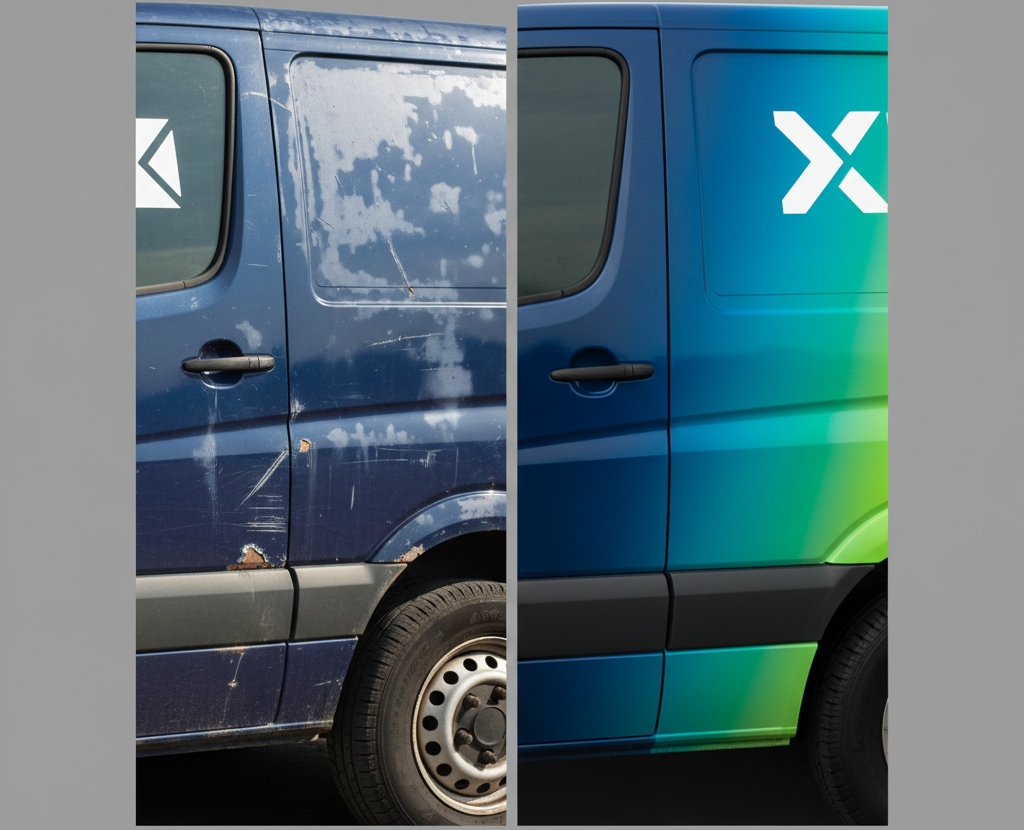
High-quality automotive paint can last 7–10 years with proper care. However, exposure to UV rays, salt, and pollutants causes fading or chipping. Touch-ups are often noticeable.
- Pros: Long lifespan, classic finish.
- Cons: Expensive refinishing, vulnerable to scratches.
Wrap Durability
Premium vinyl wraps last 5–7 years, depending on climate and care. Unlike paint, wraps can be removed or replaced when branding changes.
- Pros: Flexible replacement, protects original paint.
- Cons: Edges may peel in harsh environments.
A National Institute of Standards and Technology (NIST) study on materials durability confirms that UV radiation is a top factor in surface degradation, meaning both wraps and paint require protective coatings or sheltering for maximum longevity.
Cost Considerations: Short vs. Long-Term Value
When evaluating vehicle graphics, understanding both upfront and long-term costs is critical for making a financially sound decision. Paint and vinyl wraps differ significantly in initial investment and ongoing maintenance, affecting overall ROI.
Upfront Costs
- Paint: $5,000–$20,000 for custom commercial-grade jobs.
- Wraps: $2,500–$5,000 for full coverage.
Long-Term Costs
Paint requires polishing and refinishing, and is costly to update. Wraps allow cheaper redesigns and easier updates for rebranding.
- Paint savings: Best for static designs.
- Wrap savings: Best for evolving brands.
The Small Business Administration notes that businesses prioritizing flexible marketing strategies achieve higher ROI from advertising investments (SBA Marketing Guidance PDF). Wraps directly support this flexibility.
Design and Aesthetic Flexibility
The visual impact of a vehicle graphic is critical to brand perception. Both paint and vinyl wraps offer unique advantages in terms of design freedom and aesthetic appeal, but their strengths differ in scope and adaptability.
Paint Advantages
- Timeless, glossy finish.
- Works well for luxury or vintage branding.
- Hand-done artistry provides exclusivity.
Wrap Advantages
- Unlimited color palettes and textures (chrome, matte, carbon fiber).
- High-resolution digital printing allows photographic realism.
- Easy seasonal or campaign-based updates.
Maintenance and Care Requirements
Proper upkeep is essential to maximize the lifespan and visual appeal of both painted graphics and vinyl wraps. While each option has different care needs, routine maintenance ensures durability, preserves brand aesthetics, and protects your investment.
Maintaining Paint
- Regular waxing and polishing.
- Vulnerable to scratches from road debris.
- Requires professional refinishing if damaged.
Maintaining Wraps
- Simple washing with non-abrasive cleaners.
- Wraps protect the underlying paint from scratches.
- Easy replacement of damaged panels.
The Environmental Protection Agency (EPA) recommends low-VOC cleaning products for both painted and wrapped vehicles to minimize chemical damage and environmental impact.
Regulatory and Compliance Considerations
Both painted and wrapped vehicles must meet federal and state transportation standards.
- Visibility: Graphics cannot obstruct license plates, mirrors, or windows.
- Reflectivity: Commercial vehicles may require reflective decals for safety.
- Data compliance: Ads must follow truth-in-advertising laws (FTC guidelines).
The Department of Transportation emphasizes that improperly applied reflective graphics can reduce nighttime visibility, making professional installation essential.
Environmental and Sustainability Factors
Paint jobs often rely on solvents containing volatile organic compounds (VOCs), contributing to air pollution. Wraps use vinyl, a plastic material, but produce fewer emissions during application.
- Paint footprint: High VOC emissions.
- Wrap footprint: Lower emissions, but recycling challenges.
The U.S. Environmental Protection Agency (EPA) highlights the environmental cost of coatings, recommending businesses adopt low-emission alternatives. Wraps generally align better with sustainability initiatives when paired with responsible disposal.
Real-World Case Studies in Vehicle Branding
- Public Health Campaigns: According to the Centers for Disease Control and Prevention (CDC), mobile ads such as wrapped buses have been effective in raising awareness about health issues.
- Corporate Fleets: Logistics companies often use wraps for fleet-wide brand consistency without repainting.
- Luxury Brands: High-end dealers prefer custom paint for premium appeal.
Case studies confirm that wraps are cost-effective for scalability, while paint remains relevant for prestige projects.
Authentic Comparison Table: Maintenance and ROI
Here’s a data-backed table on maintenance and return on investment based on industry reports and public data.
|
Factor |
Paint Graphics |
Vehicle Wraps |
Business Benefit |
|
Average Lifespan |
7–10 years |
5–7 years |
Longevity vs. flexibility |
|
Upfront Investment |
$5,000–$20,000 |
$2,500–$5,000 |
Lower entry cost with wraps |
|
Update / Rebrand Costs |
Entire repaint required |
Partial or full rewrap possible |
Wraps support agile branding |
|
Maintenance Requirements |
Frequent waxing and refinishing |
Basic washing |
Wraps reduce maintenance costs |
|
Resale Value Impact |
May reduce value if branding permanent |
Protects factory paint underneath |
Wraps improve resale preservation |
|
Sustainability |
High VOC emissions |
Lower emissions, recycling challenges |
Wraps better for green initiatives |
Building a Stronger Brand with Craftsmen Industries
The future of vehicle branding lies in precision, durability, and creative flexibility. Whether your organization chooses paint or wrap, partnering with an expert ensures compliance, longevity, and quality.
Craftsmen Industries specializes in custom vehicle graphics, mobile units, and branding solutions. With decades of experience, they design solutions that not only turn heads but also deliver lasting business impact.
Work with Craftsmen Industries today to elevate your fleet branding with custom paint or wrap solutions built for your goals.
Frequently Asked Questions
Which lasts longer, paint or a vehicle wrap?
A professional paint job can last 10 years or more with proper care, while high-quality vinyl wraps typically last 5–7 years. Wraps are durable but more affected by UV exposure and weather.
Is wrapping always cheaper than painting?
In most cases, yes. A wrap generally costs 30–60% less than a custom paint job. However, premium finishes or full commercial fleet wraps can approach paint-level pricing.
Can a wrap protect the vehicle’s original paint?
Yes. Wraps serve as a protective barrier against scratches, chips, UV rays, and weather damage. Once removed, the paint underneath usually looks as good as new.
Are wraps removable, and does removal damage the car?
Wraps are designed to be fully removable. If applied and removed by professionals, they leave no residue or damage, unlike paint, which is permanent and requires repainting for changes.
Which option offers more flexibility for branding and design?
Wraps provide far greater flexibility. They allow for vibrant graphics, textures (matte, gloss, satin, chrome), and rapid redesigns, making them ideal for businesses. Paint, while long-lasting, is limited in customization and much harder to change.
Filter Posts by Tag
related posts
How custom promotional vehicles and graphic vinyl wraps turn fleets into moving billboards? Learn key guidelines for choosing the right graphics company.
Wraps change an assortment of trucks into a unified fleet into a neighborhood legend. So how is a vehicle wrap actually installed? Read on.
Fleet wraps for food and beverage delivery vehicles are large-format [...]
