
Aerospace fabrication is the specialized discipline of cutting, forming, joining, and finishing materials into precision components for aircraft, spacecraft, and defense systems. It encompasses everything from structural airframe parts and engine assemblies to avionics housings and fluid distribution systems.
This guide covers aerospace materials and their performance characteristics, core fabrication processes, the range of parts produced, governing quality standards, and what distinguishes a qualified fabrication partner.
Aerospace fabrication relies on materials chosen for specific structural and thermal demands. Aluminum 7075-T6 dominates airframe structures for its strength-to-weight ratio, titanium Ti-6Al-4V handles extreme stress and heat in engine mounts and landing gear, and nickel superalloys maintain integrity above 1,000°C in turbine hot sections. Carbon fiber reinforced polymers now deliver significant weight savings over aluminum in wing skins and fuselage panels.
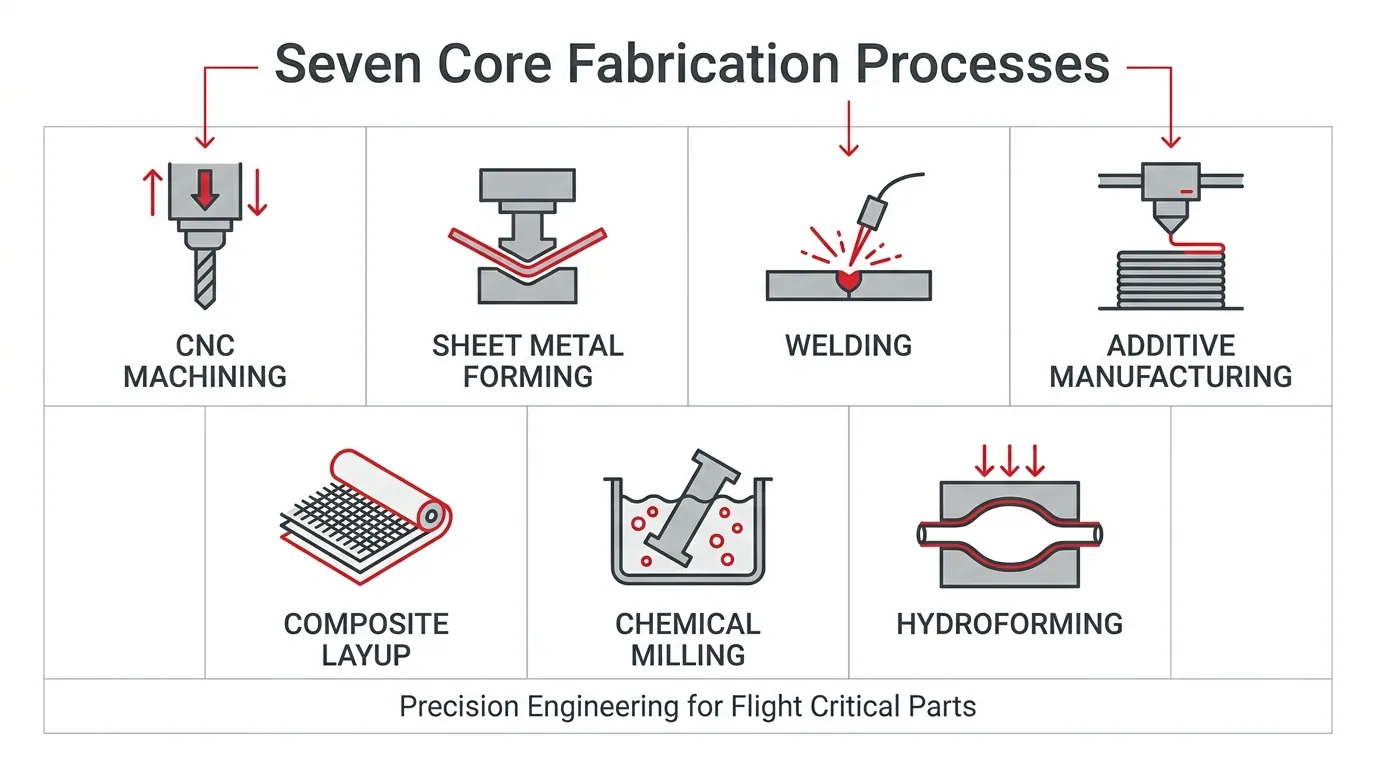
Seven core processes shape these materials into flight-ready hardware. CNC machining produces tight-tolerance parts from solid billets, sheet metal forming creates aerodynamic skins and panels, and specialized welding methods join reactive metals without compromising integrity. Additive manufacturing accelerates prototyping, composite layup builds lightweight primary structures, and chemical milling with hydroforming achieve complex geometries that conventional methods cannot.
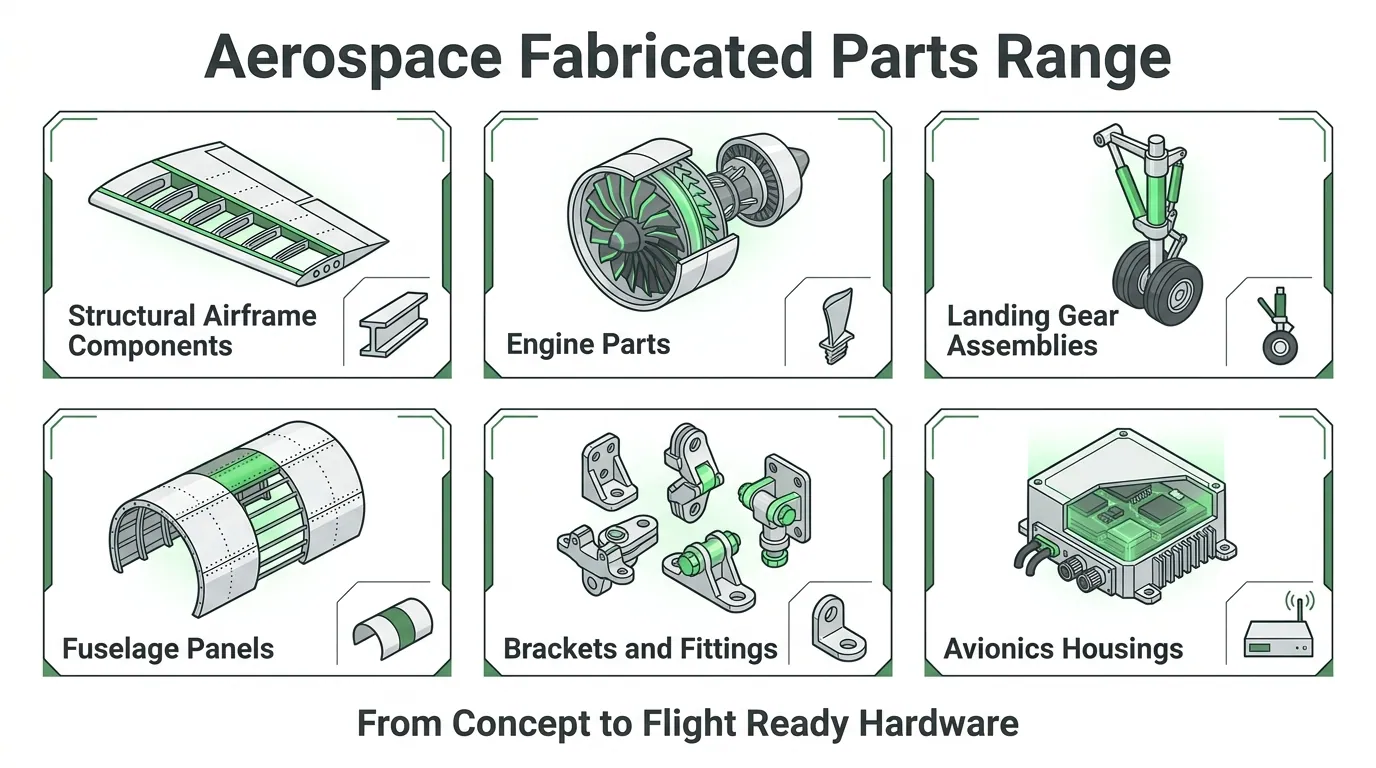
The parts produced span structural frames, turbine blades, landing gear assemblies, fuselage skins, mounting brackets, avionics enclosures, and ductwork. Each component carries full material traceability from raw stock through final inspection.
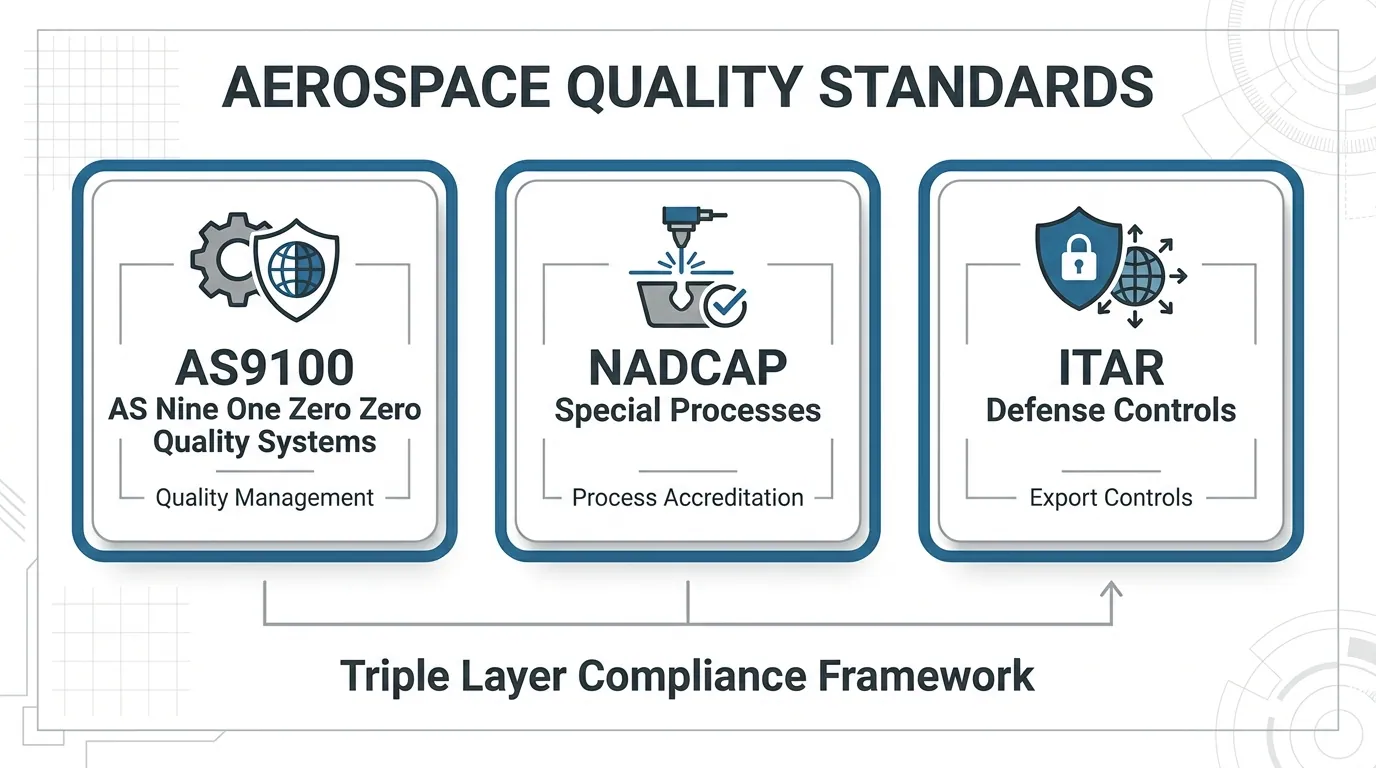
Three overlapping standards govern production: AS9100 for quality management systems, NADCAP for special process accreditation across 26 critical categories, and ITAR for defense export controls. Together, these frameworks enforce the certification rigor that separates aerospace fabrication from conventional metalworking and defines what organizations should prioritize when selecting a vertically integrated fabrication partner.
What Does Aerospace Fabrication Mean?
Aerospace fabrication is the specialized process of cutting, forming, joining, and finishing materials into components and assemblies designed for aircraft, spacecraft, and defense systems. This discipline requires extreme precision, certified quality systems, and materials engineered to withstand harsh operating environments. The scope spans structural airframe parts, engine components, avionics housings, and space systems.
Every fabricated part must meet strict dimensional tolerances, material traceability requirements, and regulatory standards before it can enter service. According to Innovation, Science and Economic Development Canada, aerospace manufacturing activities include aircraft assemblies, subassemblies and parts, aircraft engines and engine parts, fuselage, wing, and tail assemblies, aerospace product prototypes, space systems, avionics, and helicopters, propellers and parts. This breadth illustrates how far the discipline extends beyond simple metalworking.
What separates aerospace fabrication from general industrial fabrication is the certification burden. Materials and processes must be formally qualified through rigorous testing programs, and fabricators typically operate under quality management frameworks like AS9100 that standardize requirements across the global supply chain. For any organization evaluating fabrication partners, understanding this definition sets the foundation for assessing processes, materials, and quality standards covered in the sections that follow.
Why Is Aerospace Fabrication Critical to the Aviation Industry?
Aerospace fabrication is critical to the aviation industry because every flight-worthy component must meet extreme performance, safety, and regulatory standards that conventional manufacturing cannot consistently achieve. The stakes involve human lives, national defense, and billions in economic value.
Aviation depends on fabricated parts that withstand tremendous stress cycles, temperature extremes, and corrosive environments at altitude. A single structural failure in flight can be catastrophic, which is why aerospace fabrication enforces tolerances, material traceability, and process controls far beyond what standard industrial manufacturing requires. Each component, from turbine blades to fuselage skins, must perform reliably across thousands of flight hours without degradation.
The regulatory framework surrounding this discipline reflects its importance. According to the Performance Review Institute, the Nadcap program offers 26 critical process accreditations covering special processes such as nondestructive testing, heat treating, and chemical processing, while also providing oversight for printed board assemblies, materials testing laboratories, and measurement and inspection. These accreditations exist because even minor process deviations during fabrication can introduce hidden defects that compromise airworthiness.
Beyond safety, aerospace fabrication underpins supply chain integrity for commercial airlines, military programs, and space systems alike. Without qualified fabricators capable of producing flight-critical hardware to certified standards, aircraft production timelines stall, maintenance programs suffer, and operational readiness declines. For defense applications, fabrication quality directly affects mission capability and personnel safety.
From an industry perspective, this level of manufacturing rigor is not optional; it is what separates aerospace-grade production from every other fabrication sector. The combination of material science expertise, process certification, and continuous inspection creates a manufacturing environment where quality is engineered into every step rather than inspected in after the fact.
Understanding what makes aerospace fabrication unique begins with the specialized materials these processes shape.
What Materials Are Used in Aerospace Fabrication?
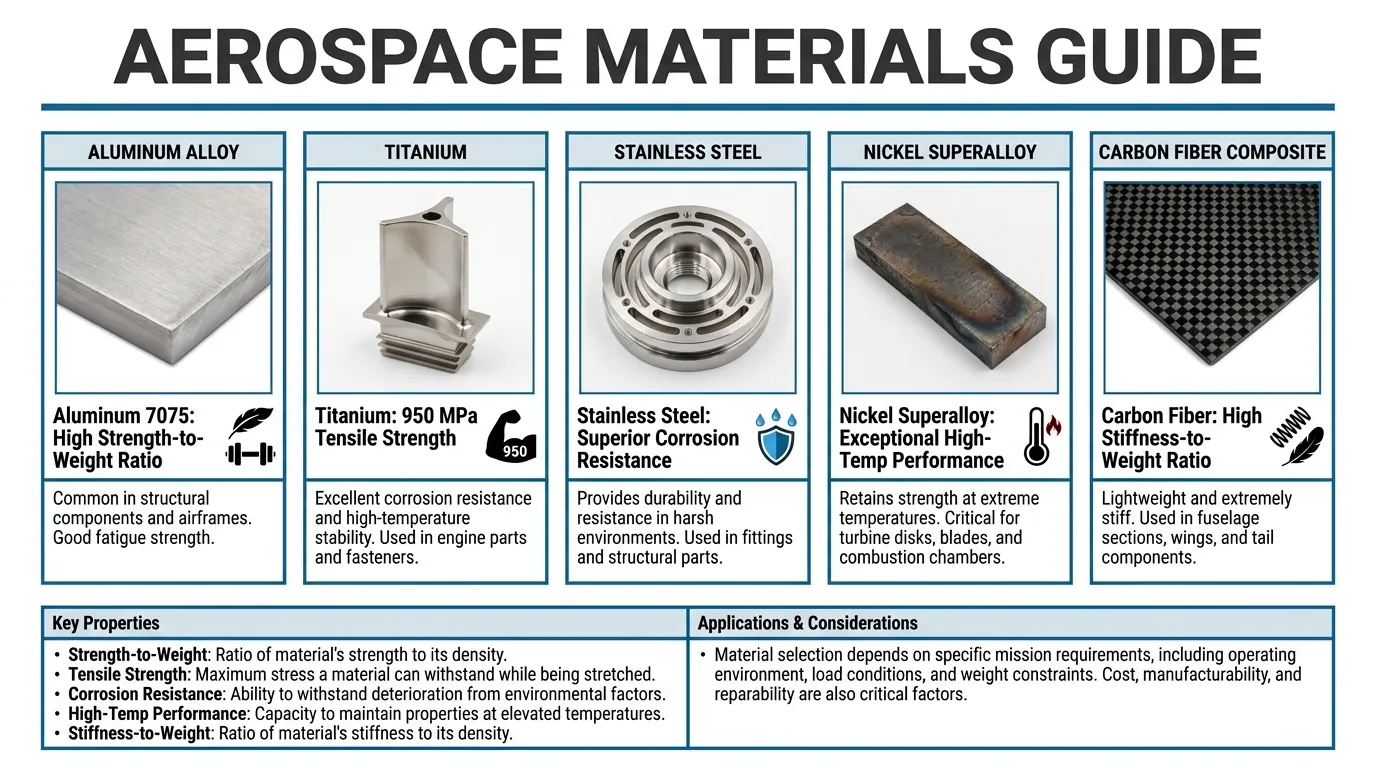
The materials used in aerospace fabrication include aluminum alloys, titanium alloys, stainless steel, nickel-based superalloys, carbon fiber reinforced polymers, and advanced ceramics. Each material serves distinct structural and thermal demands.
Aluminum Alloys
Aluminum alloys are the most widely used metals in aerospace fabrication. Alloy 7075-T6 is a standard grade for airframe structures, offering a tensile strength of 570 MPa at a density of just 2.81 g/cm³ and approximately $4 per kg, according to Embry-Riddle Aeronautical University. This strength-to-weight ratio makes aluminum ideal for fuselage skins, wing ribs, and structural brackets. Although heavier alloys outperform aluminum in extreme heat, few materials match its combination of machinability, corrosion resistance, and cost efficiency for primary aircraft structures.
Titanium Alloys
Titanium alloys provide superior strength and heat resistance for aerospace components exposed to extreme stress. Ti-6Al-4V, the most common aerospace-grade titanium, delivers 950 MPa tensile strength at a density of 4.43 g/cm³. That performance comes at roughly $40 per kg, ten times the cost of aluminum 7075-T6. Despite the price, titanium is essential for engine mounts, landing gear fittings, and bulkheads where high fatigue resistance and corrosion immunity are non-negotiable. For critical load paths that exceed aluminum’s thermal and mechanical limits, titanium remains the preferred choice across both commercial and defense platforms.
Stainless Steel
Stainless steel serves aerospace fabrication in high-wear, high-temperature applications. Grades such as 15-5 PH and 17-4 PH offer excellent corrosion resistance combined with precipitation-hardened strength. These properties make stainless steel well suited for fasteners, exhaust components, hydraulic fittings, and bearing housings. While heavier than aluminum or titanium, stainless steel costs less than titanium and resists oxidation at elevated temperatures. It fills a practical middle ground when components need durability and heat tolerance without the expense of superalloys.
Nickel-Based Superalloys
Nickel-based superalloys maintain structural integrity at temperatures exceeding 1,000°C. Inconel 718 and Waspaloy are common grades used in turbine blades, combustion liners, and exhaust nozzles. These alloys resist creep, oxidation, and thermal fatigue under prolonged exposure to jet engine operating conditions. Machining superalloys demands specialized tooling and slower feed rates due to their work-hardening behavior. Despite higher material and processing costs, no other alloy family matches superalloy performance in the hottest sections of gas turbine engines, making them indispensable for propulsion systems.
Carbon Fiber Reinforced Polymers
Carbon fiber reinforced polymers (CFRPs) combine high tensile strength with exceptionally low weight. According to a study published in Materials journal via PubMed Central, carbon fiber-reinforced PEEK components can achieve 40–60% weight savings compared to traditional aluminum alloys, and PEEK/PEKK matrices withstand temperatures above 250°C. CFRPs are used in wing skins, control surfaces, and fuselage panels on modern commercial and military aircraft. Processing requires precise layup and autoclave curing, and thermoplastic variants introduce additional complexity with printing temperatures of 380–450°C. For primary structures where weight reduction directly improves fuel efficiency, CFRPs have become a defining material in modern aerospace design.
Composites and Advanced Ceramics
Composites and advanced ceramics address thermal and structural challenges that metals alone cannot solve. Ceramic matrix composites (CMCs) withstand extreme temperatures in turbine hot sections while weighing significantly less than nickel superalloys. Glass fiber composites serve in radomes, fairings, and interior panels where radar transparency or electrical insulation is required. Advanced ceramics, including silicon carbide and alumina, provide thermal barrier coatings that protect metallic substrates from oxidation and heat degradation. These materials often work alongside metals rather than replacing them, forming hybrid structures that optimize both weight and thermal performance across the aircraft.
With material selection driving structural performance, the fabrication processes used to shape these materials are equally critical.
What Are the Key Aerospace Fabrication Processes?
The key aerospace fabrication processes include CNC machining, sheet metal forming, welding, additive manufacturing, composite layup and curing, chemical milling, and hydroforming. Each process serves a distinct role in producing flight-ready components.
How Is CNC Machining Used in Aerospace Fabrication?
CNC machining is used in aerospace fabrication to produce high-precision components from solid billets of aluminum, titanium, and nickel superalloys. Multi-axis CNC mills and lathes remove material with tolerances often measured in thousandths of an inch, which is essential for parts like turbine discs, structural bulkheads, and engine mounts.
Because CNC machining operates from digital CAD/CAM files, it delivers repeatable accuracy across production runs. This consistency matters in aerospace, where even minor dimensional deviations can compromise structural integrity or aerodynamic performance. For complex geometries requiring tight tolerances on hard-to-machine alloys, five-axis CNC machining remains one of the most reliable fabrication methods available.
How Does Sheet Metal Forming Work for Aerospace Parts?
Sheet metal forming works for aerospace parts by shaping flat metal sheets into curved, contoured, or angled geometries through controlled mechanical force. Common techniques include stretch forming, brake pressing, roll forming, and deep drawing.
Aluminum alloys and stainless steel are the most frequently formed sheet metals in aerospace applications. Stretch forming, for example, pulls sheet stock over a die to create fuselage skin panels with smooth, aerodynamic curvatures. The process requires precise tooling and springback compensation, since aerospace-grade metals must meet exact dimensional specifications after forming. When executed correctly, sheet metal forming produces lightweight structural skins, access panels, and fairings that maintain both strength and surface quality.
How Is Welding Applied in Aerospace Fabrication?
Welding is applied in aerospace fabrication to permanently join metal components where mechanical fasteners would add unnecessary weight or create stress concentrations. The most common aerospace welding methods include TIG (gas tungsten arc welding), electron beam welding, laser beam welding, and friction stir welding.
Each method suits different materials and joint requirements. TIG welding provides precise heat control for thin-walled titanium and stainless steel assemblies. Electron beam welding operates in a vacuum to join reactive metals without contamination. Friction stir welding, a solid-state process, joins aluminum alloys without melting the base material, reducing porosity and distortion. All aerospace welds undergo rigorous nondestructive testing to verify joint integrity before components enter service.
How Does Additive Manufacturing Support Aerospace Production?
Additive manufacturing supports aerospace production by building complex metal and polymer components layer by layer directly from digital models, enabling geometries that conventional machining cannot achieve. Techniques such as selective laser melting, electron beam melting, and directed energy deposition allow engineers to consolidate multiple parts into single printed structures, reducing weight and assembly time.
According to NASA, additive manufacturing enables delivery of “prototypes in weeks instead of years” and produces “technology solutions that are safer, lighter, and less costly than traditional components.” However, widespread adoption still faces hurdles. Challenges including process control, geometric tolerances, quality assurance, and repeatability must be resolved before printed parts can replace conventionally manufactured flight hardware at scale. For rapid prototyping and low-volume production, additive manufacturing already accelerates aerospace development cycles significantly.
How Are Composites Laid Up and Cured for Aerospace Use?
Composites are laid up and cured for aerospace use through a process that bonds reinforcing fibers, typically carbon fiber or fiberglass, with a resin matrix to form lightweight, high-strength structures. During layup, technicians or automated tape-laying machines place pre-impregnated fiber sheets (prepreg) onto a mold in precise orientations.
After layup, the assembly enters an autoclave for curing under controlled temperature and pressure. This consolidates the layers, eliminates voids, and cross-links the resin into a rigid structural panel. The resulting composite parts, including wing skins, fuselage barrels, and control surfaces, offer exceptional strength-to-weight ratios. Proper fiber orientation during layup directly determines the finished component’s load-bearing capacity, making process control essential throughout every stage.
How Does Chemical Milling Work for Aerospace Components?
Chemical milling works for aerospace components by selectively dissolving metal through controlled chemical etching to reduce material thickness without introducing mechanical stress. Technicians apply a chemically resistant masking material to areas that must retain full thickness, then immerse the part in an etchant solution that removes exposed metal at a predictable rate.
This process excels at producing large, thin-walled panels with complex taper profiles. Fuselage skins, wing panels, and bulkhead webs frequently undergo chemical milling to achieve precise weight reduction while preserving structural stiffness. Because no cutting tools contact the workpiece, the process avoids tool marks, residual stress, and heat-affected zones that could compromise fatigue life in flight-critical structures.
How Is Hydroforming Used to Shape Aerospace Structures?
Hydroforming is used to shape aerospace structures by applying high-pressure fluid against sheet or tube metal, forcing it into a die cavity to form complex, seamless geometries. This process produces components with uniform wall thickness and smooth surfaces in a single operation.
According to a NASA Technical Reports Server publication, wrought alloys produced through deformation processes such as forging and forming “are preferred for most load bearing structures in aerospace applications as they have higher strength and damage tolerance.” Hydroforming leverages this principle by cold-working the metal during shaping, which refines grain structure and improves mechanical properties. Typical hydroformed aerospace parts include ductwork, structural tubes, and contoured panel sections that would otherwise require multiple welded pieces.
With these core processes defined, the specific parts they produce reveal how each method contributes to a complete aircraft.
What Types of Parts Are Produced Through Aerospace Fabrication?
The types of parts produced through aerospace fabrication span structural assemblies, propulsion components, landing systems, exterior skins, mounting hardware, electronic housings, and fluid distribution systems. According to Innovation, Science and Economic Development Canada, aerospace manufacturing activities include aircraft assemblies, subassemblies and parts, aircraft engines and engine parts, aircraft fuselage, wing, tail and similar assemblies, aerospace product prototypes, space systems, avionics, and helicopters, propellers and parts.
Structural Airframe Components
Structural airframe components form the load-bearing skeleton of an aircraft. These parts include wing spars, ribs, bulkheads, longerons, and fuselage frames. Fabricators machine these components from aluminum alloys and titanium to achieve precise strength-to-weight ratios. Each structural element must withstand aerodynamic loads, pressure cycling, and fatigue over thousands of flight hours. Because failure in any airframe member can compromise the entire aircraft, dimensional tolerances on these parts are among the tightest in all of manufacturing. For most programs, structural airframe work represents the single largest category of fabricated aerospace parts by volume.
Engine and Turbine Parts
Engine and turbine parts are high-temperature components that power aircraft propulsion systems. Turbine blades, combustion liners, compressor discs, and exhaust nozzles all fall within this category. Nickel-based superalloys and titanium alloys are the primary materials, chosen because they retain mechanical strength at extreme operating temperatures. These parts require investment casting, precision CNC machining, and specialized heat treatment. Given the consequences of in-flight engine failure, every turbine component undergoes rigorous nondestructive testing before installation.
Landing Gear Assemblies
Landing gear assemblies are the structural and mechanical systems that support an aircraft during ground operations, takeoff, and landing. Key fabricated parts include:
- Shock struts that absorb impact energy on touchdown
- Drag braces and side braces that lock the gear in extended or retracted position
- Axle beams that carry wheel and brake loads
- Retraction actuator mounts machined to tight tolerances
High-strength steel and titanium forgings dominate landing gear fabrication because these materials handle the repeated compressive and shear forces of thousands of landing cycles.
Fuselage Panels and Skins
Fuselage panels and skins are the exterior shell sections that form the aerodynamic surface and pressure boundary of an aircraft. Fabricators produce these parts through sheet metal forming, stretch forming, or composite layup, depending on the airframe design. Aluminum skins require chemical milling to achieve variable thickness profiles that reduce weight without sacrificing structural integrity. Composite fuselage skins, increasingly common in modern aircraft, use carbon fiber reinforced polymers cured in autoclaves. Precision in panel contour and edge alignment is critical, since even minor surface irregularities increase aerodynamic drag.
Brackets, Fittings, and Mounting Hardware
Brackets, fittings, and mounting hardware are the secondary structural elements that connect, secure, and position primary assemblies within an aircraft. Common examples include:
- Engine mount brackets that transfer thrust loads to the airframe
- Avionics shelf fittings that isolate sensitive electronics from vibration
- Control surface hinges and actuator attachment fittings
- Clamps, standoffs, and quick-release fasteners for maintenance access
Despite their smaller size, these parts demand the same material traceability and dimensional precision as primary structures. A single improperly fabricated bracket can introduce stress concentrations that lead to fatigue cracking over time.
Avionics Enclosures and Housings
Avionics enclosures and housings are protective casings that shield electronic flight systems from vibration, electromagnetic interference, and environmental exposure. These components house navigation computers, radar processors, communication modules, and flight management units. Fabricators typically machine avionics enclosures from aluminum alloys, incorporating EMI shielding features and thermal management channels directly into the housing geometry. Wall thicknesses, seal grooves, and connector cutouts must meet exact specifications to ensure reliable electronics performance across temperature and altitude extremes.
Ductwork and Fluid System Components
Ductwork and fluid system components are the tubes, manifolds, and conduit assemblies that route air, fuel, hydraulic fluid, and coolant throughout an aircraft. Fabricated parts in this category include environmental control system ducts, fuel distribution manifolds, hydraulic lines, and bleed air tubing. These components often require hydroforming or precision tube bending to achieve complex routing paths within tight airframe spaces. Material selection varies by application; titanium handles high-temperature bleed air, while stainless steel serves hydraulic circuits. Proper fabrication of these systems directly affects cabin pressurization, engine performance, and flight control responsiveness.
With the range of fabricated parts established, the quality standards governing their production ensure each component meets flight-critical requirements.
What Quality Standards Govern Aerospace Fabrication?
The quality standards that govern aerospace fabrication include AS9100 for quality management systems, NADCAP for special process accreditation, and ITAR for defense-related export controls. Each standard addresses a distinct layer of compliance.
How Does AS9100 Apply to Aerospace Fabrication?
AS9100 applies to aerospace fabrication by establishing standardized quality management system requirements across every level of the supply chain. Built on the ISO 9001 framework, AS9100 adds aerospace-specific controls for traceability, risk management, configuration management, and product safety.
According to the International Aerospace Quality Group (IAQG), AS9100 “standardizes quality management system requirements to the greatest extent possible and can be used at all levels of the supply chain by organizations around the world,” resulting in “improved quality, schedule and cost performance by the reduction or elimination of organization-unique requirements.” Fabricators pursuing AS9100 registration must demonstrate documented process controls, counterfeit parts prevention, and first article inspection procedures. For any shop serious about aerospace contracts, this certification is effectively non-negotiable.
What Role Does NADCAP Certification Play?
NADCAP certification plays the role of independent, industry-managed accreditation for special processes that directly affect part integrity. While AS9100 governs overall quality systems, NADCAP validates that specific process capabilities meet prime contractor requirements.
According to the Performance Review Institute, the NADCAP program offers 26 critical process accreditations, including nondestructive testing, heat treating, chemical processing, printed board assemblies, materials testing laboratories, and measurement and inspection. Primes such as Boeing, Lockheed Martin, and Raytheon require NADCAP-accredited suppliers because special processes like welding or heat treating cannot be verified through final inspection alone. The accreditation must be renewed through rigorous periodic audits, making it one of the most demanding credentials a fabricator can hold.
How Do ITAR Regulations Affect Aerospace Fabricators?
ITAR regulations affect aerospace fabricators by restricting the export of defense-related articles, technical data, and services to foreign persons or entities without prior authorization from the U.S. Department of State.
Fabricators handling defense components must register with the Directorate of Defense Trade Controls (DDTC), implement access controls, and maintain compliance programs that prevent unauthorized disclosure. The consequences for non-compliance are severe: according to the DDTC, civil penalties can exceed $1 million per violation, while criminal penalties carry up to $1 million in fines, 20 years imprisonment, or both per violation. Even unintentional breaches, such as sharing technical drawings with a foreign national without a license, can trigger enforcement action. Strict ITAR compliance shapes everything from facility security to hiring practices.
Understanding these overlapping standards helps clarify what separates aerospace-grade fabrication from conventional metalworking.
How Does Aerospace Fabrication Differ from Standard Metal Fabrication?
Aerospace fabrication differs from standard metal fabrication in material requirements, tolerance precision, regulatory oversight, documentation depth, and process qualification rigor. The following distinctions clarify where these two disciplines diverge.
Standard metal fabrication serves construction, automotive, and general industrial applications using common steel grades and commercially available alloys. Tolerances typically fall within ±0.010″ to ±0.030″, and quality systems often follow ISO 9001 as the baseline certification. Documentation requirements center on material test reports and basic inspection records.
Aerospace fabrication operates under far stricter parameters. Components must withstand extreme thermal cycling, fatigue loading, and corrosive environments at altitude. Materials such as titanium Ti-6Al-4V, aluminum 7075-T6, nickel superalloys, and carbon fiber composites replace mild steel, and each alloy requires formal qualification before production use. According to the National Institute of Standards and Technology, extensive empirical testing to fully qualify an aerospace material often requires many thousands of individual tests, costing millions of dollars and 5 to 15 years to complete. Tolerances in aerospace regularly tighten to ±0.0005″ or less for flight-critical interfaces.
Regulatory separation is equally significant. Aerospace fabricators must maintain AS9100 quality management systems, secure Nadcap accreditations for special processes, and comply with ITAR export controls where defense articles are involved. Standard fabrication shops rarely face equivalent regulatory layers. Every weld parameter, heat treatment cycle, and inspection result in aerospace must be traceable to the individual part through its full service life, a documentation burden that general fabrication does not require.
The cost structure reflects these differences. Aerospace projects demand longer lead times for material procurement, process validation, and first-article inspection. However, this investment in precision and traceability is what ultimately keeps airframes, engine assemblies, and avionics housings performing safely under extreme operational conditions. For organizations evaluating fabrication partners, understanding these distinctions helps clarify why aerospace-qualified shops command different capabilities and pricing than general metal fabricators.
What Should You Look for in an Aerospace Fabrication Partner?
You should look for an aerospace fabrication partner that combines certified quality systems, multi-process capabilities, and proven defense-sector experience. The criteria below cover the essential factors that separate qualified aerospace fabricators from general metalworking shops.
- AS9100 and NADCAP certifications. These credentials verify that a fabricator meets aerospace-grade quality management and special process standards. Without them, parts may not be accepted by prime contractors or regulatory bodies.
- ITAR registration and compliance infrastructure. Fabricators handling defense articles must maintain ITAR compliance. According to the U.S. Department of State’s Directorate of Defense Trade Controls, ITAR violations can result in civil penalties exceeding $1 million per violation or criminal penalties of up to $1 million and 20 years’ imprisonment per violation.
- Vertically integrated capabilities. Partners that perform design, engineering, CNC machining, welding, forming, finishing, and assembly under one roof reduce hand-offs, compress lead times, and maintain tighter quality control across the production chain.
- Material expertise across aerospace alloys and composites. The right partner works confidently with aluminum alloys, titanium, nickel superalloys, stainless steel, and carbon fiber reinforced polymers, selecting the correct grade for each application’s strength, weight, and thermal demands.
- Full traceability and documentation. Aerospace programs require complete material certifications, process records, and inspection reports for every component. A qualified fabricator maintains this documentation as standard practice, not as an afterthought.
- Prototype-to-production scalability. The best partners support rapid prototyping for design validation and then scale seamlessly into low-rate or full-rate production without changing facilities or quality systems.
A revealing indicator of a capable aerospace fabrication partner is how they handle traceability. Any shop can claim certifications, but a partner that proactively walks you through their documentation and inspection workflow demonstrates the operational discipline aerospace programs demand.
Understanding what to look for in a partner becomes even more valuable when fabrication processes are consolidated under one operation.
How Does Vertically Integrated Fabrication Benefit Aerospace Projects?
Vertically integrated fabrication benefits aerospace projects by consolidating design, engineering, and production under one roof, reducing handoff delays and quality risks. The sections below cover custom aerospace capabilities and key takeaways.
Can Craftsmen Industries Handle Custom Aerospace and Defense Fabrication?
Yes, Craftsmen Industries can handle custom aerospace and defense fabrication. With over 40 years of vertically integrated manufacturing experience, Craftsmen Industries brings in-house design, engineering, fabrication, and finishing together in a single 127,000 sq. ft. facility. This consolidation eliminates the supply chain fragmentation that often introduces quality and schedule risks in aerospace programs.
Aerospace and defense fabrication demands adherence to rigorous quality management frameworks. According to the International Aerospace Quality Group, the AS9100 standard “standardizes quality management system requirements to the greatest extent possible” across the aviation, space, and defense supply chain, targeting “improved quality, schedule and cost performance.” A vertically integrated partner can implement these controls at every production stage without relying on external subcontractors.
Craftsmen Industries serves military, aerospace, and government clients with specialized industrial fabrication, applying the same solution-oriented approach whether the project involves structural assemblies, enclosures, or mission-critical defense hardware.
What Are the Key Takeaways About Aerospace Fabrication Processes and Parts?
The key takeaways about aerospace fabrication processes and parts center on material selection, process precision, and supply chain accountability:
- Aerospace fabrication transforms high-performance materials, such as aluminum alloys, titanium, composites, and nickel superalloys, into flight-critical components.
- Core processes, including CNC machining, sheet metal forming, welding, additive manufacturing, and composite layup, each serve distinct structural and performance requirements.
- Quality standards like AS9100, NADCAP accreditation, and ITAR compliance govern every stage from raw material to finished part.
- Choosing a fabrication partner with vertically integrated capabilities reduces lead times, tightens quality control, and simplifies project management.
For organizations operating in an industry that, according to the Aerospace Industries Association, produces $500 billion in annual economic value, selecting the right fabrication partner is not just a procurement decision; it is a strategic one. Craftsmen Industries combines full in-house production control with decades of custom fabrication expertise to deliver aerospace and defense projects from ideation to creation.
Filter Posts by Tag
related posts

Industrial fabrication for aerospace and defense is the precision manufacturing [...]
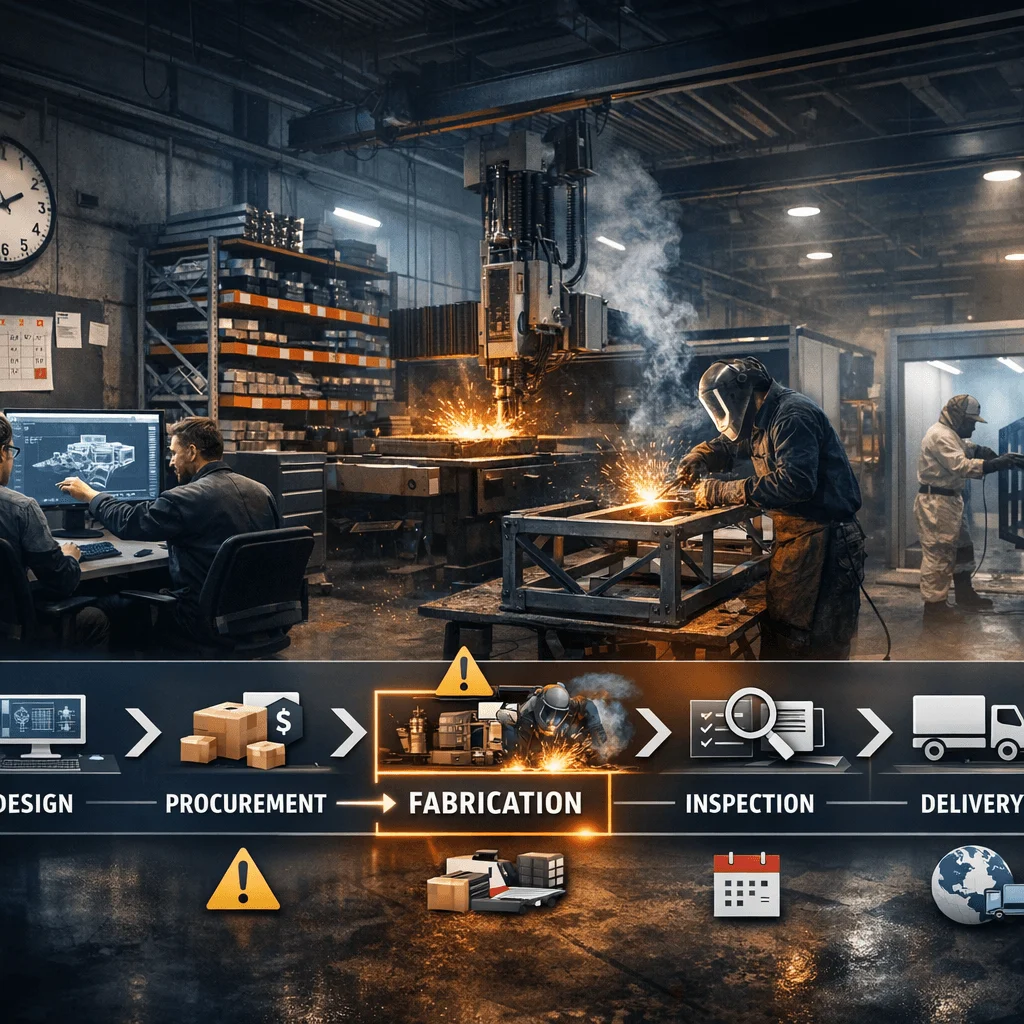
A custom fabrication lead time is the total duration between [...]

Automation and robotics in modern industrial fabrication is the application [...]
