
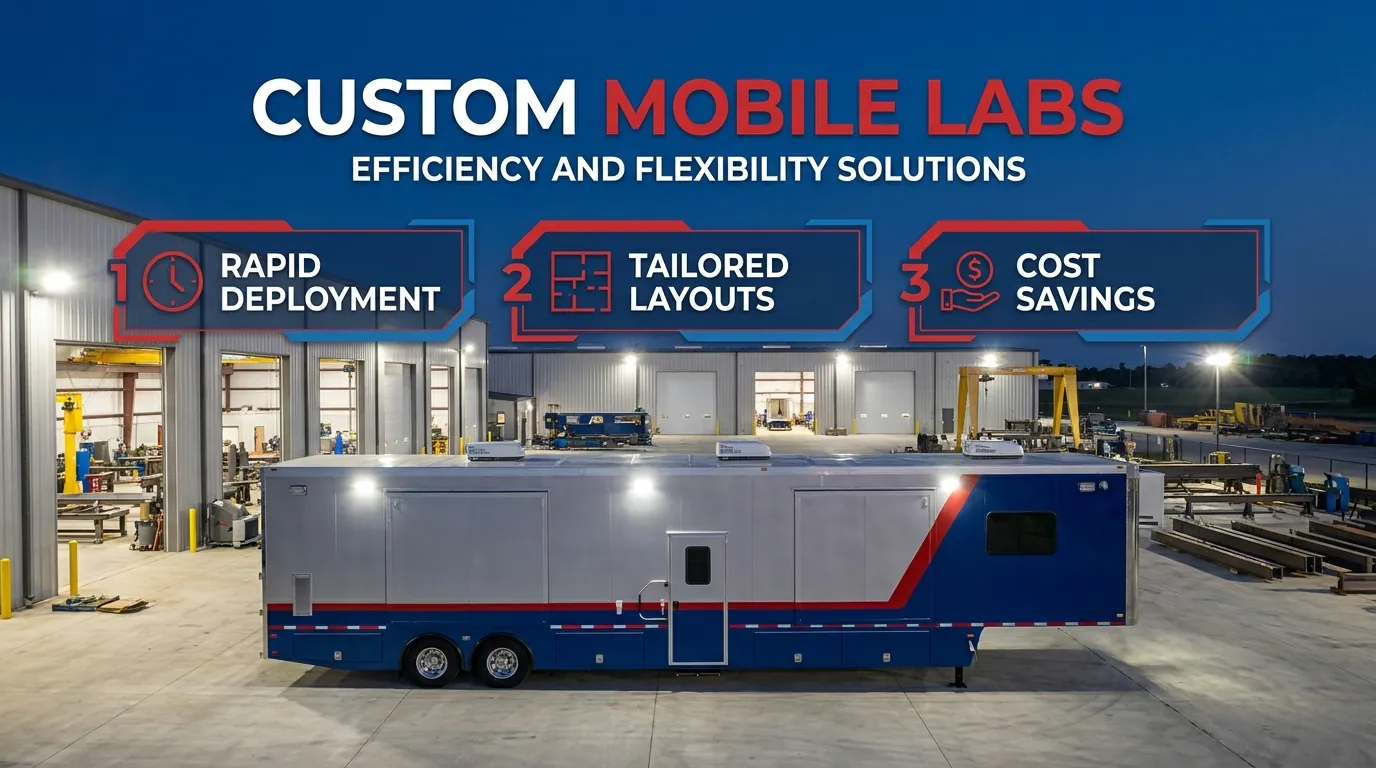
A custom mobile lab is a purpose-built, transportable laboratory engineered to match specific mission requirements, from diagnostic modules and biosafety systems to specialized power and climate controls. Standard mobile units carry fixed, general-purpose equipment; custom platforms integrate tailored layouts, dedicated HVAC, configurable interiors, and scalable power systems designed around a defined operational goal.
This guide covers how custom mobile labs differ from standard units, the efficiency gains they deliver, their flexibility advantages, all ten key benefits, compliance and safety engineering, specification planning, and vertically integrated fabrication.
Custom mobile labs are built from individual diagnostic modules that include equipment, procedures, and consumables customized to mission goals, separating them from fixed-package standard units at the design level. Industries spanning defense, public health, environmental science, energy research, and education already depend on these platforms for field-grade precision.
On the efficiency side, custom mobile labs compress project timelines by enabling on-site sample processing that eliminates shipping delays. Purpose-built units can be road-worthy within hours of notification and operational shortly after arrival, while consolidated equipment integration has been shown to reduce stat-test turnaround times and increase technologist productivity.
Flexibility comes through modular interiors with mobile casework, flexible partitions, and quick-disconnect utility fittings that allow crews to shift a lab’s mission profile without structural modification. This adaptability serves remote locations, multi-discipline programs, and organizations that cycle between seasonal fieldwork and emergency response.
Compliance and safety engineering rely on negative-pressure ventilation, HEPA filtration, biosafety cabinets, and sectioned workspaces that satisfy requirements from OSHA, the FDA and CMS’s CLIA program, and DOT hazardous materials regulations. Specification decisions around size, power infrastructure, and equipment customization determine whether the finished unit meets operational and regulatory demands. A vertically integrated fabricator like Craftsmen Industries consolidates design, engineering, production, and finishing under one roof, eliminating coordination gaps that delay complex laboratory builds.
What Is a Custom Mobile Lab and Why Does It Matter?
A custom mobile lab is a purpose-built, transportable laboratory engineered to match specific mission requirements, from diagnostic modules and biosafety systems to specialized power and climate controls. The sections below clarify how custom units differ from standard mobile platforms and which industries depend on them.
How Does a Custom Mobile Lab Differ From a Standard Mobile Unit?
A custom mobile lab differs from a standard mobile unit in its mission-specific engineering. Standard mobile units carry fixed, general-purpose equipment. Custom mobile labs integrate tailored diagnostic modules, specialized HVAC, dedicated power systems, and configurable interiors designed around a defined operational goal.
The distinction becomes clear at the design level. According to a 2024 review in Frontiers in Public Health, mobile laboratories are composed of individual diagnostic modules that include equipment, procedures, consumables, and expertise customized according to the goals of the mission, ranging from compact 1 to 3 unit configurations to full-scale expandable facilities. A standard van-based platform, by contrast, ships with a predetermined sensor or instrument package that the operator cannot fundamentally restructure.
Key differences between the two include:
- Layout scope: Custom labs use sectioned spaces, one-way personnel flow, and negative-pressure zones; standard units typically offer a single open workspace.
- Environmental controls: Custom builds incorporate HEPA filtration, biosafety cabinets, and heating rated for extremes as low as negative 20 degrees Celsius.
- Power architecture: Custom platforms may pair diesel generators with solar PV, battery storage, and microgrid controllers for grid integration or islanding.
- Turnaround performance: Purpose-built mobile labs have demonstrated median sample-to-report times of roughly 2 hours during outbreak response, compared to over 19 hours through central laboratory routing.
That performance gap makes customization far more than a convenience; it is the factor that determines whether a mobile lab can fulfill its mission or merely occupy a parking space.
What Industries Rely on Custom Mobile Labs Today?
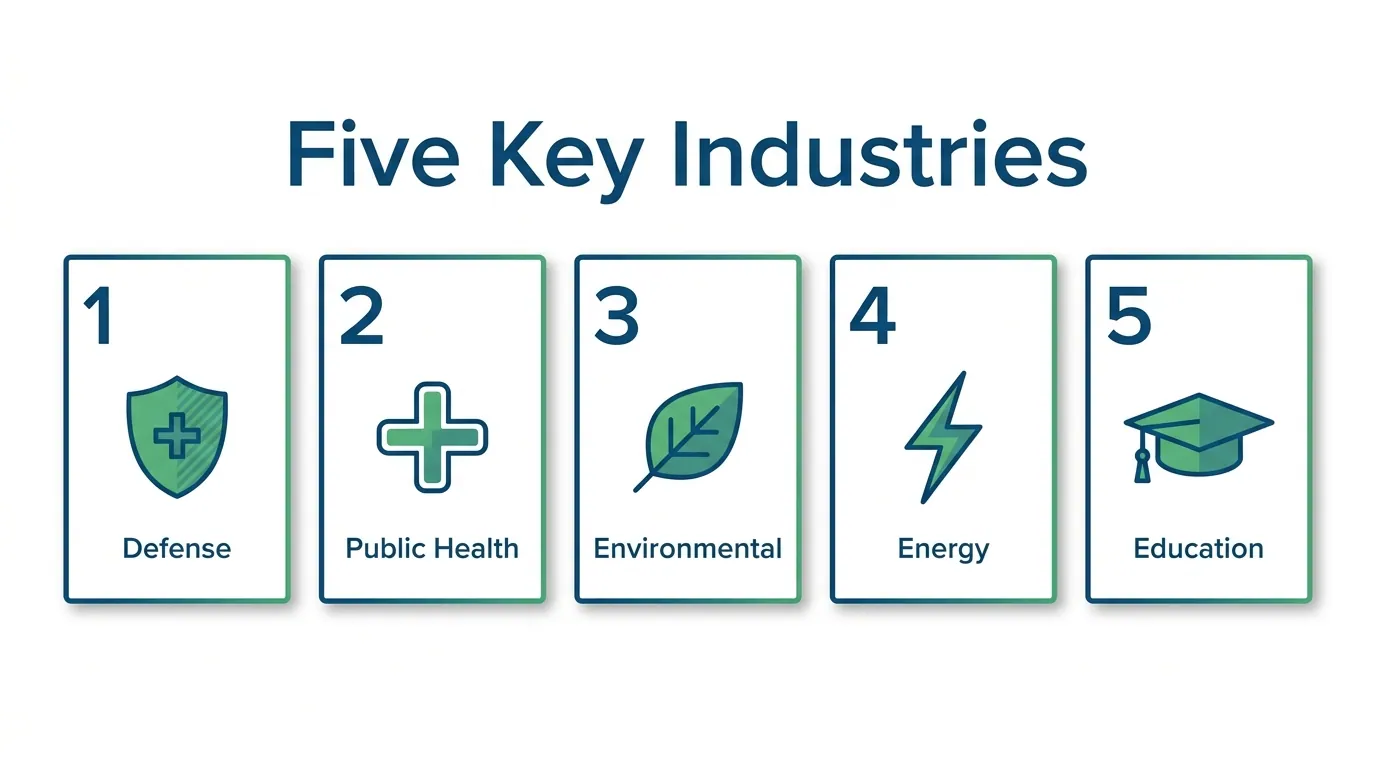
The industries that rely on custom mobile labs today span defense, public health, environmental science, energy, and education.
- Defense: The U.S. Army Combat Capabilities Development Command distributed 68 emergency-response mobile laboratory systems across every state and territory, valued collectively at an estimated 110 million dollars.
- Public health: WHO-donated mobile labs in Ukraine conduct over 3,000 PCR tests per day, enabling rapid infectious-disease surveillance in crisis zones.
- Environmental science: NOAA’s Chemical Sciences Laboratory operates a modified van equipped with standard and custom instruments for measuring agricultural emissions, methane from oil-and-gas operations, and ozone transport.
- Energy research: Arizona State University’s LEAPS program deploys a mobile 14-foot training platform with solar PV, battery storage, and a microgrid controller.
- Behavioral science: The SPRAAKLAB mobile laboratory features a custom-built acoustically insulated cabin that dampens outside sound by 33.4 dB SPL on average, supporting controlled speech and language research in the field.
This cross-sector adoption reflects a consistent pattern: when an organization needs laboratory-grade precision outside the walls of a fixed facility, a custom mobile lab becomes the most practical path forward. Understanding these industry applications sets the stage for examining the specific efficiency gains custom mobile labs deliver.
What Efficiency Gains Do Custom Mobile Labs Deliver?
Custom mobile labs deliver efficiency gains by reducing turnaround time, lowering operational costs, eliminating logistical delays, and streamlining workflow through consolidated equipment integration.
How Do Custom Mobile Labs Reduce Project Turnaround Time?
Custom mobile labs reduce project turnaround time by enabling on-site sample processing that eliminates shipping delays to off-site facilities. According to the U.S. Environmental Protection Agency, PHILIS labs can be road-worthy within four hours of notification and set up and running within six hours of arrival on site; these units run for four days before restocking or refueling using diesel generators or shore power.
This rapid operational readiness compresses what would otherwise stretch into days or weeks of waiting for external lab results. Modular construction principles reinforce this advantage; pre-built, factory-controlled environments arrive deployment-ready rather than requiring months of on-site buildout. For time-sensitive projects, the difference between six-hour setup and multi-week construction is often the difference between meeting a deadline and missing it entirely.
How Do Custom Mobile Labs Lower Operational Costs?
Custom mobile labs lower operational costs by consolidating testing capabilities into a single deployable asset, removing the need for permanent facility construction, long-term leases, and recurring sample-shipping fees. On-site analysis eliminates per-sample courier charges and reduces labor hours spent packaging, tracking, and receiving specimens from remote laboratories.
Shared equipment housed in one mobile platform also reduces redundant instrument purchases across departments. Organizations avoid duplicating expensive analyzers at multiple fixed locations when a single mobile unit can rotate between sites as demand shifts. For most programs balancing tight budgets against broad geographic coverage, a well-specified mobile lab proves far more cost-effective than maintaining underutilized brick-and-mortar facilities.
How Does On-Site Testing Capability Eliminate Logistical Delays?
On-site testing capability eliminates logistical delays by processing samples at the point of collection rather than routing them through external supply chains. Traditional workflows require sample packaging, courier coordination, chain-of-custody documentation, and transit time before analysis even begins. Each handoff introduces potential bottlenecks, temperature excursions, and scheduling conflicts with receiving laboratories.
Custom mobile labs collapse this entire chain into a single location. Field teams collect, prepare, and analyze specimens within the same unit, producing actionable data on the same day. This is especially valuable in emergency response or remote-site operations where courier access is limited and delays carry compounding consequences.
How Does Consolidated Equipment Integration Improve Workflow?
Consolidated equipment integration improves workflow by placing all necessary instruments, consumables, and workstations within a single optimized footprint. Custom layouts position equipment in the sequence technicians actually use it, minimizing unnecessary movement between stations and reducing manual handling steps.
A 2024 study published in Laboratory Medicine found that consolidated laboratory automation reduced inpatient stat-test turnaround time by 32.8% while increasing individual technologist productivity by 32.4% per month. When instruments share a unified platform rather than occupying separate rooms or buildings, technicians spend less time transporting samples and more time generating results.
Beyond equipment placement, integrated power, data, and ventilation systems engineered into the mobile lab’s design prevent the compatibility issues that arise when standalone instruments are retrofitted into generic spaces.
What Flexibility Advantages Do Custom Mobile Labs Provide?
Custom mobile labs provide flexibility advantages through rapid reconfiguration, modular interiors, remote deployment capability, and multi-discipline layout support. The following sections detail each advantage.
How Quickly Can a Custom Mobile Lab Be Reconfigured for New Tasks?
A custom mobile lab can be reconfigured for new tasks in significantly less time than a fixed facility requires for renovation. Modular diagnostic units, swappable equipment racks, and standardized utility connection points allow crews to change a lab’s mission profile without structural modification. Quick-disconnect fittings for power, data, and fluid lines let technicians remove one instrument suite and install another while keeping the core platform intact. This reconfiguration speed is what makes mobile labs practical for organizations that shift between seasonal fieldwork, emergency response, and routine testing cycles within the same fiscal year.
How Do Modular Interiors Adapt to Different Research Needs?
Modular interiors adapt to different research needs by using reconfigurable components that transform a single mobile platform for multiple scientific disciplines. According to the Whole Building Design Guide, open lab formats with mobile casework, flexible partitions, overhead service carriers, and easy utility connects and disconnects make laboratories “more easily adaptable for future needs.” Key modular interior elements include:
- Mobile casework that rolls into position for wet chemistry, then clears for instrumentation work
- Flexible partitions that create isolated zones or open collaborative spaces on demand
- Overhead service carriers delivering gases, electrical, and data lines without fixed floor penetrations
- Emergency power systems and uninterruptible power supplies ensuring continuity during transitions
This adaptability eliminates the need to commission an entirely new unit when research priorities change.
How Does Mobile Deployment Flexibility Serve Remote Locations?
Mobile deployment flexibility serves remote locations by eliminating dependence on permanent laboratory infrastructure. Field sites in rural areas, disaster zones, and industrial operations often lack the utilities or buildings required for conventional testing. A custom mobile lab arrives self-contained with onboard power generation, climate control, water supply, and waste management. Samples that would otherwise require hours or days of transport to a central facility can be processed on-site immediately. For organizations conducting environmental monitoring, public health surveillance, or resource exploration in areas far from urban centers, this deployment model converts inaccessible regions into fully functional research sites.
How Do Custom Layouts Support Multi-Discipline Use Cases?
Custom layouts support multi-discipline use cases by dividing a single mobile platform into purpose-built zones that serve distinct workflows simultaneously. A well-designed unit might dedicate one section to sample preparation, another to analytical instrumentation, and a third to data processing, with each zone receiving independent environmental controls. Shared support systems, such as compressed gas lines and centralized waste handling, reduce equipment duplication across disciplines. This zoned approach lets a single asset serve chemistry, biology, and field engineering teams without cross-contamination or workflow interference. For programs that span multiple departments, investing in a multi-discipline custom layout is often more cost-effective than deploying separate units for each function.
With these flexibility advantages established, the next section examines all ten key benefits of custom mobile labs.
What Are the 10 Key Benefits of Custom Mobile Labs?
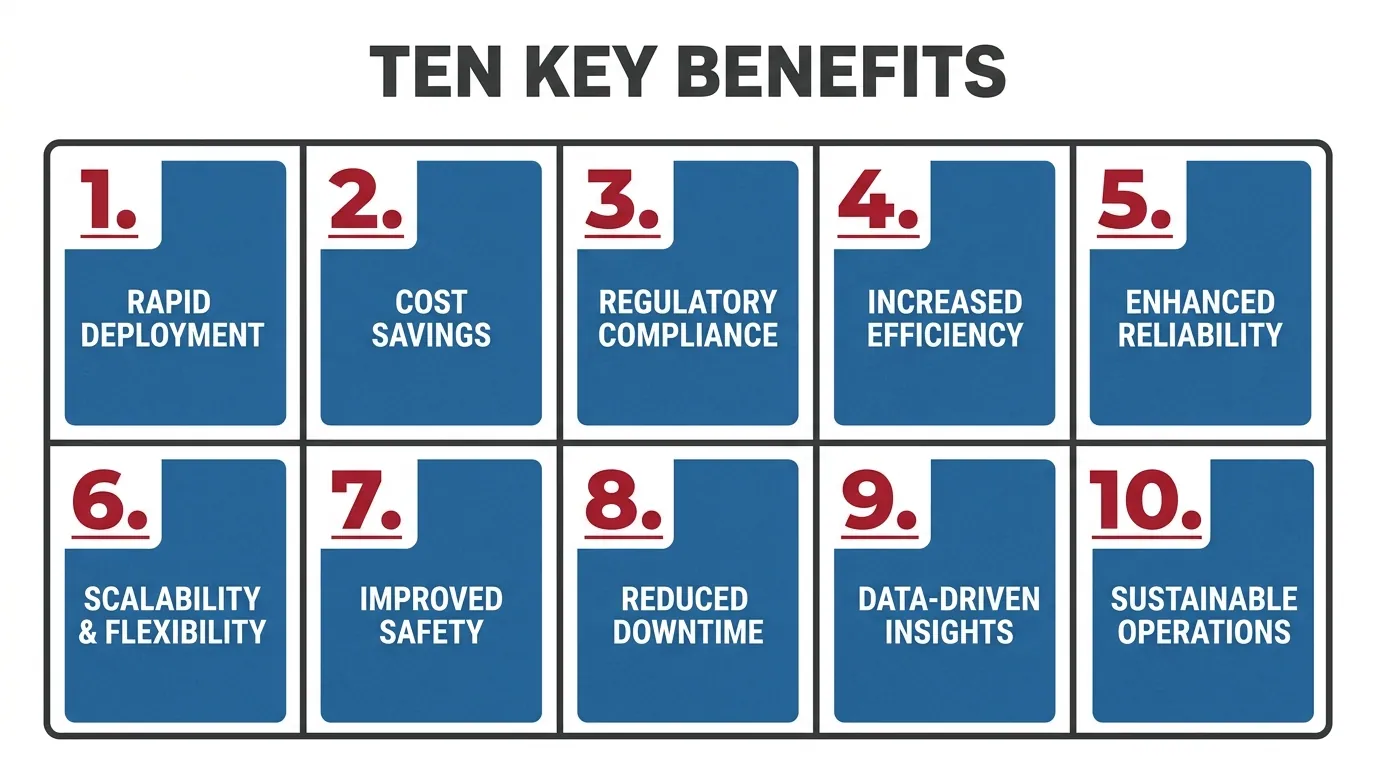
The 10 key benefits of custom mobile labs span rapid field deployment, tailored layouts, cost savings, scalability, regulatory compliance, on-site analysis, multi-purpose use, emergency readiness, collaborative workstations, and long-term ROI.
1. Rapid Deployment to Any Location
Custom mobile labs enable rapid deployment to any location, bringing full analytical capability directly to the field. According to the U.S. Environmental Protection Agency, PHILIS labs can be road-worthy within four hours of notification and set up and running within six hours of arrival on site. These units operate for four days before restocking or refueling, eliminating the need to ship samples off-site. For time-sensitive missions, this deployment speed transforms response logistics from days into hours.
2. Fully Tailored Laboratory Layouts
Fully tailored laboratory layouts allow every square foot inside a custom mobile lab to serve a specific operational purpose. Bench positions, storage, instrument placement, and utility routing are configured to match exact workflow requirements. Unlike standard mobile units with fixed floorplans, custom layouts consolidate equipment into a single optimized space. This level of design precision reduces wasted movement and supports higher throughput for the intended mission.
3. Reduced Facility Overhead and Construction Costs
Custom mobile labs reduce facility overhead and construction costs by replacing permanent brick-and-mortar builds with modular, factory-assembled units. A National Renewable Energy Laboratory report found that modular construction can deliver a six-month construction time savings compared to traditional site builds, with 15 months for modular versus 21 months for conventional construction. Shorter build schedules translate directly into lower labor expenses, reduced site-management overhead, and faster time to operation.
4. Scalable Configurations for Growing Programs
Scalable configurations allow custom mobile labs to expand alongside growing programs without requiring entirely new facilities. Modular container-based designs accept additional units as workload increases; a single 20-foot module today can connect to multiple modules tomorrow. Power systems, water supply, and HVAC scale in parallel. This incremental approach lets organizations invest only in the capacity they need at each phase.
5. Regulatory-Compliant Controlled Environments
Custom mobile labs deliver regulatory-compliant controlled environments by integrating biosafety features, HVAC pressure controls, and contamination barriers during fabrication. Negative-pressure ventilation, HEPA-filtered air systems, and sectioned workspaces maintain containment integrity during transport and operation. These engineered controls address requirements from standards such as OSHA’s Chemical Hygiene Plan and CLIA certification for clinical sample handling. Building compliance into the design stage prevents costly retrofits after deployment.
6. Faster Data Collection Through On-Site Analysis
Custom mobile labs accelerate data collection through on-site analysis by eliminating sample transport to distant central laboratories. A 2022 study published in eBioMedicine found that a mobile LabVan achieved a median turnaround time of 2 hours and 18 minutes during COVID-19 outbreak responses, compared to 19 hours and 8 minutes for samples submitted to the central laboratory. Producing results in the field rather than waiting for off-site processing compresses decision-making timelines dramatically.
7. Multi-Purpose Functionality Across Departments
Custom mobile labs provide multi-purpose functionality across departments by supporting interchangeable instrument configurations within a single platform. One unit can serve environmental monitoring, clinical diagnostics, chemical analysis, or educational outreach depending on the installed modules. Shared equipment reduces duplication across departmental budgets. For organizations managing diverse testing mandates, a single reconfigurable asset often replaces multiple fixed-purpose facilities.
8. Improved Response Time for Emergency Operations
Custom mobile labs improve response time for emergency operations by placing fully equipped analytical capability at the incident site. Purpose-built containment features, including biosafety cabinets, decontamination systems, and emergency air handling, enable safe handling of hazardous materials immediately upon arrival. According to the Public Health Agency of Canada’s Canadian Biosafety Standard (Third Edition, 2022), emergency response protocols require containment barriers, air handling, and verification testing for facilities handling regulated pathogens. Pre-engineered mobile labs meet these requirements without waiting for permanent facility construction.
9. Enhanced Collaboration With Integrated Workstations
Custom mobile labs enhance collaboration with integrated workstations that position multiple researchers in a shared, purpose-designed space. Open layouts with mobile casework, flexible partitions, and shared bench areas facilitate direct communication between team members. When instruments, data terminals, and sample preparation zones occupy a single footprint, handoff delays between disciplines shrink. This integrated approach is especially valuable for field teams where coordination speed directly affects mission outcomes.
10. Long-Term ROI Through Reusable Mobile Infrastructure
Custom mobile labs deliver long-term ROI through reusable mobile infrastructure that serves multiple missions across its operational lifespan. A single asset can be redeployed, reconfigured, and updated with new instruments rather than decommissioned after one project. Shared-use instrumentation models further maximize return; the NIH’s S10 program demonstrated that 16,050 scientists used 1,487 shared instruments over a roughly ten-year period, illustrating how asset sharing multiplies value. For any organization weighing capital expenditure, reusable mobile infrastructure converts a one-time build into decades of operational utility.
Understanding these ten benefits provides the foundation; the next consideration is how custom mobile labs meet the specific compliance and safety standards that govern laboratory operations.
How Do Custom Mobile Labs Meet Compliance and Safety Standards?
Custom mobile labs meet compliance and safety standards through engineered climate controls, contamination barriers, and adherence to federal and state regulations. The subsections below cover HVAC and contamination engineering, then regulatory frameworks.
How Are Climate and Contamination Controls Engineered?
Climate and contamination controls are engineered through negative-pressure ventilation, HEPA filtration, and physical containment barriers designed to isolate hazardous materials from personnel and the surrounding environment. Negative-pressure systems prevent airborne contaminants from escaping the work area by maintaining lower air pressure inside the lab relative to adjacent zones. HEPA-filtered air conditioning removes particulates down to 0.3 microns, while sectioned interior spaces enforce one-way personnel movement to prevent cross-contamination.
Key contamination control features include:
- Non-combustible exterior-wall insulation to reduce fire risk.
- Dedicated nucleic-acid extraction zones held at negative pressure.
- Biological safety cabinets for pathogen handling.
- Equipment fixed to the floor or transported separately to prevent shifting during transit.
For organizations handling regulated pathogens, these controls must align with standards such as Canada’s Canadian Biosafety Standard (Third Edition, 2022), which addresses containment barriers, air handling, decontamination, and verification testing. Well-engineered contamination control is arguably the single most important design factor in a mobile lab; without it, even the most advanced analytical equipment becomes unusable in regulated settings.
How Do Custom Mobile Labs Meet Federal and State Regulations?
Custom mobile labs meet federal and state regulations by integrating design features and operational protocols that satisfy requirements from agencies such as OSHA, the FDA, and the Department of Transportation. According to a 2022 guidance published in the Annals of Laboratory Medicine, mobile laboratories require pressure control, sectioned spaces, one-way personnel movement, negative pressure for nucleic-acid extraction, and HEPA-filtered air conditioning to meet biosafety standards.
Core regulatory requirements include:
- OSHA’s Laboratory Standard (29 CFR 1910.1450) mandates a written Chemical Hygiene Plan in laboratories where hazardous chemicals are used.
- The FDA’s CLIA program requires clinical laboratories to hold an appropriate certificate before accepting human samples for testing.
- DOT’s Hazardous Materials Regulations require Category B infectious substances to be packaged in triple packaging for transport.
Facility design parameters and operational procedures must be documented, tested before operation, and re-tested annually or after significant modification. Understanding which overlapping regulations apply to a specific mission, whether clinical diagnostics, environmental sampling, or pathogen research, is critical when specifying a custom mobile lab.
What Should You Consider When Specifying a Custom Mobile Lab?
You should consider size, power infrastructure, and equipment customization when specifying a custom mobile lab. These three factors determine whether the finished unit meets operational, logistical, and regulatory requirements.
What Size and Footprint Options Exist for Mobile Labs?
The size and footprint options for mobile labs range from compact van-based platforms to full-scale semi-trailer configurations. A modified passenger van suits atmospheric monitoring or small diagnostic tasks, while a semi-trailer provides significantly more usable space. According to the Federal Highway Administration, one testing trailer measures 8.5 feet wide by 53 feet long with a 5-by-15-foot expansion, requiring approximately 20 feet of width and 72 feet of total rig length when the tractor is included.
Key sizing considerations include:
- Mission scope and the number of simultaneous operators
- Available space at deployment sites for setup and access
- Transport regulations governing vehicle dimensions on public roads
- Whether expandable slide-outs or modular container additions are needed
Matching the footprint to the mission prevents both wasted space and capacity shortfalls.
What Power and Utility Requirements Must Be Planned?
The power and utility requirements that must be planned include electrical capacity, water supply, fuel reserves, and renewable energy integration. Custom mobile labs typically rely on diesel generators with shore-power connectivity as a backup, though solar and battery storage configurations are increasingly viable. Arizona State University’s LEAPS platform, for example, combines a 10 kW generator, 4.5 kW of solar PV, a 7 kW inverter with microgrid controller, and 6 kWh of battery storage on a single 14-foot mobile platform.
Essential utility planning items include:
- Generator sizing based on total equipment draw
- Voltage and amperage service requirements (commonly 208–240V single-phase)
- Potable and waste-water tank capacity for extended field operations
- Fuel storage to support multi-day autonomous operation
Underestimating power needs is one of the most common specification mistakes, and correcting it after fabrication is far more expensive than planning it upfront.
What Level of Customization Is Possible for Specialized Equipment?
The level of customization possible for specialized equipment in a mobile lab is extensive, spanning instrument mounting, acoustic insulation, modular casework, and mission-specific sensor arrays. Custom interiors can include foldable workstations, dimmable lighting, biosafety cabinets, and vibration-dampened instrument bays. A 2025 study published in Behavior Research Methods describes the SPRAAKLAB, a custom-built mobile research cabin with an acoustically insulated room that dampens outside sound by 33.4 dB SPL on average.
Customization typically addresses:
- Fixed versus removable instrument mounting for reconfiguration
- Specialized HVAC zones for temperature-sensitive equipment
- Acoustic or vibration isolation for precision measurement tools
- Integrated data acquisition and communication systems
With these specification decisions finalized, the next step is selecting a fabrication partner that can execute the full build.
How Does Vertically Integrated Fabrication Improve Custom Mobile Lab Outcomes?
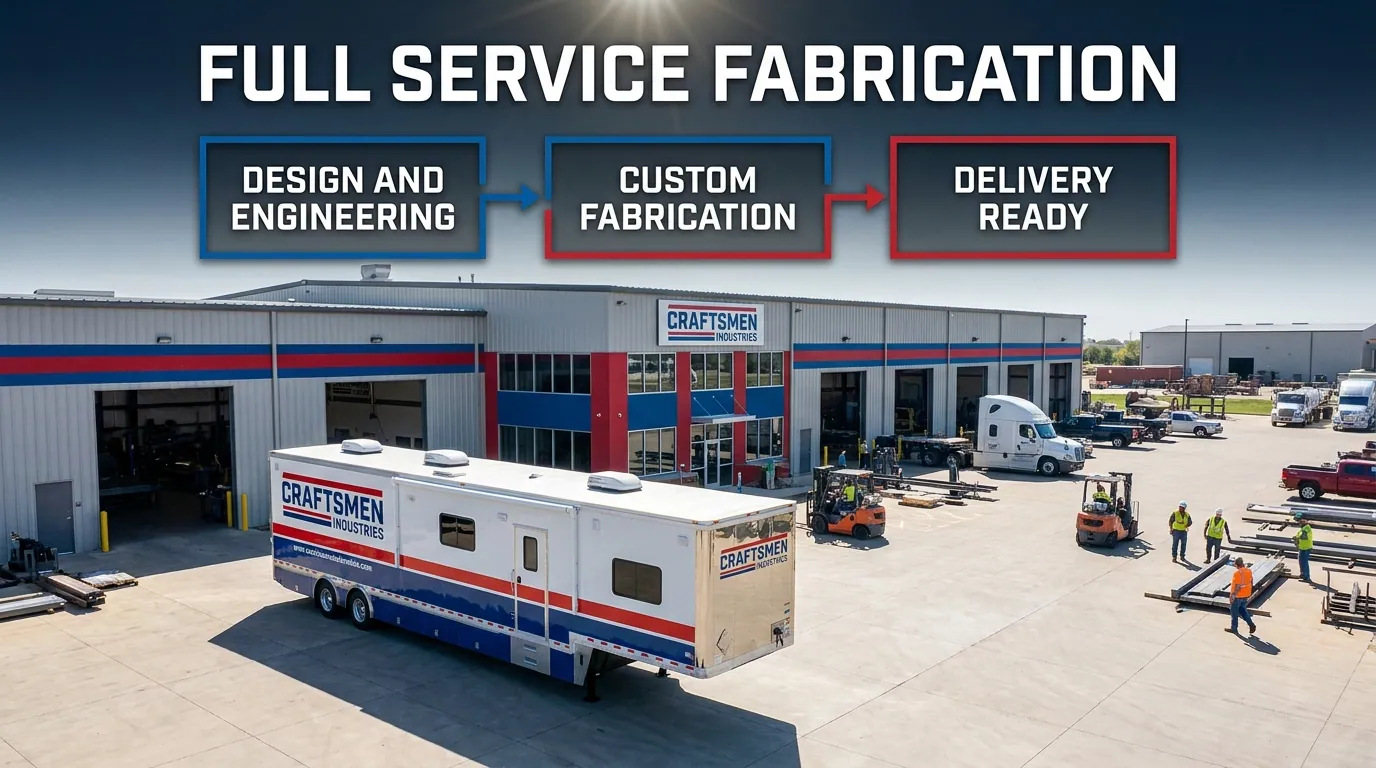
Vertically integrated fabrication improves custom mobile lab outcomes by consolidating design, engineering, production, and finishing under one roof. This section covers how Craftsmen Industries manages the full build lifecycle and the key takeaways about custom mobile lab benefits.
Can Craftsmen Industries Build Custom Mobile Labs From Ideation to Delivery?
Yes, Craftsmen Industries can build custom mobile labs from ideation to delivery. Craftsmen Industries operates as a vertically integrated fabricator with in-house design, engineering, fabrication, printing, and installation capabilities housed within a 127,000 sq. ft. facility near St. Louis County, Missouri. This single-source model eliminates coordination gaps between separate vendors, reducing the risk of miscommunication that often delays complex laboratory builds. Every phase of production, from initial concept development through final quality inspection, stays under direct project control. For organizations requiring biosafety controls, HVAC integration, or specialized equipment mounting, having one team manage structural, mechanical, and electrical systems together produces tighter tolerances and faster resolution of design conflicts.
What Are the Key Takeaways About Custom Mobile Lab Benefits?
The key takeaways about custom mobile lab benefits center on measurable gains in speed, flexibility, compliance, and long-term value. Custom mobile labs deliver rapid deployment to field locations, eliminate sample-shipping delays through on-site testing, and adapt to new missions via modular interior reconfiguration. Regulatory-compliant environments with engineered HVAC, negative pressure zones, and biosafety controls ensure safe operation across healthcare, defense, environmental science, and education sectors. According to the University of New England, its 50-foot Mobile BIOLAB weighs about 20,000 pounds and holds approximately 25 students at one time, demonstrating how a purpose-built mobile unit scales to serve real-world program demands. Choosing a vertically integrated fabricator like Craftsmen Industries streamlines the path from concept to a deployment-ready asset.
Filter Posts by Tag
related posts
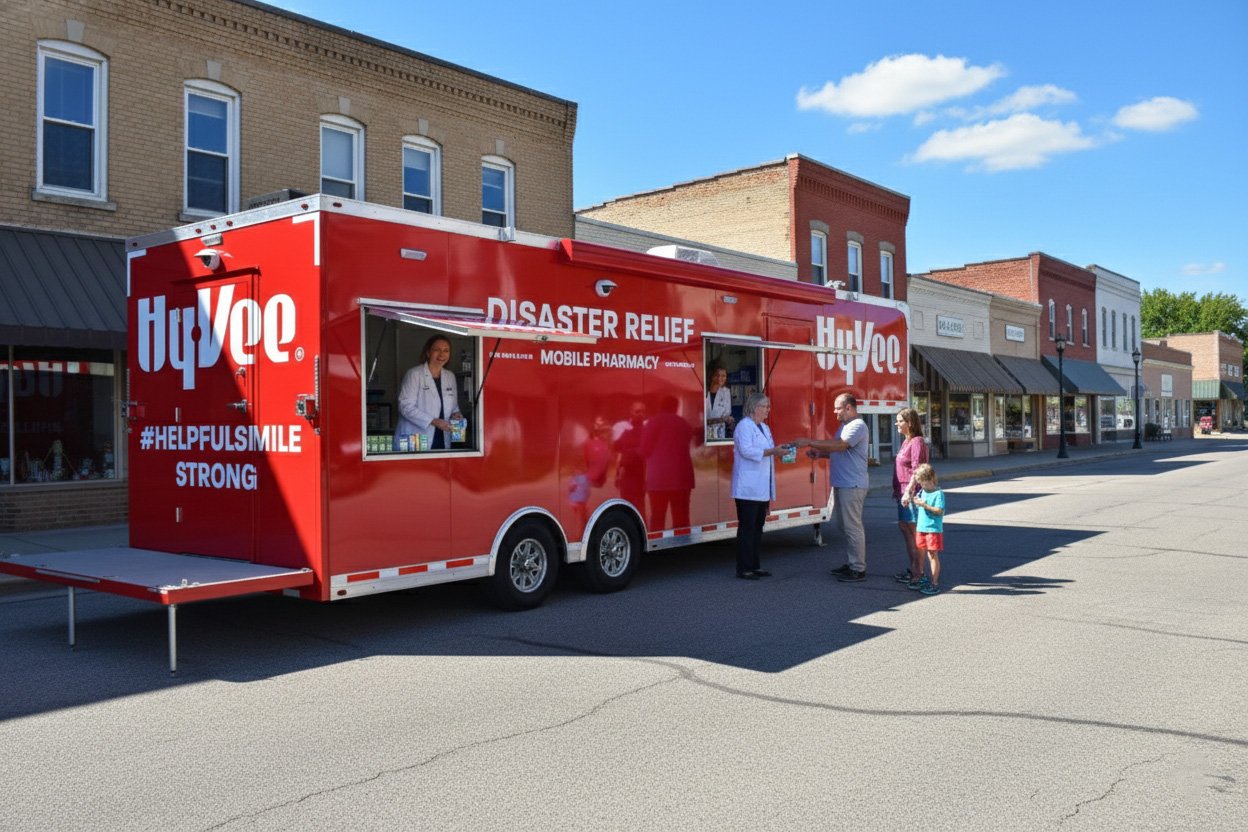
Mobile pharmacy vehicles bring prescriptions and health services to underserved areas, improving access, patient safety, and healthcare equity.
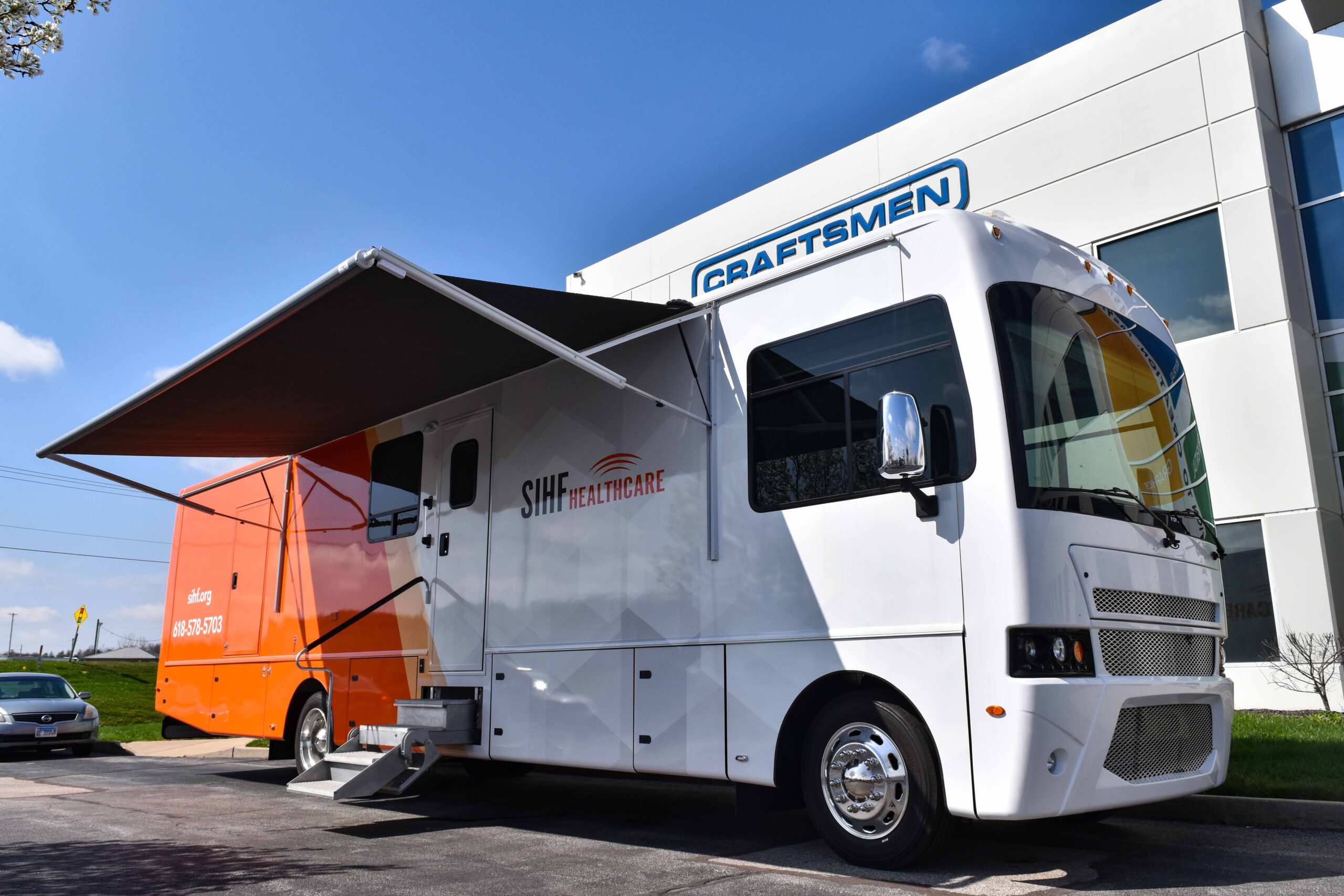
Are you searching for how are mobile medical coaches funded? Read this comprehensive article that states all the ways you can have your mobile unit funded
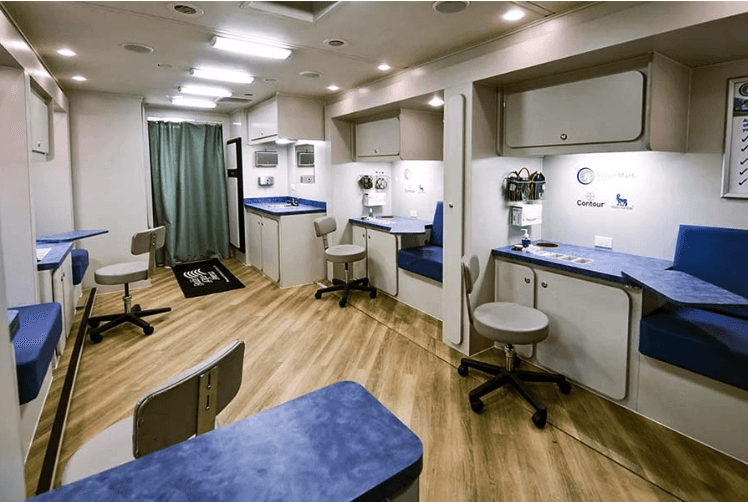
See what makes a mobile medical clinic both safe and comfortable for patients. From layout to ventilation, discover features that support mobile healthcare success.
